
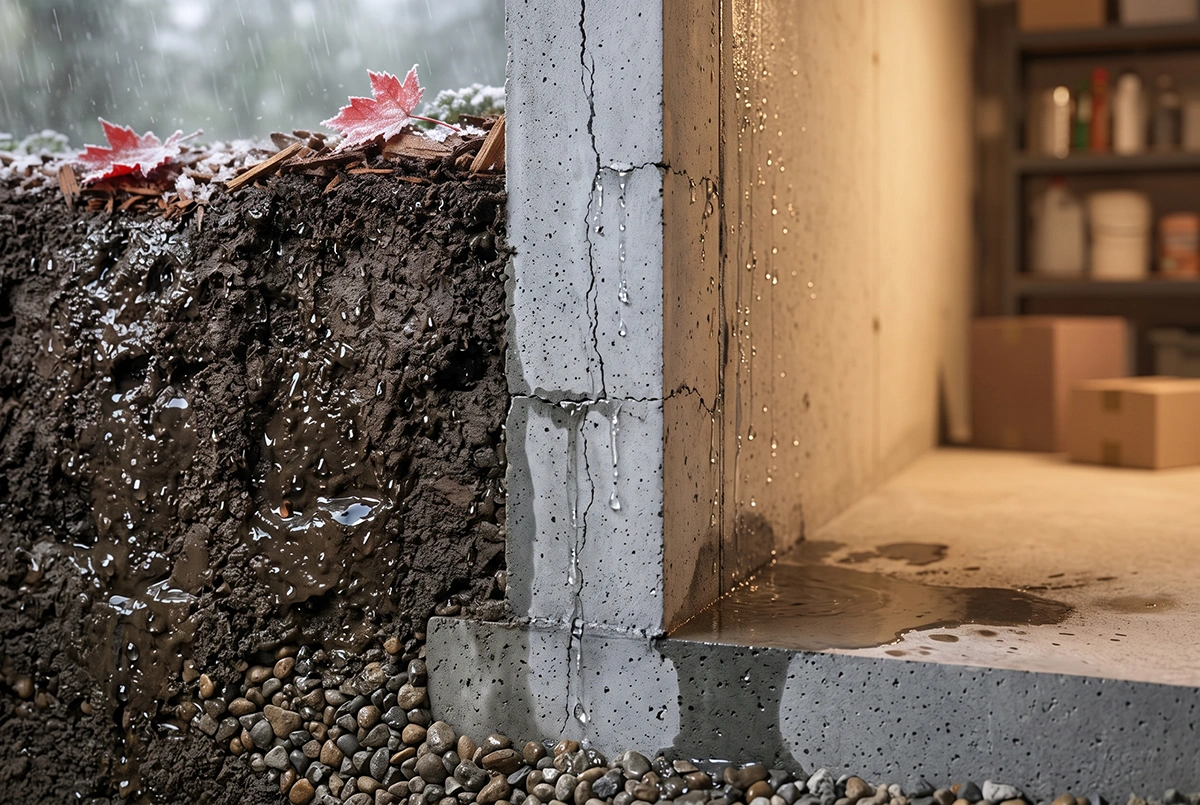
Water can begin pressing against a basement when the ground around the home holds more moisture than the drainage system can move away. Long rain, rapid snowmelt, a high local water table, poor grading, or a restricted drainage route can all raise the amount of water around the foundation and beneath the slab.
Because a basement sits below grade, saturated soil can leave water in contact with walls, footings, and the underside of the floor. If that water finds a weak path, it may enter through a crack, joint, penetration, or the wall-floor connection. Because hydrostatic pressure can contribute to basement flooding, recurring moisture should be evaluated as both a drainage and waterproofing issue.
What Hydrostatic Pressure Means Below Grade
Hydrostatic pressure develops when standing or slowly moving groundwater creates a water head against a structure. The greater the height of water above a point on the foundation, the stronger the pressure at that point can become. Lower sections of a basement wall and areas beneath the slab can therefore face more pressure when the surrounding ground is saturated.
Seasonal changes matter, so a dry summer does not rule out a groundwater problem during wetter months.
This force is different from ordinary earth pressure. Soil can push laterally against a wall even when conditions are relatively dry. Hydrostatic pressure is added when water fills the spaces in that soil and remains above part of the foundation.
When homeowners search for hydrostatic pressure basement problems, they are usually describing the effects of this water load rather than one specific defect. A wall crack may be where water appears, but the crack itself did not create the groundwater pressure.
Hydrostatic pressure against basement walls can force water through existing openings, masonry joints, tie holes, or service penetrations. A similar process can occur under the slab. If groundwater rises beneath the house, water pressure under the basement floor may push moisture toward slab cracks, penetrations, or the perimeter joint.
Why Water Builds Up Around a Basement?
Hydrostatic pressure increases only when enough water is present around or below the structure. Several site conditions can raise that level or slow the rate at which it falls.
Heavy rain is a common trigger. When storms add water faster than the soil can release it, the ground beside the house can become saturated. Repeated rainfall over several days can be especially important because new water arrives before the previous moisture has drained away.
Rapid snowmelt can create the same problem. A large volume of meltwater may reach the soil quickly, particularly when frozen or compacted ground limits drainage.
A high water table can keep the footing area wet for long periods. Some sites also develop perched groundwater above the main water table because a dense soil layer slows downward movement. This kind of hydrostatic pressure from groundwater may remain after surface puddles have disappeared.
Surface drainage matters as well. Negative grading, short downspouts, overflowing eavestroughs, and low areas beside the house can repeatedly send runoff toward the foundation instead of away from it.
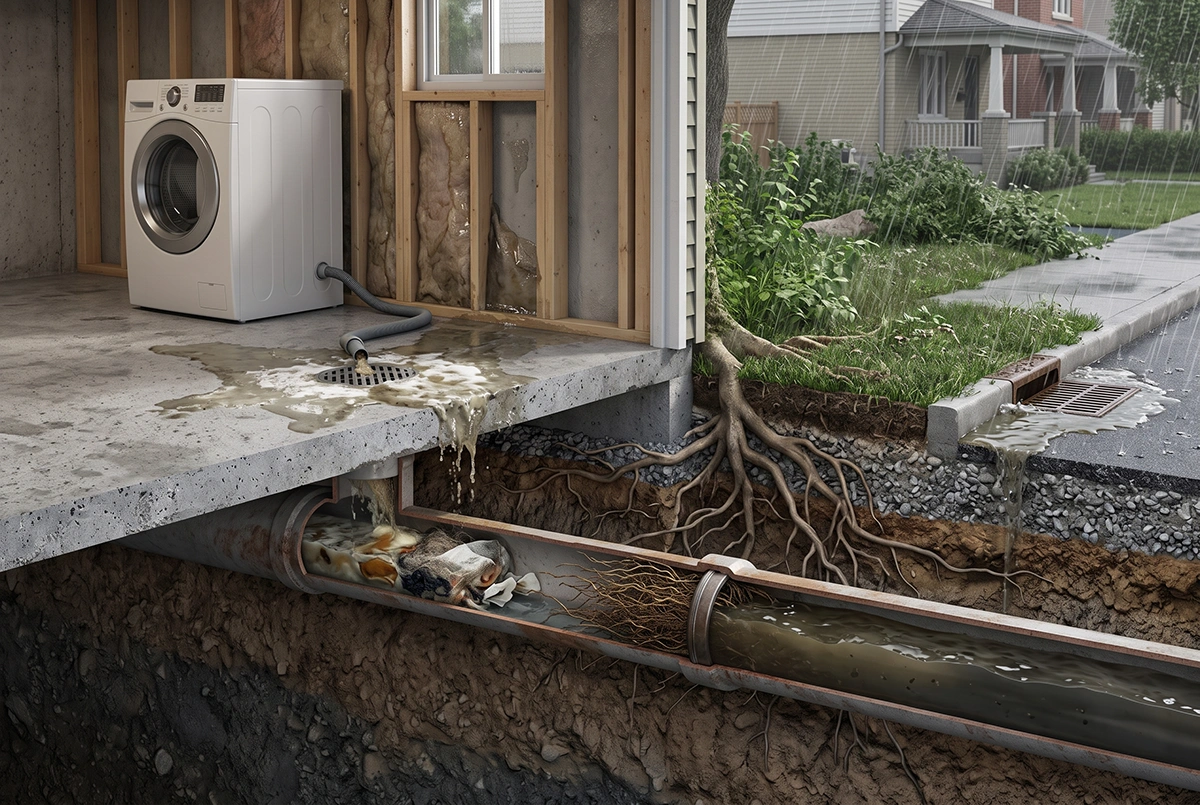
Restricted below-grade drainage is another cause. A damaged or obstructed footing drain, weeping tile, sump line, or outlet can leave water near the foundation. If water reaches the drainage zone faster than it leaves, pressure can rise even when the waterproofing membrane remains intact.
Common Conditions That Can Increase Water Around a Basement
The following conditions can increase the chance that water will collect around the home.
| Condition | How it contributes to water buildup | What to check |
|---|---|---|
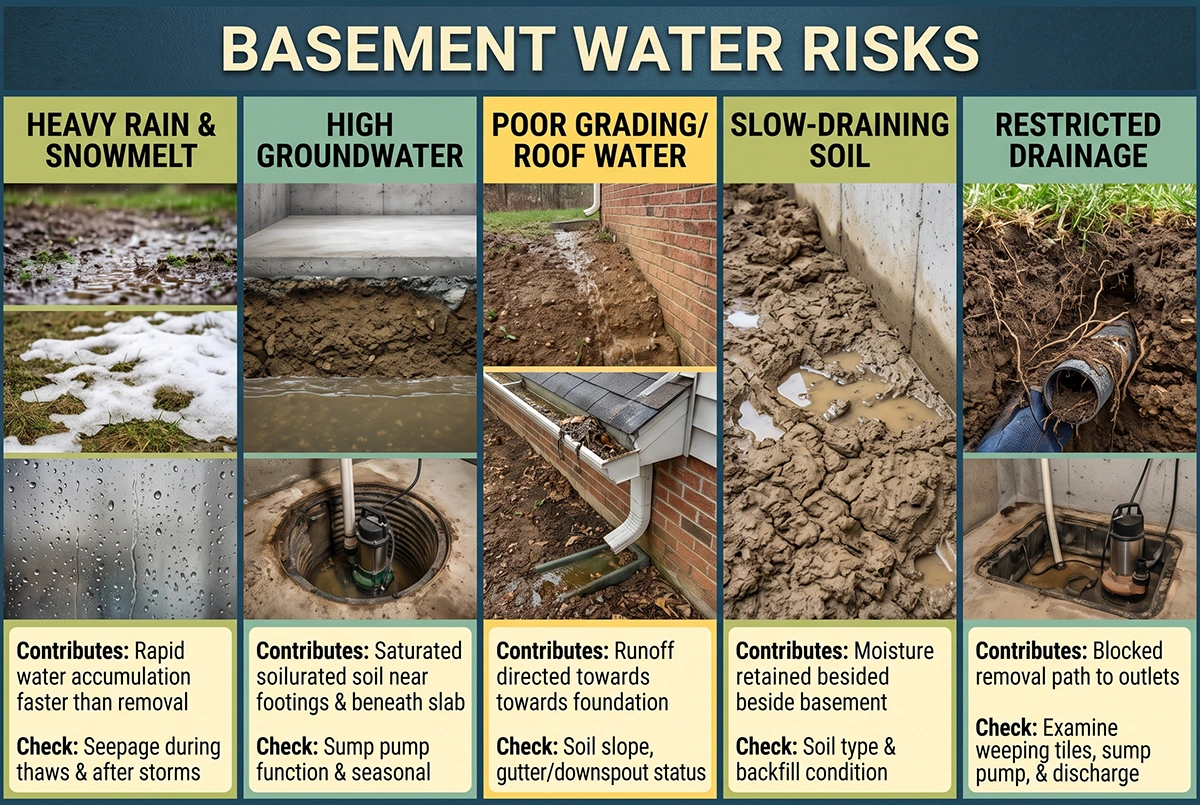
| Repeated heavy rain or snowmelt | Adds water faster than local soil and drains may be able to release it. | Whether seepage appears after storms, during spring thaw, or after several wet days. |
| High or perched groundwater | Keeps the water level near the footing or beneath the slab elevated. | Sump-pit activity, seasonal patterns, and whether moisture remains after surface conditions improve. |
| Poor grading or roof-water control | Directs runoff toward the foundation. | Soil slope, eavestrough performance, downspout length, and discharge locations. |
| Slow-draining or compacted soil | Holds moisture beside the basement for longer. | Soil condition, backfill, and the available drainage path. |
| Restricted foundation drainage | Prevents collected water from reaching a sump or outlet efficiently. | Weeping tiles, perimeter drains, sump basin, pump, and discharge route. |
How Soil and Drainage Change the Risk?
Soil type affects how water moves, but no single soil automatically creates hydrostatic pressure. Clay-rich or compacted soils can retain moisture for long periods. Sand and gravel usually drain faster, yet they can also transmit groundwater efficiently toward a house when the local water table is high.
Backfill condition matters too. Free-draining material beside the foundation can help guide water toward a perimeter drain, while fine sediment or compacted material can slow that movement.
The main question is whether incoming water has a dependable route away. If water reaches the footing but the drain is blocked, damaged, or connected to an ineffective outlet, the local water level can stay high enough to create hydrostatic pressure at the foundation.
Foundation Drains, Weeping Tiles, and French Drains
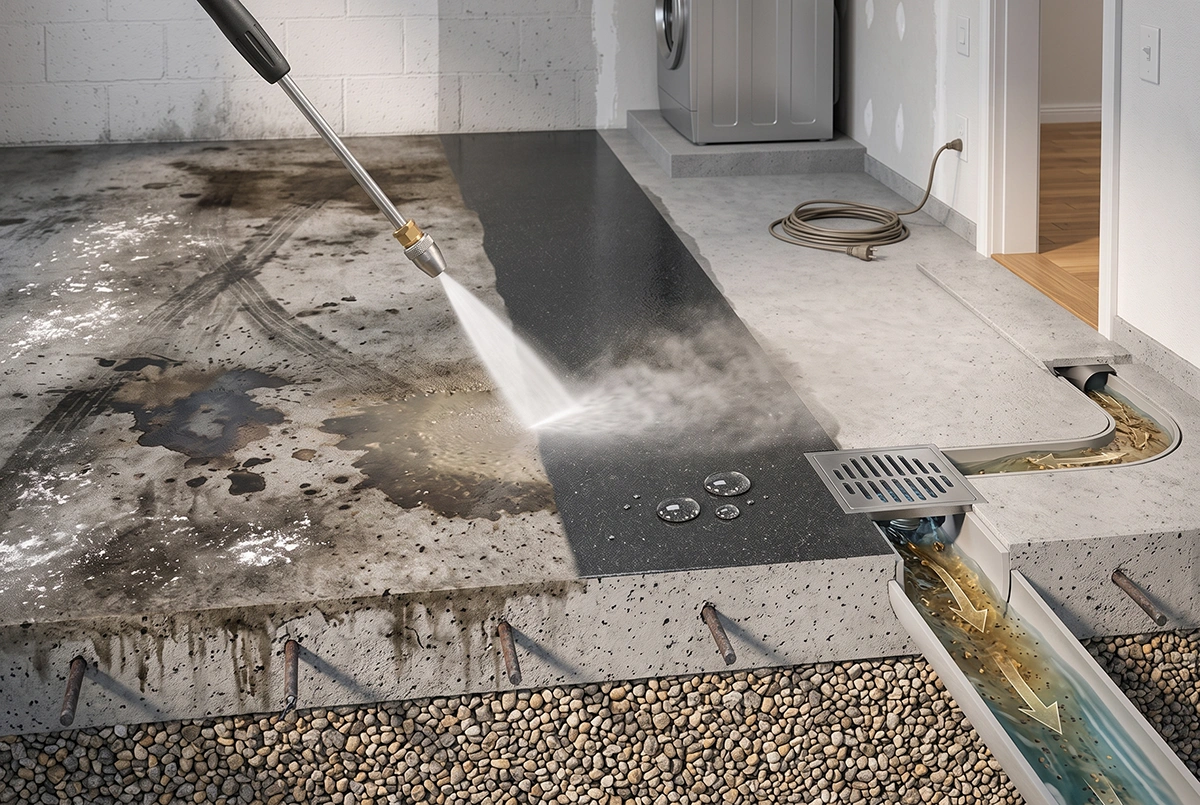
Foundation drainage is intended to collect water before a large water head develops beside below-grade walls and footings. In Canada, perimeter drains are often called weeping tile. These systems need a clear path to a sump, gravity outlet, or another approved discharge point.
A French drain can also intercept groundwater or subsurface runoff. However, its depth, location, and outlet determine whether it actually helps. A French drain hydrostatic pressure solution makes sense only when the trench intercepts the relevant water path and can discharge the collected water reliably.
How Hydrostatic Pressure Can Lead to Basement Leaks?
Water pressure usually uses openings that already exist rather than creating a new crack. Hydrostatic pressure basement leaks may appear at wall cracks, slab cracks, service penetrations, tie holes, masonry joints, or the cold joint where the wall meets the floor.
The visible entry point does not always reveal the original source. Water found on a basement floor may have travelled from a wall, entered through the slab, or come from plumbing. Weather patterns, sump behavior, grading, drain condition, and the location of the first visible moisture all matter during diagnosis.
Concrete and masonry can also absorb moisture by capillary action. This can create dampness or mineral deposits without a strong external water head. Hydrostatic seepage is more closely associated with accumulated water around or beneath the foundation.
Hydrostatic pressure and basement waterproofing should therefore be considered together with drainage. A membrane can help limit water entry through the wall surface, but it does not remove the water producing the pressure. Good performance depends on controlling both the entry path and the drainage route.
Why a Crack Alone Does Not Prove Hydrostatic Pressure?
A crack is an opening, not proof of the moisture source. Concrete can crack because of curing shrinkage, settlement, temperature changes, structural movement, or other stresses.
A crack that leaks during wet weather may be related to groundwater, but the same crack can remain dry when soil conditions change. A basement can also experience hydrostatic pressure without a visible wall crack if water enters at the slab perimeter or another hidden joint.
Other causes should be ruled out. Condensation can form on cold surfaces, plumbing leaks can occur in dry weather, and sewer backups follow a different route. Diagnosis should be based on the overall pattern rather than one symptom.
Signs That Hydrostatic Pressure May Be Involved
The most useful signs of hydrostatic pressure in a basement are recurring symptoms that follow periods of high soil moisture. No single sign proves the cause, but several together justify a closer inspection.
- Seepage develops at the wall-floor joint after extended rain or during snowmelt.
- Water appears through slab cracks, floor penetrations, or low sections of the basement floor.
- The sump pit fills much faster than usual, or the pump cycles repeatedly during wet weather.
- Damp areas or mineral deposits return along the lower wall or floor perimeter.
- A repaired leak reappears when groundwater conditions are high.
- Moisture continues after rainfall ends because the surrounding soil is still draining.
These symptoms should be compared with exterior conditions. An assessment may include grading, downspouts, foundation drainage, sump operation, plumbing, wall condition, and the timing of the leak.
Ways to Reduce the Water Load Around the Foundation
Homeowners asking how to relieve hydrostatic pressure in basement areas should focus on reducing the amount of water that can remain around the structure. Sealing a visible wet spot may stop one entry point without lowering the water level outside the wall or beneath the floor.
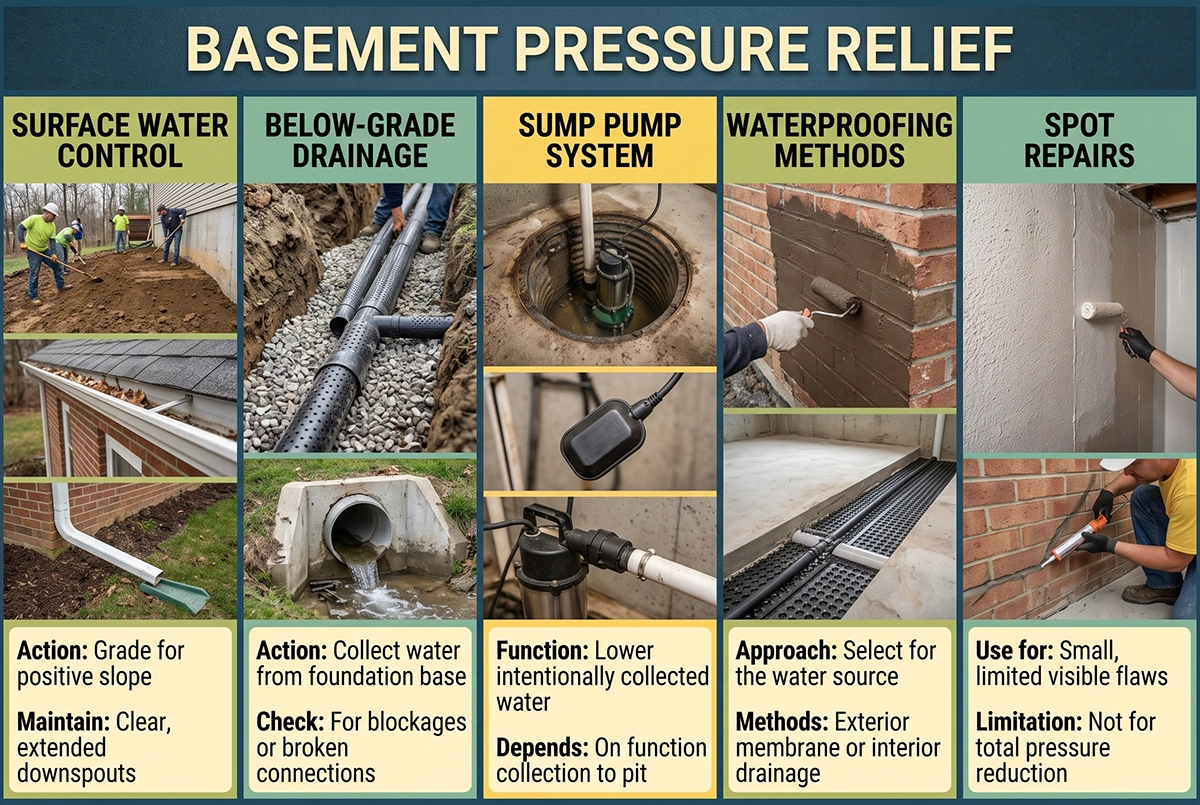
- Start with surface drainage. Where practical, grading should carry runoff away from the home, eavestroughs should remain clear, and downspouts should discharge in a suitable location rather than beside the foundation.
- Next, check below-grade drainage. A perimeter drain or weeping tile must collect water and move it to a dependable outlet. If the system is clogged, broken, or poorly connected, restoring the drainage route may be more important than applying another surface coating.
- A sump pump can help when water is intentionally collected in a sump basin. The hydrostatic pressure sump pump relationship depends on the drainage system: the pump can lower collected water only if that water reaches the pit. It cannot correct negative grading, a blocked drain, or a separate sewer or plumbing problem by itself.
- Exterior waterproofing may be appropriate when water reaches the outside face of the foundation. Interior drainage can manage water from inside when that approach suits the property. Hydrostatic pressure basement waterproofing works best when the selected method addresses the actual water source rather than only the visible symptom.
- Paint, masonry coatings, and local crack repairs may still be useful for limited defects. They should not be treated as universal pressure-relief methods when water continues to accumulate around the structure.
When a Professional Assessment Makes Sense
A professional assessment is useful when the same leak returns after storms, water enters through the slab or wall-floor joint, the sump runs heavily during wet periods, or several possible sources overlap. It also makes sense when the homeowner cannot determine whether the moisture comes from groundwater, surface drainage, plumbing, condensation, or sewer flow.
Structural warning signs need separate attention. New or widening cracks, displaced walls, or visible bowing should not automatically be treated as waterproofing issues.
For Toronto and GTA homes, an assessment should review the leak pattern, exterior grade, roof-water control, foundation condition, drainage system, and sump operation before work is recommended. The objective is to identify the water source first and then match the repair to the actual mechanism.

 CLOGGED OR BROKEN WEEPING TILE