
French Drains — Moving Water Away Before It Causes Damage
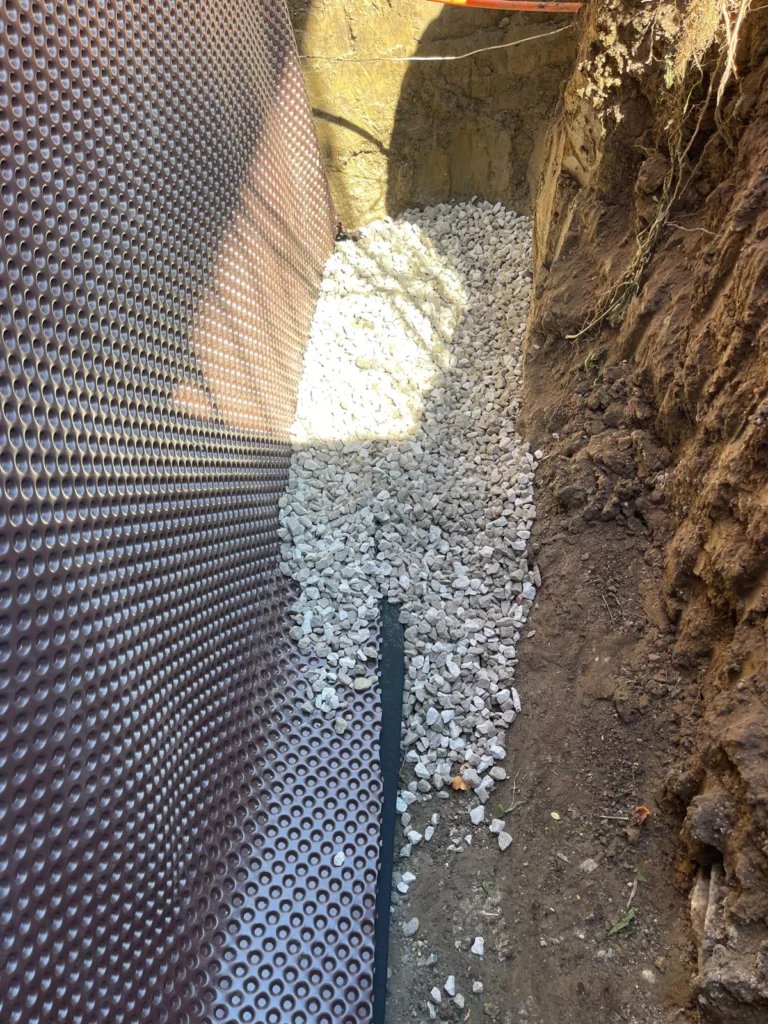
A French drain is a trench filled with clear gravel around a perforated pipe and wrapped in filter fabric. Water from the soil or the surface flows into the gravel, enters the pipe and is carried to a safe outlet. It is one of the simplest ways to fix soggy lawns, water pooling against the house and wet areas along a foundation.
We install exterior French drains in yards, along driveways and beside foundations, and interior French drains inside the basement along the walls, connected to a sump pump.
Looking for French drain installation near me in Toronto or the GTA? We design the slope and outlet so the water actually leaves your property.
Exterior and Interior French Drain Systems
Yard French drain
Fixes soggy lawns, low spots and water running toward the house.
- Shallow gravel trench across the problem area
- Perforated pipe in filter fabric
- Outlet to a dry well, swale or approved point
- Sod or stone finish on top
Foundation French drain
Intercepts groundwater before it reaches the basement wall.
- Deeper trench along the foundation
- Collects water above the footing
- Combined with downspout and grading fixes
- Ties into existing drainage where allowed
Interior basement French drain
Basement French drain system under the floor along the walls.
- Floor opened along the walls
- Perforated pipe in clear stone
- Drains to a sealed sump pit
- New concrete over the trench
What Goes Into a French Drain
| Layer | What it does |
|---|---|
| Trench with slope | Moves water by gravity toward the outlet |
| Filter fabric | Keeps soil and silt out of the gravel |
| Clear gravel | Lets water reach the pipe quickly |
| Perforated pipe | Carries water to the outlet |
| Outlet | Dry well, swale, sump pit or approved discharge point |
The outlet matters as much as the trench — a French drain that empties next to the house only moves the problem.
French Drain vs Weeping Tile
A French drain is right for…
- Soggy lawns and low spots
- Water running down a slope toward the house
- Wet areas along a driveway or walkway
- Catching water before it reaches the foundation
Weeping tile is right for…
- Drainage at the foundation footing
- Water entering at the floor–wall joint
- Replacing failed clay foundation drains
- Basement waterproofing systems
How We Install a French Drain
Site check
Where water collects, where it comes from and where it can go.
Design & quote
Route, depth, slope and outlet — in writing.
Locates
Underground utilities located through Ontario One Call before digging.
Trench
Dug to the right depth with a steady slope.
Fabric, stone & pipe
Filter fabric, clear stone and perforated pipe installed.
Outlet
Connected to a dry well, swale, sump pit or approved point.
Restore
Backfilled, sod or stone replaced, site cleaned.
French Drain Installation Cost in Toronto
| Type | Price per foot | Typical project |
|---|---|---|
| Basic yard French drain | $20 – $40 | $1,500 – $4,000 |
| Standard exterior French drain | $25 – $50 | $3,000 – $7,000 |
| Deep foundation French drain | $50 – $100+ | $6,000 – $15,000+ |
| Interior basement French drain | $50 – $120 | $3,000 – $18,000+ |
| Curtain / landscape drain | $20 – $45 | $2,000 – $6,000 |
| French drain replacement | $100 – $150 | Depends on length |
Approximate 2026 Toronto prices, not a quote. Interior pricing matches our interior waterproofing rates.
Drainage Work by Our Crew
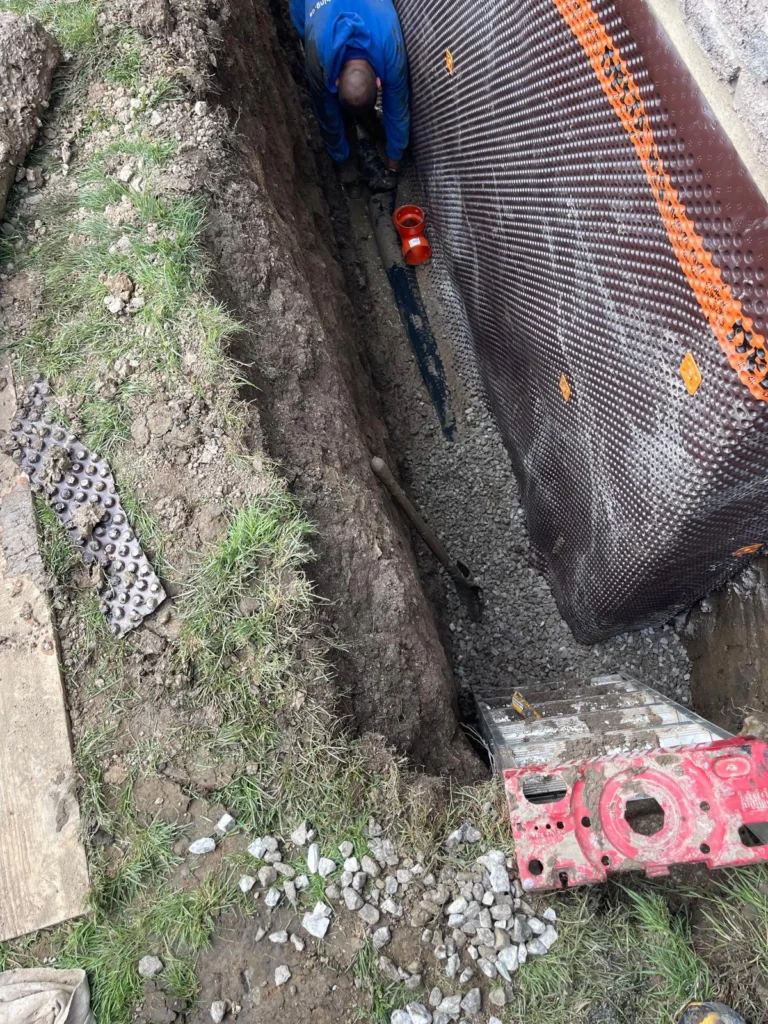
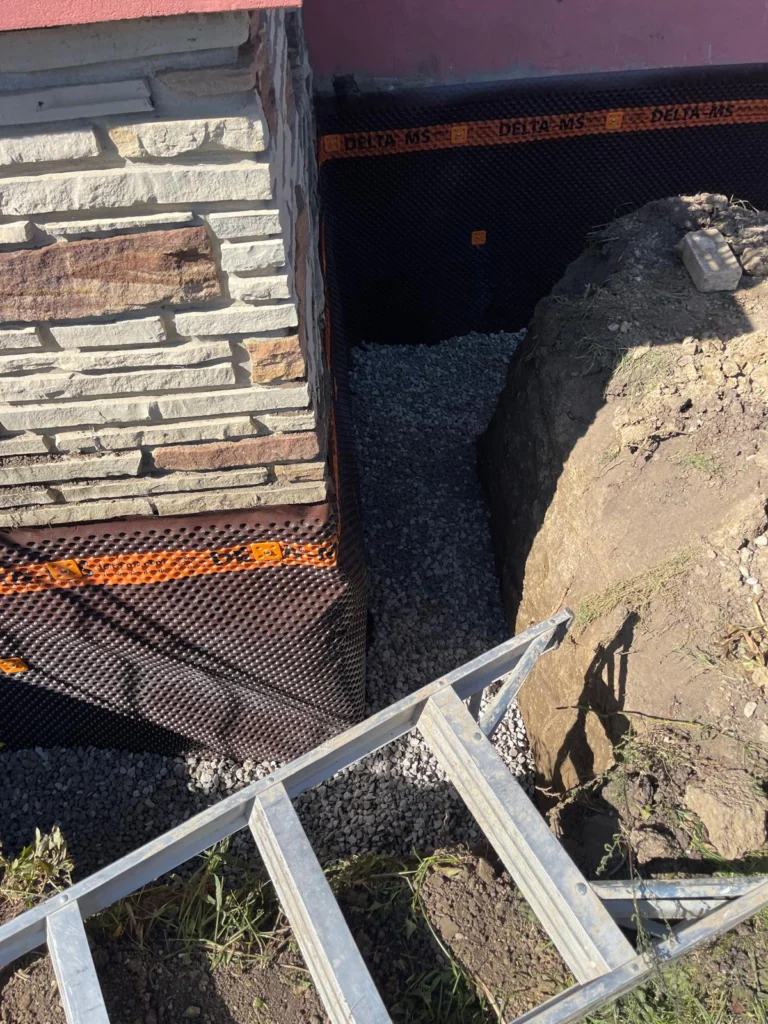
Real Leaquida projects — no stock photos.

Related Drainage Services
Signs You Need a French Drain
Water pooling against the house
Low spots along the foundation hold water after every rain instead of draining away.
Soggy lawn or yard
Areas that stay wet for days usually sit over clay that water cannot soak through.
Water at the floor-wall joint
Moisture along the bottom of basement walls means water is building up under the slab.
Erosion and washouts
Mulch and soil washing off beds or along a fence line show where surface water runs.
Downspouts with nowhere to go
Disconnected downspouts need a place to send water — a French drain or dry well can take it.
Damp basement after storms
A basement that is fine most of the year but wet after heavy rain often needs better drainage, not a full rebuild.
French Drain Systems We Install in Toronto
Each type solves a different problem, so we match the drain to where the water actually comes from.
Interior French drain installation
A basement French drain system under the slab along the inside of the walls.
- Floor cut around the perimeter
- Perforated pipe in clean stone
- Water led to a sump pit
- Floor restored
Exterior French drain installation
Dug along the outside of the foundation at footing depth.
- Excavation to the footing
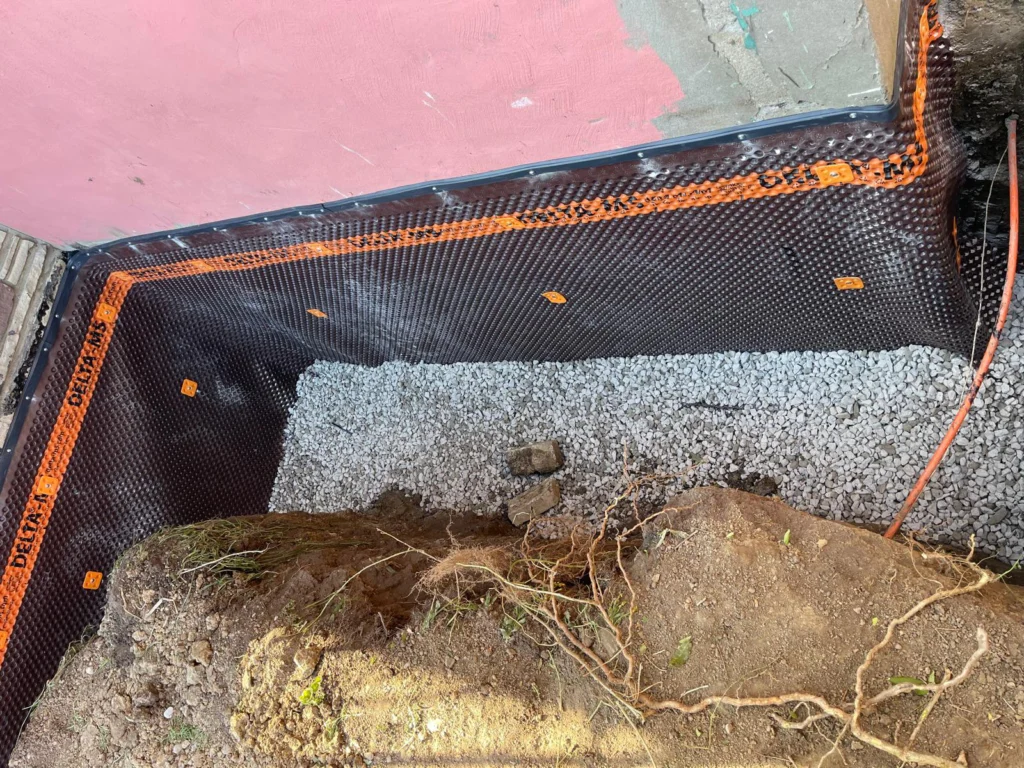
- Pipe wrapped in filter fabric
- Clean gravel backfill
- Usually paired with a membrane
Yard and landscape drains
Shallow drains for lawns, beds and low spots.
- Trench across the wet area
- Pipe and gravel bed
- Outlet to grade or a dry well
- Sod or stone restored
Curtain drains and dry wells
Intercept water on a slope before it reaches the house.
- Drain across the slope
- Water sent to a dry well
- Keeps water off the foundation
- Good where there is no storm outlet
Why French Drains Matter in Toronto
Local soil and housing stock make drainage more important here than in many places.
Heavy clay soil
Much of Toronto sits on clay that holds water against foundations instead of letting it soak in.
Older homes, older drains
Clay weeping tile from the 1950s–70s is often cracked or blocked, so water has nowhere to go.
Downspout disconnection
Downspouts disconnected from the sewer send more water onto lots that were never graded for it.
Intense summer storms
Short, heavy downpours overwhelm grading that copes with ordinary rain.
What Affects French Drain Cost
French drain installation in Toronto typically runs $20–$120 per linear foot. Where your project lands depends on these factors.
| Factor | Lower cost | Higher cost |
|---|---|---|
| Location | Open yard, shallow trench | Basement interior or footing depth |
| Length | Short run to one low spot | Full perimeter of the house |
| Access | Machine access | Hand digging, tight side yards |
| Outlet | Daylight to grade | Sump pit, dry well or pump needed |
| Surfaces | Lawn | Interlock, concrete or finished floor to restore |
French Drain Do’s and Don’ts
Do
- Slope the pipe so water keeps moving toward the outlet
- Wrap pipe or trench in filter fabric so silt does not clog it
- Use clean, washed gravel — not mixed fill
- Locate gas, hydro and irrigation lines before digging
- Send water somewhere legal — your own yard, a dry well or a sump
Don’t
- Drain onto a neighbour’s property or across a sidewalk
- Connect the drain to the sanitary sewer
- Run it under tree roots that will crush or fill the pipe
- Expect a yard drain to fix water coming through a basement wall
- Skip a cleanout on long runs
French Drain Questions
What is a French drain?
A trench filled with clear gravel around a perforated pipe, wrapped in filter fabric, that collects water and carries it to a safe outlet.
How much does French drain installation cost in Toronto?
A basic yard French drain is about $20–$40 per foot ($1,500–$4,000), a deep foundation drain $50–$100+ per foot, and an interior basement French drain $50–$120 per foot.
Do I need an interior or exterior French drain?
Exterior drains fix yard and surface water before it reaches the house. Interior drains collect water that already reaches the basement and send it to a sump pump.
Where does a French drain empty?
To a dry well, swale, sump pit or another approved point — never next to the foundation.
How deep is a French drain?
Yard drains are usually shallow; foundation drains go deeper. We set depth and slope for your site.
Is a French drain the same as weeping tile?
No. Weeping tile runs at the foundation footing; a French drain is a gravel trench for surface or groundwater in a yard or problem area.
Is there a warranty?
Yes, a written warranty on materials and workmanship.
Does a French drain need maintenance?
Very little. Keep the outlet clear, keep leaves off surface grates, and have long runs flushed through a cleanout every few years if water starts to slow.
Can a French drain be installed in an existing landscape?
Yes. We cut a narrow trench, lift and set aside sod or stone, and put it back after the pipe and gravel are in.
Do I need a permit for a French drain in Toronto?
A yard or exterior drain on your own property usually does not need a building permit. Work that connects to plumbing or a new sump pit can — we check before we quote.
Does a French drain need a dry well?
Only if there is nowhere on the lot to let the water out at grade. A dry well stores the water underground and lets it soak in slowly.
Is a French drain good for basement waterproofing?
An interior French drain is a core part of interior basement waterproofing: it collects water under the slab and sends it to a sump pump. On its own it does not seal walls — cracks and the floor-wall joint are handled separately.
Get a French Drain Quote
Tell us where water collects. We will design the route and outlet and send a written quote.
Call now — Mon–Fri 7 AM – 4 PM(416) 992-5858Office: 58 Six Point Rd, Etobicoke, ON M8Z 2X2
Email: info@leaquida.ca
Licence No.: P94 4418977 (licensed contractor)