
Internal Basement Waterproofing — Fixing Leaks From the Inside
Interior basement waterproofing (also called internal waterproofing) controls water that reaches your foundation and carries it away before it can soak walls, floors and finishes. Instead of digging up the yard, we work inside the basement: we open the floor along the walls, install a drainage membrane and new weeping tile, and send the water to a sealed sump pump that pumps it outside.
It is the most practical way of waterproofing a basement from the inside when the outside of the house is hard to reach — a driveway, deck, patio or neighbour’s wall right against the foundation — or when water comes up where the floor meets the wall. In Toronto’s clay soils, where groundwater presses against foundations every spring, an interior system relieves that pressure for good.
Searching for interior basement waterproofing near me? Our crews work across Toronto and the GTA, from Etobicoke and North York to Mississauga, Vaughan and Markham.
How an Interior Basement Waterproofing System Works
Water is not stopped at the wall — it is collected, guided and pumped out, so hydrostatic pressure has nowhere to push it into your basement.
Three Parts of Waterproofing a Basement From the Inside
Every interior system we install deals with the walls, the floor and the drainage together. Fixing only one of them usually moves the leak somewhere else.
Basement Walls
Waterproofing basement walls from inside means giving water a path down the wall instead of through your drywall.
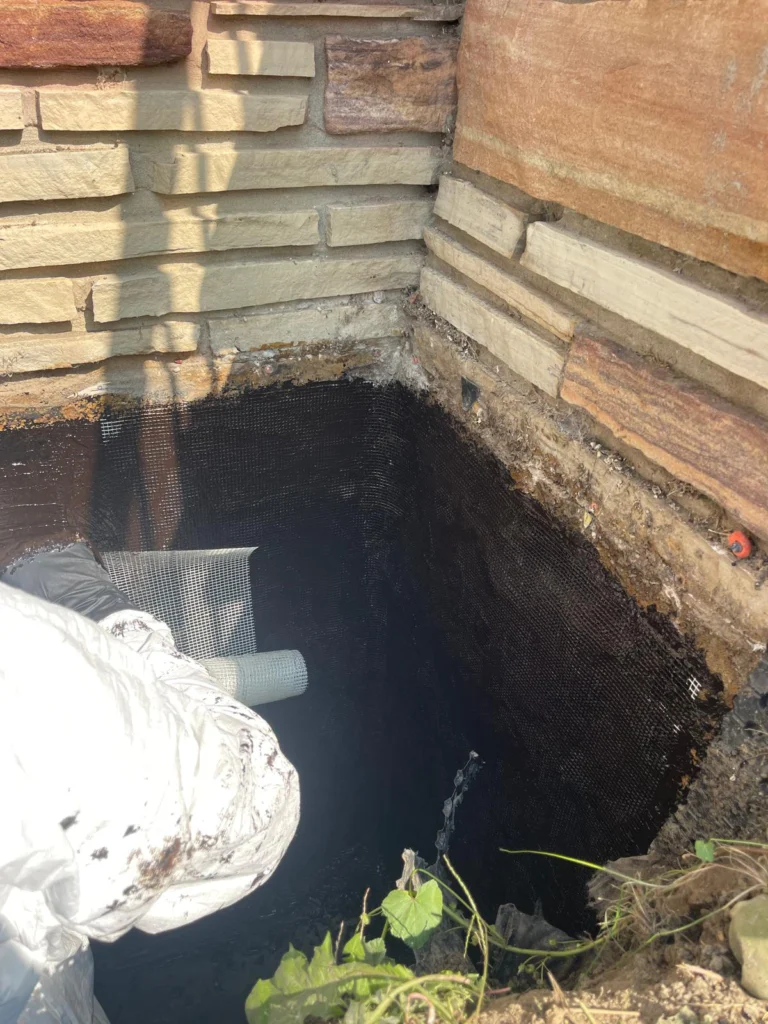
- Dimple drainage membrane fastened to the foundation wall
- Foundation crack repair by injection where cracks leak
- Sealing tie-rod holes, pipe penetrations and window openings
- Weep holes in hollow block walls so trapped water can drain
- Ready for insulation and drywall afterwards
Basement Floor
Waterproofing the basement floor stops water that rises through the joint and cracks under pressure.
- Perimeter trench cut along the floor–wall (cove) joint
- Floor cracks sealed or tied into the drainage
- Under-slab water relieved before it pushes up
- New concrete poured and levelled over the trench
- Vapour control for floors that sweat or feel damp
Drainage & Sump Pump
The interior drainage system collects everything and moves it out of the house automatically.
- New perforated weeping tile laid in clear gravel
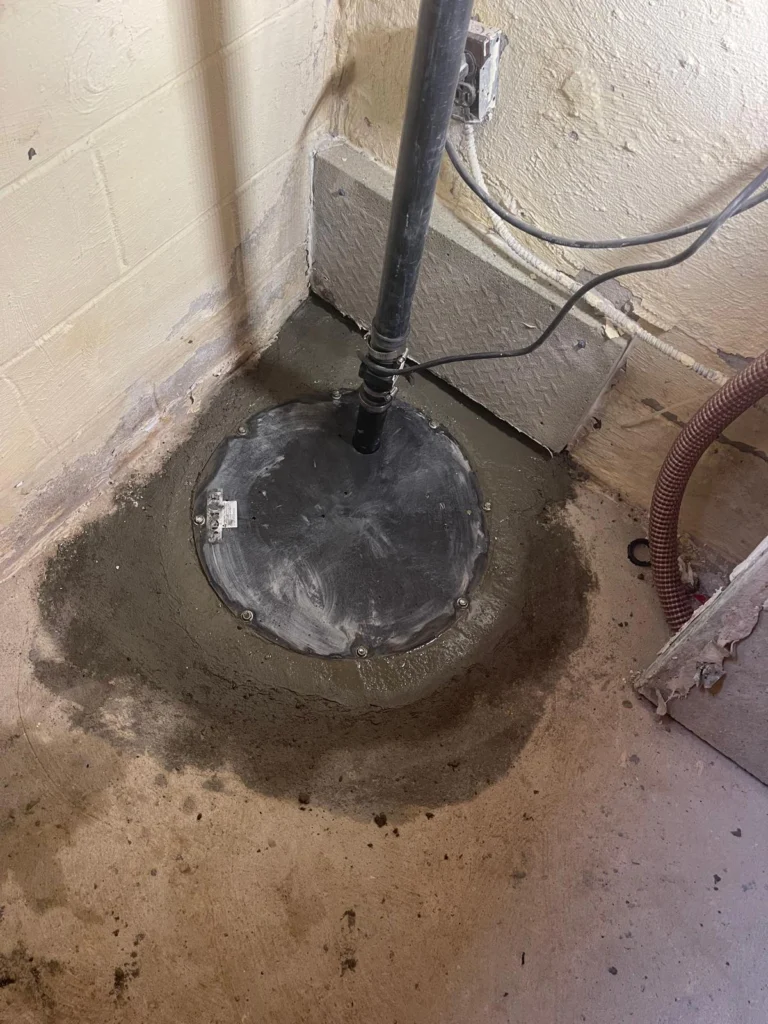
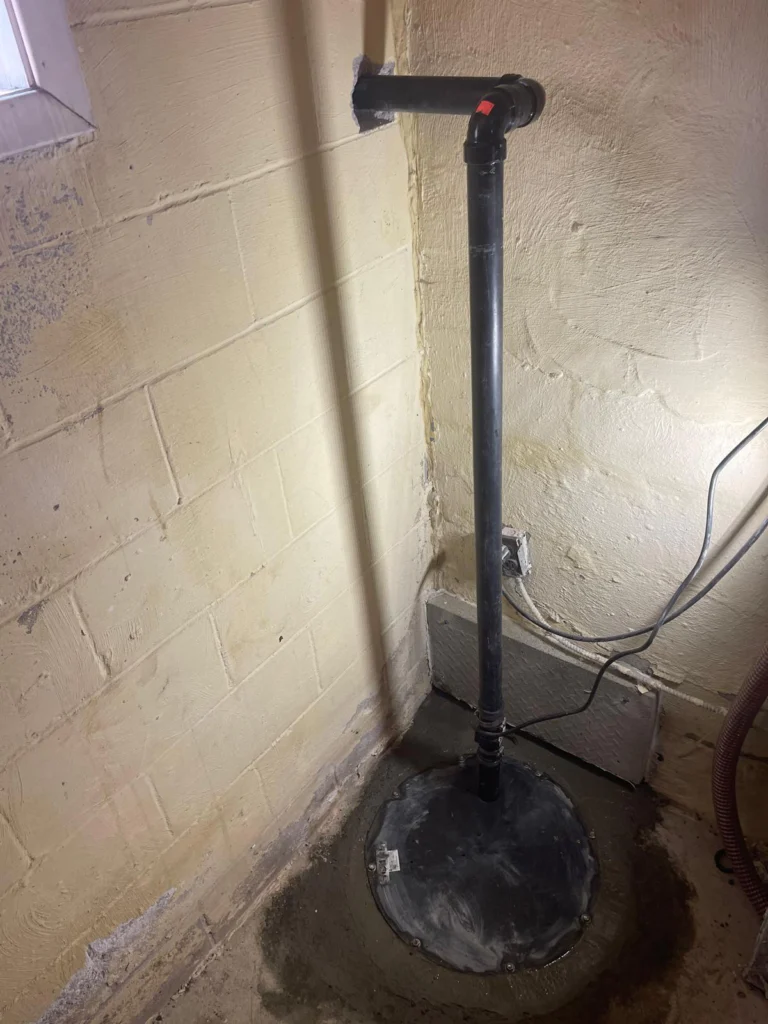
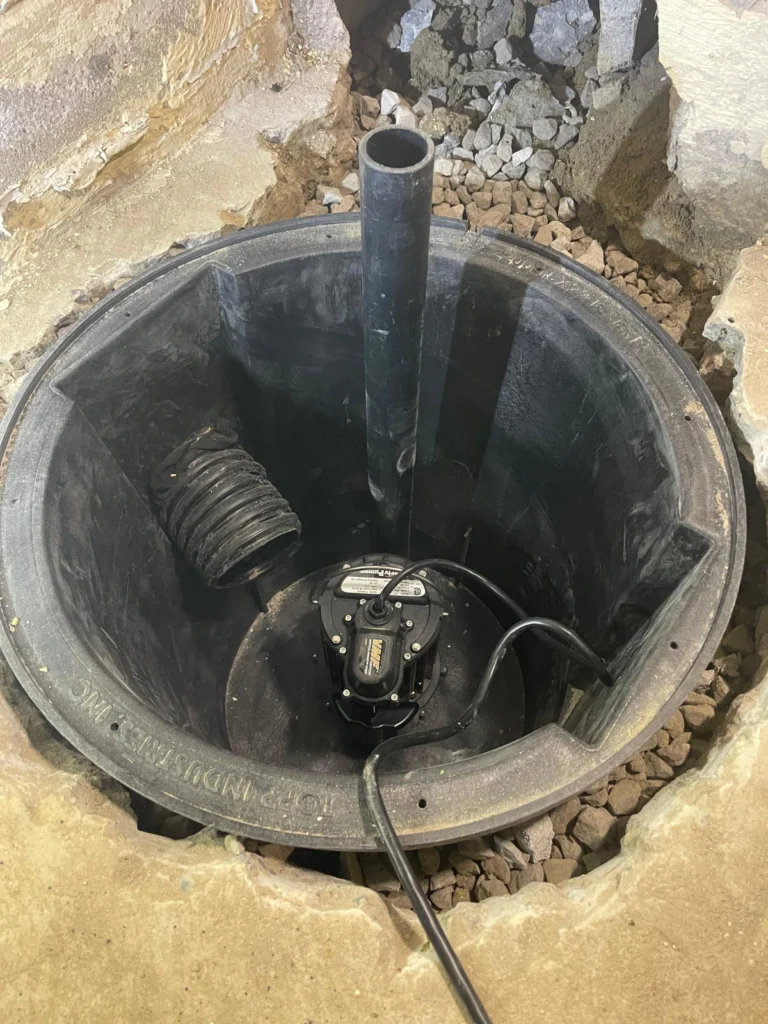
- Sealed sump basin with a lid
- Primary pump, check valve and discharge line outside
- Optional battery backup for power outages
- Clean-out access for future maintenance
Our Interior Waterproofing Process, Step by Step
Free inspection
We find where water enters — walls, cove joint, floor cracks or the sewer — and measure the work.
Written quote
Scope, linear footage, price and warranty terms in writing before any work starts.
Prepare the area
We protect your home, clear the work zone and remove wet drywall and insulation along the walls.
Open the floor
A narrow trench is cut along the inside of the foundation walls and the soil is removed.
Membrane & weeping tile
Membrane goes on the wall, weeping tile in clear gravel goes in the trench.
Sump pump
A sealed sump pit and pump are installed and connected to a discharge line outside.
Concrete & clean-up
The floor is re-poured and levelled, the system is tested and the site is cleaned.
Is Interior Waterproofing Right for Your Basement?
Interior and exterior waterproofing solve the same problem in different ways. Here is how they compare.
| Interior waterproofing | Exterior waterproofing | |
|---|---|---|
| Where the work happens | Inside the basement, along the walls | Outside, excavating down to the footing |
| How it stops water | Collects water that reaches the wall and pumps it out | Seals the wall so water never reaches it |
| Yard, driveway, deck | Not disturbed | Dug up along the wall, then restored |
| Inside the basement | Floor opened along the walls | Usually untouched |
| Best for | Floor–wall joint leaks, high water table, tight lots, sewer backup risk | Leaking walls, failed exterior weeping tile, unfinished basements |
| Typical cost in Toronto | $50 – $120 per linear foot | $100 – $250 per linear foot |
| Works in winter | Yes | Depends on ground conditions |
Interior is usually the better choice when…
- Water comes up where the floor meets the wall
- There is a driveway, deck or neighbour’s house against the wall
- The water table is high and the floor gets wet from below
- You want to avoid digging up landscaping
- You plan to finish the basement and want a dry, drained wall behind it
Exterior may be better when…
- Water runs through the wall itself in many places
- The outside of the wall is easy to reach
- The foundation wall needs repair from outside
See exterior basement waterproofing — or call us and we will tell you honestly which one your home needs.
How Much Does Interior Basement Waterproofing Cost in Toronto?
Price depends mainly on the length of wall that needs drainage, how the basement is finished and whether a new sump pit is needed.
| Service | Typical price range | What affects the price |
|---|---|---|
| Interior perimeter drainage system | $50 – $120 per linear foot | Finished walls, floor thickness, access, number of walls |
| Full interior waterproofing project | $3,000 – $18,000+ | Basement size, sump pit, crack repair, restoration |
| Foundation crack repair (injection) | $500 – $1,500 per crack | Crack length, depth and location |
| Sump pump installation | $500 – $3,900 per unit | New pit vs replacement, pump type, discharge route |
| Backwater valve | $2,000 – $4,200 per unit | Pipe depth, floor type, permit |
| Inspection & written quote | Free | — |
Approximate Toronto price ranges for 2026, not a quote. Toronto homeowners may get back up to $2,250 for a sump pump, $300 for a battery backup and up to $3,200 for backwater valves through the City’s Basement Flooding Protection Subsidy (80% of the invoice, within the limits). Your exact price is confirmed in writing after a free inspection.
Linear footage
Most interior systems are priced per foot of wall that needs drainage.
Finished basement
Drywall, flooring and built-ins along the walls must be removed and restored.
Sump pit
A new pit and discharge line cost more than connecting to an existing one.
What Goes Into a Quality Interior Waterproofing System
| Component | What it does | Why it matters |
|---|---|---|
| Interior waterproofing membrane (dimple board) | Creates an air gap and channel on the wall | Seepage runs down to the drain instead of into drywall |
| Perforated weeping tile | Collects water along the footing | Relieves hydrostatic pressure under the floor |
| Clear gravel | Surrounds the weeping tile | Lets water flow in freely and keeps the pipe clear |
| Sealed sump basin & lid | Collects the drained water | Keeps moisture, odours and radon out of the basement air |
| Sump pump + check valve | Lifts water outside | Stops water flowing back into the pit |
| Battery backup (optional) | Runs during a power outage | Storms and outages often happen together |
| New concrete | Restores the floor | Level, solid finish over the trench |
Signs You Need Interior Basement Waterproofing
Water at the floor–wall joint
Puddles or a wet line where the wall meets the floor after rain or snowmelt.
Damp or stained walls
Tide marks, peeling paint or white efflorescence on foundation walls.
Musty smell or mould
High humidity and mould behind drywall, carpet or stored boxes.
Wet floor from below
Water seeping up through floor cracks when the water table is high.
Sump pit always full
An old or undersized system that cannot keep up.
Leaking wall cracks
Cracks that drip in heavy rain — see foundation crack repair.
 Dry air starts with a dry foundation
Basement Waterproofing and Mould: Fix the Water First
Mould in a basement is almost always a water problem. Cleaning it without stopping the moisture only buys a few months. Interior waterproofing removes the source: walls drain, the floor stays dry and the sealed sump keeps humid air out.
During the job we remove wet drywall, insulation and flooring along the walls we waterproof, so nothing damp is sealed back in. If mould has spread further through the house, we recommend a certified remediation company for that part — and we coordinate the timing so the space is dry before it is rebuilt.
- Wet materials removed in the work area
- Drained, dry wall ready for new insulation
- Sealed sump lid to reduce humidity
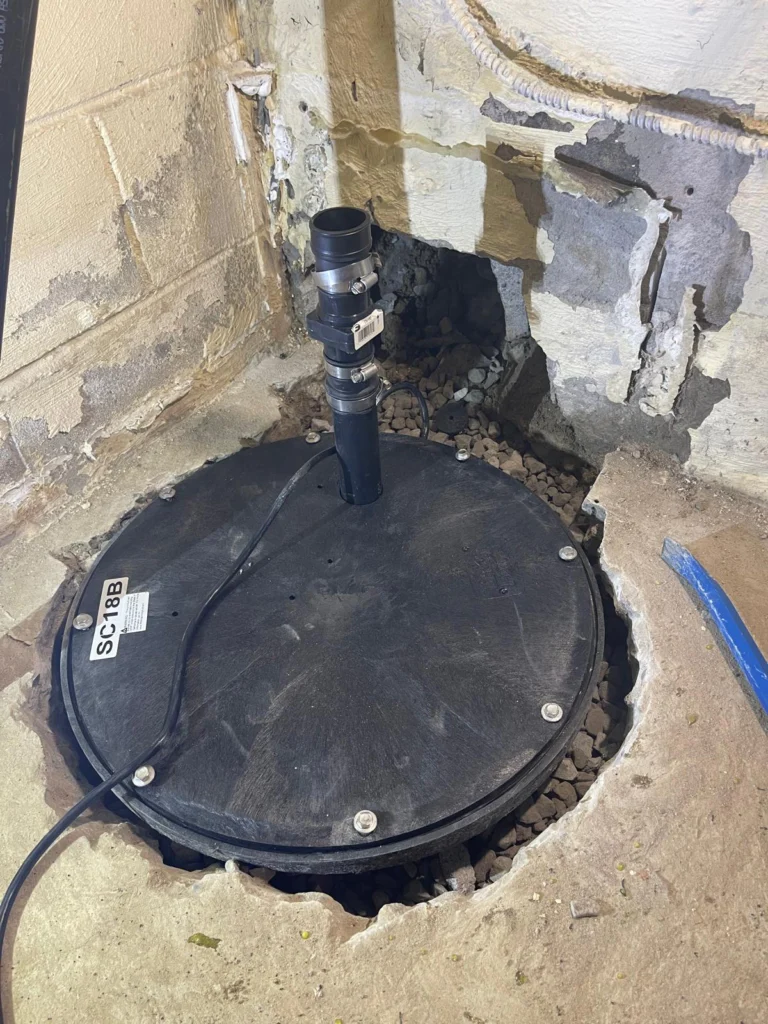
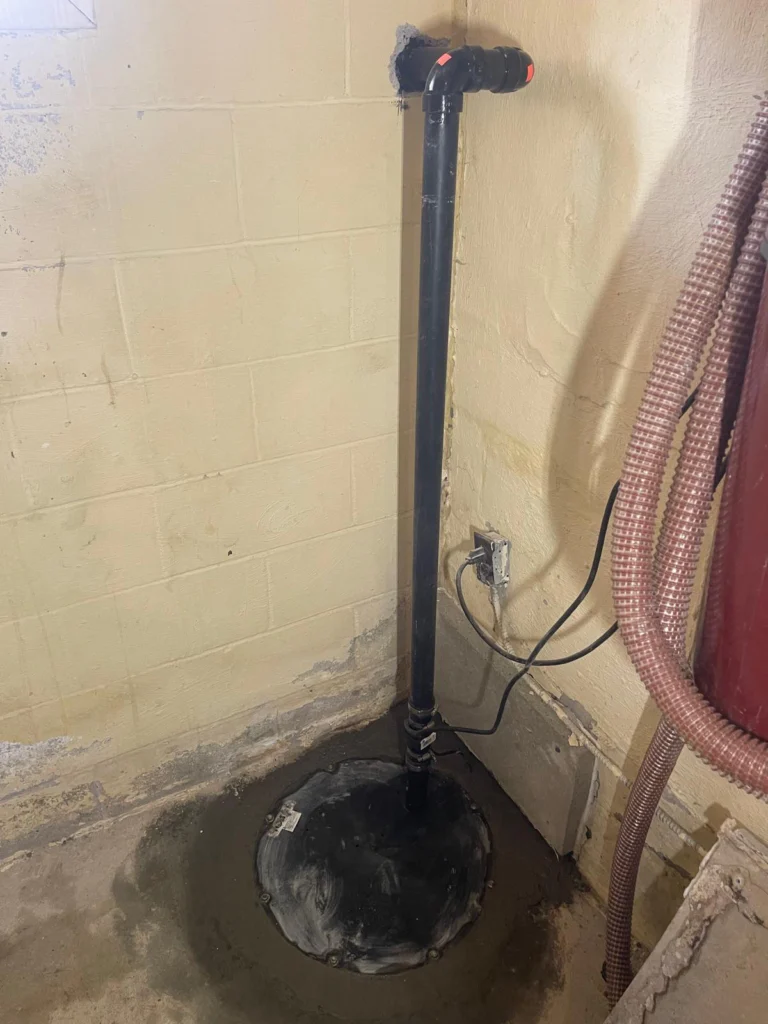
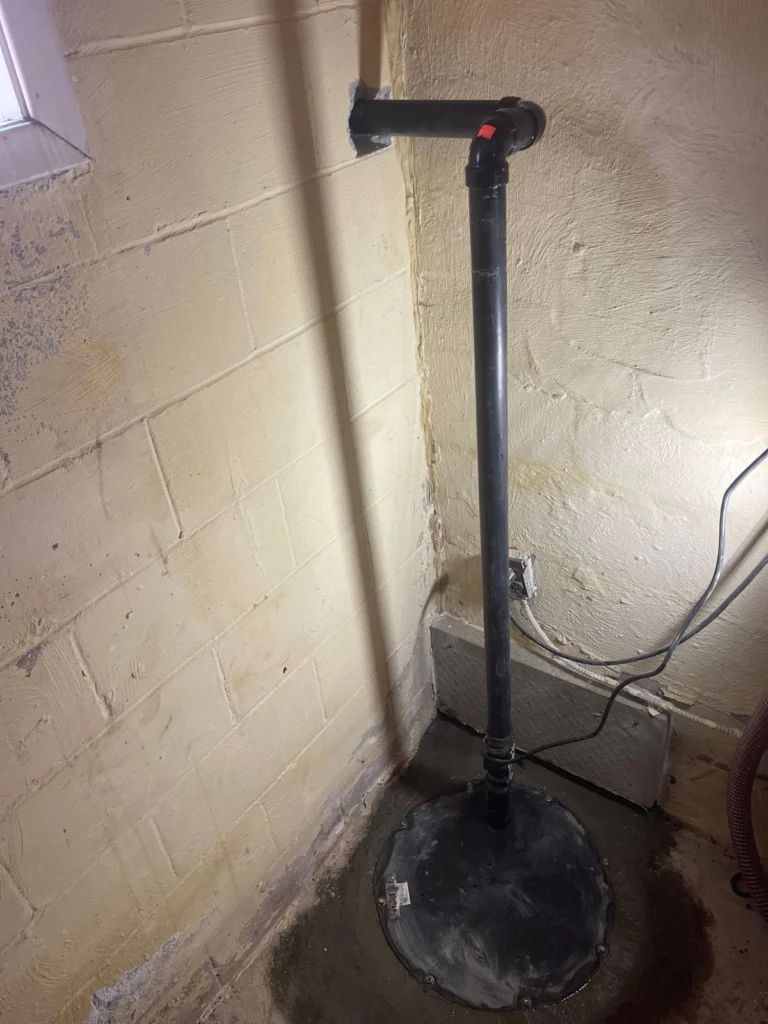
Interior Waterproofing & Sump Pump Work
Real photos from Leaquida projects.
Often Done Together With Interior Waterproofing
Interior Waterproofing in Toronto & the GTA
Same inspection, same written quote and same warranty wherever you live.
Interior Waterproofing Questions, Answered
What is interior basement waterproofing?
Interior (internal) basement waterproofing is a drainage system installed inside the basement. A membrane on the walls and new weeping tile under the floor collect water that reaches the foundation and send it to a sump pump, which pumps it outside.
Can you waterproof basement walls from the inside?
Yes. Walls are waterproofed from inside with a dimple drainage membrane that guides seepage down to an interior drain, plus injection of leaking cracks. Paint-on sealers alone cannot hold back water under pressure, so we always pair the wall with drainage.
Is it better to waterproof a basement from the inside or outside?
Both work. Interior waterproofing is best for water at the floor–wall joint, high water tables and homes where the outside is hard to reach. Exterior waterproofing is best when water comes through the wall in many places and the outside is accessible. After a free inspection we recommend the right one.
How much does interior waterproofing cost in Toronto?
Interior drainage usually costs $50–$120 per linear foot, and most complete interior projects fall between $3,000 and $18,000+. A sump pump is $500–$3,900. You get an exact written price after a free inspection.
How long does interior basement waterproofing take?
Smaller jobs such as a single wall or a sump pump are usually short; a full perimeter system takes longer. The schedule depends on the length of wall and how the basement is finished, and it is written into your quote.
Do I need a sump pump for interior waterproofing?
In most homes, yes. The interior weeping tile needs somewhere to send the water, and a sealed sump pit with a pump is the most reliable option. In some homes the system can connect to an existing floor drain where code allows.
Can I stay at home during the work?
Yes. The work stays in the basement. We protect the rest of the house and clean up every day.
Does interior waterproofing stop mould?
It removes the water that mould needs. We remove wet materials in the work area; widespread mould elsewhere should be cleaned by a certified remediation company.
Is interior waterproofing a permanent solution?
A properly installed interior system is a long-term solution. The only regular maintenance is checking the sump pump, especially before spring and after long dry periods.
Is the work covered by a warranty?
Yes. Every project comes with a written warranty on materials and workmanship. Terms depend on the scope and are written into your contract.
Can I get a city rebate?
Toronto homeowners may qualify for the Basement Flooding Protection Subsidy: up to $2,250 for a sump pump, $300 for a battery backup and up to $3,200 for backwater valves, at 80% of the invoice. We help you prepare the documents.
Get Your Interior Waterproofing Quote
Tell us what you see in your basement. We will inspect it, find the source of the water and give you a written quote for the right interior solution — no pressure, no obligation.
Call now — Mon–Fri 7 AM – 4 PM(416) 992-5858Office: 58 Six Point Rd, Etobicoke, ON M8Z 2X2
Email: info@leaquida.ca
Licence No.: P94 4418977 (licensed contractor)