
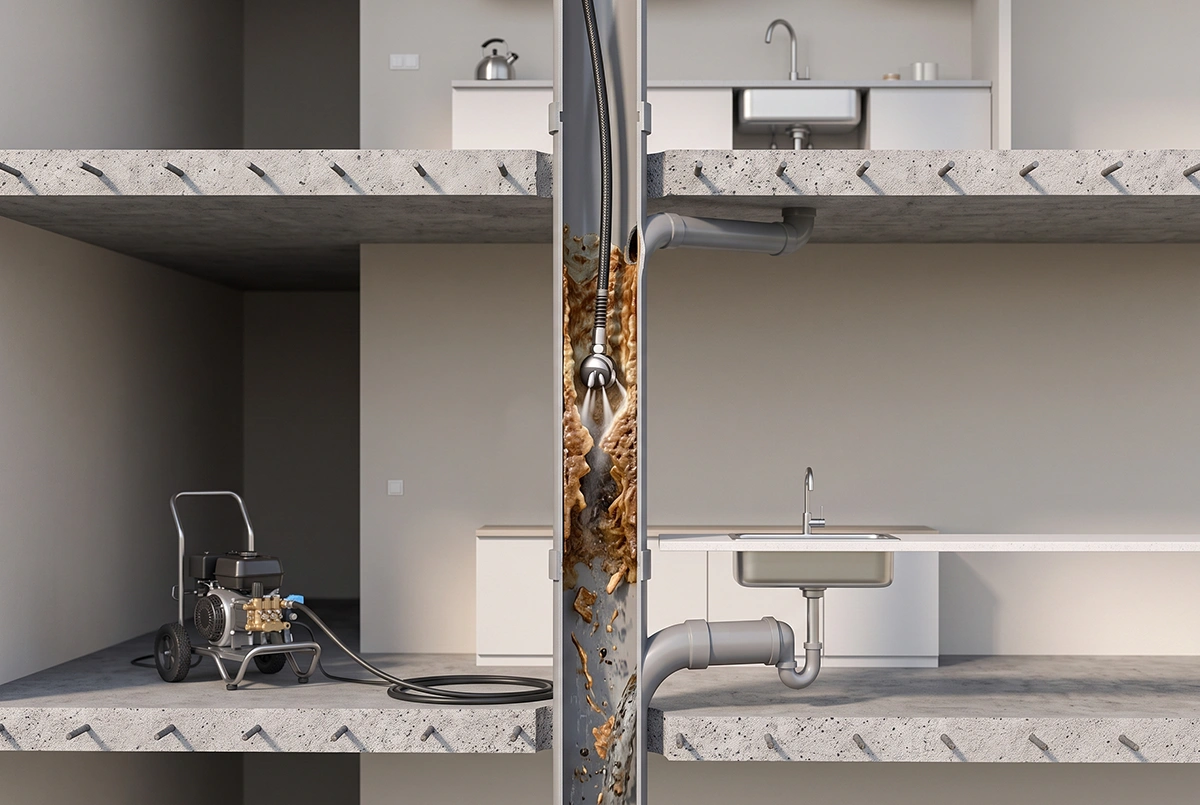
Kitchen stack cleaning is scheduled maintenance of the shared vertical drain pipe that carries wastewater from multiple condo kitchen sinks to the building drain. In high-rise and multi-unit buildings, grease, food residue, and soap buildup can narrow that pipe over time, so cleaning is used to restore flow and reduce the risk of backups affecting several units.
What Is Kitchen Stack Cleaning?
A kitchen stack is a shared vertical drain pipe serving multiple units, with branch lines from individual kitchen sinks connecting to it on each floor. Kitchen stack cleaning condo work removes grease and food buildup from that shared line rather than treating only one sink or P-trap.
That distinction matters during diagnosis. If only one sink drains slowly, the problem may be in that unit’s branch or trap. When several suites on the same riser report slow drainage, gurgling, or odours, the shared stack becomes a more likely source and building-level maintenance is usually required.
Because condo plumbing is interconnected, a restriction lower in the stack can affect residents above it. Professional service may use a cleanout in a suite, service room, or common area to access the kitchen drain stack without opening finished walls unnecessarily.
Why Does a Condo Kitchen Stack Need Regular Cleaning?
Warm fats, oils, and grease can enter a drain as liquid and then cool on the pipe wall. Food particles and detergent residue stick to that layer, gradually reducing the internal diameter. Older cast-iron stacks may also have rough scale that traps debris faster than smooth new pipe.
The lower horizontal or auxiliary sections can be especially vulnerable because material leaving the vertical stack changes direction and slows. A partial restriction there may not stop flow immediately, so residents can experience intermittent symptoms for weeks before a full blockage appears.
Regular maintenance is intended to prevent a small restriction from becoming a building-wide drain backup. Common warning signs include:
- Slow kitchen sinks appearing in several units on the same stack.
- Gurgling or water movement in a sink when another unit discharges.
- Recurring odours that return after individual sink cleaning.
- Backups in lower units or the unit directly above a blockage.
- Frequent service calls for the same riser or vertical line.

How Is a Kitchen Stack Cleaned in a Condo Building?
The kitchen stack cleaning process starts with access planning. The property manager or plumber identifies the stack, cleanouts, affected suites, and the safest sequence. Crews often clear the lower section first so loosened material has a path to the building drain.
Mechanical cleaning or snaking can open a restricted line and break hardened deposits. Hydro jetting, also called power flushing, then uses high-pressure water and specialised nozzles to scour grease from the pipe wall. Some buildings use both methods because grease and scale do not always respond to one tool.
After cleaning, the line is flushed and flow tested. A drain camera may be used to confirm that buildup is removed and to identify corrosion, damaged joints, or sections that need repair. This is more complete than simply punching a small opening through a blockage.
Good access is a major part of the job. Buildings with well-placed cleanouts can be cleaned in controlled sections, reducing the chance that loosened debris overwhelms a lower line. Where access is poor, management may be advised to add cleanouts so future hydro jetting and inspections can be completed with less disruption.
The main cleaning and verification methods serve different purposes:
| Method | Main purpose | Typical use |
|---|---|---|
| Mechanical snaking | Opens a restricted path and breaks hardened deposits | Localized blockage or an initial clearing pass |
| Hydro jetting | Scours grease and residue from the pipe wall | Preventive or restorative cleaning of a shared stack |
| Camera and flow testing | Confirms flow and identifies damage or remaining buildup | Post-cleaning verification |
How Long Does Kitchen Stack Cleaning Take?
If you are asking how long does kitchen stack cleaning take, plan on different timelines for one stack and for the whole property. An individual stack is commonly assigned a multi-hour or full-workday service window. A building-wide program in a 15–25 floor tower can take roughly one to two weeks when crews must sequence several stacks and coordinate unit access.
The duration depends on the number of floors and units, access to cleanouts, whether residents follow the water-use restriction, the condition of the pipe, and whether hydro jetting must be combined with mechanical descaling. Property management should give residents a defined service window for their stack.
How Often Should a Condo Kitchen Stack Be Cleaned?
For how often should kitchen stacks be cleaned, annual to 18–24 month maintenance is common in many GTA high-rises, while lower-load buildings may extend the interval after clean camera results. High-use properties, older cast-iron piping, recurring grease problems, or past backups often justify annual cleaning.
A newer building with clean camera results and few complaints may be able to extend the interval. The best schedule uses inspection findings, previous blockage locations, emergency call history, and the amount of buildup removed during the last service.
What Is a Kitchen Stack Cleaning Notice for Condo Residents?
A kitchen stack cleaning notice is an advance message from property management explaining when the shared drain will be serviced and what residents must do. It should identify the date, approximate access window, affected stack or units, water-use restrictions, and any preparation required.
Residents are commonly asked to stop using the kitchen sink and dishwasher during the service period. If suite access is required, the area under the sink should be cleared and pets should be secured. Management should also explain how entry will be handled if the resident is not home.
The notice should be specific enough that residents know whether bathroom fixtures remain available and when kitchen use can restart. A phone number or management contact is useful for residents who cannot provide access, have accessibility concerns, or discover an active backup before the scheduled work begins.
- Do not use the kitchen sink, dishwasher, or other fixtures connected to the affected kitchen branch during the stated window.
- Clear the cabinet and floor area around any cleanout or sink connection the plumber must reach.
- Provide access according to the condo corporation’s notice and entry procedure.
- Report an active backup, leak, or unusual odour before the crew reaches the unit.
- Wait for management or the contractor to confirm that normal kitchen water use can resume.

Who Is Responsible for Kitchen Stack Cleaning in a Condo?
In many condominiums, the condo corporation and property manager coordinate cleaning because the shared stack is part of the common plumbing system. The exact legal responsibility depends on the condominium declaration, boundaries of common elements, and the location of the blockage or damaged pipe.
A clog inside an individual unit’s branch line may be treated differently from grease buildup in the shared vertical stack. Residents should report symptoms early rather than arranging invasive work on common piping without management approval.
Management should keep service records for each stack, including cleaning dates, camera findings, recurring complaint floors, and any pipe repairs. That history makes it easier to decide whether the next visit is routine maintenance or whether a section of aging drainage pipe needs replacement.
What Happens If a Kitchen Stack Is Not Cleaned?
Neglected stacks can progress from slow drainage to odours, partial blockages, and full backups. Because several kitchens discharge into the same pipe, a blockage can force wastewater into a lower sink or cabinet even when that resident did not cause the problem.
The consequences can include water damage, emergency plumbing, cabinet and flooring repairs, odour complaints, and disruption across multiple units. Preventive kitchen drain stack cleaning is therefore different from waiting until a sink is fully blocked.
Residents dealing with a single sink clog can also review Leaquida’s guide on how to unclog a kitchen sink. For building-wide or recurring stack issues, start from the Leaquida homepage to arrange professional assessment.


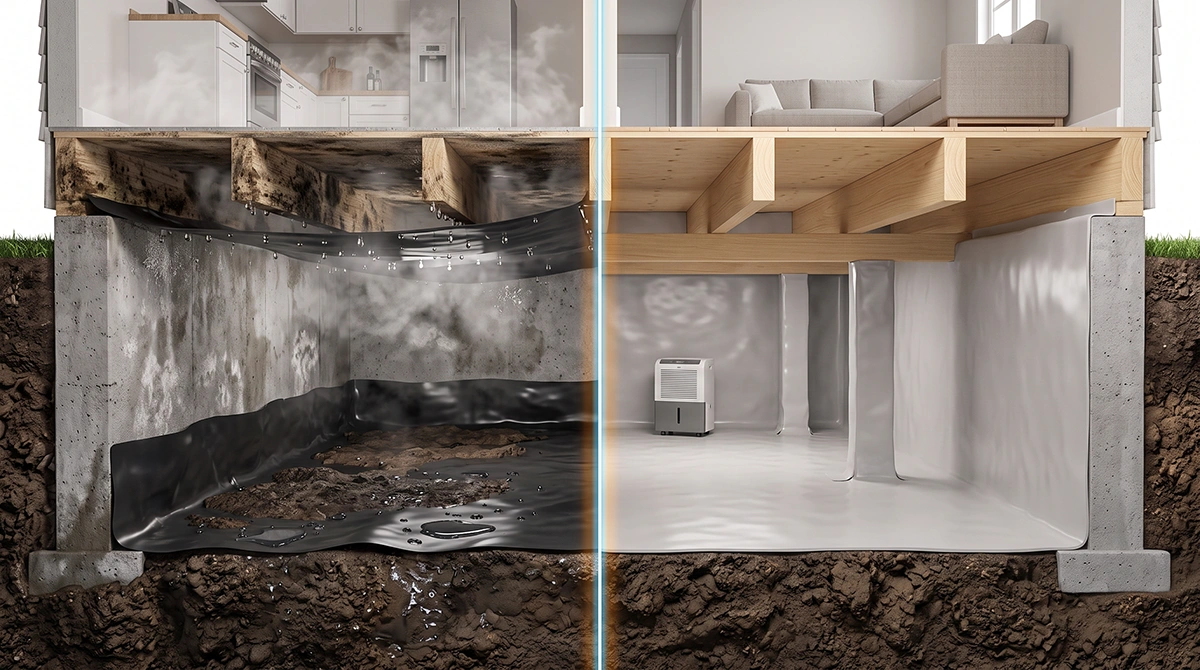
 CLOGGED OR BROKEN WEEPING TILE