
Quality and well-thought-out plumbing in a modern private home requires constant attention to detail. The main nightmare of any homeowner is a sudden and large-scale backup. In this emergency, dirty, toxic sewage begins flowing in the opposite direction. As a result, living rooms get flooded.
For reliable protection of the internal system, experts from the authoritative Leaquida company strongly advise installing a special protective sewer backwater valve.
What Is a Backwater Valve?
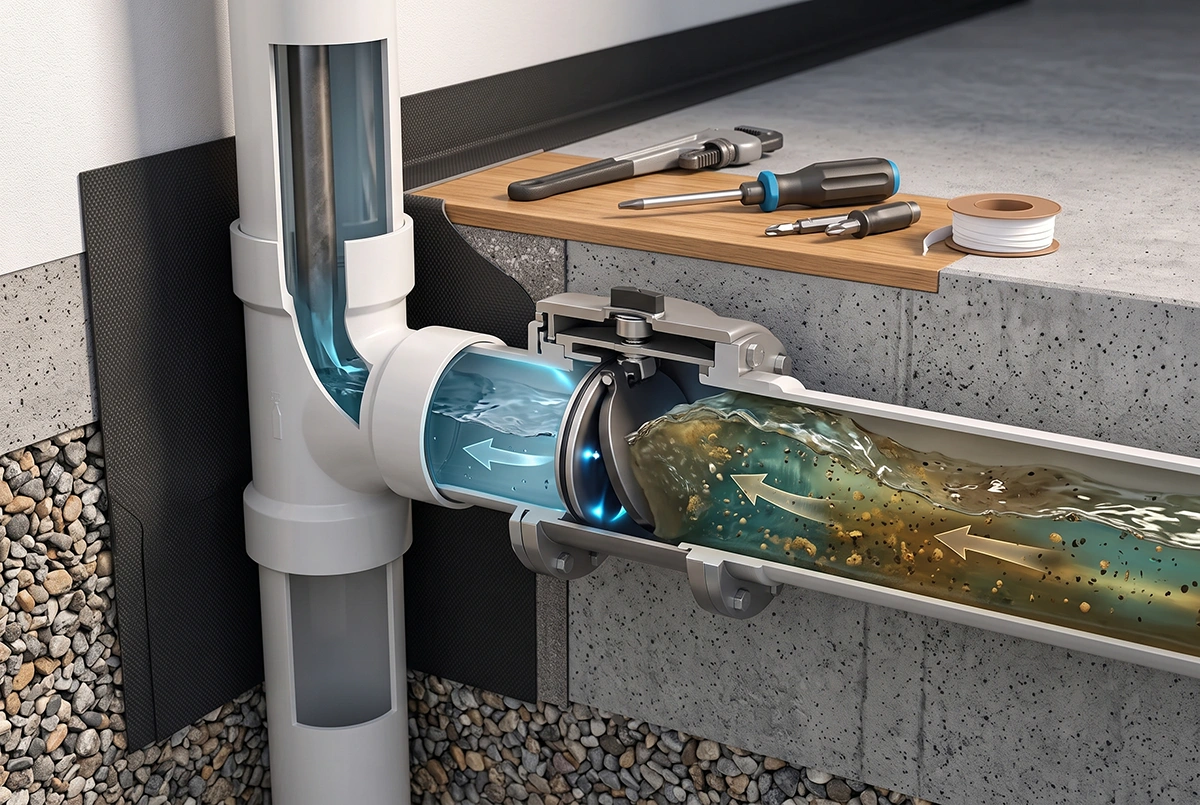
Want the simplest and clearest engineering explanation of what is a backwater valve? Imagine a strong, fully automatic mechanical shield for your home’s main pipes. Plumbers mount it directly on the main drainage pipe that removes waste from the building.
In normal mode, the internal mechanism always remains open. Sewage freely flows downhill toward the city’s central network. But when an emergency occurs on municipal sewerage lines, this smart device reacts almost instantly. The protective valve completely closes its internal flap.
Why Backwater Valves Are Important for Canadian Homes?
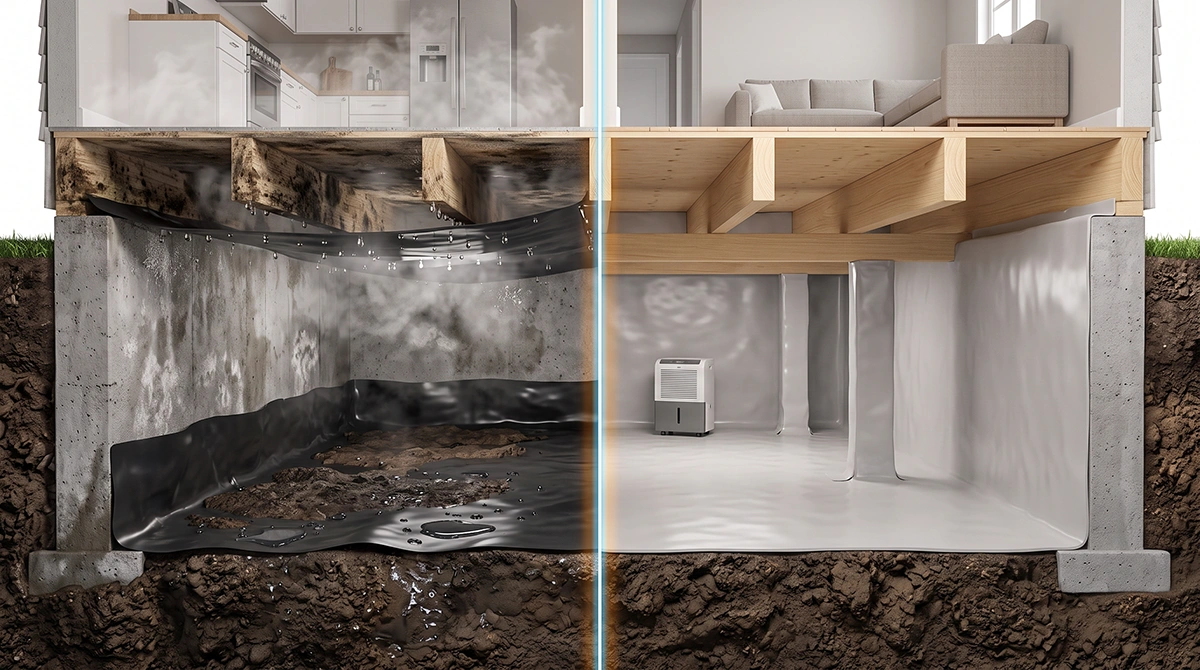
Without reliable automatic protection, a strong municipal backup can completely ruin a basement in literally a few minutes. The gushing dirty water causes persistent dampness, material rotting, and the appearance of dangerous black mould. Then you’re guaranteed to need very expensive and technically complex repair of foundation load-bearing structures.
That’s precisely why a sewer backwater valve has become a basic element of engineering safety. Modern Canadian building codes now strictly require its mandatory installation in all newly constructed residential buildings.
How a Backwater Valve Prevents Sewer Backups?
Let’s break down the physics of the process step by step — how does a backwater valve work? It has several modes:
- Normal household drainage. The waste flow gently pushes the flap forward. Water flows freely through the pipe toward the city street.
- Emergency operating mode. The city’s overcrowded wastewater begins flowing back toward your foundation due to overload. The device’s internal working chamber starts filling rapidly with counter-flow.
- Automatic blocking. Built-in lightweight polymer floats on the sides instantly react to the rising level of incoming dirty water. They smoothly lift the flap and press it against the hermetic rubber seal with enormous force.
- Reliable building protection. The path for toxic city sewage becomes completely blocked. Public sewage under pressure flows past your building, rushing toward less protected neighbours.
Each stage of this automatic mechanical chain triggers in fractions of a second without any electricity.
Common Causes of Sewer Backflow
The following factors frequently lead to emergencies:
- Tropical downpours and rapid snowmelt. A sudden colossal excess of rainwater overloads old city mains significantly beyond normal capacity.
- Critical city main blockages. Accidentally flushed dense wipes, solidified cooking fat, and construction debris create a solid blockage in central networks.
- Aggressive tree roots. Searching for nutritious moisture, powerful tree roots gradually destroy pipe joints, grow inside, and block drainage.
- Morally outdated utility networks. Municipal shared sewerage in old historic districts often can’t handle the sharply increased load from new multi-story residential complexes.
- City pump breakdowns. Technical failures at city main pumping stations lead to instant stoppage of sewage flow.
These factors can trigger simultaneously during a strong seasonal thaw or summer storm.
Types of Backwater Valves Used in Residential Plumbing
Specialists can install the following devices:
- Open-port protective valves. These are chosen most often when ordering professional backwater valve installation. In normal conditions, the flap is raised. This significantly improves natural gas ventilation in pipes. It falls and seals the system only when a real counter-flow threat arises.
- Normally closed protective valves. In such devices, the flap is always firmly pressed against the ring. It opens only a few degrees under the weight and pressure of your own household wastewater.
- Manual shut-off gates. They have a heavy mechanical valve on the top panel. It needs to be manually turned in case of a main emergency. They’re rarely installed in modern homes due to obvious inconvenience.
The choice of specific engineering type of protective device directly depends on the structural features of the pipe layout and overall depth of your home sewage system.
Signs Your Backwater Valve Needs Attention
It’s critically important for building owners to regularly and timely conduct a planned inspection. Several symptoms indicate a problem:
- Water drains too slowly in plumbing. This is the main signal that a blockage may have appeared directly inside the device’s working chamber.
- Strange sounds during drainage. Unusual gurgling or bubbling in floor drain openings indicates poor outflow of accumulated air.
- Persistent sewage smell. If basement spaces clearly smell of public sewage, it means the flap isn’t closing tightly or the seal has worn out.
- Thick layer of dirt under the cover. A buildup of solidified fat and hair on movable parts prevents them from moving freely and smoothly.
Ignoring these obvious minor symptoms usually leads to unfortunate consequences.
Backwater Valve Installation Process Explained
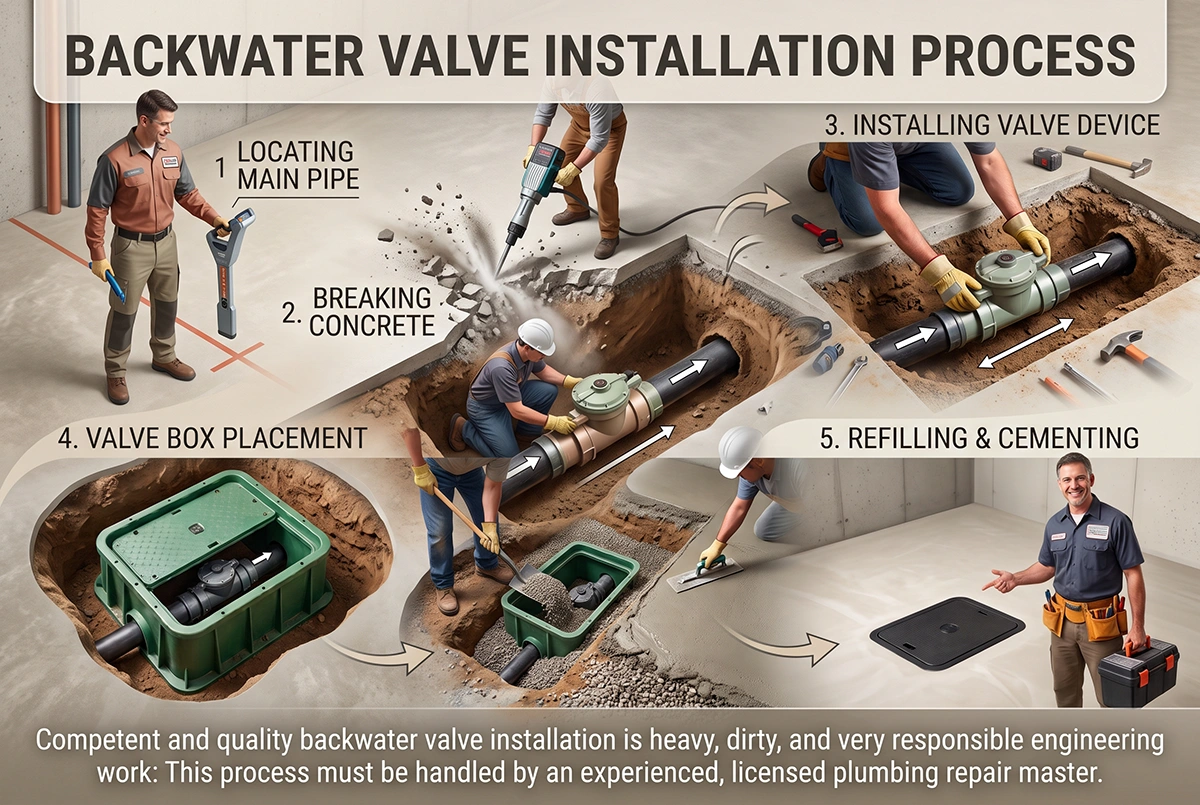
Competent and quality backwater valve installation is heavy, dirty, and very responsible engineering work:
- The plumber uses locating equipment to find the exact location of the main pipe under the floor.
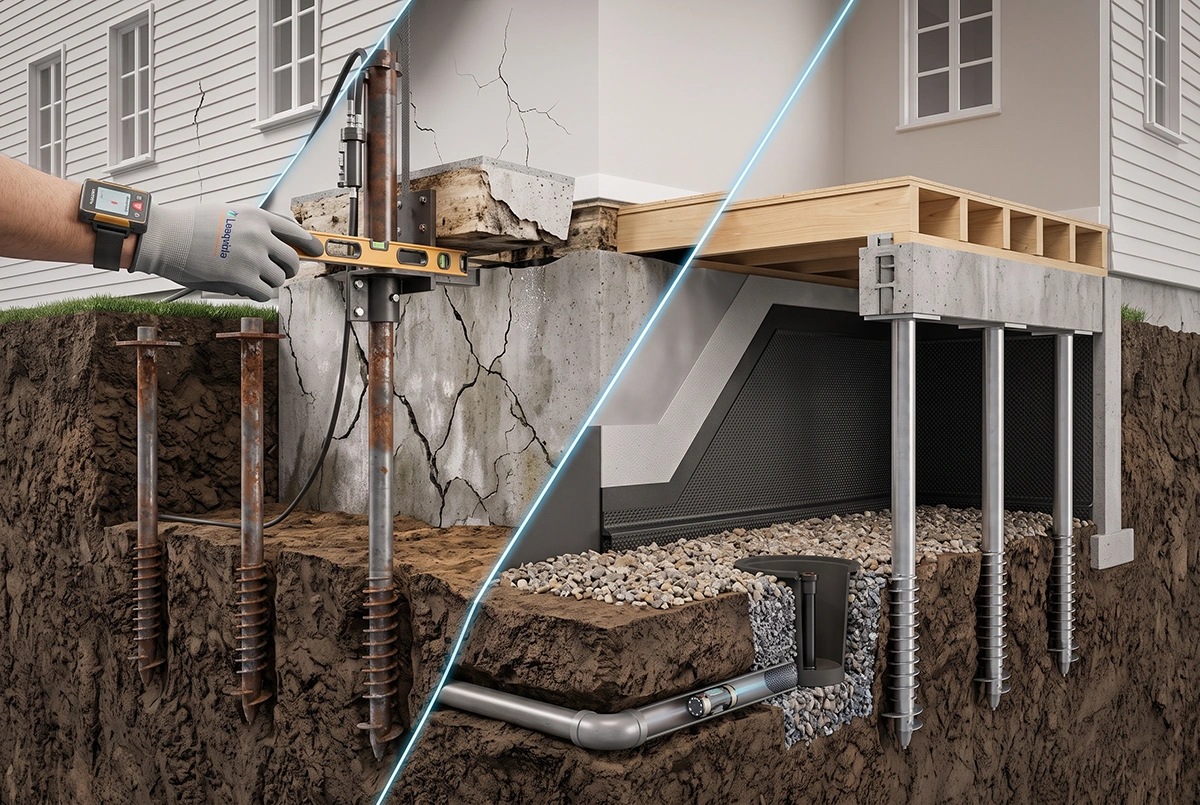
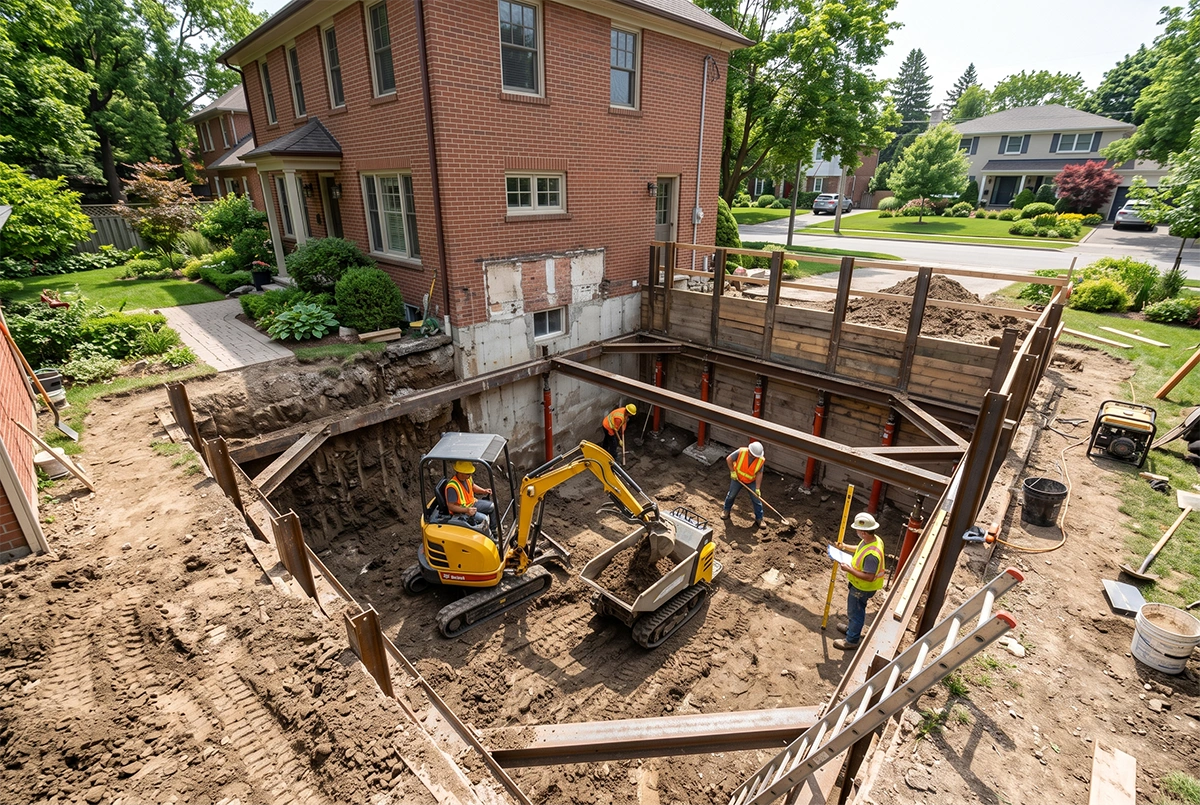
- The chosen concrete section is broken up with a jackhammer. The underground pipe is exposed for work. If cracks are visible near the old floor opening, the owner should additionally order foundation repair. This will eliminate excess and dangerous ground moisture.
- The master cuts a piece of old pipe. A new plastic protective device is installed in this place. It’s important to observe the direction of sewage flow.
- A sturdy plastic box with a hermetic top cover is installed around it. This is necessary for convenient future maintenance.
- Finally, the open trench is filled with gravel and poured with concrete.
This process must be handled by an experienced, licensed plumbing repair master.
How Much Does a Backwater Valve Cost?
The final total backwater valve cost always consists of the current price of the parts themselves and the cost of qualified labour. A quality factory valve made of durable plastic costs relatively little – from $150. But heavy earthwork, concrete demolition, and subsequent floor pouring noticeably increase the project’s overall estimate.
Backwater Valve Maintenance and Inspection Tips
Any protective valve requires regular, proper, and careful maintenance. Conduct a technical inspection strictly twice a year. Ideally, do this in spring before active snowmelt begins and in fall before prolonged seasonal rains. If your basement frequently gets damp due to poor waterproofing or groundwater, simultaneously order professional wet basement repair. This will solve the dampness problem comprehensively and for a long time.
Protective valve cleaning rules:
- Put on thick rubber gloves and protective goggles.
- Unscrew the bolts and remove the top access cover to the mechanism.
- Completely clean the internal chamber of accumulated fat, buildup, and hair. Thoroughly rinse it with warm water and regular soap.
- Check the flap’s free movement several times. It should move up and down absolutely smoothly.
- Carefully assess the rubber seal’s condition for cracks or loss of elasticity.
Such a simple preventive procedure takes the homeowner no more than half an hour.
Backwater Valve Repair: Common Problems and Solutions
Quick and timely backwater valve repair will promptly save your basement from sudden flooding. The flap often gets completely stuck in one position due to adhered solid cooking fat. This problem is easily solved by mechanical cleaning of hinges and complete removal of the formed blockage.
Another frequent problem with old devices is wear of the thin rubber ring. Over time, rubber dries out, cracks, and starts letting dirty water through. You simply need to buy a branded repair kit for replacement. If the internal plastic floats have cracked over time, they lose buoyancy and can no longer lift the flap. In this case, masters replace the entire internal flap.
When Is Backwater Valve Replacement Necessary?
Sometimes targeted repair of individual parts no longer helps. Complete backwater valve replacement is needed when deep cracks appear on the outer housing itself. This often happens due to strong seasonal ground layer shifts under the house. In this case, dirty water will start flowing directly under the foundation. Then owners have to additionally do complex and large-scale basement leak repair.
Complete replacement is also inevitable for morally outdated device models. Original spare parts for them simply disappear from hardware stores over time. If you decided to completely update or redo your home drainage system, be sure to replace the old protective valve with a modern model too.
Final Thoughts
Reliably protecting your home from dirty city sewage is the direct responsibility of every sensible and economical property owner. Quality and timely backwater valve installation provides absolute confidence in property safety. Your well-equipped basement will have nothing to fear from spring downpours, snowmelt, and city utility emergencies.

 CLOGGED OR BROKEN WEEPING TILE