
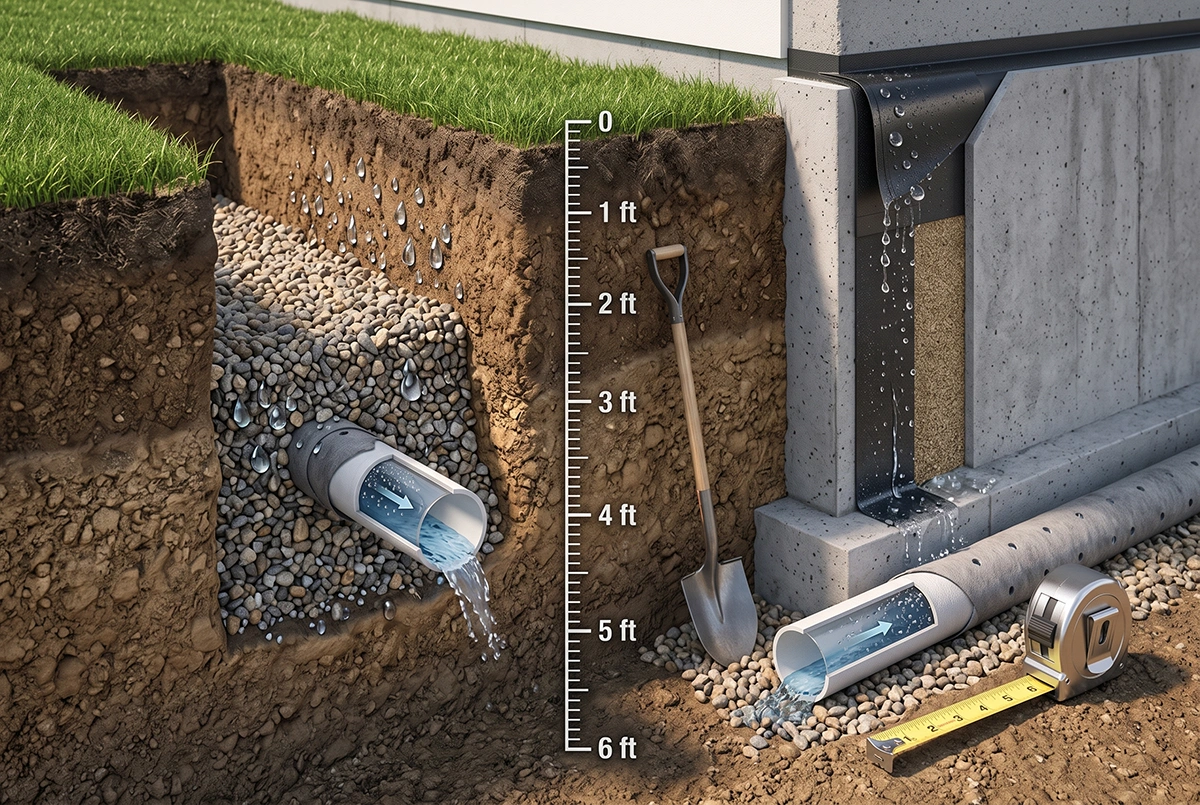
The short answer is that French drain depth depends on the water problem. For many yard drainage projects, 18 to 24 inches is a common starting range. A drain protecting a basement or foundation may need to reach the foundation footing, which can be several feet below grade. Homeowners searching how deep french drain usually need a site-specific answer. The correct french drain installation depth is the level that intercepts the unwanted water and still allows dependable flow to a discharge point.
Typical Depth of a French Drain by Drainage Problem
There is no useful one-number answer to how deep french drains should be because yard runoff, perched groundwater, and foundation drainage occur at different elevations. The table below gives practical starting points, but the site grade, utilities, soil type, water table, and outlet elevation can change the design.
| Drainage problem | Typical trench depth | Main design goal |
|---|---|---|
| Yard or surface-water interception | About 18–24 in (45–60 cm) | Intercept shallow subsurface water and move it to a lower outlet. |
| Foundation drainage without a full basement | Often 24–48+ in (60–120+ cm) | Reach the wet zone near the foundation and protect the footing area. |
| Basement / footing drain | At or near footing level; often several feet below grade | Relieve hydrostatic pressure beside the foundation and collect groundwater. |
Yard and Surface Water Drainage
For soggy lawns, low spots, or runoff moving toward the house, the typical depth of french drain trenches is often around 18 to 24 inches. The trench must be deep enough to intersect the wet layer rather than simply sit in dry topsoil. A perforated pipe is placed in a gravel bed, usually surrounded or separated from native soil by filter fabric to reduce sediment entry.
Depth alone will not fix a yard if the pipe cannot drain. The trench needs a continuous drainage slope toward a safe discharge point. Before excavation, underground utilities must be located, and the route should avoid creating a new wet area on a neighbour’s property or near the foundation.
French Drain Depth Around a Foundation
The exterior french drain depth around a foundation depends on what the drain is meant to protect. If the goal is to intercept shallow groundwater before it reaches a crawlspace or slab edge, a moderately deep trench may work. If the goal is to relieve pressure against a basement wall, the pipe generally needs to be much lower, close to the foundation footing.
This is why french drain depth foundation projects require careful excavation. Digging beside a foundation is not the same as cutting a shallow landscape trench. The contractor has to consider wall condition, footing elevation, soil stability, safe access, and whether exterior waterproofing should be completed while the wall is exposed. Leaquida’s foundation waterproofing service addresses this type of combined work.
French Drain Depth for a Basement and Weeping Tile at Footing Level
The correct french drain depth for basement protection is usually governed by the footing and the basement floor, not by an arbitrary number of inches from the lawn. A foundation weeping tile or drain tile is commonly installed beside the footing so groundwater can be collected before it creates sustained hydrostatic pressure against the wall or under the slab.
In an older Toronto home with a deep basement, that may mean exterior excavation several feet below grade. An interior drainage system can be an alternative where outside access is limited. It collects water below the slab perimeter and typically sends it to a sump pump.
Minimum Depth of a French Drain and the Frost Line in Canada
The minimum depth of french drain should be based on the level of the water you are trying to intercept. For ordinary yard drainage, 18 to 24 inches is frequently adequate, while foundation systems are much deeper. A standard depth of french drain therefore does not exist for every property.
Canada’s frost line matters, but it should not be confused with a universal French-drain depth requirement. A shallow drain can freeze if water remains trapped in the pipe, especially when the outlet is blocked or poorly graded. A well-sloped system that empties between events is less vulnerable. Foundation drainage is commonly below local frost depth simply because the foundation footing itself is deep.
Note: Do not deepen a trench only to “beat the frost line” without checking the outlet. A deeper pipe can make drainage worse if the discharge point is too high for gravity flow.
How Soil Type and Water Table Change the Required Depth?
Soil controls how quickly water reaches the trench. Sandy soil drains rapidly, while dense clay can hold water against a foundation and create a saturated zone after rain or snowmelt. In clay, the drain has to intersect the actual water path and use clean stone and suitable filter fabric so the gravel bed does not fill with fines.
A high water table can require a deeper or more robust system because the drain may receive groundwater for long periods rather than only after storms. In these conditions, the outlet capacity and sump pump design become as important as trench depth. Leaquida’s sump pump installation service explains the pumping side of below-grade drainage.
Why Trench Depth Is Not the Same as Pipe Depth?
The depth of french drain can refer either to the bottom of the trench or to the elevation of the pipe, and those numbers are not identical. A trench normally includes a layer of clean drainage stone below the perforated pipe, stone around and above it, and then the final surface layer or backfill. A 24-inch trench may therefore place the pipe several inches above the trench bottom.
That distinction matters when comparing quotes or planning excavation. Ask whether the stated french drain depth is measured to the trench bottom, the pipe invert, or finished grade. The pipe elevation is the critical number for water collection and outlet slope.
Does a French Drain Need an Outlet, and How the Outlet Sets Your Depth?
Yes. A French drain needs somewhere for collected water to go. Depending on the property, the discharge may be a legal gravity outlet, a sump pit, or another approved drainage connection. A gravel trench with no workable outlet can eventually become a storage trench instead of a drainage system.
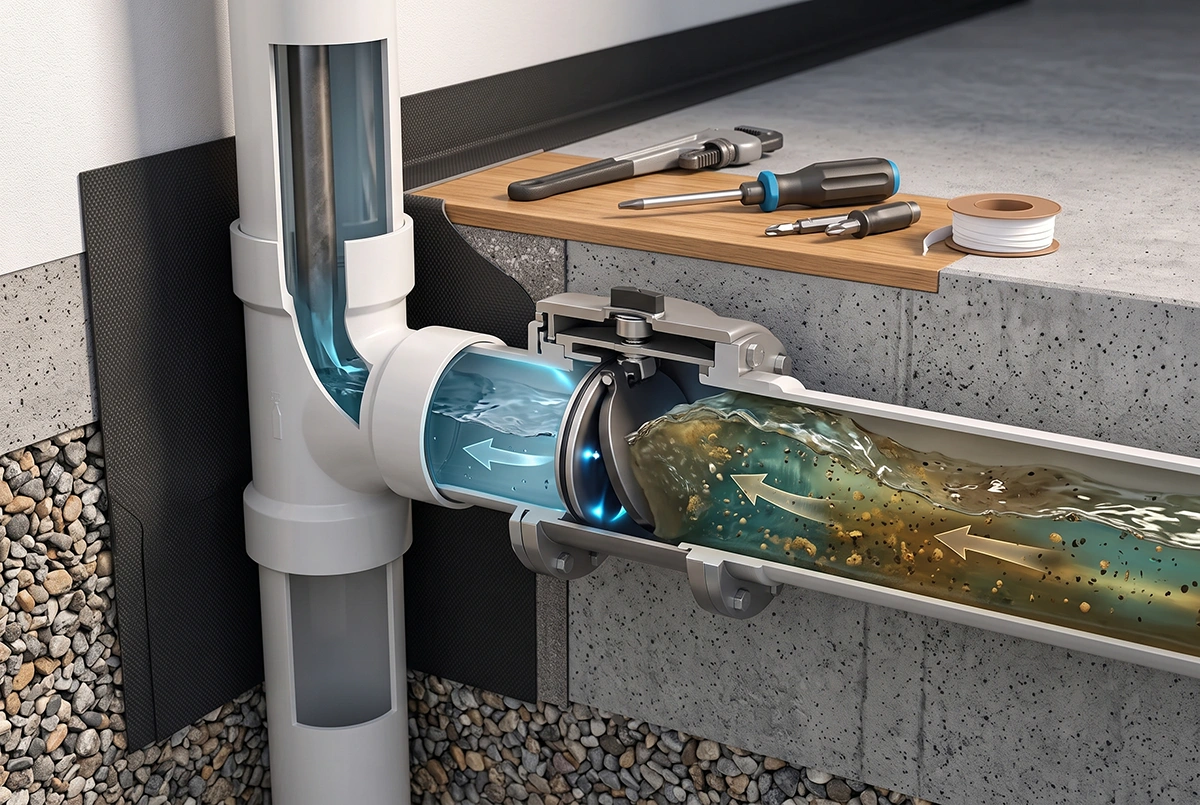
The outlet often sets the maximum practical depth. The pipe must maintain a steady fall from the collection zone toward the discharge point. If the desired drain is lower than any gravity outlet, a sump pump may be needed. Leaquida’s overview of French drains and sump pumps is useful when comparing those configurations.
Do You Need Gravel Under a French Drain, and How Much?
Yes, a traditional French drain uses clean, free-draining gravel around the perforated pipe. The stone creates open space for water to move toward the pipe and helps keep the pipe from sitting directly in fine soil. A common residential detail uses several inches of stone below the pipe and enough stone at the sides and above it to form a continuous drainage zone.
The exact volume depends on trench width, trench depth, pipe diameter, and how high the gravel is carried. For a 100-foot run, calculate the gravel-filled cross-sectional area, subtract the pipe volume if precision is needed, multiply by length, and add an allowance for settlement and waste. The weeping tile guide provides more context on foundation drainage components.
Where Not to Put a French Drain?
A French drain should not be placed where excavation could undermine a footing, damage utilities, or direct water toward another structure. It also should not be used as a substitute for correcting obvious roof runoff or negative grading when those are the main causes of water accumulation.

- Do not trench beside a foundation without confirming footing depth and safe excavation conditions.
- Do not place the discharge where water can return to the same foundation.
- Do not route the pipe with high points that trap water and sediment.
- Do not bury the system in fine soil without proper stone and filtration.
- Do not connect to a municipal system unless the connection is permitted and appropriate for the property.
What Are Common French Drain Mistakes?
The most common errors are choosing depth before diagnosing the water source and focusing on the trench while ignoring the outlet. A drain that is too shallow may sit above the groundwater path, while a drain that is unnecessarily deep costs more and may lose the gravity fall required for discharge.
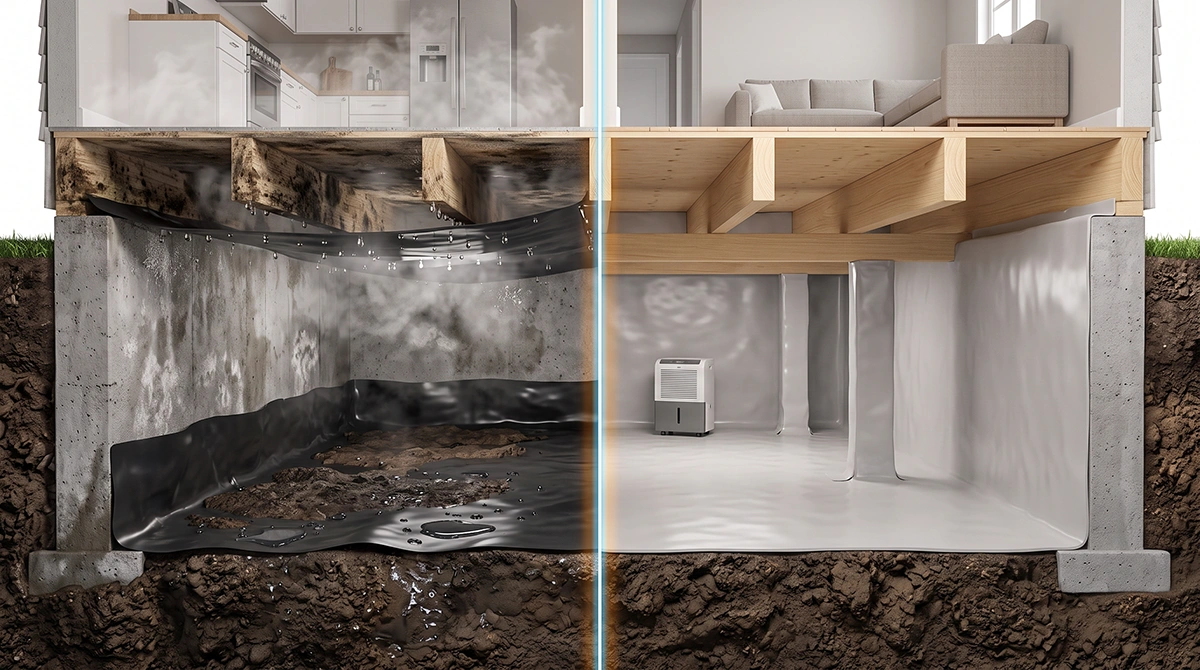
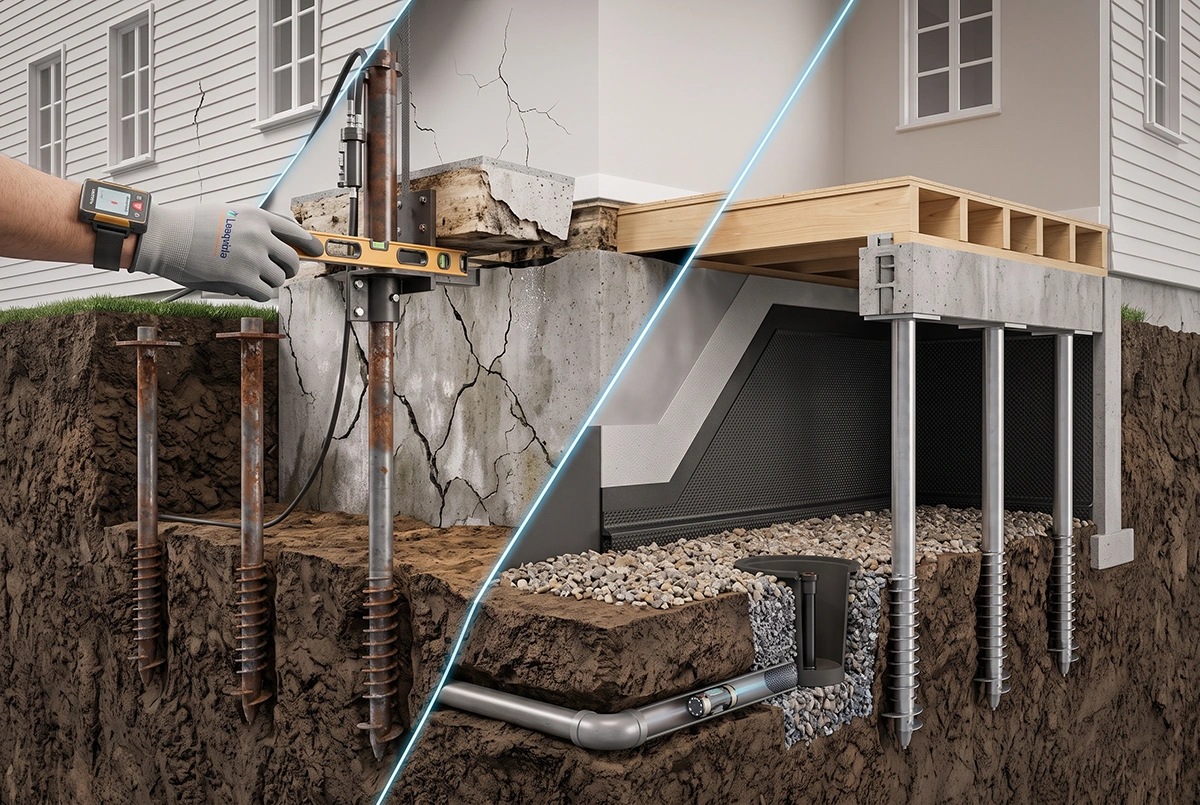
Other failures include insufficient drainage slope, crushed or poorly placed pipe, contaminated gravel, missing filter fabric where it is needed, and backfill that allows excessive sediment into the stone. A clogged drain can then behave like solid ground and stop relieving pressure, leaving the property exposed to recurring basement flooding.
How Leaquida Sets French Drain Installation Depth on Your Property
Leaquida starts by identifying the source and elevation of the water, then compares that with site grade, footing depth, soil conditions, utility locations, and the available outlet. For yard drainage, that may lead to a relatively shallow trench. For basement protection, it may require exterior excavation to footing level or an interior system below the slab.
The design also considers whether the drain should work with foundation waterproofing, a weeping tile, or a sump pump. Homeowners can review Leaquida’s French drain installation service, footing drain guide, or start from the Leaquida homepage to arrange an assessment. The best depth is the one that captures the water and moves it away reliably, not simply the deepest trench that can be dug.

 CLOGGED OR BROKEN WEEPING TILE