
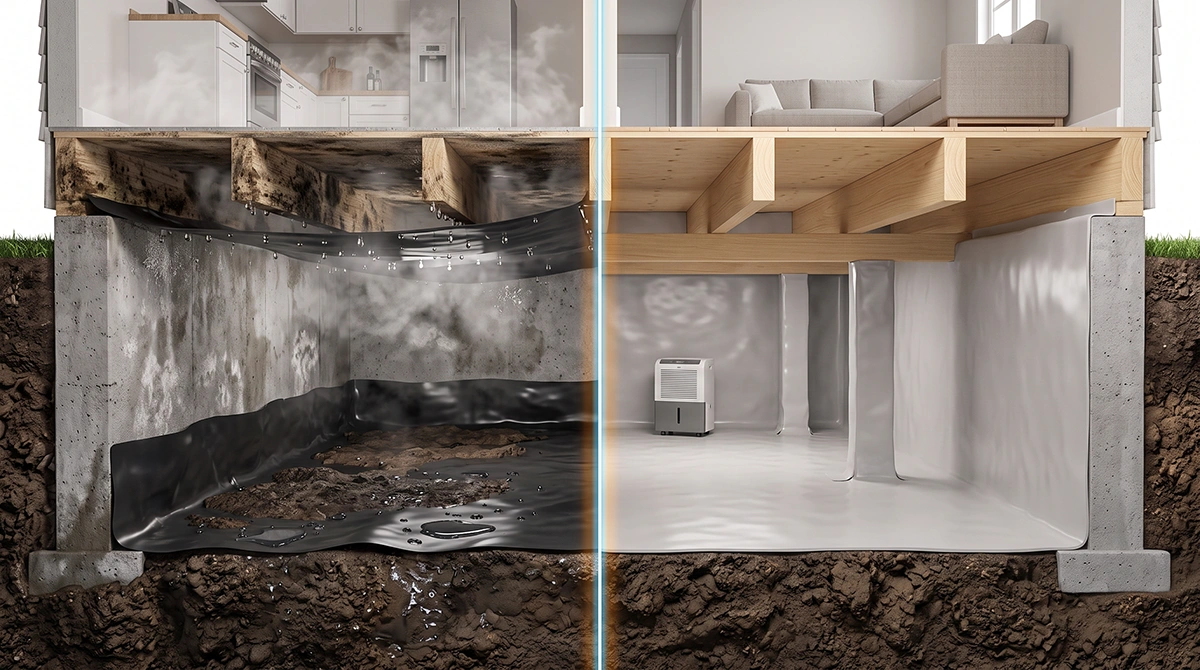
Every homeowner wants a strong and dry building. But the crawl space often remains without proper attention. Dampness in this area destroys wooden floor beams. It damages concrete foundation walls. Damp air penetrates living rooms above. This ruins the microclimate in bedrooms and the kitchen. To solve this problem, builders use different protection methods. In this material, we’ll conduct a detailed comparison: crawl space encapsulation vs vapor barrier. This will allow you to choose the right option for building protection. Experienced experts at Leaquida always help find the optimal engineering path. The right choice will protect your home for many years.
What Is Crawl Space Encapsulation?
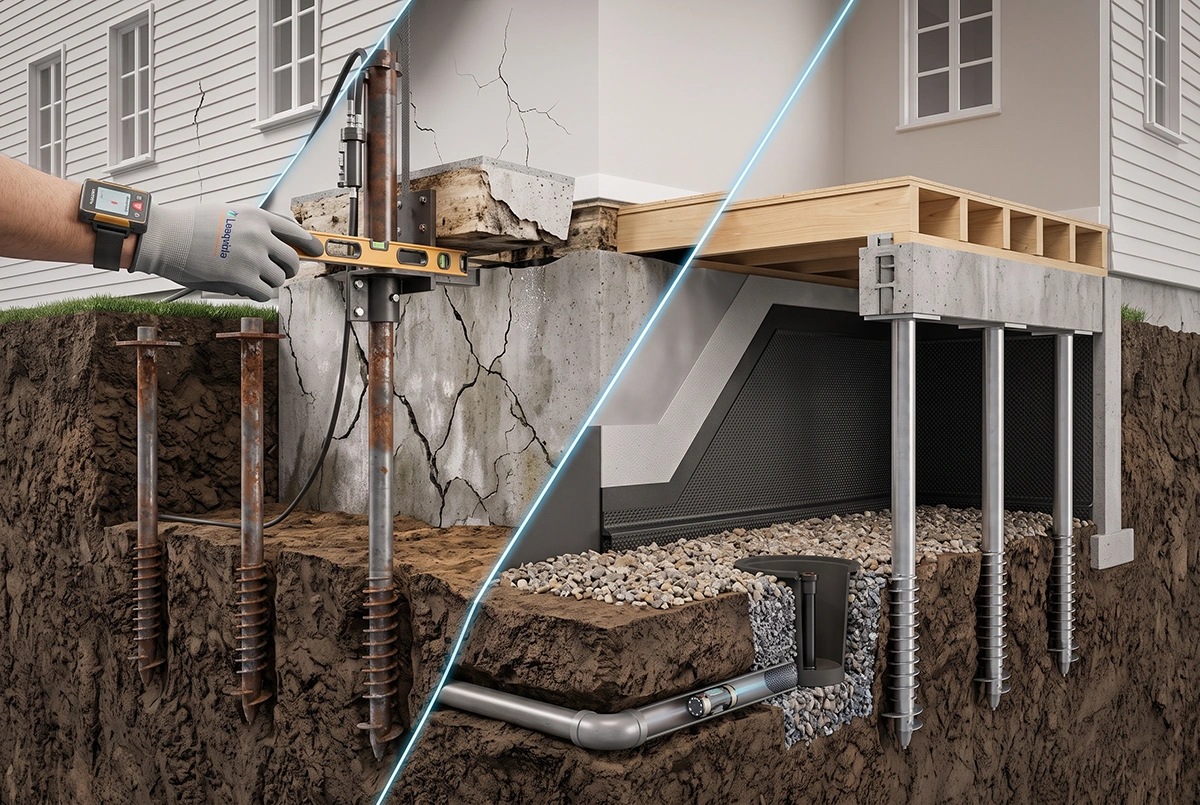
First, it’s worth addressing an important question: what is a crawl space encapsulation? This is a modern method of complete structural isolation of the entire crawl space from the external environment. Builders don’t just cover the dirt floor with protective film. They transform a dirty crawl space into a clean and sealed room. Walls and floor are completely covered with strong multi-layer materials. All joints and technological seams are sealed with special tapes. Ventilation openings in the foundation are completely closed.
Many owners are interested in: how does crawl space encapsulation work? This method works on the thermos principle. We eliminate the crawl space’s contact with humid outdoor air. The earth under the house no longer evaporates moisture. Foundation walls stop letting moisture through from the soil. A stable and dry microclimate is created inside the crawl space. The air there becomes as clean as in living rooms. This fundamentally changes the condition of the entire building.
This process requires a professional approach. Simply laying polyethene film isn’t enough here. You need to create a single monolithic shell around all structures. This technology prevents dampness from appearing in the most inaccessible corners. As a result, the house gets a powerful protective barrier.
Common Moisture Problems in Crawl Spaces
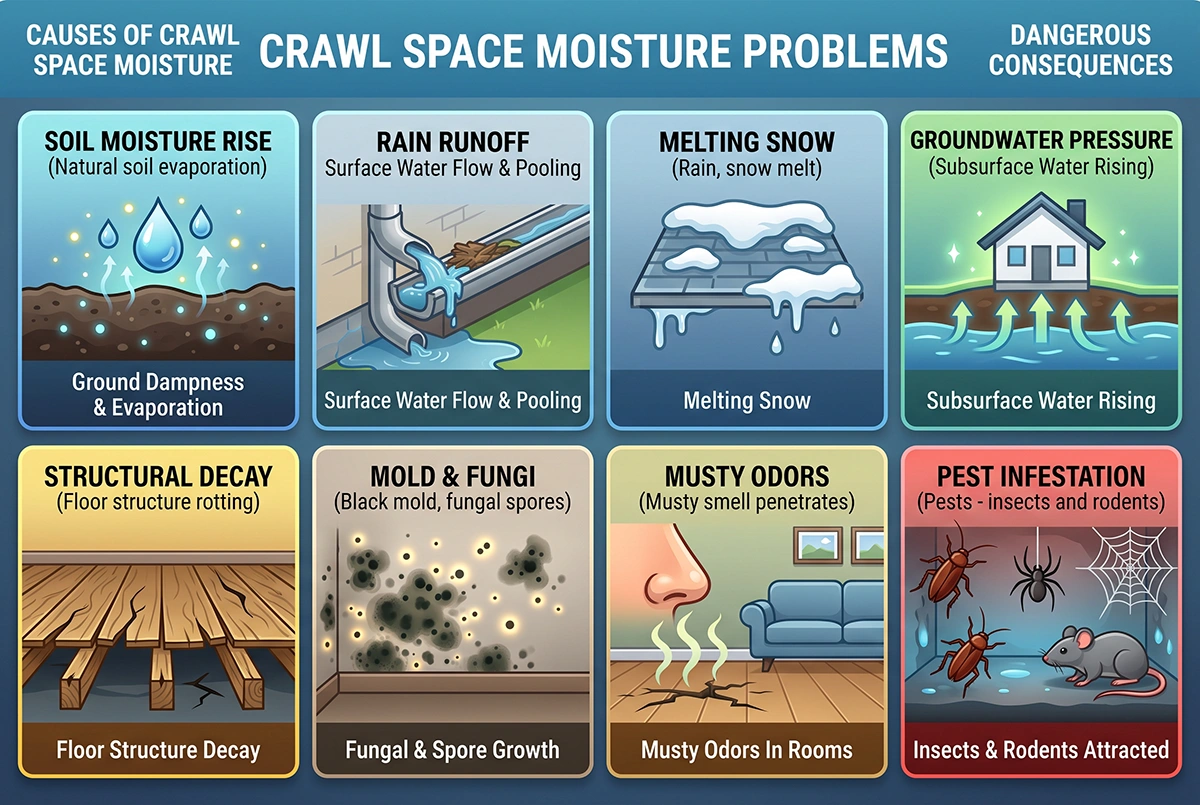
Dampness in crawl spaces appears from many natural causes that are important to detect in time. Main risk factors for crawl spaces:
- Natural soil evaporation. The earth under the building always contains a certain percentage of moisture.
- Seasonal precipitation. Snow melts rapidly in spring, and heavy downpours occur in summer.
- Groundwater pressure. Moisture rises and presses hard on the home’s underground structures.
- Without quality protection, a crawl space quickly transforms into a damp swamp, launching destruction processes.
Main dangerous consequences of constant dampness:
- Floor structure rotting. Wooden floor beams start rapidly losing their strength.
- Black mold. Dangerous fungal spores appear on all surfaces.
- Musty smell. An unpleasant heavy aroma penetrates through floor cracks into living rooms.
- Pests. Constant high humidity attracts various dangerous insects and rodents.
- Metal corrosion. Fastening elements, brackets, and metal pipes start rusting rapidly.
Quality crawl space moisture control solutions help avoid these dangerous and expensive problems at any stage.
Crawl Space Encapsulation vs Vapor Barrier: Key Differences
Each of these methods has its own structural features and different effectiveness. Main technical differences between technologies:
- Coverage area. Simple polyethene film only covers the crawl space dirt floor. Complete sealing covers the floor, all walls, and insulates beams.
- Joint sealing. Film is often laid overlapping without seam bonding. During encapsulation, all joints are connected with special strong adhesive or tape.
- Space ventilation. When using film, foundation ventilation openings remain open. Complete isolation requires closing all ventilation openings.
- Air control. Encapsulation includes mandatory dehumidifier installation. A simple barrier doesn’t mechanically control air humidity at all.
- Protection durability. Thin film tears easily when walking or moving items. Thick reinforced materials serve for decades without damage.
The choice between these two methods depends on the seriousness of the problem in your region. A simple barrier only delays evaporation from the earth. Complete isolation fundamentally changes the environmental conditions under your home.
Materials Used in a Crawl Space Encapsulation System
Quality and modern elements are needed to create a reliable system. Builders use special strong crawl space encapsulation materials. The main element is a thick polymer membrane. Its thickness usually ranges from 12 to 20 mil. It must be reinforced to withstand mechanical loads.
Special foam insulation is often used for walls. It protects the crawl space from winter freezing. All membrane joints are connected with heavy butyl-based mounting tape. It doesn’t lose its properties from constant dampness. Strong plastic anchors are used to fix materials to concrete walls. Quality polyurethane sealants are also used to treat small cracks.
Each material in this system performs its strict function:
- membrane stops water and vapor;
- insulation retains heat and eliminates the dew point;
- sealants close small pathways for outdoor air passage.
Together they create reliable and durable protection. Today the market features innovative waterproofing materials and technologies that significantly extend the service life of the entire system. Using advanced polymers guarantees that protection won’t break down under the influence of bacteria and soil salts.
The Pros of Crawl Space Encapsulation
Before starting work, it’s definitely worth considering crawl space encapsulation pros and cons. Advantages include:
- Eliminating dampness and stopping mould growth. Air in the house becomes clean and safe for allergy sufferers. You permanently forget about the unpleasant musty smell in rooms.
- Serious savings on heating bills. A dry crawl space better retains heat in winter. First-floor floors become noticeably warmer. The air conditioning system works less in summer, as humid hot air doesn’t penetrate the house.
- Wooden home structures remain dry and last for a very long time. This significantly increases the market value of all your real estate.
Many owners often ask themselves: is crawl space encapsulation worth it? The answer is always positive. Financial investments in this system quickly pay off through energy savings. You no longer have to spend money fighting fungus and rot. This is a long-term investment in housing strength and safety.
The Cons of Crawl Space Encapsulation
This solution also has disadvantages:
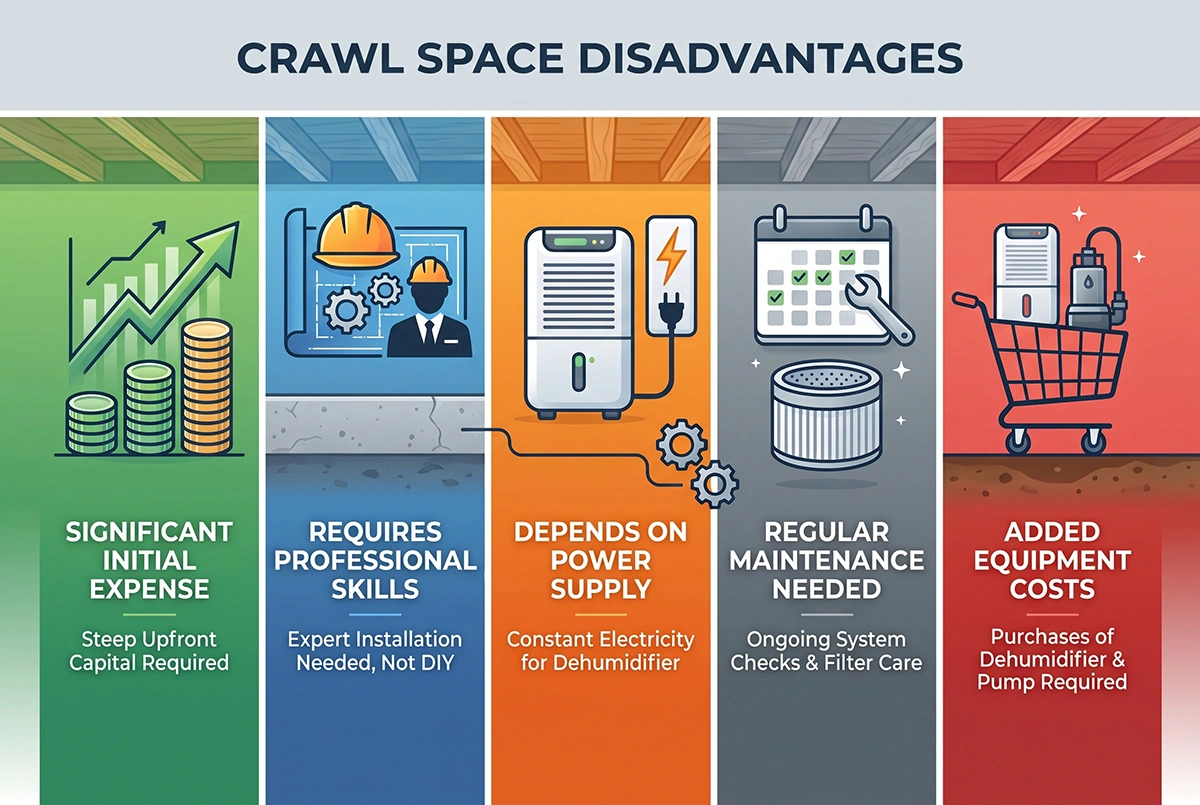
- High initial cost. This comprehensive project requires significant financial investment upfront.
- Installation complexity. Quality work is practically impossible to do yourself without experience.
- Electricity dependence. The dehumidifier requires a connection point for continuous operation.
- Maintenance necessity. Dehumidifier filters need to be regularly changed, and the system checked.
- Additional expenses. Purchasing a dehumidifier and pump increases the project’s overall estimate.
Despite these disadvantages, most experts consider these costs justified. Problems from constant dampness can cost a homeowner much more.
When a Vapor Barrier May Be Enough?
In some situations, complete crawl space isolation may be excessive. A simple protective barrier works great for homes in dry regions. If groundwater is located very deep, the earth remains relatively dry. There are no obvious signs of mould or standing water in such a crawl space. Foundation walls don’t get wet after prolonged fall rains.
For such conditions, choosing the best vapor barrier for crawl space is sufficient. Builders carefully lay dense film on the ground with good overlap onto walls. This is enough to retain minimal natural soil evaporation. Ventilation openings in the foundation remain open and easily remove remaining moisture outside. This is a simple and very budget-friendly solution for good soil conditions.
Additional Components for Long-Term Moisture Control
A single membrane is sometimes insufficient for long-term moisture control. The system is often reinforced with additional technical devices:
- Crawl space dehumidifier. It automatically maintains optimal room humidity. The device removes excess moisture from the air and directs it outside through a tube.
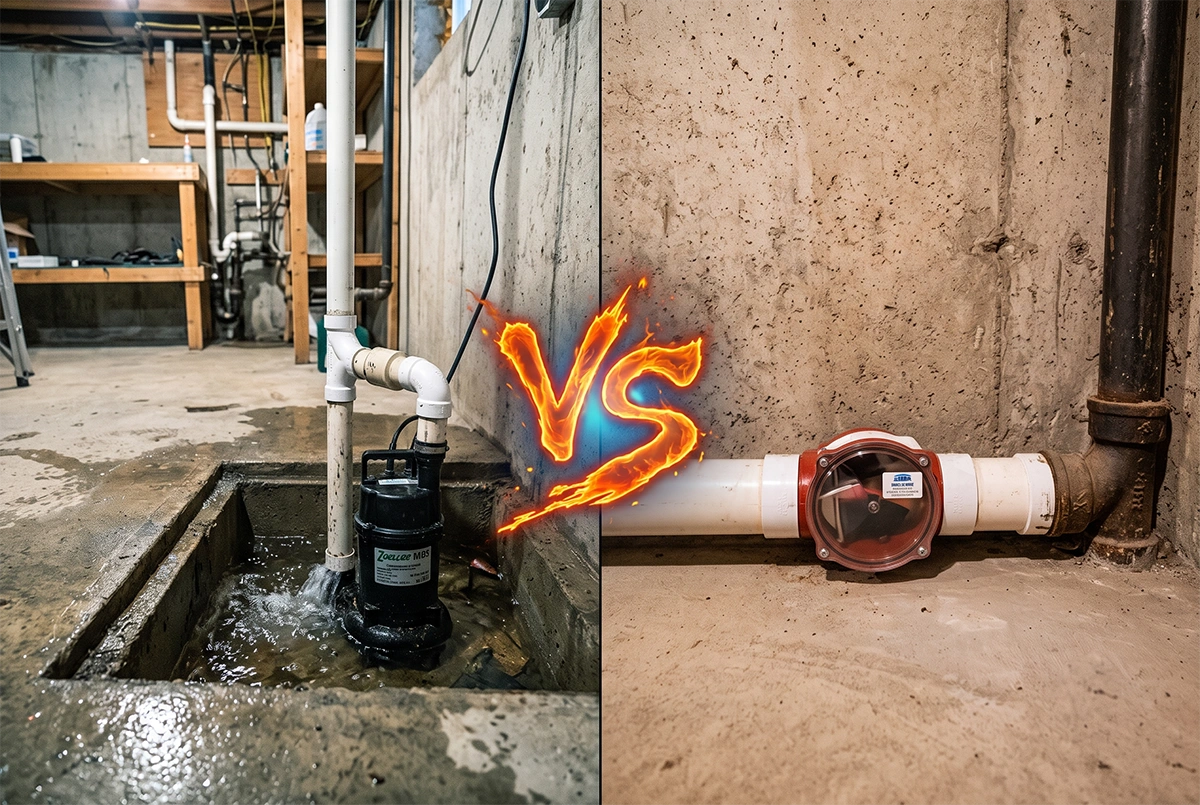
- Sump pump. A small sump is dug for it at the lowest point of the floor. The pump removes incoming water before it has time to rise above floor level.
All devices work as one coordinated mechanism. They back each other up during heavy downpours or floods. As a result, the crawl space remains dry in any extreme weather conditions.
In some cases, full basement sealing is required to completely block pathways for capillary moisture. Only a comprehensive approach guarantees stable results for many years.
Choosing the Right Moisture Control Solution for Your Home
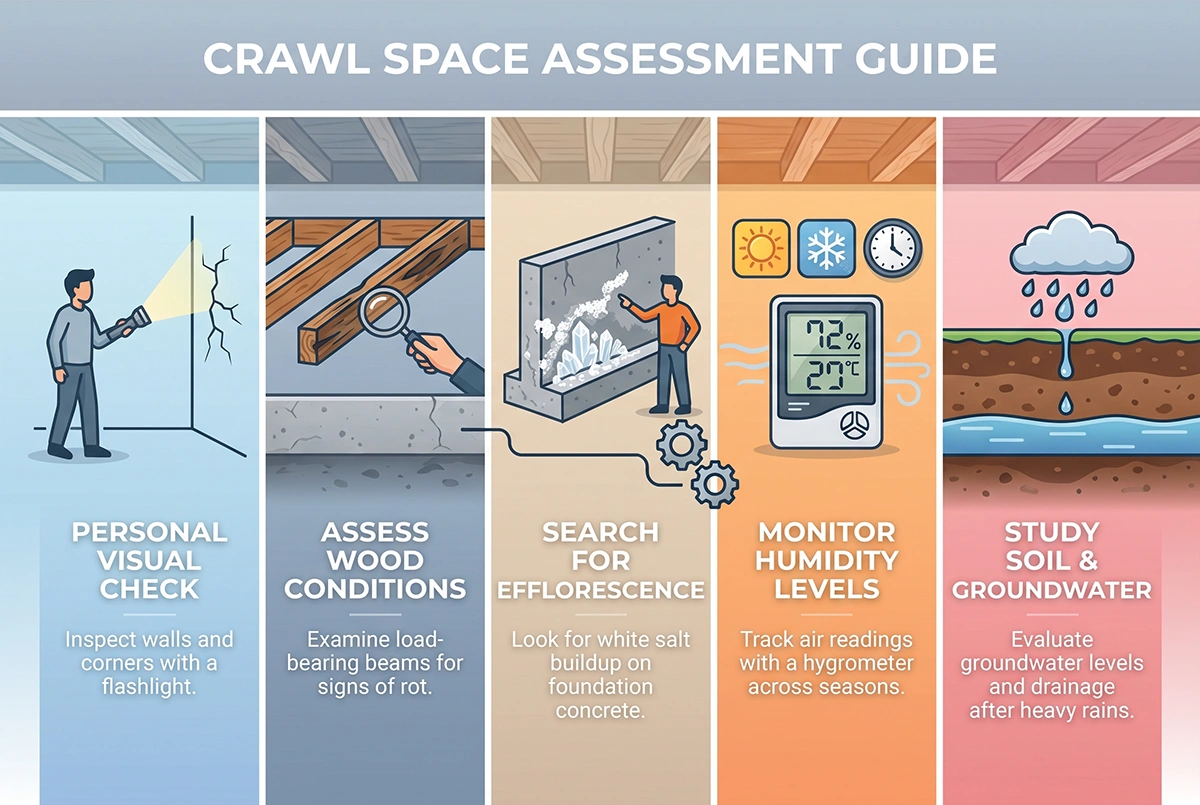
Choosing a crawl space protection method is an important step for a homeowner. A competent approach will protect home structures for decades. For assessing crawl space condition, experts recommend simple actions:
- Personal inspection. Examine wall condition and far corners with a flashlight.
- Wood check. Check load-bearing floor beams for rot.
- Efflorescence search. Look for white salt buildup on foundation concrete.
- Humidity measurement. Monitor air readings with a hygrometer in different seasons.
- Soil study. Assess groundwater level after heavy rains.
These steps will help quickly determine the real scale of the dampness problem. You’ll easily understand whether complete sealing is needed.
In a humid climate, a home requires serious protection. In Toronto, soil is often oversaturated with moisture. Ordinary film on the ground won’t handle the high load. You’ll need professional crawl space waterproofing Toronto for long-term building safety.
Remember that quality foundation waterproofing is the foundation of the entire structure’s durability. Don’t postpone solving dampness problems for the future. Protect your property from destruction and create a healthy microclimate for your family.

 CLOGGED OR BROKEN WEEPING TILE