
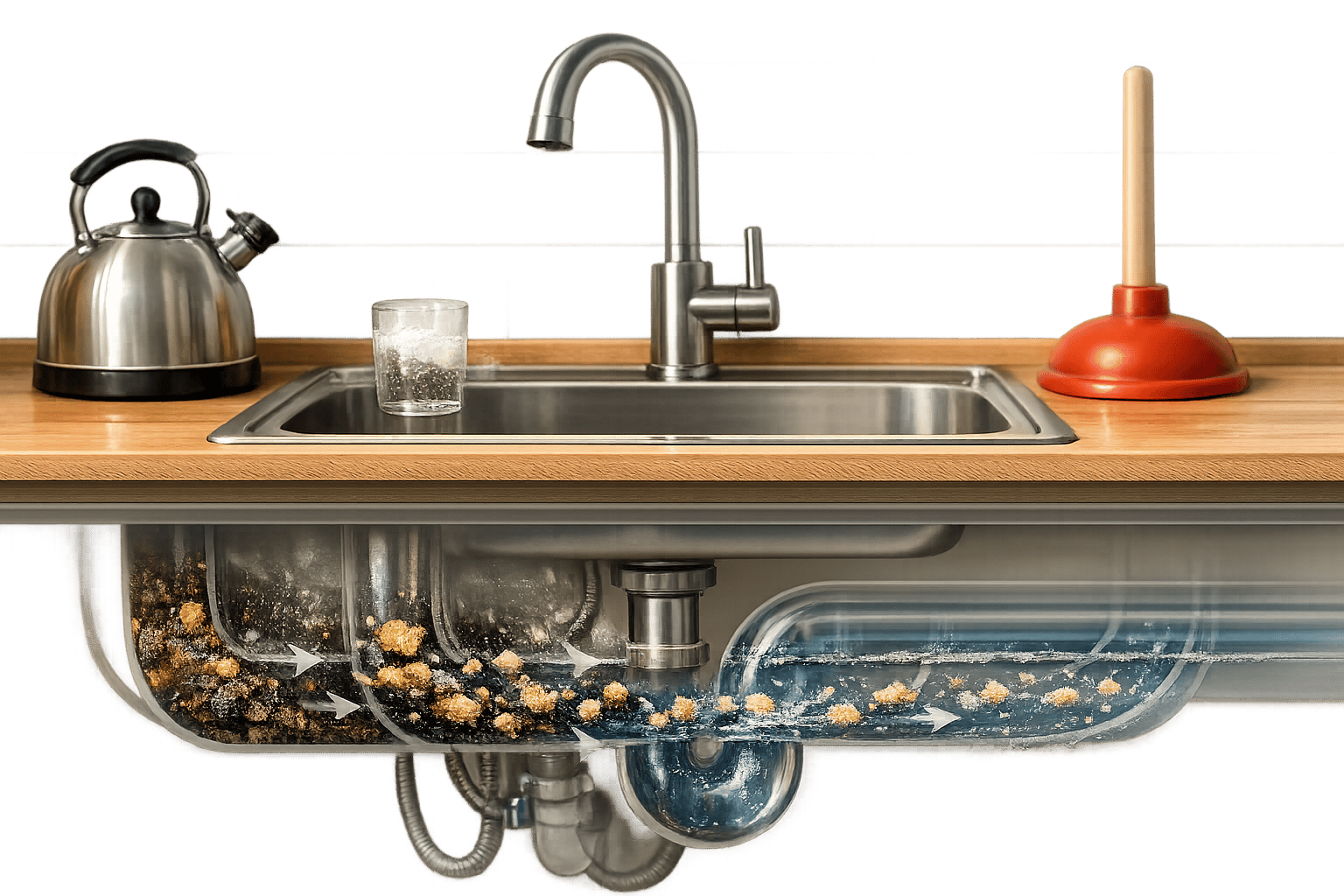
A clogged kitchen sink can disrupt your day, but most blockages can be cleared with simple DIY fixes. The primary culprits are grease, food scraps, and soap scum, which build up over time. Here are 7 methods to unclog your sink:
- Boiling Water: Ideal for grease and soap scum. Avoid using on PVC or porcelain sinks.
- Baking Soda & Vinegar: A chemical reaction breaks down organic material.
- Salt & Baking Soda: Great for moderate grease clogs; let it sit overnight.
- Plunger: Effective for solid food blockages.
- Clean the P-Trap: Physically remove trapped debris in the U-shaped pipe.
- Drain Snake: Reach deeper clogs with a flexible cable.
- Enzyme Cleaners: A slower but eco-friendly option for organic buildup.
Key Tips:
- Avoid chemical drain cleaners – they can damage pipes.
- Use a strainer to catch debris and never pour grease down the drain.
- If DIY methods fail or multiple drains are affected, call a professional.
Act quickly to prevent minor clogs from becoming major plumbing issues.
How To Unclog a Kitchen Sink With Baking Soda & Vinegar (Works Fast!)
sbb-itb-5761e20
Best Ways to Unclog a Kitchen Sink
Dealing with a clogged kitchen sink? The good news is that most clogs can be tackled at home with simple tools or common household items, often costing between CA$0 and CA$25.
Before jumping into heavy-duty fixes, start with the basics. Check the drain strainer for visible blockages and ensure the garbage disposal (if you have one) is functioning properly. These quick checks can sometimes resolve the issue or at least help you pinpoint the problem.
There are three main approaches to unclogging a sink:
- Natural solutions: Boiling water or a mixture of baking soda and vinegar can help break down grease, soap scum, or minor debris.
- Mechanical tools: Plungers and drain snakes are great for dislodging stubborn clogs deeper in the pipes.
- Manual cleaning: Removing and cleaning the P-trap is often necessary for tougher blockages caused by food particles or grease buildup.
It’s important to choose the right method based on the clog’s cause. For instance, avoid using boiling water on PVC or porcelain sinks, as it could damage them. Also, handle tools like drain snakes carefully to avoid harming your pipes. If you need to clear objects from the garbage disposal, always unplug it first, and never stick your hands into the drain.
Start with the simplest methods and only move on to more intensive techniques if needed. Most of these DIY solutions take 15 to 45 minutes, so you’ll know fairly quickly if your approach is working.
7 Methods to Unclog a Kitchen Sink
Here are some practical ways to tackle a clogged kitchen sink and get things flowing again.
Boiling Water Method
This method works wonders for clearing grease and soap scum. Boil a pot or kettle of water, then carefully pour it into the drain in stages. Let the hot water sit for a few minutes to dissolve any fatty deposits clogging your pipes.
Important: Avoid this method if your sink has PVC pipes or a porcelain basin, as the high heat can damage plastic, weaken seals, or even cause cracks.
Baking Soda and Vinegar
Start by clearing any standing water from the sink. Pour ½ to 1 cup of baking soda down the drain, followed by an equal amount of white vinegar. Quickly cover the drain with a stopper or cloth to trap the fizzing reaction. After 15–30 minutes, flush the drain thoroughly with hot water. This reaction helps break down organic material and loosen debris.
Salt and Baking Soda
For moderate clogs caused by grease, mix ½ cup of salt with ½ cup of baking soda and pour it down the drain. Let it sit for several hours or overnight to work on the buildup. Follow up by flushing the drain with boiling water to clear the loosened debris.
Plunger Method
Remove the sink strainer or stopper and fill the sink with enough water to cover the plunger cup completely. This creates a tight seal. Use a flat-bottom plunger and apply quick, sharp motions up and down for about 15 seconds. If you have a double sink, block the other side with a wet cloth to focus the pressure on the clog.
Clean the P-Trap
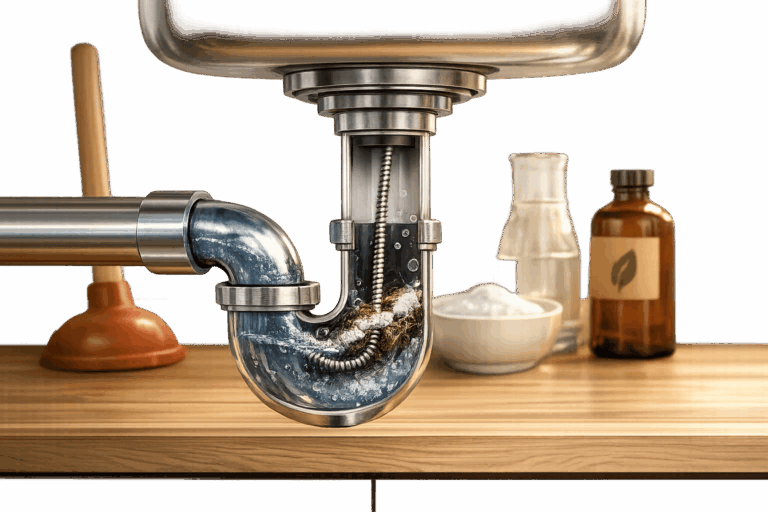
Place a bucket under the P-trap (the curved pipe beneath your sink) to catch any water or debris. Use a wrench to loosen the slip nuts and remove the trap. Clean out any blockages, scrub the trap thoroughly, and check the washers before reassembling. Once reassembled, run water to ensure there are no leaks. Gloves are a good idea for this one.
Drain Snake or Wire Hook
A plumber’s snake, ideally about 7.6 m (25 ft) long, can handle deeper clogs. Insert the flexible cable into the drain, and if needed, remove the P-trap for better access. When you hit resistance, turn the handle clockwise while applying steady pressure to break up or snag the clog. Slowly retract the cable and flush the drain with hot water. If you don’t have a drain snake, a straightened wire coat hanger with a small hook can work for shallower clogs.
Enzyme Cleaners
Enzyme-based cleaners use natural bacteria to break down organic matter like food and grease. These products are gentler on your pipes and better for the environment than chemical cleaners. Follow the instructions on the product, letting it sit for several hours or overnight before flushing with hot water. In Canada, you can find eco-friendly enzyme cleaners at hardware and home improvement stores. While they take longer to work, they’re great for regular maintenance and preventing future clogs.
How to Choose the Right Method
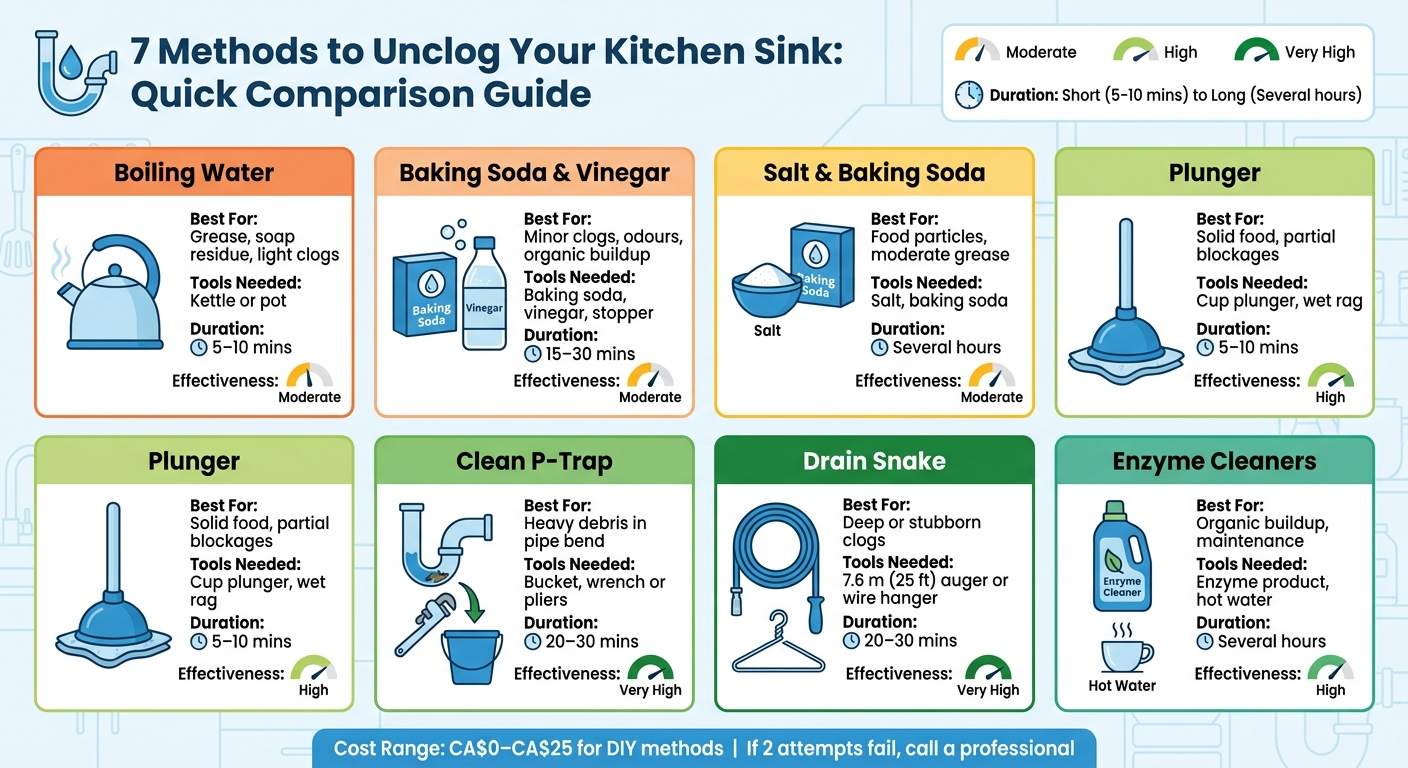
7 Kitchen Sink Unclogging Methods Comparison Chart
When dealing with a clogged drain, the first step is to figure out the problem. Slow drainage often points to a partial clog caused by grease or soap scum, while standing water typically signals a full blockage. If you hear gurgling sounds, it could mean air is trapped due to a deeper clog. Foul odours? These are usually caused by food particles or organic buildup in the drain or P-trap.
Before you dive into fixing it, confirm your pipe material and check if the clog is visible near the surface using a flashlight. If you have a garbage disposal, test it first – if it hums but doesn’t spin, it might be jammed and need a reset. Once you’ve identified the issue, choose the method that matches the cause of the clog.
Here’s a quick breakdown of methods based on common scenarios:
- For light grease clogs, boiling water is a quick fix, taking just 5–10 minutes.
- Solid food blockages are best tackled with a plunger, which works in roughly the same time frame.
- If the clog is deep or stubborn, you’ll likely need a drain snake or to clean the P-trap, both of which take about 20–30 minutes.
- For routine maintenance or organic buildup, enzyme cleaners are a good option, though they take several hours to work.
The right method depends on the severity and type of clog. Use the table below to match your symptoms to the most effective solution.
Comparison Table
| Method | Best For | Tools Needed | Duration | Effectiveness |
|---|---|---|---|---|
| Boiling Water | Grease, soap residue, light clogs | Kettle or pot | 5–10 mins | Moderate |
| Baking Soda & Vinegar | Minor clogs, odours, organic buildup | Baking soda, vinegar, stopper | 15–30 mins | Moderate |
| Salt & Baking Soda | Food particles, moderate grease | Salt, baking soda | Several hours | Moderate |
| Plunger | Solid food, partial blockages | Cup plunger, wet rag | 5–10 mins | High |
| Clean P-Trap | Heavy debris in pipe bend | Bucket, wrench or pliers | 20–30 mins | Very High |
| Drain Snake | Deep or stubborn clogs | 7.6 m (25 ft) auger or wire hanger | 20–30 mins | Very High |
| Enzyme Cleaners | Organic buildup, maintenance | Enzyme product, hot water | Several hours | High |
If you’ve tried plunging and it doesn’t work after a few attempts, the clog might be too deep for surface-level methods. In that case, move on to using a drain snake or cleaning the P-trap. For double sinks, check the Plunger Method section for tips on proper sealing technique.
Why These Methods Work
The effectiveness of these methods lies in the science behind them. Each approach targets common kitchen sink clogs with a specific mechanism designed to clear blockages efficiently.
The boiling water method relies on heat to tackle solidified fats, oils, and grease. The high temperature melts these substances, reducing their thickness and allowing them to flow through the P-trap more easily.
The baking soda and vinegar method creates a chemical reaction. When combined, these ingredients produce carbon dioxide gas, which bubbles and agitates the clog. Sealing the drain helps concentrate this reaction, breaking up the blockage.
Plungers work by creating hydraulic pressure. This force pushes and pulls on the clog, breaking it apart. Meanwhile, drain snakes use mechanical force, with their twisting motion grabbing and dislodging debris deeper in the pipe.
Enzyme cleaners are a gentler option, using natural proteins to break down organic matter like fats, proteins, and starches. These cleaners turn the debris into biodegradable liquids, making them safe for pipes and septic systems.
Finally, cleaning the P-trap is a direct approach. By removing the U-shaped pipe under the sink, you can physically clear out debris rather than just shifting it further down the line. Together, these methods provide simple yet effective ways to tackle various sink clogs without resorting to harsh chemicals or professional intervention.
What to Avoid When Unclogging a Sink
While there are plenty of effective ways to tackle a clogged sink, some approaches can do more harm than good. Let’s break down what you should steer clear of to avoid turning a small issue into a major plumbing headache.
One of the biggest mistakes is relying on chemical drain cleaners. These products use aggressive chemicals like sulfuric acid, hydrochloric acid, sodium hydroxide, or potassium hydroxide to dissolve clogs. While they might seem like a quick fix, they often leave behind residue that can lead to recurring blockages. Even worse, these harsh substances can warp PVC pipes, corrode metal ones, and weaken pipe walls over time.
“Chemical drain cleaners… often cause long-term damage that plumbers end up repairing later.” – A&A Plumbing, Heating, and Cooling
Repeated use of these cleaners increases the risk of leaks, cracked pipes, and sudden failures. And if the clog persists, the leftover chemicals create hazardous conditions for plumbers who may need to step in. Tammy Zhao, PharmD, CSPI, from Poison Control, also highlights the dangers to health:
“Consumption of non-enzymatic drain cleaners can result in serious burns, permanent tissue damage, and even death”
Another common pitfall is using improvised tools. Items like makeshift drain snakes or improper plungers can damage your pipes. For example, a flange plunger (designed for toilets) won’t create a proper seal on a sink, making your efforts ineffective. Similarly, scraping the inside of pipes with a tool can cause leaks or structural damage.
“Just make sure you don’t scrape up the insides of your pipes, because that can cause leaks. If you hear any scratching, quit what you’re doing and readjust the snake.” – ATCO Energy
If your sink remains clogged after two DIY attempts, or if you notice multiple drains backing up or hear gurgling sounds, it’s time to stop and call a professional. Pushing too hard can worsen the problem, potentially damaging your main drainage system and leading to costly repairs. Sometimes, knowing when to step back is the smartest move.
Prevention Tips to Keep Your Drain Clear
Keeping your drains clear doesn’t have to be a hassle. A few simple habits can go a long way in avoiding frustrating blockages.
Start by using a removable drain strainer or mesh guard in your sink. This handy tool catches food scraps, soap scum, and other debris before they slip into your pipes. Make it a daily habit to empty the strainer into the trash and give it a quick wash to prevent buildup. Ensure the strainer fits tightly so nothing sneaks underneath.
Another key step? Handle grease the right way. Never pour grease, oils, or fats down the drain. Even with a strainer, these substances can solidify and clog your pipes. Instead, collect hot grease in a disposable container or bag, let it cool and harden, and toss it into your outdoor garbage bin. The same goes for coffee grounds, tea leaves, eggshells, and grains – these belong in your compost or trash, not your sink.
Regular maintenance is essential too. After each use, run hot tap water to help wash away any residues. Once a month, try this simple cleaning method: pour 1/2 cup of baking soda followed by 1 cup of vinegar down the drain, let it sit for 15 minutes, and then rinse with hot water. If you have a garbage disposal, drop in ice cubes made from a mix of water and vinegar (50/50) to keep it fresh and clean.
For Canadian homeowners, take note: if your home has PVC pipes or a porcelain sink, stick to hot tap water for maintenance flushes instead of boiling water. Boiling water can warp plastic pipes or even crack porcelain, causing bigger problems down the line.
When to Call a Professional
Sometimes, a clogged drain is more than just a minor inconvenience. If you’ve tried basic fixes – like pouring boiling water, using baking soda and vinegar, plunging, or even a drain snake – and the clog persists, it might be time to bring in the pros. Stubborn clogs often hide deep in the branch or main sewer line, well beyond the reach of standard tools.
There are certain warning signs that signal a more serious problem. If your sink frequently backs up, emits constant sewage odours, or if multiple drains in your home are draining slowly, you might be dealing with a blockage in the main sewer line rather than just a local issue. Gurgling sounds or actual sewage backups are clear red flags that the situation requires professional attention.
Another clue? If your drain snake encounters little resistance, the clog is likely farther down the branch drain. Professionals have tools like camera inspections to pinpoint the problem, whether it’s tree roots invading the pipes or corrosion. Depending on what they find, they might suggest hydro jetting – a powerful, high-pressure water jet that thoroughly cleans pipes – or trenchless pipe repair to fix damaged or corroded areas. These methods address the root issue while keeping disruption to a minimum.
For homeowners in the Toronto area, recurring drainage problems could mean the issue goes beyond a single sink. Companies like Leaquida Waterproofing offer drainage system upgrades to tackle these deeper problems. These upgrades, which range from approximately CA$100 to CA$250 per linear foot, include solutions like better exterior drainage, foundation waterproofing, and backwater valve installation. These measures not only resolve the current issue but also help protect your home from future plumbing headaches.
Conclusion
Here’s the takeaway: a clogged sink doesn’t have to derail your day. The seven methods outlined – boiling water, baking soda and vinegar, salt and baking soda, plunging, cleaning the P-trap, using a drain snake, and enzyme cleaners – can tackle everything from grease and food buildup to more stubborn blockages.
But remember, prevention goes a long way. As True Service Plumbing puts it, “An ounce of prevention is worth a pound of cure”. Simple steps like using drain strainers, properly disposing of fats and oils, and regularly flushing your drain with hot water or a baking soda and vinegar solution can help keep clogs at bay.
If these DIY methods don’t do the trick and you’re dealing with persistent odours, slow drainage, or strange gurgling sounds, it’s time to call in a professional. These signs could point to more serious issues that might require advanced tools like camera inspections or hydro jetting.
Act quickly when you notice slow drainage to avoid bigger problems like severe blockages or even sewage backups. Your kitchen sink works hard every day – keeping it in good shape not only protects your daily routine but also safeguards your plumbing system in the long run.


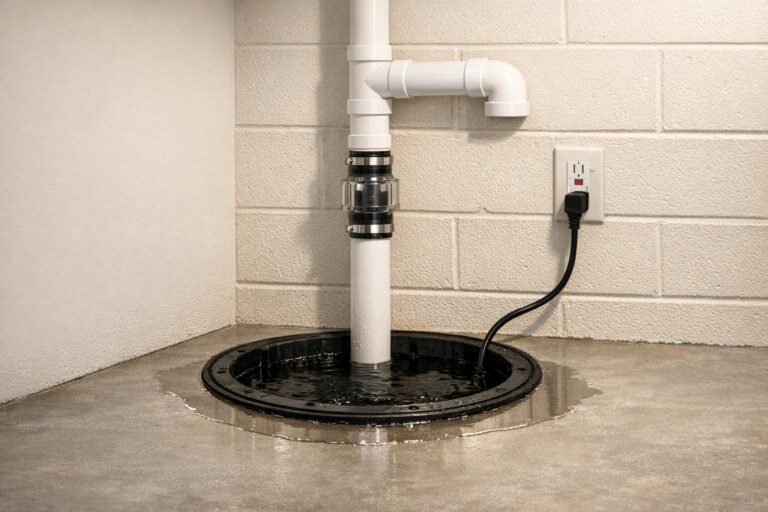
 CLOGGED OR BROKEN WEEPING TILE