
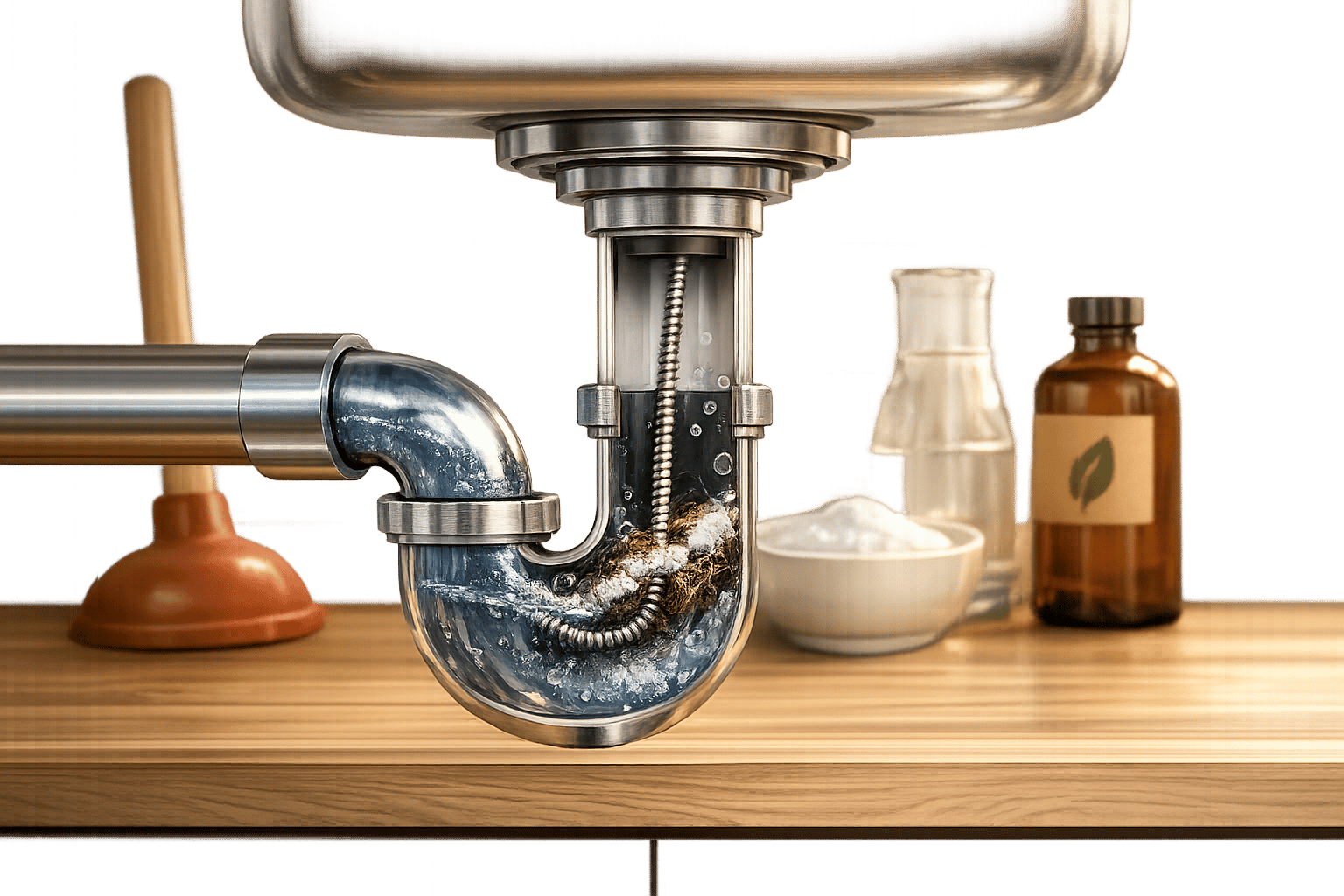
Clogged drains are a common issue in Canadian homes, especially in older neighbourhoods with aging pipes. Ignoring them can lead to costly damage, like sewage backups that can cost $3,000–$10,000 to fix. The best way to tackle clogs is by using safe, non-chemical methods like plungers, drain snakes, or natural remedies. Chemical cleaners may seem quick, but they can corrode pipes over time, especially in older systems.
Here’s a quick rundown of effective solutions:
- Prevent clogs: Use mesh strainers, avoid pouring grease down drains, and clean stoppers monthly.
- DIY fixes: Start with boiling water, baking soda and vinegar, or a plunger.
- Tools: Use a Zip-It tool for hair, a hand-crank snake for sinks, or a closet auger for toilets.
- When to call a plumber: If multiple drains are slow, or clogs keep recurring, professional help may be needed.
Taking care of your drains with regular maintenance and the right tools can save you time, money, and stress.
How to Unclog Any Drain | Ask This Old House

sbb-itb-5761e20
What Causes Drain Clogs and Why They Keep Coming Back
Understanding what causes clogs is key to preventing them from becoming a constant headache. Each type of drain has its own set of challenges, and knowing these can help you keep things flowing smoothly.
In the kitchen, grease and cooking fats that solidify as they cool are major culprits. These substances narrow your pipes and trap food particles over time. Even if you have a garbage disposal, items like fibrous vegetables, coffee grounds, eggshells, and pasta can build up and cause blockages.
In the bathroom, hair and soap residue are the main offenders. Hair mats tangle and cling to pipes, while soap scum creates a sticky surface that traps more debris. Toilets often get clogged when non-flushable items like feminine hygiene products, baby wipes, diapers, or cotton swabs are flushed.
“We don’t know why the wet wipe manufacturers feel empowered to deem these products flushable, but we always advise customers not to flush them.” – Jason Peavey, Owner of PV Heating, Cooling & Plumbing
Recurring clogs often happen because quick fixes don’t fully solve the problem. Chemical drain cleaners, for example, may only clear part of a blockage, leaving behind residue that easily traps new debris. Worse, these chemicals can corrode your pipes, creating rough surfaces that make it easier for grease and hair to snag. Neglected drain covers or stoppers can also let debris slip deeper into the system, worsening the problem over time. Older pipes, like those made of cast iron or concrete, are especially prone to issues. Their uneven surfaces catch debris more easily, and they’re more vulnerable to tree root intrusion compared to modern PVC pipes.
Preventing clogs starts with simple, proactive steps:
- Use mesh strainers to catch hair and food debris before they enter the drain.
- Avoid pouring fats or oils down the drain. Instead, let them cool in a container and throw them in the garbage.
- Consider switching from bar soap to liquid soap to cut down on soap scum buildup.
- Only flush human waste and toilet paper. Everything else – wipes, hygiene products, and cotton swabs – should go in the trash.
The material of your pipes also plays a role. Tree roots are naturally drawn to moisture and can infiltrate through tiny cracks in older pipes, while hard water deposits from calcium and magnesium can further restrict water flow. To help prevent buildup, running hot water through your drains regularly can dissolve soap residue and dislodge small debris before it turns into a bigger issue.
Drain Clogged: What to Do First Before Using Any Cleaner
Before you grab a cleaner or tool, take a moment to evaluate the situation. Is the issue isolated to one fixture, or are multiple drains affected? If your sink, tub, and toilet are all draining slowly, chances are you’re dealing with a blockage in the main drain line. Pay attention to any gurgling sounds from other fixtures when one is in use – this could be a sign of a venting issue or a main-line clog that might require professional help. Skipping this step could lead to unnecessary damage from using the wrong solution.
Next, look for other signs of a clog. Is there standing water? Do you notice a foul, sewage-like odour? These could indicate a deeper blockage or even a break in the sewer line. In the kitchen, try running the garbage disposal with ice and a bit of dish soap. This can help you figure out if trapped food is the culprit or if it’s a more serious clog.
For minor clogs without standing water, boiling water can be surprisingly effective. Heat up a kettle and pour the boiling water into the drain in two or three stages, pausing between pours to allow the heat to work on breaking down grease or soap scum. If you have PVC pipes, stick to hot tap water instead – boiling water can damage plastic pipes and loosen joints. Adding a good amount of grease-cutting dish soap before pouring the water can help emulsify fats and oils.
“I first turn to a 2-gallon pot of boiling water, followed immediately by a long stream of hot tap water… That renews the vigour of my drain 90% of the time.” – Christopher Weeks, Master Gardener
If hot water doesn’t do the trick, grab a plunger. Make sure there’s enough water in the basin to fully cover the plunger’s rubber cup, which is necessary to create a proper seal. Push down to get rid of trapped air, then pump vigorously about 15–20 times. Don’t forget to cover the overflow vent with a wet rag to maintain pressure. One warning: if you’ve already used a chemical cleaner, avoid plunging or using mechanical tools, as this can cause dangerous chemical splashes.
Always protect yourself with rubber or disposable gloves when tackling a clog. If your home has pipes installed before the 1970s, proceed carefully – older cast iron or clay pipes can be fragile. These initial steps will help you choose the safest and most effective way to clear your drain.
Mechanical Drain Cleaning Tools That Actually Work
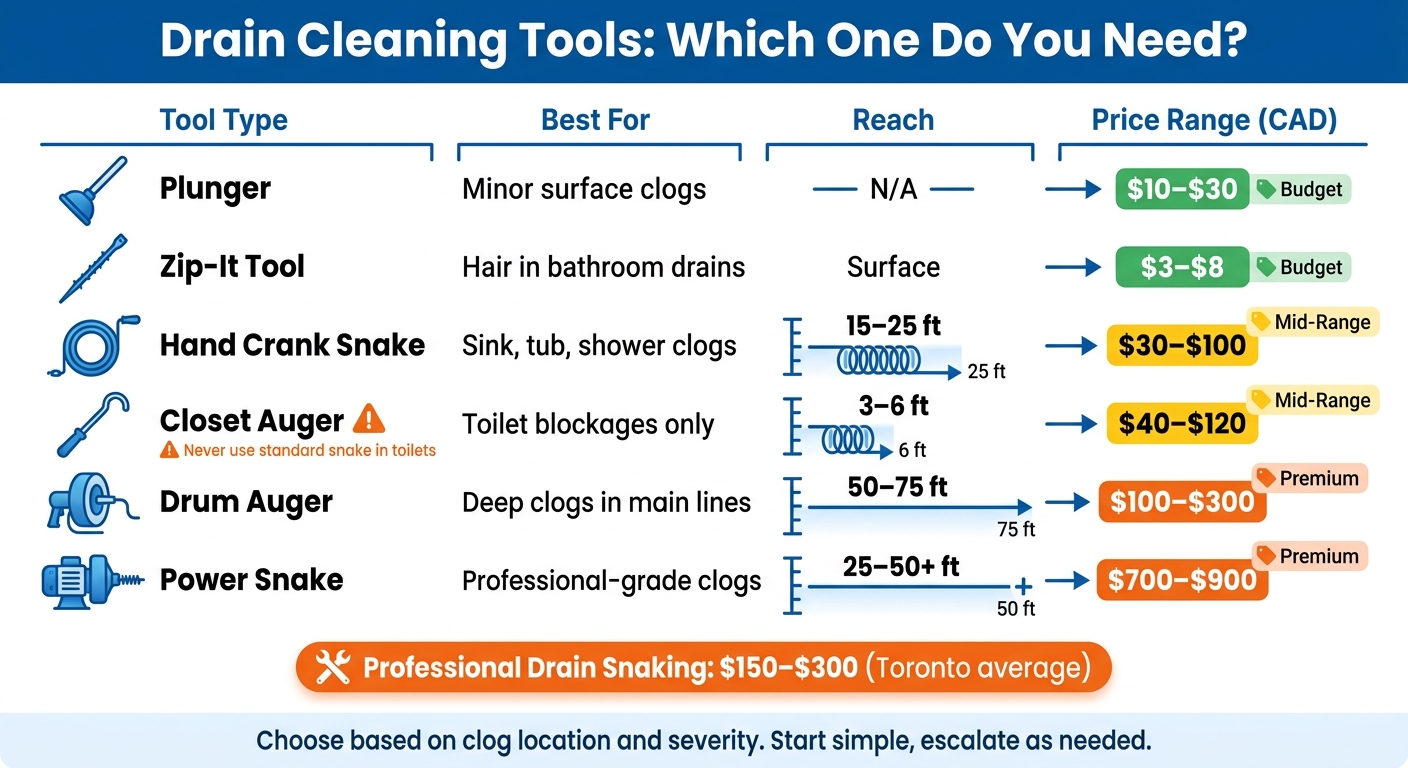
Drain Cleaning Tools Comparison: Types, Uses, and Costs
When hot water and a plunger don’t do the trick, mechanical tools are your next best bet. These tools physically remove blockages without relying on harsh chemicals, making them safer for both your pipes and the environment. The type of tool you need depends on where the clog is located and how deep it is within your drainage system.
Plungers are still the go-to choice for most clogs. Just make sure to use the right kind of plunger for the fixture you’re working on. For bathroom drains clogged with hair, Zip-It tools – those simple plastic strips with barbs – are incredibly effective and cost just a few dollars. For more stubborn clogs, you’ll need a snake or auger, which can reach deeper into the pipes. Be cautious when using these tools on older cast iron or clay pipes.
Best Drain Cleaning Tools for Home Use
There’s a variety of mechanical tools available, each suited to specific types of blockages. Here’s a breakdown of the most common options:
- Hand crank snakes (also called top snakes) are ideal for shallow clogs in sinks, tubs, and showers. These tools come with a flexible coil, typically 15–25 feet long, which you manually feed into the pipe while rotating to snag debris. A popular choice is the Cobra 1/4″ x 25′ Drum Auger, priced around $31.85 CAD, which has a 4.5/5 rating as an affordable solution for minor household clogs.
- Drum augers are more powerful and suited for deeper blockages. With a cable length of 50–75 feet stored in a canister, these tools provide more torque. Some models even connect to a drill for extra power. The DrainX Pro 50-FT Steel Drum Auger costs roughly $104.12 CAD and offers excellent reach. For heavy-duty use, tools like the RIDGID K-45AF Sink Machine (around $883.22 CAD) are highly rated, with a 4.7/5 score for their performance and reliability in tight spaces.
- Closet augers are specifically designed for toilets, featuring a protective rubber sleeve to avoid scratching porcelain. These tools are uniquely shaped to navigate toilet traps safely. Never use a standard snake in a toilet – it could damage the fixture.
Here’s a quick comparison of common drain cleaning tools:
| Tool Type | Best For | Reach | Price Range (CAD) |
|---|---|---|---|
| Plunger | Minor surface clogs | N/A | $10–$30 |
| Zip-It Tool | Hair in bathroom drains | Surface | $3–$8 |
| Hand Crank Snake | Sink, tub, shower clogs | 15–25 ft | $30–$100 |
| Closet Auger | Toilet blockages only | 3–6 ft | $40–$120 |
| Drum Auger | Deep clogs in main lines | 50–75 ft | $100–$300 |
| Power Snake | Professional-grade clogs | 25–50+ ft | $700–$900 |
In cities like Toronto, professional drain snaking typically costs between $150 and $300. However, if clogs keep coming back, the problem might be a buildup on the pipe walls rather than a simple blockage. Standard snaking usually clears a path but doesn’t clean the pipe’s interior surface.
How to Use a Drain Snake Properly
Using a drain snake effectively requires a bit of preparation. Start by laying down old towels around the drain to catch debris and splashes. Put on rubber gloves and safety goggles for protection. Make sure to remove the drain cover or stopper completely to give yourself full access to the pipe.
Feed the coil into the pipe gently to avoid damaging joints. Turn the handle clockwise while pushing forward – this helps the tip navigate bends and latch onto the clog. When you feel resistance, keep rotating to ensure the snake hooks the blockage instead of pushing it further down. Slowly pull the snake back while continuing to rotate, bringing the debris out with the cable.
“Knowing how to use one correctly makes the difference between clearing a blockage and creating a bigger problem.” – Majd, Owner & Lead Plumber, HYDROPRO
Once the clog is cleared, flush the drain with hot water for two to three minutes to remove any remaining debris. Clean the cable with a rag and disinfect it using a diluted bleach solution before storing it – this prevents rust and bacteria growth.
Important safety tip: Never use a snake in a pipe that has been treated with chemical cleaners. These chemicals can splash back during the process, causing serious burns.
If you notice multiple drains clogging at the same time or hear gurgling noises from other fixtures, the issue might be in your main sewer line. In such cases, professional equipment like hydro-jetting (which uses water at 3,000–4,000 PSI) may be necessary. If mechanical tools don’t solve the problem, there are still safe, natural drain cleaning methods to consider.
Natural Drain Cleaner Home Remedies That Are Safe
Natural remedies offer a safe and effective way to keep your drains clear without damaging pipes or releasing harmful fumes. Many of these solutions rely on everyday household items. A tried-and-true method is combining baking soda and white vinegar. The fizzing reaction helps break down organic buildup like grease, soap scum, and hair.
To use this method, start by removing any standing water to ensure the mixture can reach the clog. Pour ½ cup of baking soda, followed by ½ cup of white vinegar, into the drain. Cover the drain immediately to direct the reaction downward. Let it sit for 15 to 30 minutes, then flush thoroughly with hot water. If you have PVC pipes, stick to hot tap water to avoid softening the plastic material.
“Never use chemical drain cleaners like Drano – they corrode pipes over time.” – Ryan Giles, Red Seal Certified Plumber
For tougher clogs, you can enhance the reaction by adding salt or borax to the vinegar. Alternatively, lemon juice can replace vinegar, offering the same acidic reaction but with a fresh scent. Another option is cola, which contains carbonation and phosphoric acid that can dissolve clogs when left to sit for at least 15 minutes. For hair clogs or septic systems, biological enzyme cleaners are a safe and efficient choice, as they digest organic material without harming your plumbing.
To prevent clogs, run hot water down the drain for 30 seconds after each use to stop grease from solidifying. Clean drain stoppers monthly to avoid buildup. Using the baking soda and vinegar solution regularly in high-use drains can also help prevent blockages. These simple remedies work well alongside mechanical methods and provide an easy maintenance routine. However, if these natural solutions don’t resolve the issue, the clog may be deeper in the system or caused by a different type of debris. Up next, we’ll look at how natural cleaners stack up against chemical ones.
Chemical vs Natural Drain Cleaners: What Works Better
Let’s dive deeper into the pros and cons of chemical drain cleaners versus natural solutions. Choosing the right approach can make a big difference in clearing blockages while protecting your plumbing.
Chemical drain cleaners rely on potent ingredients like lye, bleach, sodium hydroxide, or sulfuric acid. These substances work quickly to dissolve hair and minor organic debris but struggle with larger clogs, such as baby wipes, food particles, or tree roots. The downside? They can wreak havoc on your plumbing. Over time, these chemicals erode the protective coatings on cast-iron and clay pipes, especially in older homes built before 1970, making them vulnerable to leaks or even collapse. Beyond that, they can damage garbage disposals and release toxic fumes, which may irritate your lungs or cause chemical burns.
“Chemical drain cleaners can cause irreparable damage to your plumbing system. There’s never a good reason to use them. Ever.” – Jason Peavey, PV Heating, Cooling & Plumbing
On the other hand, enzymatic cleaners offer a gentler solution. These cleaners use bacteria to break down organic waste, making them ideal for monthly maintenance rather than tackling major blockages. Another natural option is the classic baking soda and vinegar method. It’s perfect for minor kitchen clogs or fresh buildup and poses no risk to your pipes. Both natural methods are also safe for septic systems, unlike chemical cleaners, which can kill the beneficial bacteria needed for proper septic function.
Here’s a quick comparison:
| Feature | Chemical Cleaners | Enzymatic Cleaners | Vinegar & Baking Soda |
|---|---|---|---|
| Effectiveness | Quick on hair/small clogs; struggles with wipes or roots | Slow; great for regular maintenance | Effective for minor, fresh clogs |
| Pipe Safety | Damages cast iron, clay, and galvanized steel | Safe for all pipe materials | Safe for all pipe materials |
| Environmental Impact | High – toxic fumes and potential water pollution | Low – eco-friendly | Low – biodegradable |
| Septic Compatibility | Harmful; kills beneficial bacteria | Adds waste-digesting bacteria | Safe; doesn’t disrupt the system |
| Cost (DIY) | – | Typically used for monthly maintenance | $5–$15 |
For long-term care, enzyme-based solutions are a safe and effective choice, with professional treatments ranging from $50 to $150. When natural options don’t cut it, mechanical tools can provide immediate relief without risking damage to your pipes. Up next, we’ll explore drain cleaners that are safe for your plumbing and what to steer clear of.
Clearing Different Types of Clogs: Targeted Solutions
Different drains require different methods to tackle clogs effectively. A hair-clogged shower drain, a grease-filled kitchen sink, and a blocked toilet each demand unique approaches to avoid damaging your plumbing. Here’s how to handle these common clogs with care.
Best Way to Unclog a Shower Drain (Hair Clogs)
Hair clogs are best addressed in two steps. First, remove the drain cover and use a plastic drain snake. This tool, equipped with small teeth, is perfect for pulling out hair clumps from shallow blockages. It’s inexpensive and easy to use.
“A hand crank snake… is best suited for sink, tub, and shower drains where blockages are relatively shallow.” – Majd, Owner & Lead Plumber, HYDROPRO
Once you’ve removed most of the hair, you can deal with any leftover residue by using a natural cleaning method, such as those mentioned in the Natural Drain Cleaner Home Remedies section. For other types of clogs, keep reading for detailed solutions tailored to sinks and toilets.
How to Unclog a Sink Drain Step by Step
When dealing with a clogged sink, start with the simplest solution and escalate only if necessary. Begin by pouring a kettle of hot water directly down the drain. Use a funnel to protect your sink’s surface. For metal pipes, boiling water can help dissolve grease, but for PVC pipes, ensure the water temperature stays below 79°C to avoid damage.
If hot water doesn’t do the trick, try a baking soda and vinegar treatment, as outlined in the Natural Drain Cleaner Home Remedies section.
Still clogged? Reach for a plunger. Block any overflow holes with duct tape to optimise suction, then plunge vigorously. If the clog persists, a hand-crank drain snake may be your best bet. These tools, typically 15–25 feet long, can handle most household clogs. Insert the snake gently until resistance is felt, then rotate it clockwise to break up the blockage as you slowly retract it.
How to Unclog a Toilet Without Chemicals
Toilets require extra care because conventional drain snakes can scratch the porcelain, leaving permanent marks. Avoid using them altogether. Start with a plunger, positioning it firmly over the drain and pumping steadily to create pressure.
If plunging doesn’t work, try the hot water and dish soap method. Add a generous squirt of dish soap to the toilet bowl, followed by hot (but not boiling) water. This helps lubricate the clog, making it easier to dislodge. For tougher blockages, use a closet auger. This tool is specifically designed for toilets and comes with a protective rubber sleeve to prevent damage. Insert the auger tip into the toilet trap, rotate it clockwise to engage the clog, and then gently retract it while continuing to turn.
“Never use a standard snake in a toilet – you risk scoring the porcelain permanently.” – Majd, Owner & Lead Plumber, HYDROPRO
If multiple drains in your home are clogging at the same time or flushing the toilet causes gurgling sounds in nearby sinks, it could signal a blockage in the main sewer line. In such cases, professional assistance may be necessary. Persistent clogs that resist these targeted methods might indicate a deeper issue requiring expert inspection.
Recurring Drain Clogs: How to Fix the Root Cause
If the same drain keeps clogging every few weeks, the issue likely goes beyond a simple blockage. Temporary fixes like snaking might clear the immediate problem, but they don’t address the underlying cause.
“Snaking punches a hole through the clog but doesn’t clean the pipe walls. If you have recurring clogs, the buildup on the pipe interior is likely the real problem – and snaking alone won’t fix it.” – RenoHouse
Let’s explore the common causes of persistent clogs and how to tackle them effectively.
Recurring clogs often stem from deeper issues like roots invading small pipe cracks or the natural wear and tear of older pipes. These problems create traps for debris, leading to blockages. Some of the main culprits include:
- Tree root intrusion: Roots can enter pipes through cracks or loose joints, forming dense networks that catch debris.
- Structural pipe damage: Older pipes, especially those made of clay or cast iron, are prone to cracking or collapsing, creating areas where clogs easily form.
- Grease and soap buildup: Kitchen grease and bathroom soap scum coat pipe walls, restricting water flow over time.
- Mineral deposits: Hard water can leave behind mineral buildup, further narrowing pipes.
You can reduce the risk of clogs with a few simple habits:
- Use drain guards to catch debris.
- Switch from bar soap to liquid soap to prevent residue.
- Flush drains monthly with a mix of ½ cup white vinegar and ½ cup water.
- Always dispose of grease in a container rather than pouring it down the drain.
If these measures don’t solve the problem, it might be time to investigate further. A professional fibre-optic camera inspection, which costs about $200–$400, can reveal hidden issues like root intrusions, cracks, or pipe collapses. Warning signs such as multiple slow drains, gurgling sounds when flushing, or soggy patches in your yard may indicate main line blockages or underground leaks that need professional attention.
For persistent clogs that resist routine maintenance, professional solutions are often the best option. Companies like Leaquida Waterproofing offer services ranging from drainage system upgrades to trenchless pipe lining, which provides durable repairs without the need for extensive digging. To prevent future root-related problems, consider planting trees at least 20 to 30 feet away from sewer lines and installing physical root barriers.
Emergency Drain Cleaning Solutions That Work Overnight
Sometimes, a clogged drain can’t wait for a weekend DIY project or a weekday plumber visit. When you’re dealing with an urgent situation, these overnight solutions are designed to tackle stubborn clogs while you sleep – without causing damage to your pipes.
One reliable option is enzyme-based cleaners. These products rely on natural enzymes like protease (to break down hair and food), lipase (to tackle fats and oils), and amylase (for starches). To use, pour 240 mL (8 oz) of the cleaner into the drain before bedtime. Allow it to sit for 6–8 hours, then flush with lukewarm water in the morning. For drains that are persistently slow, this process can be repeated nightly for 3–5 days.
“Using Multi-Enzyme Technology derived from natural sources, this method breaks down organic matter before it becomes problematic, preventing clogs rather than just treating them after they occur.” – Green Kulture
If you don’t have enzyme cleaners on hand, the classic baking soda and vinegar method works well for overnight use. Start by pouring 1 cup (240 mL) of baking soda into the drain, followed by 1 cup (240 mL) of white vinegar. Quickly cover the drain to trap the chemical reaction inside, and let it sit overnight. This combination dissolves grease, soap scum, and even unpleasant odours. In the morning, flush the drain with hot water – but if you have PVC pipes, keep the water temperature below 79°C to avoid damage.
For particularly tough clogs, try a salt, borax, and vinegar mixture. Combine 60 mL each of salt and borax with 120 mL of vinegar, then pour it down the drain. While 20–30 minutes might be enough for some blockages, letting it sit overnight can make a bigger impact. This method is safe for all pipe types and doesn’t release any harmful fumes.
If these overnight fixes don’t get the job done, it might be time to consider professional help. Check out the next section for advice on when to call in a plumber.
When to Call a Plumber for Drain Cleaning
Sometimes, a clogged drain is more than just an inconvenience – it can point to a much larger plumbing issue. For instance, if multiple drains in your home are backing up, it’s likely a sign of a main sewer line blockage. A clear giveaway is when unusual things happen, like your sink gurgling when you flush the toilet or water backing up from one fixture when you use another. These are signs that the problem isn’t limited to a single drain but affects the main sewer line instead.
If clogs keep coming back despite your best DIY efforts, it’s probably time to bring in a professional. Persistent blockages often hint at deeper issues like tree roots invading the pipes, scaling, or even partial pipe collapse. While a DIY snake might provide a temporary fix, it won’t address the root cause. Professionals, on the other hand, can use tools like hydro-jetting, which employs high-pressure water (3,000 to 4,000 PSI) to thoroughly clean the inside of your pipes, clearing out grease, roots, and other debris that hand tools simply can’t handle.
“Ignoring these signs can turn a $150 drain cleaning into a $2,000 sewer repair.” – Majd, Owner & Lead Plumber, HYDROPRO
Other warning signs include recurring foul odours or drain flies, which often indicate a buildup of organic material or biofilm deeper in the system. Older pipes made of cast iron or clay require extra care, as they are more prone to damage and blockages.
When DIY solutions fail to solve the problem, a professional assessment becomes essential. Persistent clogs, especially when they affect multiple fixtures, often require more than just surface-level fixes. Companies like Leanquida Waterproofing can provide comprehensive drainage system evaluations, addressing not only the immediate issue but also related problems like foundation drainage that may contribute to recurring clogs.
For context, basic professional drain snaking typically costs between $150 and $300. If the issue involves cleaning the main sewer line, expect to pay between $300 and $500. However, neglecting these problems can lead to emergency repairs that could cost upwards of $10,000. Taking action early can save you from significant headaches – and costs – down the line.
Conclusion
Taking care of your drains doesn’t have to be a hassle or break the bank. Choose the right tools for the job: a closet auger for toilets, a hand-crank snake for shallow sink or shower clogs, and a flange plunger for a proper seal. When using a snake, always turn the handle clockwise as you feed the cable through, and avoid forcing it if you hit a tough blockage – this helps protect your pipes from damage.
Skip chemical drain cleaners. They can corrode pipes, release harmful fumes, and even cause burns, especially in older plumbing systems. Instead, focus on prevention: use drain guards, dispose of grease properly, and flush your drains regularly with hot water.
Pay attention to warning signs that could point to bigger problems. Issues like multiple drains clogging at once or gurgling sounds from fixtures might indicate trouble with the main sewer line. If clogs keep coming back despite your efforts, it’s time to consider professional help. Basic drain snaking by a plumber usually costs $150 to $300, while hydro-jetting can range from $300 to $600. These costs are minor compared to the $3,000 to $10,000 you might spend on emergency sewer backup cleanups if issues are ignored.
Regular maintenance is the best way to avoid expensive repairs. Clean removable drain guards weekly, flush drains with hot water every month, and schedule professional inspections every two to three years. For homes built before 1970 or those with mature trees near sewer lines, annual inspections are a smart move.
With a little effort and the right approach, you can keep your drains in top shape. Combine simple prevention habits with the right tools, and know when it’s time to call in a pro. This ensures your plumbing system stays in good working order for years to come.


 CLOGGED OR BROKEN WEEPING TILE