
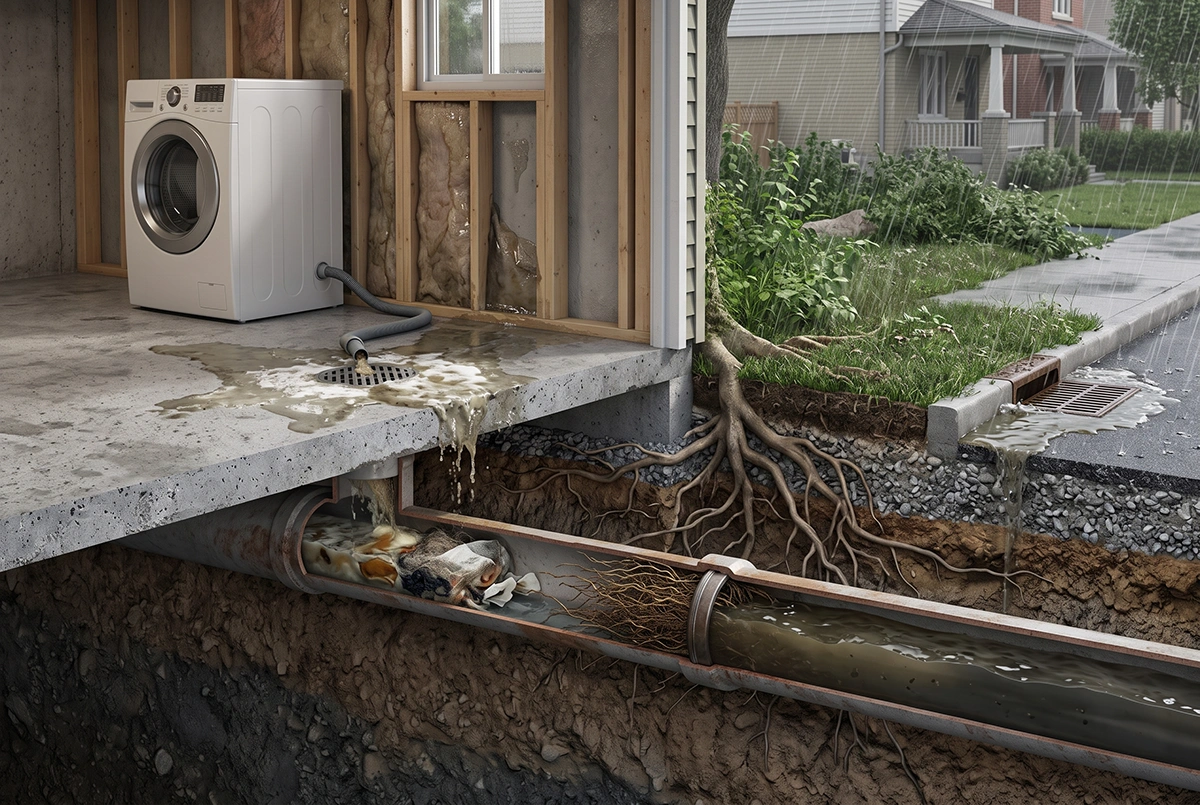
A basement drain backing up usually means wastewater cannot move freely through the connected piping, or the public sewer is too full to accept it. Grease, flushed wipes, invading roots and damaged underground lines can restrict flow. Heavy rainfall can also overload parts of Toronto’s sewer system, pushing water back towards low plumbing fixtures.
The timing helps explain what to investigate. An overflow during laundry may point to a restriction that becomes noticeable under a larger discharge. Trouble affecting several homes during a storm raises a different question about the street sewer. Identifying the source matters because clearing a local clog, repairing a damaged lateral and managing groundwater address different problems.
Why Water Comes Back Through a Floor Drain?
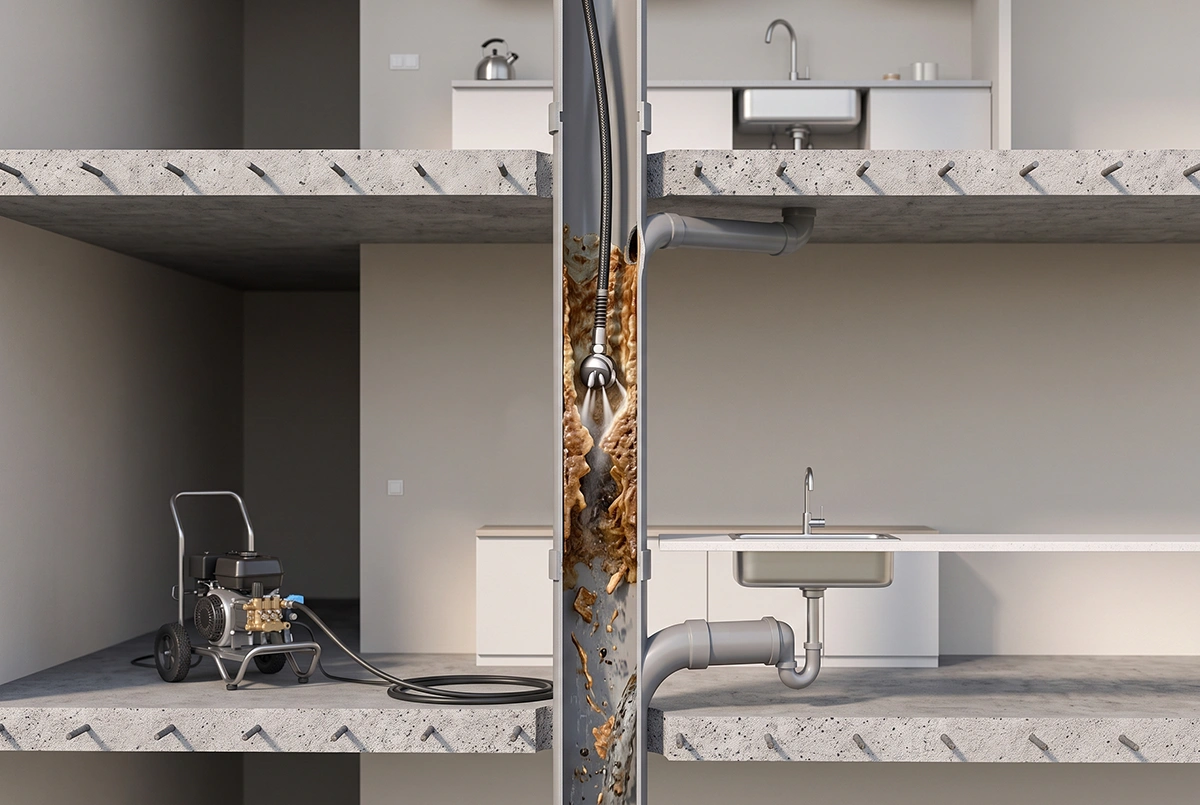
Household wastewater normally travels through branch pipes into a main building drain, then through a sewer service line to the municipal system. If that route becomes obstructed, incoming wastewater collects upstream. Once its level reaches a low connected opening, it can spill onto the floor or rise through a shower or toilet.
Seeing sewage backing up in basement fixtures does not establish where the obstruction is. The visible opening may simply be the lowest available escape point. A problem farther along the shared line can show up there even when the fixture itself is clear.
Not every wet floor involves that route. Groundwater can enter through cracks or the wall-floor joint, and surface runoff can enter through a window or doorway. Note where the water first appears before assuming that every flood needs the same repair.
Common Causes of Restricted Wastewater Flow
Several conditions can produce similar symptoms. The following causes explain how capacity is lost and why an apparently minor slowdown can develop into an overflow.
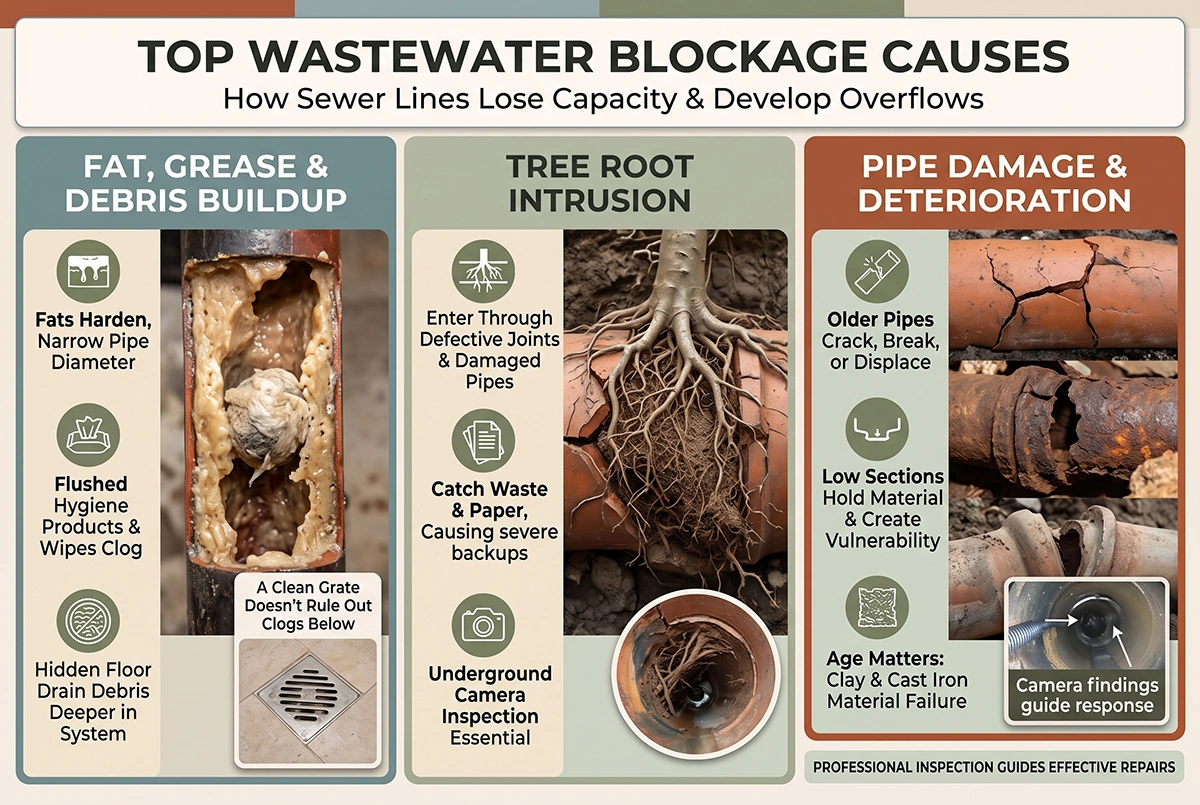
Grease, Wipes and Other Flushed Materials
Cooking fats can cool and stick inside piping. Over time, grease buildup narrows the available passage and catches other debris. Wipes and personal hygiene products can add to the obstruction; a “flushable” label does not mean a wipe breaks down like toilet paper.
A clogged floor drain in a basement utility area may involve debris near the opening, but a clean grate does not rule out a blockage downstream. Repeatedly removing visible material will not resolve a restriction deeper in the system. The affected fixtures and inspection findings should guide the response.
Tree Roots in Underground Pipes
Roots can enter defective joints or damaged sections of a buried line and develop into a mass that catches waste. The location of a nearby tree alone cannot identify the affected pipe or establish the cause. Underground inspection is needed to understand what is happening.
When an inspection finds tree roots causing sewer backup, clearing the obstruction may restore flow without resolving the opening that allowed roots inside. Ask whether the pipe is otherwise sound and what follow-up is appropriate. A short-lived improvement can be a reason to investigate the condition of the line more closely.
Cracked, Displaced or Deteriorated Lines
Older Toronto properties may have sewer piping made from clay or cast iron. Cracks, deterioration and displaced connections can interrupt the route out of the house. Low sections may also retain material instead of carrying it onward, making the system vulnerable during heavier use.
If a basement drain keeps backing up, record how long each clearing lasts and whether the same fixtures are affected. Repeated service calls do not prove that replacement is necessary, but they warrant a clearer explanation of the underlying condition. Camera findings can help distinguish a recurring obstruction from a damaged section that needs a different repair.
How Heavy Rain Can Trigger an Overflow?
Toronto has different sewer arrangements, including areas with combined systems that carry both wastewater and stormwater. During heavy rainfall, incoming flow can exceed available capacity. A sewer surcharge occurs when the water level rises above the top of the pipe, creating conditions that can push flow back towards connected properties.
If you notice water coming up through a basement floor drain after heavy rain, both the public system and your own service line may need investigation. Rainfall timing is useful evidence, but it does not prove that the City’s infrastructure caused the incident. A private restriction can also become apparent during a wet-weather event.
Several neighbours reporting similar trouble can strengthen the reason to investigate the street sewer. A suspected city sewer backup into basement fixtures should be reported to Toronto’s 311 service so the incident can be investigated and recorded. Responsibility depends on the location and findings, rather than the appearance of the water alone.
What the Timing and Affected Fixtures Can Tell You
A basement floor drain backing up while another fixture discharges suggests a connection worth tracing. The following patterns can help describe the incident when arranging an assessment. They are clues, not a diagnosis.
| Observed pattern | Possible explanation | Useful detail to record |
|---|---|---|
| One sink or shower drains slowly. | A restriction in that fixture or its branch. | Whether other fixtures work normally. |
| Several low fixtures rise together. | A restriction along a shared route. | Which fixtures change at the same time. |
| Overflow starts during a storm. | Sewer surcharge or a restriction exposed by wet weather. | Rainfall timing and nearby affected properties. |
| Trouble returns after clearing. | Remaining debris, roots or pipe damage. | Previous inspection findings and time between incidents. |
| Water first appears at a crack or wall joint. | Groundwater entry rather than plumbing backflow. | The first visible entry point. |
Two common household triggers deserve particular attention:
- A basement drain backing up when washing clothes may reveal a restriction when the washer releases a substantial amount of water. That timing does not, by itself, mean the washing machine is defective.
- A basement drain backing up when flushing a toilet can indicate a restriction farther along the shared route. Stop testing it with repeated flushes, since each flush adds more wastewater.
Record these observations from a dry, safe location. Do not keep running appliances to reproduce a known overflow. Photographs of the first affected opening and notes about recent work can give the person investigating a more useful starting point.
Sewer Backup in a Basement: What to Do?
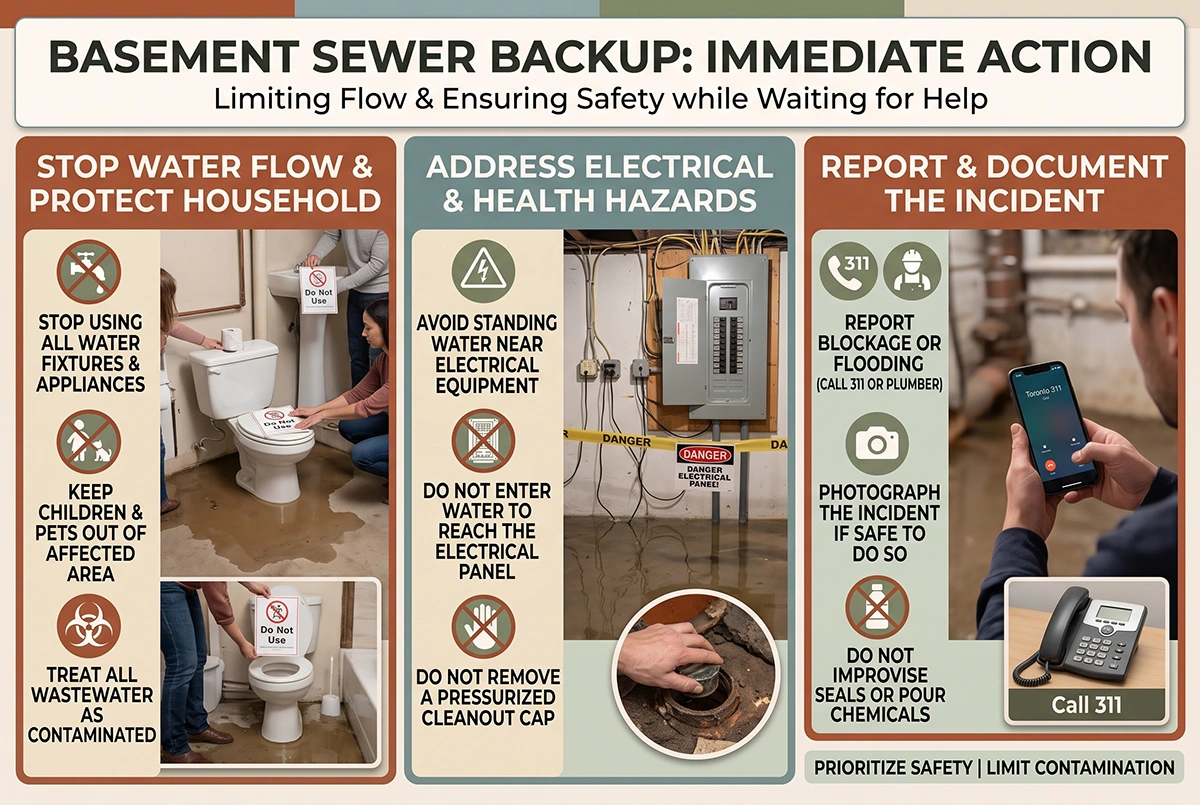
The immediate aim is to limit additional flow and keep people away from contaminated or electrically hazardous areas. Take these first steps while arranging help:
- Stop using connected toilets, sinks, showers and water-discharging appliances. Ask other household members to do the same.
- Keep children and pets out of the affected area. Treat wastewater as contaminated, even if it has little visible debris or odour.
- Stay out of standing water where electrical equipment, outlets or wiring may be involved. Do not enter it to reach the electrical panel; seek qualified assistance from a safe location.
- Report a blocked sewer service line or basement flooding to Toronto’s 311 service. If only one fixture is affected, a licensed plumber can investigate that local problem.
- Photograph the incident only where safe and record its timing, affected fixtures and previous repairs. Arrange appropriate cleanup once the immediate hazards and source are addressed.
Do not remove a pressurized cleanout cap, improvise a seal over an overflowing opening or pour chemicals into standing wastewater. Tell the responding professional if any chemical product has already been used. An accessible cleanout can assist an investigation, but opening it should be left to someone who can assess the conditions safely.
How to Reduce the Risk of Another Incident?
Preventive work should follow the findings. A property with a damaged service line needs a different response from one exposed to reverse flow during sewer surcharge. The main basement sewer backup causes can overlap, so ask how each proposed measure addresses the problem identified at your home.
Keep Waste Materials Out of the System
Dispose of cooking grease in the waste rather than the sink, and keep wipes, hygiene products and other unsuitable materials out of toilets. Maintain access to cleanouts and retain inspection videos or written findings. These records make it easier to compare recurring problems and assess whether an earlier repair resolved the cause.
There is no single cleaning interval that suits every property. Previous root intrusion, the condition of the piping and the history of blockages can affect the follow-up needed. Ask for a maintenance plan based on those findings instead of relying only on the building’s age.
Understand the Role of Backflow Protection
A suitable backwater valve can help prevent reverse flow from the sewer through the connection it protects. It does not clear a clog within the home or repair a broken line. Suitability, placement and maintenance need professional assessment, including which fixtures are protected.
When the valve closes against reverse flow, wastewater from protected fixtures may be unable to leave through that route. Continued household use can therefore create another problem upstream. Follow the installed device’s operating instructions, keep it accessible and arrange the inspections or servicing it requires.
Separate Sewer Problems from Groundwater Problems
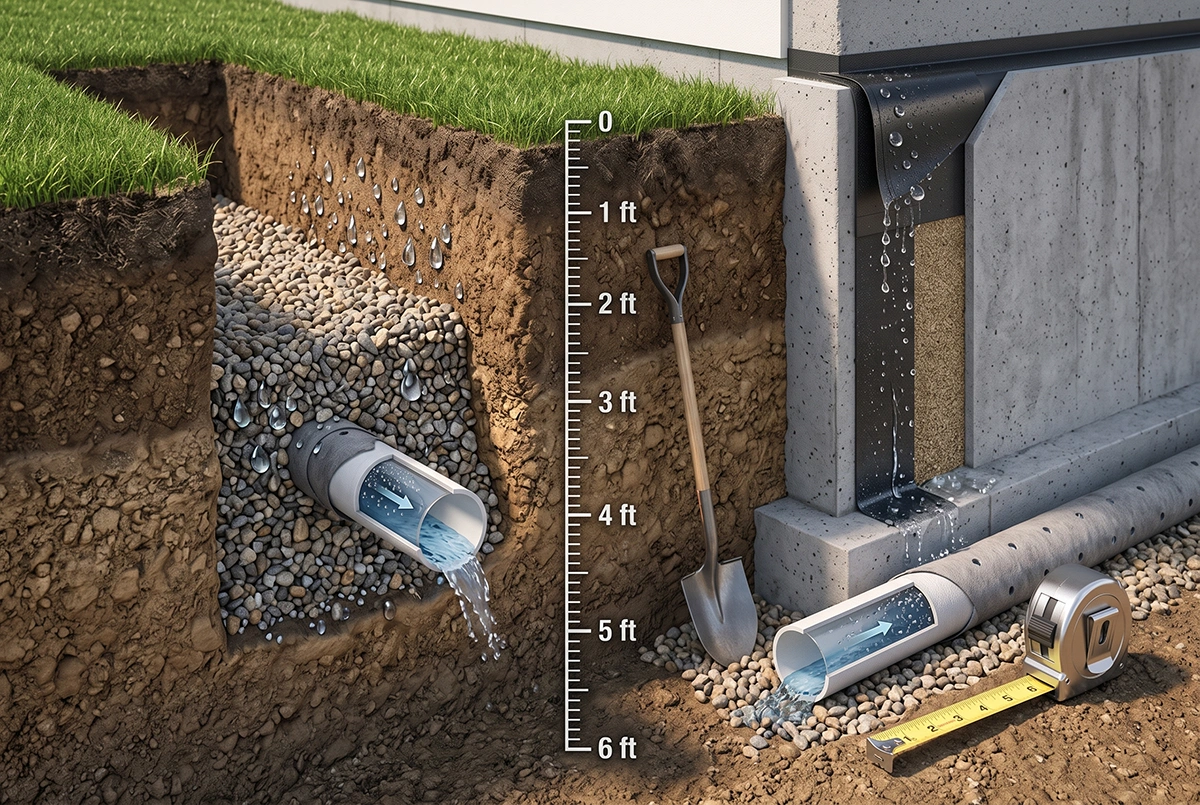
A sump pump generally removes water collected in a sump basin. A conventional groundwater pump does not clear a blocked sanitary sewer or substitute for backflow protection. Its role depends on the home’s drainage arrangement and the water it is designed to handle.
Likewise, interior waterproofing can form part of a plan for groundwater entering at the foundation. It should not be presented as a fix for sewage reversing through plumbing. If the entry route is unclear, have it assessed before choosing work; Leaquida can assess relevant basement waterproofing needs once the source has been identified.

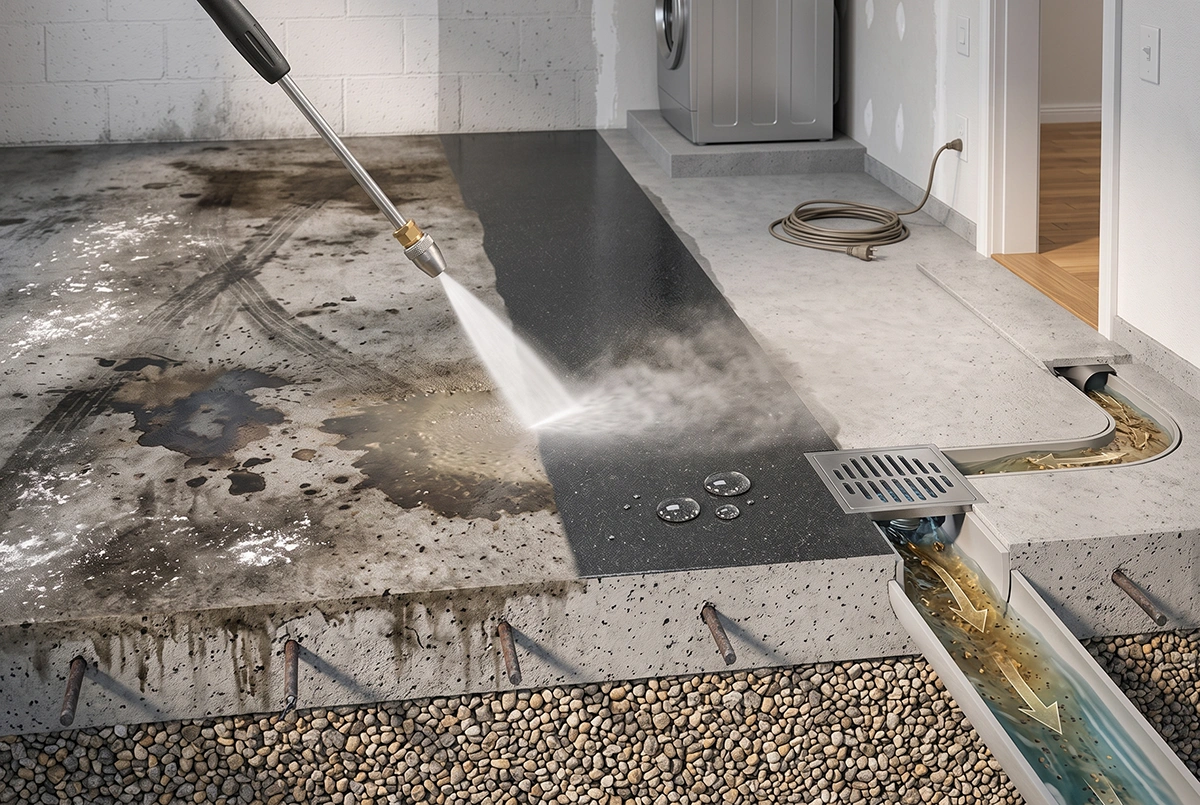
 CLOGGED OR BROKEN WEEPING TILE