
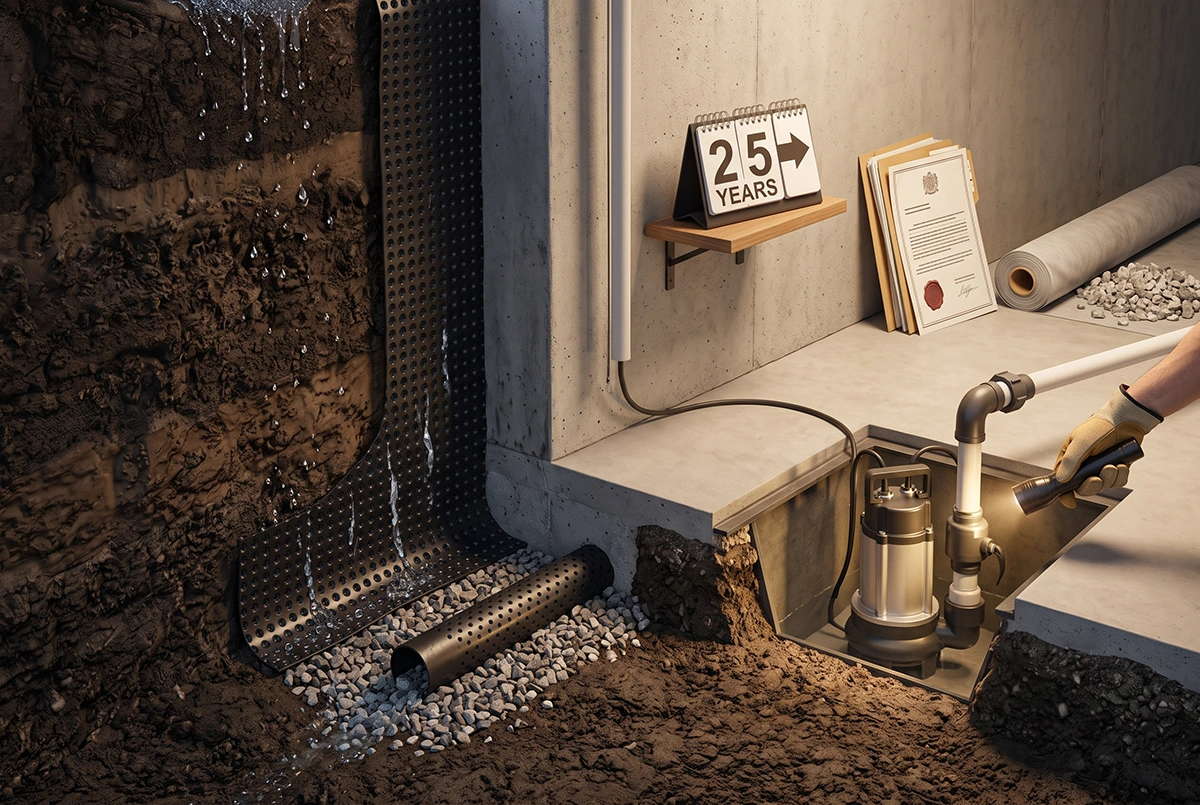
Basement waterproofing can last for decades, but the components do not all last equally long. Buried membranes and drainage can remain in service while equipment wears out: a well-maintained sump pump typically lasts about 7–10 years. The condition of the whole system matters more than a single installation date.
A dry basement depends on keeping water away from the foundation, collecting groundwater and discharging it safely. To judge how much life your protection has left, check what was installed, how it has been maintained and whether its performance has changed. A warranty provides separate information about covered repairs.
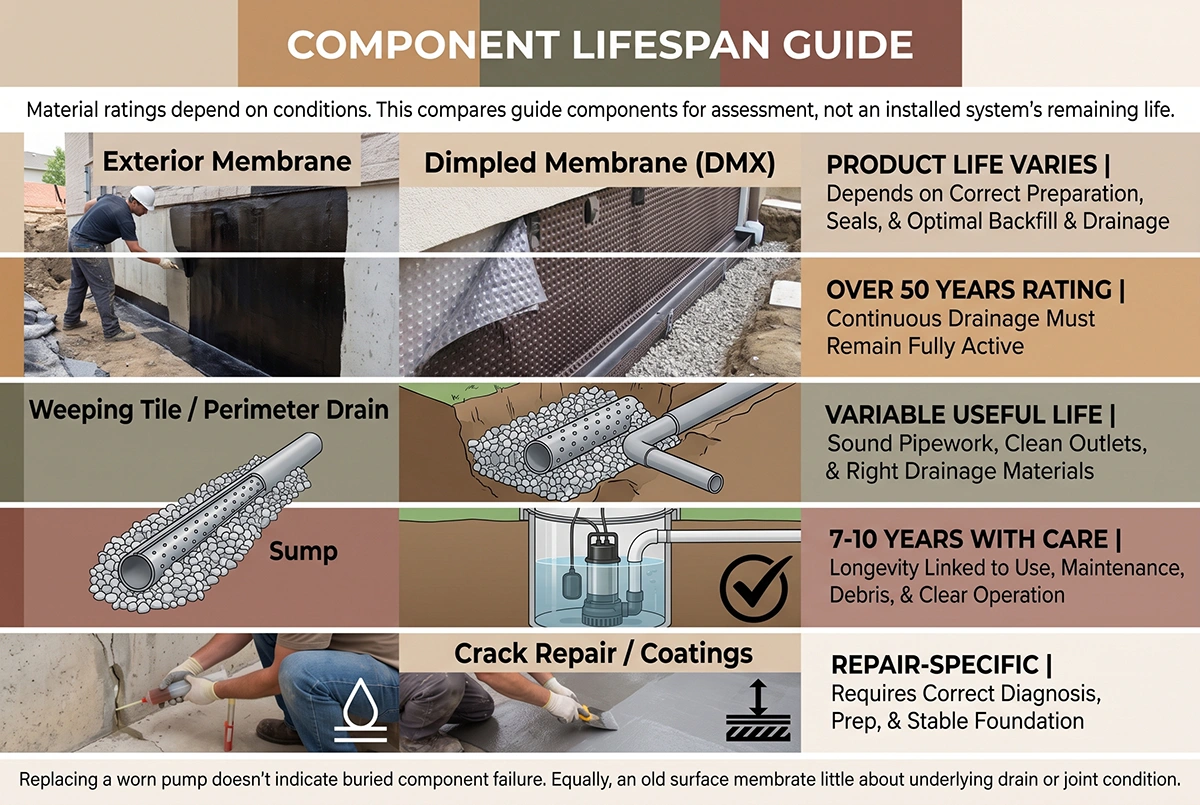
Basement Waterproofing Lifespan by Component
Product ratings apply to specified materials under stated conditions. This comparison identifies the components to assess; it does not predict an installed system’s remaining life.
| Component | What to expect | What determines useful life |
|---|---|---|
| Exterior waterproofing membrane | Product-specific long-term use | Preparation, sealed joints, backfill protection and drainage |
| Dimpled foundation membrane | DMX AG rating: over 50 years | A component rating; drainage must keep working |
| Weeping tile or perimeter drain | No universal replacement age | Sound, clear pipework, suitable drainage material and an open outlet |
| Sump pump | Often 7–10 years with maintenance | Use, debris, float operation and clear discharge |
| Crack repair or coating | Repair- and product-specific | Correct diagnosis, preparation and foundation movement |
Replacing a worn pump does not mean every buried component has failed. Equally, an old membrane that looks sound above ground tells you little about the drain or the joints below the soil.
How Long Does Foundation Waterproofing Last?
A properly designed exterior assembly can provide protection for decades. Its membrane limits water entry through the wall, while drainage carries water away. Seams, penetrations and the connection near the footing all affect performance, so waterproofing membrane lifespan cannot be judged from the membrane material alone.
For example, some dimpled foundation drainage and protection membranes are rated for a service life of more than 50 years. This rating applies only to the specified component under stated conditions and does not guarantee that every waterproofed basement will remain dry for 50 years. It also does not confirm which product was installed at a particular property.
Note: A product rating or warranty applies to the specified component and stated conditions; it should not be treated as a guaranteed lifespan for the entire installed waterproofing system. Verify the installed product and written terms before relying on it.
Good exterior waterproofing depends on the complete assembly. Poorly prepared walls, damaged material during backfilling or a blocked drain can cause trouble much earlier. Keep the product name, installation photos and scope of work so an inspector can assess the actual system.
How Long Does Interior Basement Waterproofing Last?
An interior drainage system manages water that reaches the inside of the foundation. It typically collects that water at the perimeter and sends it to a sump or another designed outlet. Its passive components can provide long-term service, but performance depends on keeping the collection and discharge paths open.
Where a pump is part of interior basement waterproofing, plan for equipment maintenance and eventual replacement. The typical 7–10-year pump range is an estimate, not a deadline. Heavy use, a sticking float or a restricted discharge can cause an earlier failure.
A battery backup can help during a power outage, but its battery and controls need testing too. Replacing a pump or battery is routine component work; it does not automatically justify removing a functioning perimeter drain.
How Long Does Weeping Tile Last?
Weeping tile is a drainage pipe installed near the foundation footing. Despite the name, modern systems commonly use perforated plastic pipe. There is no reliable replacement date that applies to every installation: the pipe may remain intact while sediment, roots or mineral deposits restrict water flow.
Check performance when dampness returns after rain, water appears at the wall–floor joint or the sump behaves differently. These symptoms need diagnosis because similar signs can come from grading, window wells or plumbing. Accessible cleanouts and an inspection of the discharge route can help identify the problem.
A French drain also collects and redirects groundwater, although its location and layout depend on the property. Keep the drain layout, outlet location and French drain warranty with your installation records. They are useful when arranging cleaning, repairs or a warranty claim.
Why Waterproofing Can Fail Early?
An early leak can result from a fault in one part of the system or a change around the house. Common causes to investigate include:
- More water reaching the wall. Blocked gutters, short downspouts or settled ground can concentrate runoff beside the foundation.
- Installation defects. Gaps at penetrations, unsuitable surface preparation or damage during backfilling can interrupt the protective barrier.
- Restricted drainage. Sediment, roots, damaged pipework or an obstructed outlet can prevent collected water from leaving.
- Foundation movement. A repaired crack can reopen, or a new crack can form nearby as the structure or surrounding soil moves.
- Pump or power failure. A blocked float, worn pump, frozen discharge or power outage can interrupt water removal.
Toronto and GTA homeowners should pay particular attention during spring thaw and heavy rain, when water-management problems may become visible. Condensation can also make a basement damp, so moisture alone does not prove the buried waterproofing has failed.
Basement Waterproofing Maintenance Checklist
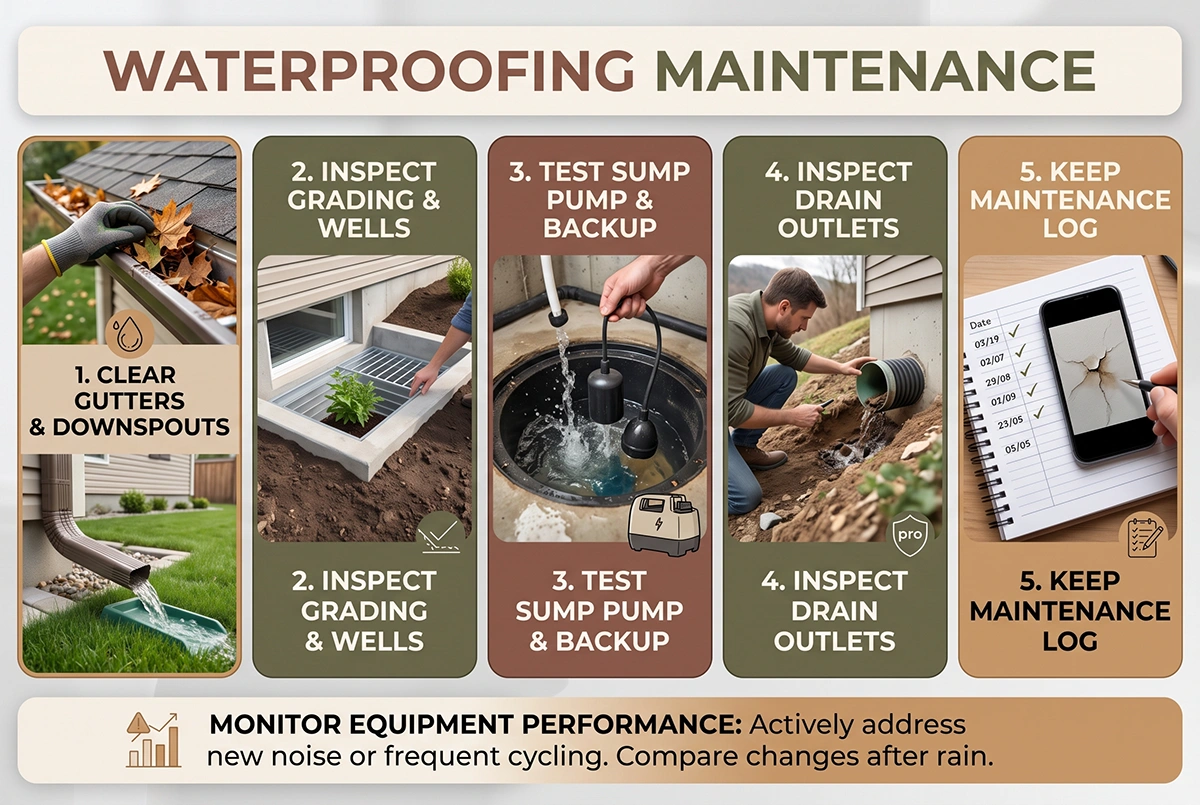
Inspect the system before spring thaw and after severe storms, alongside the more frequent checks required by your equipment manufacturer. A practical routine includes these steps:
- Clear gutters and check downspouts. Confirm that roof water flows away from the foundation and does not collect beside the wall.
- Check grading and window wells. Look for settled soil, blocked drains and debris that can hold water against below-grade openings.
- Test the sump and any backup equipment. Follow the manufacturer’s instructions and confirm that the float operates and water leaves through the intended discharge route.
- Inspect accessible drain outlets. Look for debris, damage or ice. Arrange a professional check if water cannot move freely or the drain’s condition is uncertain.
- Keep a service record. Photograph new stains or cracks and record testing, cleaning, repairs and replacement dates. Compare changes after significant rain.
For the pump-specific part of basement waterproofing maintenance, follow a regular sump pump maintenance routine that includes the float, discharge and backup power. Do not wait for standing water before investigating a new noise, repeated short cycles or a change in pumping behaviour.
When to Repair a Component or Replace the System
Start with the source of the water. A leaking pipe, an overflowing window well and a blocked foundation drain need different repairs. One faulty pump or local leak may call for a targeted repair, while repeated seepage along several walls can justify a broader assessment.
Professional basement crack repair can address a suitable local defect, but sealing alone may not resolve continuing movement or widespread drainage problems. Widening cracks or displaced walls need assessment of the foundation as well as the leak.
Before authorizing work, check any existing basement waterproofing guarantee and contact the installer about the claim procedure. If major replacement is recommended, ask which components have failed and what evidence supports that conclusion. Age is useful context; recurring leaks and inspection findings explain the work needed.
What a Basement Waterproofing Warranty Covers
A warranty sets out what the provider will remedy under specified conditions. Its duration does not measure the physical lifespan of the system. A manufacturer’s material warranty and an installer’s workmanship warranty may cover different defects and offer different remedies.
Ask for the written terms and check these points before relying on the coverage:
- Scope: the walls, drain runs, repairs and products included in the contract.
- Remedy: whether a valid claim covers material, labour, access work or only a replacement product.
- Conditions: inspection, maintenance, registration and notification requirements.
- Exclusions: how the terms address new cracks, structural movement, blocked drainage, pump failure or unrelated water sources.
- Transfer: whether coverage passes to a new owner and whether notice or a fee is required.
For work with Leaquida, request the terms for the particular proposed repair. Do not assume that a warranty for a membrane, drain or crack also covers every pump, finished surface or future water problem.


 CLOGGED OR BROKEN WEEPING TILE