
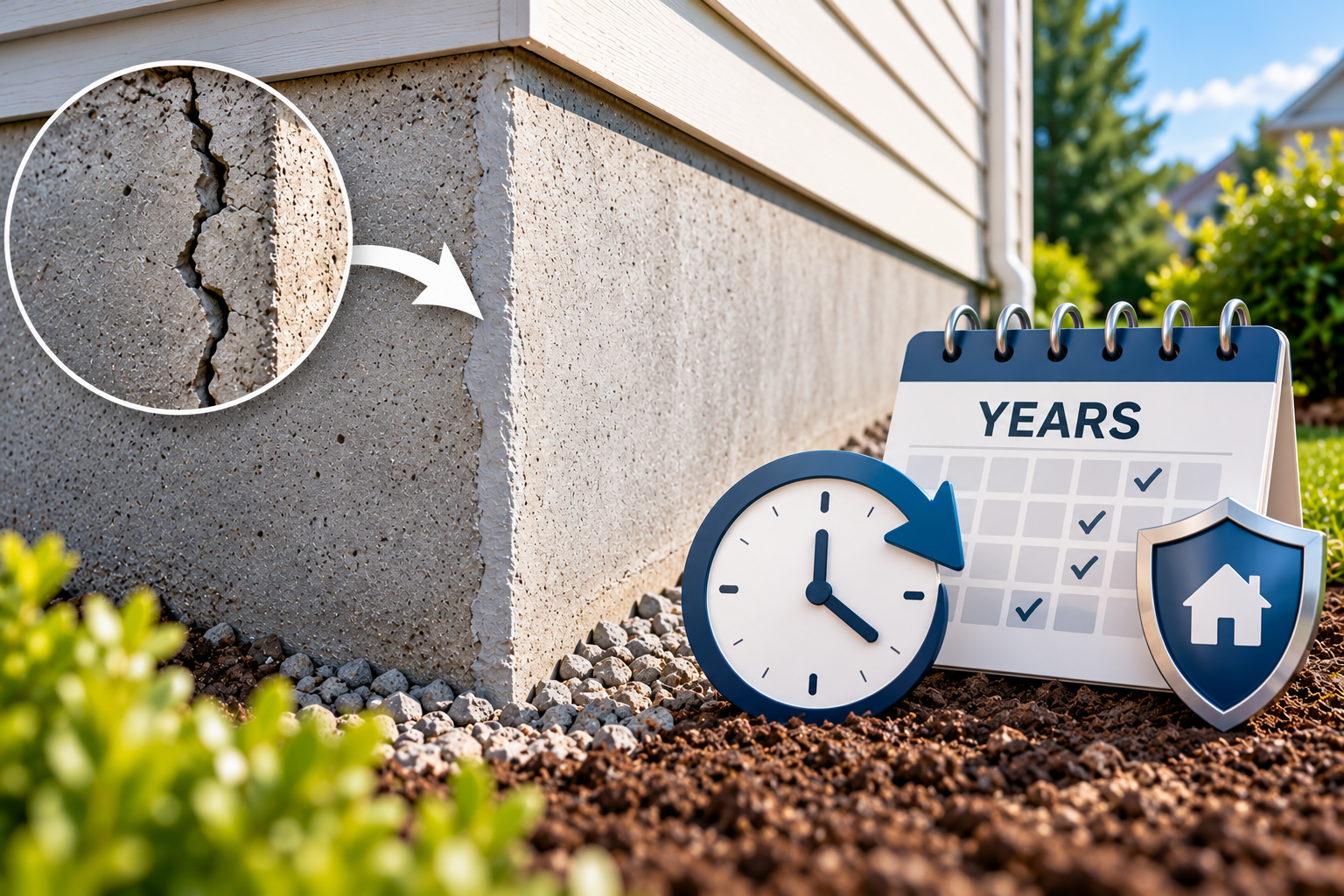
Foundation cracks are common in many homes, but repairing one does not always mean the problem is permanently resolved. The lifespan of a repair depends on the type of crack, the repair method, the condition of the foundation, and whether the cause of the cracking has been addressed.
A properly selected repair method can provide long-term protection, but there is no single lifespan that applies to every crack. Understanding what affects durability can help homeowners choose the right approach and recognise when further assessment may be necessary.
What Determines the Lifespan of Foundation Crack Repair?
Several factors influence how long a repaired crack remains sealed and stable. The condition of the foundation and the behaviour of the crack are particularly important.
Key factors include:
- Type and size of the crack
- Whether the crack is stable or continues to move
- Amount of water pressure around the foundation
- Condition of the surrounding concrete
- Repair material and application method
- Quality of surface preparation
- Experience of the contractor
- Whether drainage and moisture problems have also been addressed
A repair can perform well for many years when the material is appropriate for the crack and the underlying conditions are properly assessed. Conversely, simply filling a crack without understanding why it developed may result in recurring problems.
The quality of the original foundation crack repair is therefore just as important as the material selected for the job.
Does the Type of Foundation Crack Affect Repair Longevity?
Yes. Different cracks can behave differently, and this directly affects the expected performance of a repair.
A narrow, stable crack in otherwise sound concrete may remain unchanged for years. A crack that continues to widen or shift presents a different challenge because movement can place stress on the repair material.
Common factors to consider include:
- Vertical versus horizontal or diagonal cracks
- Stable versus actively moving cracks
- Hairline versus wider cracks
- Dry cracks versus cracks with active water intrusion
- Cracks associated with settlement or structural movement
- Cracks accompanied by other foundation damage
The source of the crack matters as well. Seasonal ground movement, settlement, drainage issues, and hydrostatic pressure can all contribute to foundation movement.
A professional assessment can determine whether a crack is primarily a moisture-entry problem or whether there are other conditions that need to be addressed before the repair is performed.
Which Foundation Crack Repair Method Lasts the Longest?
There is no universal method that lasts longest in every situation. The appropriate material depends on the characteristics of the crack and the result required.
Two commonly used approaches are polyurethane and epoxy injection.
| Repair method | Typical application | Main characteristic | Important consideration |
| Polyurethane | Cracks where water intrusion is a concern | Flexible and can react to minor movement | Suitable selection depends on the crack and moisture conditions |
| Epoxy | Stable cracks where structural bonding is required | Rigid and strong bond | Best suited to cracks that are not expected to move |
| Surface-only patching | Minor cosmetic defects | Quick surface treatment | May not address water entering through the full crack |
The goal is not simply to choose the strongest material. The repair needs to accommodate the conditions affecting the crack.
Polyurethane Crack Injection
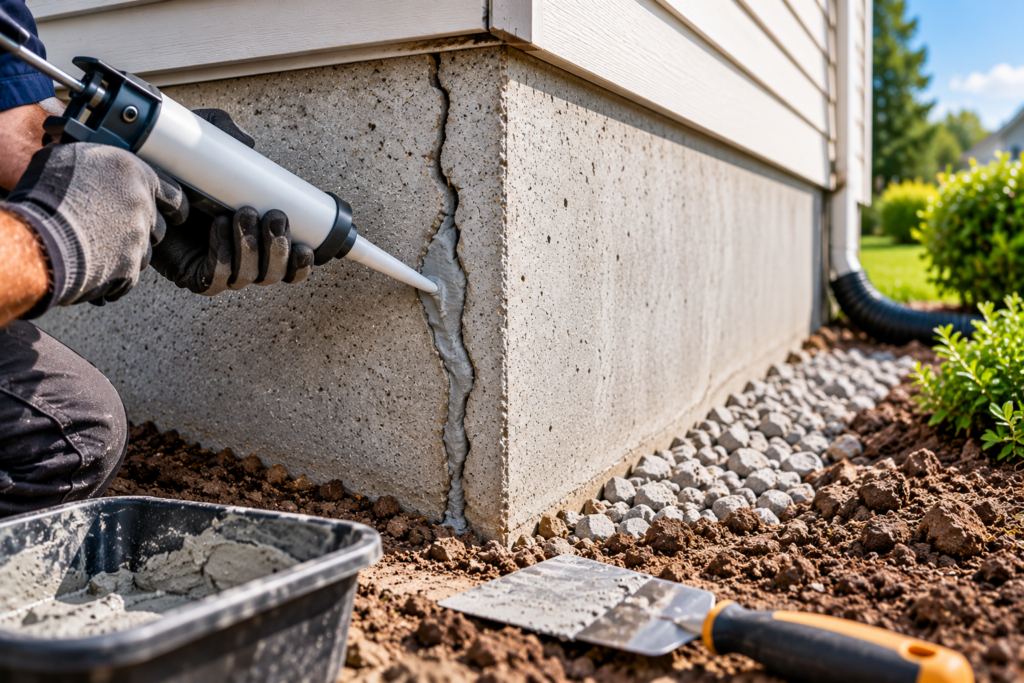
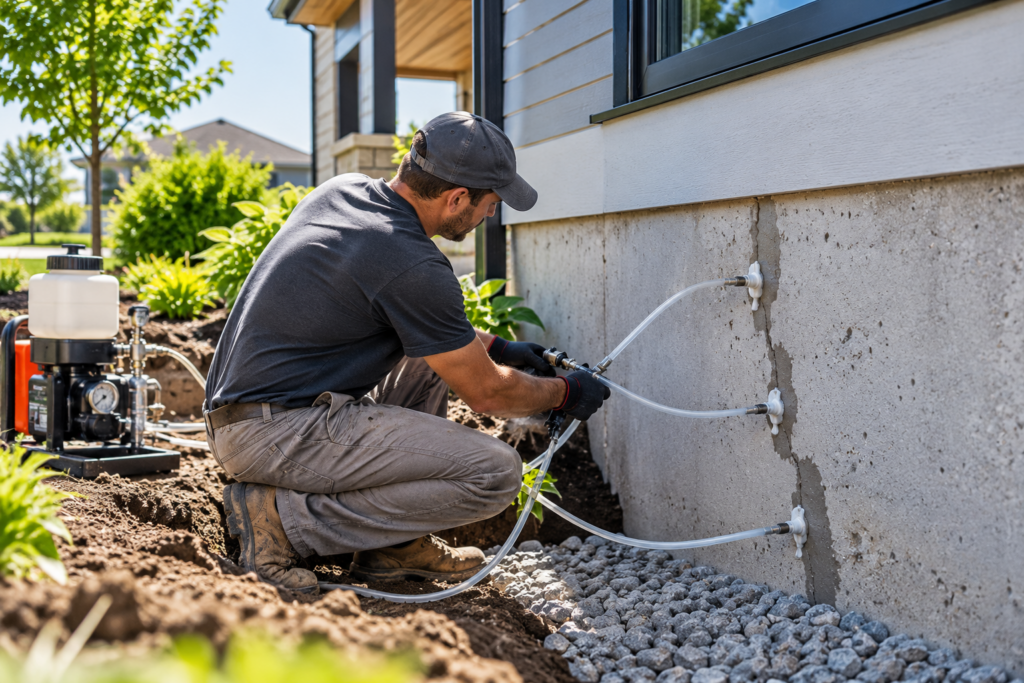
polyurethane crack injection is commonly used when a foundation crack is allowing water to enter. Polyurethane materials can expand and provide a flexible seal, making them useful where some minor movement or moisture is present.
The effectiveness of the repair depends on proper preparation and injection throughout the crack rather than simply applying material to the visible surface.
Epoxy Foundation Crack Repair
epoxy foundation crack repair is generally associated with stable cracks where a rigid bond is appropriate. Epoxy can bond strongly to concrete and is often selected when the crack itself is not expected to continue moving.
However, a rigid repair is not automatically appropriate for every foundation crack. If the concrete continues to move, the conditions causing that movement need to be considered before selecting the repair method.

Can Foundation Crack Repair Fail or Need to Be Repeated?
A repaired crack can require additional attention if the underlying conditions change or if the original repair was not appropriate for the crack.
Possible reasons include:
- Continued foundation movement
- New settlement
- Increased water pressure
- Improper material selection
- Incomplete filling of the crack
- Poor surface preparation
- Deterioration of surrounding concrete
- New drainage problems
A new leak does not necessarily mean that the repair material itself failed. Water can sometimes enter through a nearby crack, joint, or another pathway.
If the same area repeatedly develops moisture after repair, it is important to determine whether the original crack has reopened or whether water has found a different route into the basement.
What If Foundation Cracks Are Leaking Water?
Water entering through a foundation crack requires more attention than a purely cosmetic crack. Persistent water intrusion can contribute to dampness, mould growth, damaged finishes, and deterioration of materials around the affected area.
When you notice foundation cracks leaking water, check whether the problem occurs:
- During heavy rainfall
- After snowmelt
- During periods of saturated soil
- Only during certain seasons
- Continuously, even during dry weather
The timing can provide useful information about the source of the water. Exterior drainage, grading, hydrostatic pressure, and foundation conditions should all be considered.
For a localized problem, foundation repair may be appropriate. If water is entering repeatedly through the foundation, the crack itself may be only one part of a broader moisture problem.
How Much Does Foundation Crack Repair Cost?
The price of a repair depends on the characteristics of the crack and the work required to access and seal it. There is no single price that applies to every property.
Factors that can affect foundation crack repair cost include:
- Crack length and width
- Number of cracks requiring repair
- Location and accessibility
- Type of repair material
- Whether water is actively entering
- Required preparation
- Condition of the surrounding concrete
- Whether additional waterproofing or drainage work is needed
A simple localized repair may involve significantly less work than a situation where several cracks are combined with ongoing water intrusion or drainage problems.
For this reason, a proper assessment is more useful than relying on a generic price range without knowing the condition of the foundation.
How Can You Make Foundation Crack Repair Last Longer?
The longevity of a repair depends not only on the injection or sealing material but also on the conditions around the foundation.
Homeowners can help protect the repair by:
- Keeping gutters clear
- Directing downspouts away from the foundation
- Maintaining proper grading around the property
- Monitoring repaired cracks for changes
- Addressing recurring water intrusion promptly
- Keeping basement humidity under control
- Inspecting the foundation periodically
- Addressing drainage problems that increase water pressure
It is also important to avoid treating recurring leaks as isolated events. If water repeatedly reaches the same foundation wall, improving drainage or waterproofing may be necessary alongside crack repair.
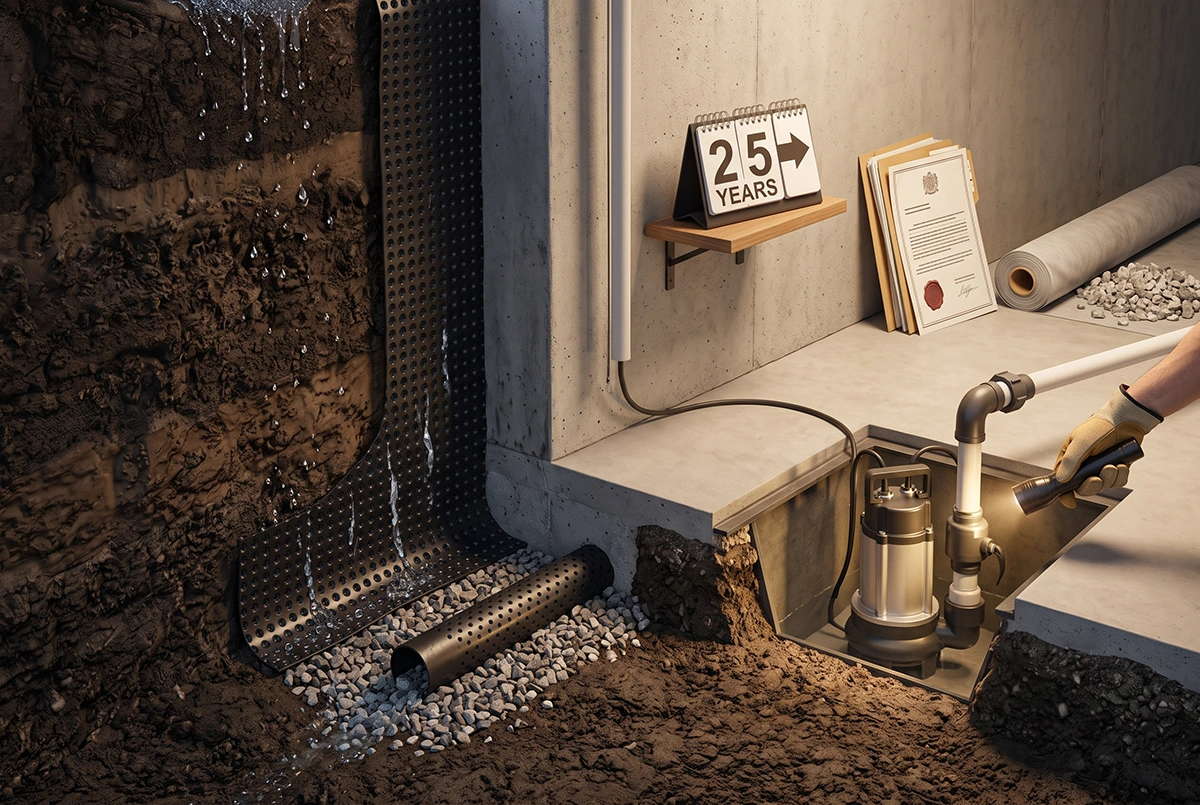
For homes experiencing broader moisture problems, basement waterproofing can be considered when the source of water extends beyond a single foundation crack.
When Is Crack Repair Not Enough?
Crack repair may not be sufficient when the foundation has an ongoing structural or drainage problem. A repaired crack can only address the specific defect being treated; it cannot by itself correct every condition that may be contributing to foundation movement or water intrusion.
Further investigation may be appropriate when:
- Multiple cracks are appearing
- Existing cracks continue to widen
- Walls show signs of movement or displacement
- Water continues entering after a repair
- Drainage around the foundation is inadequate
- The same moisture problem appears in several areas
- Settlement or soil movement is suspected
In these situations, the crack should be considered as part of the overall condition of the foundation rather than as an isolated defect.
If water is reaching the foundation from outside, exterior waterproofing may be part of a broader solution. The appropriate approach depends on the source of the water, foundation conditions, and whether the crack is stable or continuing to move.
A durable repair starts with identifying the reason the crack developed and selecting a method that matches its characteristics. When the material, installation method, and surrounding conditions are properly considered, foundation crack repair can provide long-term protection rather than serving as a temporary surface fix.


 CLOGGED OR BROKEN WEEPING TILE