Many homeowners are not sure whether their basement was ever waterproofed. Others know it was — a previous owner left an invoice, or a contractor did the work a few years ago — but now see damp patches and wonder whether it still works. A dry basement in August proves very little; the real test is spring snowmelt and a week of heavy rain.
This guide explains how to tell if a basement is waterproofed, what proper waterproofing looks like from inside and outside, the signs that a system is failing, and what a professional inspection checks. It is written for houses in Toronto and the GTA, where clay soil and older drainage make these questions common.
What “Properly Waterproofed” Actually Means
A properly waterproofed basement has three things working together:
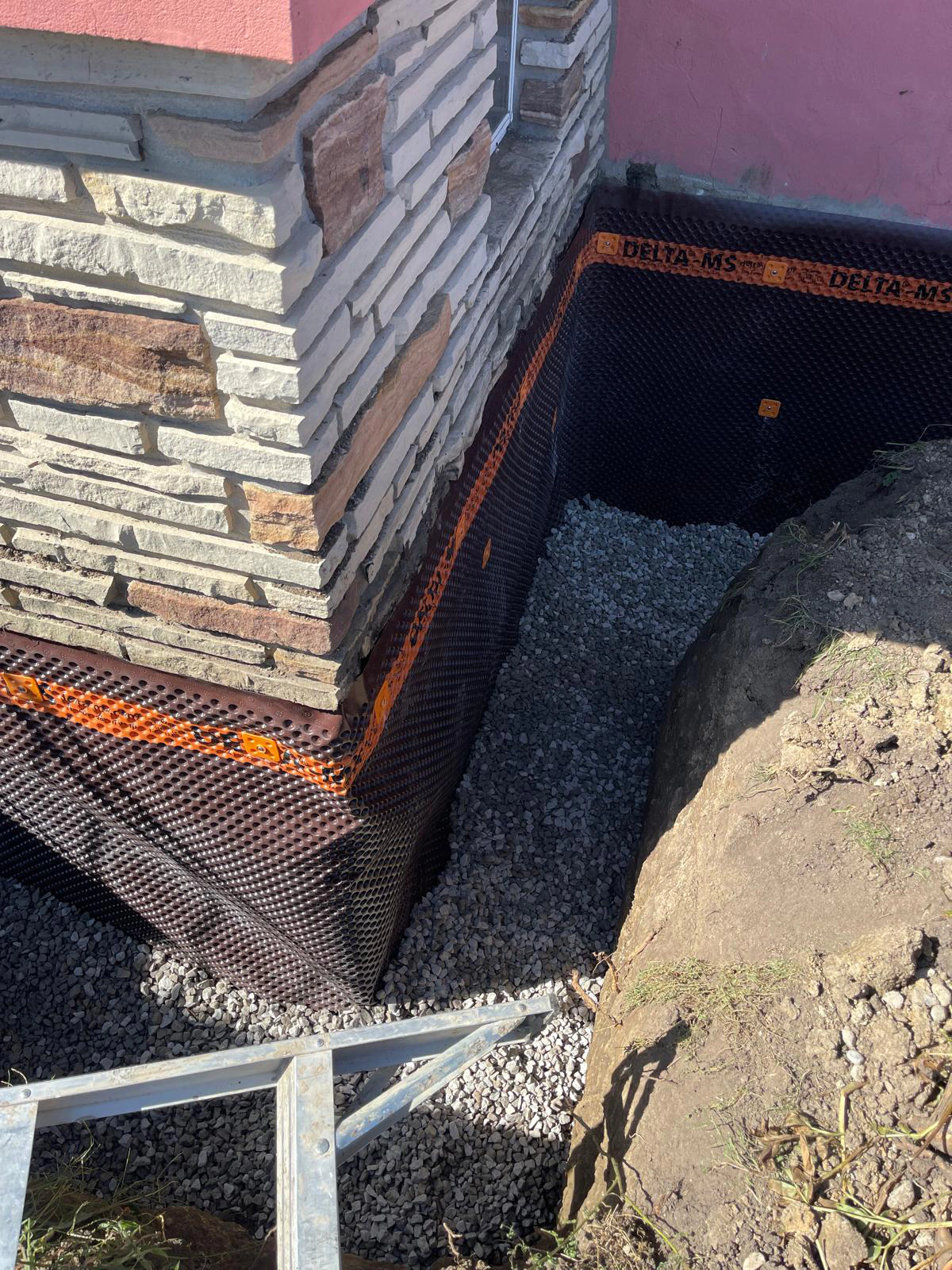
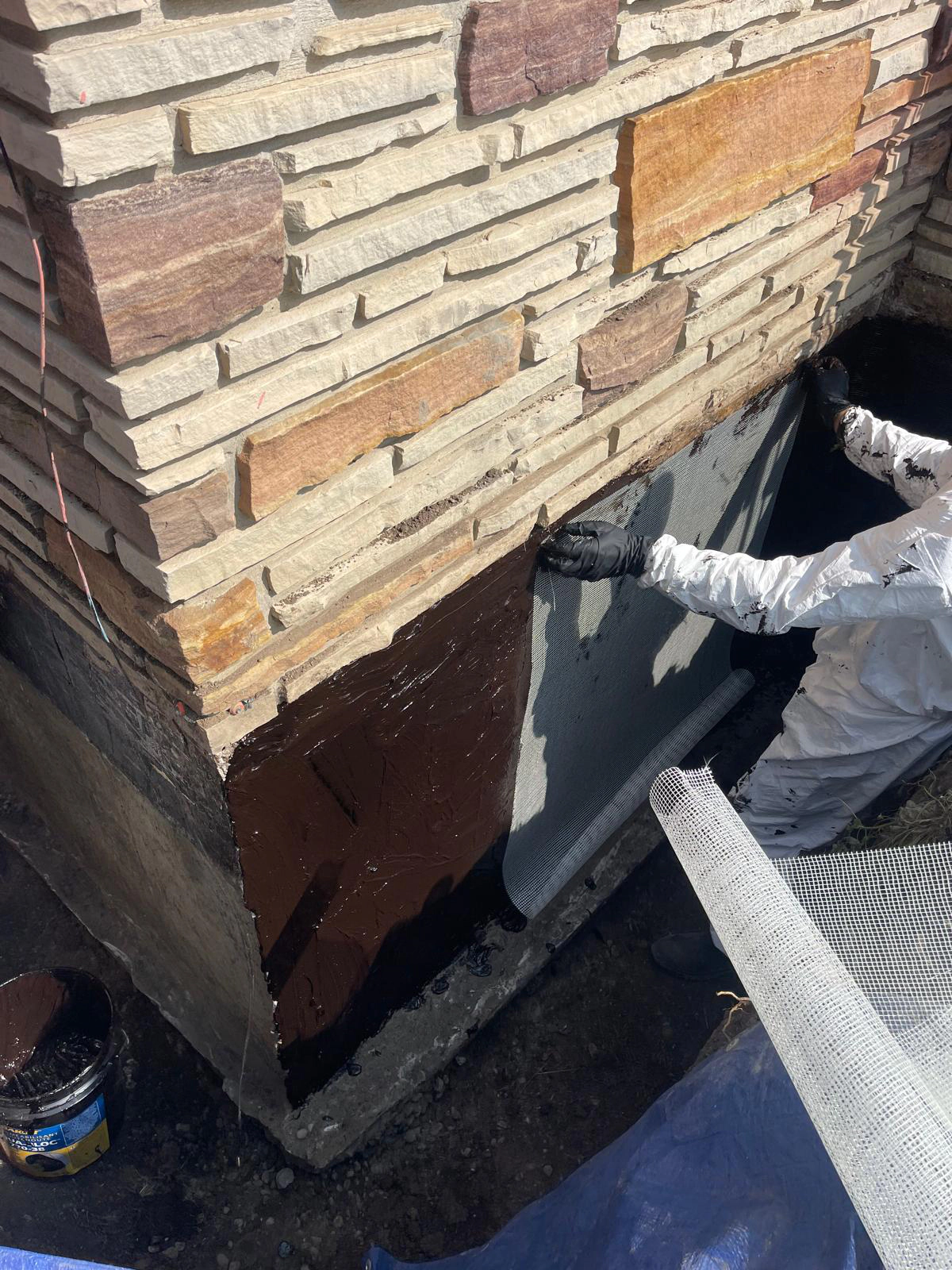
- A barrier on the walls — a membrane on the outside of the foundation, or an interior drainage membrane that controls water reaching the wall.
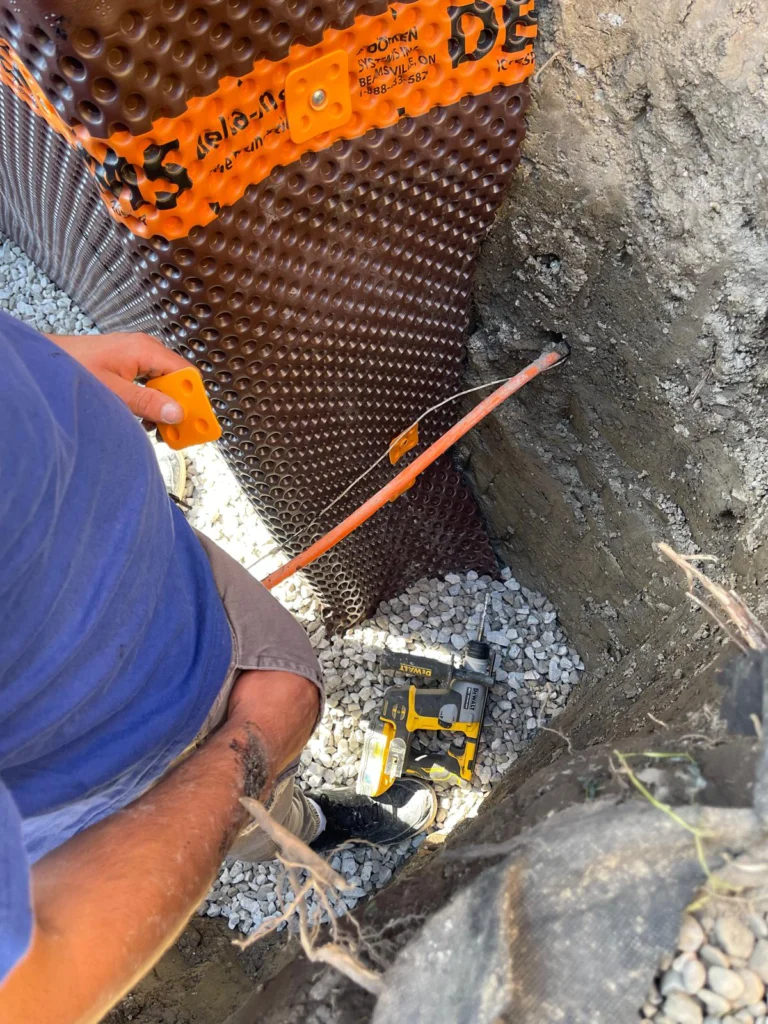
- Drainage at the footing — weeping tile that collects groundwater and carries it to a sump pit or another outlet.
- A way to remove the water — a working sump pump and discharge line, or a gravity outlet, plus surface drainage that sends roof and yard water away from the house.
A thin black coating on the foundation is usually damp-proofing, not waterproofing. It slows moisture in damp soil but is not designed to hold back water under pressure. Our comparison of damp proofing vs waterproofing explains the difference.
How to Check Whether Your Basement Was Waterproofed
Look for paperwork first
Ask the previous owner or check your closing documents for invoices, warranties or permits. A transferable warranty usually names the system, the walls treated and the contractor. City of Toronto permit records can show sump pump, backwater valve and weeping tile disconnection work.
Clues inside the basement
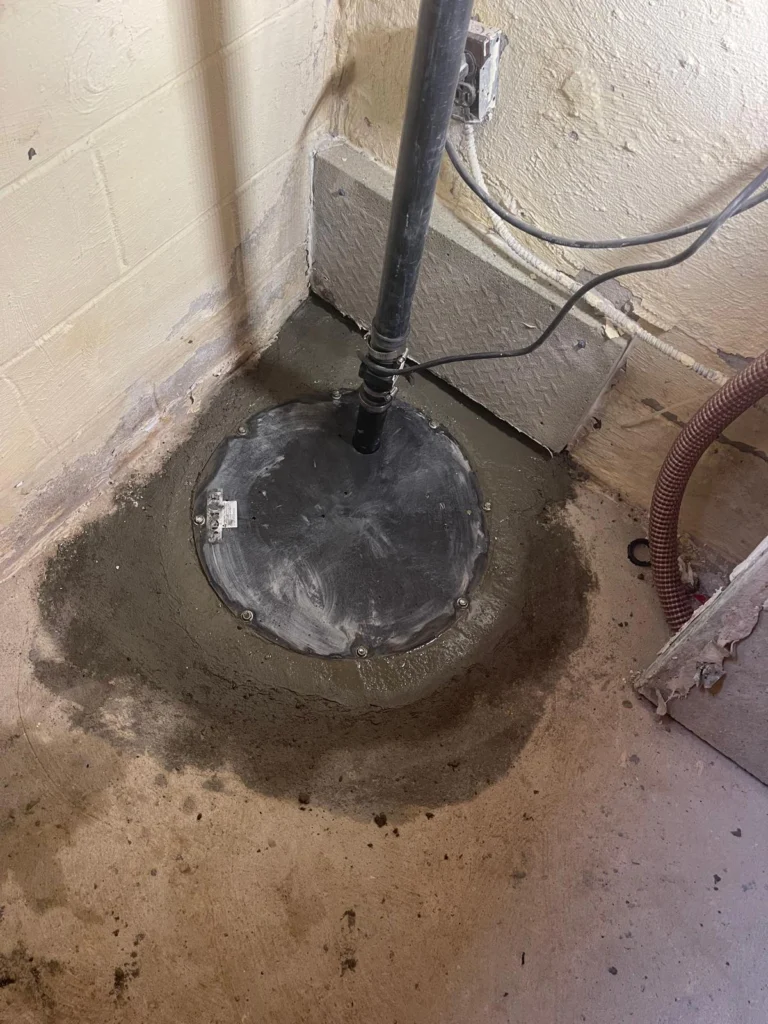
- A sump pit with a sealed lid and pipes entering below the water line — a sign of an interior or exterior drainage system.
- A dimpled plastic membrane visible at the bottom of the walls, or a narrow strip of newer concrete along the floor edge — signs of interior waterproofing.
- Injection ports — small plastic nipples along a sealed crack — show past foundation crack repair.
- A backwater valve access cover in the floor near the main drain.
Clues outside the house
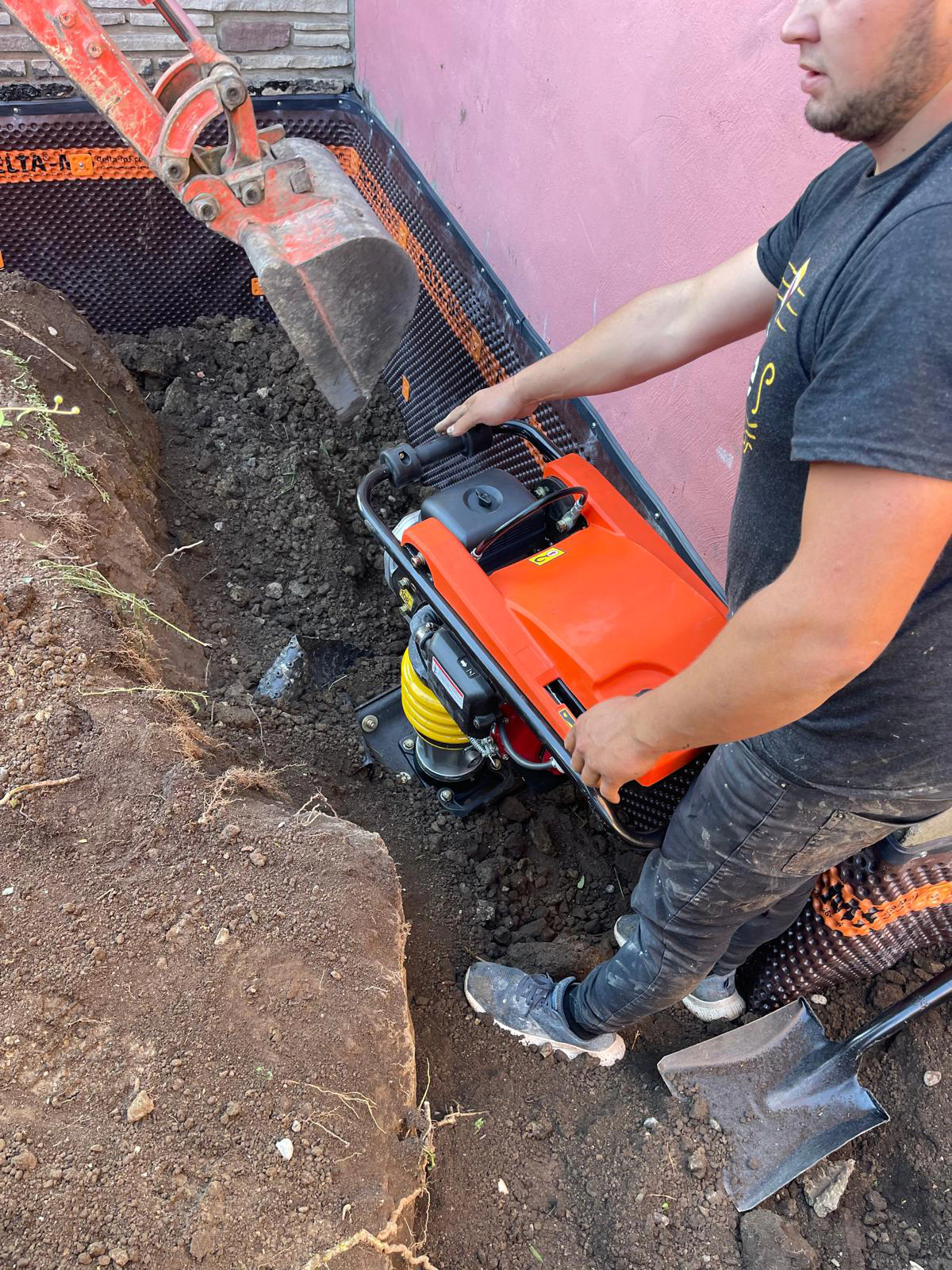
- Freshly regraded soil or rebuilt walkways along one or more walls can point to past excavation.
- A dimpled membrane or protection board visible just above the grade line.
- A sump discharge pipe coming out of the wall above ground.
If you find none of these and the house is older than about 30–40 years, assume the original damp-proofing is still all that protects the walls.

Basement Waterproofing Signs That Something Is Wrong
These basement waterproofing signs suggest the protection is missing or no longer working.
Water stains in the basement
Water stains in the basement — brown or yellow tide lines on walls, darker patches on the floor, stained baseboards — show where water has been, even if the area is dry today. A stain that grows or darkens after rain is active.
Water leaking from a wall in the basement
Water leaking from a wall in the basement is the clearest sign. A wet streak that starts partway up the wall usually means a crack or penetration; water along the bottom of the wall means pressure at the floor–wall joint.
A crack in the foundation wall leaking
A crack in the foundation wall leaking after rain needs attention even in a waterproofed basement. Exterior membranes can tear during backfill or later digging, and new cracks can form as the house settles. See how to tell if a foundation crack is serious.
White powder, peeling paint and crumbling parging
White mineral deposits mean water has moved through the wall; see our guide to efflorescence on basement walls. Blistering paint and parging that falls off outside are related signs.
Smell and humidity
A musty smell, condensation and humidity that stays above 60% point to basement moisture problems that a waterproofing system should be preventing. Our guide to why a basement smells musty helps separate humidity from leaks.
Why a Waterproofed Basement Still Leaks
If your waterproofed basement still leaks, the system has a weak point. The most common causes we find:
- Only part of the basement was done. One wall was waterproofed and water now enters through another.
- The membrane was damaged during backfilling, landscaping, deck posts or a later repair.
- Weeping tile has clogged with silt or roots, or was never connected to a working outlet.
- The sump pump failed — a stuck float, a dead pump, no backup during a power outage or a frozen discharge line.
- Surface water is overwhelming the system — downspouts at the wall, grading toward the house, flooded window wells.
- The leak is not groundwater at all — a plumbing leak, condensation or a sewer backup through the floor drain.
- Damp-proofing was sold as waterproofing.
Basement Waterproofing Failure: Interior vs Exterior Systems
| Exterior system | Interior system | |
|---|---|---|
| Typical failure signs | Wall seepage, damp patches, efflorescence in one area | Water at the floor edge, full or overflowing sump pit |
| Common causes | Torn membrane, failed weeping tile, poor backfill | Pump failure, blocked discharge, clogged drain channel |
| Quick check | Look outside above the wet area for grading and downspout problems | Test the pump with a bucket of water; check the discharge outlet |
| Usual repair | Spot excavation and membrane repair, new weeping tile | Pump replacement, battery backup, flushing or extending the drain |
A basement waterproofing failure is not always a system failure. Often one component — a pump, a downspout, a window well drain — is the weak link.
How Long Does Basement Waterproofing Last?
How long does basement waterproofing last depends on what was installed and how it is maintained. A good exterior membrane and new plastic weeping tile can last for decades; crack injections are permanent for that crack; sump pumps typically need replacing every several years, and backup batteries sooner. Our guide on how long basement waterproofing lasts covers each part in detail.
How to Test Your Basement Yourself
- Watch during heavy rain. Check walls, the floor edge, windows and the sump pit during and after a storm.
- Run a hose test. Run a garden hose at low flow beside one wall section for 15 minutes while someone watches inside.
- Do the foil test. Tape foil to a damp wall for 24–48 hours; moisture on the room side is condensation, on the wall side is seepage.
- Test the sump pump. Pour a bucket of water into the pit and confirm the pump starts, empties it and shuts off.
- Check humidity. A hygrometer should read 30–50% most of the year.
What a Basement Waterproofing Inspection Includes
A professional basement waterproofing inspection — also called a basement water inspection or wet basement inspection — checks the whole system rather than one symptom:
- Walls and floor for cracks, stains, efflorescence and repairs.
- The sump pit, pump, check valve, backup and discharge line.
- Floor drain and backwater valve, if present.
- Moisture readings along walls, especially behind finished areas.
- Outside: grading, downspouts, window wells, parging and signs of past excavation.
- A clear explanation of what is working, what is not and the repair options.
If the weeping tile is suspected, a drain camera inspection can show its condition without digging.
Repairs When the Waterproofing Is Not Working
- Basement leak repair for isolated leaks and cracks.
- Interior waterproofing when water enters at the floor–wall joint.
- Exterior waterproofing when walls leak and the old membrane has failed.
- Sump pump installation with a battery backup when the pump is the weak point.
- Weeping tile installation when the footing drain is clogged or broken.
Leaquida inspects basements across Toronto and the GTA. The inspection and written quote are free.