
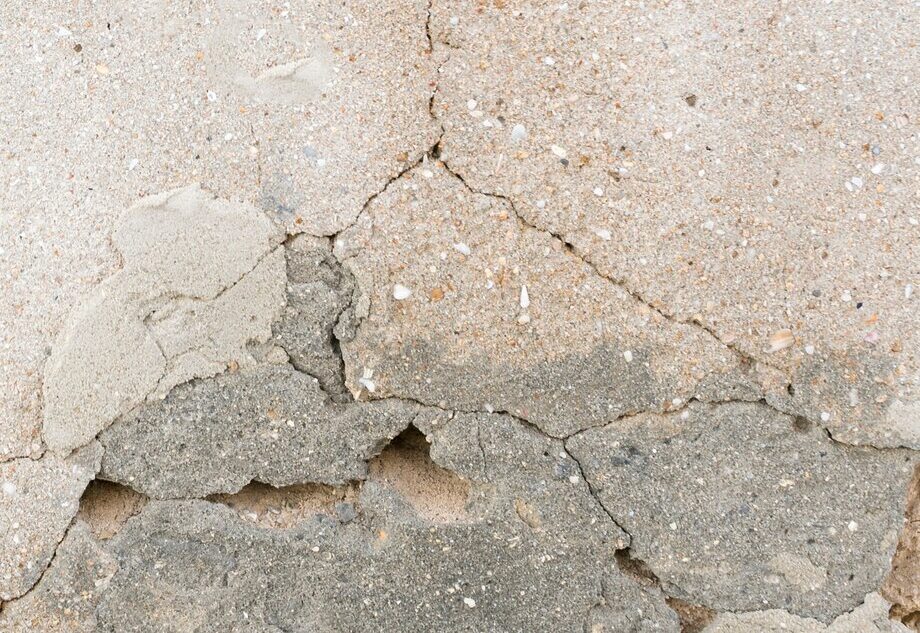
Almost every poured concrete foundation cracks at some point. Most of them are thin, dry and harmless, the result of concrete shrinking as it cures. A few are serious foundation cracks, signs that the soil under the house is moving or that the walls are being pushed in, and those get worse with time. Knowing how to tell if a foundation crack is serious comes down to four things: the direction of the crack, its width, whether it is still growing, and what is happening in the rest of the house.
Why Foundation Walls Crack?
Concrete is strong under compression but weak when it is pulled or bent, so any force that stretches the wall finds the weakest line in it. The most common causes are:
- shrinkage as fresh concrete dries during the first year or two;
- uneven settling of the soil under the footing;
- pressure from wet, heavy clay soil pushing on the outside of the wall;
- frost in saturated soil expanding against the foundation in winter;
- tree roots drying out the soil on one side of the house;
- poor drainage that keeps water against the wall for long periods.
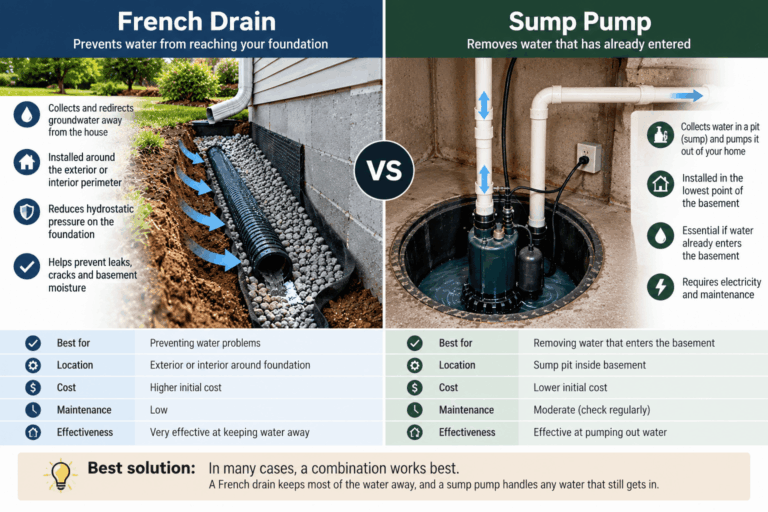
Water is behind several of these, and it is also behind many signs of foundation problems. Saturated soil weighs more, freezes harder and pushes on the wall with hydrostatic pressure. Keeping it away through grading, downspouts and foundation waterproofing takes a large share of that load off the concrete.
Much of the GTA sits on clay, which swells when wet and shrinks during dry summers. That seasonal movement, combined with repeated freeze-thaw cycles each winter, puts more strain on a basement wall than steady conditions would. Age matters too. Many older Toronto houses have concrete block or even brick foundations, which open along their mortar joints, while most homes built in recent decades have poured walls that split through the concrete itself.
Serious Foundation Cracks and Harmless Ones
Its direction shows which force caused it. Block and poured walls show different types of foundation cracks, so check what your foundation is made of before you compare.
| Pattern | Usual cause | How serious |
|---|---|---|
| Vertical, thin and even (poured wall) | Shrinkage as concrete cures | Usually cosmetic, watch for leaks |
| Diagonal, often from a window corner (poured wall) | Uneven settling of one part of the house | Moderate, monitor for widening |
| Wider at the top or bottom | Settling or heaving at one end of the wall | Moderate to high |
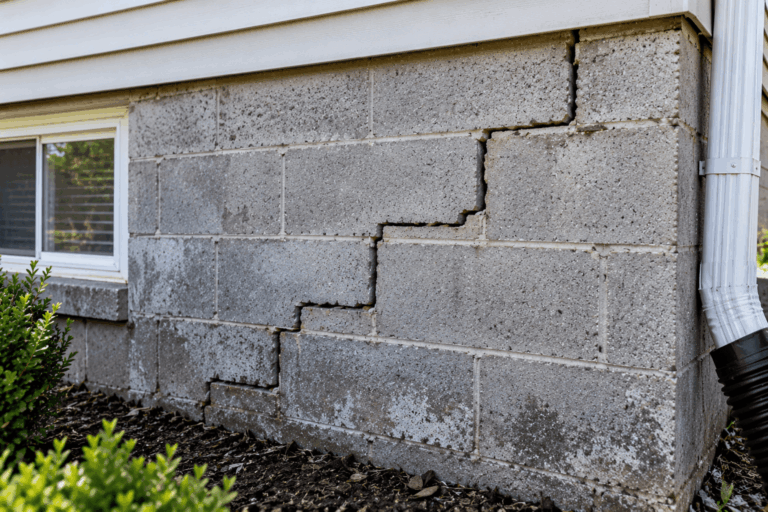
| Stair-step through the mortar joints (block wall) | Settling or soil pressure | Moderate to high, depends on width |
| Horizontal, along the middle of the wall | Soil or frost pushing the wall inward | High, needs an inspection |
| Any line with one side sticking out past the other | The wall has shifted | High, needs an inspection |
Poured walls usually show the problem as a single line through the concrete, so direction and width tell most of the story. Block walls spread movement across many mortar joints, which is why a stair-step pattern deserves more attention there. In either case, check whether the wall around the line is still flat. A section that has moved inward even slightly matters more than the shape of the line itself.
Foundation Crack Width and When It Matters
Width is the easiest thing to measure and one of the most telling. Use a ruler or a plastic crack-width card from a hardware store, and measure at the widest point. General guidance on when a foundation crack is serious looks like this:
- under 1.5 mm (1/16 in.): a hairline crack, normal in most homes;
- 1.5 to 3 mm (1/16 to 1/8 in.): worth monitoring, and worth sealing if it lets in water;
- 3 to 6 mm (1/8 to 1/4 in.): a sign of movement that should be checked;
- over 6 mm (1/4 in.): a structural concern in almost every case.
When deciding when to worry about cracks in foundation walls, one exception matters more than any number. A narrow horizontal crack in a block wall, or one with a step in the surface, is more worrying than a wide vertical one.
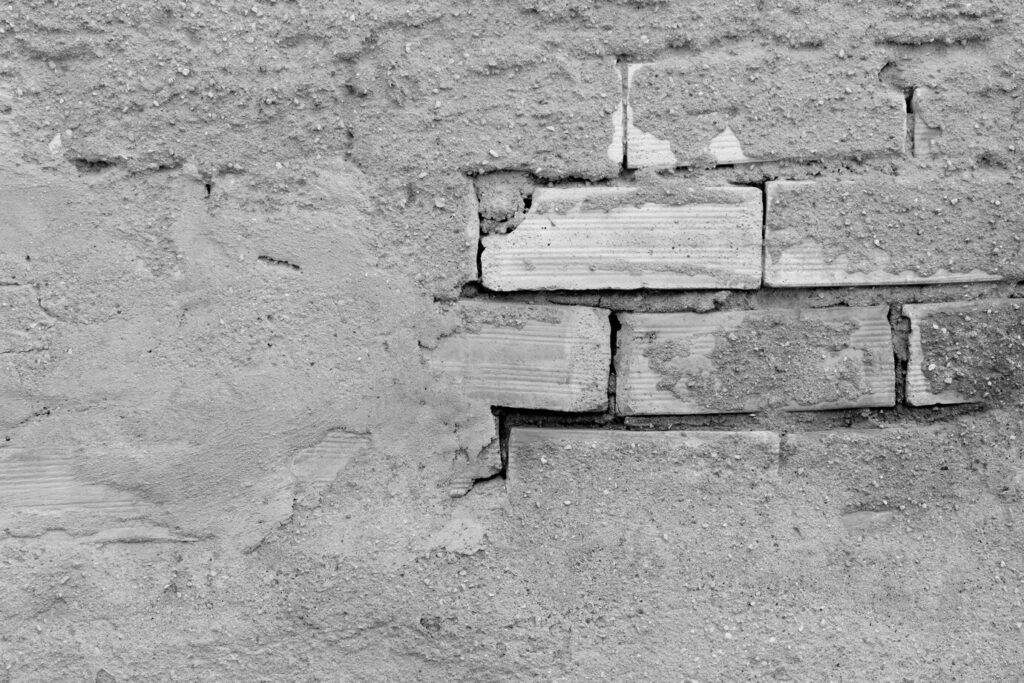
Measure at several points along the length, not only where it looks worst, and write the numbers down. A gap that is wider at the top than at the bottom suggests one end of the wall is settling or being pushed, even when the widest point is still small. In a house less than two years old, a thin vertical line usually comes from curing and is worth reporting to the builder before you repair anything yourself.
Checking How Serious a Crack in the Foundation Is
A crack that formed years ago and has stayed the same size is rarely a problem. One that keeps growing is. Tracking it is the simplest way to tell if a foundation crack is serious, and it takes a few minutes a month:
- Draw a pencil line across each end of the gap and write the date next to it.
- Take a photo with a ruler held against the widest point.
- For more precision, glue a plastic crack monitor across the gap. Its two halves slide apart as the gap widens.
- Check and photograph it once a month for a full year.
Most gaps open slightly in winter and close in summer, so a small seasonal change is normal. If it grows past your pencil marks or keeps getting wider from one season to the next, the foundation is still moving.
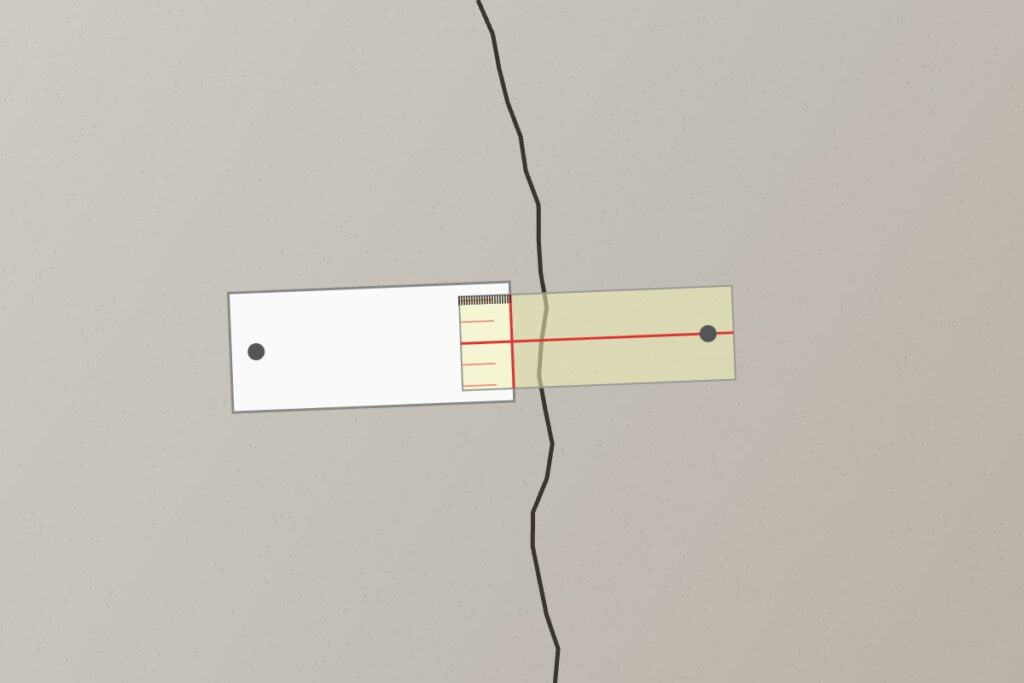
Take each reading at roughly the same time of day and note the weather, since temperature and moisture change the reading slightly. Look for dampness along the line after heavy rain or snowmelt as well. If the gap widens noticeably within a single season, or a new one appears nearby, there is no need to finish the full year of tracking before calling for an inspection.
Signs of Foundation Problems Inside the House
A foundation that is shifting usually shows it upstairs as well. Look for these alongside a basement crack:
- doors and windows that start to stick or won’t latch;
- floors that slope or feel springy;
- diagonal cracks in drywall running from the corners of doors and windows;
- gaps between the baseboard and the floor, or between the ceiling and walls;
- a chimney pulling away from the house;
- bowing basement walls that lean inward when you look along them.
A single sign on its own can come from humidity or a house that has simply settled. Two or three together with a wide basement crack are a clear answer to when a foundation crack is serious.
The outside of the house gives clues too. Walk around the foundation and look for stair-step lines in brick veneer, gaps where a porch or front steps meet the wall, and soil pulling away from the foundation in dry weather. Window and door frames that no longer look square from the outside point in the same direction. Photograph anything you find so you can compare it with what you see in the basement.
Why a Small Leak Through the Wall Still Needs Repair
Even a structurally harmless gap can cause real damage if it lets water in. Moisture coming through the wall soaks drywall, insulation and flooring and leads to mould. In winter, water inside it freezes, expands and pushes the gap open a little more each year. That is how a hairline gap becomes a wide one.
Signs that water is getting through include damp edges after rain, white mineral deposits along the line, rust stains from the rebar, and a musty smell nearby. Any of these means it needs basement leak repair, even if its width falls in the harmless range.
Patching the surface with caulk or hydraulic cement often stops the drip for a season, but water still sits inside the wall and finds a new path. White powder along the line can also be old efflorescence from water that came through years ago. To tell an active leak from an old one, check the area during or right after a heavy rain, when moisture is easiest to see.
How Foundation Damage Is Repaired
The method depends on how serious a crack in the foundation is: whether it only leaks, has weakened the wall, or comes from movement under the house. Most foundation crack repair is done from the inside, with no digging.
| Problem | Repair method | Where the work happens |
|---|---|---|
| Dry hairline shrinkage crack | Monitoring, optional surface sealing | Inside |
| Gap that leaks water | Polyurethane injection, which expands and seals the gap | Inside, no digging |
| Structural damage in a sound wall | Epoxy injection, which bonds the concrete back together | Inside, no digging |
| Horizontal crack or bowing wall | Wall bracing with steel beams or carbon fibre straps, or rebuilding the wall | Inside, sometimes outside excavation |
| Damage caused by settling | Underpinning or piers under the footing | Under the foundation |
| Several leaks on one wall | Exterior membrane and new weeping tile | Outside, excavation to the footing |
Injection from the inside usually takes a few hours and needs no digging, so it can be done in any season. Underpinning, wall bracing and exterior membranes are larger projects that often need an engineer’s design and a building permit in Toronto, and exterior excavation is easier to schedule once the ground has thawed. The right method depends on what the inspection finds, which is why direction, width and movement are recorded first.
When to Worry About Cracks in Foundation
Some cracks can be watched for a year. Others shouldn’t wait. Get an inspection if you notice any of these signs of foundation problems:
- a horizontal crack or a wall that bows inward;
- a gap wider than 6 mm (1/4 in.);
- one side sitting further out than the other;
- a line that keeps growing over several months;
- new cracks appearing together with sticking doors or sloping floors;
- water coming through every time it rains.
A contractor who does foundation repair will measure the gap, check the wall for movement and look at the drainage outside. For bowing walls and major settling, a structural engineer’s assessment is often part of the plan.
Before the visit, gather what you have already recorded: dated photos, width measurements, notes on when water appears and any changes upstairs. This history helps the contractor separate old, stable movement from active movement. It also shows whether the problem started after a specific event, such as a wet spring, nearby excavation or a new addition, which can change the recommended repair.


 CLOGGED OR BROKEN WEEPING TILE