
A wet basement floor can look like a thin film after a humid week. It can also be water coming up through the basement floor after heavy rain, a puddle along one wall or a dark patch that never fully dries. Each of these comes from a different source. Some you can fix in an afternoon. Others mean water is getting past the foundation, and it will keep coming back until the drainage or the concrete is repaired. Below are the most common reasons a basement floor gets wet, how to tell them apart, and what fixes each one.
How to Find Where the Water Is Coming From?
Start with timing and location. A basement floor wet after rain or snowmelt usually points to water coming from outside. A floor that sweats on hot, sticky days with no rain points to humidity inside the house. A wet spot that stays the same in any weather is often a plumbing leak.
The foil test helps when you can’t tell condensation from seepage:
- Dry a section of the floor and tape a 30 × 30 cm piece of aluminum foil over it, sealing all four edges.
- Leave it for 24 to 48 hours.
- Lift it and check both sides. Moisture on top comes from the room air. Moisture underneath is a sign of water coming up through the concrete basement floor from the ground.
| When and where you see water | Most likely source |
|---|---|
| Even film across the whole floor in summer | Condensation |
| Wet band along the base of the walls after rain | Seepage at the floor-wall joint |
| Water coming up through cracks in basement floor | Floor crack |
| Puddle around the floor drain, sometimes with an odour | Drain or sewer backup |
| Water spreading from the sump pit | Pump failure or overflow |
| Damp spot near the water heater, washer or pipes in any weather | Plumbing leak |
Condensation on a Cold Concrete Floor
The slab stays cool all year because it sits directly on the ground. In summer, warm humid air touches that cold surface and turns into water, the same way a glass of ice water gets wet on the outside. A damp basement floor caused by condensation looks evenly wet. It is often worse under rugs, boxes and furniture, where air doesn’t move, and a musty smell usually comes with it.
Unlike a wet basement floor after rain, this is the one cause that has nothing to do with leaks. To bring it under control:
- Run a dehumidifier sized for the basement and keep relative humidity at about 50% or lower.
- Keep basement windows closed on humid days.
- Make sure the dryer vents outdoors.
- Insulate cold water pipes that drip onto the floor.
Water Coming Up Through Basement Floor Cracks
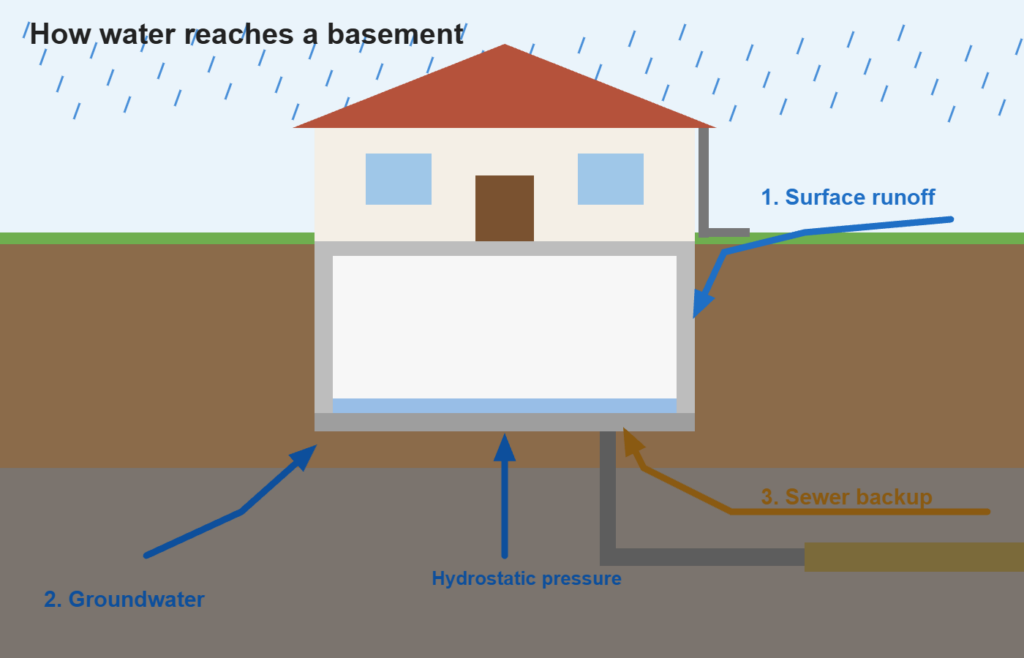
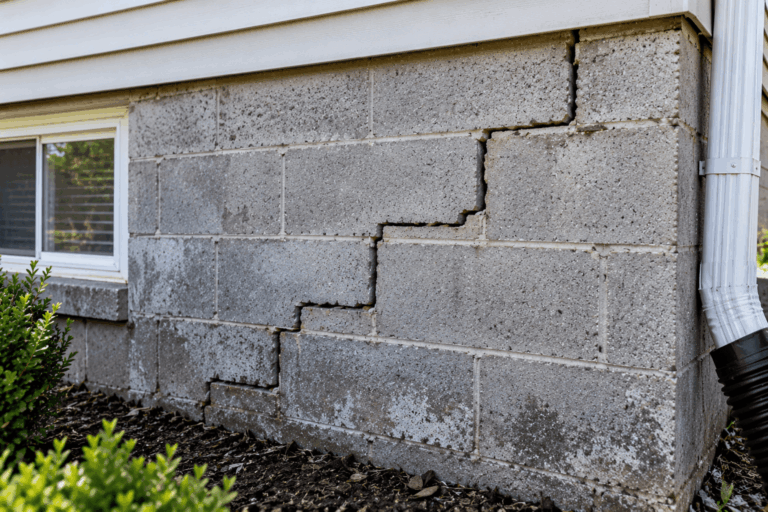
When the soil under the house gets saturated, water builds up beneath the floor and presses on the concrete from below. This is hydrostatic pressure. Concrete is porous, so moisture can pass even through an undamaged slab, and any crack becomes the easiest path. Typical signs of ground water coming up through the basement floor are wet patches in the middle of the floor, water seeping from a crack during a storm, and white chalky deposits (efflorescence) left when the water evaporates.
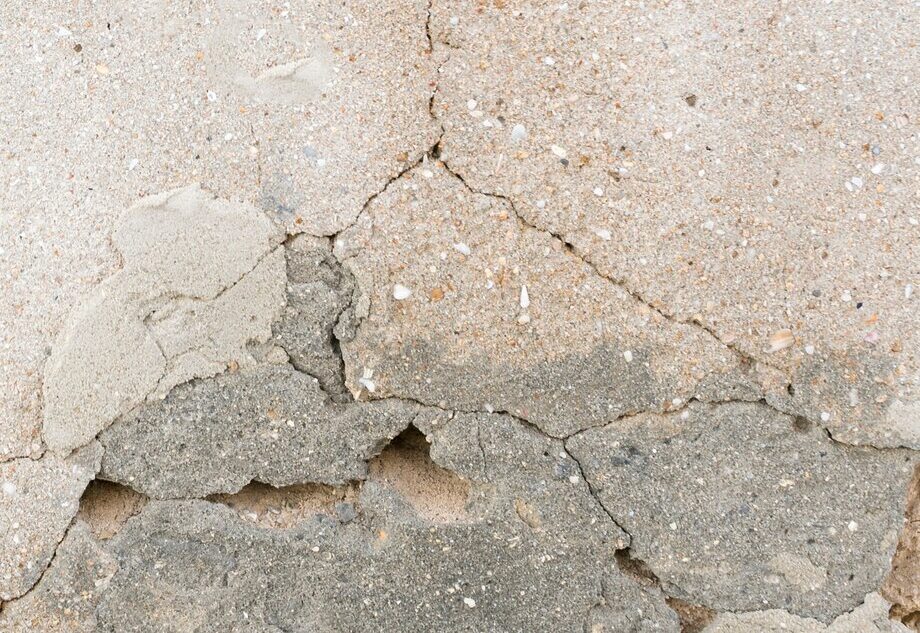
Hairline shrinkage cracks are normal in a poured slab and often stay dry for years. A crack that gets wet every spring, keeps widening or has one side higher than the other needs attention. Leaking cracks are usually sealed from the inside with polyurethane injection, a common method of foundation crack repair because the resin expands and fills the gap even when water is present. Water coming up through a hole in the basement floor around a pipe or an old drain opening is sealed the same way. If water rises through the whole slab, sealing single cracks won’t hold. The pressure has to be relieved with drainage under the floor.
Water Seeping In Where the Floor Meets the Wall
The seam between the slab and the foundation wall is called the cove joint. The floor and walls are poured separately and never fully bond, so this seam is a weak point. Groundwater that collects against the footing finds the gap and comes up as a wet line along the base of the wall. It can look like basement water coming up through floor concrete, yet the water often travels along the wall before it surfaces, so the wet spot isn’t always where it gets in.
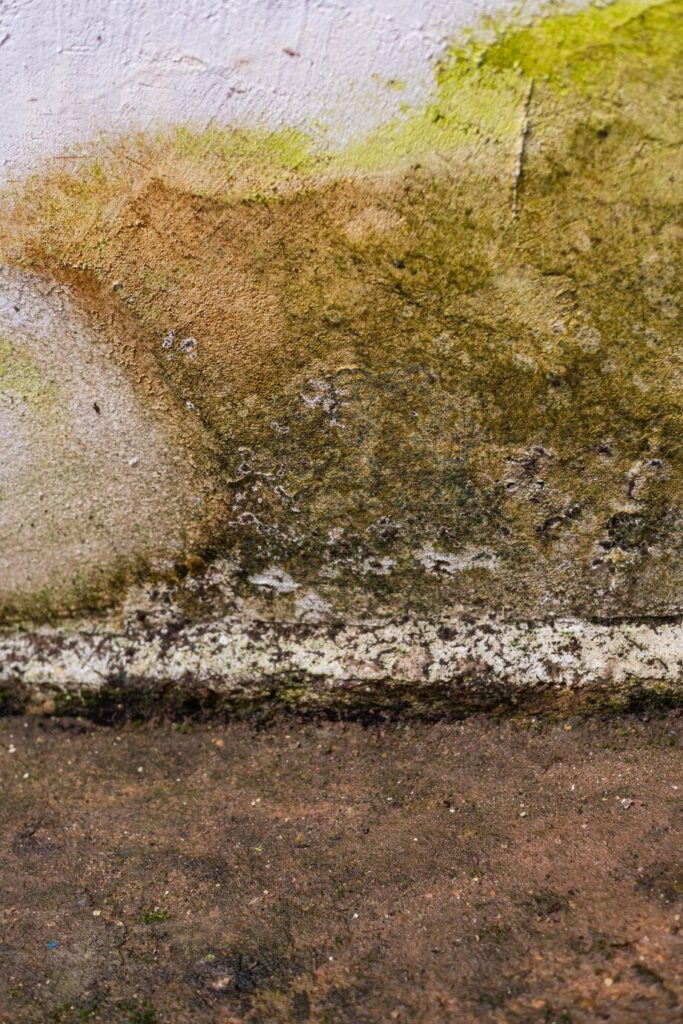
Surface sealants rarely last here, since the pressure comes from behind the joint. The standard fix is a drainage channel cut along the perimeter of the floor. It collects water at the joint and carries it to a sump pit. This type of interior waterproofing also suits finished basements, because there is no digging outside.
Poor Drainage and a Wet Basement Floor After Rain
Much of the water coming up through the basement floor starts as rain on the roof and yard. The usual problems are:
- downspouts that empty right next to the foundation;
- clogged or overflowing eavestroughs;
- soil, patios or driveways sloping toward the house;
- window wells without drains or covers that fill up in storms;
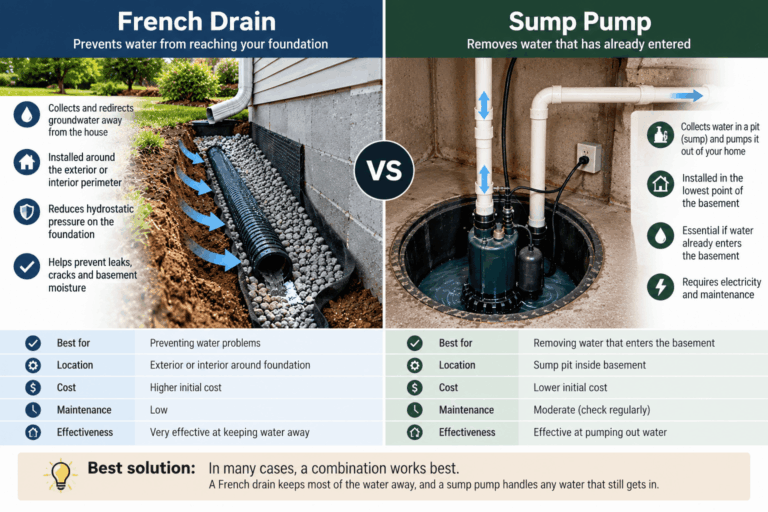
- old weeping tile around the footing that is clogged with silt or crushed by roots.
The first four are inexpensive to correct. Extend downspouts at least 1.8 m (6 ft) from the wall, clean the eavestroughs and regrade the soil so it slopes away from the house. Weeping tile is harder. In older homes it may be clay pipe that has collapsed or filled with silt, and once it stops working, water sits against the footing and leaves the basement floor wet after heavy rain. Replacing it means excavating along the foundation, and it is usually done together with exterior waterproofing of the walls.
When the Sump Pump Stops Keeping Up
In homes with a sump pit, the pump is what keeps collected groundwater off the floor. When it stops, water comes up through basement floor cracks and the pit itself. It usually fails for one of these reasons:
- a power outage during a storm;
- a stuck float switch;
- a pump that’s too small for the amount of water;
- a frozen or clogged discharge line;
- an old pump at the end of its service life.
Test the pump every few months by pouring a bucket of water into the pit. It should switch on and empty the pit within seconds. A battery backup covers outages. When the pump runs nonstop or the pit still overflows, the usual answer is a new sump pump installation with a higher-capacity unit or a second pump.
Floor Drain and Sewer Backup
Water coming up through basement floor drain after heavy rain is a separate problem. When city sewers overload in a storm, water pushes back up the pipes into the lowest opening in the house. It is often dirty and smells. If the drain backs up when the washing machine empties, the blockage is in your own line and a plumber can clear it.
Storm-related backups are stopped with a backwater valve, a one-way flap on the main sewer line that closes when water tries to flow back in. The City of Toronto covers part of the cost of backwater valve installation through its Basement Flooding Protection Subsidy Program. Sewer water is contaminated, so clean it up with gloves and disinfect every surface it touched.
Plumbing Leaks That Look Like Groundwater
Not every wet floor is a waterproofing problem. Water coming up through floor in basement utility rooms is often a plumbing leak, so check these first:
- the water heater tank and its pressure relief valve;
- washing machine hoses;
- supply lines and shut-off valves;
- condensate lines from the furnace or air conditioner;
- pipes running under the slab.
Turn off every fixture in the house and watch the water meter for an hour. If it moves, water is escaping from the supply system somewhere. An under-slab leak in a hot water line often shows up as a warm damp spot that keeps growing whatever the weather.
How to Fix a Wet Basement Floor for Good
Most wet floors have one main source, though two at once is common, such as condensation plus a leaking crack. Working out how to fix water coming up through basement floor problems starts outside, since grading and downspouts cost the least. If water keeps coming back after that, wet basement repair usually combines two or more of the fixes below.
| Cause | Long-term fix | Where the work happens |
|---|---|---|
| Condensation | Dehumidifier, ventilation, vapour barrier under new flooring | Inside, no construction |
| Floor crack | Polyurethane or epoxy injection | Inside, no digging |
| Floor-wall joint seepage | Interior perimeter drainage with sump pit | Inside, floor is cut along the walls |
| Failed weeping tile | New weeping tile and wall membrane | Outside, excavation to the footing |
| Sump pump failure | Larger pump, battery backup | Inside, at the pit |
| Sewer backup | Backwater valve | Inside, main drain line, permit required |
| Plumbing leak | Repair or replace the line | Inside, plumber |
What to Do When You Find Water on the Floor?
- Shut off power to the basement if water is near outlets, extension cords or the furnace.
- Take photos before cleaning up, in case you file an insurance claim.
- Remove the water with a wet vac and lift boxes, rugs and furniture off the floor. If there is water coming up through basement floor tiles, lift one or two to check the concrete underneath.
- Run fans and a dehumidifier until the concrete feels dry, then keep them on for another day or two.
- Write down where the water first appeared and what the weather was like. This makes finding the source much faster.
Mould can start growing on wet drywall, carpet and cardboard within 24 to 48 hours, so speed matters more than a perfect cleanup.

 CLOGGED OR BROKEN WEEPING TILE