
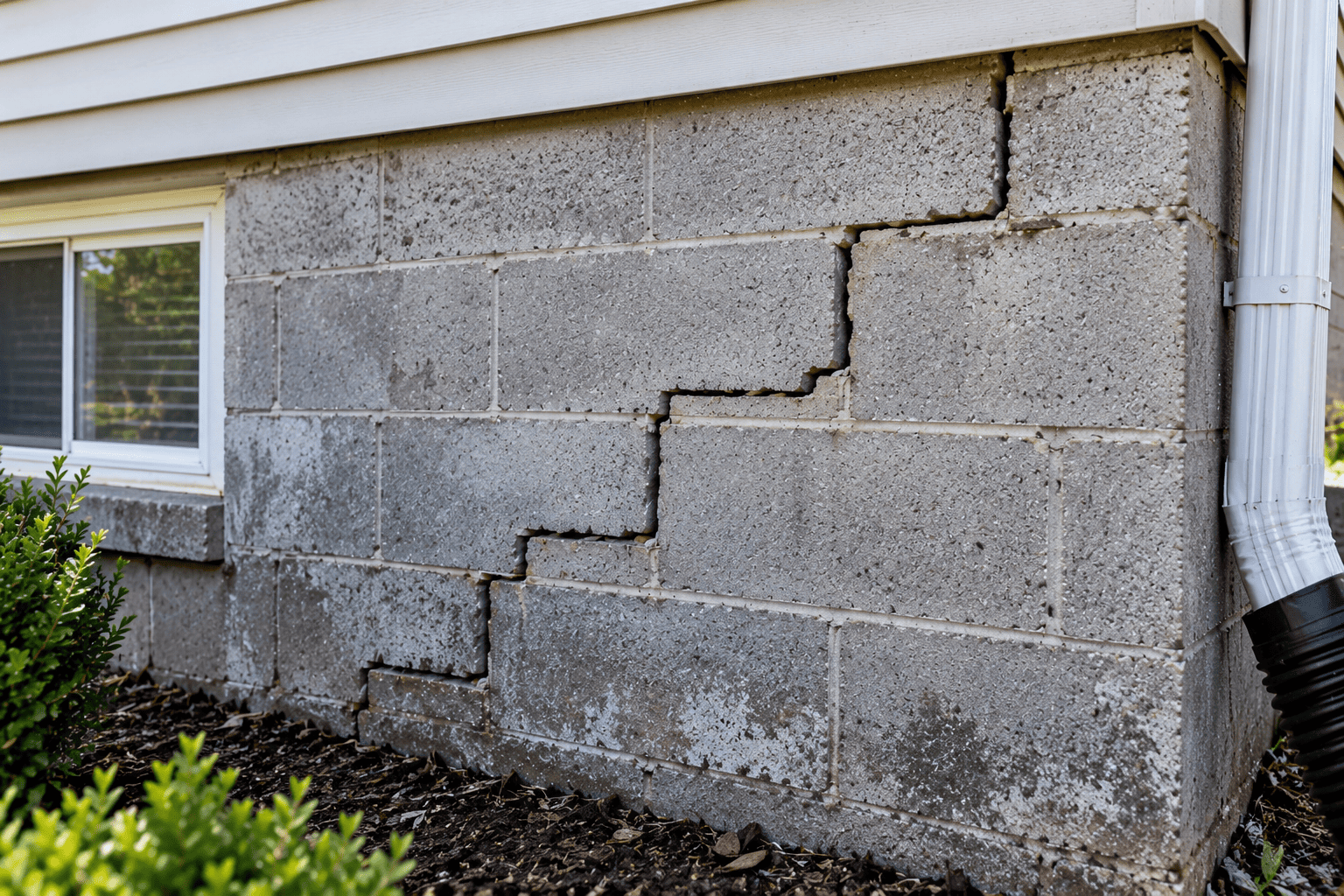
Foundation cracks can be concerning for homeowners, especially when they follow a zigzag pattern along mortar joints. Although some cracks are related to minor settlement, others may indicate foundation movement, drainage problems, or pressure from the surrounding soil. Understanding the difference is important for protecting your home’s structural integrity and preventing moisture from entering the basement.
The seriousness of a crack depends on its size, location, progression, and associated symptoms. Learning what causes these cracks and when to seek professional help can help you determine the appropriate next steps.
What Are Stair-Step Foundation Cracks?
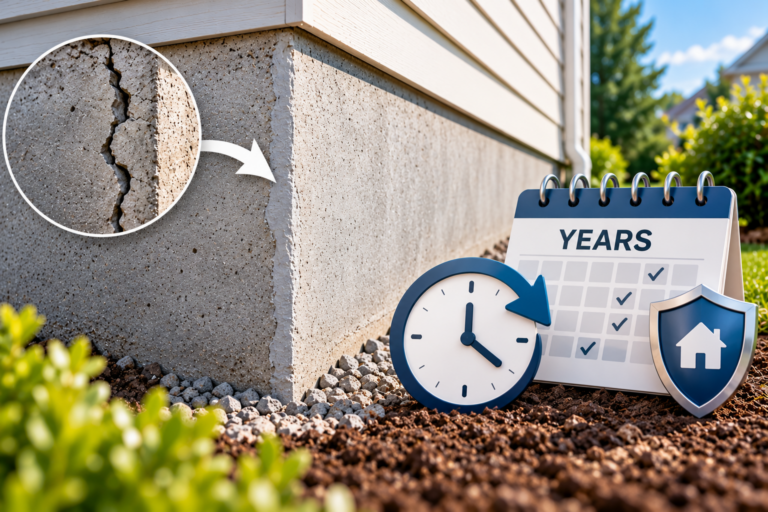
Stair-step cracks are zigzag-shaped cracks that follow the horizontal and vertical mortar joints between bricks or concrete masonry blocks. Rather than running straight across a wall, they resemble a staircase as they move between individual masonry units.
These cracks commonly appear in brick walls, block foundations, and other masonry structures. They may develop because of natural material movement, soil settlement, or pressure acting on the foundation.
The pattern alone does not determine whether a crack is serious. Small, stable cracks may require monitoring or minor repairs, while cracks that widen, extend over time, or appear alongside other signs of movement may indicate a more significant issue.
What Causes Stair-Step Cracks in Foundation Walls?
Understanding the causes of stair-step cracks in foundation can help homeowners determine whether the problem is related to normal settlement, water exposure, or more significant structural movement.
Soil Settlement and Foundation Movement
Soil settlement is a common reason for cracks in masonry foundations. When the ground beneath a house compresses unevenly, parts of the foundation may move at different rates, creating stress along mortar joints.
Settlement can occur because of changes in soil composition, inadequate soil compaction during construction, erosion, or changes in the moisture content of the ground. Small cracks may remain stable, but continued movement can cause them to widen or spread.
Hydrostatic Pressure and Poor Drainage
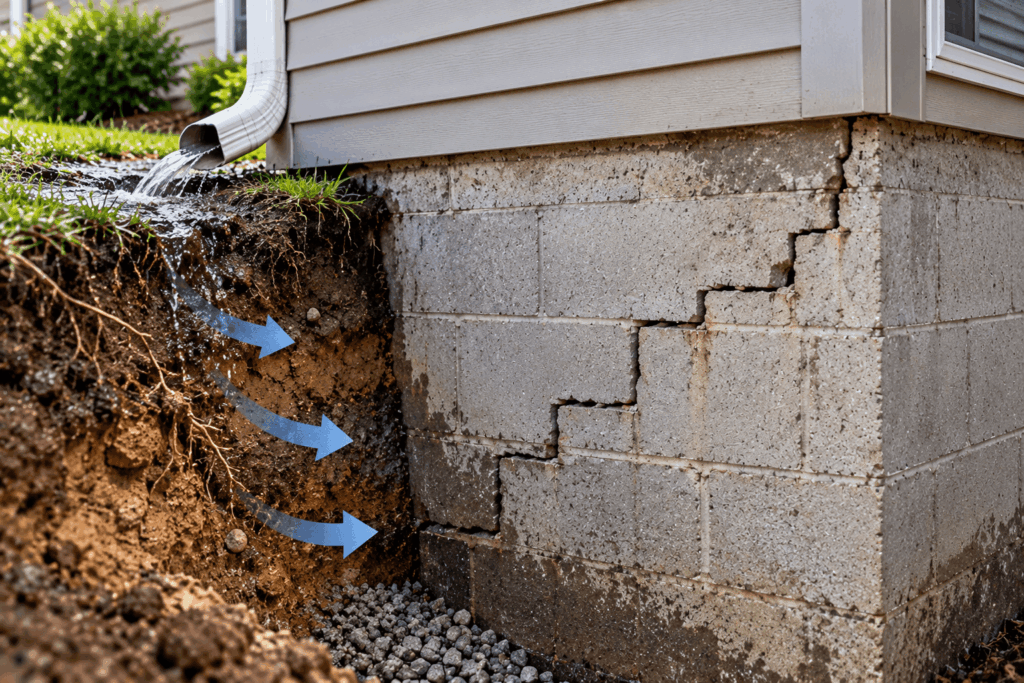
Water accumulating in the soil around a foundation can increase hydrostatic pressure against basement walls. If drainage is inadequate, this pressure may contribute to cracking, moisture infiltration, and, in more severe cases, wall displacement.
Clogged gutters, poorly positioned downspouts, improper grading, and damaged perimeter drainage systems can allow excess water to collect near the foundation. Addressing these issues can help reduce pressure and prevent further deterioration.
Freeze-Thaw Cycles and Seasonal Changes
In climates with cold winters, repeated freezing and thawing can affect soil conditions around a foundation. Water in the soil expands when it freezes, potentially increasing pressure on foundation walls. Seasonal temperature changes can also contribute to movement in building materials.
These effects may be more noticeable in older masonry structures or foundations with existing weaknesses. Proper drainage and timely maintenance can help reduce the impact of seasonal changes.
Expanding Clay Soil and Moisture Changes
Clay-rich soil can expand when it absorbs water and shrink as it dries. These repeated changes in soil volume may place uneven pressure on a foundation, particularly when moisture levels vary significantly around the property.
If certain sections of the ground expand or contract more than others, the resulting movement can cause cracks in mortar joints and masonry units. Managing surface water and maintaining consistent drainage conditions can help reduce these risks.
Are Stair-Step Foundation Cracks Serious?
Not every crack indicates a structural emergency. However, stair step foundation cracks should be evaluated according to their characteristics and whether other signs of damage are present.
Cracks that remain narrow and unchanged over time may be associated with minor settlement or normal material movement. In contrast, cracks that continue to widen, extend across multiple masonry units, or appear alongside displaced blocks may indicate ongoing foundation movement.
Watch for the following warning signs:
- Cracks that become wider or longer over time.
- Masonry blocks or bricks that appear displaced.
- Foundation walls that bow, bulge, or lean.
- Doors and windows that suddenly become difficult to open or close.
- Uneven floors or visible separation between building components.
- Water seepage, damp patches, or recurring basement leaks.
Stair step cracks in block foundation walls can be particularly concerning when the cracks are accompanied by horizontal displacement or outward wall movement. These symptoms may suggest that the wall is experiencing pressure beyond what it can safely resist.
If a crack is rapidly worsening, the wall is visibly moving, or you notice sudden structural changes, arrange a prompt professional assessment. Avoid assuming that sealing the visible crack alone will resolve the underlying problem.
How to Repair Stair-Step Foundation Cracks?
The appropriate repair depends on the cause of the crack, the condition of the foundation, and whether movement is ongoing. Effective repairs should address both the visible damage and any underlying factors contributing to it.
Crack Sealing and Waterproofing
When cracks are stable and the primary concern is water infiltration, a suitable crack repair method may help prevent moisture from entering the basement. Depending on the material and crack characteristics, a professional may recommend an appropriate sealant or injection system.
If water is penetrating through foundation walls, additional waterproofing measures may be needed. Repairing the entry point without controlling the surrounding moisture may not provide lasting results.
Improving Exterior Drainage
Poor drainage can contribute to foundation moisture and soil movement. Cleaning gutters, extending downspouts, correcting ground slope, and repairing damaged drainage components can help direct water away from the house.
In some cases, a French drain or repairs to the perimeter drainage system may be appropriate. The solution should be selected according to the property’s drainage conditions rather than installed as a universal fix.
Foundation Stabilization and Structural Repairs
When cracking results from ongoing movement or structural instability, sealing alone may not be sufficient. Depending on the assessment, repairs may involve rebuilding damaged masonry, reinforcing foundation walls, or installing an appropriate stabilization system.
The choice of repair depends on the extent of the damage, soil conditions, wall construction, and whether the movement is continuing. Significant structural work should be planned and completed by qualified professionals.
Why Professional Assessment Matters
A foundation specialist can evaluate the crack pattern, measure displacement, look for signs of water intrusion, and determine whether further structural investigation is necessary.
This assessment helps distinguish between minor cracking and damage that requires more extensive intervention. It also reduces the risk of spending money on cosmetic repairs when the underlying cause remains unresolved.
If you are researching how to fix stair-step cracks in foundation, remember that the right approach depends on why the crack developed, not just how it looks.
How to Prevent Stair-Step Foundation Cracks?
Although not all foundation movement can be prevented, regular maintenance can help reduce common risks.
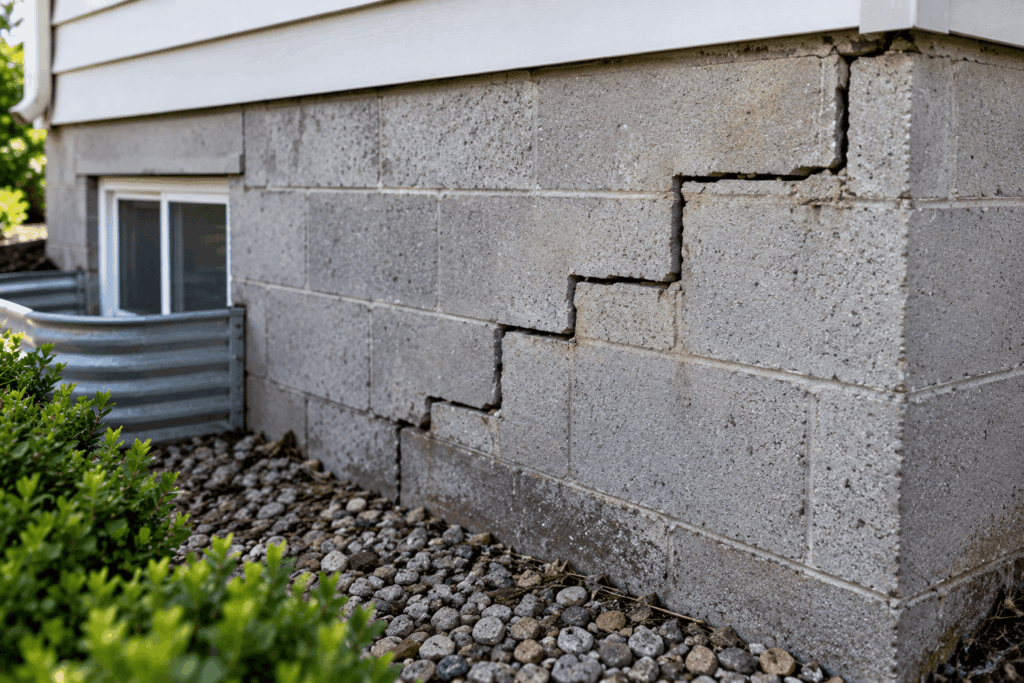
- Maintain proper grading: Ensure the ground slopes away from your home so rainwater does not collect beside the foundation.
- Keep gutters and downspouts clear: Prevent roof runoff from saturating the soil around foundation walls.
- Manage excess moisture: Address persistent puddles, drainage problems, and areas where water accumulates near the house.
- Maintain drainage systems: Inspect accessible drainage components and arrange professional checks if the system appears blocked or ineffective.
- Monitor existing cracks: Photograph cracks periodically and record any changes in their width or length.
- Address plumbing leaks: Repair leaking water lines and other sources of persistent soil saturation near the foundation.
These measures can help limit moisture-related damage and identify developing problems before they become more extensive.
When Should You Call a Foundation Repair Specialist?
Contact a foundation repair specialist if cracks continue to grow, masonry units become displaced, foundation walls appear to bow, or water repeatedly enters your basement. Professional evaluation is also advisable when several cracks develop within a short period or when cracking coincides with noticeable changes in doors, windows, or floors.
A specialist can identify the likely cause and recommend a suitable repair, whether that involves crack sealing, drainage improvements, waterproofing, or structural stabilization.
Taking action early can help prevent further deterioration and protect your property. If you notice new or worsening cracks in your foundation, a professional inspection can help you understand the severity of the problem and determine the next steps.


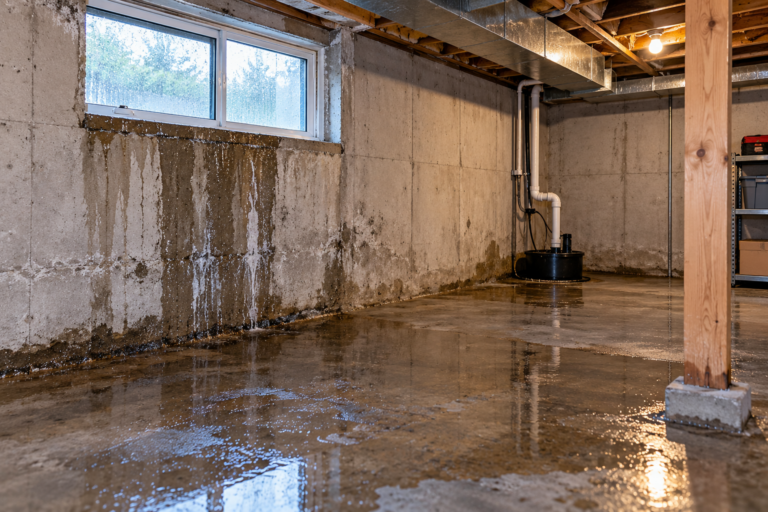
 CLOGGED OR BROKEN WEEPING TILE