White, chalky powder on a basement wall is one of the clearest clues a foundation can give you. It is not mould and it is not dangerous in itself, but it proves that water is moving through the concrete or masonry. Brushing it off makes the wall look better for a few weeks; it comes back in the same place for as long as the water keeps coming.
This guide explains efflorescence on basement walls: what it is, how to tell it apart from mould, what the colour and location tell you, how to remove it safely and how to stop it at the source.
What Is Efflorescence on Basement Walls?
What is efflorescence on basement walls? It is a deposit of mineral salts left on the surface of concrete, block, brick or stone when water evaporates. Concrete and mortar naturally contain soluble salts, and groundwater carries more from the surrounding soil. As water passes through the wall and evaporates on the inside face, the salts stay behind and crystallize.
The process needs three things at once: soluble salts, water to dissolve and carry them, and evaporation at the surface. Take away the water and the efflorescence stops.
What Efflorescence Looks Like
On basement walls it usually appears as:
- A white, powdery or fluffy coating, often in bands or patches.
- Crystals that crunch or brush off easily when dry.
- Lines along mortar joints in block and brick walls.
- A white tide line a few centimetres to a metre above the floor.
- Crusty deposits along cracks, tie-rod holes and the floor–wall joint.
Efflorescence on Concrete Basement Walls
Efflorescence on concrete basement walls often outlines the exact path of the water: a white streak along a crack, a ring around a form-tie hole or a band at the bottom of the wall where the floor–wall joint is damp. On poured concrete, a single white line along a crack is a strong sign that the crack leaks during wet weather. See how to tell if a foundation crack is serious.
Efflorescence on Painted Basement Walls
Efflorescence on painted basement walls shows up as bubbling, blistering and flaking paint, with white powder behind the loose paint or pushing through it. The salts crystallize under the paint film and lift it. Repainting only repeats the cycle; even “waterproof” masonry paint will lift when water keeps arriving from behind.
Yellow Efflorescence on Basement Walls
Yellow efflorescence on basement walls, or brown and orange staining, usually means the water carries iron or other minerals from the soil, rusting metal in the wall, or fine soil particles. The colour does not make it less of a moisture sign; it often points to water passing through soil-contaminated cracks or an old, rusting tie rod. Mud-coloured stains at the base of the wall may mean soil is washing in with the water.

Efflorescence vs Mould: How to Tell the Difference
Homeowners often worry that the white growth is mould. Simple checks:
| Check | Efflorescence | Mould |
|---|---|---|
| Texture | Powdery or crystalline, crunches when dry | Fuzzy, slimy or leathery |
| Water test | Dissolves or softens in water | Does not dissolve, smears |
| Surface | Concrete, block, brick, mortar | Organic materials: drywall paper, wood, dust, fabric |
| Smell | No smell | Musty, earthy |
| Colour | White, grey, sometimes yellow-brown | Green, black, white, grey, often spotty |
The two often appear together, because the same moisture that causes efflorescence lets mould grow on nearby drywall, wood framing and stored items. If the basement also smells, read why a basement smells musty.
What Causes Efflorescence in a Basement?
Efflorescence is a symptom. The cause is water reaching the wall, most often from:
- Groundwater pressure — saturated clay soil pushing water through the wall and joint. See what causes hydrostatic pressure.
- Failed or missing exterior protection — old damp-proofing that has worn out, especially on homes over 30–40 years old. See damp proofing vs waterproofing.
- Clogged weeping tile — water rising at the footing. Read about how weeping tile works.
- Poor surface drainage — downspouts and grading sending water to the wall.
- Leaking cracks and window wells.
- Capillary rise — porous block and older concrete wick water upward from damp soil even without a visible leak.
Is Efflorescence Dangerous?
The salt deposit itself is not toxic. The problem is what it represents:
- Ongoing moisture in the wall, which can rot wood framing and support mould on organic materials nearby.
- Spalling — salts crystallizing inside the surface can break off flakes of concrete or brick over years.
- Weakened mortar in block and stone foundations as water dissolves and carries material out.
- Wasted renovation money — finishing over an efflorescing wall traps moisture behind drywall.
Treat persistent efflorescence the way you would treat a damp patch: as an early warning.
Efflorescence on Basement Walls Removal
Efflorescence on basement walls removal is simple, but it is cosmetic. Do it after you have looked at where the deposits are, because their pattern helps find the water.
- Dry-brush first. Use a stiff nylon brush on a dry wall and vacuum the powder. Avoid wire brushes, which can scratch the surface and leave metal particles that rust.
- Wash lightly. Scrub with a little clean water and dry the wall quickly with fans. Do not soak the wall; adding water can dissolve more salts and bring them back.
- For stubborn deposits, use a mild acid only with care. A diluted white vinegar solution can loosen deposits on concrete — test a small area first, rinse well and let the wall dry. Strong acids such as muriatic acid can etch concrete and damage mortar and are best left to professionals.
- Wear protection. Gloves and eye protection for any cleaning solution, and a dust mask when brushing.
If deposits return within weeks, the wall is still taking on water, and more cleaning will not change that.

How to Fix Efflorescence on Basement Walls
How to fix efflorescence on basement walls means fixing the moisture, matched to where it comes from.
| Where the deposits are | Likely source | Repair |
|---|---|---|
| Along one crack | Leaking crack | Foundation crack repair by injection |
| Band at the bottom of all walls | Groundwater at the footing, clogged weeping tile | Interior waterproofing or weeping tile replacement |
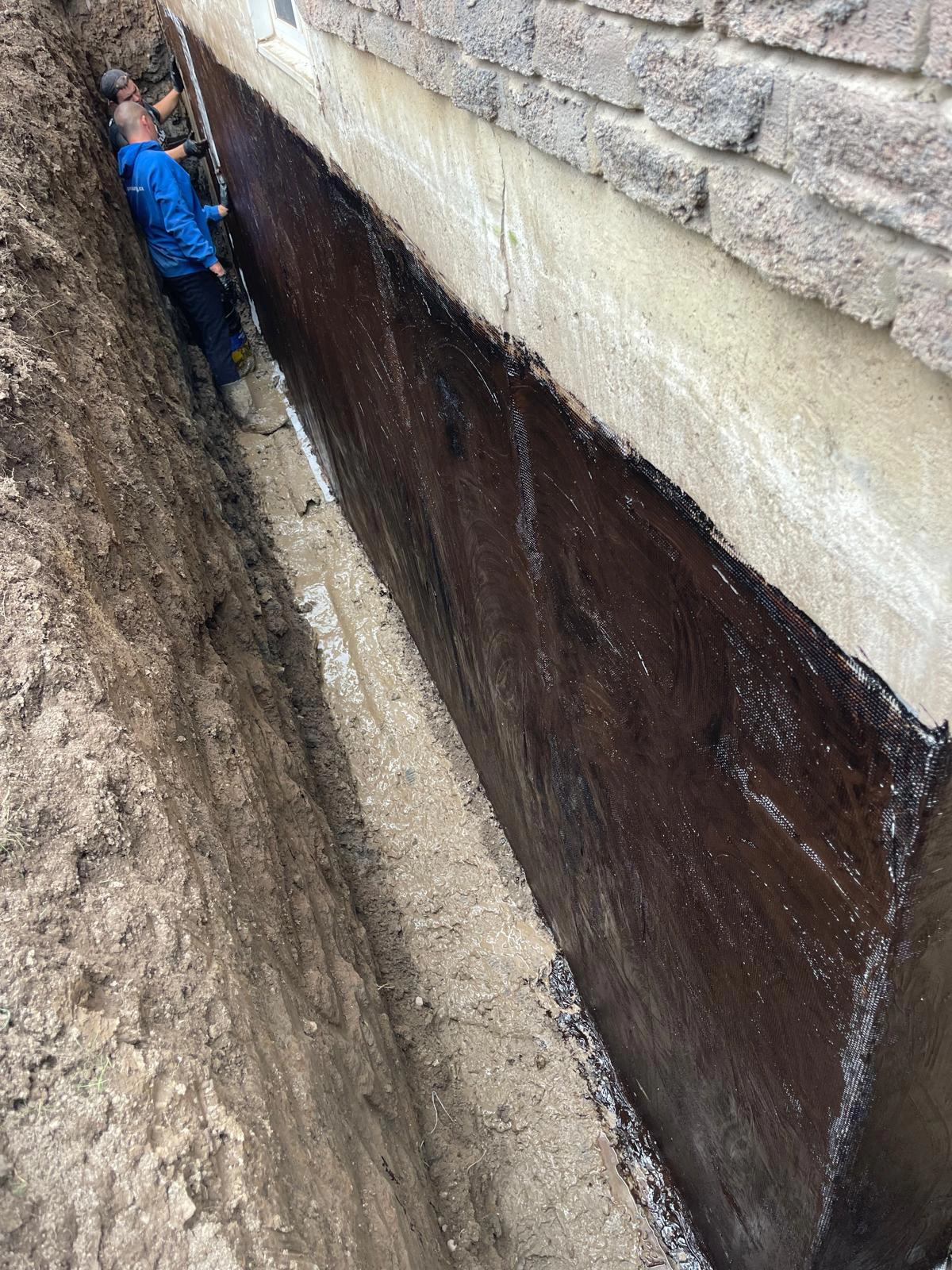
| Across whole wall surfaces | Failed exterior damp-proofing, porous block | Exterior waterproofing with a membrane |
| Under a window | Window well water | Window well waterproofing |
| On the exterior wall above grade | Splashback, poor grading, worn parging | Grading, downspout changes and foundation parging |
How to Stop Efflorescence on Basement Walls
How to stop efflorescence on basement walls permanently comes down to keeping water out of the wall:
- Manage surface water. Keep gutters clear, extend downspouts so water lands away from the foundation on your own property and keep the soil sloping away from the house.
- Repair entry points. Inject leaking cracks, seal pipe penetrations and fix window well drains.
- Restore exterior protection where the old damp-proofing has failed.
- Relieve water at the footing with working weeping tile and a sump pump.
- Control indoor humidity. Keep the basement between 30% and 50% relative humidity with a dehumidifier, especially in summer.
- Seal only after the wall is dry. If a sealer is used at all, choose a breathable masonry product suited to the wall and apply it only once the source is fixed. Non-breathable coatings trap moisture and make peeling worse.
When Efflorescence Means You Should Call a Professional
Call for an inspection if the deposits return within weeks of cleaning, if they follow a crack, if paint keeps blistering, if you see yellow-brown or mud staining, or if you plan to finish the basement. Our guide on how professionals find the source of a basement leak explains what an inspection involves. Leaquida inspects basements across Toronto and the GTA, and the inspection and written quote are free.