There is no single waterproofing product that works for every basement. The most effective method is the one that stops water where it actually gets in — and that depends on whether the water comes through a crack, the walls, the floor–wall joint or a window well, and on whether you can dig outside.
This guide compares the three main methods side by side, explains what each one fixes and what it cannot, and gives a simple way to decide what your home needs. Prices are typical Leaquida ranges for Toronto and the GTA in 2026.
Start With Where the Water Comes In
Before comparing systems, find the entry point. Each one points to a different fix:
- A wet line running down from one crack — usually an isolated crack that can be injected.
- Water along the bottom of every wall — water pressure under the slab and at the floor–wall joint.
- Dampness across a block or stone wall — the wall itself is porous and the outside protection has failed.
- Water under a basement window — the window well, its drain or the grading around it.
- Water rising from the floor drain — a sewer or drain problem, not a wall problem.
- Droplets on cold pipes and walls in summer — condensation, which no waterproofing system will fix.
If you are not sure which one you have, start with our guide on how to find the source of a basement leak.
What Are the Three Main Methods of Waterproofing?
What are the three main methods of waterproofing a basement? They are exterior waterproofing, interior drainage and targeted crack sealing. Surface drainage — grading, gutters and downspouts — supports all three but rarely solves a leak alone.
| Exterior waterproofing | Interior drainage | Crack injection | |
|---|---|---|---|
| What it does | Stops water at the outside face of the wall | Collects water at the footing and pumps it out | Seals one leaking crack through its full depth |
| Best for | Leaks through walls, failed old membrane | Floor–wall joint seepage, high groundwater, no outside access | Isolated cracks in poured concrete |
| Digging outside | Yes, down to the footing | No | No |
| Typical price | $100 – $250 per linear foot | $50 – $120 per linear foot | $500 – $1,500 per crack |
| Typical timeline | 3 – 7 days | 2 – 5 days | Usually one visit |
| Main limitation | Landscaping, decks and driveways must be removed and restored | Relies on a sump pump and a discharge line | Does nothing for water entering anywhere else |

The Best Way to Waterproof a Basement From Outside
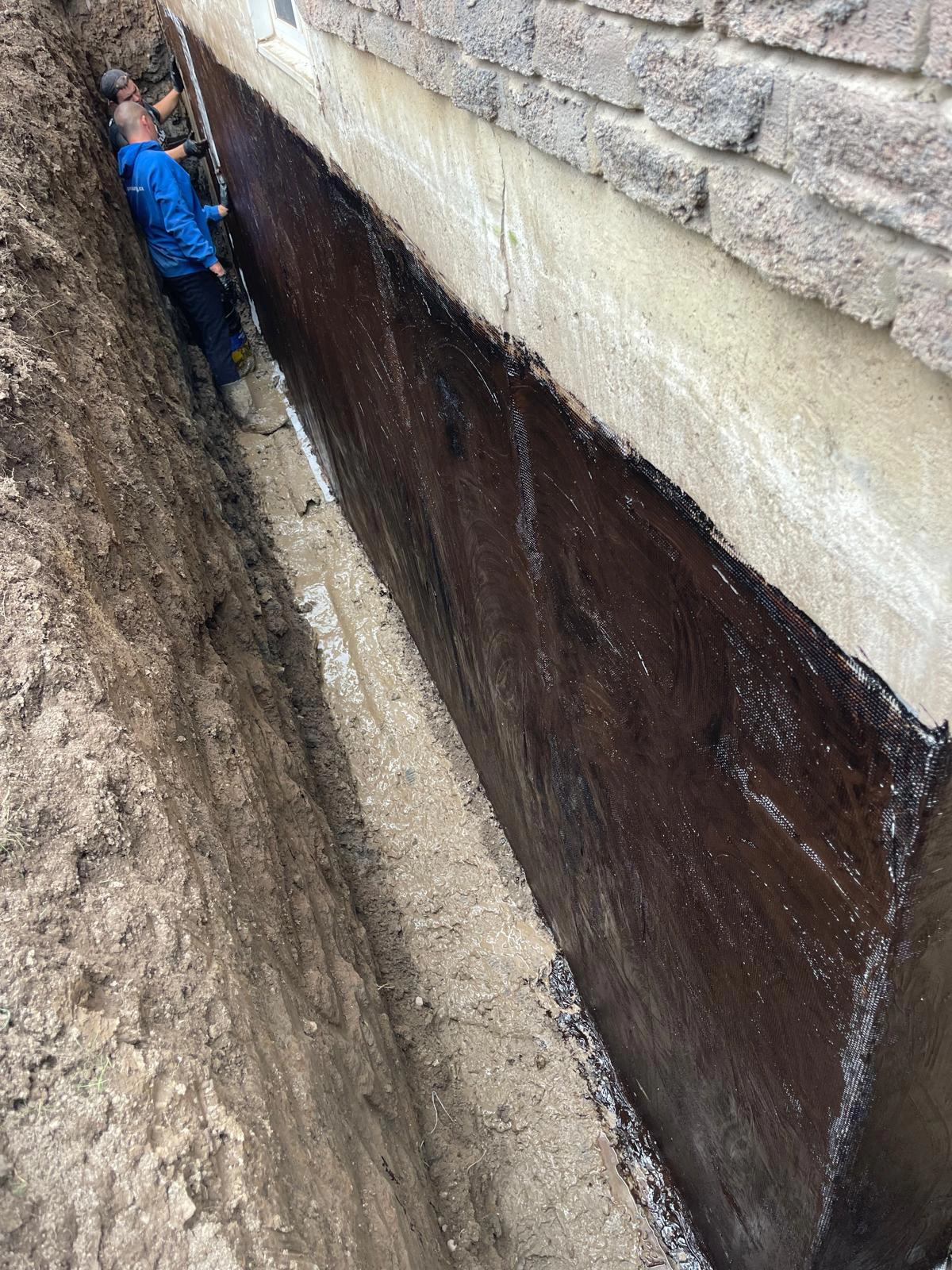
The best way to waterproof a basement from outside is to excavate to the footing, clean and repair the wall, apply a waterproofing membrane, add a drainage board and install new weeping tile at the footing before backfilling. This is positive-side waterproofing: water is stopped before it touches the concrete.
Exterior waterproofing is the most complete repair when water comes through the walls, when the original damp-proofing has worn out (common in homes over 30–40 years old), or when you want the wall itself kept dry, for example before finishing the basement. It is also the only method that protects the concrete from repeated wetting and freeze–thaw damage.
The trade-off is disruption and cost. Walkways, decks, patios and gardens along the wall have to come out and go back. On tight Toronto lots with a neighbour’s house a metre away, outside access may simply not exist.
The Best Way to Waterproof a Basement From Inside
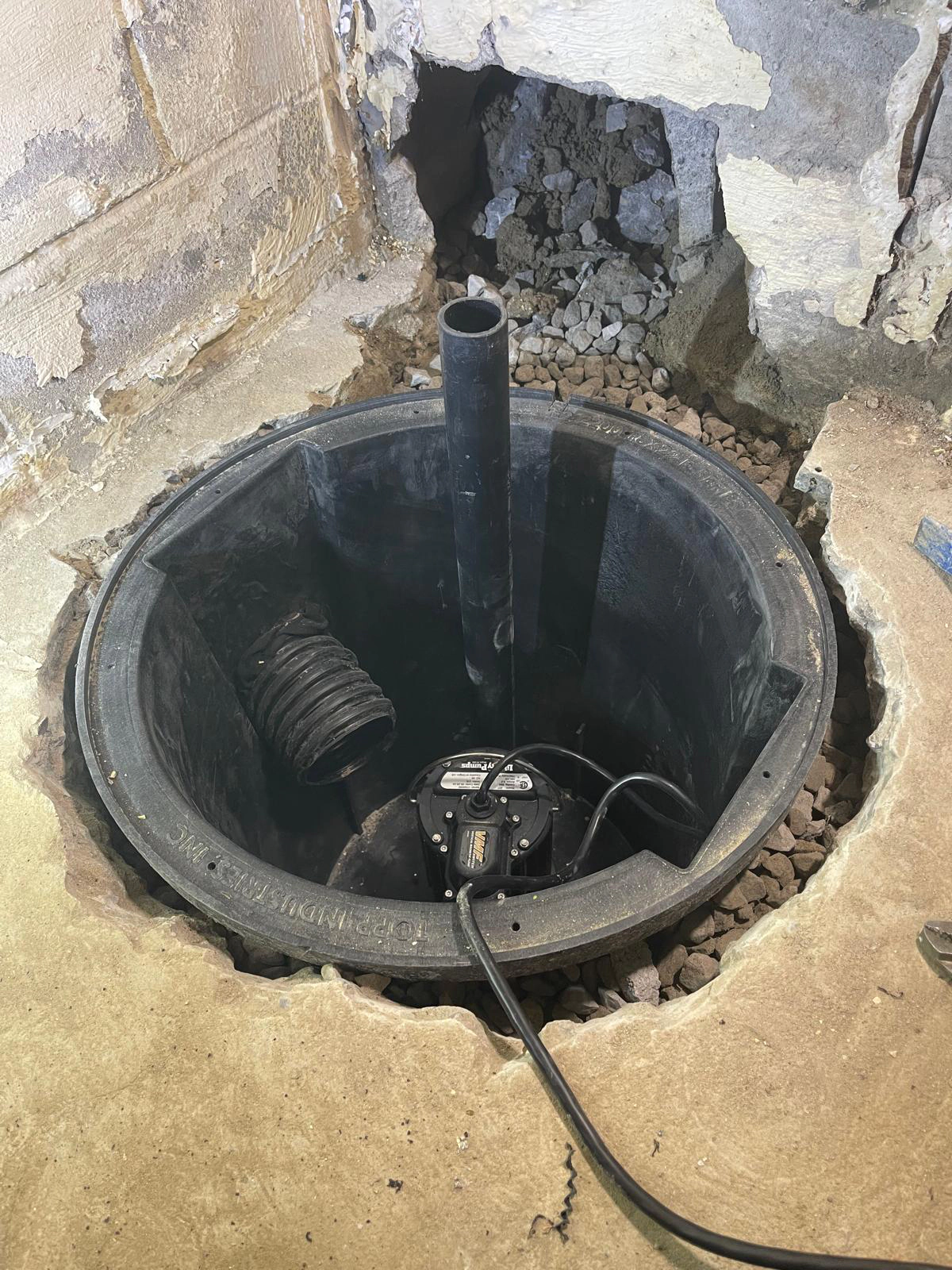
The best way to waterproof a basement from inside is an interior drainage system, not a coating. A strip of the floor is removed along the walls, a perforated pipe is laid in clean stone next to the footing, a dimpled membrane is fitted to the wall to direct seepage down, and the water is carried to a sealed sump pit and pumped out.
What is the best waterproofing system for an interior basement? For most older GTA homes with seepage at the floor–wall joint, it is a full perimeter drain with a sealed pit, a quality submersible pump, a battery backup pump and a check valve on the discharge line. Our guide on how interior basement waterproofing works explains each part.
Interior waterproofing avoids excavation and can be done in winter. It manages water rather than keeping the wall dry, so it depends on a working pump and an outlet that never freezes or blocks.
Crack Injection for Isolated Leaks
When water comes through one or two cracks in a poured concrete wall and nowhere else, foundation crack repair by injection is usually the most effective and least disruptive fix. Polyurethane expands to fill the crack and stays flexible; epoxy bonds the concrete and is used when strength must be restored. Injection is not suitable for block or stone walls, which leak through joints and the blocks themselves.
What Usually Does Not Work
Some products are sold as waterproofing but rarely fix an active leak:
- Waterproofing paint and sealers — they may reduce light dampness on sound concrete, but water pressure from outside pushes them off, and they can trap moisture in block walls.
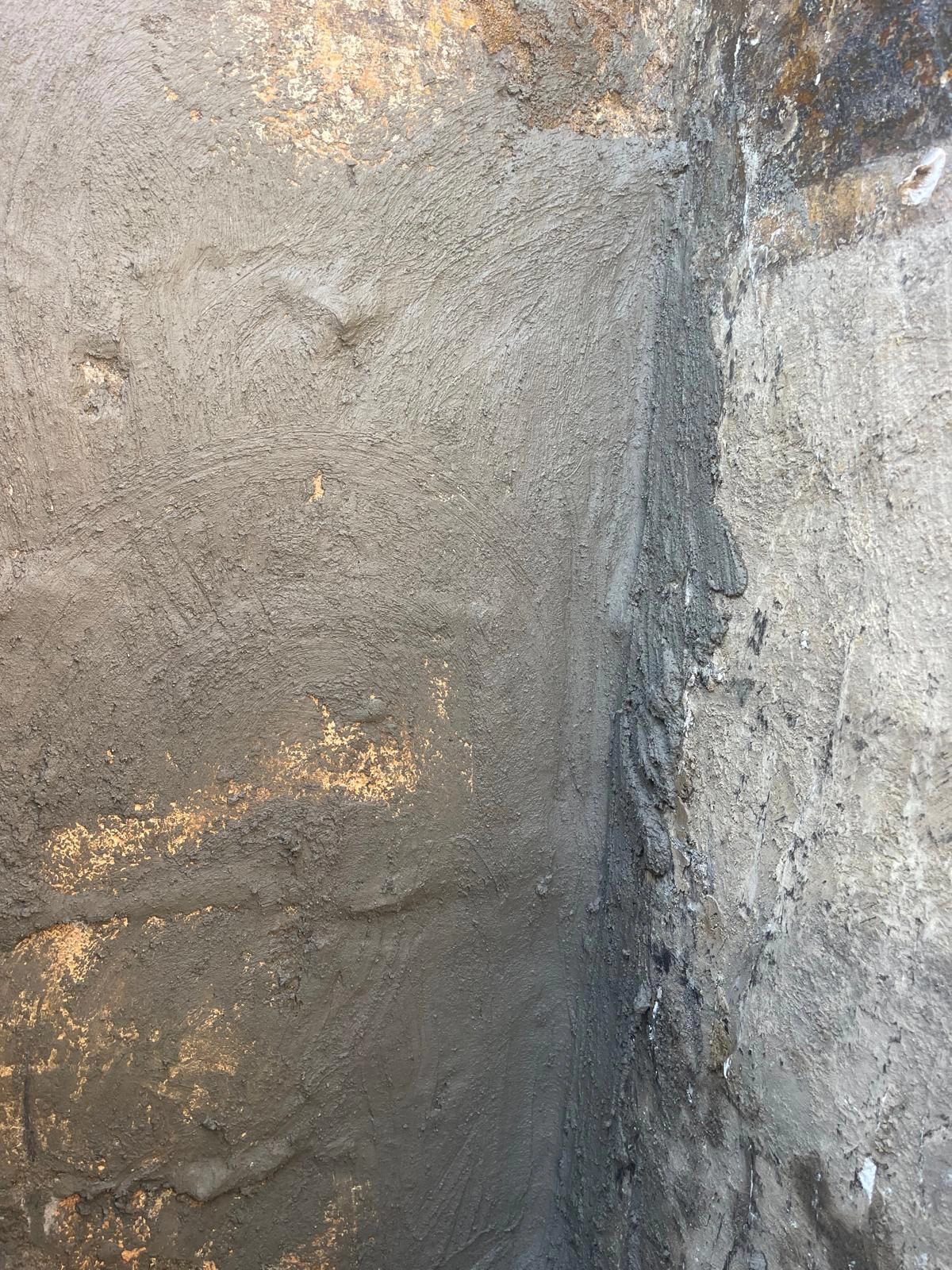
- Hydraulic cement patches — a rigid surface plug often cracks again with the next seasonal movement and leaves the crack open behind it.
- A sump pump without drainage — a pump only removes water that drainage brings to it.
- Regrading alone — grading helps a lot when water comes from roof runoff, but it does not stop groundwater at the footing.

Best Way to Waterproof Basement Walls by Wall Type
The best way to waterproof basement walls depends on what the walls are made of:
- Poured concrete — crack injection for isolated cracks; exterior membrane when several walls leak.
- Concrete block — exterior membrane or interior drainage; block walls leak through their hollow cores, so surface sealing rarely holds.
- Stone or rubble — compatible repairs to mortar joints and parging first, then interior drainage or an exterior system designed for old masonry. See the best waterproofing method for an old house.
Our comparison of membranes, coatings and drainage products for walls goes deeper into materials.
What Type of Basement Waterproofing Is Best for Your Home?
What type of basement waterproofing is best comes down to four questions:
- Where does the water enter? One crack, every wall, or the floor–wall joint.
- Can you dig outside? Space, neighbours, decks and driveways decide this.
- What is the wall made of? Poured concrete, block or stone.
- What are your plans for the basement? A finished living space or rental unit justifies keeping the walls dry from outside.
In practice, the best basement waterproofing system for many Toronto homes combines methods: exterior waterproofing on the walls that can be reached, interior drainage under the walls that cannot, and a backwater valve on the sewer line where flooding came through the floor drain.
What is the best foundation waterproofing method for new construction? A membrane system with drainage board and footing drains installed before backfilling — it is far cheaper to do then than later. Our guide to types of foundation waterproofing compares the materials.
The Best Way to Keep a Basement Dry After Waterproofing
The best way to keep a basement dry long term is to reduce the water reaching the foundation and maintain what you installed:
- Keep gutters clean and extend downspouts so water lands well away from the wall, on your own property.
- Keep the soil sloping away from the house for at least the first two metres.
- Test the sump pump every few months and replace the backup battery as the manufacturer recommends.
- Keep window well drains clear of leaves.
- Run a dehumidifier in summer to keep basement humidity below 50%.
Cost, Lifespan and Subsidies in Toronto
A full basement project in the GTA usually costs between $3,000 and $35,000 depending on method, wall length and what must be removed and restored. A properly installed exterior membrane and new plastic weeping tile can last decades; sump pumps typically need replacing every several years. See our basement waterproofing cost page for full price tables.
Toronto homeowners can recover part of the cost: the City’s Basement Flooding Protection Subsidy pays up to $6,650 per property for a backwater valve, a sump pump and weeping tile disconnection, with conditions. Leaquida inspects basements across Toronto and the GTA and recommends the method after finding the water source, not before.