
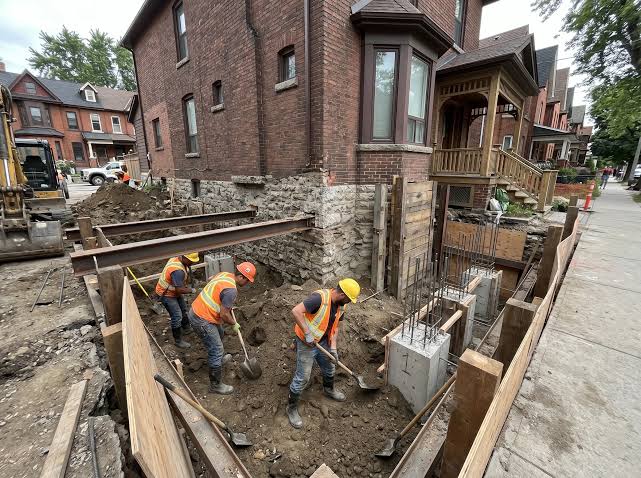
The best waterproofing method for an old house in Toronto depends on the foundation material, its condition, and how water enters the basement. Exterior waterproofing is usually the most comprehensive solution when the foundation walls are accessible, while interior drainage is a practical alternative when excavation is difficult or impossible. The right choice also depends on whether the basement is finished, the severity of water intrusion, and your budget.
Older homes require a different approach from modern properties. Stone and brick foundations need compatible repair materials, while early poured concrete walls may benefit from crack injection or exterior membranes. Understanding your foundation type helps you choose a solution that addresses the source of moisture rather than temporarily covering up the symptoms.
Why Old Toronto Foundations Let Water In
Many older Toronto houses were built before modern waterproofing membranes and drainage systems became standard. Their foundations have often endured decades of rainfall, snowmelt, soil movement, and repeated freeze-thaw cycles.
Several factors contribute to basement leaks:
- Missing exterior membranes: Older foundations may have little more than a basic damp-proof coating, which cannot reliably withstand prolonged water pressure.
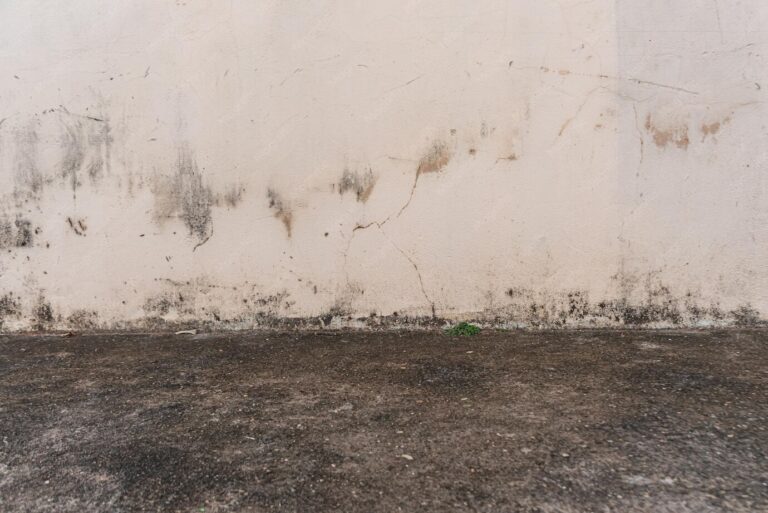
- Failed drainage: Original clay weeping tiles can crack, collapse, become blocked by sediment, or lose their ability to carry groundwater away from the foundation.
- Clay-heavy soil: Clay retains moisture and drains slowly. When saturated, it can increase hydrostatic pressure against basement walls.
- Freeze-thaw damage: Water entering small gaps can freeze, expand, and gradually widen cracks or deteriorate mortar joints.
- Poor surface drainage: Clogged eavestroughs, short downspouts, and ground sloping toward the house can concentrate water beside the foundation.
Understanding old basement drainage systems is particularly important when planning repairs. Some older homes have clay weeping tile installed around the footings, occasionally connected to older sewer or drainage arrangements. These systems can deteriorate over time, allowing water to accumulate around the foundation instead of draining away.
A waterproofing inspection should establish whether the main problem is wall penetration, failed footing drainage, groundwater pressure, or surface runoff. The repair method should address the actual cause.
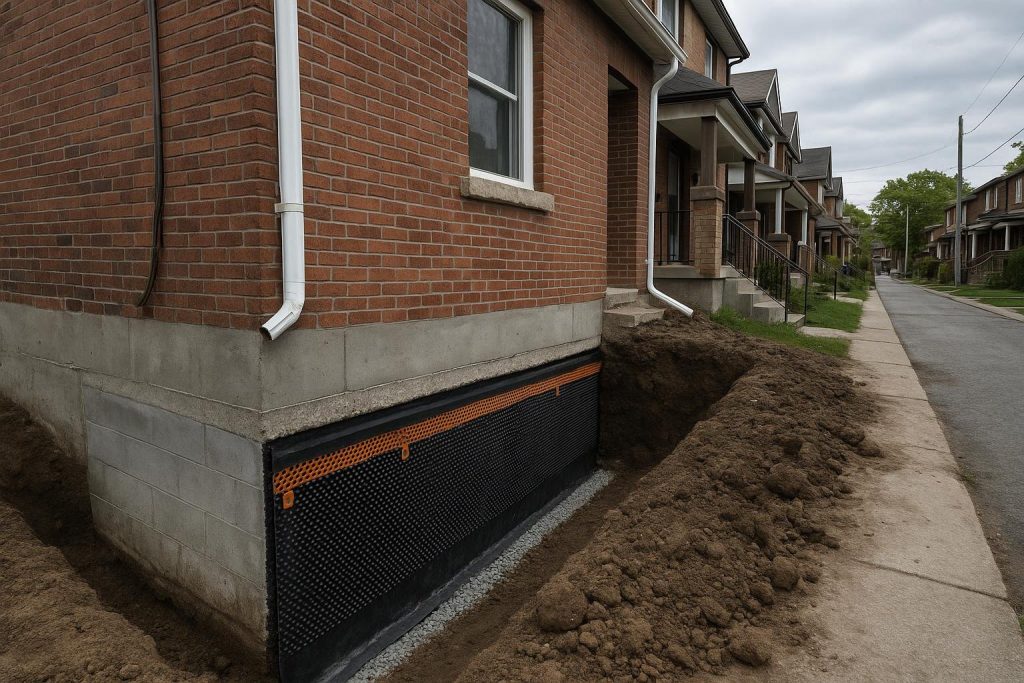
Foundation Types in Older Toronto Homes
Toronto has a wide range of older residential construction, and the foundation type often determines which waterproofing methods are appropriate.
In established neighbourhoods such as Leslieville, North York, and Etobicoke, homeowners may encounter traditional stone foundations, older brick construction, concrete block walls, and early poured concrete. However, foundation materials vary by property, so the building’s age alone is not enough to determine the right treatment.
- Stone foundations are common in some of the city’s oldest houses. Built from irregular fieldstone or rubble, these walls rely on mortar joints to hold the masonry together. As the mortar deteriorates, water can pass through gaps between stones. Some walls also lack a continuous exterior waterproofing layer.
- Brick foundations can develop moisture problems when mortar joints deteriorate, bricks become porous, or previous repairs trap moisture inside the masonry. Older brickwork may also be vulnerable to damage from incompatible repair materials.
- Concrete block foundations contain mortar joints and hollow cores that can provide pathways for water. Cracks, deteriorated joints, and hydrostatic pressure can contribute to leaks.
- Early poured concrete foundations are generally more continuous than masonry walls, but they can develop shrinkage cracks, deteriorated cold joints, and gaps around service penetrations. These defects may allow water to enter at specific locations.
Identifying the material and assessing its condition should come before choosing a waterproofing system.
Waterproofing Methods for an Old Basement
Several methods can help protect older foundations, but they solve different problems. Exterior waterproofing prevents water from penetrating the wall, interior drainage collects and redirects incoming water, and masonry repairs restore deteriorated joints.
For an overview of the available systems and their installation processes, see Leaquida’s guide to basement waterproofing methods.
Exterior Waterproofing on an Old Foundation
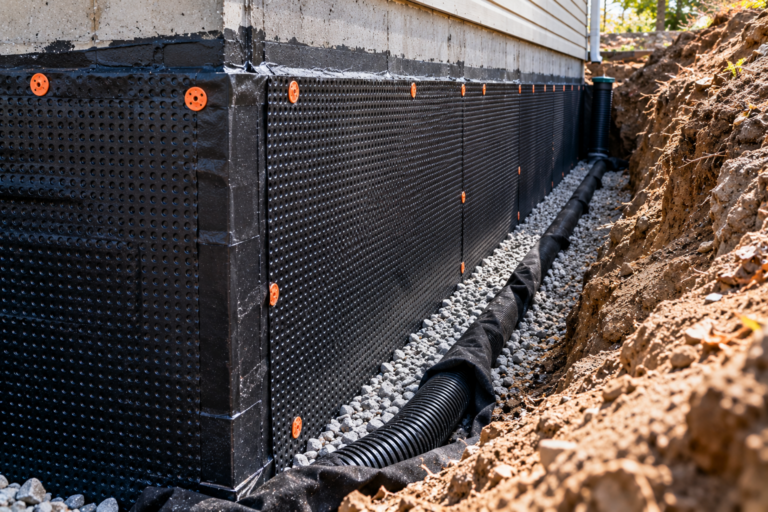
Exterior waterproofing is often the preferred option when the foundation can be safely excavated and accessed.
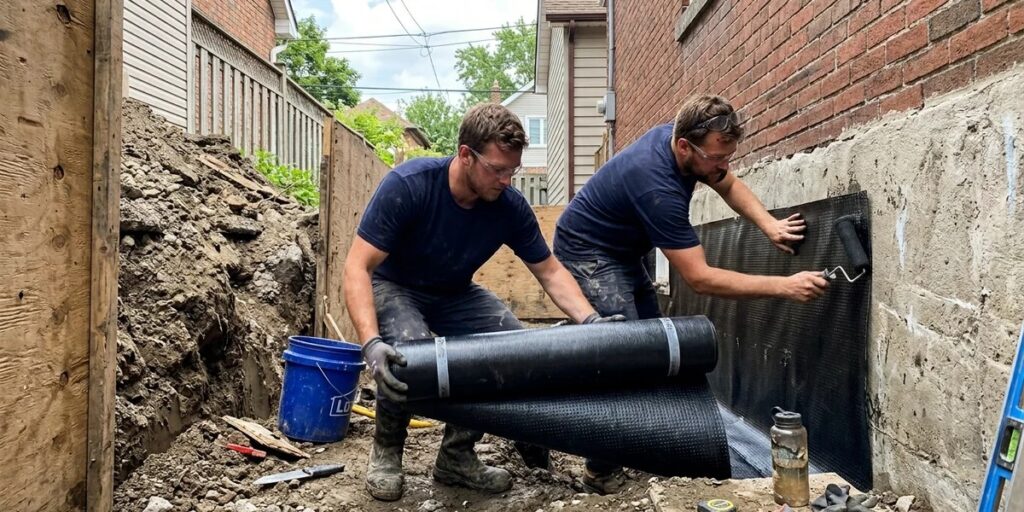
The process must account for the condition of older walls. Rubble stone and brick surfaces are cleaned, loose mortar is removed and repaired, and uneven masonry is parged to create a suitable surface for the waterproof membrane. Existing cracks and gaps are addressed before the protective layers are installed.
If the original clay weeping tile has failed, it can be replaced with a modern perforated drainage pipe surrounded by filter fabric and clean crushed gravel. A suitable drainage board and membrane help protect the foundation and direct water toward the drainage system.
Advantages:
- Stops water before it penetrates the foundation wall.
- Allows damaged masonry and drainage components to be repaired.
- Reduces moisture exposure and water pressure when properly designed.
- Provides comprehensive protection when combined with effective drainage.
Disadvantages:
- Requires excavation around the affected foundation walls.
- Can disturb landscaping, walkways, decks, and driveways.
- May be difficult on narrow lots or beside shared structures.
- Costs more when extensive masonry repairs are required.
Exterior stone foundation waterproofing is especially useful when the wall has widespread moisture penetration and the surrounding site allows excavation.
Interior Drainage in an Old Basement
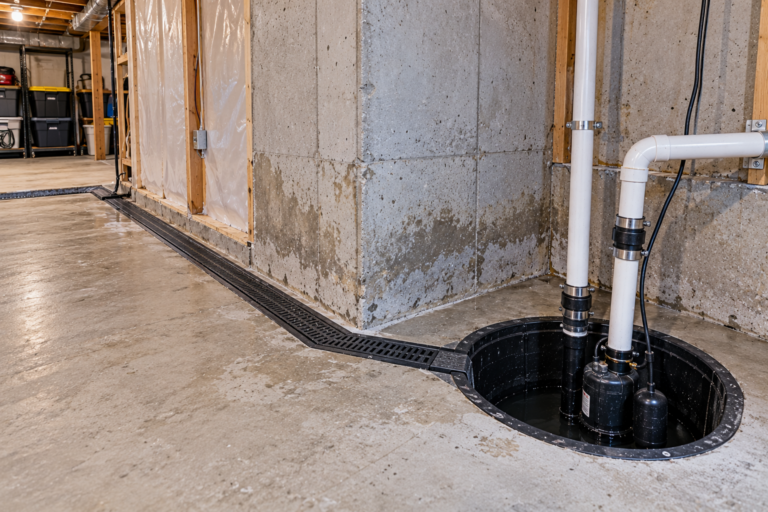
Interior waterproofing collects water entering around the foundation and redirects it to a suitable discharge point, commonly a sump pit and pump.
Older basements can present installation challenges because their floors may be thin, uneven, or close to the footing. Cutting drainage channels requires care to avoid undermining the foundation. Porous stone and brick walls can also remain damp behind the drainage system, which is why an appropriate wall membrane or vapour-management layer is important.
A sump pump removes collected water, while a battery backup helps maintain protection during a power outage. The system should also include an appropriate discharge arrangement and regular maintenance.
Advantages:
- Generally costs less than full exterior excavation.
- Can be installed relatively quickly.
- Avoids major disruption to the yard.
- Works where exterior access is restricted.
Disadvantages:
- Does not prevent groundwater from contacting the outside of the foundation.
- Requires a functioning drainage and discharge system.
- Pump maintenance and backup power must be considered.
- Wall moisture may persist unless the system includes appropriate wall protection.
For many homeowners, waterproofing stone foundation inside is a practical option when digging outside is not feasible. However, the drainage design must account for the foundation’s age and structural condition.
Waterproofing Stone Foundation Walls by Repointing
Repointing involves removing deteriorated mortar from masonry joints and replacing it with compatible mortar. For older stone foundations, lime-based mortar is often appropriate because it accommodates the properties of traditional masonry and allows moisture to move through the wall.
Portland cement is generally too hard and insufficiently permeable for many historic stone foundations. It can concentrate moisture and damage softer stone or brick as the surrounding masonry weathers.
Repointing can reduce water entry through failing joints and improve wall stability. It also works for brick foundations when the replacement mortar is selected to match the original materials.
However, repointing alone may not stop significant groundwater infiltration. It is often part of a broader waterproofing plan.
Crack Injection for Poured Concrete Walls
Crack injection uses specialized resin to seal cracks in poured concrete. Depending on the situation, polyurethane can help stop active leaks, while epoxy may be suitable for certain structural crack repairs.
This method is appropriate for compatible poured concrete walls, not traditional stone, brick, or concrete block foundations. Those materials require repair techniques suited to their joints and construction.
Injection may be sufficient when water enters through an isolated, stable crack and there are no broader drainage problems. If the foundation experiences persistent hydrostatic pressure, additional waterproofing or drainage may be necessary.
Best Basement Waterproofing Paint for an Old House
Waterproofing paint is rarely a dependable standalone solution for an old stone or brick basement with recurring water intrusion.
Traditional masonry needs to release moisture. When an impermeable coating traps moisture inside the wall, pressure can build beneath the finish, causing it to blister, peel, or detach. Hardware-store paints and sealers may fail within a season or two when applied to persistently damp masonry.
Breathable mineral-based coatings or compatible lime-based finishes can help manage surface dampness in suitable conditions. However, they cannot replace drainage improvements or repair significant leaks.
Before applying any coating, identify the moisture source and confirm that the product is compatible with the foundation material.
Matching the Method to Your Foundation
The most effective solution depends on the material, the extent of deterioration, and whether water is entering through the wall, joints, or floor-wall connection.
How to Waterproof a Stone Foundation
The best approach to waterproofing old stone foundation walls often combines mortar repairs, surface preparation, and exterior waterproofing when access permits.
For rubble stone foundation waterproofing, deteriorated joints should be repointed with compatible mortar, and uneven surfaces should be prepared before a membrane is applied. Proper footing drainage helps prevent water from accumulating against the wall.
For waterproofing stacked stone foundation walls, the assessment should also consider loose stones, wall movement, and the stability of the masonry before excavation or waterproofing begins.
Avoid crack injection and indiscriminate Portland cement repairs. Neither is an appropriate substitute for repairing deteriorated stonework.
Options for Brick and Block Walls
Brick foundations may benefit from compatible repointing, exterior membrane installation, and drainage replacement. The mortar and surface preparation must be appropriate for the age and condition of the brickwork.
Concrete block foundations may require repairs to mortar joints, treatment of cracks where appropriate, and an exterior waterproofing membrane. Where excavation is impractical, interior drainage can manage water entering through the wall or floor perimeter.
The choice depends on whether the problem is localized or affects several sections of the foundation.
What Works on Early Poured Concrete
For early poured concrete, crack injection may be enough when the leak originates from one stable crack and the surrounding wall remains in good condition.
Widespread seepage, repeated leaks, or water pressure around the footing may require exterior waterproofing or an interior drainage system. If cracks are widening or walls are bowing, a structural assessment should precede routine waterproofing work.
When Site Access Changes the Choice
Not every Toronto property allows excavation. Narrow side yards, additions, landscaping, and shared walls can make exterior work difficult or prohibitively expensive. A finished basement may also require careful planning to protect existing walls, flooring, and furnishings.
High groundwater levels can influence the decision, particularly in low-lying areas of Scarborough and Etobicoke. Where seasonal groundwater creates persistent pressure and exterior access is limited, interior drainage with a sump pump is often a practical choice.
In some cases, combining methods offers better protection. Exterior waterproofing can reduce water penetration through accessible walls, while interior drainage manages water entering through other sections or beneath the floor. The appropriate combination depends on the source of water and the property’s drainage conditions.
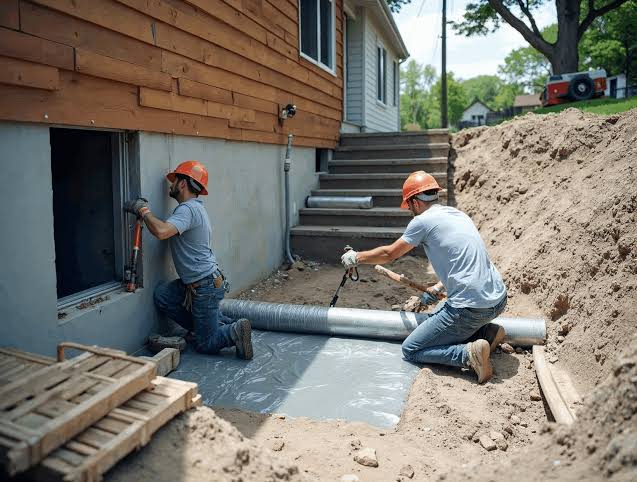
Choose the Right Waterproofing Solution for Your Old Toronto Home
Older foundations need solutions that respect their construction while addressing the source of water intrusion. Exterior waterproofing is often the most comprehensive option when excavation is possible. Interior drainage provides an effective alternative when access is limited, while repointing and crack repairs address specific foundation defects.
The best decision starts with identifying your foundation material, checking the condition of the masonry or concrete, and determining how water reaches the basement.
Leaquida provides basement waterproofing and foundation repair services in Toronto and the GTA. Contact our team to arrange an assessment and receive a recommendation based on your home’s foundation, drainage conditions, and budget.

 CLOGGED OR BROKEN WEEPING TILE