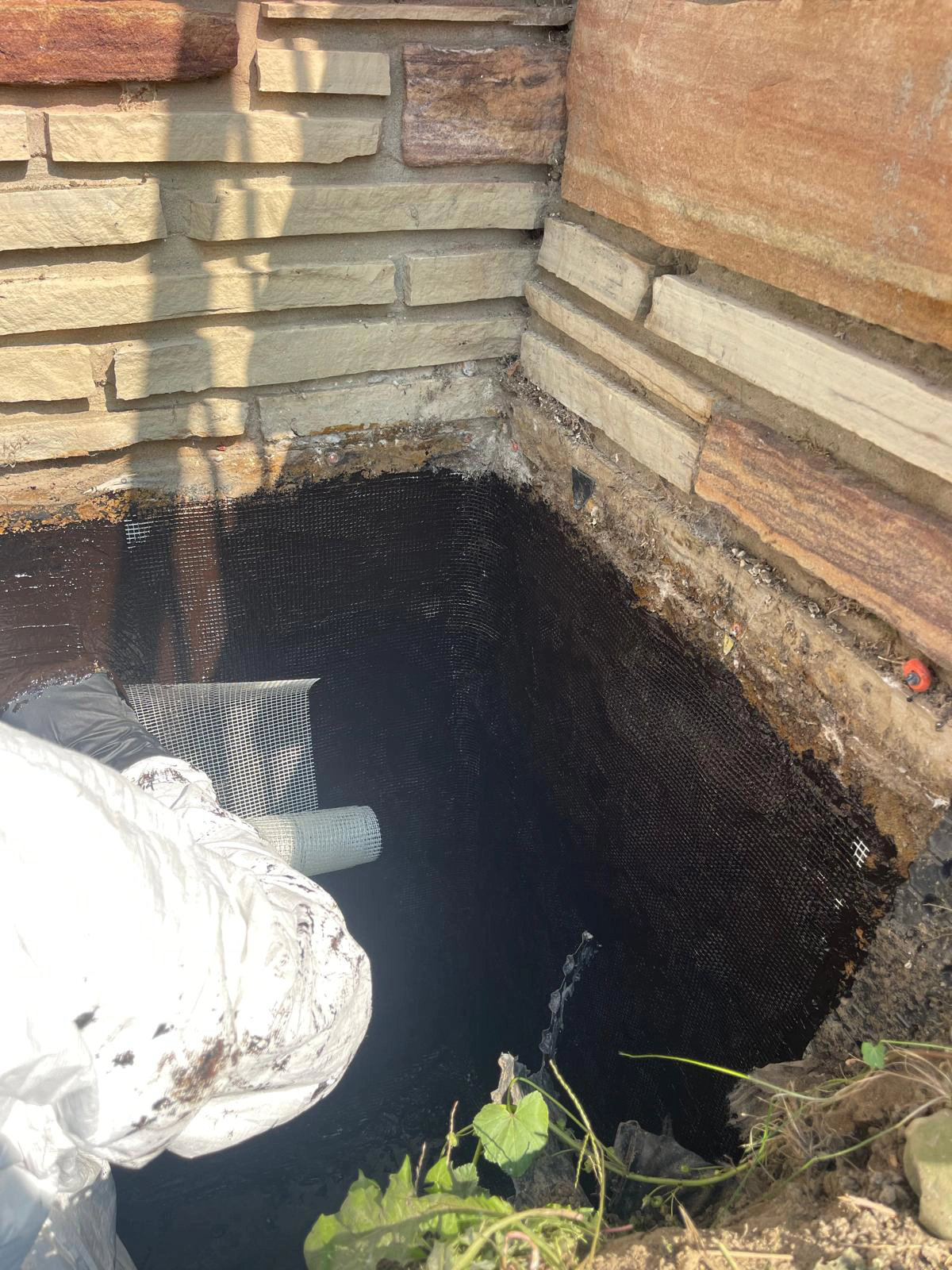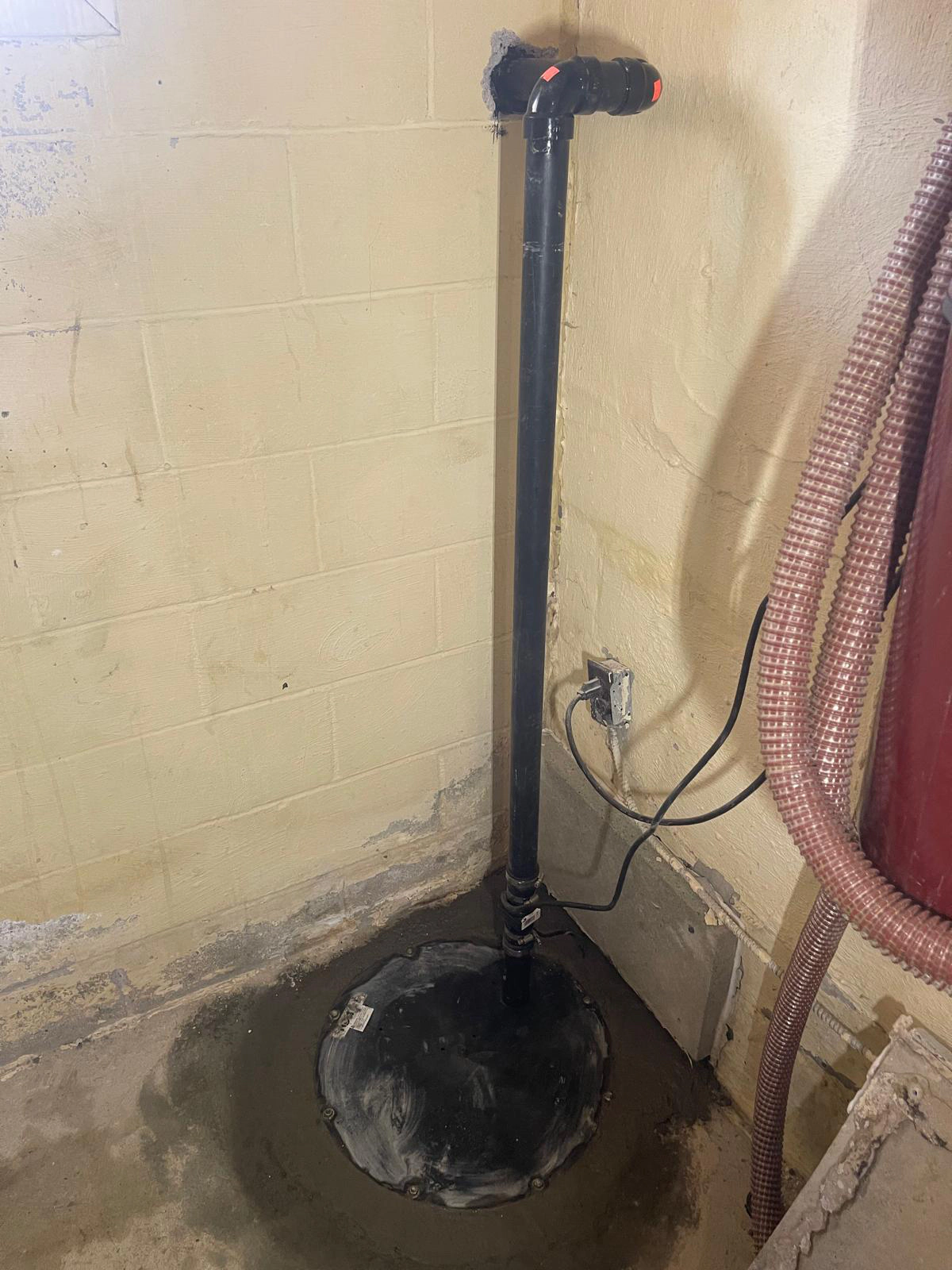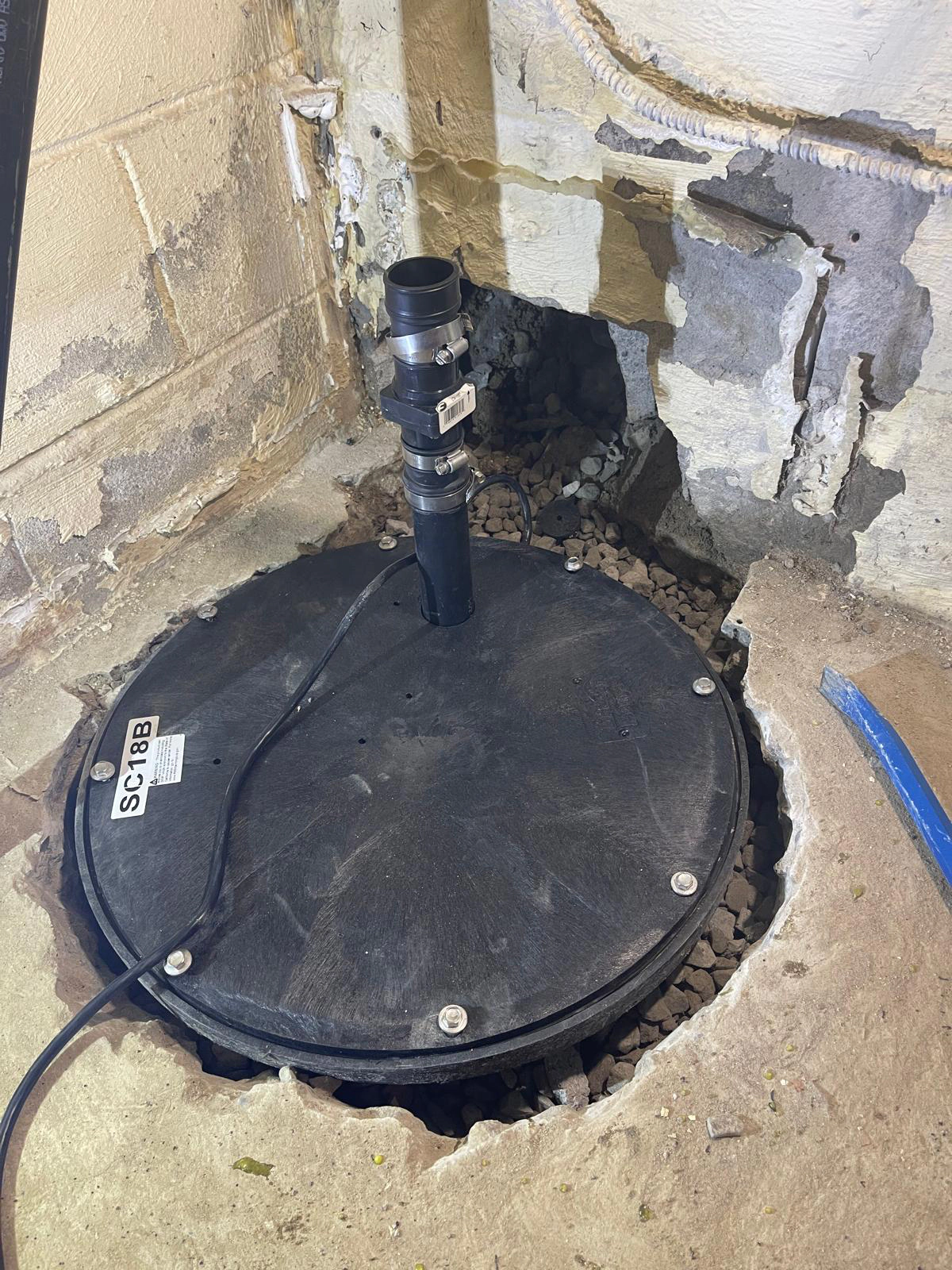

Most basement water starts as rain on the ground next to the house. If the ground slopes toward the foundation, every storm sends water down along the walls, into the backfill and against the weeping tile. Fixing the slope and using the right soil is one of the cheapest ways to keep a basement dry — and one of the most overlooked.
This guide covers grading around the foundation: what slope you need, which soil to use and which to avoid, how to regrade a yard, and when grading alone is not enough.
Why Grading Around a Foundation Matters
Grading around the foundation decides where surface water goes. Good grading:
- Sends rain and snowmelt away from the walls before it soaks in.
- Reduces water pressure against the foundation and the load on the weeping tile and sump pump.
- Prevents ponding that softens soil under walkways, steps and patios.
- Cuts down on freeze–thaw damage to the top of the foundation and to parging.
Poor grading is behind many of the problems we see in Toronto homes, especially older houses where the soil next to the wall has settled over decades. Our article on why water pools around a foundation shows the warning signs.
Proper Slope Away From House
How much slope do you need?
The usual rule for a proper slope away from house walls is a drop of about 15 cm (6 in) over the first 3 m (10 ft). That is a fall of about 5%. The Ontario Building Code requires finished ground to be graded so water drains away from the building; many municipalities and builders use the 15 cm over 3 m guideline as the target.
Where lot lines are close, as in many Toronto semis and row houses, you may not have 3 m. In that case, aim for the steepest practical slope away from house walls in the space you have and add a swale or drain to carry water off.
Yard slope for drainage beyond the foundation
Past the first few metres, a gentler yard slope for drainage of 1–2% is enough to keep water moving toward the street, a swale or a rear-lot drainage path. Flat areas and low spots in the middle of the yard should be filled so water does not pond and soak back toward the house.
How to check your grade
- Drive a stake against the foundation and another 3 m out.
- Tie a string between them and level it with a line level.
- Measure from the string down to the soil at each stake.
- The soil at the outer stake should be about 15 cm lower than at the house.
Check every side of the house. Corners and the areas under downspouts, decks and walkways are where grade usually fails.
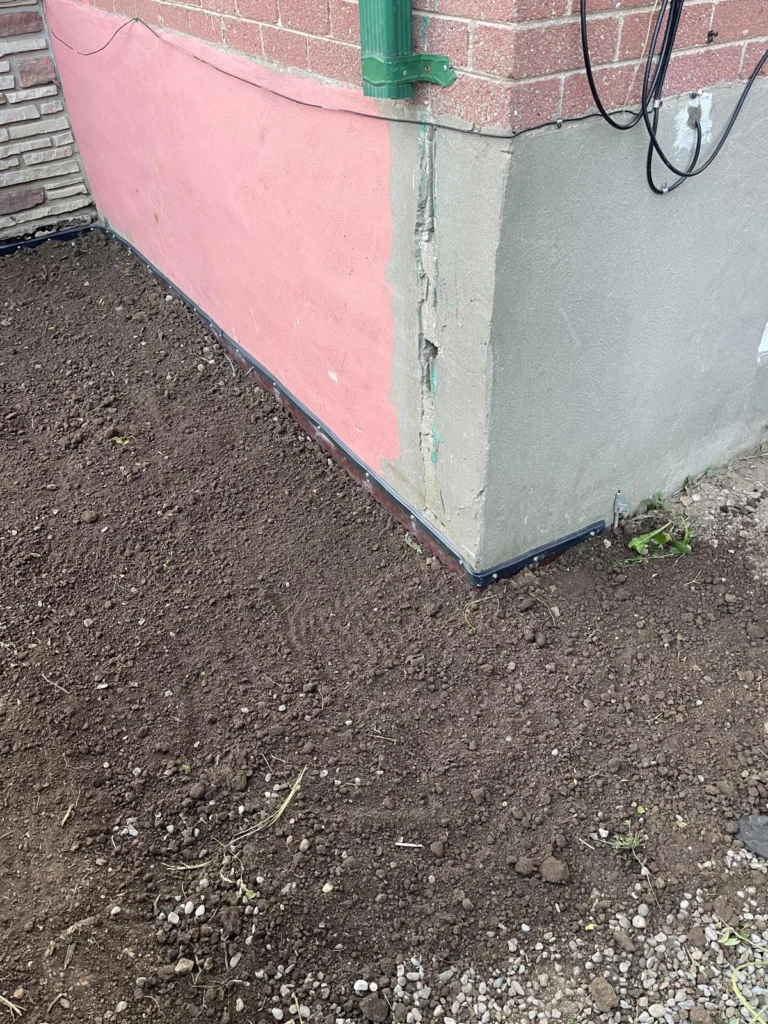
Best Soil for Grading Around House
What makes a good grading soil?
The best soil for grading around house walls sheds water at the surface instead of soaking it up and passing it down to the foundation. In practice, that is a layered approach:
- Clean fill with some clay content for the main body of the slope. A soil with a fair amount of clay and silt packs well and limits how much water soaks in.
- Topsoil, 10–15 cm thick, on top only, to support grass or planting.
- Mulch or stone only as a thin decorative layer, kept a few centimetres below the top of the foundation.
Best soil for grading around foundation: what to avoid
The best soil for grading around foundation walls is not sand or pure topsoil:
- Sand and gravel drain fast — straight down to the foundation. They belong in drainage layers and around weeping tile, not at the surface next to the wall.
- Pure topsoil or garden soil is loose, full of organic material, and settles as it decomposes, reversing the slope within a few years.
- Mulch piled deep holds water against the wall and can hide insects.
- Construction debris creates voids that collect water and settle.
Soil for grading around house vs backfill
Soil for grading around house surfaces is different from foundation backfill. Backfill is placed against the wall during construction or excavation, often with free-draining material behind a membrane so water can reach the weeping tile. Grading soil sits on top of that backfill and is meant to keep water from getting into it in the first place. Our guide to soil types and foundation waterproofing explains how the soil around the house affects the foundation itself.
Clay Soil Around Foundation
Much of Toronto and the GTA sits on clay. Clay soil around foundation walls has two sides:
- At the surface, a well-compacted clay cap is useful. It sheds water and is a good base for the final grade.
- Against the wall below grade, clay holds water, swells when wet and shrinks when dry. That puts pressure on the wall and can open gaps that let water run straight down along the foundation.
This is why foundations in clay soil rely on good drainage at the footing and a sound membrane. When regrading, do not pile more clay against a wall that already leaks — fix the drainage and the wall first.
Type of Soil to Use Around Foundation: Quick Guide
| Material | Use it for | Avoid it for |
|---|---|---|
| Clay-rich fill, compacted | Main body of the slope near the house | Directly behind a leaking wall without drainage |
| Topsoil | Top 10–15 cm for grass and plants | Building up height or slope |
| Sand | Bedding for pavers, drainage layers | Surface grading next to the wall |
| Clear gravel | Around weeping tile, French drains, dry wells | Surface grade near the house |
| Mulch | Thin decorative layer | Deep piles against siding or the foundation |
The type of soil to use around foundation walls depends on the layer: free-draining material where water should be collected, and denser soil where water should run off.

Yard Grading for Drainage: How to Regrade
Yard grading for drainage around a typical house is a weekend project for a small area or a contractor job for a whole lot. The basic steps:
- Call before you dig. Contact Ontario One Call to locate gas, hydro and other buried lines.
- Mark the target grade with stakes and string at 15 cm fall over 3 m.
- Remove sod, mulch and old landscaping next to the wall.
- Add fill in layers of 10–15 cm, compacting each layer with a hand tamper or plate compactor.
- Keep a gap below siding and wood. Leave at least 15 cm of foundation exposed above the finished grade, and never bury the sill plate or siding.
- Top with topsoil and seed or sod immediately so rain does not wash the new slope away.
- Recheck after the first heavy rain and top up any settled spots.
Grading Works With Downspouts and Drains
Grading is only part of surface drainage:
- Downspouts should discharge at least 1.8 m (6 ft) from the house onto ground that keeps sloping away. In Toronto, downspouts must be disconnected from the sewer and discharge onto the ground.
- Window wells need a drain at the bottom and a cover in exposed spots.
- Hard surfaces — patios, driveways, walkways — must also slope away. Re-levelling a sunken patio slab is often more important than the soil itself.
- Swales carry water between houses on narrow lots.
- French drains and dry wells handle water where grading alone cannot. See dry well vs French drain for small yards.
When Grading Is Not Enough
Proper grading reduces surface water, but it cannot stop groundwater or a high water table. If the basement still leaks after the grade is fixed, the problem is below grade:
- Exterior waterproofing to replace a failed membrane.
- Weeping tile installation when the footing drain is clogged or broken.
- Sump pump installation to remove collected water.
- Foundation crack repair for leaking cracks.
- Basement leak repair for isolated leaks.
When Leaquida excavates for exterior waterproofing, we backfill and restore the grade so water runs away from the repaired wall. The inspection and written quote are free across Toronto and the GTA.