

Waterproofing your foundation isn’t just about stopping leaks – it’s about understanding the soil beneath your home. Different soil types like clay, sandy, and loamy each have unique risks (e.g., swelling, erosion, uneven settling) that can affect your foundation’s stability. The wrong waterproofing approach can lead to costly damage, especially in areas like Canada, where freeze-thaw cycles and heavy rainfall are common.
Key Solutions:
- Clay soil: Use exterior waterproof membranes and drainage boards to manage high moisture retention and hydrostatic pressure.
- Sandy soil: Install geotextile filters to prevent erosion and clogging.
- Loamy soil: Ensure proper grading and backfill to handle uneven drainage and settling.
Costs in Canada:
- Exterior systems: CAD $100–$250/linear foot (lasts 30–50 years).
- Interior systems: CAD $70–$120/linear foot (relies on sump pumps).
For long-term protection, tailor waterproofing to your soil type and water intrusion issues. Exterior solutions are durable but pricier, while interior options are budget-friendly but require ongoing maintenance. Always consult a professional for a soil-specific assessment.
Soil Types and their Characteristics [Foundation Repair Tips]
sbb-itb-5761e20
Types of Soil and Their Waterproofing Challenges
Soil Type Waterproofing Guide: Clay vs Sandy vs Loamy
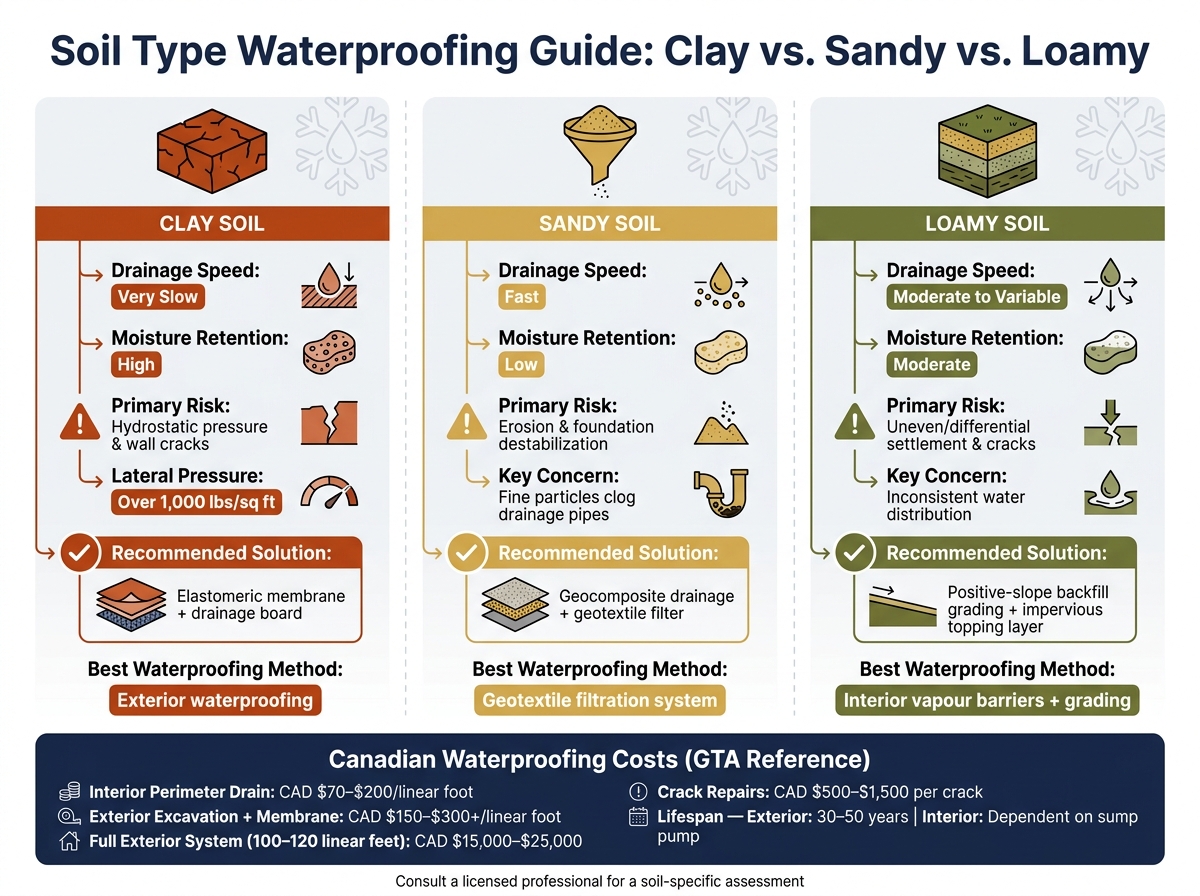
Soil behaves differently around a foundation, and each type – clay, sandy, and loamy – presents its own waterproofing challenges. Understanding these differences is essential for effective waterproofing strategies. The table below highlights each soil type’s drainage speed, moisture retention, and primary risk.
| Soil Type | Drainage Speed | Moisture Retention | Primary Risk |
|---|---|---|---|
| Clay | Very Slow | High | Hydrostatic pressure and cracks |
| Sandy | Fast | Low | Erosion and destabilization |
| Loamy | Moderate to Variable | Moderate | Uneven or differential settlement |
Clay Soil: Expansion and Contraction Problems
Clay soil demands special attention due to its tendency to expand and contract with moisture changes. This soil type absorbs and holds water, causing it to swell when wet and shrink when dry. This constant cycle creates hydrostatic pressure, which can lead to inward bowing of foundation walls, hairline cracks, and eventual structural damage. Jaspreet Singh, P.Eng., explains:
“Clay soils are among the most problematic because they expand and shrink with moisture changes, but uncontrolled fill, organic soils, frost-susceptible silts, and mixed soil-rock conditions can also cause serious issues.”
Sandy Soil: Erosion and Drainage Risks
Sandy soil presents challenges related to its rapid drainage. While its ability to drain water quickly might seem like an advantage, it also allows water to carry away fine soil particles. Over time, this erosion can undermine the foundation by creating voids or soft areas beneath it. As the sandy soil shifts and loses its compactness, the foundation becomes vulnerable to settlement and movement.
Loamy Soil: Drainage and Settling Concerns
Loamy soil, with its moderate drainage and variable compaction, can create uneven settlement issues. Its drainage capability falls between that of clay and sandy soils, but its composition – often containing varying amounts of organic material – can lead to inconsistent water distribution. This uneven drainage can cause parts of the foundation to settle differently, resulting in misalignment and cracks.
Waterproofing Methods by Soil Type
Matching your waterproofing approach to the specific soil type around your home is crucial for protecting your foundation. In Canada, where freeze-thaw cycles and spring melts are common, tailoring solutions to how your soil behaves can make all the difference.
Exterior Waterproofing Methods
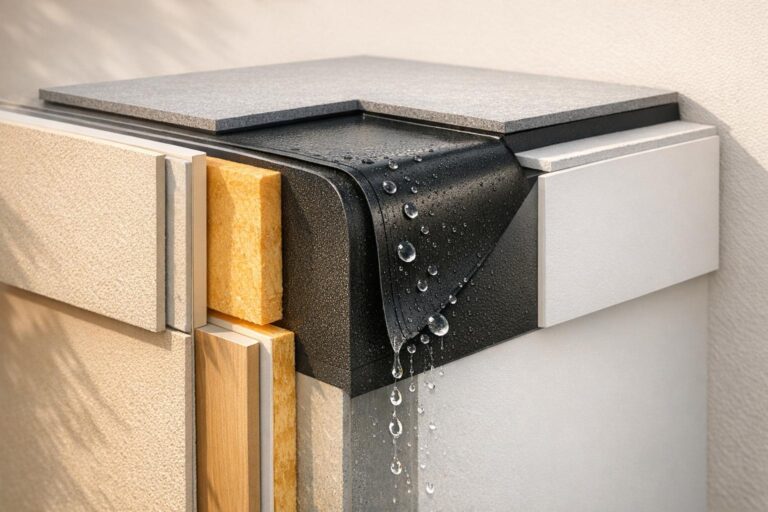
Exterior waterproofing acts as the first barrier, preventing water from reaching your foundation walls. This involves excavating down to the footing, repairing any wall damage, and applying a waterproof membrane – typically elastomeric or dimpled polyethylene – along with a drainage board to reduce hydrostatic pressure.
This method works especially well for clay-heavy soils, which tend to hold water and exert significant pressure on foundation walls. When installed correctly, exterior systems in Canada can last between 30 and 50 years.
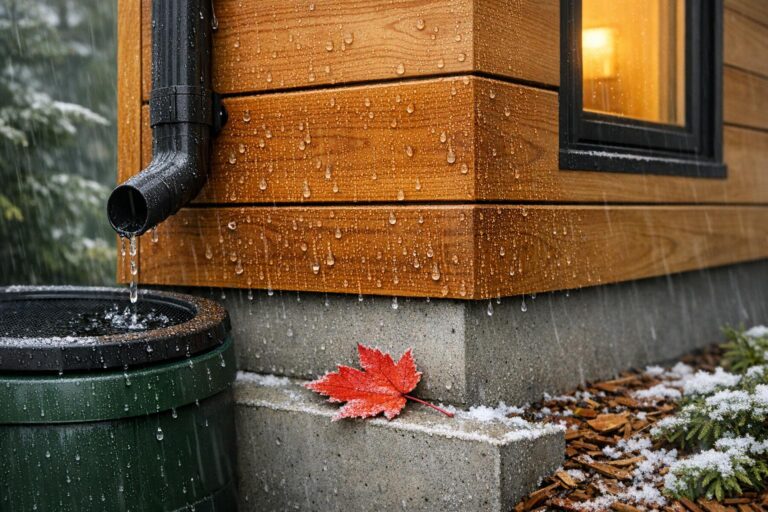
Managing surface water is equally important. Grading the soil to slope away from the foundation and extending downspouts to discharge water at least 1.2 to 2 metres from the house are simple but effective ways to reduce the strain on the surrounding soil. Ryan May, Founder of Homeowner.ca, emphasizes this point:
“The ‘right’ waterproofing fix depends on how water is getting in (surface water, groundwater seepage, sewer backup, or condensation), not just how wet the basement feels.”
In the Greater Toronto Area, the cost for exterior waterproofing ranges from CAD $100 to $250 per linear foot, with larger, more complex projects potentially exceeding CAD $30,000, depending on factors like depth and site conditions.
Interior Waterproofing Options
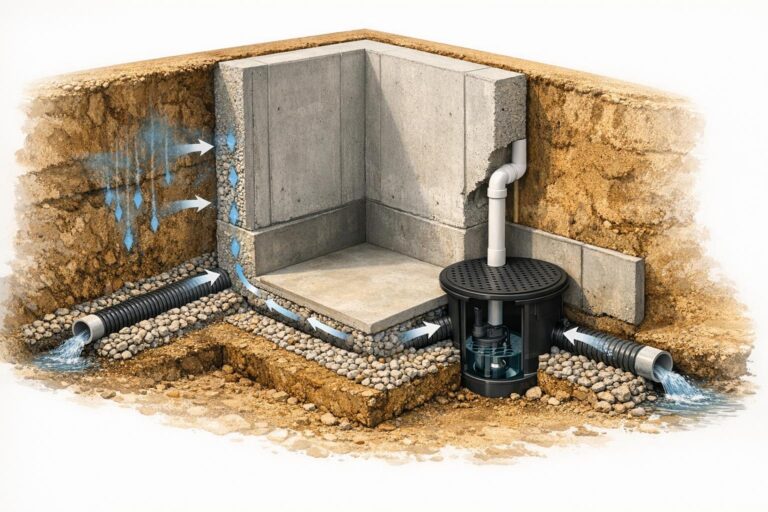
Interior waterproofing focuses on managing water after it has entered the home. This typically involves cutting a perimeter drain into the basement slab near the footing, which collects water seeping through the wall or floor joint and directs it to a sump pump for safe discharge.
This method is ideal for situations where excavation isn’t feasible, such as when neighbouring properties are too close or the water table is consistently high. Interior waterproofing costs in Canada range from CAD $70 to $120 per linear foot, making it a more budget-friendly option. However, its effectiveness depends on the sump pump’s reliability, as opposed to the passive protection offered by exterior barriers.
For basements with moderate humidity, often due to loamy or mixed soils, adding vapour barriers to interior walls can help reduce moisture migration through concrete. These strategies naturally evolve into more targeted methods tailored to specific soil challenges.
Adjusting Waterproofing for Specific Soil Types
Different soil types – clay, sandy, and loamy – present unique challenges, requiring precise adjustments to waterproofing designs. According to the National Research Council Canada:
“Long-term performance of a drainage system will depend on local conditions such as the soil type, hydrogeology of the site, mineralogy and presence of microorganisms in the soil.”
For sandy or silty soils, the main concern is fine particles clogging drainage pipes. A geocomposite drainage system, which includes a dimpled membrane with a geotextile filter facing the soil, can prevent particles from entering the drainage pathways. These systems are classified as Class A products under Canadian standards and should be backfilled quickly to avoid heavy rainfall washing fine particles into the filter before it’s secured.
In loamy soils, uneven drainage and settling are the primary risks. Here, proper backfill grading combined with an impervious clay or silt topping layer on the exterior can help consistently direct surface water away from the foundation.
The table below outlines key adjustments based on soil type:
| Soil Type | Primary Risk | Key Adjustment |
|---|---|---|
| Clay | High hydrostatic pressure | Elastomeric membrane + drainage board to relieve pressure |
| Sandy/Silty | Erosion and drain clogging | Geotextile filter (facing soil) on drainage system |
| Loamy | Uneven drainage and settling | Positive-slope backfill grading + impervious topping layer |
Common Mistakes in Soil-Based Waterproofing
When it comes to protecting your foundation, a one-size-fits-all approach just doesn’t cut it. Waterproofing often fails not because of subpar products but due to mismatched methods, misdiagnosed issues, or shortcuts that overlook the unique challenges posed by different soil types.
Treating All Soils the Same
One of the most expensive mistakes in waterproofing is assuming all soil types behave the same way. In reality, soil conditions vary widely: expansive clays can damage rigid coatings, sandy soils drain quickly but allow water to move freely, and loamy soils often settle unevenly. Each type presents its own set of challenges. As Homeowner.ca points out:
“Applying the wrong solution to the wrong problem is the most common and expensive mistake in basement waterproofing.”
For instance, expansive clay soils can exert lateral pressures of over 1,000 pounds per square foot – enough to shear off a rigid waterproofing coating. Using a standard coating in such conditions is a recipe for failure.
Another common error is confusing interior humidity with foundation seepage. To differentiate, tape a 30-cm square of aluminium foil to the wall for 24–48 hours. If moisture forms on the wall side of the foil, water is seeping through the foundation. If it forms on the room side, the problem is interior humidity, not leakage.
Poor Drainage Design
Waterproofing isn’t just about the foundation walls – it’s also about managing the water around your home. Neglecting drainage design can overload your waterproofing system. Common culprits include clogged gutters, downspouts that discharge too close to the house, or soil that slopes toward the foundation.
To reduce water load, ensure downspouts discharge at least 1.2 to 2 metres away from the foundation, and grade the soil to slope away from the house by about 150 millimetres over the first 3 metres. If basement leaks only occur during heavy rain, it might indicate that your system is barely coping rather than outright failing. Addressing drainage issues is a critical first step before focusing on materials.
Using the Wrong Materials
Confusing dampproofing with waterproofing is another costly misstep. Dampproofing, often a thin bituminous coating, is designed to resist soil moisture and vapour but isn’t built to handle liquid water under pressure. On the other hand, waterproofing membranes are tested for hydrostatic resistance and are the correct choice for below-grade, habitable spaces.
If a contractor suggests a simple “paint-on” coating as the main solution, ask them how it will handle hydrostatic pressure and manage water at the footing. If they can’t provide a clear answer, it’s a warning sign that the approach may not hold up long-term. Choosing the right materials is essential to creating an effective, soil-specific waterproofing system.
Choosing the Right Waterproofing Solution for Your Soil Type
Matching the Method to Your Soil
Your soil type plays a huge role in choosing the best waterproofing strategy. Different soils come with their own water-related challenges, so your approach needs to address those risks specifically. Whether you’re preventing water from entering your home, managing it once inside, or using a mix of both, understanding how water gets in is just as crucial as knowing your soil type. For example, is it groundwater seeping through the walls? Surface water pooling near the foundation? Or maybe even sewer backup? Each scenario requires a different fix.
Ryan May, Founder of Homeowner.ca, explains it well:
“The ‘right’ waterproofing fix depends on how water is getting in (surface water, groundwater seepage, sewer backup, or condensation), not just how wet the basement feels.”
By tailoring your waterproofing solution to both the soil and the water intrusion mechanism, you can strike a balance between your budget and long-term protection.
Weighing Cost Against Long-Term Protection
While your budget is important, so is the durability of the solution you choose. Exterior waterproofing is highly effective, keeping water out of your home entirely, and can last anywhere from 30 to 50 years. On the other hand, interior systems tend to have lower upfront costs but rely on mechanical sump pumps, which have a shorter lifespan.
Here’s a quick cost breakdown for Canadian homeowners:
| System Type | GTA (CAD/linear foot) | Metro Vancouver (CAD/linear foot) |
|---|---|---|
| Interior perimeter drain | $70–$200 | $70–$230 |
| Exterior excavation + membrane | $150–$300+ | $100–$320 |
For a standard single-family home (about 100–120 linear feet), a full exterior waterproofing solution, including a French drain, typically costs CAD $15,000 to $25,000. If you’re dealing with cracks, repairs usually range from CAD $500 to $1,500 per crack, while installing a sump pump can cost a few thousand dollars.
It’s also worth exploring financial aid options. For instance, Toronto’s Basement Flooding Protection Subsidy Program helps cover costs for backwater valve installation and sump pumps. Keep in mind that exterior work is best done between mid-May and late October, when the ground isn’t frozen, and membranes adhere properly.
Investing in the right solution now can save you from expensive problems down the road.
When to Call a Professional
If you’re noticing signs of water damage, it’s time to bring in a professional. Watch for things like water stains on foundation walls, musty odours that won’t go away, visible cracks, or water pooling near your home after rain. Even if you’re running a dehumidifier, basement humidity levels consistently above 50–60% could indicate a drainage issue, not just condensation.
A qualified waterproofing expert will evaluate your foundation, drainage system, and soil conditions before recommending a solution. Look for someone who is licensed and insured, offers clear pricing upfront, and adjusts their approach based on your specific situation rather than applying a one-size-fits-all fix. Modern tools like infrared cameras and moisture metres allow professionals to detect hidden leaks behind finished walls without tearing everything apart.
For example, Toronto-based Leaquida Waterproofing specializes in soil-specific assessments. They handle everything from interior drainage systems and sump pump installations to full exterior excavations and membrane applications, offering warranties and transparent pricing for peace of mind.
Conclusion: Protecting Your Foundation Starts with the Right Approach
The type of soil beneath your foundation is the key factor in determining the best waterproofing strategy. Clay, sandy, and loamy soils each have unique characteristics, so a universal solution just doesn’t cut it.
As Leaquida Waterproofing explains:
“Waterproofing is a preventive measure that helps avoid future problems. Even without visible leaks, water can slowly seep through cracks and lead to bigger issues over time.”
Equally important is the quality of the materials you choose. High-grade elastomeric membranes, for example, offer far greater durability compared to traditional bituminous coatings, making them a smarter choice for Canada’s varied and often harsh climate.
To effectively protect your foundation, you need a thorough understanding of your soil conditions, a clear identification of water entry points, and materials designed to withstand local weather. A complete waterproofing plan should include reducing water exposure, sealing potential entry paths, and improving drainage systems. If you’re unsure about the specifics, a professional assessment tailored to your soil type is a must.
Need expert advice? Toronto-based Leaquida Waterproofing specializes in soil-specific evaluations and offers services like interior and exterior drainage systems, sump pump installations, exterior excavation, and membrane applications. With transparent pricing and warranties, they can help you create a customized plan to ensure your foundation remains secure for years to come.

 CLOGGED OR BROKEN WEEPING TILE