

When it comes to protecting Canadian homes from water damage, the right waterproofing solutions can make all the difference. Homes in regions like Toronto face unique challenges due to freeze-thaw cycles, heavy rainfall, and rising water tables. This guide highlights modern materials and methods designed to keep your foundation dry and secure for decades.
Key Takeaways:
- Advanced Membranes: Options like liquid-applied, spray-applied polyurea, and hot-applied rubberized asphalt provide long-lasting protection, handling extreme Canadian weather.
- Eco-Friendly Coatings: Solvent-free and low-VOC products improve indoor air quality while offering effective waterproofing.
- Drainage Systems: Exterior and interior systems, including sump pumps and weeping tiles, reduce hydrostatic pressure and prevent basement flooding.
- Concrete Additives: Crystalline and hydrophobic admixtures integrate waterproofing directly into concrete, sealing cracks and pores.
- Green Roof Waterproofing: Engineered systems with thermoplastic membranes and drainage layers manage water effectively while supporting vegetation.
From modern membranes to eco-conscious coatings and drainage solutions, these techniques are tailored to withstand Canada’s challenging climate. Proper installation by professionals ensures long-term performance and peace of mind.
Interior vs Exterior Waterproofing | Basement Second Suite | Ontario
sbb-itb-5761e20
Advanced Waterproof Membranes
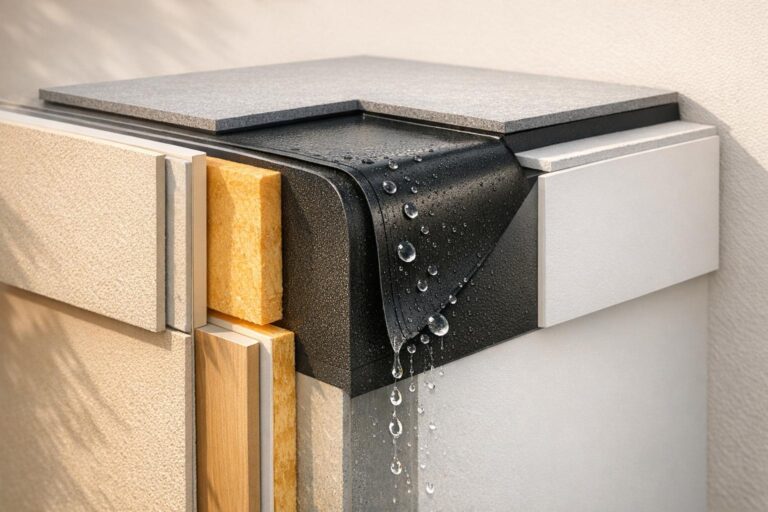
Modern waterproofing membranes have come a long way from traditional tar coatings, offering superior protection against Canada’s challenging weather. Below, we’ll explore four types of advanced membranes that are commonly used to protect Canadian foundations.
Types of High-Performance Membranes
Today’s residential waterproofing relies on four main types of membranes, each offering unique advantages.
- Liquid-applied membranes: Products like Sikagard® M 790, which use Xolutec® technology, create a seamless, cross-linked barrier directly on foundation walls. The absence of seams or laps eliminates weak points, reducing the risk of water leaking into your basement.
- Spray-applied polyurea: Examples include DURAFLEX F46 and COLPHENE LM 3500. These two-component systems cure in seconds, adhere tightly to vertical walls, and can even be applied to concrete that’s only three to seven days old without primer. A single kit of COLPHENE LM 3500 covers up to 261 square metres at a 60-mil thickness.
- Hot-applied rubberized asphalt: Monolithic Membrane 6125® (MM6125) is applied at a thickness of approximately 6 mm, which is over three times thicker than standard membranes. This ensures a strong bond that prevents lateral water movement, even if the membrane is punctured.
- TPU polymer-modified bitumen: Products like MAMMOUTH NEO ONE combine biobased thermoplastic polyurethane with bitumen, offering UV resistance and long-term durability. These membranes often come with warranties of up to 40 years.
How These Membranes Hold Up in Canadian Conditions
Performance under Canada’s extreme weather is where these membranes truly shine.
The freeze-thaw cycle is a major challenge, and advanced membranes are specifically designed to handle it. For instance, DURAFLEX F46 remains flexible at temperatures as low as -40°C and can bridge cracks at -20°C. Similarly, MM6125 can be installed at temperatures as low as -18°C, provided the surface is free of frost and snow.
Hydrostatic pressure is another critical factor, especially during spring when rising water tables put extra strain on foundations. Advanced polyurea membranes can withstand hydrostatic pressure of 48 kPa for five days, and some HDPE-based systems can handle a hydrostatic head of up to 71 metres. These capabilities are essential for managing the seasonal water challenges Canadian homes face.
“TPU guarantees increased longevity and exceptional resistance… [meeting] the needs of the North American and European markets in terms of sustainable construction.” – SOPREMA
For Canadian projects, it’s important to choose membranes with a CCMC (Canadian Construction Materials Centre) evaluation number, such as CCMC 14841-R. This certification ensures the product complies with the National Building Code (NBC 2020) for waterproofing under hydrostatic conditions.
How Leaquida Waterproofing Uses These Membranes
At Leaquida Waterproofing, membrane selection is tailored to the unique conditions of each project in the Greater Toronto Area. Factors like soil type, foundation age, and water pressure levels determine the best solution. Exterior waterproofing with these advanced membranes typically costs between $100 and $250 per linear foot, and professional installation is crucial to meet code requirements and ensure long-lasting performance.
Eco-Friendly Waterproof Coatings
For Canadians looking to waterproof their homes without relying on harsh chemicals, low-VOC and solvent-free coatings offer a practical solution. These products not only provide effective protection for foundations and crawlspaces but also help improve indoor air quality.
Types of Eco-Friendly Coatings
There are four main types of eco-friendly waterproof coatings, each suited to specific applications and conditions: bitumen-modified polyurethane, elastomeric acrylic, hot-applied rubberized asphalt, and two-component polyurea. Here’s how they compare:
| Coating Type | Eco Benefit | Canadian Climate Advantage | Common Applications |
|---|---|---|---|
| Bitumen-Modified Polyurethane (e.g., Sikalastic®-320 NS) | Solvent-free with a VOC content of just 46 g/L | Can be applied to damp or “green” concrete | Foundation walls, planters |
| Elastomeric Acrylic (e.g., Acriflex Pro) | Solvent-free, LEED/WELL certified | Remains flexible even at -25°C | Roofs, terraces, balconies |
| Hot-Applied Rubberized Asphalt (e.g., MM6125) | Made with 40% recycled content, 100% solids, and zero VOCs | Perfect for sustainable construction projects | Foundation walls, plazas |
| Two-Component Polyurea (e.g., Hygrothane) | Monolithic and VOC-free | Complies with NBC 2020; highly resistant to impacts | Below-grade concrete foundations |
For instance, Acriflex Pro costs around $334.34 for a 20 kg pail, while MM6125 offers a 10-year shelf life when stored properly. This longevity is especially helpful for contractors working within the short Canadian construction season.
Health and Air Quality Benefits
These coatings offer more than environmental perks – they also contribute to better indoor air quality. Unlike traditional waterproofing products, solvent-free options don’t release harmful fumes. This is particularly important for spaces like basements and crawlspaces, where poor ventilation can allow chemical vapours to seep into living areas. Additionally, low-odour formulations mean residents can stay in their homes during application, making these products more convenient.
Crystalline-based coatings bring another layer of safety. They’re non-toxic, certified under NSF/ANSI 61 for use near potable water, and allow concrete to breathe instead of trapping moisture. For homeowners with water cisterns or wells near their foundations, this can be a critical feature.
Using These Coatings on Canadian Homes
To get the best results, surfaces need proper preparation. They should be clean, stable, and free from grease or standing water before application. Interestingly, crystalline slurries work best on damp surfaces because moisture activates the chemical reaction that forms nano-scale crystals, sealing cracks up to 0.4 mm wide.
Most eco-friendly coatings are easy to apply using standard tools like a spray gun, roller, brush, or squeegee. This versatility is especially useful for older Canadian homes with irregular surfaces. For moisture-cured polyurethane, mixing it with water at a 1:40 ratio can help reduce pinholes and speed up curing to about 2–4 hours. Once the coating is fully cured, it’s crucial to protect it from UV exposure within 14 days by backfilling or adding a compatible topcoat.
Modern Drainage Systems for Basements
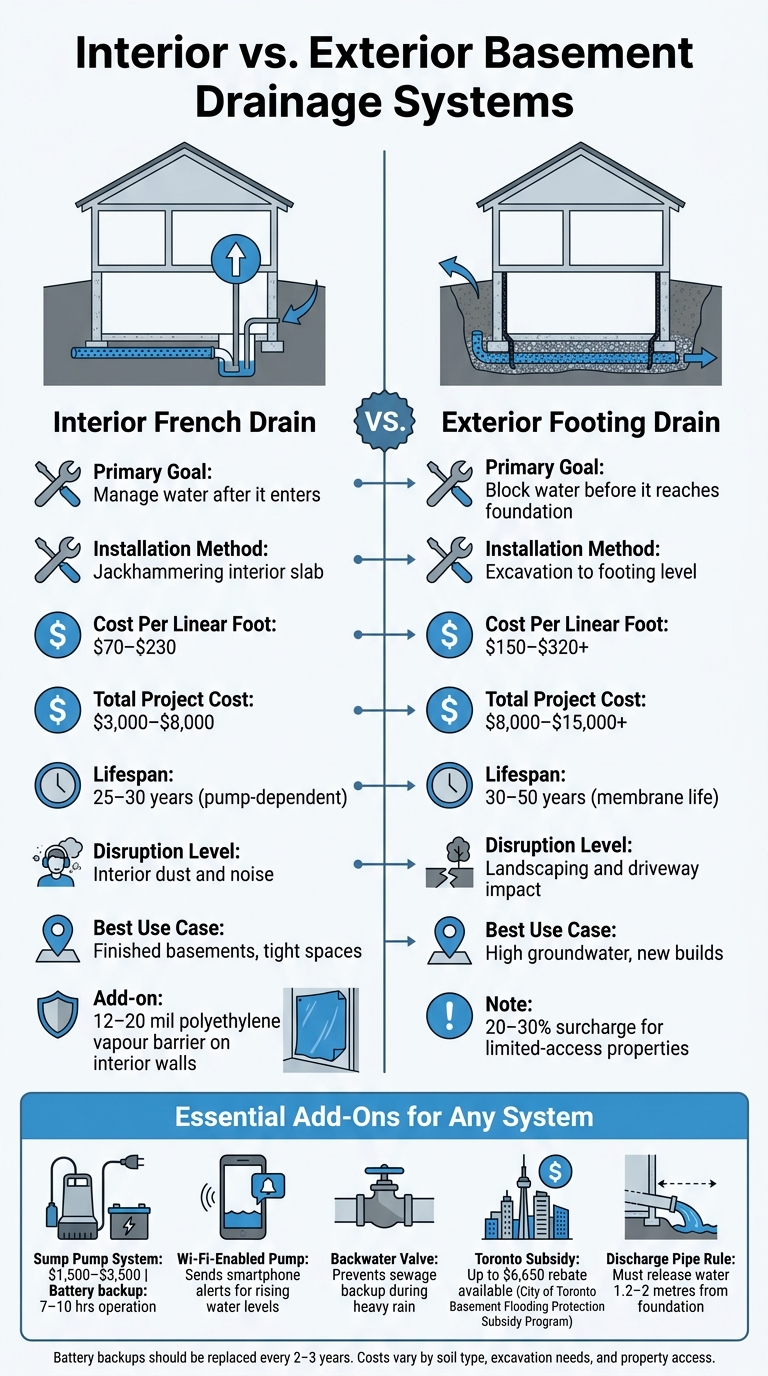
Interior vs. Exterior Basement Drainage Systems: Cost, Lifespan & Best Use
Modern drainage systems play a key role in keeping basements dry, complementing advanced membranes and eco-friendly coatings. They work by reducing hydrostatic pressure – the force exerted by pooled water against basement walls. This is crucial because nearly 30% of foundation-related problems reported by homeowners are due to basement flooding. In short, drainage isn’t just a bonus; it’s essential.
Exterior Foundation Drainage
Exterior drainage acts as the first barrier, stopping water before it reaches the foundation. These systems typically include three components:
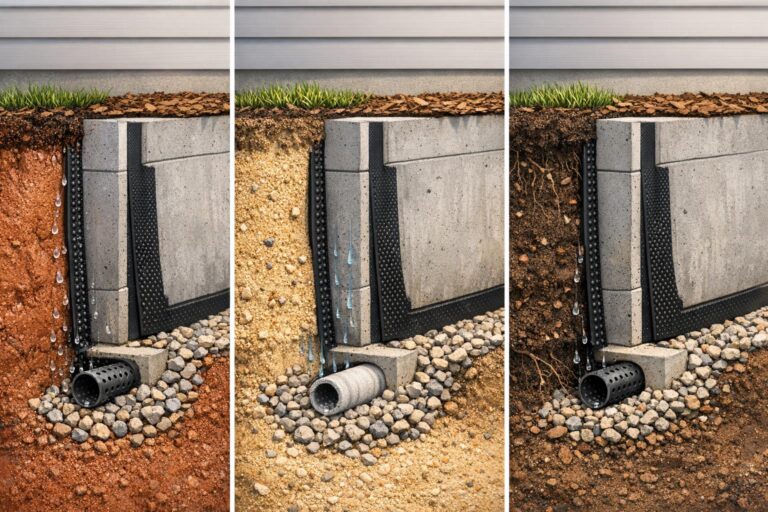
- A waterproof membrane applied to the foundation wall
- A dimpled drainage board that channels water downward
- A weeping tile (perforated pipe) at the footing level, which redirects water to a sump pump or municipal drain
Modern weeping tiles are designed with a geotextile filter sock to prevent clogging. However, in some parts of Canada, iron ochre – a reddish, gel-like substance found in iron-rich soils – can block these pipes. To address this, contractors often install clean-out chimneys, allowing the system to be flushed with high-pressure water if needed.
Installing exterior drainage can cost between $150 and $320+ per linear foot, with total project costs ranging from $8,000 to $15,000 or more, depending on excavation requirements. If access is limited, expect a 20–30% surcharge. For homes where exterior solutions are impractical, interior systems offer an alternative.
Interior Basement Drainage
When digging outside isn’t an option, an interior French drain becomes the go-to solution. This system involves creating a perimeter trench inside the basement and installing a sump basin. Costs typically range from $3,000 to $8,000.
“Interior systems usually manage water after it enters, while exterior systems aim to block and redirect it before it reaches your foundation.” – Ryan May, Founder, Homeowner.ca
Interior systems are generally less expensive, costing $70 to $230 per linear foot. A 12 to 20 mil polyethylene vapour barrier is often added to interior walls to catch seepage and direct it into the drainage system instead of letting it spread across the floor.
| Feature | Interior French Drain | Exterior Footing Drain |
|---|---|---|
| Primary Goal | Manage water after entry | Block water before entry |
| Installation | Jackhammering interior slab | Excavation to footing level |
| Disruption | Interior dust and noise | Landscaping and driveway impact |
| Lifespan | 25–30 years (pump-dependent) | 30–50 years (membrane life) |
| Best Use Case | Finished basements, tight spaces | High groundwater, new builds |
Smart Components and Backflow Protection
At the heart of any drainage system is the sump pump. A typical setup includes a primary submersible pump paired with a battery backup unit, which can operate for 7 to 10 hours during power outages. This is critical during summer storms, which often cause blackouts across southern Ontario. A complete sump pump system costs between $1,500 and $3,500, and backup batteries should be replaced every two to three years to ensure reliability.
“Every basement with any history of water issues should have a sump pump with battery backup. This is non-negotiable.” – The Basement Guide Staff
Wi-Fi-enabled sump pumps add another layer of convenience, sending alerts to your smartphone if water levels rise or the pump malfunctions. This feature is especially handy for frequent travellers or rental property owners. Additionally, installing a backwater valve on the main sewer line prevents sewage from backing up into your basement during heavy rains. Homeowners in Toronto can take advantage of city subsidies to offset the costs of sump pump and backwater valve installations.
Finally, ensure that sump pump discharge pipes release water at least 1.2 to 2 metres (4 to 6 feet) away from the foundation. Otherwise, you risk recycling the same water back into the system.
When combined with advanced waterproofing materials, these drainage solutions create a robust defence against basement flooding, tailored to withstand Canada’s challenging conditions. Smart components like Wi-Fi sump pumps and backwater valves further enhance the system’s reliability and effectiveness.
Concrete Waterproofing Additives
Making concrete resistant to water is possible by using additives that prevent moisture from seeping through. These additives can either be mixed directly into the concrete or applied to its surface. This is especially helpful for Canadian homes, which often face challenges like freeze–thaw cycles, de-icing salts, and springtime groundwater pressure. Below, we’ll dive into how admixtures integrate waterproofing directly into the concrete itself.
Crystalline and Integral Waterproofing Admixtures
Crystalline admixtures work by triggering a chemical reaction within the concrete. When moisture comes into contact with the concrete, these additives form insoluble crystals that fill capillary pores and air voids, creating a barrier against water. Over time, the concrete can even self-seal minor cracks up to 0.40 mm.
These admixtures are added during the batching process, ensuring the entire concrete mix gains uniform protection. Dosage guidelines are as follows: powdered admixtures are used at 2% of the weight of cementitious materials, while liquid admixtures are typically around 1%. For best results, the concrete should have a minimum cementitious content of 350 kg/m³ and a water-to-cement ratio no higher than 0.42.
Another type of admixture, hydrophobic pore-blocking additives, works differently. Instead of forming crystals, they coat the walls of capillaries with a water-repellent layer. When paired with a high-range water reducer, these additives can lower the water-to-cementitious ratio significantly. For example, in a test using Type GU cement, a watertight concrete powder additive reduced water content by 16% and increased 28-day compressive strength from 43.1 MPa to 60.2 MPa compared to untreated concrete.
Surface-Applied Sealers and Densifiers
For existing concrete structures where admixtures can’t be added during batching, surface treatments offer an effective alternative. One option is polymer-modified cementitious slurry mortars, which can be brushed or rolled onto the concrete surface. These create a breathable, slightly flexible barrier that resists freeze–thaw cycles. Unlike sheet membranes, these coatings bond directly to the surface, becoming part of the structure itself.
In harsher conditions, advanced two-component liquid-applied membranes provide a seamless, monolithic barrier. These can bridge cracks and even tolerate moisture during application. Designed to resist water pressure up to 5 bar (72.5 psi), they also perform well in temperatures as low as –20°C. However, during application, the substrate temperature must be at least 3°C above the ambient dew point to prevent bonding issues – a critical factor on chilly Canadian mornings.
| Additive Type | How It Works | Crack Sealing | Application Method |
|---|---|---|---|
| Crystalline Admixture | Forms insoluble crystals in pores | Up to 0.40 mm | Added to concrete mix |
| Pore-Blocking Admixture | Creates a hydrophobic layer in capillaries | Limited | Added to concrete mix |
| Cementitious Slurry Mortar | Forms a surface barrier | Seals static hairline cracks | Brush or roller on surface |
| Liquid-Applied Membrane | Forms a seamless, monolithic barrier | Bridges active cracks | Spray or roller (minimum two coats) |
Uses in Canadian Residential Construction
Concrete additives are increasingly used in residential construction to embed waterproofing directly into the material. Integral admixtures are often chosen for poured concrete foundations and basement walls, eliminating the need for separate external membranes. This approach can save both time and materials during construction.
Surface-applied sealers are popular for garage floors, driveways exposed to road salt and freeze–thaw cycles, and walk-out foundation walls where full excavation for an external membrane isn’t feasible. In homes with elevator pits or below-grade utility rooms, applying a crystalline coating to the interior wall can stop active water seepage without requiring exterior excavation. This is particularly useful during renovations where access to the exterior is limited.
Green Roof Waterproofing
Green roofs combine vegetation with engineered waterproofing systems underneath, designed to handle heavy rain and prolonged snow cover. Getting these layers right is crucial because once the growing medium is installed, accessing and repairing the underlying components becomes both challenging and expensive. Using advanced concrete waterproofing methods, green roof systems bring durability to elevated spaces.
Waterproofing Layers in a Green Roof System
Green roofs are built with several specialized layers, each serving a specific purpose. At the base is the waterproofing membrane, which acts as the main defence against water penetration. In Canada, thermoplastic membranes like PVC or TPO are popular choices since their seams are hot-air welded, creating a seamless and moisture-resistant barrier.
Here’s a breakdown of the key layers:
- Protection layer: Materials like extruded polystyrene (XPS) boards or asphaltic sheets shield the membrane from damage during installation.
- Root barrier: Polyethylene or HDPE sheeting prevents plant roots from reaching and damaging the waterproofing membrane. Overlaps follow manufacturer specifications.
- Drainage layer: Typically made of profiled plastic boards or aggregates, this layer directs excess water toward roof drains.
- Geotextile filter fabric: Positioned between the drainage layer and the growing medium, this fabric stops fine soil particles from clogging the drainage system.
To ensure long-term performance, many systems include an Electric Field Vector Mapping (EFVM) leak detection system before adding the growing medium. This conductive grid allows precise identification of membrane breaches without disturbing the overlying layers.
Canadian Climate Factors for Green Roofs
Green roofs in Canada are designed to withstand the unique challenges of the local climate, including heavy snow and freeze–thaw conditions. Extensive green roofs typically weigh between 12 and 35 lbs per square foot (59–171 kg/m²), with snow adding even more weight. XPS insulation rated between 40 and 100 psi is often used to preserve structural integrity under these loads.
The soil and vegetation layers provide natural insulation, reducing thermal stress on the waterproofing membrane and potentially increasing its lifespan compared to exposed roofs. To manage snowmelt effectively, systems are installed with a minimum slope of 1:50. Additionally, a vegetation-free zone – 450 mm around the roof perimeter and 300 mm around drains and penetrations – should be maintained using gravel or pavers. This ensures proper drainage and allows for easier inspections.
Where Green Roof Systems Are Used Residentially
Green roof waterproofing is becoming more common in residential projects, including detached garages, flat-roofed extensions, and rooftops of lower-level additions in urban areas. Extensive green roofs, which use growing mediums of 150 mm or less, are particularly suited to residential applications due to their lighter weight and lower maintenance needs. Sedum-based plantings are a popular choice as they tolerate drought, wind, and extreme temperatures, reducing the need for irrigation.
For intensive green roofs, which can exceed 35 lbs per square foot, a structural assessment is necessary to ensure the building can handle the added weight. Regardless of the type, the choice and quality of the waterproofing membrane, along with proper installation, are critical to the system’s long-term success. These green roof applications integrate seamlessly with other advanced waterproofing methods, offering a comprehensive solution for Canadian homes.
Next-Generation Basement Waterproofing Systems
Modern basement waterproofing takes a comprehensive approach by integrating advanced membranes, sustainable coatings, and smart drainage systems. These systems combine interior and exterior solutions to create a resilient barrier against water intrusion. What makes them stand out is their ability to work together – when one part faces stress, others step in to maintain protection. This ensures durability, even during harsh Canadian winters.
Combined Interior and Exterior Systems
A good waterproofing system addresses water intrusion from both the inside and outside of a foundation. On the exterior, high-performance membranes and drainage boards manage the bulk of the water, while interior systems handle any leftover seepage. These include footer drains and vapour barriers, which not only keep water out but also block soil gases like radon. This dual-layered strategy ensures water is effectively dealt with from all sides.
For homeowners in Toronto, the City of Toronto’s Basement Flooding Protection Subsidy Program offers up to $6,650 in rebates for installing qualifying waterproofing components, such as sump pumps and backwater valves.
Self-Healing Materials and Moisture Detection
Next-generation materials tackle one of the biggest challenges of traditional waterproofing: adapting to structural shifts over time. Crystalline concrete admixtures, for example, react with moisture to form crystals that fill any pores or micro-cracks that emerge as the building settles. Liquid-applied membranes create a seamless, flexible layer over 215 mils thick – more than three times the thickness of standard options. These membranes can even flex and reseal around cracks and can be applied in temperatures as low as −18°C. For areas with movement-prone joints, hydrophilic swelling profiles like SikaSwell® expand upon contact with water to seal gaps.
Adding to this, moisture detection tools now provide real-time alerts, making it easier to monitor and address water ingress before it becomes a problem.
“A waterproofing system usually costs less than 1% of the total cost of building a structure. However, choosing a good quality waterproofing solution can save this amount or more in future maintenance and repair costs.” – Sika
These cutting-edge materials not only seal out water but also actively respond to potential issues, making maintenance more proactive and effective.
How Leaquida Waterproofing Applies These Systems
Leaquida Waterproofing uses a detailed five-step process for homes in Toronto: inspection, custom solution design, site protection, installation, and final cleanup. Given the city’s clay-heavy soil, which expands during freeze–thaw cycles, they carefully select membranes and drainage components to handle the specific pressures of each property. They also use hydraulic water stop cement, which expands to seal active leaks, as a standard part of their process.
The cost for interior waterproofing systems ranges from $70–$120 per linear foot, while exterior systems range from $100–$250 per linear foot, depending on factors like soil type and excavation depth. Addressing early warning signs, such as efflorescence or hairline cracks, can help homeowners avoid more expensive repairs down the line.
“By combining these solutions, our home waterproofing Toronto services can resolve existing problems and prevent future damage.” – Leaquida
Where Waterproofing Technology Is Headed
The waterproofing industry is progressing quickly, with new innovations aimed at handling the challenges of cold climates. These advancements are paving the way for waterproofing solutions that can better withstand the demands of Canadian weather.
New Materials and Methods on the Horizon
Several noteworthy developments are reshaping the waterproofing landscape. Bio-based TPU membranes, like MAMMOUTH NEO ONE, combine bitumen with bio-sourced thermoplastic polyurethane. These membranes offer twice the durability and come with 40-year warranties, making them a long-term solution. Another advancement is rapid-curing polyurea systems, which speed up application times while instantly reinforcing waterproof layers. Then there’s cold-weather liquid waterproofing products, such as Acriflex Rapido, which can be applied at temperatures as low as 1°C and remain flexible even at −25°C – perfect for Canadian job sites.
Flameless, self-adhesive, cold-applied systems are also gaining traction. These systems eliminate the need for open flames, improving both safety and efficiency.
Waterproofing Designs Built for Extreme Weather
To handle Canada’s harsh weather, new waterproofing designs are being engineered to tackle extreme conditions. The country’s freeze–thaw cycles can stress traditional systems, so materials like Xolutec®-based membranes are now being used. These membranes rely on a cross-linked interpenetrating network (XPN) that stays flexible and moisture-resistant despite temperature swings.
For flat or low-slope residential roofs that endure heavy UV and chemical exposure, hybrid systems are a smart choice. These systems combine SBS-modified base sheets with PMMA-based liquid finishing membranes, offering excellent solar reflectance and chemical resistance. In regions where unpredictable rain is common in spring or fall, products that form a protective layer within 20 minutes and resist washout are an ideal solution.
Why Professional Installation Matters
No matter how advanced the materials are, improper application can lead to failure. Modern waterproofing systems integrate primers, membranes, drainage boards, and protection layers into a single moisture control system. To ensure these systems perform as intended, proper installation by skilled professionals is critical. This is especially true in Canada, where climate-specific expertise is needed to meet warranty requirements and handle local conditions.
For homeowners in Toronto, companies like Leaquida Waterproofing bring this expertise to every project. From choosing the right membrane for clay-heavy soil to ensuring drainage systems can handle freeze–thaw cycles, they deliver tailored solutions. Many leading contractors even provide transferable lifetime warranties, offering long-term protection for your investment.

 CLOGGED OR BROKEN WEEPING TILE