

When it comes to protecting your home from moisture, the terms “waterproofing” and “water-resistant” aren’t interchangeable. Waterproofing creates a complete barrier against water, even under pressure, while water-resistant materials only slow moisture absorption. Here’s what you need to know:
- Waterproofing: Designed for areas exposed to constant water or hydrostatic pressure (e.g., basements). Uses durable materials like elastomeric membranes, rubberized asphalt, and polyurea coatings. Offers long-term protection (30–50+ years) with minimal maintenance.
- Water-Resistant Materials: Suitable for light moisture exposure (e.g., above-grade walls). Includes water-repellent paints and sealers. Less durable (5–15 years) and prone to cracking under stress.
Key takeaway: If your home faces hydrostatic pressure, like in clay-heavy soils or high water table areas, waterproofing is essential. For less demanding situations, water-resistant materials might suffice but won’t provide the same level of protection.
Quick Comparison:
| Feature | Waterproofing | Water-Resistant Materials |
|---|---|---|
| Protection Level | Full water barrier | Slows moisture absorption |
| Hydrostatic Pressure | Can withstand | Not designed for pressure |
| Lifespan | 30–50+ years | 5–15 years |
| Maintenance | Low | High (re-application needed) |
| Cost (CAD/linear foot) | $150–$400+ | $80–$150 |
Choosing the right solution depends on your home’s conditions, such as soil type, water exposure, and whether the basement is finished. Investing in waterproofing upfront can save you thousands in future repairs.
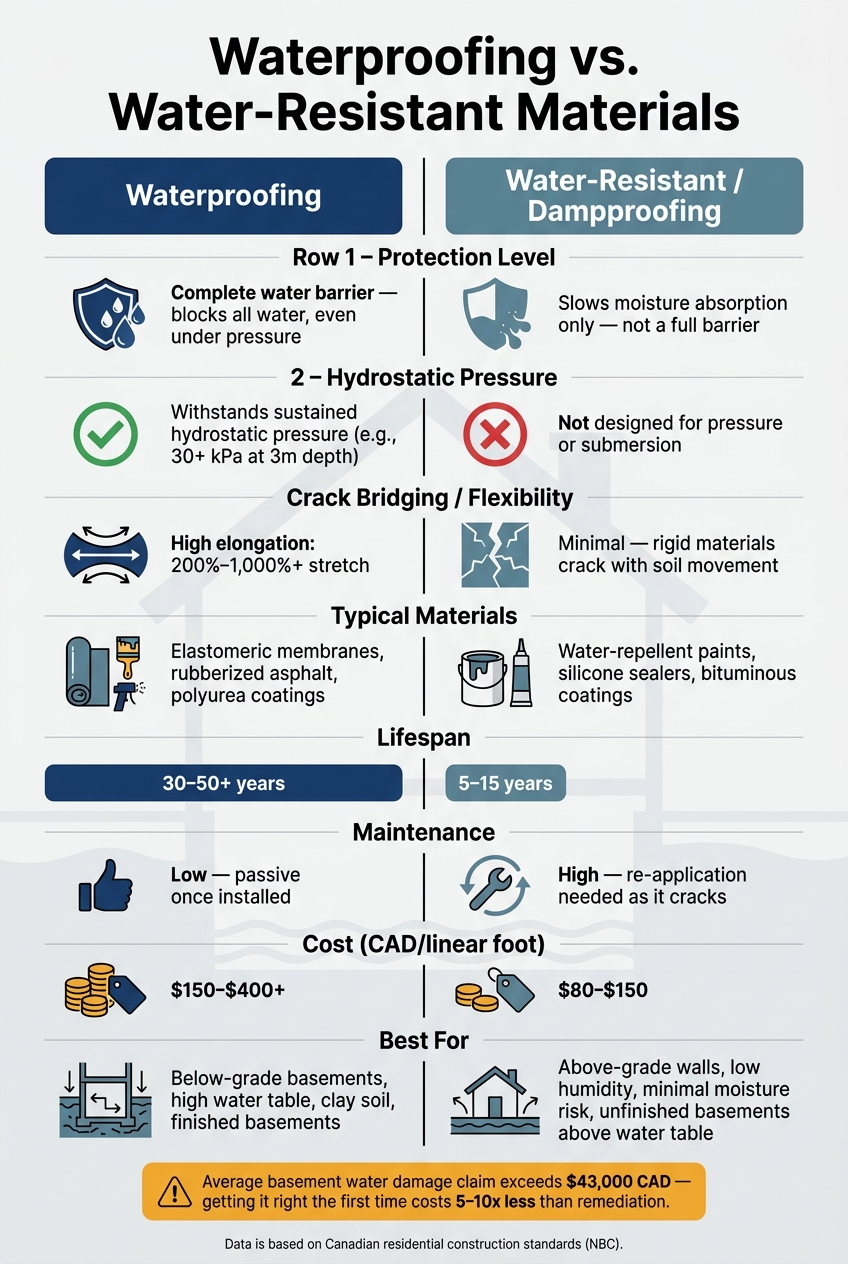
Waterproofing vs. Water-Resistant Materials: Full Cost & Performance Comparison
Waterproofing vs. Water-Resistant Materials: Key Differences
Mixing up these terms can lead to expensive construction mistakes.
What Is Waterproofing?
Waterproofing involves creating a barrier that completely blocks water, even under pressure. This pressure, known as hydrostatic pressure, is a major issue for below-grade structures in Canada. For example, at a depth of 3 metres, groundwater can exert over 30 kPa of pressure – enough to push water through a crack as small as 0.2 mm.
To handle this pressure, waterproofing systems use materials like elastomeric membranes, rubberized asphalt, and polyurea coatings. These are applied as a seamless, bonded layer, eliminating gaps where water could seep through. One key feature of these systems is their elongation – the ability to stretch significantly. Fluid-applied membranes, for instance, can stretch 200% to over 1,000% of their original length, allowing them to cover small cracks that may form in concrete over time.
“Waterproofing… consists in treating a surface with a resistant, consistent and durable product to prevent the passage of water under hydrostatic pressure conditions.” – Christian Paré, Technical Advisor, RESISTO
Waterproofing is essential where constant water exposure or pressure is expected. But for less demanding conditions, water-resistant materials might do the job.
What Are Water-Resistant Materials?
Water-resistant materials, often referred to as dampproofing in foundation work, are designed to slow moisture absorption rather than stop it entirely. Examples include water-repellent paints, silicone sealers, and bituminous coatings. These materials work well for areas exposed to light rain or occasional splashes, such as exterior siding, kitchen backsplashes, or above-grade walls with proper drainage.
However, these materials cannot handle sustained water exposure or hydrostatic pressure. They also tend to crack when the underlying surface shifts, as they lack the flexibility of waterproofing systems.
Dampproofing is suitable for short-term or light moisture exposure but falls short when dealing with constant water pressure.
The table below highlights the key differences between the two:
| Feature | Waterproofing | Water-Resistant (Dampproofing) |
|---|---|---|
| Protection Level | Complete barrier; blocks all water | Slows moisture absorption |
| Hydrostatic Pressure | Can withstand sustained pressure | Not designed for pressure or submersion |
| Crack Bridging | High elongation (200%–1,000%+) | Minimal; rigid materials crack with movement |
| Typical Materials | Elastomeric membranes, rubberized asphalt, polyurea | Water-repellent paints, sealers, silicone coatings |
| Service Life | 25–50+ years | 5–15 years |
Under Canada’s National Building Code (NBC), waterproofing is only required when hydrostatic pressure is present. However, given the country’s clay-heavy soils, high water tables in many regions, and harsh freeze–thaw cycles, full waterproofing is often a better choice than dampproofing for long-term protection.
sbb-itb-5761e20
Performance Comparison: Durability and Longevity
How Each Handles Hydrostatic Pressure
Hydrostatic pressure is a major challenge for moisture control systems, especially in Canadian basements. In areas like the Greater Toronto Area, where clay-heavy soils dominate, water is often pushed against foundation walls with relentless force. This creates a perfect test for the durability of these systems.
Water-resistant coatings simply aren’t equipped to handle this kind of sustained pressure. They lack the strength and flexibility needed to stand up to such conditions.
Waterproofing membranes, however, are specifically designed for this purpose. Their elastomeric properties allow them to remain flexible, even in freezing temperatures, and they can adapt to micro-cracks that form as concrete naturally settles. Christian Paré, Technical Advisor at RESISTO, explains the importance of proper installation:
“The membrane should always be installed on the pressure side to ensure the integrity of the waterproofing barrier. This method is called positive waterproofing.”
By placing the membrane on the exterior – or the “positive side” – water is stopped before it even touches the concrete. This not only protects the foundation but also prevents internal issues like rebar corrosion, ensuring the structure remains sound.
Beyond their immediate ability to resist pressure, waterproofing membranes also stand out for their long-term durability, making them a superior choice for lasting protection.
Maintenance Requirements and Lifespan
When it comes to lifespan, the difference between dampproofing and waterproofing systems is stark. Bituminous dampproofing typically holds up for just 10–15 years under Canadian conditions. In contrast, a professionally installed exterior waterproofing membrane can last 30 to 50 years – essentially the lifetime of most homes.
DryShield highlights another key advantage:
“While an internal system can clog with silt over 15–25 years and depends on a mechanical pump, a professionally installed external membrane is a permanent, passive shield designed to last over 50 years.”
Exterior waterproofing is largely maintenance-free. Once installed, it operates passively, with one primary post-installation step: allowing 12 to 18 months for backfilled soil to settle through a full seasonal cycle before re-paving or laying interlock.
On the other hand, interior water management systems require more attention. Sump pumps need regular testing, discharge lines must be cleared, and battery backups require periodic replacement. These ongoing demands can add up over time.
| Feature | Dampproofing (Water-Resistant) | Exterior Waterproofing |
|---|---|---|
| Typical Lifespan | 10–15 years | 30–50+ years |
| Maintenance Level | High; re-application needed as it cracks | Low; passive once installed |
| Mechanical Components | None (or sump pump if interior) | None required |
| Flexibility Over Time | Becomes brittle; cracks with soil movement | Remains elastic; bridges new cracks |
| Hydrostatic Resistance | None | High |
In some parts of Ontario, there’s an additional factor to consider: iron ochre bacteria. Over time, this bacteria can clog drainage pipes, potentially compromising the system. To address this, access chimneys (cleanouts) should be included in the French drain system. These allow for periodic high-pressure flushing, ensuring the drainage layer continues to work effectively alongside the waterproofing membrane.
Applications in Residential Construction
When to Use Waterproofing
Waterproofing becomes crucial in areas where structures face hydrostatic pressure, especially in below-grade foundations and basements across Canada. The National Building Code mandates waterproofing for exterior surfaces of floors-on-ground and below-grade walls in such conditions, including underground parking structures. Christian Paré, Technical Advisor at RESISTO, explains:
“Waterproofing is defined by a perfect protection against water infiltration… It is the solution for all below-grade applications that are or may be exposed to hydrostatic pressure.”
Canada’s harsh freeze-thaw cycles make waterproofing even more critical. When water infiltrates concrete pores and freezes, it expands, leading to cracks – a process that repeats every winter. An elastomeric membrane effectively prevents this damage before it begins. In fact, over 70% of new homes in major Canadian cities now incorporate advanced waterproofing membranes.
That said, not all situations demand such robust measures. In less challenging environments, water-resistant materials may be sufficient.
When Water-Resistant Materials Are Enough
In areas without significant hydrostatic pressure, water-resistant materials can provide adequate moisture control. These materials are often used on above-grade masonry walls (applied on the interior) to limit moisture infiltration and on below-grade foundations where the slab is located above the water table.
A thin bituminous or asphalt-based coating is commonly used to meet minimum code requirements for low-risk foundations. These coatings are also applied to interior foundation walls that will later be covered by framing or drywall. If you’re unsure whether basement moisture comes from external seepage or condensation, try this: tape a plastic sheet to the wall for 24 hours. If moisture appears on the wall side, it’s external seepage, which means dampproofing alone may not be enough.
Here’s a quick summary of recommended applications and their corresponding protection methods:
| Application | Recommended Protection | Why |
|---|---|---|
| Below-grade basement walls (high water table) | Waterproofing membrane | Hydrostatic pressure present |
| Below-grade walls (above water table, good drainage) | Dampproofing | No hydrostatic pressure |
| Interior side of above-grade masonry walls | Dampproofing | Moisture/vapour control only |
| Underground garage roofs | Waterproofing membrane | Direct water exposure |
| Concrete slab floors-on-ground (low-risk) | Dampproofing | Soil moisture migration |
Cost Breakdown: Waterproofing vs. Water-Resistant Solutions
Short-Term vs. Long-Term Costs
When comparing waterproofing and water-resistant materials, the upfront costs can vary significantly. For instance, tar-based dampproofing is often the more affordable option initially. However, its durability is limited, typically lasting only 5 to 15 years. This short lifespan can lead to costly repairs, with the average basement water damage claim exceeding $43,000. By contrast, a high-quality elastomeric membrane offers a lifespan of over 40 years, making it a more reliable long-term investment.
As WhatCosts aptly states:
“Remedial waterproofing costs 5–10 times more than getting it right the first time.”
Exterior waterproofing systems also require minimal maintenance once installed. On the other hand, interior water-management systems depend on mechanical components like sump pumps, which come with ongoing servicing and replacement expenses. These recurring costs can add up considerably over time, making initial savings less appealing in the long run.
Typical Pricing in Canada
In Canada, the cost of waterproofing projects for a standard single-family home in 2026 typically ranges from $10,000 to $30,000, depending on the method used and site-specific factors. Homes in urban areas like Toronto or Montreal often face additional charges of 20%–30% due to manual excavation requirements on narrow lots. Similarly, properties in regions with heavy clay soil, such as Mississauga or Markham, may incur higher costs because of the extra drainage stone needed.
Here’s a breakdown of current costs by solution type, showing both short- and long-term value:
| Solution Type | Price Range (CAD/linear foot) | Typical Lifespan |
|---|---|---|
| Dampproofing (tar/bituminous) | $80 – $150 | 5 – 15 years |
| Interior waterproofing (drainage system) | $70 – $150 | 15 – 25 years |
| Exterior waterproofing (membrane) | $150 – $400+ | 20 – 40+ years |
| Foundation crack injection | $600 – $1,100 per crack | Varies |
| Sump pump installation | $800 – $4,000+ | 5 – 10 years |
This table highlights the long-term advantages of exterior waterproofing, which, although more expensive upfront, provides better financial and structural benefits over time.
For example, Leaquida Waterproofing offers exterior waterproofing services priced between $100 and $300+ per linear foot. Their work is backed by a 25-year transferable warranty, which can be a strong selling point if you decide to put your home on the market. A well-installed waterproofing system can boost resale value by as much as 10%.
If you’re undertaking exterior waterproofing, it’s a good idea to replace the French drain at the same time to save on future costs. Additionally, homeowners in the Greater Toronto Area should take advantage of the City of Toronto’s Basement Flooding Protection Subsidy Program, which, as of May 1, 2026, offers rebates of up to $6,650 for eligible upgrades like sump pumps and backwater valves.
Choosing the Right Solution for Your Home
Factors to Consider
Start by evaluating how severe your moisture issues are. For example, if your basement is dealing with hydrostatic pressure – where water pushes against the foundation – basic water-resistant coatings won’t cut it. These coatings, applied at just 1–2 mm thick, simply can’t hold up under such pressure.
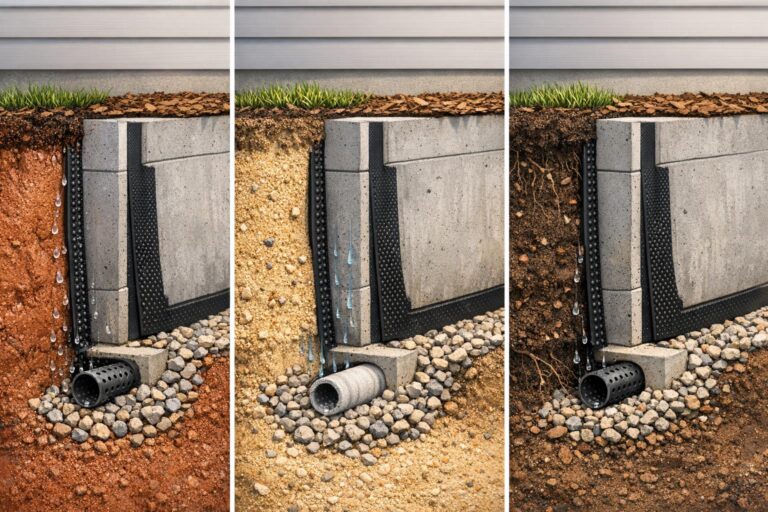
The type of soil around your home is just as important. In the Greater Toronto Area, clay-heavy soil is common. Clay absorbs water and expands, which increases the pressure on your foundation walls. A simple dampproofing coat won’t handle this kind of stress. If you’re unsure about your soil type, a professional inspection can provide clarity.
You’ll also need to think about how you use your basement. A finished basement might benefit from full waterproofing to boost air quality and resale value. On the other hand, an unfinished basement with no hydrostatic pressure may only need a water-resistant solution. If selling your home is in the cards, a professionally installed waterproofing system with a transferable warranty can be a big selling point. Plus, investing in a long-term solution now can save you from costly repairs down the road.
“Waterproofing once, done right, is far more cost-effective than repairing repeated damage caused by neglect or poor workmanship.” – Leaquida Waterproofing
With these considerations in mind, let’s see how Leaquida Waterproofing can address your specific needs.
How Leaquida Waterproofing Can Help
Leaquida Waterproofing offers tailored solutions based on your home’s unique conditions. Their process starts with a thorough inspection to identify issues like efflorescence, moisture entry points, and clogged weeping tiles. From there, they provide targeted solutions, including:
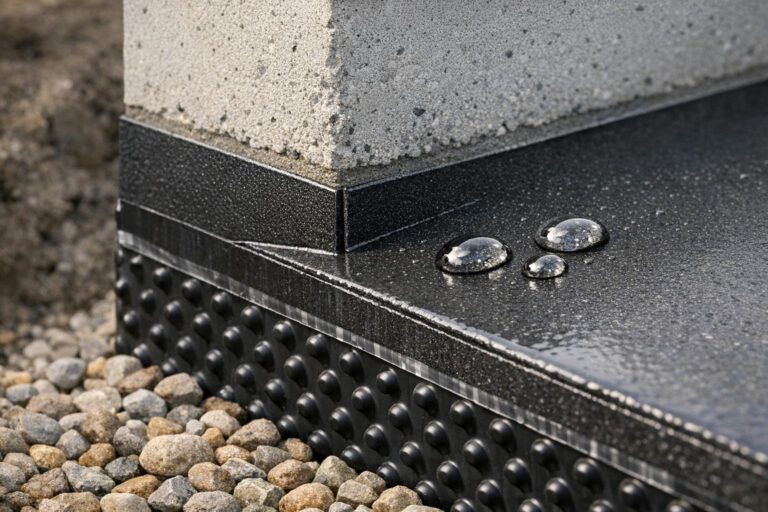
- Exterior waterproofing: This involves excavation, installing waterproof membranes, and adding dimpled drainage boards.
- Interior waterproofing: Includes drainage channels and sump pump systems to manage water effectively.
- Foundation crack repair: Uses industrial-grade epoxy for durable fixes.
- French drain installation: Helps relieve hydrostatic pressure on your foundation.
Pricing depends on the scope of work and site conditions, but all exterior waterproofing services come with a 25-year transferable warranty. That’s a strong guarantee, especially since a properly installed system can last 20–30 years or more. Customers often praise the team’s straightforward pricing and efficient on-site work, with no hidden costs.
Conclusion: Choosing the Right Protection for Your Home
Water-resistant materials might slow down moisture, but they don’t stop it entirely. Opting for the wrong solution for your home’s specific needs can lead to more than just a damp basement – it can result in mould growth, structural damage, and costly repairs.
As Lucas Bennett of Leaquida Waterproofing explains:
“A small leak can turn into severe waterlogging, which causes significant damage not only to the property but also to the health of the occupants.”
This highlights the importance of selecting the right moisture protection based on your home’s unique conditions. If your property is exposed to hydrostatic pressure, sits on clay soil, or has a finished basement, full waterproofing is a must. On the other hand, in areas with low humidity and minimal moisture risk, water-resistant solutions might suffice – but only if the environment truly supports it.

 CLOGGED OR BROKEN WEEPING TILE