
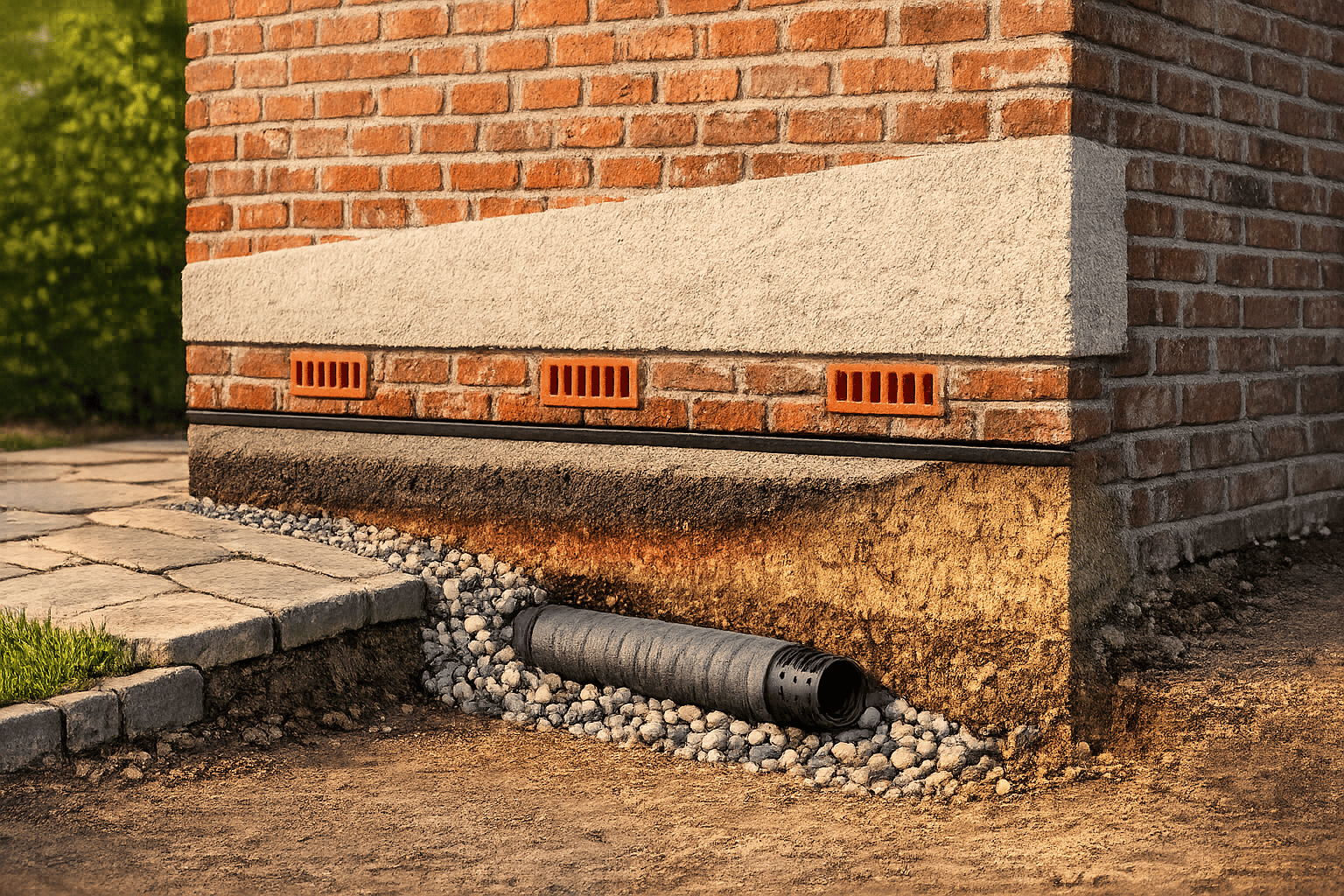
Rising damp is a common issue in older Canadian homes, especially those built before 1919. It occurs when groundwater seeps up through porous materials like brick or stone, causing structural damage, peeling paint, rotting wood, and mould growth. This problem is worsened by Canada’s climate, with heavy rains, snowmelt, and freeze-thaw cycles increasing the risk.
To prevent and address rising damp:
- Identify signs early: Look for tide marks, salt deposits, peeling paint, or musty smells near ground-level walls.
- Improve drainage: Ensure proper grading, clean eavestroughs, extend downspouts, and consider French drains or weeping tile systems.
- Use breathable materials: Lime-based plasters and vapour-permeable finishes allow moisture to escape, unlike modern cement or acrylic coatings.
- Consider damp-proofing methods: Chemical injections or physical damp-proof courses can block moisture, but professional assessment is key.
- Maintain ventilation and humidity control: Use exhaust fans, avoid drying clothes indoors, and keep furniture slightly away from walls to prevent condensation.
For severe cases, consult professionals for tailored solutions like exterior waterproofing, drainage upgrades, or foundation repairs. Proactive maintenance and the right materials are crucial for preserving older buildings while ensuring they remain dry and energy-efficient.
Damp cellars and basements – how to dry them out
sbb-itb-5761e20
Why Older Buildings Are More Prone to Rising Damp
Older Canadian homes, especially those built before 1919, were constructed using solid masonry walls without modern moisture barriers. This design allows groundwater to rise through capillary action, affecting the entire thickness of the wall.
Construction Methods and Materials
Materials like brick, fieldstone, and lime-based mortar, commonly used in older homes, are naturally porous. They absorb and release moisture as part of the building’s natural “breathing” process. According to Adaptavate:
“Before about 1919, houses were built from permeable materials with solid walls and no damp proof course or membranes. Older buildings manage moisture by absorption and evaporation.”
This system functioned well until modern finishes disrupted it. Cement renders, gypsum plasters, and vinyl paints often seal the wall surface, trapping moisture within the masonry. Similarly, replacing original breathable floors with solid concrete slabs forces groundwater into the walls’ base, intensifying the problem.
Canadian Climate and Site Conditions
Canada’s diverse climate adds to the challenges. In areas like Southern Ontario, clay-heavy soils hold moisture against foundation walls, creating a constant source of dampness. Freeze–thaw cycles over decades can produce small cracks, which serve as entry points for water. Older foundations, often made from rubble stone or unreinforced poured concrete, lack the exterior waterproofing membranes found in modern construction. Spring snowmelt combined with rainfall further stresses these aging structures, amplifying the risk of rising damp.
Common Risk Factors
Certain site conditions and maintenance issues can increase the likelihood of rising damp:
- Poor exterior grading: Directs water toward the foundation.
- Elevated garden beds: Can bypass any existing moisture barriers.
- Blocked eavestroughs: Funnel roof runoff directly to the building’s base.
- Impermeable exterior finishes: Trap moisture within porous masonry walls.
- Replaced breathable floors: Redirect groundwater into the base of the walls.
| Risk Factor | Why It Matters |
|---|---|
| Poor ground grading | Channels water to the foundation |
| Elevated garden beds | Can bypass existing moisture barriers |
| Blocked eavestroughs | Concentrates roof runoff at the building’s base |
| Impermeable exterior finishes | Traps moisture inside masonry walls |
| Replaced breathable floors | Redirects groundwater into wall bases |
These factors, combined with the unique challenges of older construction methods and Canada’s climate, make older buildings especially vulnerable to rising damp.
How to Identify Rising Damp in Your Home
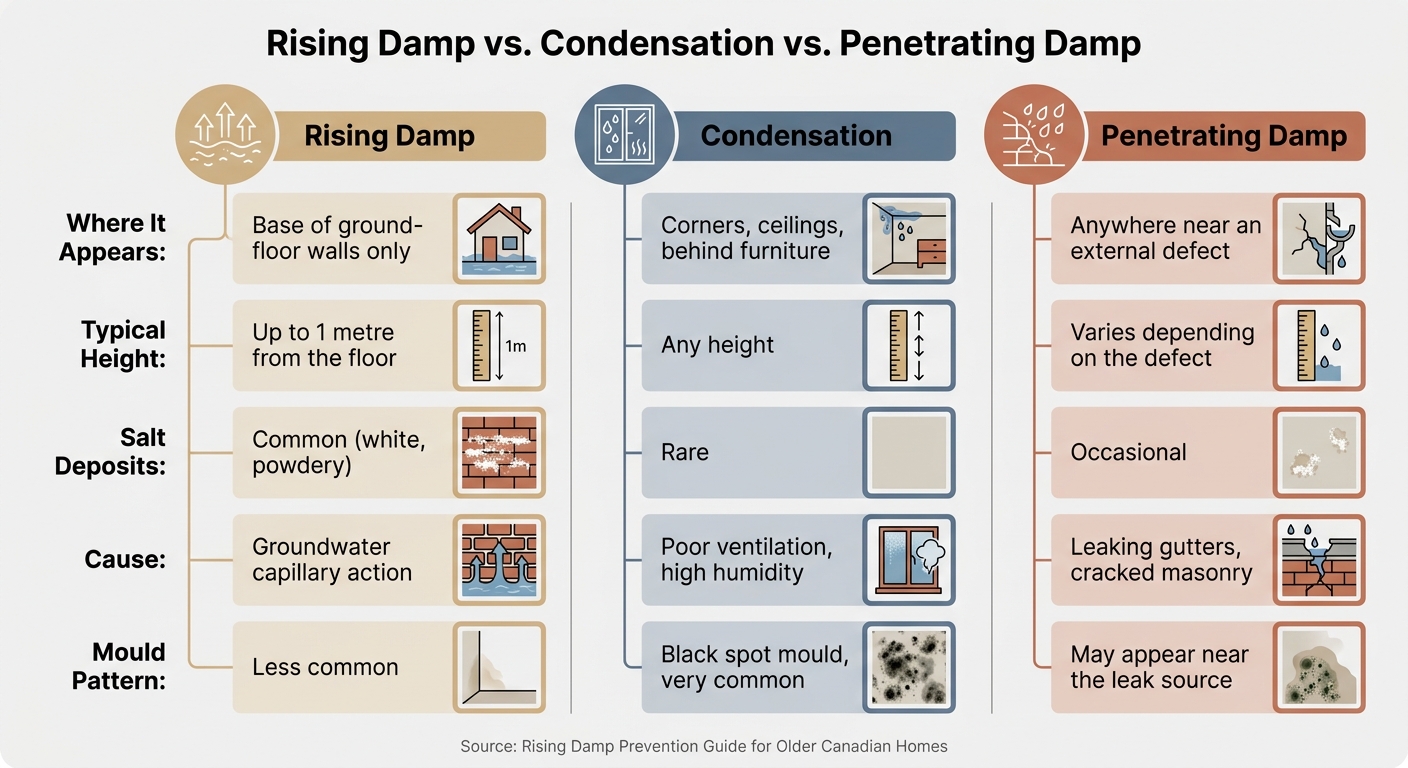
Rising Damp vs. Condensation vs. Penetrating Damp: Key Differences
Older buildings are especially prone to moisture problems, and catching rising damp early can save you a lot of money on repairs. The good news? Rising damp leaves behind some clear signs that can help you spot it before the damage gets worse.
Visual Signs of Rising Damp
Start by looking for a horizontal tide mark – often a yellowish or brownish stain along the lower part of the wall. You might also notice white, powdery salt deposits left behind when groundwater evaporates. Other signs include peeling paint, curling wallpaper, or crumbling plaster near the floor. Pay attention to skirting boards close to the ground too; if they’re rotting or you notice a persistent musty smell, these are strong indicators that moisture is creeping up from the ground.
Telling Rising Damp Apart from Other Moisture Problems
Not all moisture issues are rising damp, and misdiagnosing the problem can lead to costly mistakes. So, how do you differentiate rising damp from condensation or penetrating damp? Here’s a quick comparison:
| Feature | Rising Damp | Condensation | Penetrating Damp |
|---|---|---|---|
| Where it appears | Base of ground-floor walls only | Corners, ceilings, behind furniture | Anywhere near an external defect |
| Typical height | Up to 1 metre from the floor | Any height | Varies depending on the defect |
| Salt deposits | Common (white, powdery) | Rare | Occasional |
| Cause | Groundwater capillary action | Poor ventilation, high humidity | Leaking gutters, cracked masonry |
| Mould pattern | Less common | Black spot mould, very common | May appear near the leak source |
Condensation often shows up as black mould in corners, on cold surfaces, or behind furniture, and you might see water droplets on windows. Penetrating damp, on the other hand, creates isolated wet patches that worsen after heavy rain and can appear at any height. Rising damp is different – it’s confined to the base of walls and comes with tell-tale salt stains and tide marks.
By combining these visual clues with proper testing methods, you can confirm whether you’re dealing with rising damp.
Assessment Methods
Once you’ve identified potential signs of rising damp, testing can help confirm your suspicions. A moisture meter is a handy tool that measures electrical resistance in materials like plaster, brick, or timber to detect areas with high moisture levels. However, while it shows where moisture is present, it won’t reveal the source.
For a more definitive diagnosis, you can opt for laboratory salt analysis. By testing a plaster sample, professionals can detect chlorides and nitrates – salts that indicate rising groundwater. It’s also worth checking the exterior of your home; raised garden beds or paving that sits above the original damp-proof course can allow moisture to bypass the barrier entirely.
If you’re unsure, a professional assessment can make all the difference. Companies like Leaquida Waterproofing offer detailed inspections that include moisture mapping and a thorough review of your foundation and drainage. This is especially helpful for older homes where pinpointing the source of the damp can be tricky.
Damp Proof Course Options for Older Homes
When dealing with rising damp in older Canadian homes, selecting the right treatment requires careful consideration. Homes with rubble stone, unreinforced concrete, or concrete block foundations were not built with modern waterproofing in mind. This means a universal solution often falls short. Below are options tailored to the unique needs of these older structures.
Physical Damp Proof Courses
A physical damp proof course (DPC) creates a barrier within the wall to stop moisture from rising. Historically, materials like slate, bitumen, or lead were used, but today, plastic sheeting is the standard. Retrofitting a physical DPC into an older home, however, is a major undertaking. It involves removing multiple layers of bricks, making it both invasive and costly. Unless you’re already planning a significant renovation, this approach may not be practical for most older homes.
Chemical Damp Proof Courses
Chemical injection is the go-to method for treating rising damp in existing buildings. This process involves drilling holes along the base of the wall and injecting a silane-based cream or liquid. Once inside, the chemical spreads through the masonry and cures, creating a water-resistant barrier that blocks moisture from moving upward.
This method is far less disruptive than installing a physical DPC. However, it does have limitations. In older homes with dense or uneven masonry, the chemical may not spread effectively, reducing its ability to prevent dampness. A professional assessment is essential to determine whether this solution will work for your specific walls.
After treatment, it’s important to replace any salt-contaminated plaster with lime-based or salt-retardant renovation plaster to manage residual moisture.
Sometimes, resolving damp issues involves addressing the root cause of the moisture.
Drainage and Interior Moisture Control
In many cases, improving drainage around the home can be more effective than treating the walls directly. Pre-1960 Canadian homes often have outdated clay or concrete drainage tiles. Over time, these systems tend to collapse or become clogged with silt. Upgrading to perforated French drains can redirect groundwater away from the foundation, preventing it from rising into the walls.
Additionally, older homes often lack proper interior vapour barriers. Installing one can significantly reduce moisture pressure on foundations, especially in regions with cold winters and wet thaw periods.
“Older homes that have never had wall assemblies opened and updated often contain framing that has experienced enough cumulative moisture exposure to support ongoing biological activity.” – DKI Burlington
The best approach often combines drainage improvements with interior moisture control. Factors like foundation type, soil conditions, and the severity of the damp issue will determine the most effective strategy. A professional inspection can provide valuable insights, ensuring that you address rising damp at its source and prevent it from re-entering your home. By tackling both external and internal moisture challenges, you can protect your home for the long term.
Why Breathable Materials Matter in Older Buildings
The materials you choose for repairs play a key role in helping older buildings “breathe” and maintain their structural health.
Homes in Canada built before the 1920s used porous materials designed to naturally absorb and release moisture. When this process is interrupted, moisture becomes trapped, leading to serious damage over time.
How Vapour-Permeable Construction Works
Using impermeable coatings like cement render or acrylic paint blocks the natural escape of vapour. This leads to interstitial condensation, which can cause rot and decay. Breathable materials, on the other hand, allow vapour to pass through walls and evaporate, effectively preventing moisture buildup.
“Moisture is just water that has condensed – allow water to move around freely as a gas, and it will never cause a problem. Put something in its way, and you will regret it.” – Mark Beaumont, Heritage House
Damp walls are not just a structural concern; they also impact energy efficiency. Studies show that wet walls can lose anywhere from 21% to 38% more heat compared to dry ones. This means maintaining dry walls with breathable materials can significantly reduce heating costs.
Choosing the Right Repair Materials
For older homes, selecting the correct repair materials is essential. Modern materials like cement mortar and gypsum plaster are impermeable and are linked to over 90% of damp-related damage in older houses.
Lime-based mortars and plasters are ideal for pre-1920s homes. These materials are porous, flexible enough to handle minor shifts in masonry, and allow moisture to escape. For interior repairs, renovating plasters are a better option than cement-based alternatives. On the exterior, opt for vapour-permeable finishes instead of waterproof masonry coatings, which act like a plastic barrier over the walls.
“The outer skin of the building should be weather-tight to meet regulations, but also vapour permeable to allow any moisture that gets into the wall structure to escape.” – Gregg Setherton, Technical Operations Manager, Permagard
Balancing Insulation and Ventilation
Insulating an older home without addressing ventilation can create problems. As homes become more airtight – thanks to sealed gaps, new windows, or added insulation – the natural airflow that once allowed moisture to escape is reduced.
To avoid moisture issues, incorporate controlled ventilation. Options like airbricks, Positive Input Ventilation (PIV) systems such as the Drimaster, or heat recovery units can maintain airflow without compromising warmth. Keeping a steady background temperature of about 15°C also helps prevent repeated dew point cycles, which can accelerate moisture buildup.
| Factor | Breathable Approach | Non-Breathable Approach |
|---|---|---|
| Wall materials | Lime mortar, natural plaster | Cement render, gypsum plaster |
| Surface finishes | Vapour-permeable paint | Acrylic or waterproof masonry paint |
| Moisture management | Absorbs and evaporates freely | Traps condensed moisture inside walls |
| Insulation strategy | Paired with controlled ventilation | Added without ventilation adjustment |
Using breathable materials alongside damp-proofing methods helps protect your building’s structure. Combined with regular maintenance, this approach ensures rising damp and other moisture issues remain under control.
Maintenance Tips to Prevent Rising Damp
Even the best damp-proofing materials and repairs can only do so much if the environment around your home is working against you. Regular upkeep plays a key role in supporting reliable damp-proofing and breathable repairs, helping to protect your home from recurring moisture problems.
Managing Water Around the Foundation
Excess water in the soil surrounding your foundation is one of the biggest contributors to rising damp. When water has no proper drainage, it eventually seeps into your home. As Violet Lim, P.Eng., from Read Jones Christoffersen Ltd., explains:
“Water is the source of most building issues, and these can exacerbate or compound over time.”
Start by focusing on your eavestroughs. Clean them at least twice a year to remove leaves and debris, and ensure your downspouts extend about 2 metres away from the building – don’t let them drain directly at the base of the wall. Also, check that the ground slopes away from the foundation to prevent water from pooling against the masonry. For older drainage systems, regular inspections are a must. If pooling water remains an issue, consider installing a French drain or weeping tile system that redirects water to a municipal storm outlet.
While managing external water is critical, don’t overlook the importance of controlling moisture inside your home.
Controlling Indoor Humidity
Everyday activities like cooking, showering, and even breathing release moisture into the air. In older homes with poor ventilation, this excess moisture can build up and penetrate the walls.
To combat this, ensure good exhaust ventilation in areas prone to high humidity, such as kitchens and bathrooms, and aim to keep indoor temperatures steady at around 15°C to minimise condensation. Avoid drying laundry indoors, as it adds unnecessary moisture to the air. Also, avoid placing furniture directly against exterior walls. Leaving a small gap allows air to circulate and prevents cold, stagnant pockets where condensation and mould can form.
Seasonal Inspections
Beyond day-to-day water and humidity management, seasonal inspections are essential for catching potential issues early. Spring is an ideal time to assess your home for moisture damage after enduring a Canadian winter. Look for signs like damp patches, musty smells, or softened wood around window sills and door thresholds. Walk around your home’s foundation to check for cracked parging, blocked air bricks, or soil that has accumulated above the damp-proof course.
“Addressing individual moisture symptoms in an older home without understanding the full picture of building envelope condition often produces temporary relief rather than lasting improvement.” – DKI Burlington
Professional Services for Rising Damp Prevention
Seasonal inspections and routine maintenance can go a long way, but some moisture issues are simply too complex for homeowners to handle alone. Knowing when to bring in the experts – and understanding what they can do – can help you avoid expensive structural repairs down the line.
When to Call a Professional
If you notice recurring signs of dampness, persistent musty odours, or interior paint that repeatedly fails near exterior walls, it’s time to call in a professional. Other warning signs include soft or stained wood around window sills and door frames. Homes built before the 1960s, especially those with outdated drainage systems, are particularly at risk and should be assessed by an expert. These issues often point to deeper problems that require more than just a surface fix.
Leaquida Waterproofing Services

Leaquida Waterproofing specializes in solutions tailored to the unique challenges of older homes. Their process begins with a comprehensive envelope assessment, examining everything from foundation integrity to drainage and sealing. This thorough approach ensures they address the root cause of moisture issues, aligning with earlier advice about tackling both structural and moisture vulnerabilities.
Their services include:
- Exterior waterproofing: This involves excavating around the foundation, applying a protective membrane, and upgrading drainage systems to keep water away from the walls. This method is especially effective for protecting older homes and ensuring long-term durability.
- Interior waterproofing: For situations where exterior excavation isn’t practical, interior solutions like drainage channels, vapour barriers, and sump pumps are used to manage groundwater and hydrostatic pressure.
- Foundation crack repair: Using epoxy or polyurethane injections, technicians restore structural integrity. Repairs typically range from $500 to $1,200 per crack.
- Drainage upgrades: Services include installing French drains, weeping tiles, and backwater valves. Toronto homeowners may even qualify for rebates of up to $6,650 through the Basement Flooding Protection Subsidy Program.
With regular upkeep, these professional waterproofing systems can last anywhere from 10 to 20 years or more.
Working with Heritage Buildings
When it comes to heritage buildings, modern waterproofing techniques are adapted to respect the original construction methods. Leaquida Waterproofing uses advanced materials like SBS-modified bitumen or PVC membranes alongside period-appropriate practices to protect these older structures while preserving their historical integrity. This is especially important in areas like the Greater Toronto Area, where clay-heavy soils expand and contract during freeze-thaw cycles, putting extra stress on ageing foundations.
For homes built before 1960, addressing rising damp often involves replacing old drainage tiles, repairing deteriorated parging, and carefully assessing wall assemblies. These steps ensure compatibility with the building’s original materials and the breathable construction principles mentioned earlier.
Conclusion
Protecting an older home from rising damp involves more than quick fixes – it’s about consistent care and smart choices. The key lies in combining strategies like keeping water away from the foundation, using breathable materials such as lime-based mortars and renders, maintaining a stable low ambient temperature, and conducting regular seasonal inspections.
Did you know that a damp building can lose about 30% more heat compared to a dry one? This makes moisture control not just a matter of preserving your walls but also a direct factor in lowering energy bills and staying warm during those chilly Canadian winters.
The materials and methods you use for repairs are equally important. Heritage specialist Mark Beaumont explains, “Anything that prevents a masonry wall from breathing will reduce its life expectancy”. Cement renders and plastic-based coatings may seem like easy fixes, but they trap moisture, worsening damage over time. That’s why periodic professional evaluations are essential – they help you catch and address issues before they escalate.
Signs like persistent staining, recurring odours, or structural concerns shouldn’t be ignored. In some cases, a properly installed chemical damp-proof course can offer protection for 20 to 30 years. This kind of long-term solution saves you from the headache of repeated surface repairs.
Older homes have stood the test of time thanks to their thoughtful construction. By adopting these preventive measures, you’re not just maintaining a house – you’re preserving a piece of history and ensuring it remains functional for years to come.



 CLOGGED OR BROKEN WEEPING TILE