
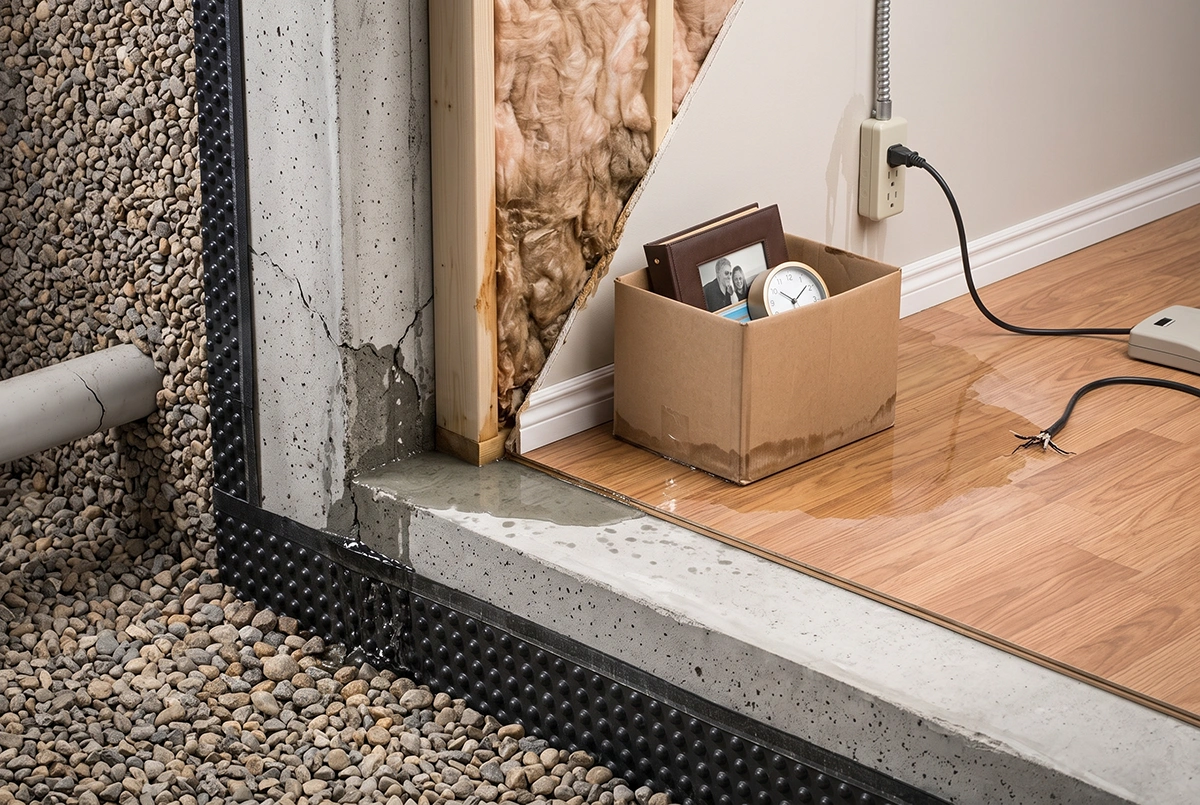
A foundation leak needs prompt attention, but a damp patch does not automatically mean your house is unstable. The immediate concern is water reaching flooring, insulation, stored belongings or electrical equipment. Recurring moisture can also hide deterioration behind finished walls.
The seriousness depends on the water source, how often it returns and whether the structure is moving. Finding a leaking foundation early gives you time to separate a repairable entry point from a drainage problem or damaged pipe.
Signs You May Have a Foundation Leak
Look for changes during rain and snowmelt, then compare the same areas in dry weather. A foundation water leak often leaves a trail even after the floor dries. Check exposed concrete and the edges of finished rooms for:
- Damp streaks below cracks, pipe openings or basement windows.
- White mineral deposits on a foundation wall.
- Peeling finishes, swollen baseboards or a persistent musty smell.
- Small pools appearing along the wall-floor junction after storms.
Condensation and plumbing leaks can produce similar symptoms. Photograph the first wet spot, rather than only the puddle where water eventually collects.
How can I tell if I have a water leak under my foundation?
A water leak under foundation slabs may cause unexplained water use, a running-water sound or a persistent warm floor patch from a leaking hot-water pipe. Check whether the water meter moves when all fixtures and water-using appliances are off. This suggests a plumbing leak somewhere; professional leak detection is needed to locate it.
Common Causes of Foundation Leaks
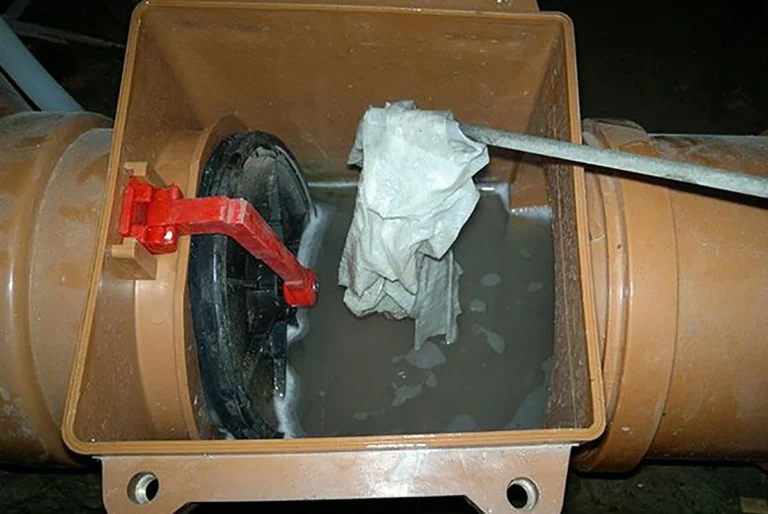
Water left beside the house often comes from overflowing gutters, short downspouts or paving that drains toward the building. Saturated soil creates hydrostatic pressure, which can force water through joints and foundation cracks. A blocked or damaged footing drain makes that pressure harder to relieve.
Other entry points include deteriorated mortar, poorly sealed service penetrations and damaged waterproofing membranes. A concrete foundation may leak through a shrinkage crack without major movement. A broken pipe beneath a slab foundation requires a different repair from groundwater entering after storms.
When runoff gathers against the wall, a contractor may recommend a French drain to carry it toward an appropriate outlet. Its slope and discharge route must be planned; gravel alone will not divert the water.
How Foundation Leaks Can Damage Your Home?
Repeated wetting can damage drywall, flooring and timber framing. Persistent dampness supports mold growth, including inside wall cavities where the surface looks dry. Water can also contribute to soil erosion and movement in susceptible conditions. These risks justify investigation without assuming every wet crack signals structural failure.
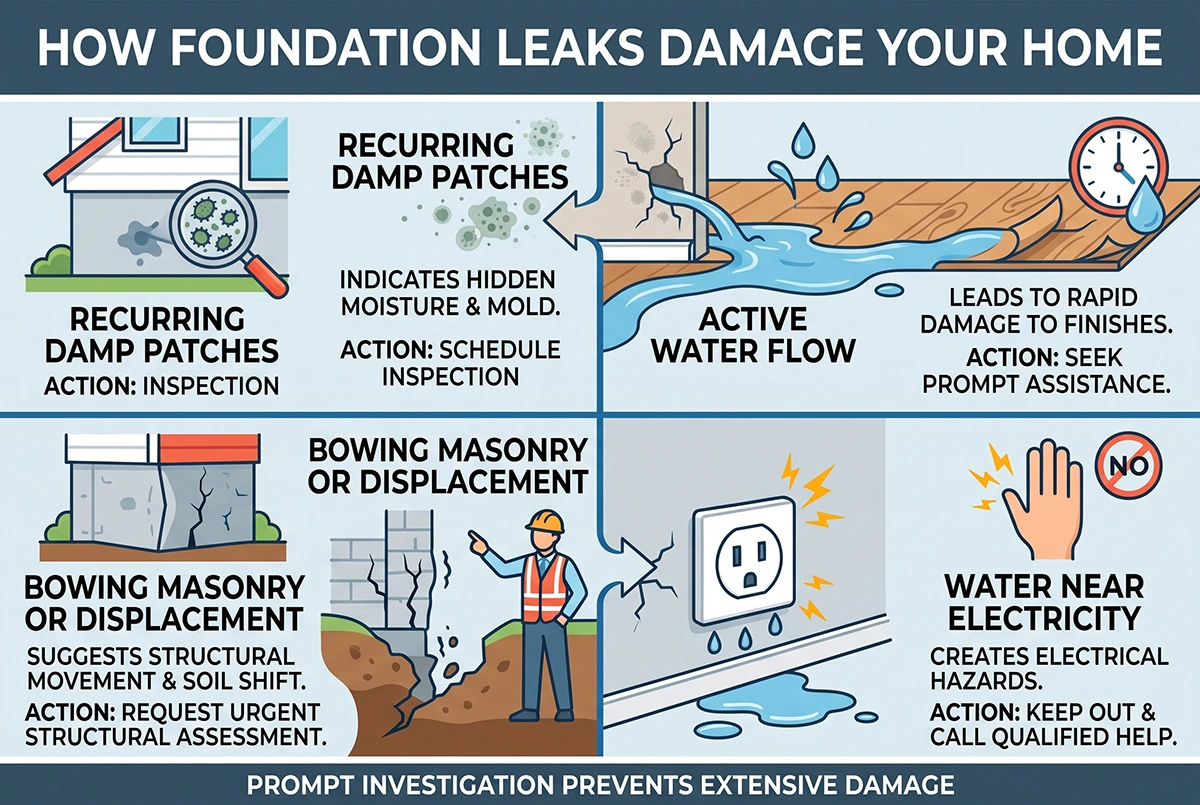
Use the pattern of damage to decide how urgently to seek help:
| What you notice | Main concern | Response |
|---|---|---|
| Small recurring damp patch | Hidden moisture damage | Arrange an inspection |
| Active water across the floor | Rapid damage to finishes | Seek prompt assistance |
| Bowing or displaced masonry | Possible structural movement | Request urgent structural assessment |
| Water near electrical equipment | Electrical hazard | Keep out and call qualified help |
How long does it take for water to damage a foundation?
There is no reliable countdown. Finishes may suffer water damage during one event, while foundation damage depends on soil, loading, materials and repeated exposure. A suddenly moving wall needs immediate assessment, even if the leak is new. Dry affected materials promptly and fix the source before closing walls again.
How to tell if a foundation crack is structural?
Possible structural foundation cracks include horizontal cracks with wall bowing, widening stair-step cracks and cracks with displacement between their edges. New sticking doors or uneven floors strengthen the case for assessment. Width alone cannot establish safety. A structural engineer should evaluate movement; foundation crack repair must suit the diagnosis.
Foundation Leak Repair Options
Before choosing how to fix a foundation leak, establish where the water enters and what the wall is built from. Sealing a visible opening may help an isolated defect, but repeated water seepage along several walls usually needs broader investigation. Foundation waterproofing should address drainage and water entry together.
| Finding | Possible approach | Important limit |
|---|---|---|
| Stable poured-concrete crack | Suitable crack injection | Does not correct ongoing movement |
| Seepage at floor perimeter | Collection drain linked to sump | Discharge capacity must suit site |
| Failed outside protection | Exterior membrane and drainage | Requires safe excavation and access |
| Damaged buried pipe | Locate and repair the pipe | Wall coatings cannot stop it |
For a foundation crack leaking water, the repair material depends on moisture conditions and whether the crack moves. Polyurethane injection can seal suitable leaking cracks. Epoxy may be specified for certain structural repairs, but filling a crack cannot replace required stabilization.
Where outside protection has failed, exterior waterproofing allows the wall and drainage to be addressed from the soil side. Excavation depth, neighbouring structures and buried utilities all affect the work plan.
What to do when you have water seeping in from your foundation?
If you notice water leaking from foundation joints, take these steps:
- Stay out of water near outlets, appliances or the electrical panel.
- Photograph the entry point and note the weather and timing.
- Contact a professional to identify the source and arrange drying.
Do not open a suspected sewage line or enter an unsafe flooded basement. Leaky basement repair begins with diagnosis, not covering the stain.
How to fix a water leak under foundation?
Have a plumber locate and confirm the damaged line before breaking concrete. Depending on access and pipe condition, repair may involve opening a limited area or rerouting the line. Groundwater beneath the slab instead calls for drainage assessment. A waterproof coating cannot repair a pressurized supply pipe.
Can a leaky basement be fixed from the inside?
Yes. Suitable crack injection or interior waterproofing can control many leaks without exterior excavation. Interior drainage collects water and directs it toward a sump or approved outlet. It does not repair every exterior defect or moving wall, so basement waterproofing must match the actual cause.
When to Call a Foundation Waterproofing Professional
Arrange an inspection if moisture returns after rain, a previous patch fails or finished walls hide the source. Seek urgent help for rapid flooding, displaced masonry or electrical hazards. Bring photographs, dates and previous repair records. Ask for the diagnosed cause, proposed method, exclusions and written warranty terms before agreeing to work.


 CLOGGED OR BROKEN WEEPING TILE