
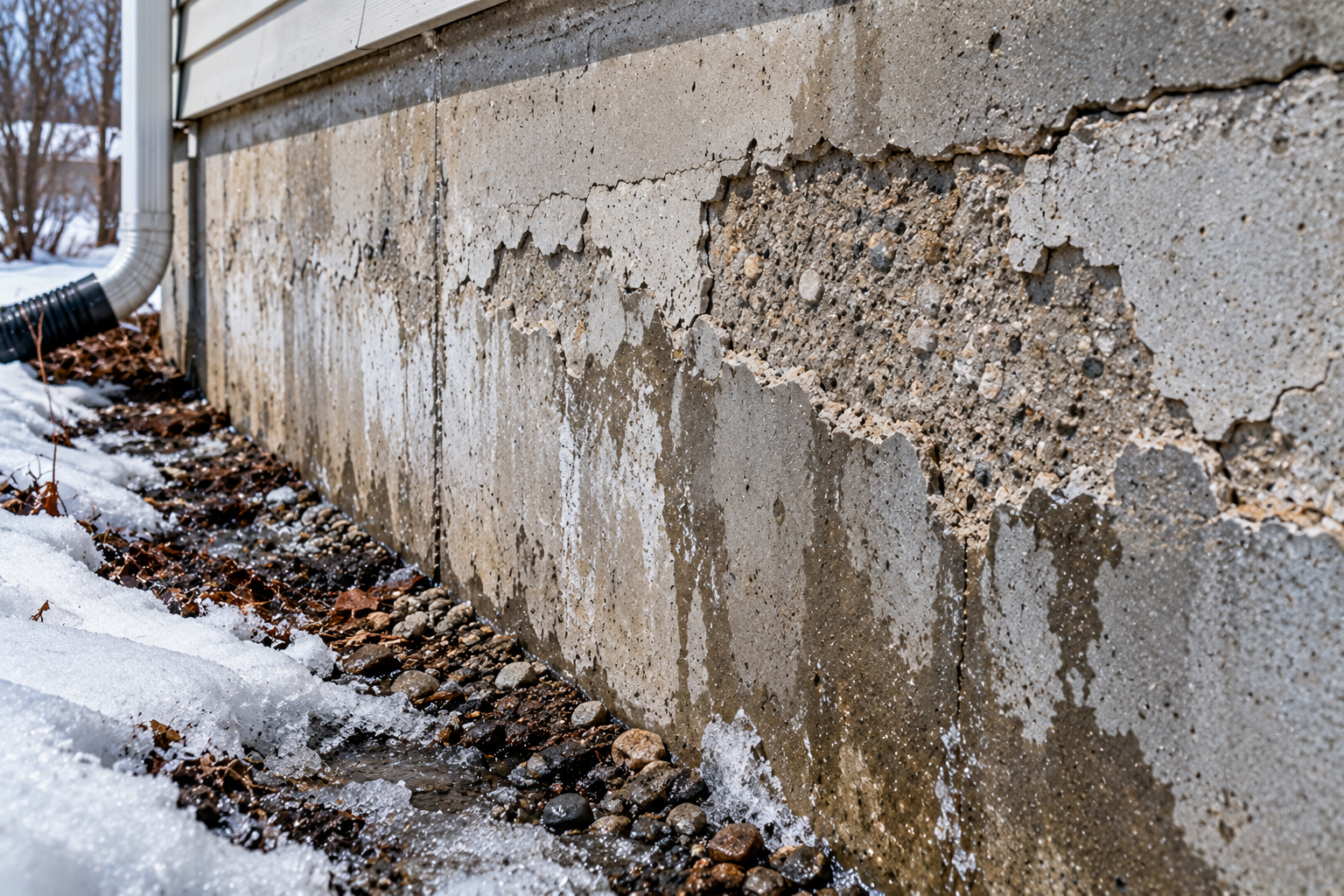
In Toronto, freeze-thaw cycles wear down foundation walls in two ways. Water trapped inside concrete, mortar and old brick freezes, expands by about 9% and pries open the pores and cracks it sits in. At the same time, wet clay soil around the house freezes, swells and presses on the upper part of the wall. Most of this damage builds up quietly over the winter and only becomes visible after the spring thaw. Keeping water away from the walls therefore protects a foundation better than any repair made after cracks appear.
What Freeze-Thaw Does to Concrete
Concrete looks solid, yet it is full of tiny pores and capillaries that soak up water. Foundation walls usually pick up that moisture from a handful of sources:
- rain and snowmelt that collect at the base of the foundation
- downspouts that empty right beside the house
- clay soil that stays saturated for weeks after the thaw
- window wells without a working drain
What happens during the freeze-thaw cycle in concrete comes down to volume. Water in the pores turns to ice, which takes up about 9% more space, so it pushes on the walls of every pore and hairline crack it fills. A single freeze rarely does visible harm. Each thaw, however, lets fresh water into gaps the last freeze opened, and the next freeze widens them a little more.
How many freeze-thaw cycles concrete can survive depends on how wet it stays. Concrete that dries out between storms can go through many winters with little loss, while a wall soaked by poor drainage starts to flake within a few seasons.
The freeze-thaw damage concrete walls suffer usually starts where water sits longest: the surface near grade, existing cracks and joints around pipes. Soft century brick and old lime mortar absorb even more water than poured concrete, so older homes often show damage first.
Frost Heave Foundation Damage in Clay Soil
Much of Toronto is built on clay and silty soil. These fine soils hold water and keep drawing more of it toward the frozen layer, where it builds up into thin sheets of ice called ice lenses. As the lenses grow, the ground swells. Next to a house, the swelling soil has room to move only up and sideways, so it presses hard against the part of the foundation wall that sits inside the frozen zone.
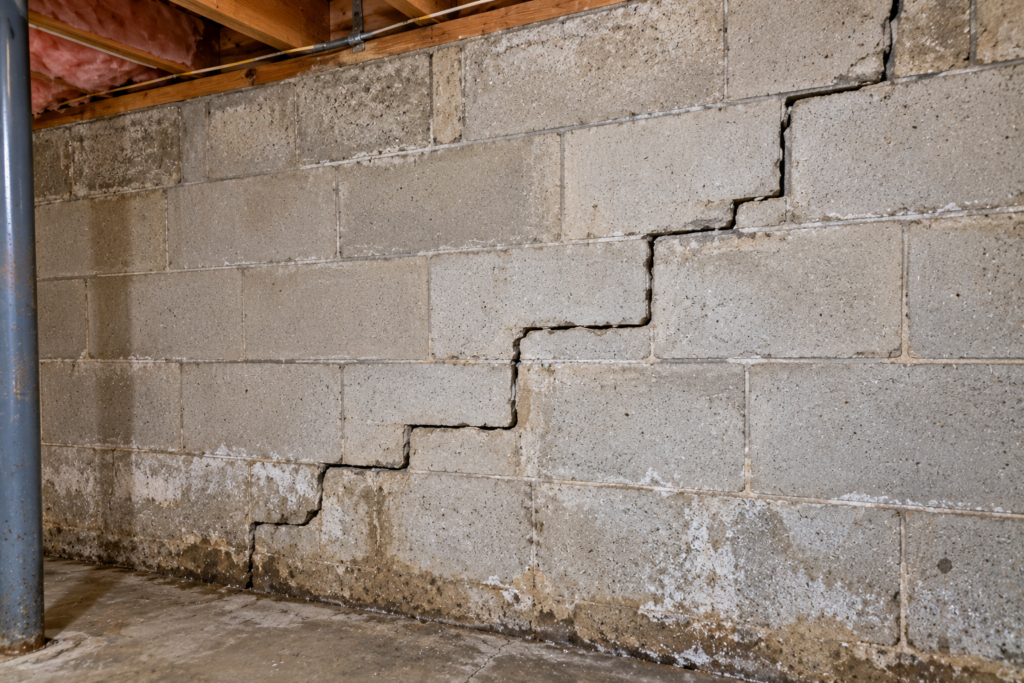
The pressure is greatest where the soil is wettest, which is under downspouts, along low spots in the grading and beside window wells. Concrete block walls react worst because their mortar joints are a natural weak line. Repeated sideways push shows up as horizontal or stair-step cracks and, over several winters, a slight inward bow. Poured walls resist better, yet frozen soil can still grip the surface and drag on it as it moves.
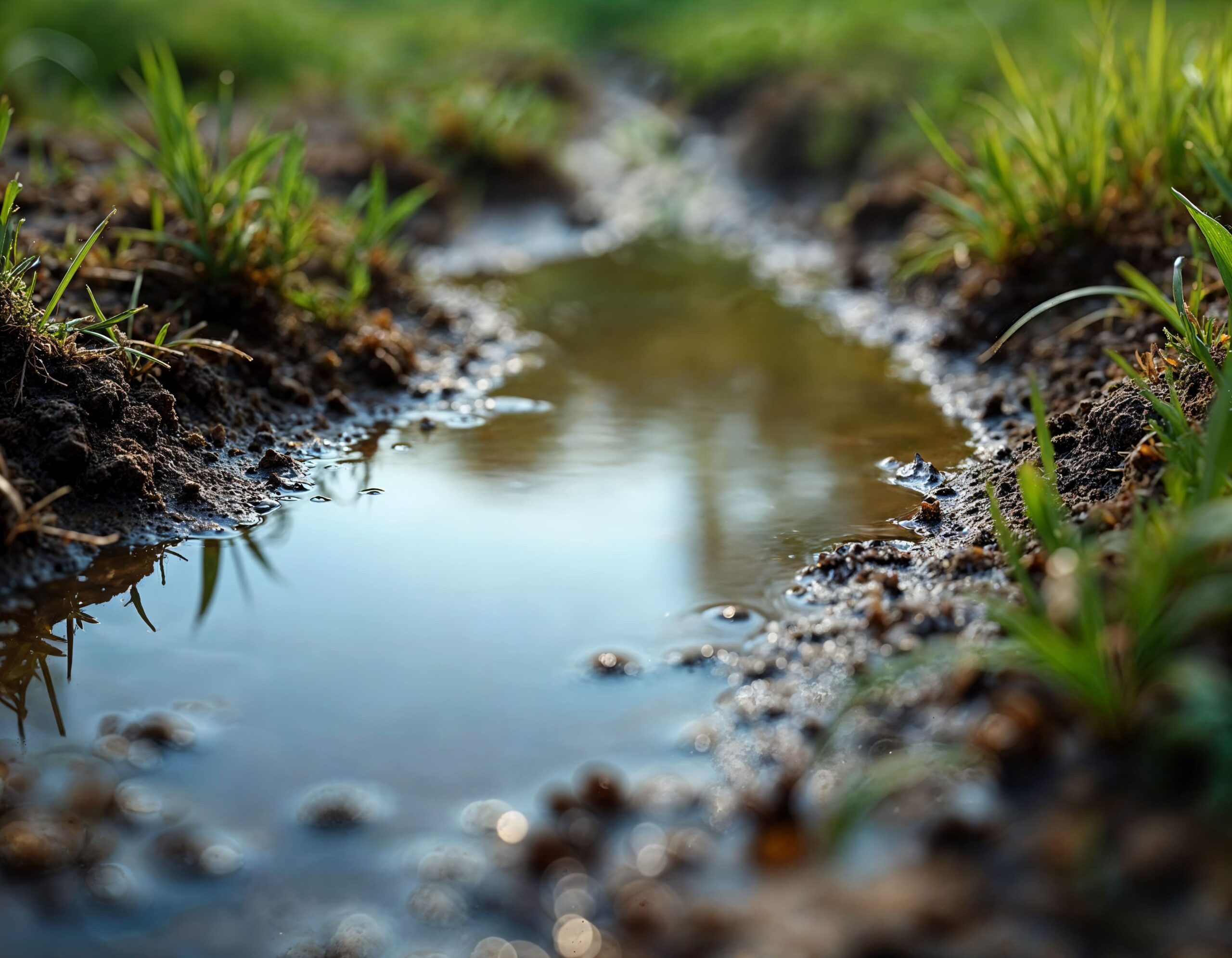
In spring the process runs in reverse. The ice melts, the soil loses volume and settles unevenly, and meltwater pools against the wall. Water standing in saturated clay raises hydrostatic pressure in a basement and pushes moisture into every crack the winter opened. Porches, front steps, garage slabs and additions on shallow footings are hit harder than the main house, because they lack the heat a warm basement gives off into the soil.
Freeze-Thaw Damage by Foundation Type
Toronto houses were built over more than a century, so the city has a mix of foundation materials. Each one reacts to frost differently. Knowing what your walls are made of helps you read the damage you see.
| Foundation type | Typical homes | How freeze-thaw affects it | What to look for |
|---|---|---|---|
| Rubble stone or fieldstone with lime mortar | Century homes | Mortar washes out and frost loosens stones | Sandy joints, loose stones, damp patches |
| Double brick | Older semis and detached houses | Soft brick absorbs water and its face breaks off | Crumbling brick face, white salt deposits |
| Concrete block* | Post-war houses and additions | Hollow cores fill with water, joints crack under soil pressure | Stair-step or horizontal cracks, inward bow |
| Poured concrete | Most newer homes | Surface scaling and wider shrinkage cracks | Flaking surface, cracks that grow each spring |
* Many older houses have mixed walls, such as a stone foundation under a later block addition, so different parts of one basement can fail in different ways.
Stone and brick walls need repairs that let moisture escape. Lime mortar breathes, while hard cement patches trap water, and the stone or brick next to them then takes the frost damage instead. On poured walls, concrete foundation spalling near grade shows that the surface stays wet too long. Loose stones and bowing block walls usually call for foundation repair before any waterproofing goes on.
Signs of Foundation Damage from Freezing
Damage forms in winter and tends to show after the thaw, when the soil softens and water starts moving again. Checking the basement in early spring and again in fall gives the clearest picture. A spalling concrete foundation is often the first visible sign: thin flakes or shallow chips pop off where water froze just under the surface.
The table below matches common signs with what usually causes them.
| Sign | What it usually means |
|---|---|
| Flaking or scaling surface | Water freezing in the outer layer |
| Hairline crack wider than last year | Ice opened it further over the winter |
| Horizontal or stair-step crack in a block wall | Frozen soil pressing from outside |
| White powdery deposits (efflorescence) | Water moving through the wall and leaving salts |
| Sandy, crumbling mortar joints | Joints worn down by repeated freezing |
| Damp patches or seepage in spring | Thaw water finding a path through cracks |
| Doors upstairs that start sticking after winter | Slight foundation movement |
Photographing the basement wall cracks winter leaves behind, with a ruler beside them, shows whether they are stable or growing. A thin vertical crack that only widens in spring can usually be sealed with foundation crack repair from the inside. Horizontal cracks and bowing point to soil pressure, and sealing alone will not stop it.
How to Protect Concrete from Freeze-Thaw
There is no way to stop frost, although the soil around the house can be kept from getting soaked. Dry soil barely heaves and dry concrete barely cracks from frost, so most protection comes down to drainage. Before winter, it is worth going through these steps:
- slope the soil away from the house and fill low spots next to it
- extend downspouts so they discharge well away from the foundation
- clean gutters so ice dams do not dump meltwater right beside the house
- pile shovelled snow away from the house, since it melts straight into the soil beside the foundation
- seal small cracks in late summer or fall, before water gets in and freezes
- clear window well drains and test the sump pump before the spring thaw
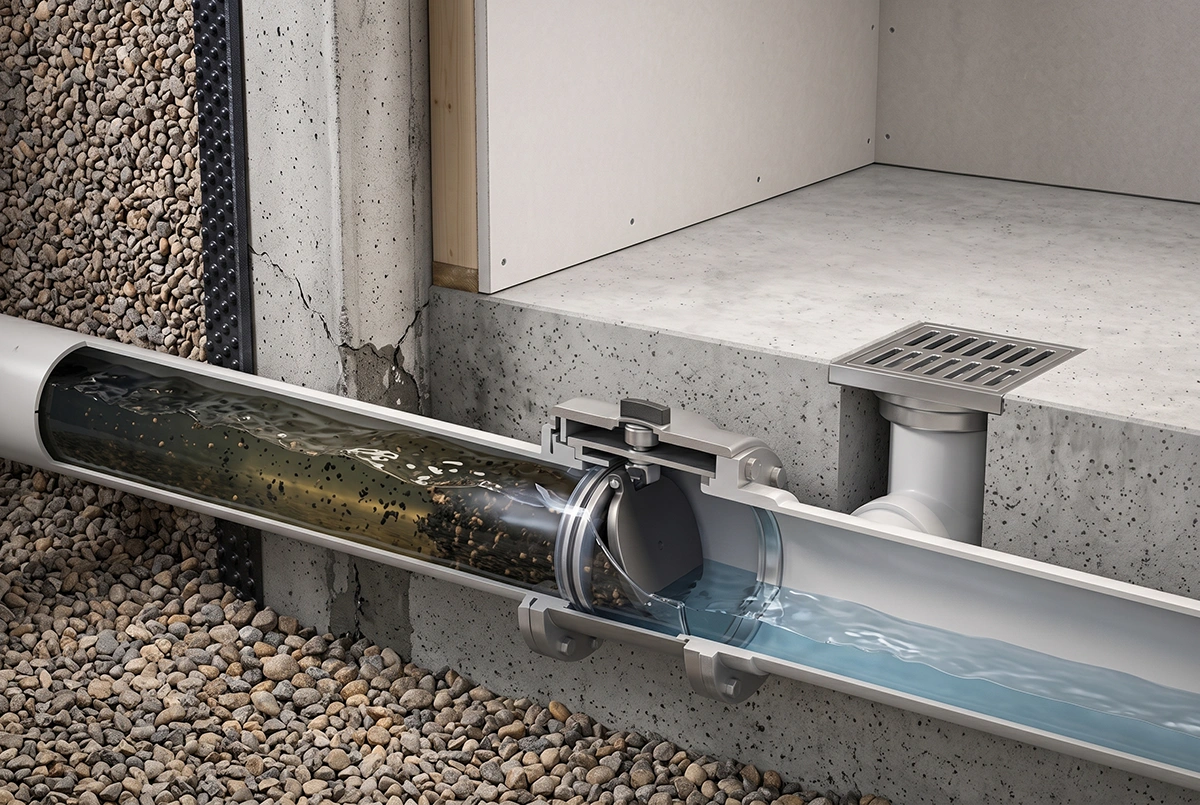
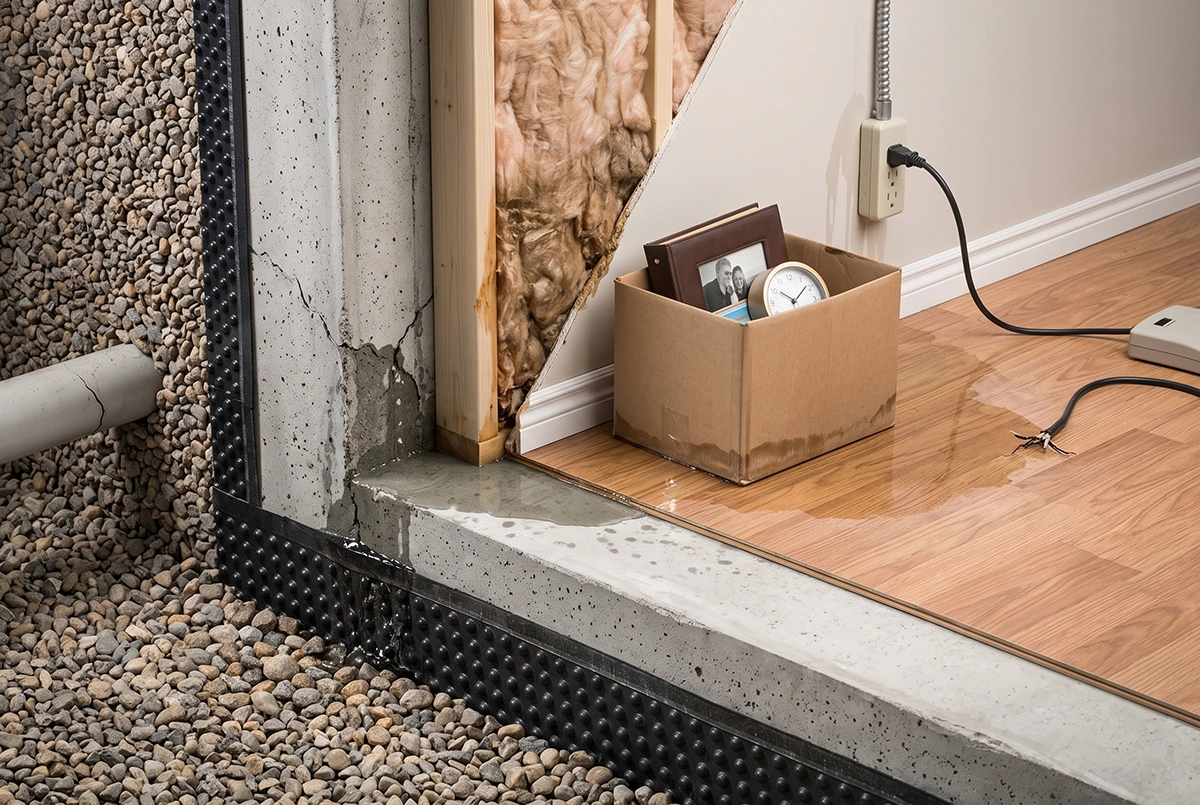
In many older houses the original clay weeping tile is cracked, clogged with roots or silt, or tied into an old sewer line. When water keeps reaching the walls despite good grading, exterior foundation waterproofing with a flexible membrane and new drainage pipe keeps the concrete dry from the outside. Interior drainage handles water that has already come through, but the soil outside stays wet. The upper part of the wall sits inside the frost zone, so the freeze-thaw cycles foundation walls go through every winter keep wearing it down near grade.
When Freeze-Thaw Damage Needs a Professional?
Most of this damage is cosmetic, though some of it points to movement or steady water entry. An assessment is worth booking when you see:
- horizontal cracks or a wall that leans or bows inward
- cracks that grow wider every spring
- water coming through the same crack after each thaw
- loose stones, missing mortar or brick that crumbles to the touch
A crack that lets water in is a leak path as well as a structural question. Knowing how serious a foundation leak is helps decide whether sealing will do or the wall also needs drainage work. Catching these problems in their first or second winter usually keeps the fix small.

 CLOGGED OR BROKEN WEEPING TILE