Basement moisture is a common concern for homeowners, particularly in areas exposed to heavy rainfall, seasonal snowmelt, fluctuating groundwater levels and freezing temperatures. Even minor water problems can affect how a basement is used, damage building materials and create conditions for mould growth if left unaddressed.
Understanding the causes of basement water problems and the available protection methods can help homeowners make informed decisions about maintaining their properties. The right approach depends on the foundation’s condition, the source of moisture, soil drainage and how water moves around the house.
This guide explains the purpose of basement waterproofing, how different systems work, what the installation process involves and how to maintain long-term protection.
What Is Basement Waterproofing?
Basement waterproofing is a combination of materials, construction techniques and drainage solutions designed to prevent water from entering a basement or to collect and redirect water before it causes damage.
Basement waterproofing is one part of house waterproofing, which also covers the roof, exterior walls, windows and gutters.
The primary goal is to protect the foundation, basement walls, floors and interior spaces from water infiltration. Depending on the property’s condition, waterproofing may involve sealing foundation cracks, applying protective membranes, installing drainage systems or improving how surface water flows away from the house.
It is important to distinguish waterproofing from damp-proofing. Damp-proofing generally limits moisture absorption through foundation walls but is not designed to withstand significant water pressure. Waterproofing provides a more comprehensive approach to managing water exposure and preventing infiltration. We compare the two in detail in damp proofing vs waterproofing.
A basement waterproofing solution may address several areas:
- Foundation walls: Protecting concrete, block or masonry surfaces from groundwater penetration.
- Foundation joints: Sealing vulnerable connections between walls and floors.
- Basement floors: Managing water entering through floor cracks or joints.
- Perimeter drainage: Collecting groundwater around the foundation and directing it away.
- Surface drainage: Preventing rainwater and melting snow from accumulating near foundation walls.
The exact combination of solutions depends on the building’s construction, soil conditions and the source of the water problem.
Why Do Basements Need Waterproofing?
Basements are particularly vulnerable to moisture because much of their structure is located below ground level. Soil surrounding the foundation can retain water, and changes in groundwater levels or weather conditions can increase the amount of moisture pressing against basement walls and floors.
Several factors contribute to basement water infiltration.
Hydrostatic Pressure
Hydrostatic pressure develops when groundwater accumulates in the soil surrounding a foundation. As water builds up, it creates pressure against basement walls and beneath the floor slab.
If the foundation has cracks, weak joints or insufficient waterproofing protection, this pressure can force water through vulnerable areas.
Heavy Rainfall and Surface Water Runoff
During heavy rainfall, water can accumulate around a house if the soil does not drain properly. Poor grading, blocked gutters and improperly positioned downspouts may direct runoff toward the foundation instead of away from it.
Over time, repeated water exposure can increase the likelihood of leaks and moisture penetration.
Freeze-Thaw Cycles and Snowmelt
Canadian weather conditions create additional challenges for basement foundations. During winter, moisture in the soil can freeze and expand. When temperatures rise, melting snow and ice increase the amount of water surrounding the foundation.
Repeated freeze-thaw cycles can contribute to cracks, material deterioration and drainage problems. Spring snowmelt can also raise groundwater levels, particularly when the soil is already saturated.
Foundation Cracks and Deteriorating Materials
Concrete and masonry foundations can develop cracks as buildings settle or materials deteriorate. Even relatively small openings may allow water to enter, especially when groundwater pressure is high.
Other vulnerable areas include wall–floor joints, basement window wells, utility penetrations and connections between different foundation sections.
Poor Drainage Around the Property
Inadequate drainage can cause water to remain close to the foundation for extended periods. Damaged weeping tile, clogged drainage channels, insufficient grading and leaking downspouts can all contribute to recurring basement moisture.
Addressing these external conditions is often an important part of an effective waterproofing strategy.
How Does Basement Waterproofing Work?
The way basement waterproofing works depends on the selected method, but most systems follow one of two principles: preventing water from reaching the foundation or collecting and redirecting water before it causes interior damage.
Exterior waterproofing focuses on stopping water before it penetrates foundation walls. A protective membrane is applied to the outside of the foundation, while drainage materials and perimeter pipes help move groundwater away from the structure.
Interior waterproofing takes a different approach. Rather than relying entirely on the exterior foundation surface, it manages water that reaches the basement perimeter. Drainage channels collect incoming water and direct it toward a sump pit, where a pump removes it from the property.
A typical waterproofing system may work as follows:
- Water reaches the foundation: Rainwater, snowmelt or groundwater accumulates in the surrounding soil.
- A protective barrier limits infiltration: Waterproof membranes, coatings or suitable crack repairs help prevent water from passing through vulnerable foundation surfaces.
- Drainage components collect water: Weeping tile or interior perimeter drains collect groundwater and direct it toward a designated discharge point.
- Water is redirected: Gravity or a sump pump moves collected water away from the foundation.
- The system helps maintain a dry basement: Properly installed and maintained components reduce the likelihood of recurring water intrusion.
Not every basement requires all these components. Some properties need exterior protection, while others benefit from interior drainage or targeted crack repairs.
It is also important to understand that waterproofing and humidity control are not the same thing. A drainage system can address water infiltration, but it does not automatically eliminate condensation or high indoor humidity. Ventilation and dehumidification may be needed to manage those separate issues.

How Is Basement Waterproofing Done?
A professional basement waterproofing project generally involves several stages. The exact work depends on whether the problem originates outside the foundation, inside the basement or in a specific structural area.
Step 1. Basement Inspection and Water Source Identification
The first step is to examine the basement and surrounding property to determine where moisture is coming from.
A professional inspection may include:
- Checking foundation walls and floors for cracks.
- Identifying water stains, damp patches and efflorescence.
- Inspecting wall–floor joints and basement windows.
- Evaluating exterior grading and downspout locations.
- Checking existing drainage systems and sump pumps.
- Looking for signs of condensation or plumbing leaks.
Identifying the actual source of moisture is essential because different problems require different solutions. For example, groundwater entering through a foundation wall should not be treated in the same way as condensation caused by poor ventilation.
Step 2. Choosing the Right Waterproofing Method
After identifying the source of water, the next step is selecting an appropriate waterproofing solution.
The decision depends on several factors:
- The location and severity of water infiltration.
- The type and condition of the foundation.
- Soil composition and groundwater conditions.
- Existing drainage infrastructure.
- Accessibility of exterior foundation walls.
- The property’s layout and surrounding structures.
For example, exterior waterproofing may be appropriate when water is penetrating through foundation walls. Interior drainage may be more practical when exterior excavation is difficult or when groundwater needs to be collected beneath the basement floor.
In some situations, combining several methods provides more reliable protection than relying on a single repair.
Step 3. Preparing the Foundation and Work Area
Before installing waterproofing materials, the affected surfaces and work areas must be properly prepared.
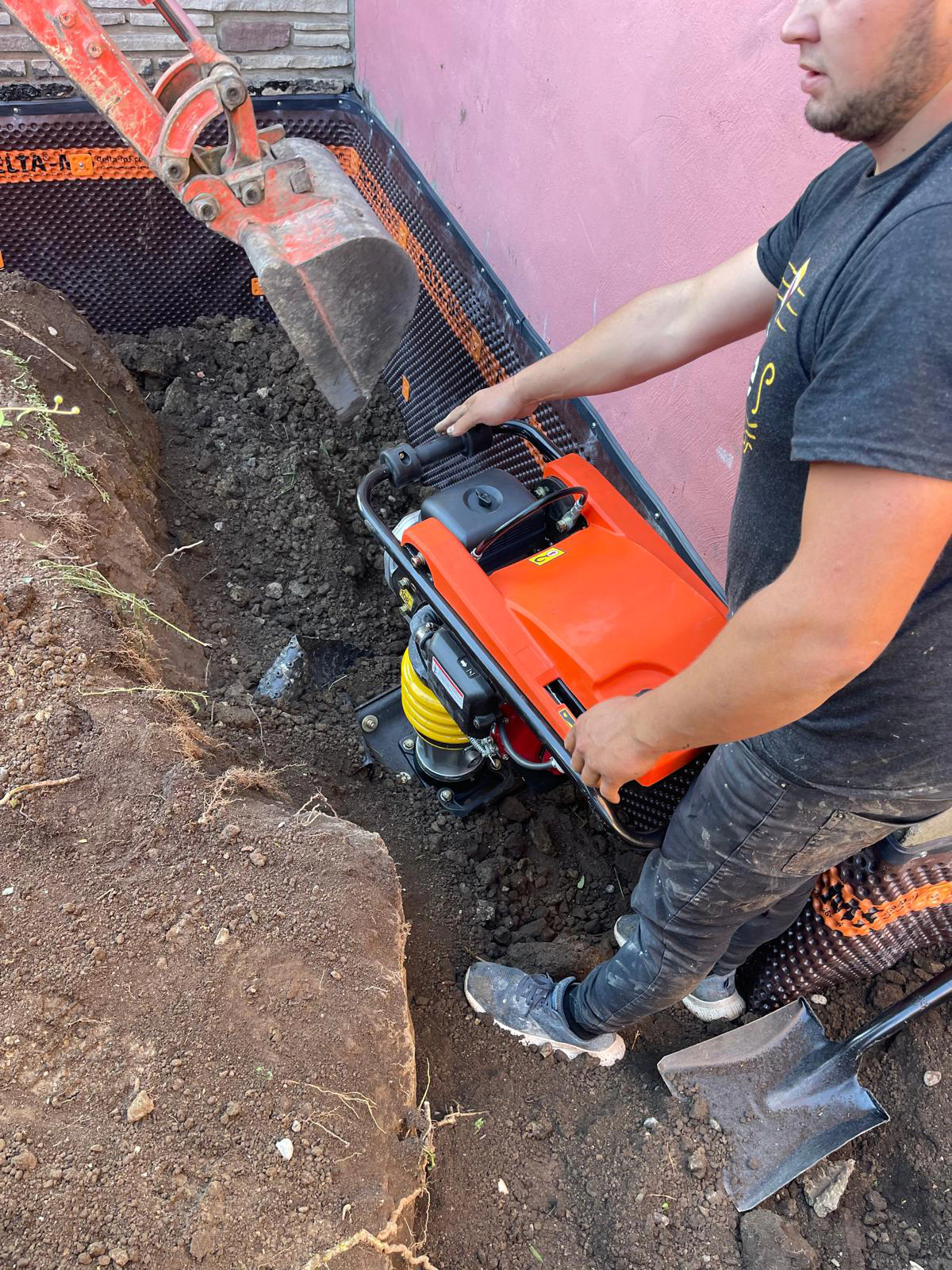
For exterior projects, preparation may involve excavating soil around the foundation to expose the walls. Existing coatings, dirt, loose concrete and deteriorated materials may need to be removed before repairs begin.
For interior projects, preparation can include removing affected flooring or baseboards, clearing the perimeter of the basement and identifying the locations of existing utilities.
Foundation cracks and damaged sections may also require repair before protective materials or drainage components are installed. Proper preparation is important because the effectiveness of waterproofing materials depends partly on the condition of the surfaces to which they are applied.
Step 4. Applying Waterproofing Materials and Installing Drainage Systems
This stage involves installing the components selected for the project.
Depending on the method, the work may include:
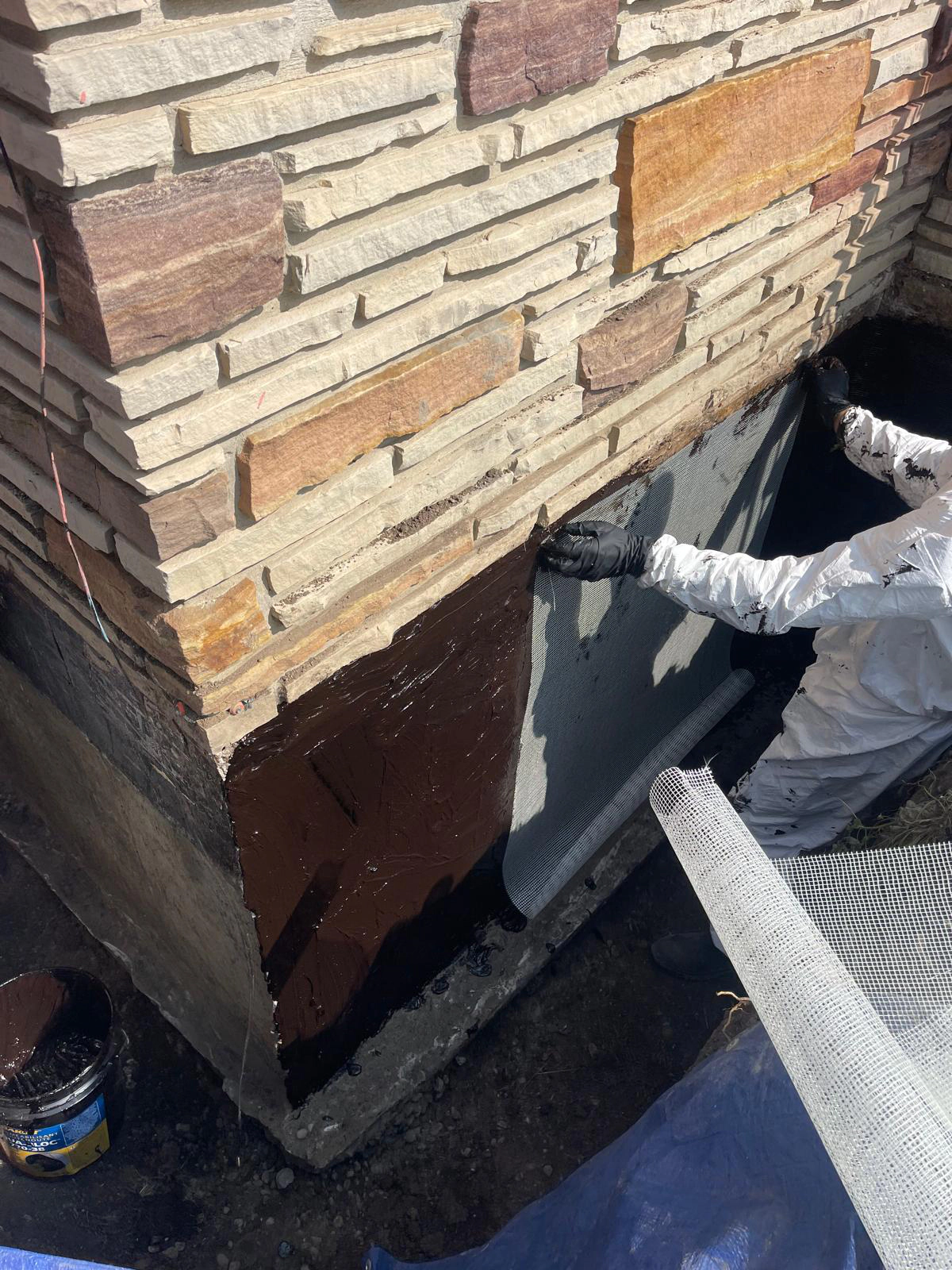
- Applying a waterproof membrane or suitable protective coating to exterior foundation walls.
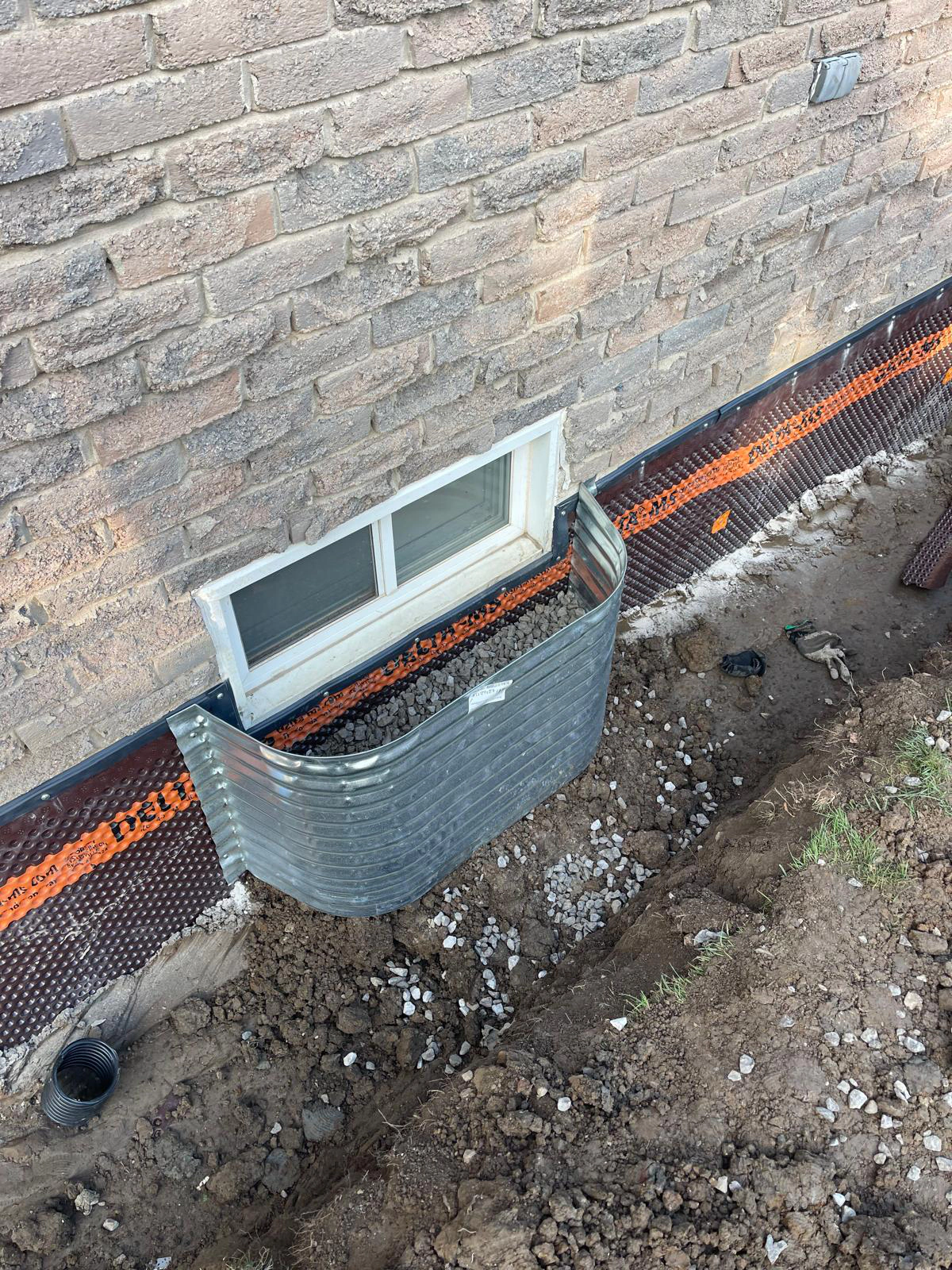
- Installing a drainage board to help direct water toward perimeter drainage.
- Placing or replacing weeping tile around the foundation footing.
- Installing an interior perimeter drainage channel.
- Connecting drainage components to a sump pit.
- Installing a sump pump and, where appropriate, a battery backup system.
- Sealing foundation cracks using suitable injection materials.
Each component has a specific purpose. Protective barriers limit water penetration, while drainage systems collect and redirect water away from the foundation.
The installation details matter. For example, drainage pipes need the correct positioning, slope and connection to an appropriate discharge point. Waterproofing materials must also be compatible with the foundation and installed according to their technical specifications.
Step 5. Testing the System and Restoring the Area
Once the installation is complete, the system should be inspected to confirm that its components are properly connected and functioning.
Depending on the project, final checks may include:
- Verifying drainage connections and water flow.
- Testing sump pump operation.
- Checking the discharge line.
- Confirming that protective materials are properly installed.
- Inspecting repaired cracks and foundation surfaces.
For exterior projects, the excavated area can then be backfilled and the surrounding landscape restored. Interior projects may involve covering drainage channels, restoring concrete flooring and reinstalling affected finishes.
The homeowner should also receive information about system maintenance, pump testing and any applicable workmanship or material warranties.
What Are the Main Basement Waterproofing Methods?
There is no single waterproofing method suitable for every basement. The right solution depends on how water reaches the foundation, the building’s construction and the accessibility of the affected areas. For a deeper comparison of materials, see our guide to the types of foundation waterproofing.
Exterior Basement Waterproofing
Exterior basement waterproofing aims to stop water before it penetrates the foundation walls.
The process typically involves excavating soil around the affected foundation sections to expose the exterior wall. The surface is cleaned and repaired before a waterproof membrane is applied.
Additional components may include:
- Waterproofing membrane: Creates a protective barrier against groundwater.
- Drainage board: Helps channel water downward toward the perimeter drainage system.
- Weeping tile: Collects groundwater near the foundation footing.
- Protective materials: Help prevent damage to the membrane during backfilling.
Once the system is installed, the excavated area is backfilled. Exterior waterproofing can be particularly useful when water enters through foundation walls or when the existing exterior waterproofing has deteriorated.
However, excavation can be disruptive and may require access around the property. Landscaping, driveways, decks and nearby structures can affect the project’s complexity.
Interior Basement Waterproofing
Interior basement waterproofing focuses on collecting and redirecting water that enters or accumulates around the basement perimeter.
One common solution is an interior perimeter drainage system. A channel is installed along the basement floor near the foundation walls, allowing water to flow toward a sump pit.
The system may include:
- Perimeter drainage channels.
- Drainage pipes beneath or alongside the basement floor.
- A sump pit for collecting water.
- A sump pump to discharge collected water outside.
- A battery backup system to provide additional protection during power interruptions.
Some systems also use dimpled drainage membranes on basement walls to direct moisture toward the drainage channel.

Interior waterproofing can be useful when exterior excavation is impractical or when groundwater enters through the wall–floor joint or beneath the floor slab. However, an interior drainage system generally manages water after it reaches the foundation rather than preventing all exterior water contact.
Foundation Crack Injection
Foundation crack injection is a targeted repair method used to seal cracks that allow water to enter through concrete walls.
The material used depends on the nature of the crack and the repair objective:
- Polyurethane injection: Expands to fill suitable cracks and helps stop water infiltration. Its flexibility can accommodate some minor movement.
- Epoxy injection: Bonds concrete surfaces and may restore structural continuity in appropriate non-moving cracks when specified for structural repair.
Crack injection can be an effective solution for isolated leaks, but it does not address every underlying drainage or foundation problem.
If cracks are widening, displaced or accompanied by significant structural movement, further assessment may be necessary before selecting a repair method.
Surface Drainage Improvements
Not every basement water problem requires extensive foundation work. Sometimes, improving drainage around the property can significantly reduce the amount of water reaching the foundation.
Common improvements include:
- Grading: Adjusting the ground slope so rainwater flows away from the house.
- Gutters: Collecting roof runoff and preventing uncontrolled water discharge.
- Downspouts: Directing collected rainwater to a suitable discharge location away from the foundation.
- French drains: Collecting and redirecting excess groundwater through a gravel-filled trench containing a perforated drainage pipe.
These measures are often part of a broader waterproofing strategy. However, surface drainage improvements alone may not resolve existing foundation leaks or problems caused by high groundwater levels.
What Are the Key Components of a Basement Waterproofing System?
A basement waterproofing system can contain several components that work together to protect the foundation and manage groundwater. Understanding their individual functions helps explain why effective waterproofing often involves more than applying a coating to basement walls.
| Component | Main Function |
|---|---|
| Waterproofing membrane | Creates a barrier that limits water penetration through foundation walls. |
| Drainage board | Provides a drainage path for water moving down the exterior foundation surface. |
| Weeping tile | Collects groundwater near the foundation footing and directs it toward a drainage outlet. |
| Interior perimeter drain | Collects water entering around the basement perimeter and channels it toward a sump pit. |
| Sump pit | Provides a collection point for water from the drainage system. |
| Sump pump | Pumps collected water away from the foundation. |
| Battery backup | Helps maintain sump pump operation during certain power interruptions. |
| Crack injection materials | Seal suitable foundation cracks to prevent localized water infiltration. |
Not all basements need every component. For example, a property with an effective exterior drainage system may not require an interior perimeter drain. The configuration should be based on the building’s actual water problems and foundation conditions.
What Are the Signs That Your Basement Needs Waterproofing?
Recognizing early warning signs can help homeowners address moisture problems before they lead to more extensive damage. Common indicators include:
- Water stains on foundation walls: Brown or yellowish marks, damp patches and visible water lines may indicate previous or ongoing water infiltration.
- Musty odours: A persistent musty smell can suggest excess moisture or mould growth, particularly in areas with limited ventilation.
- Efflorescence: A white, powdery deposit on concrete or masonry that develops when water moves through the material and leaves mineral deposits behind as it evaporates.
- Foundation wall or floor cracks: Cracks can create pathways for water. Their size, location and movement should be assessed to determine whether they indicate a moisture or structural concern.
- Water pooling on the basement floor: Standing water after rainfall or snowmelt may indicate drainage problems, groundwater infiltration or a failure in an existing waterproofing system.
- Peeling paint and damaged drywall: Bubbling paint, deteriorating baseboards, swollen flooring and damaged drywall can all be signs of prolonged moisture exposure.
- Mould and mildew growth: Visible mould or mildew may develop when moisture remains in the basement for extended periods and can affect indoor air quality.
It is important to distinguish between water infiltration and condensation. Condensation often appears when warm, humid indoor air contacts cold basement surfaces. It may require humidity control and improved ventilation rather than foundation waterproofing alone.

If several of these signs appear together or return after repairs, a professional inspection can help identify the underlying cause.
Interior vs. Exterior Basement Waterproofing: What’s the Difference?
Interior and exterior waterproofing use different approaches to manage water around a foundation. Neither method is automatically better in every situation.
| Feature | Exterior Waterproofing | Interior Waterproofing |
|---|---|---|
| Main purpose | Prevents water from penetrating foundation walls. | Collects and redirects water that reaches the basement perimeter. |
| Installation location | Outside the foundation. | Inside the basement. |
| Common components | Waterproof membrane, drainage board, weeping tile. | Perimeter drainage, sump pit, sump pump. |
| Excavation | Usually required. | Generally does not require exterior excavation. |
| Best suited for | Exterior wall water penetration and deteriorated exterior protection. | Groundwater entering around the basement perimeter or beneath the floor. |
| Property disruption | May affect landscaping, patios and driveways. | May require cutting and restoring sections of the basement floor. |
| Main limitation | Access and excavation can make installation more complex. | Does not prevent all water from contacting the exterior foundation. |
In some properties, a combination of interior and exterior solutions may be appropriate. For example, exterior membrane protection can reduce water penetration, while an interior drainage system provides additional water management.
The decision should be based on the source of moisture, foundation condition, soil characteristics and existing drainage infrastructure.
What Happens If You Don’t Waterproof Your Basement?
Ignoring recurring basement moisture can lead to more extensive problems over time. Even when water initially appears in small amounts, repeated exposure can gradually affect the foundation and interior materials.
Potential consequences include:
- Mould and mildew growth: Persistent dampness creates conditions that support mould and mildew, which can affect indoor air quality, particularly for people with respiratory sensitivities.
- Deterioration of building materials: Prolonged moisture exposure can damage drywall, insulation, wood framing, flooring and other materials.
- Foundation damage: Repeated water exposure, freeze-thaw cycles and soil pressure can contribute to concrete deterioration and worsening cracks. Significant structural damage is not inevitable, but unresolved problems become harder to repair.
- Unpleasant odours: A damp basement may develop persistent musty odours and become uncomfortable to use for storage, recreation or living space.
- Damage to stored belongings: Furniture, cardboard boxes, electronics and clothing can be damaged by moisture or standing water.
- Reduced basement usability: Water problems can prevent homeowners from safely using their basement as a finished living area, home office or recreational space.
Addressing the source of moisture early can help limit property damage and reduce the likelihood of more complicated repairs.
How Long Does Basement Waterproofing Last and How Do You Maintain It?
The lifespan of a basement waterproofing system depends on the materials used, installation quality, soil and groundwater conditions and ongoing maintenance.
Different components have different service lives. A properly installed membrane may provide protection for many years, while mechanical components such as sump pumps require periodic inspection and eventual replacement.
Several factors influence how long a waterproofing solution remains effective:
- Material quality: Products must be suitable for the foundation type and expected water exposure.
- Installation quality: Correct surface preparation, drainage connections and material application are essential.
- Soil conditions: Groundwater levels and soil drainage can affect the amount of pressure around the foundation.
- Weather exposure: Heavy rainfall, snowmelt and freeze-thaw cycles can place additional demands on the system.
- Maintenance: Blocked drains, failed pumps and damaged discharge lines can reduce system effectiveness.
Basement Waterproofing Maintenance Checklist
Homeowners can help maintain their waterproofing systems through regular inspections and basic maintenance:
- Test the sump pump: Periodically check that the pump activates and discharges water properly.
- Inspect the battery backup: Check its condition and follow the manufacturer’s testing and replacement recommendations.
- Keep gutters clean: Remove leaves and debris that could prevent proper rainwater drainage.
- Check downspouts: Make sure roof runoff is directed away from the foundation.
- Monitor drainage areas: Look for visible signs of blockages, pooling water or unusual odours.
- Inspect foundation walls: Watch for new cracks, damp patches or recurring efflorescence.
- Check basement humidity: Use a hygrometer or dehumidifier when needed to monitor and control indoor moisture.
Maintenance requirements vary depending on the installed system. Homeowners should follow the manufacturer’s instructions and have any persistent drainage or water infiltration issues assessed.
A well-maintained waterproofing system can help protect the basement for many years, but no system should be considered maintenance-free or guaranteed to prevent every possible water problem.
Protect Your Basement with the Right Waterproofing Solution
Basement moisture problems can have different causes, from groundwater pressure and foundation cracks to poor surface drainage. Understanding the source of water is the first step toward choosing an effective solution.
If you notice recurring leaks, damp foundation walls or standing water, a professional assessment can help determine which waterproofing method is appropriate for your property.
Leaquida provides basement and foundation waterproofing solutions for homeowners in Toronto and the GTA. Contact the team to discuss your basement concerns and find an approach suited to your home’s foundation and drainage conditions.