
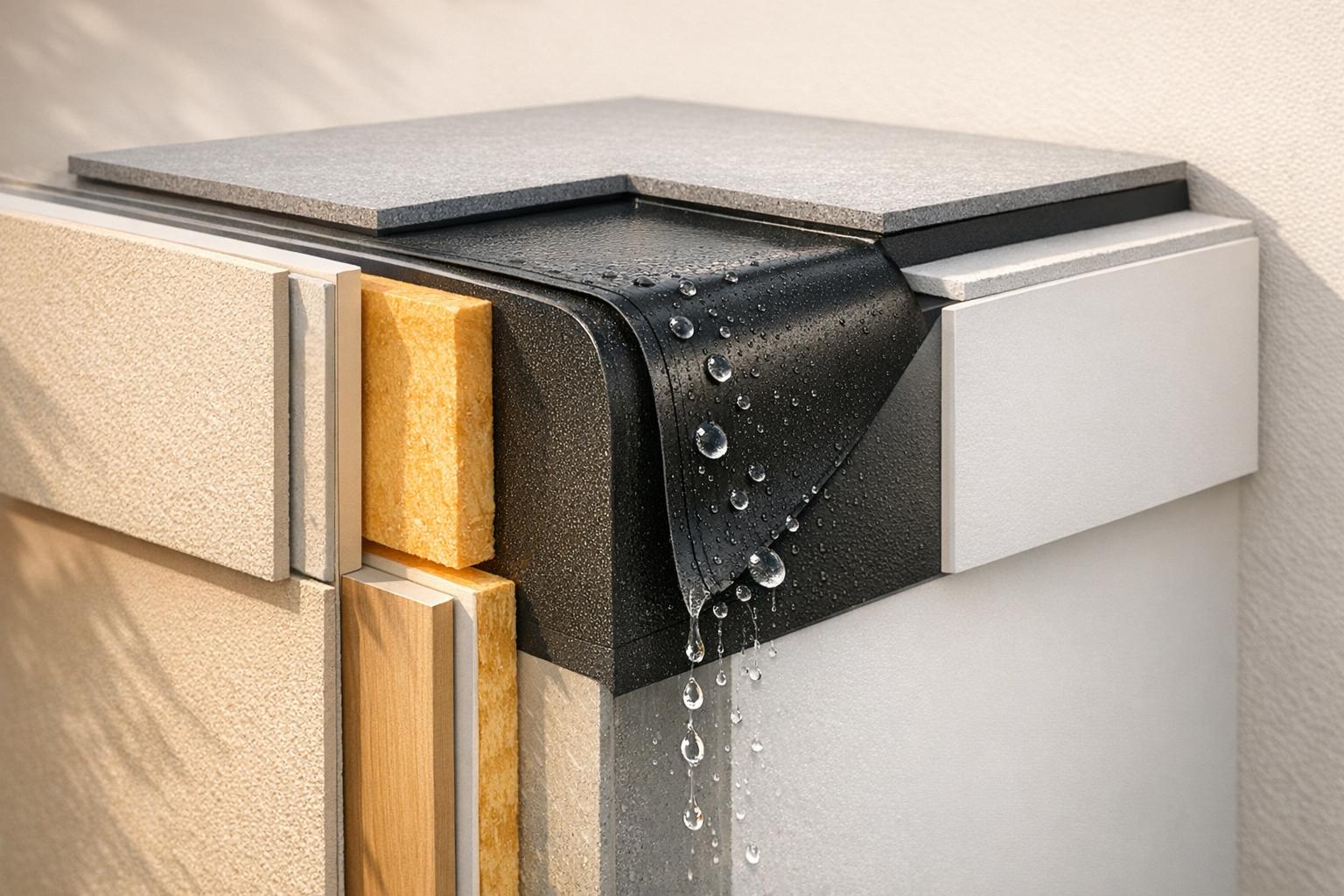
Waterproof membranes are a game-changer for protecting structures from water damage. They create a watertight barrier that prevents moisture from causing costly repairs, especially in harsh Canadian climates with freeze-thaw cycles and heavy rainfall. These membranes are used in roofs, foundations, tunnels, and bridge decks to handle high water pressure and extreme temperatures.
Key points:
- Types: Sheet membranes (e.g., modified bitumen, PVC/TPO), liquid-applied membranes (hot or cold), crystalline systems, and self-adhered membranes.
- Applications: Green roofs, below-grade foundations, bridge decks, and urban spaces.
- Benefits: Long-term durability, improved indoor air quality, protection from moisture and chemicals, and energy efficiency.
- Advancements: Self-healing membranes, recycled-content materials, and low-VOC formulations.
Choosing the right waterproof membrane depends on site conditions, climate, and project needs. Professional installation ensures reliable performance and extends the lifespan of the structure.
What are the installation steps for a waterproofing membrane during building constructions?
sbb-itb-5761e20
Types of Waterproof Membranes and Their Uses
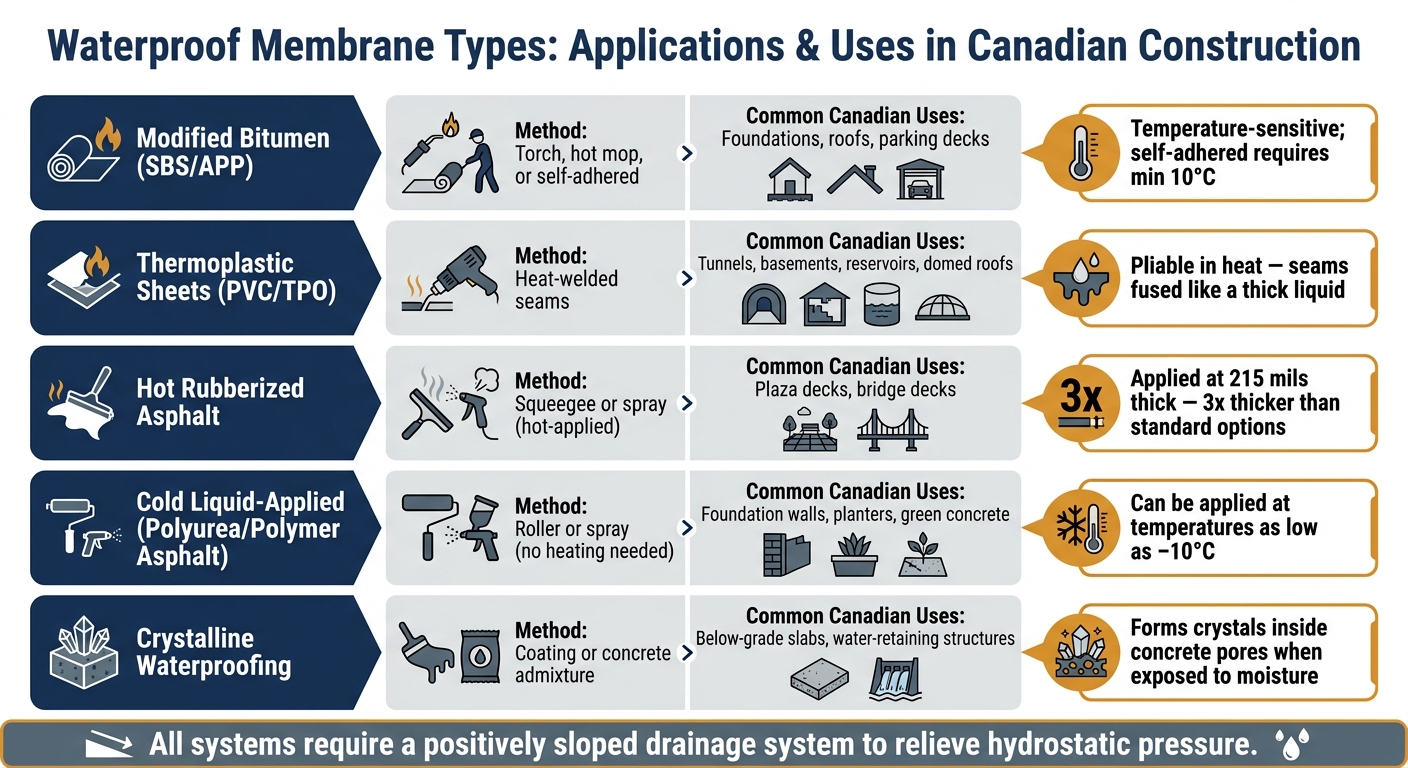
Waterproof Membrane Types: Applications & Uses in Canadian Construction
Waterproof membranes come in various forms, each designed to handle specific challenges posed by Canadian climates. Choosing the right type depends on factors like application location, temperature extremes, and the level of water pressure it needs to withstand. Below is an overview of the main types and their typical uses.
Sheet and Liquid-Applied Membranes
Sheet membranes are pre-formed rolls or panels. Modified bitumen (SBS or APP) is a common example, applied using methods like torching, hot mopping, or self-adherence. These are often used on foundations, parking garages, and roofs. Thermoplastic sheets, such as PVC and TPO, rely on heat-welded seams to create a watertight seal, making them ideal for intricate shapes like tunnels or domed roofs. According to the Canadian Roofing Contractors Association:
“Thermoplastic sheets tend to be stiff in cold weather and soft and pliable in hot weather. If the temperature is high enough, the material will flow like a thick liquid and it is this property that allows the seams… to be heat welded.”
Liquid-applied membranes are applied as a wet layer that cures into a seamless, monolithic surface. Hot-applied rubberized asphalt, for instance, is spread or sprayed at a thickness of 215 mils, which is over three times thicker than many other waterproofing options. Cold-applied alternatives, such as polymer-enhanced asphalt or polyurea, are rolled or sprayed on without the need for heating equipment. These can even be applied to freshly poured (“green”) concrete, helping projects stay on schedule.
Crystalline and Self-Adhered Systems
Crystalline waterproofing works differently. It can be applied as a coating or integrated directly into the concrete mix. When exposed to moisture, it triggers a chemical reaction that forms crystals within the concrete pores, effectively blocking water from the inside out. This makes it especially useful for below-grade concrete structures like foundation walls or underground parking slabs.
Self-adhered membranes simplify installation by using a pressure-sensitive adhesive backed with release paper, removing the need for torches or hot kettles. However, these membranes are temperature-sensitive and typically require ambient temperatures of at least 10°C to ensure proper adhesion. In Canada, this limits their use to spring through fall or for indoor projects.
The table below highlights how these systems are applied in Canadian construction:
| Membrane Type | Typical Application Method | Common Canadian Use |
|---|---|---|
| Modified Bitumen | Torch, hot mop, self-adhered | Foundations, roofs, parking decks |
| Thermoplastic (PVC/TPO) | Heat-welded seams | Tunnels, basements, reservoirs |
| Hot Rubberized Asphalt | Squeegee/spray (hot) | Plaza decks, bridges |
| Cold Liquid-Applied | Roller/spray (cold) | Foundation walls, planters |
| Crystalline | Coating or concrete admixture | Below-grade slabs, water-retaining structures |
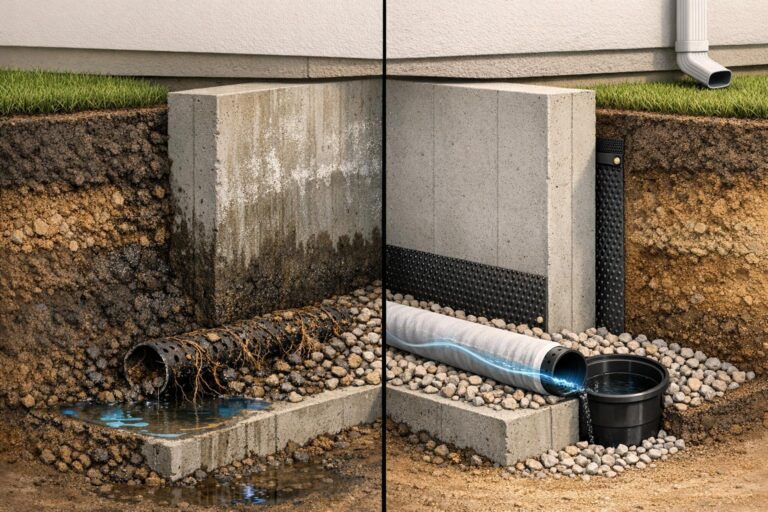
For all these systems, it’s crucial to include a positively sloped drainage system to relieve hydrostatic pressure. These examples show how waterproof membranes are adapted to meet the diverse needs of Canadian construction projects.
Benefits of Waterproof Membranes in Construction
Choosing the right waterproof membrane is a critical step in protecting structures from the challenges posed by Canada’s climate. These membranes shield buildings from freeze-thaw cycles, chemical exposure, and moisture damage, making them a wise choice for long-term durability.
Durability and Structural Protection
Canada’s climate can be tough on buildings, especially when water damage comes into play. Freeze-thaw cycles, chemical exposure, and moisture can wreak havoc on concrete, leading to issues like carbonation, rebar corrosion, and accelerated deterioration. Waterproof membranes act as a defence against these threats, significantly extending a structure’s lifespan.
Modern waterproofing solutions have evolved to tackle these challenges head-on. High-build monolithic membranes, for example, can self-heal cracks that develop in concrete, maintaining a seamless barrier for decades. Products like Monolithic Membrane 6125 boast a proven track record of over 60 years in both horizontal and vertical applications. This kind of reliability is crucial, especially when you consider the high costs associated with repairing foundations or parking decks.
Canadian infrastructure also faces chemical threats from sources like de-icing salts, calcium chloride, fertilizers, and sewer gases. Advanced membranes are designed to resist these chemicals, ensuring long-term protection. Some polyurea-based systems even offer exceptional resistance to impact, tearing, and abrasion, reducing the need for additional protection during construction.
But the benefits of waterproof membranes go beyond just structural integrity – they also contribute to healthier and more comfortable indoor environments.
Indoor Air Quality and Comfort
A damp basement isn’t just an inconvenience; it can pose serious health risks. Health Canada highlights the importance of indoor air quality, stating:
“Indoor air quality is considered an environmental determinant of health. A healthy indoor environment is one that contributes to productivity and comfort, and protects the health and well-being of occupants.”
Waterproof membranes help by keeping moisture out of foundations and below-grade walls, which in turn helps maintain indoor relative humidity levels between 30% and 50% – a range that discourages mould growth. These membranes can also block harmful soil gases like radon from entering living spaces, a concern in many Canadian regions.
In addition to preventing mould, a properly sealed building envelope reduces air leakage and drafts. This contributes to consistent indoor temperatures, as thermal comfort standards recommend keeping the temperature difference between the floor and ceiling within 4°C. When moisture compromises insulation, maintaining this balance becomes much harder, leading to cold spots and discomfort.
Beyond health and comfort, waterproofing also plays a role in improving a building’s energy performance.
Energy Efficiency and Green Building
Waterproof membranes are essential for energy efficiency, especially in Canada’s challenging climate. In Protected Membrane Roof (PMR) systems, the membrane is placed beneath the insulation, protecting it from moisture and mechanical damage. This ensures the insulation retains its RSI (thermal resistance) value over time, preventing energy losses.
Some membranes, like Monolithic Membrane 6125, go a step further by incorporating 40% post-consumer recycled content and using zero-VOC formulations, aligning with green building goals. For projects aiming for LEED Canada certification, factors like regional material sourcing and waste diversion (e.g., recycling PVC cut-offs) can also contribute to sustainability.
“MM6125 contains 40% post-consumer recycled material.” – Hydrotech
To ensure a product meets green building standards, requesting an Environmental Product Declaration (EPD) from the manufacturer can confirm its recycled content and environmental impact. Additionally, products evaluated by the Canadian Construction Materials Centre (CCMC) provide assurance that they meet the National Building Code of Canada (NBC) requirements, making them a reliable choice for alternative-solution projects.
Key Applications of Waterproof Membranes
Waterproof membranes play an essential role in a variety of settings, from green roofs to bridge decks. Each application has its own set of demands, and membranes have been developed to address these challenges effectively.
Green Roofs and Urban Spaces
Green roofs showcase how waterproof membranes can be used in creative and functional ways. Acting as a protective barrier between the building structure and the growing medium, these membranes handle loads ranging from 70 to 300 kg/m², resist root penetration, and maintain watertight performance for decades. Additional layers are often added to shield the membrane from UV rays and extreme temperatures, further extending its lifespan.
“Green roofs protect the roof membrane from UV damage and should increase the lifespan of the roof.” – Sustainable Technologies Evaluation Program
In Canadian urban areas, particularly in Southern Ontario, green roofs help manage water by retaining around 50% of annual rainfall. During non-winter months, this retention rate increases to 60%–70%, easing the strain on municipal drainage systems and aligning with Low Impact Development goals. To ensure proper functionality, maintaining a drainage slope of at least 2% (1:50) towards roof drains is crucial, as it prevents water from pooling on the membrane.
Below-Grade Waterproofing for Foundations
Foundation waterproofing is one of the most demanding applications for membranes. Constant exposure to groundwater makes failure in this area both costly and complicated to address. Scott Schendel, Director of Product Development at EPRO, highlights the stakes:
“Attempting to remediate a failed blindside waterproofing system can cost 10 to 20 times the original installation, while never achieving the reliability of a properly executed initial system.” – Scott Schendel, Director of Product Development, EPRO
Membranes used below-grade must adhere tightly to the substrate, accommodate movement in the concrete, and resist hydrostatic pressure. Fluid-applied systems, for instance, offer elongation capabilities ranging from 200% to over 1,000%, allowing them to stretch without tearing despite substrate shifts. High-performance HDPE composite membranes add another layer of security by bonding directly to poured concrete. This prevents water from travelling laterally behind the membrane, even if punctured. Additionally, these systems protect interiors from soil gases and chemicals like sulphates and salts found in the ground.
Bridges and Civil Infrastructure
Bridge decks endure some of the harshest conditions, including constant traffic, freeze–thaw cycles, and heavy de-icing salt use during Canadian winters. Without proper protection, concrete deteriorates quickly, and steel reinforcement can corrode, leading to structural issues. Waterproof membranes act as the first line of defence against these problems.
Bridge waterproofing systems are built to handle these extreme conditions. Many high-performance membranes provide elongation of at least 1,000%, allowing them to bridge cracks that develop over time. They must also withstand the heat of hot-mix asphalt overlays, which can reach temperatures of up to 170°C, without losing adhesion. Typically, these systems are designed to last a minimum of 25 years.
“Failure to adequately waterproof a bridge deck can lead to severe consequences, including accelerated corrosion of reinforcement, reduced structural integrity, and potentially hazardous conditions for bridge users.” – Sika
Fast-curing hot-spray systems are becoming more popular for infrastructure projects as they allow for the application of over 1,000 m² in a single shift. This reduces traffic disruptions and labour costs. To maximize effectiveness, these membranes should be paired with efficient subsurface drainage to prevent water from becoming trapped beneath asphalt layers. These advancements highlight the critical role waterproof membranes play in ensuring the durability and safety of infrastructure.
New Developments in Waterproof Membrane Technology
The construction industry has come a long way from basic waterproofing solutions. Today’s membranes are designed with advanced features and a reduced environmental footprint, reshaping expectations across the sector.
Smart Membranes and Self-Healing Materials
One of the most exciting advancements in recent years is the rise of self-healing membranes. These innovative systems rely on water-reactive polymers that automatically seal cracks or punctures when exposed to moisture – no manual intervention needed. Sika explains the process:
“Water-reactive polymers power this remarkable advancement, offering autonomous sealing for roofs, safeguarding valuable assets.” – Sika
Hydrotech’s Monolithic Membrane 6125 (MM6125) takes a slightly different approach, using its impressive thickness – installed at 215 mils – to flow into and seal developing cracks in concrete over time. This makes it an ideal solution for critical environments like data centres, museums, and pharmaceutical facilities, where even minor leaks can lead to major consequences.
Beyond self-healing capabilities, some liquid-applied membranes now include colour-change indicators. These shift from light blue to dark blue as the material cures, reducing installation errors and ensuring the membrane isn’t prematurely loaded. Additionally, certain products feature antimicrobial technology, which provides ongoing protection against mould, mildew, and bacteria. This is especially useful for below-grade or interior applications.
These advancements reflect a broader trend toward high-performance waterproofing systems that combine durability with practical features.
Low-Impact and Recycled-Content Materials
Alongside technical improvements, sustainability has become a key focus in waterproof membrane design. For example, Hydrotech’s MM6125 contains at least 40% post-consumer recycled content, as verified by UL. Sika’s Sarnafil G 410-60 membrane includes 10% recycled content and offers a high Solar Reflectance Index, helping to combat urban heat island effects. These innovations are particularly relevant in Canada, where construction-related activities contribute approximately 28 million tonnes of GHG emissions annually.
The push for greener materials has also led to the adoption of 100% solids, solvent-free formulations. These eliminate VOC restrictions, reduce the risk of curing issues on-site, and meet certifications for environmental performance. For projects aiming for LEED or Green Globes certification, it’s increasingly common to specify products with Environmental Product Declarations (EPDs) and certifications like GREENGUARD or NSF/ANSI 347 Platinum.
Together, these developments highlight a shift toward materials that combine advanced functionality with a commitment to reducing environmental impact.
How to Choose the Right Waterproof Membrane
When it comes to waterproofing, picking the right membrane is critical to ensuring long-lasting results. Your choice should reflect the specific conditions of your site, your budget, and your long-term objectives. What works well for a Toronto home’s foundation might not be the best option for a bridge deck in a colder northern region. There’s no one-size-fits-all solution.
Assessing Site Conditions
Before making a decision, consider factors like soil composition, groundwater levels, and the local climate. Some soils, especially those with high organic or chemical content, can degrade standard membranes. The National Research Council Canada emphasizes this point:
“The use of the product is limited to installation over foundation walls facing normal soil conditions. When used in soils containing high levels of organic matter, chemicals or microbiological activity, the manufacturer must be consulted to determine suitability.”
Canada’s harsh winters also play a role in determining the right membrane. For instance, spray-applied polyurea membranes can be applied at temperatures as low as −10°C, while most bituminous systems require temperatures above 4.4°C. For below-grade installations, it’s crucial to assess hydrostatic pressure. Use a membrane designed to handle the load instead of relying on a dampproofing vs. waterproofing comparison to justify a cheaper product. Also, ensure the product has a CCMC (Canadian Construction Materials Centre) evaluation number, which confirms compliance with the National Building Code of Canada. This certification helps narrow down your options.
Cost and Service Life
Waterproofing costs can vary significantly. In Canada, exterior membrane installations typically range from $100 to $250 per linear foot, while interior systems are slightly more affordable at $70 to $120 per linear foot. If you’re repairing foundation cracks, expect costs between $500 and $1,200 per crack, depending on factors like depth and accessibility.
Don’t just focus on upfront costs – consider the service life and warranty of the product. For example, adding a compatible drainage panel alongside your membrane can sometimes double the warranty period, extending it from 5 years to 10 years. While thicker, more durable membranes may require a higher initial investment, they often lead to lower maintenance costs over time.
Working with a Professional Waterproofing Service
High-performance waterproofing systems demand professional installation. Take two-component spray-applied polyurea as an example – it requires skilled installers and specialized equipment. Mistakes in mixing or applying the product under the wrong conditions can lead to cure failures, jeopardizing the entire system.
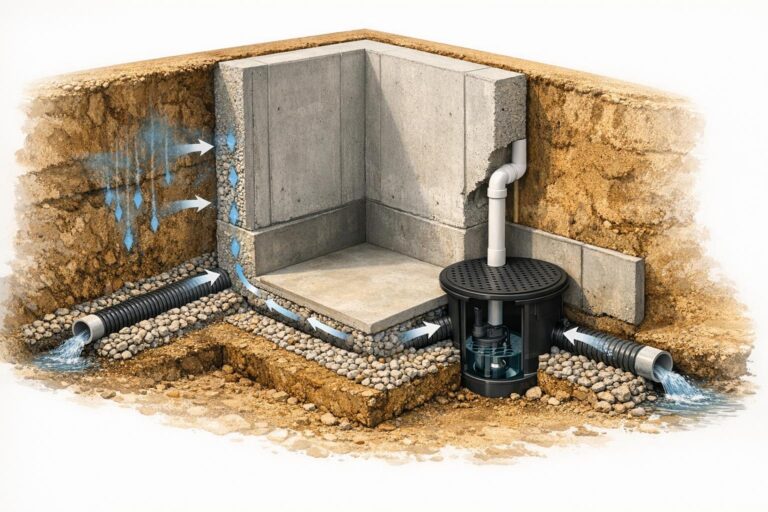
For homeowners in the Toronto area, Leaquida Waterproofing provides customized solutions. Their services include exterior membrane installation, foundation crack repair, sump pump installation, and French drain systems. By evaluating site-specific conditions, their team ensures that the membrane, drainage, and structural components work seamlessly together, delivering a comprehensive and effective solution rather than patchwork fixes.
Conclusion: Using Waterproof Membranes to Build Lasting Structures
Waterproof membranes play a crucial role in protecting concrete structures from carbonation and chloride ion diffusion – two of the main culprits behind rebar corrosion. When combined with a comprehensive moisture control system, these membranes significantly enhance the durability and energy efficiency of buildings, especially in Canada’s challenging climate.
The global market for below-grade waterproofing membranes is expected to grow from CA$3.05 billion in 2026 to CA$4.39 billion by 2034, with a CAGR of 4.6%. This steady growth reflects the rising demand for durable waterproofing solutions in Canadian cities, where structures must endure freeze–thaw cycles, hydrostatic pressure, and the wear and tear of aging infrastructure.
Achieving long-term protection requires more than just selecting the right membrane; it depends on a well-thought-out system. Success in waterproofing is about creating a cohesive approach, not relying on a single product. For instance, fabric-reinforced assemblies installed at 215 mils thick demand skilled applicators to ensure proper coverage, detailed work at transitions, and warranty compliance. Expert application is absolutely essential in these cases.
For projects that require precision and expertise, local professionals bring the necessary skills to maintain system integrity. In the Toronto area, Leaquida Waterproofing offers tailored solutions for lasting results. From exterior membrane installations to French drains and foundation crack repairs, their team ensures every project is treated as a complete system – because durable waterproofing depends on it.

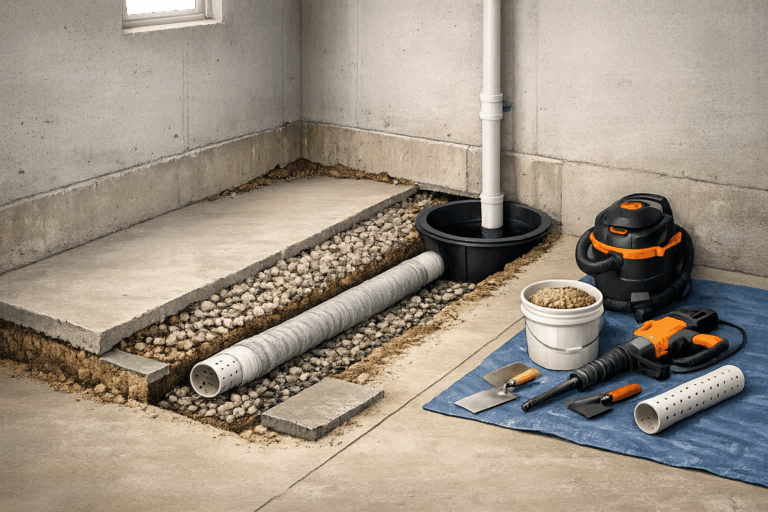
 CLOGGED OR BROKEN WEEPING TILE