
Sometimes it can, and sometimes it makes no difference at all. Waterproofing stops mold that feeds on water coming through the foundation. Growth caused by condensation and humid air needs a different fix, and mold that is already on the walls has to be cleaned out by hand. Before paying for any system, it helps to know which of these problems your basement actually has.
The Moisture Source Decides the Answer
What causes mold in basement corners, walls and storage areas is almost always one of four things: water seeping through the foundation, humid air condensing on cool surfaces, a flood or sewer backup, or a plumbing leak. Only the first one is a waterproofing problem. Plumbing leaks, for example, show up as damp spots under laundry tubs, around the water heater or below a bathroom, and they need a plumber. After heavy rain, groundwater around the house rises and hydrostatic pressure in a basement forces it through cracks and the joint where the wall meets the floor.
A quick test narrows it down. Tape a 30 cm square of clear plastic to a bare concrete wall, seal all four edges and check it after two days. Moisture trapped behind the plastic comes through the wall, while beads on the room side come from the air. The season helps too: dampness after rain and the spring thaw points to the foundation, and dampness in July and August points to humidity.
| What you see | Likely source | What fixes it |
|---|---|---|
| Moisture behind taped plastic | Water through the wall | Waterproofing |
| Beads on the room side of the plastic, sweating pipes | Condensation | Dehumidifier, less humid air |
| Damp band along the base of block walls* | Moisture wicking from wet soil | Exterior membrane or drainage |
| Water at the wall and floor joint after rain | Groundwater pressure | Drainage and a sump pump |
| Mold low on walls after a flood | Flood or sewer backup | Cleanup and a backwater valve |
| Mold on ceilings, joists and stored boxes | Humid air | Humidity control |
| Musty smell with nothing visible | Hidden growth behind finishes | Opening the wall to inspect |
* Toronto’s clay soil holds water for long periods, so this kind of dampness is common even in houses that never see a puddle.
Leaks do not need to be dramatic to matter. A slow seep that only darkens the concrete for a day after each storm keeps the bottom of drywall and the sill plate damp, and a leaky basement can cause mold there long before anyone notices water on the floor.
When Basement Waterproofing Stops Mold?
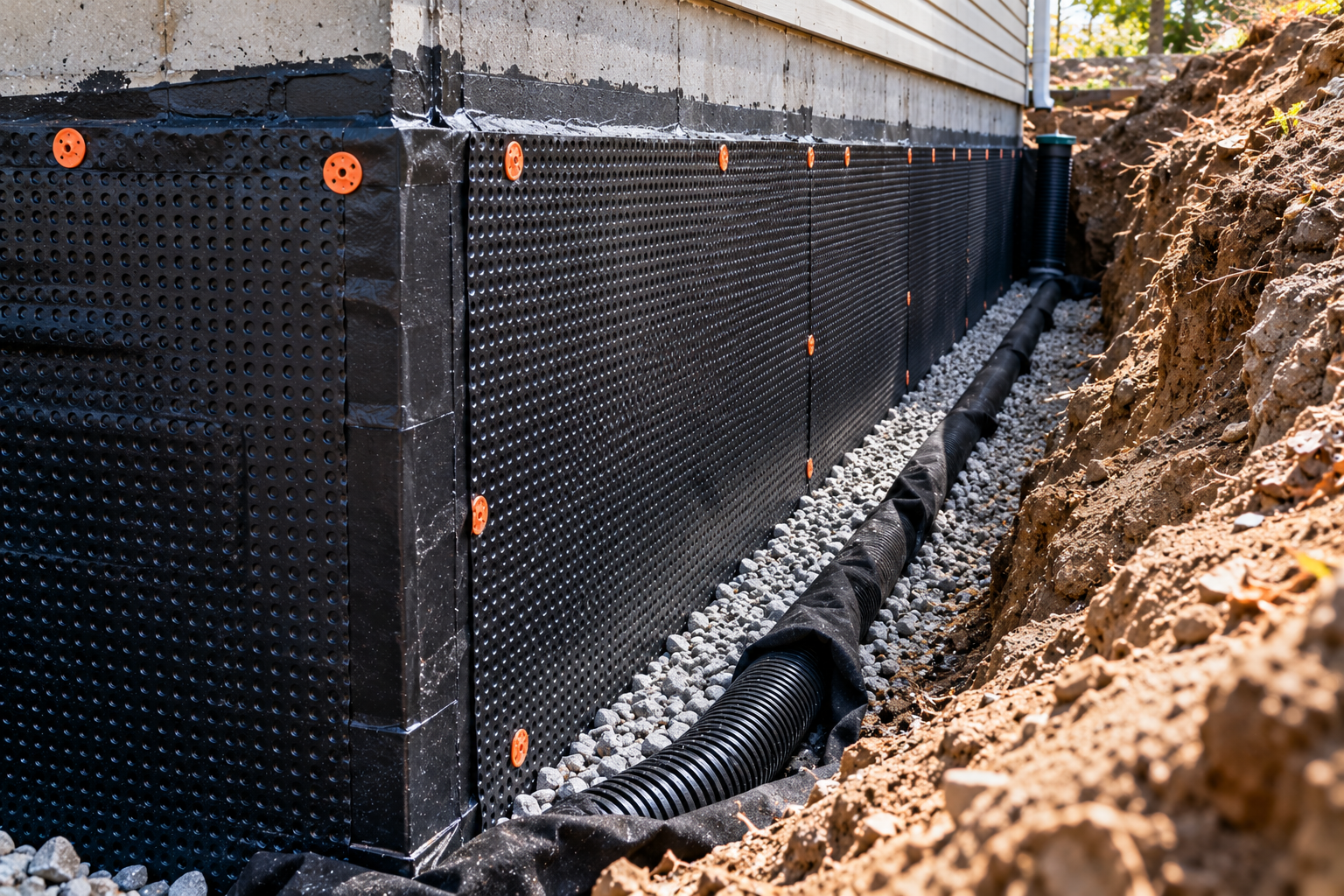
If the test and the timing point to water entry, waterproofing removes the moisture the mold depends on. Growth that has no water source dries out and stops spreading. Concrete holds a lot of water, though, so the wall may take several weeks to dry fully after the leak stops. The system has to keep the wall surface dry, and the options do that to different degrees, as a comparison of basement waterproofing methods shows in more detail.
The main options handle mold risk as follows:
- exterior membrane with new drainage pipe keeps the entire wall dry from the outside, so it suits walls with mold on them or behind them
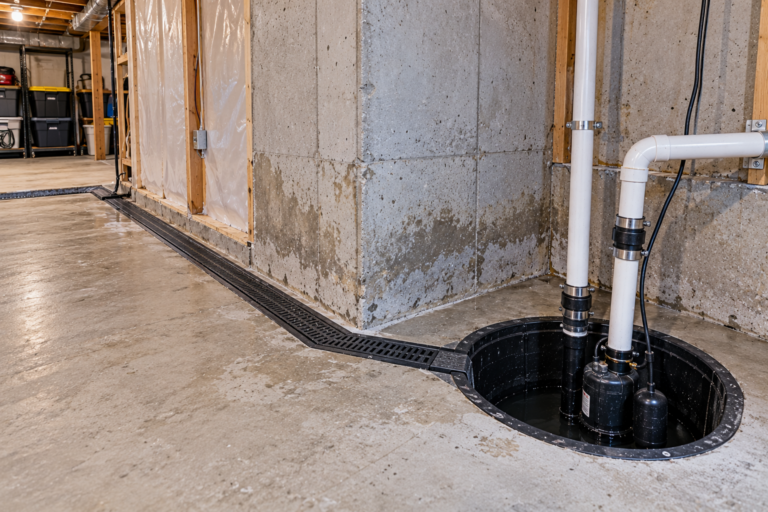
- interior drainage with a sealed sump catches water at the footing, and a dimpled membrane on the wall keeps the inner face drier
- crack injection closes a single leaking crack in poured concrete but does nothing for porous block or stone walls
Interior paint and masonry sealers are the most common shortcut, and the least reliable one. On a wall that keeps getting wet, water builds up behind the coating until it blisters and peels, and spores settle into the gap. Waterproofing basement to prevent mold only pays off when the system stops water where it enters, not where it shows.
Humid Air and Condensation
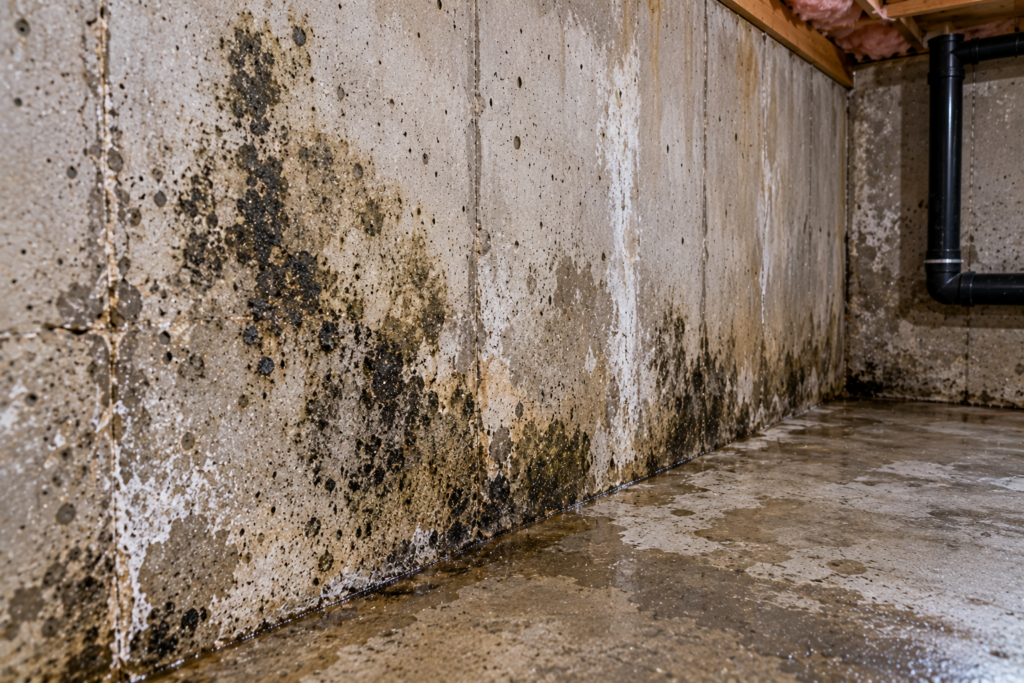
Toronto summers are warm and humid, while basement walls stay cool because the ground around them barely warms up. When moist air meets those walls, cold water pipes and the floor slab, it condenses. Opening basement windows on a hot day makes this worse, since it pulls in more of the air that causes the problem. Waterproofing cannot change any of this, so a dry foundation can still show growth on joists and stored boxes.
For this kind of growth, how to prevent mold in basement rooms comes down to humidity. Health Canada advises keeping indoor humidity at no more than 50% in summer and 30 to 40% in winter. These steps keep it there:
- run a dehumidifier from late spring to early fall and drain it to a floor drain or sump
- check readings with an inexpensive hygrometer instead of guessing
- keep windows closed when outdoor air is hot and sticky
- wrap cold water pipes with foam insulation
- vent the dryer outdoors and hang laundry upstairs
Cold rooms under the front porch are a typical trouble spot in older Toronto houses. They sit under an exterior concrete slab, stay colder than the rest of the basement and often have a blocked vent, so condensation forms there first.
Air movement matters as much as the reading on the meter. Boxes pushed tight against an exterior wall create cold, still pockets where moisture lingers, so a small gap behind stored items helps.
Basement Waterproofing and Mold Removal in the Right Order
Stopping the water does not kill mold that is already growing. It goes dormant, keeps releasing spores and musty odours, and starts again the next time the material gets wet. Health Canada recommends cleaning up visible mold and fixing the moisture behind it, regardless of the type.
A basement waterproofing mold remediation project works best in this sequence:
- fix the water entry first, whether through basement leak repair or a full system
- remove drywall, insulation and carpet that have mold in them
- clean concrete, block and framing that can be saved, wearing an N95 respirator and gloves
- dry the space completely and confirm it with a moisture meter
- rebuild only when the walls stay dry through a few rainfalls
Doing it the other way around wastes money. Fresh drywall over a wall that still seeps gets spotted again within months, which is why basement mold removal and waterproofing are best booked as a single job. Small patches on hard surfaces can be cleaned with dish soap and water, while larger areas, mold inside wall cavities or growth after a flood call for a professional.
Basement Waterproofing Mold Risks Behind Finished Walls
Finished basements hide problems. Drywall, studs and batt insulation sit against the foundation, and any dampness in the concrete moves straight into them. By the time a stain shows on the room side, growth has often covered the back of the panels. Baseboards and carpet edges along exterior walls are worth checking once a year, since seepage reaches them first.
Before finishing, confirm the walls stay dry through a full spring. Rigid foam or closed-cell spray foam against the concrete keeps the inner surface warm, so humid air does not condense behind the wall. Mold-resistant drywall and a gap between the bottom plate and the slab add some margin. If a finished wall already shows signs of trouble, a basement waterproofing mold remediation plan has to include opening the wall, because the source is out of sight.
Exterior foundation waterproofing is usually the better choice under finished space. It keeps the concrete dry without tearing out the floor along the walls, and the interior finishes stay in place.

 CLOGGED OR BROKEN WEEPING TILE