

Water damage to your foundation can lead to expensive repairs if left unchecked. From cracks in walls to standing water, these signs often start small but can escalate quickly. Early detection is key to avoiding structural problems and costly fixes. Here’s a quick summary of the warning signs:
- Cracks in walls and floors: Vertical or diagonal cracks may indicate settling, while horizontal cracks suggest more serious issues like hydrostatic pressure.
- Damp or wet basement walls: Look for dark patches, especially near the floor or cove joint, often caused by poor drainage or saturated soil.
- Efflorescence: White, chalky residue on walls signals water seeping through concrete and leaving mineral deposits.
- Wall stains and discolouration: Brown streaks near the floor or cove joint point to ongoing moisture problems.
- Musty odours and mould growth: A musty smell or visible mould indicates high humidity and hidden water damage.
- Peeling or bubbling paint: Trapped moisture lifts paint and leaves behind mineral build-up.
- Standing water or puddles: Puddles in the basement or near the foundation suggest poor drainage or cracks.
- Structural movement: Bowing walls, uneven floors, or sticking doors signal advanced damage.
Key takeaway: Addressing these signs early can save you thousands in repairs. Simple fixes like sealing cracks or improving drainage cost $200–$1,000, while neglecting serious issues can lead to bills upwards of $20,000. Pay attention to both interior and exterior signs to protect your home.
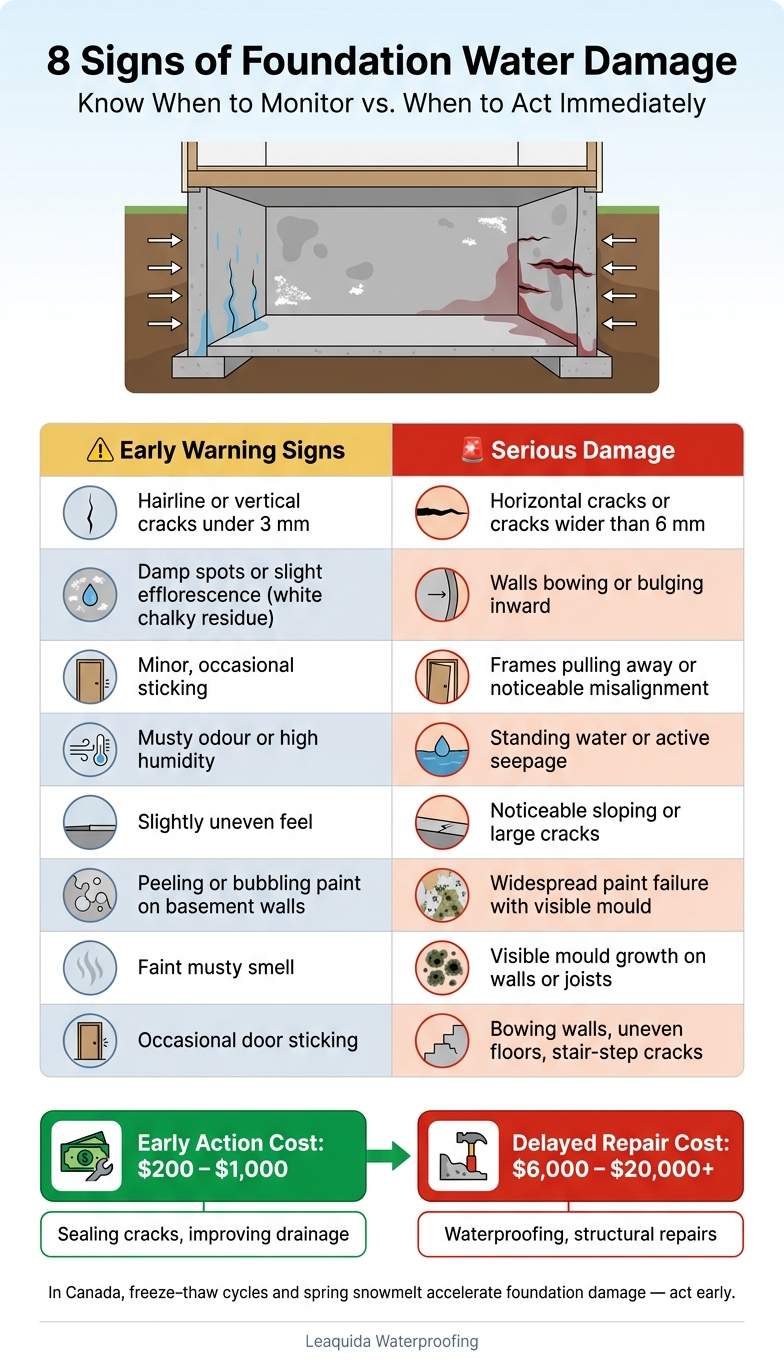
8 Signs of Foundation Water Damage: Early Warning vs. Serious Damage
How to Recognize & Fix Water Intrusion | Basement Waterproofing Guide
sbb-itb-5761e20
1. Cracks in Walls and Floors
When you notice cracks in your basement walls, floors, or exterior surfaces, it’s often a telltale sign of water damage.
Vertical and diagonal cracks usually form due to natural settling of the structure or the freeze–thaw cycle. Here’s how it works: water seeps into a small crack, freezes, expands, and forces the crack to grow over time. On the other hand, horizontal cracks are more concerning – they’re caused by hydrostatic pressure from water-saturated soil pushing against the foundation, which can weaken the wall’s strength.
For cracks 1/8 inch (3 mm) or smaller, you can typically seal them yourself. But if a crack is wider than 1/4 inch (6 mm), it’s time to call in a professional. If you notice damp concrete around these cracks after heavy rain, it’s a clear sign that water is actively infiltrating your foundation.
“Foundation cracks paired with damp concrete after heavy rain confirm you have a developing moisture problem that can worsen without prompt action.” – Dan Simms, Contributing Writer, Angi
Ignoring even small cracks can lead to bigger problems. Over time, water seepage can cause mould growth, wood rot in floor joists, and expensive structural repairs. For poured concrete walls, polyurethane injection is a popular fix. This method works because the material expands deep into the crack and stays flexible, even if the foundation shifts slightly. Repair costs for foundation cracks typically range from $500 to $1,200 per crack, depending on how accessible the area is.
Understanding the types of cracks and their causes can help you decide when to take action and whether to bring in a professional for repairs.
2. Damp or Wet Basement Walls
Damp or wet basement walls often show up as dark, wet-looking patches on concrete or masonry surfaces. After heavy rain or spring snowmelt, you might notice water trickling down the walls. These patches are usually found near the floor or at the cove joint – where the wall meets the floor – because water pressure tends to build up in these areas.
The main issue here is hydrostatic pressure. When the soil around your foundation becomes overly saturated, it pushes water through weak spots like hairline cracks, porous surfaces, or the cove joint.
“Hydrostatic pressure pushes water through any weak point in your walls.” – ECO Seal Canada
This problem is particularly common for Canadian homeowners in the spring. Rapid snowmelt paired with frozen ground that struggles to absorb water can create a surge of pressure against the foundation. Poor exterior drainage – like clogged gutters or a yard sloping toward the house – only makes matters worse by causing water to pool near the foundation.
Ignoring damp walls can lead to serious problems. Moisture can rot wood, encourage mould growth, warp walls, and even increase energy costs. As Alecsandro Moraes of VMB Group points out, “When hidden water damage goes unchecked, what begins as a small seepage can escalate into major structural problems.”
To tackle this issue, start with some basic fixes. Ensure the soil around your home slopes at least 15 cm away from the foundation over the first 3 m. Clear out gutters and extend downspouts so water drains at least 3 m away from your home. For more persistent issues, professional solutions like interior waterproofing systems with drainage channels and a sump pump, or exterior waterproof membranes, offer reliable long-term protection. Once the source of the moisture is addressed, running a dehumidifier can help remove any leftover dampness and prevent mould from developing. These steps will also help avoid further wall staining and structural problems, which are discussed in later sections.
3. Efflorescence
Efflorescence is that white, chalky residue you might notice on basement walls. While it may seem harmless at first glance, it’s actually a clear indicator that water is moving through your foundation. This powdery deposit forms when water seeps through concrete or masonry, evaporates at the surface, and leaves behind mineral salts. ECO Seal Canada describes it this way:
“White, chalky deposits on your basement walls are called efflorescence. They form when water seeps through concrete or masonry and leaves mineral salts behind.”
Interestingly, you don’t always need to see water itself to know there’s an issue. The presence of efflorescence is often enough to confirm that moisture is passing through your foundation. This makes it a vital clue when inspecting for potential water damage.
If ignored, the problem can escalate. Persistent moisture can weaken the concrete, damage interior finishes, and even encourage mould growth. Efflorescence may also signal the early stages of spalling, where the concrete surface starts to chip and flake as water damage worsens.
To tackle this, begin by addressing the root cause. Seal any cracks using polyurethane injections, which expand to block water from entering. After sealing, clean off the mineral deposits and apply a moisture-resistant coating to the wall. Improving exterior drainage is also crucial to reduce the pressure that forces water through the foundation. These steps, combined with interior basement waterproofing methods discussed later, can help safeguard your foundation. Stay tuned for more signs to fully evaluate your home’s condition.
4. Wall Stains and Discolouration
After spotting cracks or damp walls, water stains on foundation walls often signal deeper moisture problems. These stains usually appear as brown streaks near the lower sections of basement walls. Pay close attention to areas like the cove joint – the seam where the wall meets the floor – and around window frames, as these spots often attract moisture. Unlike efflorescence, which leaves a white, powdery residue, these stains are caused by dirt, minerals, and organic material carried in by water as it seeps through the concrete.
The culprit? Excess moisture. Water is forced through tiny pores and cracks in the foundation, often driven by hydrostatic pressure from saturated soil. This pressure increases during heavy rain or when snow melts in the spring. Poor exterior drainage only makes things worse, allowing water to pool and add stress to the foundation.
If left untreated, these stains can signal ongoing damage. Persistent moisture weakens concrete, promotes mould growth, and can lead to wood rot in nearby structural elements like floor joists and support beams. As ECO Seal Canada explains:
“When basement paint starts peeling, blistering, or showing dark stains, moisture is almost always the cause. Water seeps through the wall and gets trapped behind coatings, causing them to fail.”
Addressing the issue requires fixing the source of the problem, not just the surface. Start by sealing the entry point – polyurethane crack injections are a common solution. Once the leak is resolved, remove any damaged paint, clean the wall thoroughly, and apply a moisture-resistant coating. Beyond these repairs, ensure proper exterior drainage and soil grading to minimize pressure against the foundation. Repair costs vary, typically ranging from $200 to $1,000, while full waterproofing can average around $6,000.
Avoid the temptation to simply repaint over stains. This only hides the visible signs, while the moisture and damage persist beneath the surface. After addressing the stains, check for musty odours or mould growth to evaluate the extent of moisture intrusion. These steps are crucial to maintaining a dry and stable foundation.
5. Musty Odours and Mould Growth
A musty smell in your basement is often one of the first signs of hidden moisture. Much like wall stains or damp patches, this odour can signal trouble brewing behind the scenes. Mould typically shows up in areas with limited air circulation – corners, cove joints, the underside of floor joists, or behind drywall and insulation.
When water seeps through cracks or porous concrete, it increases indoor humidity. Once humidity levels hit 50% or higher, mould and odour-causing bacteria thrive. Dylan Morris, Marketing Director at The Foundation Specialists, puts it plainly:
“This earthy smell is a primary indicator of mold or mildew thriving in damp conditions, even if it’s not yet visible.”
The implications go beyond just unpleasant air. Mould can start forming within 24–48 hours of water exposure, and research shows that about 38% of Canadian homes already have signs of excessive dampness or mould. Over time, unchecked moisture can lead to dry rot – a fungus that breaks down wood components like beams, posts, and floor joists, compromising your home’s structural integrity.
To tackle musty odours, focus on fixing the root cause of the moisture rather than simply masking the smell. Start by sealing any foundation cracks to prevent water from entering (this also helps address other water damage issues). Use a dehumidifier to maintain basement humidity below 50%. If porous materials like drywall or insulation get wet, replace them within 24–48 hours to stop mould from spreading. For larger infestations, professional remediation ensures the mould is fully eliminated. Ignoring these issues can lead to repair costs exceeding $40,000. Also, keep an eye out for peeling or bubbling paint, as this can be another clue pointing to moisture problems.
6. Peeling or Bubbling Paint
If you notice peeling or bubbling paint on your basement walls, it’s a red flag for moisture problems. When water seeps through porous concrete, it gets trapped, lifting the paint and leaving behind crystallized minerals. This is similar to the efflorescence often found on basement walls. Ignoring this issue can lead to further damage and expensive repairs, so tackling the root cause is critical.
As ECO Seal explains:
“When basement paint starts peeling, blistering, or staining, moisture is almost always the cause.”
One major culprit is hydrostatic pressure. When soil around your home becomes saturated, it forces water through even the tiniest cracks in your foundation. Clogged gutters and improperly positioned downspouts, which dump water too close to the house, can make the situation worse.
Unfortunately, many homeowners make the mistake of simply repainting over the damaged area. Without addressing the moisture source, the problem will resurface. Andy Roe, Founder and CEO of Roe Painting, emphasizes this point:
“If you skip the ventilation step, the peeling will come back – no matter how good your paint job is.”
Unchecked moisture doesn’t just ruin paint; it also weakens concrete and encourages mould growth, both of which can lead to costly fixes.
To solve the issue, you need to start at the source. For cracks in poured concrete walls, polyurethane crack injection is a reliable solution. It works by expanding into the crack, creating a durable, flexible seal. Once the leak is sealed, remove any loose paint and mineral build-up, then apply an alkali-resistant primer before repainting. Always test a small area first, waiting seven days to ensure the paint adheres properly before moving on to the rest of the wall.
To prevent future problems, ensure gutters are clear and downspouts direct water at least 3 metres away from your foundation. Also, keep an eye out for standing water or puddles near your home – these can indicate additional foundation issues.
7. Standing Water or Puddles
Discovering puddles in your basement or around your foundation is a clear warning sign of potential problems. Water tends to pool in basement corners, along the floor, in crawl spaces, and near foundation walls. Areas like exterior basement stairwells and window wells are especially vulnerable, particularly if their drains are clogged or left uncovered.
This issue often stems from poor soil grading, clogged gutters, or downspouts that release water too close to your home. In Canada, clay-heavy soils are common and can worsen the problem. These soils absorb and retain moisture, expanding and creating hydrostatic pressure that pushes water against your foundation. Over time, this pressure can force water through the cove joint – where the wall meets the floor – or seep through existing cracks.
“Address water damage as soon as it happens to prevent structural issues and mold growth. Hiring a pro for large leaks can save on more expensive repairs caused by prolonged water exposure.” – Caroline Gilbert, Director, Content & Editorial, Angi
If left unaddressed, standing water can lead to serious consequences like wood rot, concrete spalling, pest infestations, and even walls bowing inward. Repairing foundation water damage typically costs around $6,000, but severe cases requiring full waterproofing can cost between $10,000 and $20,000.
To tackle these issues, start with external fixes: adjust the soil slope around your home, extend downspouts, and clear any debris from drains. For small cracks (up to 3 mm), polyurethane injection is often a good solution. However, larger cracks may need professional evaluation. Once external repairs are made, continue inspecting for any signs of structural movement to ensure the problem is fully resolved.
8. Structural Movement
Structural movement is one of the clearest indicators of advanced water damage. When this happens, it’s no longer just about surface issues – your foundation is at risk.
Some of the most obvious signs include bowing or leaning basement walls, horizontal cracks, and stair-step cracks in brick or block masonry. You might also notice doors and windows that suddenly start sticking, rubbing, or refusing to latch properly – this often points to a shifting structure. Inside your home, watch for sloping or uneven floors, cracks extending from door frame corners, or drywall cracking near openings.
Different types of cracks tell different stories about the severity of the problem:
| Crack Type | Likely Cause | Urgency |
|---|---|---|
| Horizontal crack | Lateral soil or hydrostatic pressure | High – engineer review required |
| Stair-step crack | Differential settlement in masonry | High – inspect if widening |
| Displaced/offset crack | Ongoing foundation shifts | Critical – immediate engineer review |
| Vertical hairline crack | Concrete shrinkage or minor settling | Monitor – repair if leaking |
Recognizing these crack types is crucial because each requires a tailored response to prevent further damage.
Several forces contribute to structural movement, including saturated soil, uneven settling, and frost cycles. These can gradually shift your foundation and weaken its stability.
“The important question is not only ‘How do I seal the crack?’ The better question is: why did the crack form, is it moving, and does it affect the performance of the foundation?” – Abchal Engineers Inc.
If you suspect structural movement, it’s best to avoid any DIY fixes for structural cracks. Covering up active movement can make it harder for professionals to diagnose the root issue. Cracks wider than 6 mm (approximately 1/4 inch) should always be assessed by a structural engineer before repairs begin. Ignoring structural movement can lead to foundation failure, significant property value loss, and repair costs ranging from $6,000 to over $20,000.
Identifying these warning signs early can help you determine when it’s time to call in a professional.
Early Warning Signs vs. Serious Damage
When it comes to water damage, not all signs call for immediate action. Some are early warnings, while others indicate serious structural issues. Understanding the difference can help you address problems before they escalate – and save you a lot of money in the process.
Early warning signs are often subtle and easy to overlook. These might include hairline cracks (less than 3 mm wide), a faint musty odour, efflorescence (that white, powdery residue on basement walls), or a door that occasionally sticks. These hints usually point to minor issues that can often be managed with simple fixes like sealing cracks or improving drainage. Costs for these repairs typically range between $200 and $1,000.
Serious damage, however, is a different story. If you spot horizontal cracks, walls bowing inward, standing water in your basement, visible mould, or noticeably sloping floors, it’s time to call in the experts. These red flags signal major problems that require immediate attention. Repairs for such issues can range from $6,000 to over $20,000, and in some cases, exterior foundation waterproofing might push costs even higher.
Here’s a quick guide to help you decide when to monitor and when to act:
| Sign | Monitor | Act Immediately |
|---|---|---|
| Cracks | Hairline, vertical cracks (under 3 mm) | Horizontal cracks or cracks wider than 6 mm |
| Walls | Damp spots or slight efflorescence | Walls bowing or bulging inward |
| Doors & Windows | Minor occasional sticking | Frames pulling away or noticeable misalignment |
| Moisture | Musty air or high humidity | Standing water or active seepage |
| Floors | Slightly uneven feel | Noticeable sloping or large cracks |
It’s important to remember that foundation problems don’t fix themselves.
“Foundation damage rarely stops on its own – small shifts can become major cracks in a matter of months.” – Modernize
How Water Damages Your Foundation
Water can wreak havoc on your foundation in several ways, and understanding these processes is crucial to recognizing why early warning signs shouldn’t be ignored.
One major culprit is hydrostatic pressure. When the soil around your home becomes saturated – whether from heavy rain, melting snow, or spring thaw – it presses against your foundation walls. This pressure encourages cracks to form and weakens the structure over time. Even tiny gaps in the concrete can allow moisture to seep through, compounding the damage.
“When soil around your foundation becomes saturated with water, it exerts pressure against your home’s walls. This constant pressure can cause cracks, bowing, and even shifting of the foundation itself.” – ServiceMaster Restore
In Canada, the freeze–thaw cycle adds another layer of stress. When moisture in the soil freezes, it expands, exerting upward and lateral pressure on the foundation. As temperatures rise, the thawing soil shifts again, creating a cycle that amplifies the strain. ECO Seal Canada explains, “Vertical, diagonal, or horizontal cracks may start small but often widen over time, especially in Regina’s freeze-thaw climate. Left unsealed, these cracks can lead to serious water problems.”
Soil erosion poses yet another threat. When water washes away the soil supporting your foundation, it destabilizes the base, leading to settlement and uneven shifting.
“Extreme moisture conditions in the soil surrounding your home can rapidly deteriorate its foundation, causing it to shift, buckle, crack, and crumble with time.” – Leaf Home
In regions with clay-heavy soils, the problem can be even worse. These soils swell dramatically when wet, increasing lateral pressure on foundation walls. During dry periods, they shrink, leaving gaps that destabilize the foundation further. This constant swelling and contracting cycle magnifies the stresses on your home’s structure.
Grasping how these processes work is the first step toward identifying and addressing water-related foundation issues. It’s always better to act sooner rather than later.
Exterior Signs of Foundation Water Problems
Foundation water problems often start outside, so it’s important to inspect your property after heavy rainfall. Spotting these early signs can help protect your foundation.
Improper soil grading is a common culprit. If the ground around your home slopes toward the foundation, rainwater will naturally flow in that direction. To prevent this, ensure the soil slopes downward by 15–25 centimetres over the first three metres away from your home.
Clogged gutters and short downspouts are another issue. When gutters are blocked or downspouts discharge water too close to the house, water pools around the foundation. To avoid this, keep your gutters clear and extend downspouts 1.5 to 3 metres from your home.
“If your gutters are clogged or your downspouts are short and lack catch basins, your gutter system may be allowing a lot of water to pool around your home, increasing the pressure on your foundation.” – Leaf Home
Exterior foundation cracks are a clear warning sign. After rainfall, check if the concrete near any cracks feels damp. This is a strong indicator of water seeping in. Small cracks, about 3 mm or less, can often be sealed to prevent further issues. However, cracks wider than 6 mm should be evaluated by a professional. Additionally, chipped parging, the masonry coating that protects your foundation, can expose the concrete to moisture. This can lead to damage from freeze–thaw cycles, worsening the problem quickly.
Window wells and landscaping also deserve attention. Debris-filled window wells can trap water, allowing it to seep through basement windows. Similarly, trees or shrubs planted within 60 centimetres of the foundation can retain moisture and disrupt soil stability. These factors can create long-term water damage if left unchecked. Together with interior signs, these exterior indicators provide a more complete understanding of your foundation’s condition.
When to Call a Professional
Some foundation issues can be handled with basic upkeep, but there are warning signs that demand immediate professional attention. For instance, if you spot a crack wider than 6 mm (about 1/4 inch), it’s not something a surface patch can fix – this warrants a structural inspection. Horizontal cracks are especially concerning since they suggest lateral soil pressure against the foundation, which can escalate into severe problems if ignored.
Bowing or bulging walls are another red flag, often caused by hydrostatic pressure forcing the wall to shift. Similarly, doors or windows that suddenly stick, uneven flooring, or recurring water in specific areas point to structural issues rather than cosmetic ones.
Even your utility bills can hint at hidden problems. A sudden 20% increase in your water bill might indicate an unseen leak affecting your foundation. To check, try a 30-minute water meter test – if the reading changes, it’s time to bring in an expert.
“A hidden leak is not a static problem – it grows worse with every passing day.” – HYDROPRO Team
When these issues arise, Leaquida Waterproofing offers specialized solutions. For active leaks in poured concrete walls, they use polyurethane crack injection, which expands within the crack to create a flexible seal that adapts to slight foundation shifts during freeze–thaw cycles. Their services also include foundation structural repairs, interior and exterior waterproofing systems, sump pump installations, and drainage upgrades – all designed to address the structural and moisture concerns mentioned above and protect your foundation from long-term damage. Foundation crack repairs typically cost between $500 and $1,200 per crack, while interior waterproofing is priced at $70 to $120 per linear foot.
Putting off professional help often leads to higher costs. Fixing extensive water damage and major structural issues can range from $5,000 to over $50,000. Addressing problems early is almost always the more cost-effective choice.
How to Prevent Foundation Water Damage
Preventing foundation water damage is almost always less expensive than repairing it. Regular seasonal maintenance is especially important in Canada’s challenging freeze–thaw climate.
Start with proper grading. The ground around your home should slope away from the foundation, not toward it. Over time, patios, walkways, and driveways can settle, creating slopes that direct water toward your walls. Check your grading every fall, especially after the summer, and fix any low spots by adding compacted soil. For homes built on expansive clay – common in Ontario – managing moisture levels is even more critical. Prolonged dryness can cause the soil to shrink, making your foundation less stable. Pairing proper grading with other maintenance steps helps keep water out.
Next, pay attention to your gutters and downspouts. As ServiceMaster Restore explains:
“If [gutters] are full, a big rain will dump sheets of water over the side of the house and straight into the ground, saturating it further and even eroding the ground that supports your foundation.”
Clean your gutters at least once a year – ideally before winter and again after the spring thaw. Make sure your downspouts extend at least 3 metres away from your home. If your downspouts connect to weeping tiles or French drains, you might want to disconnect them to ease the load on your drainage system.
When it comes to waterproofing your foundation, the materials you use make a big difference. Traditional tar-based coatings typically last only 10–15 years in Canada’s climate. On the other hand, elastomeric membranes, like self-adhesive “Blueskin” products, are designed to stay flexible during extreme temperature changes and can last over 40 years. If you’re planning to waterproof your foundation, aim for the period between mid-May and late October, when the ground is thawed, and the membranes can properly adhere.
A seasonal maintenance routine is essential for long-term protection. Here’s a simple guide to follow:
| Season | Action | Why It Matters |
|---|---|---|
| Spring | Clear snow and ice from the foundation perimeter | Prevents seepage during rapid thaws |
| Spring & Fall | Clean gutters and downspouts | Stops overflow from saturating soil near footings |
| Summer | Check for soil shrinkage or new cracks | Dry spells can destabilise clay-heavy soils |
| Fall | Inspect grading of patios and walkways | Settling can create slopes directing water inward |
| Winter | Keep nearby city storm drains clear | Prevents street-level water backup during melts |
Lastly, don’t overlook small but important steps, like installing flood shields on basement windows and keeping window wells free of snow and debris. These simple measures can make a big difference when heavy rain or rapid snowmelt occurs.
Conclusion
Spotting these eight warning signs – cracks, damp walls, efflorescence, wall stains, musty odours, peeling paint, standing water, and structural movement – early on can save you from skyrocketing repair costs. The longer you wait, the worse the damage gets.
In Canada, where freeze–thaw cycles, spring snowmelt, and heavy rainfall constantly challenge foundations, catching problems early isn’t just wise – it’s crucial. Even minor issues, like a faint musty smell or a slight trace of efflorescence, should never be ignored.
“Address water damage as soon as it happens to prevent structural issues and mould growth. Hiring a pro for large leaks can save on more expensive repairs caused by prolonged water exposure.”


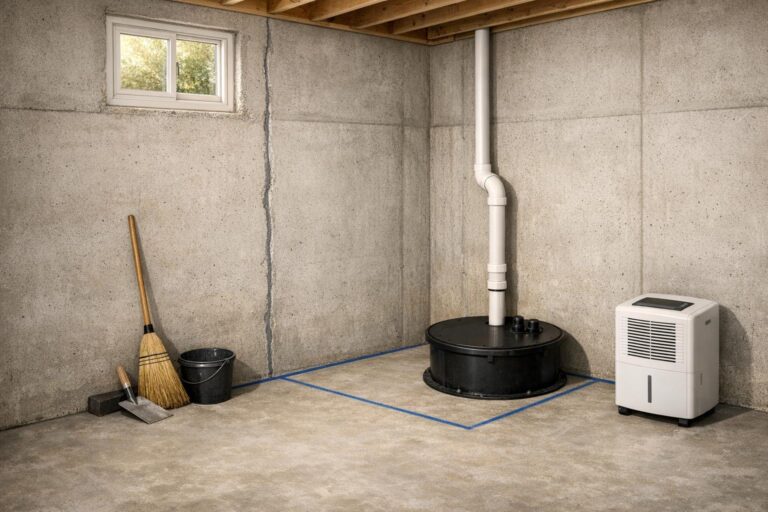

 CLOGGED OR BROKEN WEEPING TILE