

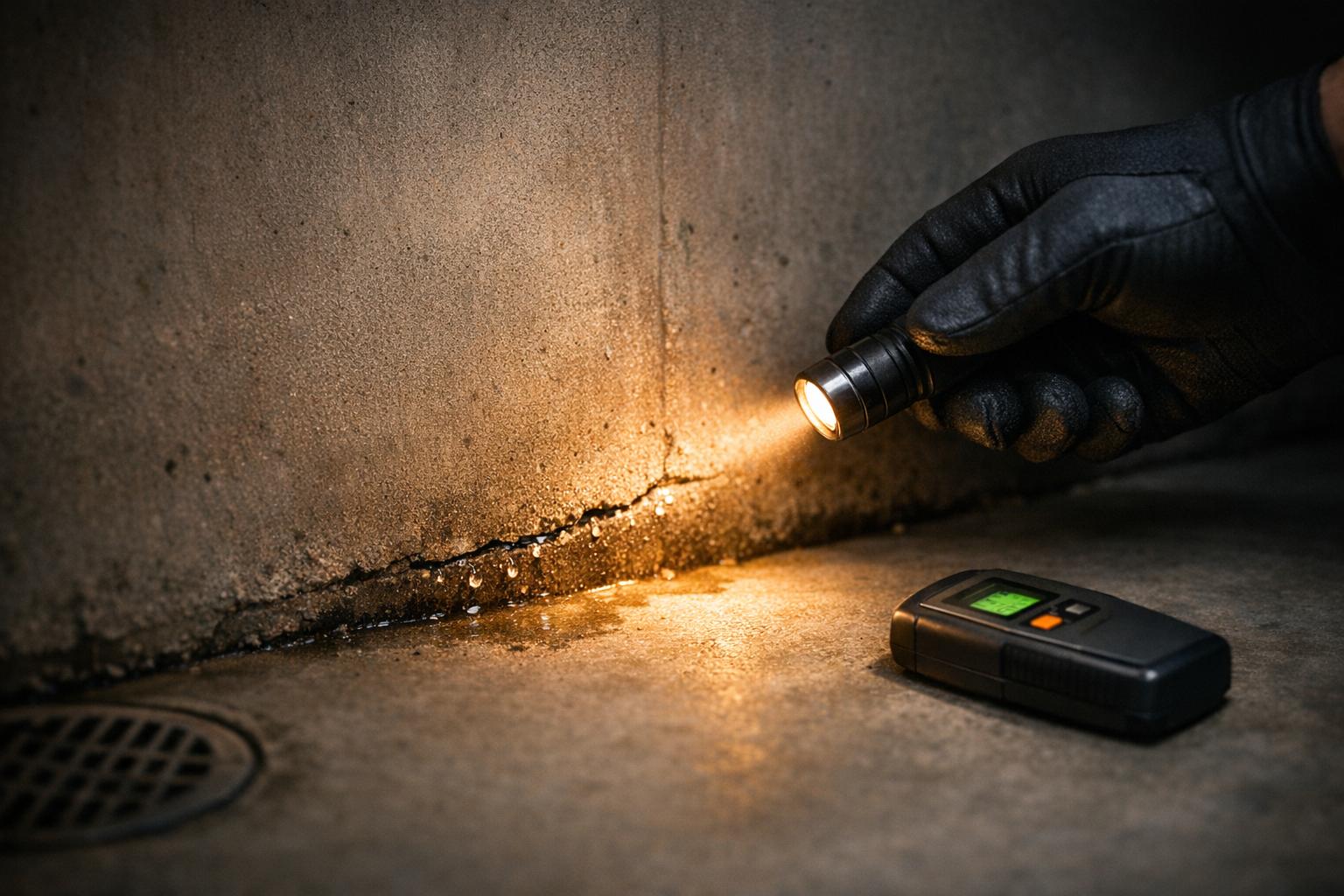
Regular basement inspections can save you thousands in repair costs and protect your family’s health. In Canada, 60% of homes face moisture issues due to factors like freeze-thaw cycles, heavy rainfall, and clay-rich soil. Left unchecked, these problems can lead to water damage, mould growth, and foundation instability. Early detection helps address small issues – like cracks or musty odours – before they escalate into expensive repairs.
Key takeaways:
- Moisture risks: Hydrostatic pressure and poor drainage are common culprits.
- Health concerns: Mould can form within 24–48 hours in damp environments.
- Cost savings: Fixing a small crack costs $500–$1,200, while major repairs can exceed $10,000.
- Inspection frequency: Annual checks are recommended, especially in spring and fall.
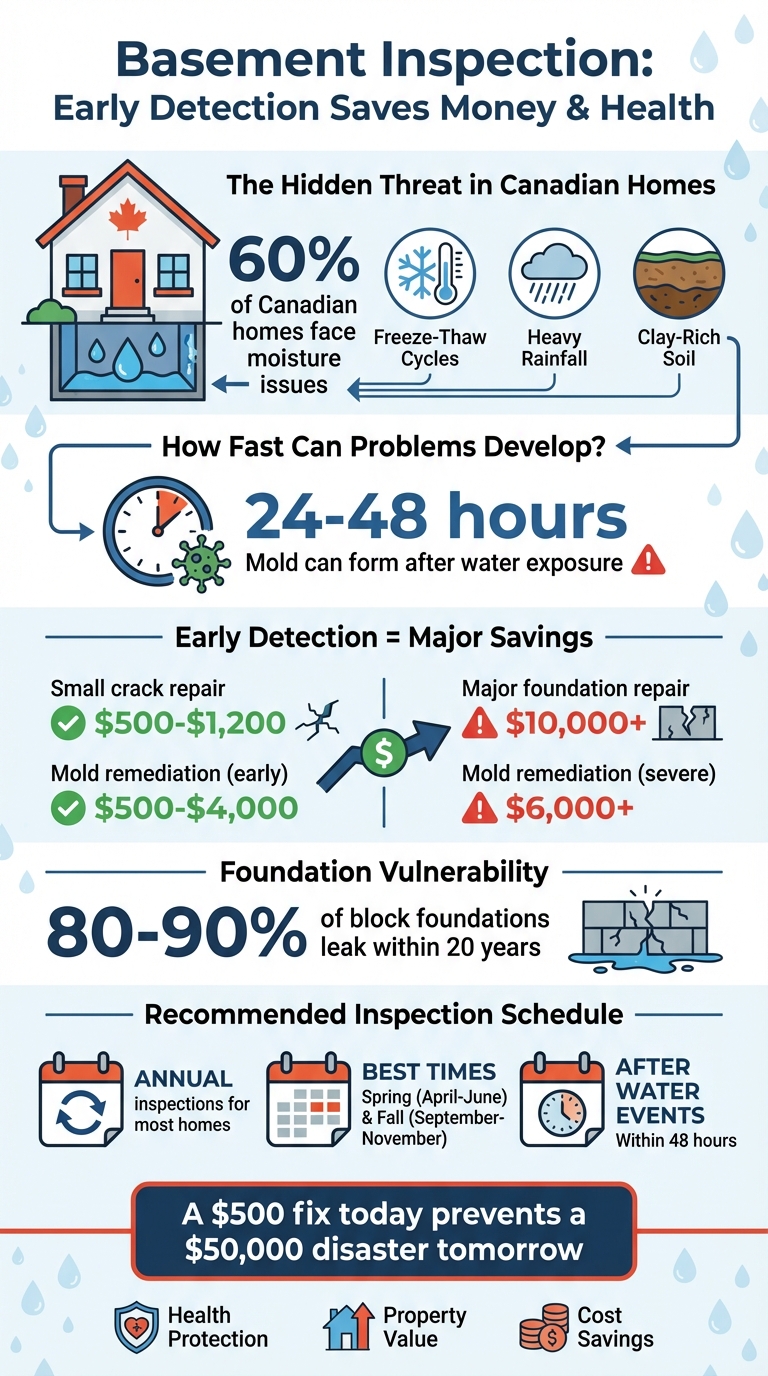
Basement Inspection Cost Savings and Health Risks Infographic
How Building Inspectors Detect Hidden Moisture Issues
sbb-itb-5761e20
Common Basement Problems Homeowners Face
Understanding the typical issues basements encounter highlights the importance of regular inspections. In Canada, basements face unique challenges due to the freeze-thaw cycle, heavy spring rains, and clay-rich soil. These factors contribute to moisture problems in about 60% of homes. Here are some of the most common problems to keep an eye on.
Water Leaks and Seepage
Water often sneaks into basements through foundation cracks, porous concrete, or the cove joint – the seam where the walls meet the floor. When soil becomes saturated during spring thaws or heavy rains, hydrostatic pressure forces water through these weak spots. If you notice wet streaks higher on the walls, it’s likely water is entering through cracks or gaps. On the other hand, pooling at the base without any visible trail often points to water being pushed up from under the slab through the cove joint. Homes with block foundations are especially vulnerable, with an 80% to 90% chance of leakage within 20 years. Considering Toronto experienced over a metre of rainfall in 2024 alone, proper grading and drainage systems are essential to avoid water damage.
Beyond structural issues, moisture also introduces serious health risks.
Foundation Cracks
Concrete foundations are under constant stress, which can lead to cracks. In winter, water seeps into small crevices, freezes, and expands, making the gaps larger with each freeze-thaw cycle. Clay soil, known for its expansion and contraction, and general soil movement add to the strain. Even brand-new homes aren’t exempt – most new concrete basements develop at least two cracks.
Horizontal cracks are a red flag for significant pressure against the foundation, while vertical or diagonal cracks, often accompanied by efflorescence (a white, powdery residue), suggest moisture intrusion and uneven settling.
Mold and Mildew Growth
Basements with high humidity levels are breeding grounds for mold, which can form within 24 to 48 hours of water exposure. The problem doesn’t stay confined to the basement. The "stack effect" allows air, along with humidity and mold spores, to rise into the rest of the house. This can lead to respiratory problems, frequent coughing or sneezing, and worsening asthma symptoms – issues that are especially concerning for children and seniors.
"A damp basement is a health hazard you can’t afford to ignore." – Groundworks
Keeping basement humidity below 55% to 60% with a dehumidifier can help manage mold growth. However, if water continues to seep in due to cracks or drainage problems, the damp environment will persist. This not only attracts dust mites but also causes gradual damage, such as rotting wooden supports and corroding metal fixtures.
Poor Drainage Around the Property
Water pooling near the foundation is often a sign of poor drainage rather than a direct foundation issue. Improper grading that directs water toward the house, clogged gutters, or downspouts that release water too close to the foundation can all lead to trouble. Saturated soil builds hydrostatic pressure, forcing water through every crack and seam it can find.
To prevent this, ensure the ground slopes away from the house at a rate of 1.3–2.5 cm per linear foot. Downspouts should discharge at least 2.4 metres away from the foundation, and window wells should sit at least 10 centimetres above grade while remaining debris-free. These small exterior adjustments can go a long way in preventing costly interior water issues, including mould and structural damage.
Why Early Detection Is Critical
Spotting basement problems early can save you from expensive repairs and protect your family’s well-being. What might begin as a tiny crack or a faint musty smell can quickly spiral into major issues like foundation instability, mould growth, and repair bills that climb into the thousands. Acting promptly is far more affordable than delaying repairs, which could lead to extensive mould remediation, significant foundation fixes, and even a drop in your property value. These risks highlight the importance of timely inspections to minimize both costs and health concerns.
"Basement water issues rarely fix themselves – and the longer they’re left unaddressed, the more damage they can cause." – Classic Waterproofing
For example, addressing cracks in your basement floor with an epoxy injection may cost between $500 and $1,200, but ignoring it could lead to repairs exceeding $10,000 in the future. Similarly, catching dampness before mould becomes visible typically costs between $500 and $4,000, while severe cases can go beyond $6,000. Tackling these issues early not only protects your wallet but also shields your family from respiratory issues and asthma triggers.
Canada’s climate makes regular inspections a must. Spring snowmelt and heavy autumn rains create hydrostatic pressure that pushes water through weak spots in your foundation. On top of that, the temperature difference between cold exterior walls and warm indoor air can cause condensation, which fosters mould growth. Scheduling inspections during the spring thaw and after heavy fall rains can help you identify and address problems before they worsen.
Watch for early warning signs like efflorescence – a white, chalky residue on concrete walls that signals moisture movement – or a damp, earthy smell, which might indicate moisture buildup even if the walls look dry. Spotting these clues early allows you to take action, such as improving waterproofing or interior vs. exterior drainage systems, to protect your foundation and avoid bigger headaches down the road.
What Professionals Look for During a Basement Inspection
A basement inspection isn’t just a quick glance around the room. Professionals rely on specialized tools and techniques to uncover hidden issues – whether they’re behind walls, under floors, or lurking in drainage systems. This thorough process ensures a detailed evaluation.
Visual Foundation and Wall Assessments
One of the first steps is inspecting the foundation walls. Professionals look closely for crack patterns, as these can reveal different levels of concern. For example, hairline vertical cracks are often harmless signs of settling. But horizontal cracks or stair-step patterns in block foundations suggest structural pressure that needs immediate attention.
They also examine areas prone to water seepage, such as tie rod holes, honeycombing (small voids in concrete), and gaps around utility pipes. Signs of moisture, like efflorescence (white, chalky residue), indicate water is migrating through the foundation. Other red flags include bulging or bowing walls, rusted steel posts (Lally columns), and rotting wood components like sill plates and floor joists. Even secondary signs like peeling paint, warped tiles, or rusted supports are carefully noted.
A key focus is the cove joint – where the wall meets the floor. Water pooling here often points to groundwater pressure beneath the slab.
Moisture Detection and Mould Sampling
Detecting moisture is another critical part of the inspection. Tools like moisture meters can identify damp areas behind drywall or wood panelling, catching problems before they become visible. Thermal imaging cameras are also used to spot cold areas on walls or floors, as water-saturated materials show different temperature patterns compared to dry ones.
Hygrometers measure relative humidity levels, which should ideally stay between 30% and 50% to prevent mould growth. If mould is suspected, inspectors may collect samples, even from hidden areas like behind drywall or under flooring. A musty smell is often a telltale sign of hidden water damage or mould issues that haven’t been resolved.
These findings help assess whether drainage and sump pump systems are functioning as they should.
Drainage System and Sump Pump Checks
Inspectors pay close attention to the sump pump system, starting with the sump pit. They check for debris, test the float switch to ensure it activates properly, and confirm that the motor is working. Camera systems and flow tests are often used to verify that weeping tiles (perforated drainage pipes) are directing water to the sump or storm sewer effectively. They also inspect discharge pipes for blockages and ensure water is being diverted far enough – at least 2.4 metres – from the foundation.
Battery backup systems are tested to make sure the sump pump remains operational during power outages, especially during storms. Additionally, exterior elements like gutters and downspouts are checked to confirm they’re directing water away from the home.
These detailed inspections allow homeowners to address issues early, protecting the structure of the house from long-term damage.
How Often Should Basement Inspections Be Done?
The frequency of basement inspections largely depends on the age of your home. For newer homes (under 10 years old), inspections every 2–3 years are usually enough. These homes have fewer wear-and-tear issues, though occasional design or construction flaws may still arise. For homes older than 10 years, annual inspections become important to address aging systems and potential foundation issues. Historic homes, given their unique challenges, benefit from inspections twice a year. Sticking to these schedules ensures routine monitoring and timely follow-ups after significant water-related events.
Annual Inspections for Most Homes
For most Canadian homeowners, an annual inspection by a professional is a good rule of thumb. This is particularly crucial in areas like Ontario and Quebec, where freeze–thaw cycles can wreak havoc on building materials. These cycles often lead to cracks that become evident during the spring thaw.
The best times for inspections are:
- Spring (April–June): This helps uncover damage from ice dams, snow loads, and freezing temperatures before summer humidity creates conditions for mould growth.
- Fall (September–November): This allows homeowners to identify and fix vulnerabilities before the harsh winter weather sets in.
"Our experience shows that proper timing prevents costly problems and protects family health." – Mould Inspection Canada
In addition to professional inspections, homeowners should do their own checks between visits. After heavy rain, inspect the basement for damp spots or musty odours. Test the sump pump every six months to ensure it’s working, and keep an eye on small foundation cracks to make sure they’re not worsening.
Additional Inspections After Water Events
Routine inspections aren’t enough when water incidents occur. If your basement floods, a pipe bursts, or heavy snowmelt leads to water pooling, schedule a professional inspection within 48 hours. Acting quickly can prevent mould growth and help avoid costly repairs down the line. These extra checks during critical moments are key to maintaining a safe and dry basement.
Preventive Measures After an Inspection
After identifying problem areas during an inspection, acting quickly can stop small issues from turning into expensive repairs. The right steps will depend on what the inspection uncovered, but most solutions fall into three main categories: waterproofing, foundation repairs, and drainage improvements. Taking these steps helps protect your basement over the long term and reduces the likelihood of future costs.
Waterproofing Solutions
Interior waterproofing focuses on managing water that has already made its way inside. This can involve applying silicate concrete sealers or liquid rubber to walls, using plastic vapour barriers (encapsulation) to control humidity, or installing interior French drains that direct water to a sump pump. While these methods help manage moisture, they don’t stop water from reaching your foundation walls in the first place.
Exterior waterproofing, on the other hand, aims to prevent water from ever touching your basement walls. This involves excavating around the foundation to apply a rubberized bitumen membrane, installing dimple boards to create an air gap, and laying weeping tiles to redirect groundwater. Though more expensive – typically costing $100 to $250 per linear foot compared to $70 to $120 for interior solutions – this approach tackles the root cause of water intrusion.
For areas with higher water risks, a layered defence system may be the best option. This combines interior and exterior methods, such as perimeter drainage systems, sump pumps with battery backups for power outages, and improving exterior grading. Battery backups are especially important during storms, when power failures often coincide with heavy rain.
If waterproofing isn’t enough, addressing structural issues with foundation repairs becomes essential.
Foundation Repairs
Foundation cracks need to be dealt with quickly, and the repair method will depend on the crack’s cause. For individual vertical or diagonal cracks, crack injection with hydraulic cement or pressurized epoxy offers a direct and cost-effective solution. While small cracks can sometimes be temporarily fixed with DIY silicone sealant, larger horizontal cracks or recurring leaks require professional repairs.
"Hydrostatic pressure from the soil is powerful (thousands of pounds). It will eventually bubble, peel, and push right through the paint because the water is still trapped inside the concrete." – Dryshield
Proper drainage is key to preventing new cracks by reducing hydrostatic pressure on your walls. If water pools where the wall meets the floor without leaving streaks above, it’s likely caused by "cove joint" seepage from water pushing up beneath the slab. In such cases, focus on improving interior drainage instead of just sealing walls.
Improving Drainage Systems
Good drainage is vital for keeping water away from your foundation. Start by making grading adjustments to ensure the ground slopes at least 15 centimetres over a distance of 3 metres away from your home. This simple adjustment helps prevent water from pooling near basement walls.
Downspout extensions should direct water at least 1.8 to 3 metres away from your house. Also, make sure gutters are clear of debris and functioning properly during rainstorms.
For homes with ongoing groundwater problems, French drains (perforated pipes surrounded by gravel) can collect and redirect water before it reaches the foundation. Another effective measure is installing a backwater valve, which stops city sewer water from backing up into your basement during heavy rainfall – a concern highlighted when Toronto experienced over a metre of rain in 2024.
If a sump pump is necessary, professional installation averages about $1,200, while DIY units cost between $250 and $375. Test your sump pump at least twice a year by pouring water into the basin to confirm it activates and that the discharge line is clear. These small maintenance tasks can make a big difference in avoiding water damage.
Benefits of Regular Basement Inspections
Cost Savings from Early Repairs
Catching problems early can save you a lot of money. For instance, fixing small foundation cracks or addressing minor moisture issues now is far cheaper than dealing with major repairs later. Foundation repairs alone can exceed $10,000, while professional mold remediation typically runs between $500 and $6,000. On top of that, water damage restoration costs can range from $2,000 to over $7,500. Compare that to professional basement waterproofing, which generally costs between $2,000 and $10,000 – a much smaller expense than emergency repairs.
Regular inspections make it easier to identify issues like minor foundation cracks or bowing walls before they become structural nightmares. Professionals can also pinpoint the cause of moisture problems, whether it’s poor grading, faulty gutters, or plumbing leaks, and implement repairs that last. Early detection even helps prevent termite damage, as damp basement walls often attract these pests. Plus, keeping your basement dry can improve the efficiency of your HVAC system, potentially lowering your energy bills. A dry basement also means less risk of mold, contributing to better indoor air quality.
Health Protection from Mold Prevention
Regular inspections don’t just save money – they also protect your health. A dry basement plays a big role in maintaining good indoor air quality. Thanks to the "Stack Effect", air from the basement rises into the rest of the house, meaning any mold growth below can affect the air you breathe throughout your home. Inspections can catch high moisture levels early, stopping mold before it starts and shielding your family from respiratory issues, allergies, and other health problems.
Unchecked mold exposure can lead to chronic respiratory conditions and worsen asthma. Keeping basement humidity at 55% or lower is key to preventing mold, as well as reducing dust mites and other allergens. If you notice musty or stale odours, it could signal a mold issue that an inspection can address before it spreads further.
Preservation of Property Value
Regular maintenance doesn’t just help you avoid costly repairs – it also protects your home’s value. A dry and well-maintained basement is a major selling point for potential buyers. Keeping records of inspections and waterproofing reassures buyers about the structural integrity of your home, which can boost its resale value. Plus, lenders and insurance providers often require proof that a property is in good condition before approving mortgages or offering lower premiums.
Inspections also ensure that essential systems in your basement – like sump pumps, plumbing, and electrical wiring – are functioning properly and safely. By addressing potential issues early, you’re not only preserving your home’s value but potentially increasing it over time.
Conclusion
Your basement plays a critical role in maintaining your home’s structure and protecting your family’s health. Regular inspections are your first line of defence against expensive repairs, potential health risks from mould, and a drop in your property’s value. Spotting problems early can save you from turning a $500 fix into a $50,000 restoration nightmare.
Take action as soon as you notice warning signs. Simple habits like testing your sump pump regularly and keeping an eye out for new cracks or signs of dampness can go a long way in preventing serious issues.
While self-checks are a good start, professional expertise is essential when problems arise. Leaquida Waterproofing offers a range of services across the GTA, including foundation crack repair, exterior waterproofing, and sump pump installation. They use advanced tools like thermal imaging and moisture metres to detect issues that might be missed during a standard home inspection.
"A small leak can turn into a full-blown waterlogging, which causes significant damage not only to the property but also to the health of the occupants." – Leaquida Waterproofing
FAQs
What are the earliest signs of basement moisture?
The first hints of basement moisture problems often show up as musty or earthy smells, water stains on walls or floors, and a noticeable rise in humidity levels. These subtle signs tend to surface well before more obvious issues like leaks or flooding become apparent.
When is a basement crack an emergency?
A basement crack turns into an urgent issue when it’s large, getting bigger, or letting water seep through. These warning signs could point to structural damage or create openings for water, which might lead to more serious problems like mould growth. Taking care of these cracks quickly is essential to avoid expensive repairs and to keep your home safe.
Should I choose interior or exterior waterproofing?
When deciding between interior and exterior waterproofing, it all comes down to your basement’s specific needs. Exterior waterproofing works by tackling issues outside the foundation, such as seepage, cracks, or poor drainage, to stop water from getting in. On the other hand, interior waterproofing focuses on managing water that has already made its way inside. This often involves tools like sump pumps and drainage systems to control moisture and reduce the risk of mould.
For many homeowners, combining both methods offers the best protection. It’s always a good idea to consult with experts to figure out the right solution for your home.
 CLOGGED OR BROKEN WEEPING TILE