
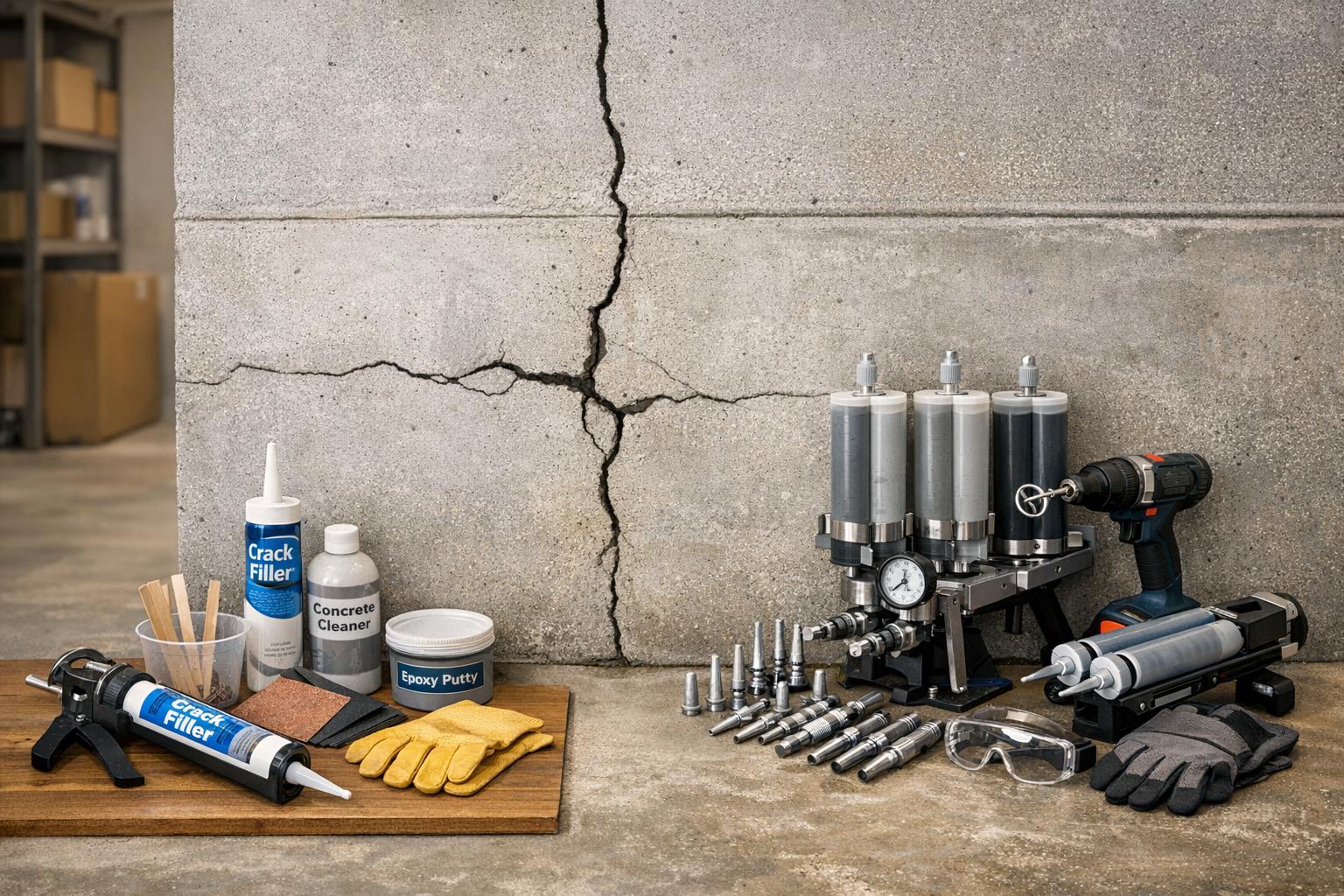
Not sure whether to fix foundation cracks yourself or hire a professional? Here’s what you need to know:
- DIY repairs are best for small, stable cracks (under 3 mm) that are dry and not growing. Costs range from $75 to $225 for kits, but these fixes typically last only 5–10 years and lack warranties.
- Professional repairs are recommended for larger cracks (over 6 mm), horizontal cracks, water leaks, or signs of structural movement. Costs start at $500 per crack and often include warranties lasting 10 years to a lifetime.
Key factors to consider:
- DIY is cheaper but risks failure if underlying issues like soil pressure or drainage problems aren’t addressed.
- Professionals use advanced techniques (e.g., polyurethane injection) and provide long-term solutions.
Quick tip: If a crack can fit a credit card or shows signs of spreading, call an expert. Canadian weather and soil conditions often make DIY repairs temporary at best.
Types and Causes of Foundation Cracks in Canada
Common Crack Types and What Causes Them
In Canada, the unique environmental conditions present specific challenges for foundations, and the types of cracks often reveal their underlying causes. Let’s break down the most common types:
Hairline or shrinkage cracks are extremely narrow – usually less than 1.5 millimetres wide – and occur as concrete dries and cures. This is a natural process, with concrete shrinking approximately 3 mm for every 6 metres during curing. These cracks are mostly cosmetic and don’t compromise structural integrity.
Vertical cracks run straight up and down and are usually caused by minor settlement or shrinkage. Unless these cracks widen beyond 3 to 6 millimetres or taper significantly at the top, they’re generally not a structural concern.
Horizontal cracks, which often appear below the frost line, are a red flag for structural issues. According to Matt Jaglowitz, P. Eng from Exactus Engineering:
Horizontal cracks in foundation walls are more serious than vertical ones… and often indicate significant structural problems.
These cracks are usually caused by hydrostatic pressure or heavy soil pushing against the foundation wall.
Diagonal cracks, which run at angles between 30° and 75°, suggest differential settlement – where one part of the foundation sinks faster than the other. Meanwhile, stair-step cracks are specific to brick or concrete block foundations, following the mortar joints in a zigzag pattern. Both diagonal and stair-step cracks often point to settlement issues or soil movement caused by moisture changes.
How to Assess Crack Severity
Identifying the type of crack is just the first step. Next, you’ll need to evaluate its severity. A simple coin test can help: if a crack is wide enough to fit a coin, it’s time to call an expert. Cracks wider than 6 millimetres are almost always structural and require immediate attention.
The direction of the crack also provides clues. For example, vertical cracks that widen at the top may indicate a cracked foundation footing or severe differential settling. Other warning signs of structural issues include cracks wide enough for a coin, sticking doors, sloping floors, or gaps in walls.
To monitor if a crack is actively growing, mark its endpoints with a pencil or place tape across it. If the tape tears or the crack extends beyond your pencil mark, it’s a sign that the foundation is still shifting and needs professional repair. Additionally, water seepage through any crack is a sign of hydrostatic pressure, which cannot be resolved with surface sealants alone.
How Canadian Weather Affects Foundation Cracks
Canada’s weather plays a significant role in aggravating foundation cracks. Freeze–thaw cycles are particularly harsh on foundations. When water in the soil freezes, it expands, causing "frost heave" that lifts foundations and creates horizontal cracks. The spring thaw often worsens these problems.
In areas with clay-heavy soils, such as parts of Ontario, the soil expands when wet and contracts during dry periods. This constant movement can exert lateral pressure or cause the foundation to settle unevenly, leading to cracks. Even trees near your foundation can contribute to the problem. For instance, a 9-metre-tall tree with a 30-cm diameter can absorb up to 568 litres of water daily during midsummer, causing uneven soil shrinkage near the foundation.
To stay ahead of these issues, inspect your foundation twice a year, ideally during the spring thaw and fall. Early detection can help you determine whether a quick DIY fix will work or if professional repairs are necessary. Regular checks can save you from more extensive – and expensive – repairs down the line.
DIY Foundation Crack Repair: Methods, Costs, and Risks
When DIY Repairs Make Sense
DIY repairs are a practical option for smaller cracks – specifically hairline cracks (less than 1.5 millimetres wide) and thin vertical cracks in poured concrete walls. These are often found in unfinished basements where appearance isn’t a major concern. If a crack is between 1/16 and 1/8 inch wide, stays stable over several months, and doesn’t show signs of moisture, it’s typically safe to repair on your own.
However, cracks wider than 6 millimetres, horizontal cracks, stair-step patterns, or any crack actively leaking water should be examined by a professional. For example, a 1/16-inch vertical crack is common in homes that are 2–3 years old, making it a manageable DIY task. To ensure the crack isn’t growing, take photos every few weeks with a millimetre ruler placed next to it. If the crack extends past your reference points, it could indicate ongoing foundation movement, which requires professional intervention rather than just a surface patch.
Knowing when a DIY approach is appropriate helps you move forward with the right materials and budget in mind.
DIY Repair Materials and Costs
If you’ve determined that a DIY repair is suitable, the next step is gathering the necessary tools and materials. In Canada, foundation crack repair kits generally cost between $75 and $225. For instance, the Sika Crack Injection Kit is available for around $90 to $115 at major retailers. Larger kits designed to handle 10 to 20 feet of cracks are priced at $230 to $390, while smaller kits typically cover 8 to 10 feet of a single crack.
You’ll primarily choose between two materials: polyurethane foam or epoxy. Polyurethane foam is ideal for non-structural cracks that leak, as it expands to fill voids and adheres to damp surfaces. Epoxy, on the other hand, is better for dry, structural cracks since it bonds the concrete together with strength that often surpasses the original material. Most kits include injection ports, two-part resin or foam, a surface seal or hydraulic mortar, and sometimes tools like a caulking gun and wire brush. However, you may need additional tools such as a hammer and chisel to widen the crack into a “V” shape for better material penetration, as well as a glue gun to secure the injection ports.
Begin by cleaning the crack with a wire brush to remove debris. Install injection ports every 6–12 inches along the crack, spacing them closer together for hairline cracks. Allow the surface seal to cure completely – often for about 24 hours – before using high-pressure injection. Keep in mind that many repair materials shouldn’t be applied if temperatures drop below 4°C or rise above 35°C.
Risks and Drawbacks of DIY Repairs
It’s important to note that sealing the surface crack alone won’t address deeper structural issues, which can be caused by factors like soil movement or hydrostatic pressure – both common in Canada’s challenging climate. As KC Waterproofing puts it:
DIY for foundation repair is like sweeping the actual foundation problem under the rug. You may be able to hide the problem temporarily, but over time, it will develop into a bigger problem.
Professional contractors often use two to three times the amount of material included in standard DIY kits to ensure a thorough seal. Renco Home Improvements has observed:
The most common reason DIY repairs fail is when the cavity behind the foundation crack is large and has multiple points of failure.
If a DIY repair fails, you may end up needing professional exterior excavation and waterproofing, which can cost $5,000 or more.
Another consideration is warranty coverage. DIY repairs don’t come with any guarantees, while professional services often include transferable warranties that range from 25 years to a lifetime. Amateur repairs can also raise red flags during home inspections, potentially leading to lower offers, negative reports, or even the need for professional certification before selling the property. Additionally, poorly executed repairs can trap water, allow radon gas to seep in, or encourage mould growth. DIY fixes typically last 5 to 10 years, compared to professional repairs, which can last 25 years or more.
These potential risks highlight the importance of carefully evaluating whether a DIY repair is the right choice or if professional expertise is needed.
Professional Foundation Crack Repair in Canada
When Professional Help Is Needed
If you notice cracks wider than 6 millimetres (1/4 inch), horizontal cracks, or cracks that actively leak water, it’s time to call in a professional. Other warning signs include sticking doors or uneven floors, which may point to foundation movement. Horizontal cracks, in particular, signal significant soil pressure that could jeopardize the structure’s stability. If a crack noticeably widens within 24 hours, immediate professional assessment is crucial. Acting quickly ensures the problem is properly diagnosed and the best repair method is chosen.
Professional Repair Methods and Techniques
At Leaquida Waterproofing, contractors rely on advanced techniques like high-pressure injections using epoxy or polyurethane to create watertight seals. For structural cracks, high-tensile epoxy is applied to restore the wall’s strength, often surpassing the original concrete’s durability. When dealing with active leaks, polyurethane foam is injected under pressure. This foam expands to fill gaps and solidifies into a flexible seal capable of accommodating minor shifts.
Beyond treating the cracks, professionals also investigate underlying causes such as poor drainage, unstable soil, or high water tables. Solutions may include fixing gutter and downspout issues, installing exterior drainage systems, or reinforcing the foundation with steel or helical piers if significant soil settlement is detected. Interior injection methods often eliminate the need for costly exterior excavation, with most repairs completed within one to two days.
Professional Repair Costs and Warranties
The cost of professional repairs varies depending on the severity of the issue. Interior injections typically range from CAD $500 to $1,200 per crack, while more complex repairs can reach up to $5,000. Exterior excavation costs between $1,400 and $3,000 per crack, and full waterproofing is priced at CAD $140–$290 per linear foot. For major structural work, such as underpinning or foundation stabilization, costs can climb to $10,000–$30,000 or more, depending on the project’s scope.
One of the key advantages of professional repairs is the warranty protection they provide. Many contractors in Canada offer lifetime transferable warranties for non-structural repairs and 10-year warranties for structural fixes. As Groundworks explains:
Foundation repair is more than just a fix – it’s an investment in your home’s long-term safety, value, and livability.
These documented repairs not only meet lender requirements but also help maintain your home’s market value. Ignoring foundation issues could lead to a 10–15% drop in value, making professional intervention a smart choice for protecting your investment.
sbb-itb-5761e20
How To Fix a Concrete Foundation Crack | This Old House

DIY vs Professional Repair: Which Option Is Right for You?
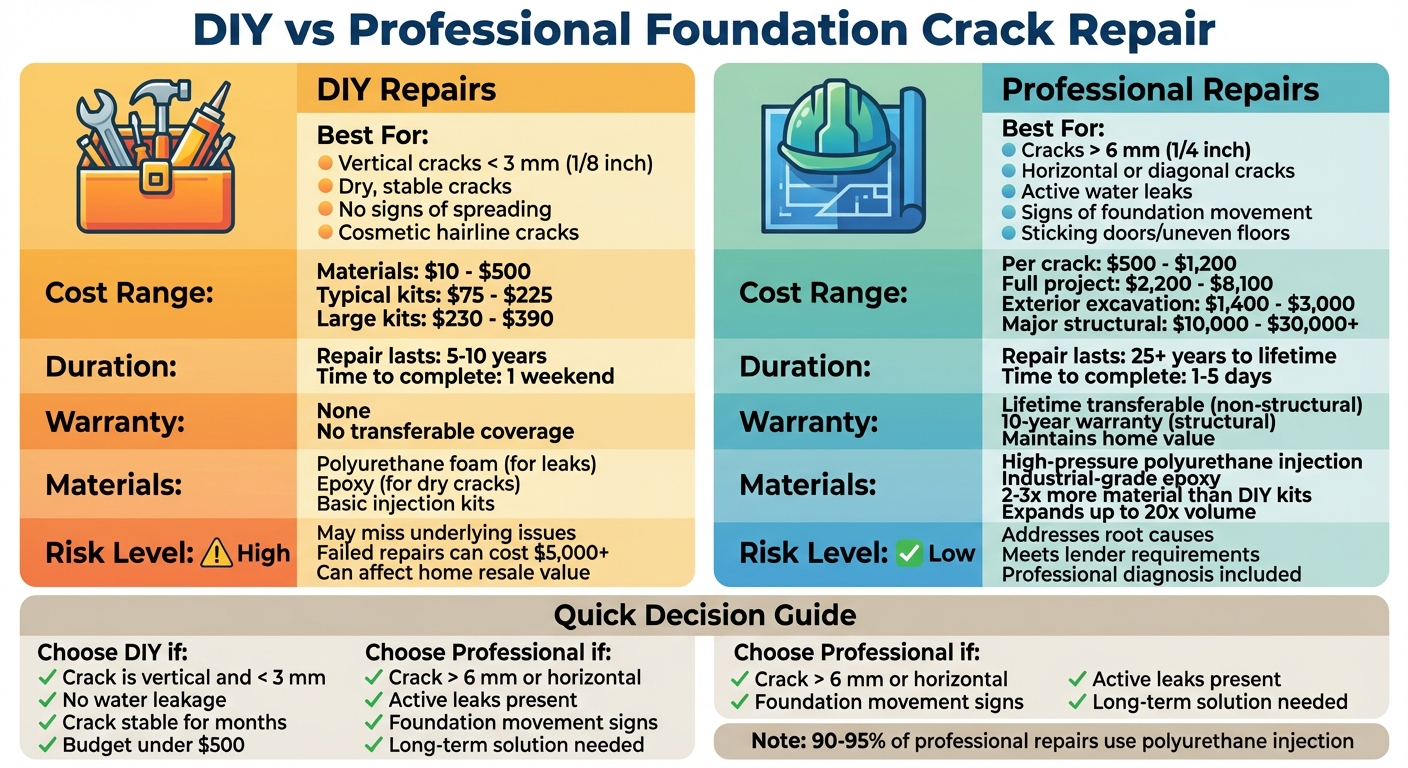
DIY vs Professional Foundation Crack Repair: Cost, Duration, and Warranty Comparison
Side-by-Side Comparison of DIY and Professional Repairs
Deciding between tackling a foundation crack repair yourself or hiring a professional comes down to several key factors. One of the most noticeable differences is cost. DIY materials can cost anywhere from $10 to $500, while hiring professionals typically ranges from $2,200 to $8,100 per project. While DIY repairs might seem like a bargain upfront, they generally last only 5 to 10 years, compared to the durability of professional fixes designed to last for decades.
Time is another consideration. If you’ve got a free weekend and some basic masonry skills, you might be able to handle a DIY repair. On the other hand, professionals bring specialized tools and engineering expertise to complete the job in 1 to 5 days.
Then there’s the matter of warranties. As David Brown from Foundation Professionals of Florida points out:
"If you DIY, there’s no warranty on your work. Anything you mess up will have to be paid for out-of-pocket".
Professional repairs usually come with transferable warranties, which not only protect your investment but can also help maintain your home’s value and satisfy lender requirements. These factors – cost, time, and warranty coverage – play a big role in determining the best approach for your situation.
Repair Recommendations Based on Your Situation
When deciding how to proceed, consider practical guidelines, especially given the unique challenges posed by Canada’s climate and foundation stresses:
- For minor, stable cracks: If the crack is vertical, less than 3 mm (1/8 inch) wide, dry, and shows no signs of spreading over time, a DIY repair may be a suitable option.
- For significant or structural issues: Cracks wider than 6 mm (1/4 inch), horizontal or diagonal cracks, active water leaks, or signs of foundation movement – like sticking doors, uneven floors, or gaps in walls – call for professional attention.
It’s worth noting that 90% to 95% of professional foundation crack repairs rely on polyurethane injection. This material expands up to 20 times its volume, creating a thorough seal that DIY methods simply can’t match. Choosing the right repair method is essential to ensure the long-term stability of your home.
Conclusion: Selecting the Right Foundation Crack Repair Approach
For small, stable cracks under 3 mm that are dry and not worsening, a DIY repair can be a practical solution. However, for larger cracks over 6 mm, horizontal cracks, leaks, or signs of movement, it’s wise to call in a professional. These key points highlight the critical factors discussed earlier.
Standard DIY materials often fall short when dealing with the challenging climate conditions in Canada. If cracks exceed safe limits, a professional assessment becomes crucial to avoid costly errors and ensure your home’s structural safety.
DIY repair kits typically cost between $75 and $225, but a poorly executed fix can lead to additional repairs that may exceed $5,000. On the other hand, professional repairs, which range from $500 to $2,500, often come with warranties that help maintain your home’s value and provide peace of mind.
Professionals bring expertise in diagnosing issues like hydrostatic pressure and soil movement, which are often the root causes of cracks. They also use industrial-grade materials, such as specialized polyurethane, designed to fill voids and endure Canada’s harsh climate – products you won’t find in retail DIY kits. Tackling these underlying issues is essential to ensure the repairs last and prevent future problems.
FAQs
What are the potential risks of repairing foundation cracks yourself instead of hiring professionals?
Opting to tackle foundation crack repair on your own can be a risky move. Without the right expertise, you might misidentify the issue, leading to fixes that don’t address the root cause. This could not only fail to solve the problem but also result in further structural damage. Plus, using unsuitable materials or tools can compromise the repair’s durability and even raise safety concerns.
Another factor to consider is that DIY repairs might void warranties tied to your home or its structural elements. If your initial attempt doesn’t hold up, you could face steeper expenses when turning to professionals for a proper fix. On top of that, poorly done repairs can hurt your home’s resale value, as potential buyers may question whether the foundation is sound.
How does Canada’s climate impact the durability of foundation crack repairs?
Canada’s weather is no stranger to extremes, with its wide temperature swings and frequent freeze-thaw cycles. These conditions can take a toll on foundation crack repairs, as the constant expansion and contraction of soil can make existing cracks worse – or even lead to new ones forming.
To keep repairs holding strong, it’s essential to use durable sealing materials that can withstand these challenges. Proper drainage around your home is also a must, as it helps prevent water from pooling near the foundation. On top of that, addressing any issues quickly and scheduling regular inspections can go a long way in shielding your foundation from the harsh realities of Canada’s climate.
When should I hire a professional to repair foundation cracks?
If you notice cracks wider than 6 mm (1/4 inch), horizontal cracks, or cracks that seem to be getting larger over time, it’s time to call in a professional. Other red flags include sloping or uneven floors, ongoing water leaks, or visible structural changes like walls starting to tilt. These could point to serious underlying issues that need expert attention.
Trying to handle significant cracks on your own can sometimes make the problem worse or lead to even more expensive repairs down the line. A professional can conduct a detailed assessment and recommend long-term fixes to help protect your home’s structure and value.
 CLOGGED OR BROKEN WEEPING TILE