
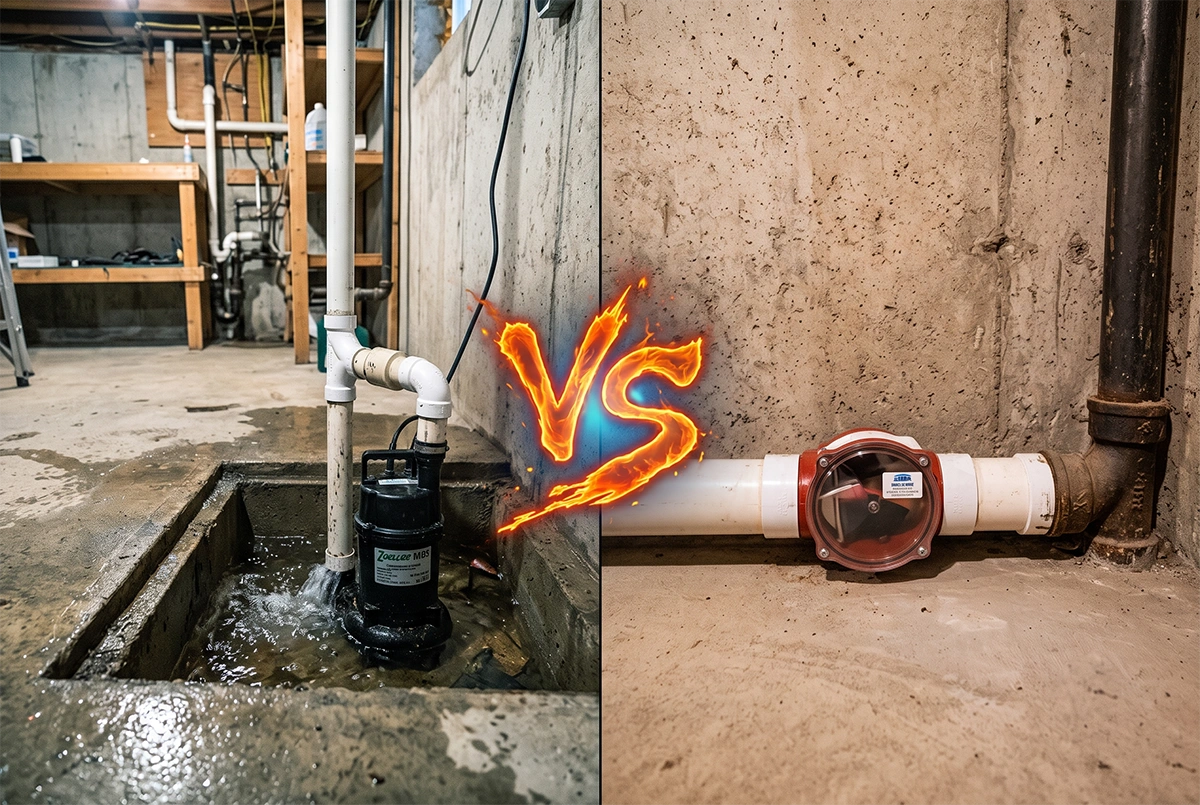
A flooded basement is a hit to both your wallet and your nerves. Water destroys property. To combat water damage, engineers created two systems – a sump pump and a backwater valve. The pump saves from groundwater. The valve serves as a shield against utility emergencies. The devices do different jobs, and confusing them is dangerous.
What Is a Sump Pump?
A sump pump is a simple and reliable device for pumping excess water from under the house. Builders install it at the lowest point of the building – right under the basement floor.
Here’s how it works:
- Water collection. A small pit – a sump – is dug in the floor.
- Level control. When groundwater rises, it flows into this container.
- Pumping. The pump automatically turns on and pushes liquid through a pipe far beyond the foundation.
The main task of this device is to prevent any basement leak from nature’s whims. It collects clean rainwater and underground water. Otherwise, the flows would flood the floor.
In regions with active rainfall, installing a sump pump will protect against dampness. The device works quietly and inconspicuously. Its installation protects walls from mould and destruction year-round.
What Is a Backwater Valve?
A backwater valve is a reliable gate for home sewage. Builders install it on the main pipe that runs from the house to the street. Inside the device is a movable flap.
Here’s how it works:
- Normal mode. The flap is open. Dirty water from sinks and toilets freely flows into the city network.
- Emergency mode. The city collector overflows. Sewage flows back through the pipe toward your home.
- Protection moment. The counter-flow presses hard on the flap. It automatically snaps shut and completely blocks the pipe.
After the flap closes, foreign sewage physically cannot burst from your toilet or shower. This device works purely mechanically and requires no electricity at all. It will be the best protection against foul street sewage during serious utility emergencies.
Sump Pump vs Backwater Valve: Key Differences
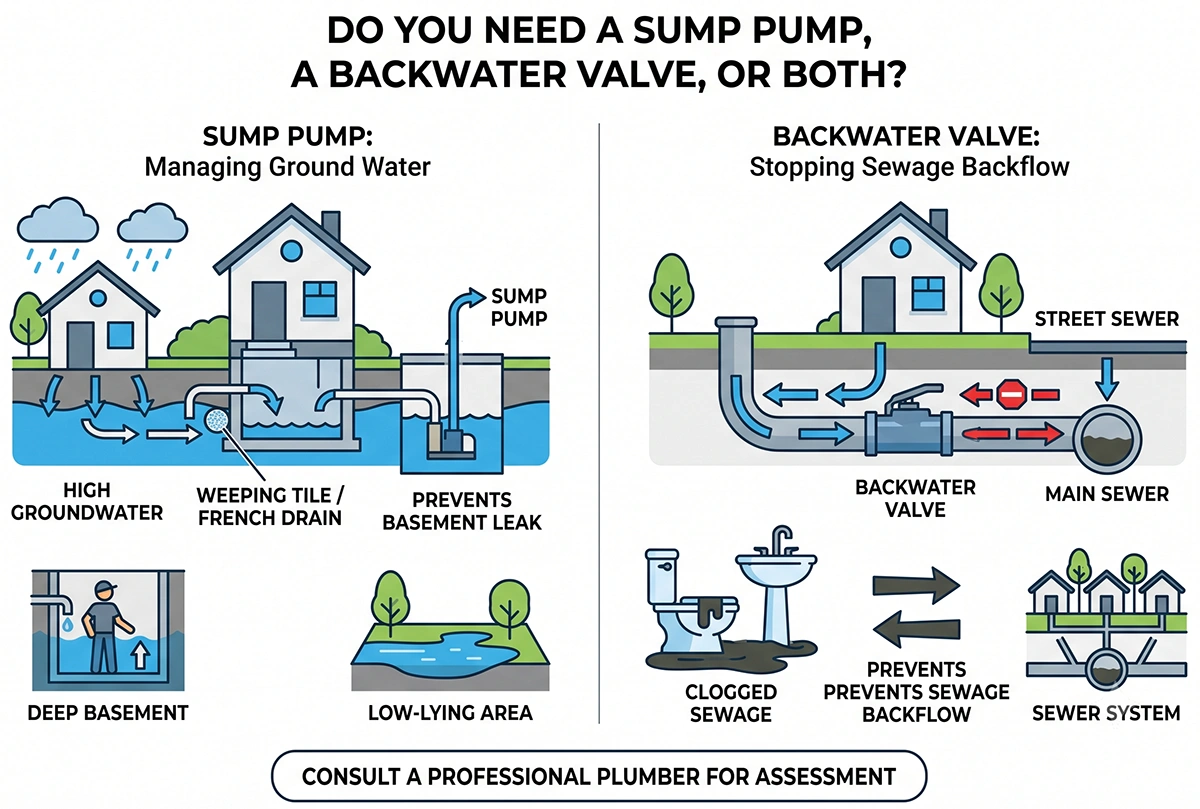
Where exactly does the water come from? The answer to this question explains the entire difference between sump pump and backwater valve. The pump fights clean water from outside. It presses on the house through the soil. The valve protects from dirty utility sewage. It tries to break through from inside via pipes.
The pump runs on electricity. It actively pushes liquid outward. The valve works passively. It simply closes the passage in time.
Sump pump compared to backwater valve – the devices differ in the following parameters:
- Liquid type. The pump moves clean underground water, while the valve blocks dirty sewage.
- Power source. The pump definitely needs electricity, while the valve works purely mechanically.
- Operating principle. The pump actively pushes water outward. The backwater valve passively closes the pipe when threatened.
- Control zone. The pump drains the entire foundation. The valve only guards one sewer main.
When choosing a sump pump or backwater valve, you can’t say one device is better than the other. They don’t replace each other. They protect the home from completely different sides, performing opposite functions.
Which Flooding Problems Does Each System Solve?
Each device saves from a specific problem. There’s no universal solution here. These devices perform their task:
- The pump handles heavy rainfall. Heavy rainfall or melting snow quickly raises underground water levels. Moisture starts pressing on the basement floor from below. The device picks up this water in time and directs it away. It completely solves the high groundwater level problem and saves your foundation.
- The valve blocks sewage. If the city sewer line gets clogged or overflows, sewage immediately flows back into the house. It rises through pipes. The valve firmly blocks this flow. It simply doesn’t allow sewage to gush from the toilet right onto the carpet.
Both devices are very important for foundation protection. But they work under completely different conditions.
Do You Need a Sump Pump, a Backwater Valve, or Both?
Equipment choice directly depends on the home’s location. You’ll definitely need both protection systems in the following cases:
- The building stands in a low-lying area. All surrounding water will flow toward you.
- The basement goes deep underground. Flooding risk increases significantly.
- High groundwater. Constant automatic liquid pumping is required.
- Sewage frequently gets clogged. City sewage can flow back at any moment.
The building’s drainage system also influences the choice. Weeping tile is usually laid around the foundation. This underground drain tile system collects moisture from the soil and directs it toward the house. Professional French drain installation is often ordered for these purposes. This solution helps effectively intercept water from the entire site. Without a powerful pump, accumulated liquid will quickly flood the basement. To completely secure the home, owners often do comprehensive basement leak repair. Masters immediately install both protection systems.
Can a Sump Pump Prevent Sewer Backups?
The short and clear answer is no – a sump pump is powerless here. This device is physically not connected to your sewage network. The pump only transfers clean water from the drainage system. If city sewage starts gushing from your toilet, the device won’t even turn on. It will simply continue standing in its dry sump.
A special device is sometimes used to protect against such trouble – a sump pump backflow preventer. This is a small valve installed on the pump’s discharge pipe. It’s needed to solve two local tasks:
- Protection against pumped clean water returning to the sump after the motor shuts off.
- Prevention of street stormwater getting inside the basement through the pump’s drain hose.
But this small element won’t be able to protect the entire house from a city main emergency. Only a large backwater valve on the main pipe is effective against utility emergencies.
Can a Backwater Valve Prevent Basement Flooding?
The backwater valve itself won’t save the basement from groundwater. It only controls flows inside pipes. Imagine a strong flood starting outside. Micro-cracks in walls allow water to seep inside. The valve will be closed at this time. The device won’t be able to stop water from flooding the floor from the side or below.
The valve won’t provide comprehensive protection. A reliable external barrier is needed here. Professional foundation waterproofing will close all pores in the concrete. Liquid won’t be able to penetrate inside the walls. And the valve will continue doing its job – protecting plumbing from dirty utility surprises.
Maintenance Requirements for Both Systems
Protective equipment requires constant attention:
- Test the pump twice a year – in spring and fall. Simply pour a bucket of water into the sump and watch the startup. Always clean the pit bottom. Dirt easily jams the motor blades. It will burn out during the first heavy rain.
- The backwater valve can’t be left unattended. Regularly open the inspection cover to check the flap. Debris constantly accumulates on it. Because of this, the flap won’t close tightly during an emergency. Rinse the device internals with clean water. A brush works for removing buildup.
Maintenance can be done independently or entrusted to professionals.
Common Mistakes Homeowners Make
Property owners frequently make the following mistakes:
- No inspections. Installing the equipment and forgetting about it for several years until the first flood.
- Ignoring backup power. Using a powerful pump without a good battery in case of a power outage.
- Terminology confusion. Buying a small sump pump backwater valve instead of a full-fledged sewer valve.
- Improper waste disposal. Flushing dense wipes down the toilet that firmly jam the device’s flap.
Without maintenance, any valve will get clogged with dirt. An old pump will also eventually burn out. Regular equipment cleaning will protect your home. This is much cheaper than paying for expensive post-flood repairs.
When to Call a Professional
Don’t try to install complex equipment into pipes yourself. An error in slope or dimensions can block all drainage in the house. If the pump hums strangely or turns on every two minutes, urgently call a master. Frequent startups indicate a sensor malfunction or clogged discharge.
For protective system installation, contact only professionals. Professional backwater valve installation requires floor opening and precise slope calculation. One call and engineers will start the project. Completed work comes with a warranty.
Final Thoughts
Home safety depends on small details. Smart basement drainage will free you from dampness and mould. Working foundation drainage will extend the building’s life for years. Don’t wait for the first flood. Protective equipment always costs less than emergency cleanup.
If you’re uncertain about device choice, contact Leaquida company. An engineer’s advice will help protect the home from any weather whims.


 CLOGGED OR BROKEN WEEPING TILE