

Waterproofing your home isn’t just about keeping water out – it’s a smart way to protect your property and increase its market value. Here’s why it matters:
- Boosts resale value: A dry, waterproofed basement can increase a home’s value by up to 20%. Buyers view it as a sign of a well-maintained property.
- Prevents costly repairs: Fixing water damage can cost $5,000–$50,000, while waterproofing is a preventive measure that saves money long-term.
- ROI potential: Waterproofing offers a return on investment (ROI) of 30–70%, with specific upgrades like sump pumps and crack repairs yielding high returns.
- Health and safety: It reduces mould risks, which can cost $500–$6,000 to remediate, and improves air quality.
- Insurance savings: Homes with waterproofing may qualify for premium discounts of 5–15%.
With Canadian weather causing frequent basement flooding, waterproofing is now a key factor for buyers, especially in Ontario. From foundation crack repairs to sump pump installations, these upgrades not only protect your home but also make it more appealing to potential buyers.
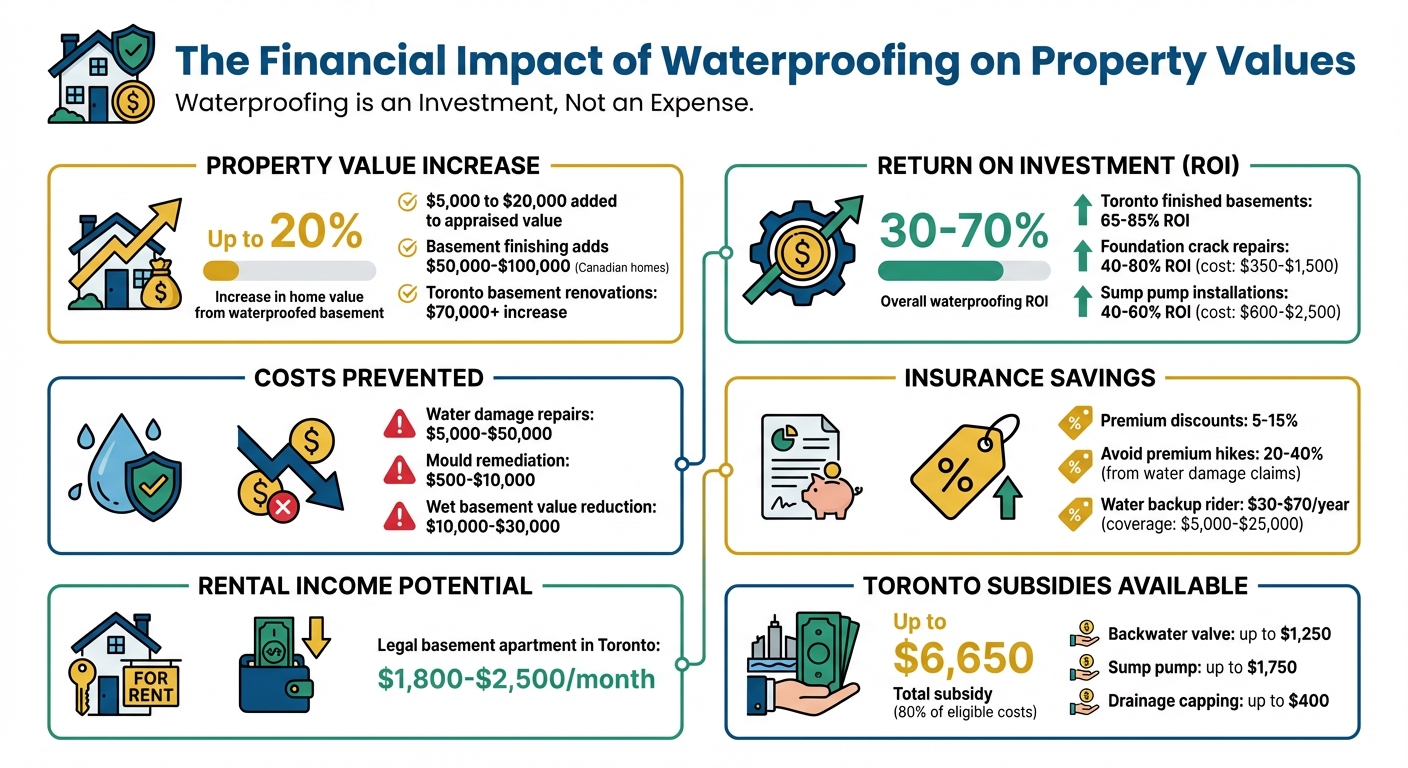
Waterproofing ROI and Property Value Impact Statistics
How Waterproofing Can Increase Your Property Value
sbb-itb-5761e20
How Waterproofing Increases Property Values
Waterproofing can significantly boost the value of your home by addressing issues that often deter buyers. A dry basement sends a clear message: the property is well cared for, and future repair costs are less likely. This added confidence often translates into a higher asking price, as it reassures buyers about the home’s structural health and lower long-term maintenance needs.
Protection Against Structural Damage and Mould
Water and concrete don’t mix well, especially in Canada’s harsh freeze–thaw cycles. When moisture seeps into your foundation, it freezes and expands during winter, creating cracks that worsen over time. This process can weaken the foundation and even lead to structural problems in other areas, such as wood rot in beams or corrosion in metal fasteners . Buyers often associate a wet basement with hidden issues and future expenses, while a dry basement is seen as an opportunity to create additional living space.
Mould prevention is another major benefit. Not only can mould remediation cost between $500 and $6,000, but persistent moisture can also damage materials like drywall, plaster, and timber . A damp basement often smells musty and feels clammy, leaving buyers with concerns about air quality and health risks like asthma or allergies .
"Waterproofing eliminates the moisture that mold needs to thrive."
- Direct Waterproofing
A professionally waterproofed basement, especially one with transferable warranty documentation, acts as a selling point. It offers peace of mind to buyers, simplifying negotiations and making the property more attractive.
Flood Risk in Canada and Property Impact
Ontario’s unpredictable weather – intense rainfall, spring snowmelt, and fluctuating temperatures – makes basement flooding a top concern for buyers. By 2025–2026, buyers in cities like Toronto, Hamilton, and Ottawa are increasingly asking about flood history and requesting specialized basement inspections.
"Basement waterproofing is no longer an optional consideration – it’s central to the buying process in Ontario."
- Ray Dickson, Broker of Record / President, Ontario One Realty Ltd
This shift highlights a growing trend: buyers now prioritize practical upgrades like moisture control over purely aesthetic changes. A dry basement can be reimagined as functional space – a home office, gym, or entertainment area – making the property more appealing and justifying a higher listing price . Sellers who can show proof of waterproofing measures, such as sump pumps, exterior membranes, or backwater valves in Toronto, build trust with potential buyers.
Financial Returns from Waterproofing
Investing in waterproofing can deliver financial returns ranging from 30% to 70% on the initial investment. This isn’t just about protecting your home – it’s about enhancing its market value. By preventing hidden damage and lowering long-term maintenance costs, waterproofing becomes a smart financial move. In highly competitive markets like Toronto, where buyers pay close attention to every detail, a finished and waterproofed basement can yield an even higher return on investment (ROI) of 65% to 85%.
Measured Impact on Resale Value
Let’s talk numbers. Data shows that waterproofing efforts can significantly boost resale value. For example:
- Foundation crack repairs: These cost-effective fixes typically range from $350 to $1,500 and offer an ROI of 40% to 80%.
- Sump pump installations: With costs between $600 and $2,500, these upgrades can deliver returns of 40% to 60%.
- Professionally waterproofed basements: These can increase a home’s appraised value by $5,000 to $20,000.
- Basement finishing: Renovating a typical 1,000 sq. ft. basement can add $50,000 to $100,000 to the value of a Canadian home. In Toronto, high-quality basement renovations can push that increase to $70,000 or more.
For homeowners eyeing rental income, the benefits are even more compelling. A legal, waterproofed basement apartment in Toronto can generate monthly rental income of $1,800 to $2,500. This means the waterproofing investment could pay for itself in just a few years. Beyond the immediate ROI, waterproofing also protects your finances by preventing damage that could result in costly repairs.
Money Saved by Preventing Water Damage
The cost of repairing water damage can be staggering, making waterproofing a smart preventive measure. Persistent moisture can lead to structural issues like wood rot and foundation deterioration, with repair costs ranging from $5,000 to $50,000. Mould remediation isn’t cheap either, costing anywhere from $500 to $10,000. Additionally, a wet basement can slash a home’s appraised value by $10,000 to $30,000. Clearly, waterproofing isn’t just a nice-to-have – it’s essential for protecting your home’s equity.
There are also insurance benefits to consider. Many carriers offer 5% to 15% discounts on premiums for homes with documented waterproofing systems. Plus, waterproofing helps you avoid water damage claims, which often lead to premium hikes of 20% to 40%. For example, a water backup rider – covering sewer or sump pump failures – costs just $30 to $70 per year and provides coverage of $5,000 to $25,000. That’s a small price to pay for peace of mind and financial protection.
Waterproofing can also lead to energy savings. By sealing leaks and managing humidity, you reduce the strain on your HVAC system, which lowers your monthly utility bills. And when it’s time to sell, waterproofing costs are considered capital improvements, which can increase your home’s cost basis and potentially save you thousands in capital gains tax.
Waterproofing Methods and Their Effect on Property Value
Not all waterproofing solutions add the same level of value to your home. Knowing how each method protects your property – and appeals to potential buyers – can help you make informed investment decisions. Here’s a breakdown of how various waterproofing options from Leaquida Waterproofing can help boost your home’s worth.
Interior Waterproofing
Interior waterproofing focuses on managing moisture inside your home. This method often involves installing a drainage channel along the base of foundation walls to collect water and direct it to a sump pit. Sealants and waterproof coatings are also used to tackle minor dampness and condensation, making basements more practical for storage or finishing. By addressing these issues, interior waterproofing can turn a basement into usable living space, ideal for home offices, gyms, or guest rooms – features that buyers find appealing. Costs typically range from $70 to $120 per linear foot, with effectiveness lasting 5 to 10 years.
If you’re planning to sell, consider securing a transferable warranty to reassure buyers. Also, be on the lookout for signs like musty odours, efflorescence (white salty stains), or water marks, which may indicate the need for waterproofing. While interior waterproofing manages existing moisture, exterior methods prevent water from reaching your foundation in the first place.
Exterior Waterproofing
Exterior waterproofing is designed to stop water before it even touches your foundation walls. By keeping moisture away, this method helps prevent structural issues like shifting, cracking, and long-term damage caused by extreme weather. The process involves excavating around the foundation, applying a waterproof membrane, and installing improved drainage systems. Although this solution costs between $100 and $250 per linear foot, it addresses the root cause of water intrusion. For added protection, combine this method with a dependable sump pump and backup power system. Repairing any existing foundation cracks further strengthens your home’s structure and value.
Foundation Crack Repair
Fixing foundation cracks is essential for maintaining the structural integrity of your home and preventing leaks that can lower its value. Untreated cracks can worsen over time, especially during freeze-thaw cycles, leading to expensive repairs. Non-structural crack repairs typically cost between $500 and $1,200 per crack. Addressing these issues before selling your home is crucial, as buyers are more likely to be drawn to a dry, finished basement rather than one that’s damp or uninviting. Keep detailed records, including receipts, photos of the repair process, and warranty documents, to show buyers and inspectors that you’ve invested in maintaining your property.
Sump Pump and Backwater Valve Installation
Sump pumps and backwater valves are vital for preventing basement flooding, a feature that can significantly increase buyer confidence, especially in areas prone to heavy rainfall. Sump pumps efficiently remove water from the basement, which is often a key factor in passing home inspections. Meanwhile, backwater valves protect against sewer backups during storms, making them a valuable upgrade for buyers. In the GTA, a full interior drainage system with a sump pump can cost between $8,000 and $18,000, while backwater valve installations range from $1,500 to $3,500, with potential municipal subsidies available. Many insurance companies now recommend or require backwater valves for sewer backup coverage, and proper documentation of these installations – including warranties and maintenance records – can further enhance your home’s resale value.
"A dry basement signals a well-maintained, secure property, while a wet one screams ‘hidden problems and future expenses.’" – Concrete Master
Steps to Maximize Your Waterproofing Investment
Making smart choices about waterproofing goes beyond just hiring a contractor and writing a cheque. With nearly 98% of basements experiencing some form of water damage over their lifetime, understanding your home’s specific needs, tapping into funding opportunities, and choosing the right solution can be the difference between a minor improvement and a significant boost to your property’s value.
Evaluating Your Home’s Waterproofing Needs
Assessing your home’s waterproofing requirements is key to protecting both its structural integrity and resale value. Watch for early warning signs like musty smells, mould growth, efflorescence, and water stains near window wells. More severe issues, such as standing water, bowing foundation walls, or rotting floor joists, demand immediate professional attention.
Take a walk around your property and check for external risks. Is your yard sloping toward your house instead of away from it? This can increase water pressure against your basement walls. Inside, maintaining basement humidity levels between 30% and 50% can help prevent mould growth.
Avoid DIY fixes without a professional assessment, as they could make the situation worse. Experts like Leaquida Waterproofing use advanced tools to determine whether moisture issues stem from groundwater pressure or vapour diffusion – critical information for selecting the right approach. For the best results, consider combining exterior waterproofing (to stop water before it reaches your foundation) with interior solutions (to manage any seepage that occurs).
Taking Advantage of Toronto Subsidies and Financial Programs
Toronto’s 2026 budget expanded the Basement Flooding Protection Subsidy Program, offering homeowners up to $6,650 for qualifying upgrades. Since its launch, this program has supported over 21,500 properties, with approximately $37 million disbursed. The subsidy covers 80% of eligible costs, including labour, materials, and taxes.
Here’s what you can claim:
- Up to $1,250 for a backwater valve
- Up to $1,750 for a sump pump (including backup systems)
- Up to $400 for drainage capping
If you’re outside Toronto, other GTA municipalities may offer even higher rebates. For example, Mississauga provides up to $8,500, Halton Region offers $8,175, and Brampton provides $1,500.
To qualify, ensure your contractor holds a City of Toronto licence and obtain a building permit. You’ll also need to confirm that your property taxes are up to date and that your downspouts are disconnected from the city sewer system. Keep original, itemized invoices marked "paid in full", photos of installed devices, and inspection reports handy. Applications must be submitted within one year of installation, and you can expect payment within 10 weeks.
Once you’ve secured funding, choosing the right waterproofing method becomes an investment in your home’s future.
Choosing the Right Waterproofing Method
The best waterproofing solution depends on your foundation’s condition, access points, and the severity of your water issues. For minor leaks, foundation crack injections – costing between $500 and $1,200 per crack – are a cost-effective way to prevent further structural damage. This method is most effective when cracks are addressed early, before they worsen due to freeze-thaw cycles.
For ongoing leaks or visible mould, interior waterproofing ($70 to $120 per linear foot) might be the better option. It’s quicker and less invasive, making it ideal for homes with limited exterior access or finished basements. However, this approach relies on sump pumps and doesn’t stop water from touching your foundation walls.
Exterior waterproofing ($90 to $250 per linear foot) offers the most durable protection by dealing with water at its source. While it involves excavation and landscape restoration, it’s particularly valuable for older homes with aging foundations or those in areas with combined sewer systems and heavy storm runoff.
For maximum protection, install both a backwater valve and a sump pump. Most municipal programs allow you to claim rebates for both devices, and together they provide comprehensive flood protection. Regular maintenance – such as annual backwater valve cleaning and monthly sump pump tests – helps ensure long-term performance and preserves your property value. Remember, all work must be done by licensed contractors with valid permits to qualify for subsidies and to ensure your upgrades add to your home’s resale value.
Conclusion
Waterproofing offers much more than just keeping moisture at bay – it’s a smart, long-term investment. It protects your home’s structure, boosts its market value, and helps you avoid expensive repairs. In fact, a waterproofed basement can increase your home’s resale value by up to 10% and provide a return on investment of up to 30%.
It’s not just about finances, though. Waterproofing shields your foundation from the tough freeze-thaw cycles common in Canada, prevents mould growth that can harm indoor air quality, and even improves energy efficiency. A dry basement also gives potential buyers peace of mind, which can make all the difference during an inspection.
Thanks to municipal subsidies, these upgrades are now more accessible, helping you get the most out of your investment. Whether you’re sealing foundation cracks, installing a sump pump, or going all-in with exterior waterproofing, the key is finding the right solution tailored to your home’s needs.
With expert guidance and a well-thought-out plan, waterproofing becomes a reliable way to protect your home for years. Industry experts highlight that smart monitoring systems can save homeowners thousands in flooring and drywall repairs. Professional services, like those provided by Leaquida Waterproofing, ensure accurate assessments, use materials designed for Canada’s climate, and offer long-term warranties for added peace of mind. By working with certified contractors and following expert advice, you can preserve both the structural integrity and future value of your home.
FAQs
Will waterproofing affect my home inspection and sale negotiations?
Waterproofing can play a key role in home inspections and sale negotiations. It demonstrates that the property has been well-maintained, reduces the risk of water damage, and may even enhance your home’s value and appeal to potential buyers. These factors can make your home stand out in the market and simplify the selling process.
Which waterproofing upgrade adds the most value for my home?
Basement waterproofing is one of the smartest upgrades you can make for your home. Why? It safeguards the structural integrity of your property, prevents costly water damage, and transforms your basement into a functional, usable space. Plus, it can make a big difference when it comes to resale – homes with waterproofed basements are far more appealing to potential buyers. This upgrade isn’t just about protection; it’s about adding long-term value and marketability to your home.
What paperwork should I keep to prove waterproofing work to buyers and insurers?
To show proof of waterproofing work, maintain thorough documentation. This includes receipts, invoices, contracts, and any warranties or guarantees provided by the contractor. Taking before-and-after photos and keeping inspection reports that verify the quality of the work can also be incredibly useful. These records not only confirm proper installation but also reassure potential buyers and help with insurance claims if necessary.
 CLOGGED OR BROKEN WEEPING TILE