
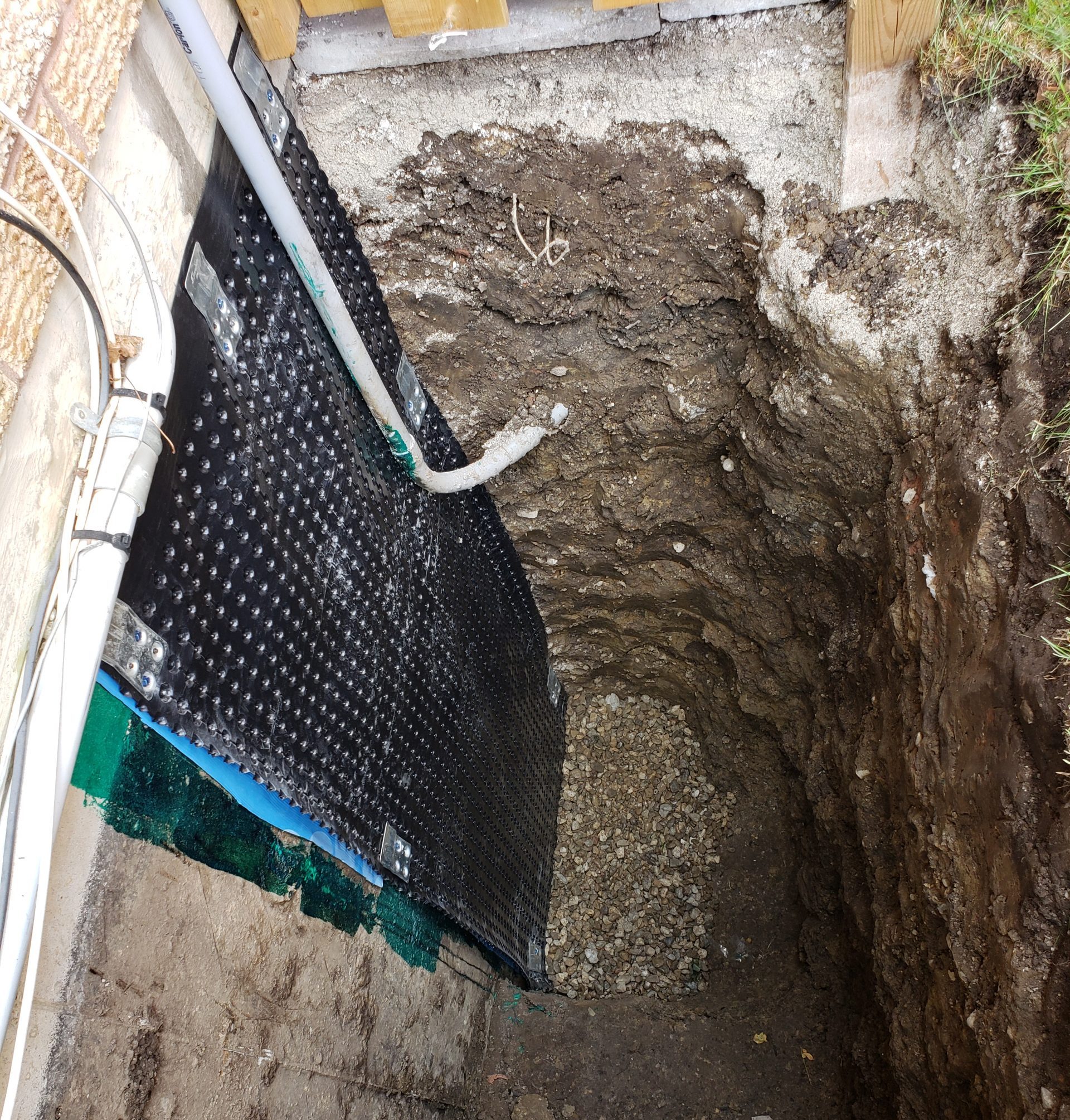
- What causes foundation cracks from the outside?
- Properly inspect outside foundation cracks
- Fixing Foundation Cracks From the Outside: How to Patch Minor Cracks
- What Are The Supplies You’ll Need to Repair Cracked Foundation Outside?
- When to Repair Foundation Cracks Yourself-And When to Call in the Pros
Over the years of use of a private home, certain defects can occur. One of the most common problems is cracks in the foundation. To cope with this problem, you need to know how to fix cracks in the foundation on the outside properly and who you should turn to for this task.
What causes foundation cracks from the outside?
Crack-in foundation wall outside comes in a variety of ways. Experts divide cracks into structural and nonstructural. The former threatens the integrity of the entire house. They can be caused by:
- Expansive soil type. If the foundation is in soil that contains a lot of clay, then this soil is called expansive soil. As a result of moisture absorption, the soil swells; after it dries, on the contrary, it shrinks. Because of the swelling and increased pressure, the foundation of the building may be covered with cracks. And after compression, the walls will begin to unclench, which provokes the expansion of damage. This kind of movement will occur every time the weather changes.
- Hydrostatic pressure. Poor waterproofing of foundation walls outside and lack of drainage system to collect runoff moisture leads to the fact that water begins to accumulate near the base of the building. As a result, pressure is formed on the walls, which provokes cracks.
- Swelling as a result of exposure to low temperatures. When the ground freezes, it can cause the earth to rise and the pressure from the walls to be relieved, but in the future, the ground volume will decrease again when thawing. Also, the ground may increase in volume, increasing pressure on the walls. These movements provoke cracking.
- Differential settlement. After the construction of a building, it will certainly settle. Most often this happens evenly. But it can also happen that a differential shrinkage occurs – parts of the house sink into the soil differently on each side. It can result in the warping of the walls, flooring, and cracks in the foundation.
- Lateral pressure. If you place heavy objects in the ground next to the house’s foundation, the excess weight will cause the soil to press heavily against the walls and create increased pressure.
- Other factors. Cavities under the structure, poor soil, and insufficient soil compaction can lead to cracks.
Nonstructural cracks can occur if a waterproofing a foundation exterior wall is not sealed correctly. These defects do not affect the structural integrity of the entire building. They are provoked by:
- Aging. Natural processes cause cracks in the foundation. Often these effects are less than 1/10 of an inch wide. If the crack is growing, you should think about caulking it.
- Concrete shrinkage. As a result of the concrete drying out too quickly, micro-cracks form on the surface.
These defects can often be found near windows, in corners, and under 2-tab beams.
Why Foundation Cracks Start Leaking Water
Foundation cracks often become a direct entry point for water, especially in basements located below ground level. The main reason for this is hydrostatic pressure — when water accumulates in the soil around the foundation, it creates pressure against the walls and forces moisture through even the smallest openings.
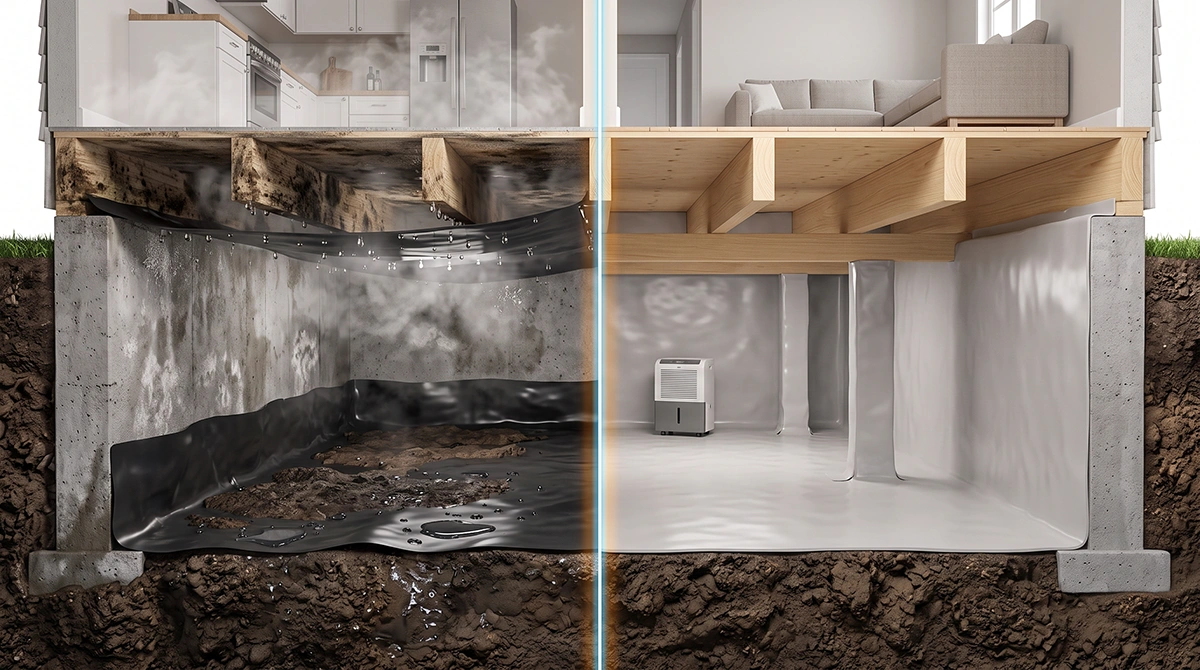
When cracks appear, water doesn’t just stay outside — it gradually seeps into the structure, leading to damp walls, musty smells, and eventually mold growth. In many cases, homeowners only notice the issue once visible damage appears inside the basement.
Other contributing factors include poor drainage systems, clogged gutters, and improper grading around the house. In some situations, tree roots growing near the foundation can also create additional stress on the structure, worsening cracks and allowing water to penetrate.
If leaking cracks are ignored, the problem can escalate from minor moisture intrusion to serious structural damage. That’s why it’s important to not only seal the crack but also address the underlying cause of water pressure around the foundation.
Properly inspect outside foundation cracks
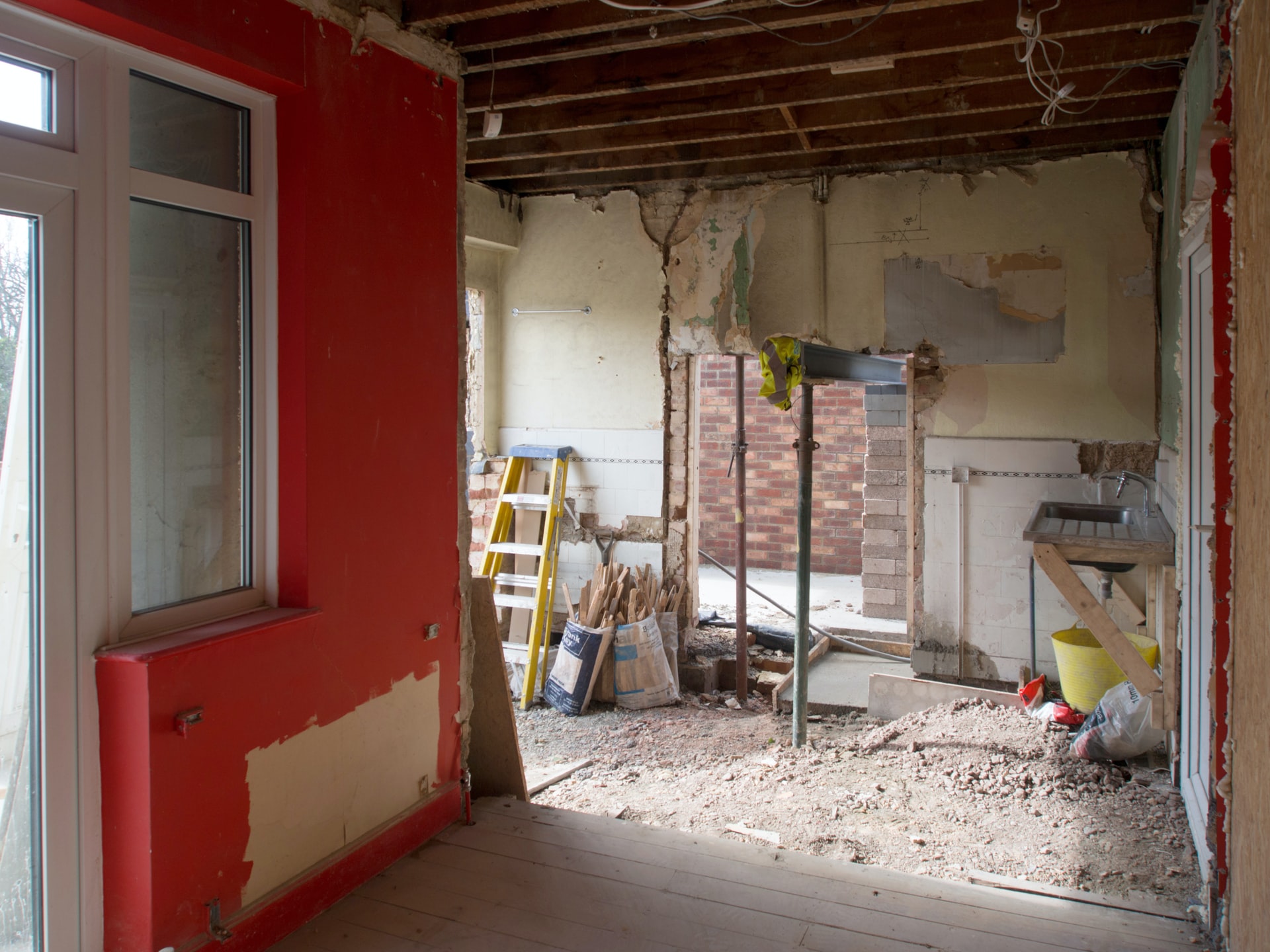
Before fixing exterior foundation cracks, the foundation of the building must be inspected. A thorough inspection will allow you to plan the work properly, calculate the cost and avoid surprises. Internal ones can provoke external cracks. A detailed inspection also involves assessing the condition of the interior foundation. With the help of the inspection will be able to determine the appropriate type of repair.
It should also be determined whether the crack in the foundation is deep or superficial. To this end, it is necessary to remove a small patch from the outer crack of the foundation. This way, you will be able to check whether only the plaster is cracked or the entire wall underneath is cracked.
Fixing Foundation Cracks From the Outside: How to Patch Minor Cracks
Properly fixing foundation cracks from the outside is a must, as ignoring this process can lead to more significant problems if you leave the crack as it is. Real estate is a considerable investment. It should be taken care of if you don’t want to lose your investment.
If there are micro-cracks outside, you can try fixing foundation wall cracks from the outside yourself. This process involves several steps:
- inspection of the base of the building;
- preparation of the crack for repair;
- direct sealing of the defect;
- seal exterior foundation cracks.
Changes in humidity can lead to the appearance of shrinkage cracks. Only those tiny cracks that do not affect the structural integrity of the entire house should be sealed. It would be best if you did not leave them unattended because these defects can grow over time. If the foundation has a crack, you should regularly check it for expansion. Vertical and horizontal cracks can cause severe problems with the house. The same applies to diagonal defects that start at the corner of the walls and run through the entire structure plane.
Structural cracks can provoke basement flooding. It is also a terrible consequence. To avoid dampness and severe deterioration, the crack must be repaired promptly.
If a crack is already leaking, simply sealing the surface may not be enough. In these cases, it is important to fully clean, dry, and prepare the crack before applying repair materials. Waterproof sealants or epoxy injections are often used to prevent further water intrusion and ensure a long-lasting result.
Which Foundation Cracks Are Dangerous
Not all cracks are the same, and understanding their type is essential before choosing a repair method.
Vertical cracks are often caused by natural settlement and are usually less dangerous if they are stable. Horizontal cracks, however, are often a sign of hydrostatic pressure and can indicate serious structural stress on the foundation walls.
Diagonal or step cracks may point to uneven settlement or soil movement beneath the house. These types of cracks often require professional assessment, as they can worsen over time.
Cracks wider than 1/8 inch, growing cracks, or those that allow water to seep through should always be treated as a serious issue. In such cases, professional repair methods may be required to prevent further damage.
What Are The Supplies You’ll Need to Repair Cracked Foundation Outside?
Professional and quality exterior foundation crack repair requires specific knowledge, skills, and experience. If you want to solve the problem on your own, but even for fixing a small crack, you need to buy a complete set of materials and tools. In particular, for the repair, you will need:
- a respirator;
- hammer;
- cement mixture;
- assembly gun;
- trowel;
- repair compound.
Repairing small cracks in the foundation is an excellent option if you want to restore the integrity of the foundation of the structure yourself. On your own, it is best to solve not too serious problems. For example, hairline cracks in the joints of concrete mortar. This set of tools can even be used to seal cracks in drywall sheets.
But, if you have more severe defects, it is best to contact a company of real professionals. They will competently assess the problem’s essence, examine the house and offer the best way to eliminate the defect. If this problem is left unattended, it will lead to more significant issues in the future and more costs to fix.
When to Repair Foundation Cracks Yourself-And When to Call in the Pros
Even if you know how to repair crack foundation cracks outside, that doesn’t mean you should do it yourself. In some situations, you may be able to fix the defect yourself, but in exceptional cases, you need to have it done professionally. In particular, this applies to cracks in the foundation. This problem is best entrusted to real professionals. Otherwise, fixing it yourself can only lead to new situations.
The repair team will help with a variety of situations:
- Hanging slab piles needing beams and supports;
- raising a structure;
- repairing cracks in the foundation, and more.
If your home has a crack in the foundation outside and you don’t know what to do about it, then contact our experts. A team of experts will inspect your home, identify the problem, and suggest the best solution.
FAQ
Yes, in many cases foundation cracks can be repaired from the outside, especially if the goal is to stop water before it enters the basement. Exterior repair typically involves sealing the crack and improving drainage around the foundation to reduce hydrostatic pressure. However, if water is already entering the structure, additional interior solutions may also be required.
If water is actively leaking through a crack, the first step is to remove moisture and properly prepare the surface. Simply sealing a wet crack is not effective. The area must be cleaned, dried, and treated with waterproof materials designed to prevent further water intrusion. In many cases, professional repair is recommended to ensure long-term results.
Cracks wider than 1/8 inch or those that continue to grow over time should be treated as a serious issue. Wider cracks may indicate structural stress or soil movement and often require professional evaluation. Ignoring them can lead to water intrusion and further damage to the foundation.
Horizontal cracks, step cracks, and widening cracks are usually the most concerning. These types of damage are often caused by hydrostatic pressure or uneven settlement and may indicate structural problems. Unlike small vertical cracks, they typically require professional repair.
Small surface cracks can sometimes be sealed using basic repair materials. However, if the crack is deep, leaking, or changing over time, DIY repairs may only provide a temporary fix. Professional waterproofing contractors can properly diagnose the issue and apply long-term solutions.
Epoxy is commonly used to repair foundation cracks because it bonds strongly with concrete and helps restore structural integrity. It is especially effective for sealing non-moving cracks and preventing water penetration. However, the correct repair method depends on the type and cause of the crack.
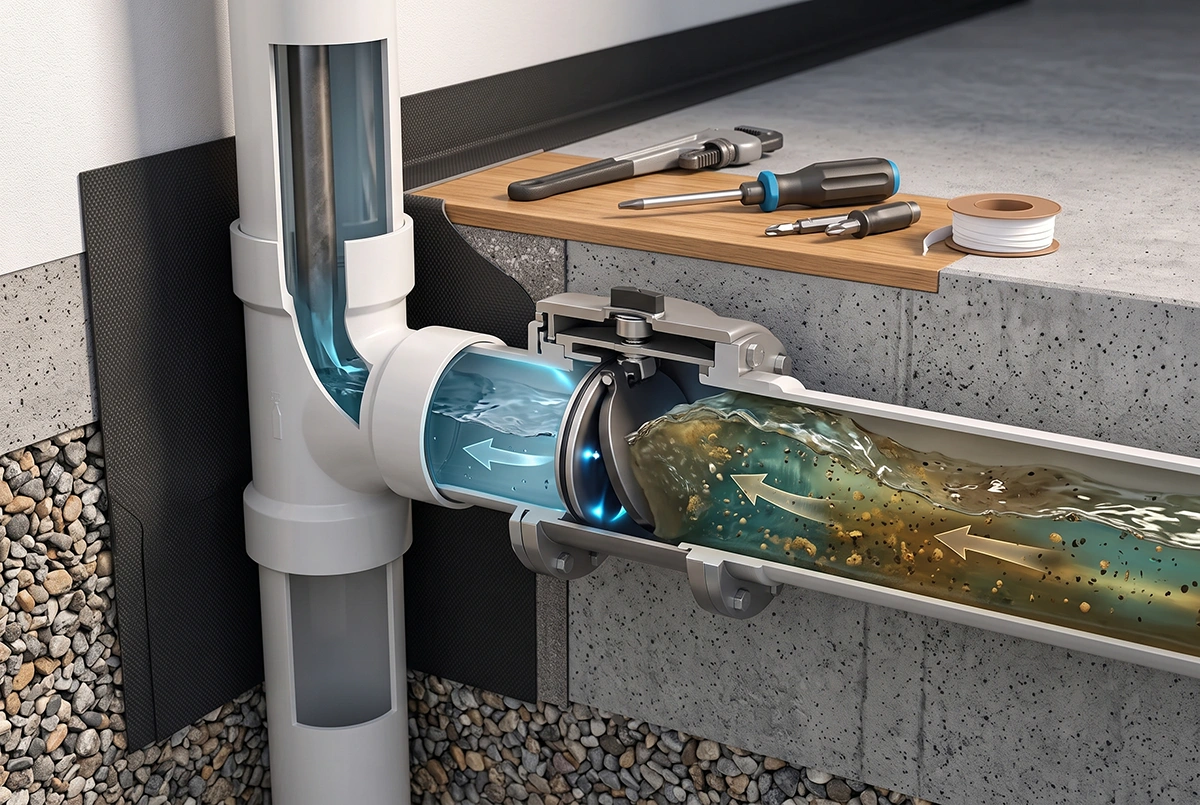
 CLOGGED OR BROKEN WEEPING TILE