

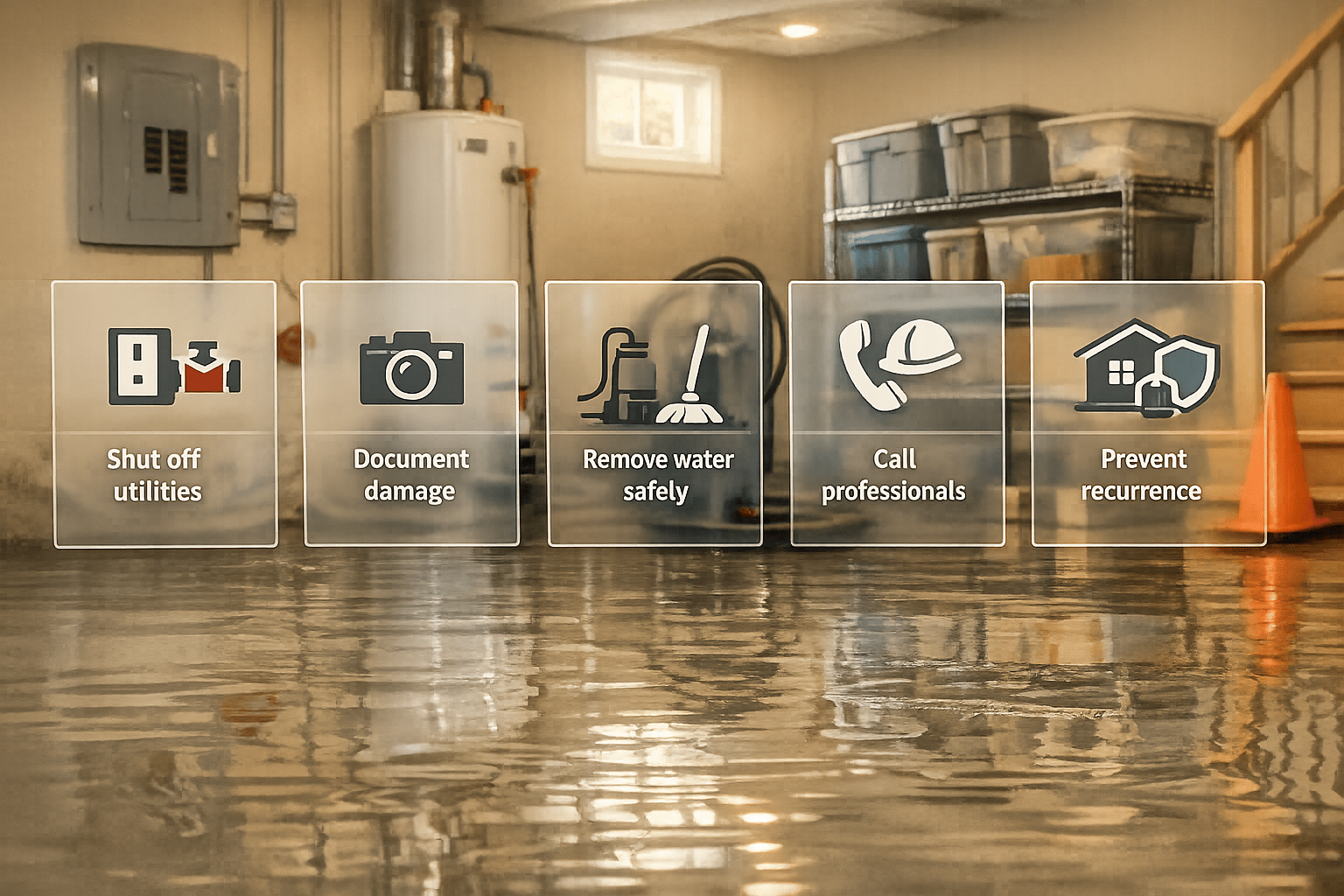
When your basement floods, acting fast is key to minimizing damage and protecting your home and health. Here’s what you need to do immediately:
- Ensure Safety First: Avoid entering the basement until professionals confirm it’s safe. Floodwater can carry electrical charges or harmful contaminants like sewage.
- Turn Off Utilities: If safe, shut off electricity and gas. If not, call your utility providers for help.
- Stop the Water Source: Identify and address the cause – burst pipes, sewer backups, or foundation leaks.
- Document Everything: Take photos and videos of the damage for insurance purposes.
- Remove Water Safely: Use a wet/dry vacuum for small amounts or call professionals for larger floods or contaminated water.
- Call Professionals: Contact water removal services and utility companies for inspections and repairs.
- Clean and Dry Thoroughly: Discard porous items, disinfect surfaces, and use fans and dehumidifiers to dry the area completely.
- Check Insurance Coverage: Review your policy for flood or sewer backup coverage and file a claim promptly.
Prevent future flooding by fixing foundation leaks, installing sump pumps with battery backups, and ensuring proper drainage around your home. Stay proactive to avoid costly repairs and protect your property.
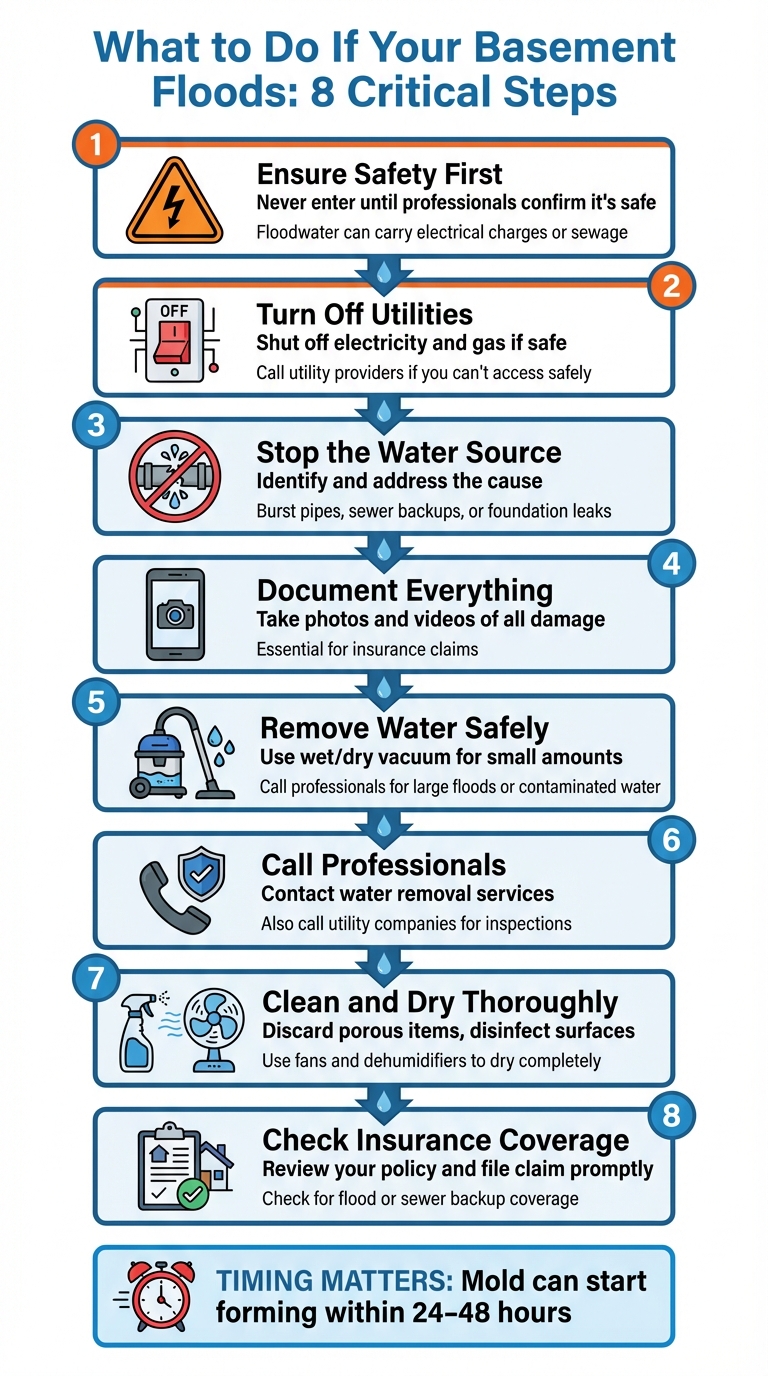
8 Essential Steps to Take When Your Basement Floods
Basement Flooded!? Do This First!
sbb-itb-5761e20
What to Do in the First 24 Hours
The first 24 hours after discovering a flooded basement are crucial. Acting quickly can help minimise damage and reduce health risks. Timing is critical, but your safety must always come first.
Safety First: Protecting Yourself in a Flooded Basement
Never enter a flooded basement until a professional has confirmed it’s safe. Floodwater can carry an electrical charge, especially if your home has older systems. If the electrical panel is submerged or you can’t access it without stepping into water, stay out entirely.
Floodwater is often contaminated, so avoid direct contact. If water has reached outlets, cords, or gas appliances, contact your utility provider right away. Also, stop using all plumbing fixtures – this includes toilets, sinks, and washing machines – as running water could make the flooding worse.
If you absolutely need to enter, wear proper protective gear: insulated safety boots, waterproof gloves, an N95 mask, and safety goggles. Use a battery-powered flashlight instead of flipping light switches, which could create an electrical hazard.
Once personal safety is secured, focus on safely shutting off utilities to prevent further risks.
How to Shut Off Power and Gas
The next step is to safely disconnect utility services.
Turn off the electricity at the main circuit breaker – but only if it’s dry and accessible. If reaching the breaker requires standing in water, do not attempt it yourself. Call your local hydro utility for assistance instead.
If you notice gas or water near gas appliances, evacuate immediately and contact your gas provider. To turn off the gas supply, locate the main valve near your gas metre. If it’s safe to do so, turn the valve so it’s perpendicular to the pipe.
Keep children and pets far away from the flooded area until a professional confirms it’s safe to enter. Let someone know you’re working near the basement, and make sure the area around sewer clean-out caps (usually near the water metre) is clear for service crews. However, don’t attempt to open the caps yourself.
Step-by-Step Guide: What to Do After Your Basement Floods
Once you’ve ensured your utilities are off and the area is safe, it’s time to take action. Here’s what to do next.
Find and Stop the Water Source
The first step is figuring out where the water is coming from. Run a simple drain test by turning on a sink or flushing a toilet. If water starts backing up through the floor drain, the issue is likely a sewage or plumbing blockage. If nothing happens, the culprit could be groundwater seeping in through your foundation.
Look for burst pipes, leaking appliances, or a sump pump failure. If you discover a burst pipe, shut off your main water valve immediately. If it’s a sewer backup, avoid using any water fixtures, including sinks, toilets, and dishwashers, to prevent worsening the situation.
For external sources, such as foundation leaks, water often enters through cracks in walls or floors, poorly sealed windows, or the cove joint where the wall meets the floor. Heavy rain can also lead to hydrostatic pressure, pushing water through even the smallest openings. Check your home’s exterior for clogged eavestroughs or downspouts, and clear away debris to ensure water is draining away from your foundation. The ground around your house should slope downward by at least one inch per foot for 6–8 feet.
If your sump pump isn’t working, verify it’s receiving power and check the float switch to ensure it moves freely, while being careful to avoid common sump pump mistakes. For municipal sewer backups, report the flooding to your local emergency line, such as 3-1-1 in many Canadian cities.
Take Photos and Document Everything for Insurance
Before touching anything, grab your camera or phone and document the damage thoroughly. Take clear photos and videos of the standing water, showing its depth and reach. Capture images of the suspected water source and all damaged items, such as furniture, electronics, appliances, flooring, and walls.
Separate structural damage from personal belongings when documenting. Photograph cracks in the foundation, warped floors, water stains on drywall, and any visible mould. Create a detailed written inventory of damaged items, including their approximate ages and original purchase prices if you can.
Keep receipts for any emergency repairs, cleanup costs, or temporary fixes. This documentation will be essential for your insurance claim and could impact your reimbursement.
Once you’ve documented everything, you can begin removing the water safely.
Remove Standing Water
Ensure all electrical hazards are eliminated before you start. Protect yourself with rubber boots, waterproof gloves, safety glasses, and a face mask. Floodwater often contains harmful contaminants like sewage and bacteria.
For shallow water (a few centimetres), a wet/dry vacuum can usually handle the job. For deeper water, you may need a sump pump or submersible pump. However, if the water has reached gas-powered equipment like your furnace or water heater, or if the contamination is severe, call professional water removal services immediately.
Clear at least one metre of space around your sewer clean-out caps (usually near the water metre) so professionals can access them – but don’t try to open these caps yourself. After the water is removed, be sure to wash thoroughly and launder any clothing that came into contact with floodwater.
Who Should You Call When Your Basement Floods?
Once you’ve safely turned off utilities and removed any immediate water, the next step is contacting the right professionals. Acting quickly can stop a small problem from turning into a much bigger one. Your priorities should be ensuring safety, bringing in experts for water removal, and having utility systems inspected. With these steps in place, you can ensure a faster and more effective resolution.
Emergency Water Removal and Pumping Services
After making the area safe, your first call should be to a professional water removal service. Depending on how severe the flooding is, they might use equipment like truck-mounted or portable extractors to remove water efficiently. Floodwaters are categorized into three types: clean water (e.g., from burst pipes), grey water (e.g., from appliance leaks), and black water (e.g., sewage backups). If sewage is involved, don’t attempt to clean it yourself unless you have the proper protective gear.
"When your basement is wet, there is a legitimate risk of electrical shock. Electricity can move through water or wet flooring and cause a severe electrical shock."
Leaquida Waterproofing provides emergency water extraction and sump pump inspections across the Greater Toronto Area, including Aurora, Richmond Hill, and Stouffville. Their team is familiar with local drainage challenges. For small leaks, professional drying usually takes 24–48 hours, while larger floods might need 3–5 days of continuous dehumidification.
Once the water is being handled, your attention should turn to your utilities.
When to Contact Utility Companies
If floodwater has reached electrical outlets, baseboard heaters, or appliances, call your local hydro provider immediately. Never try to restore power yourself – always have a licensed electrician inspect the system first.
For gas-related issues, such as water threatening your furnace or water heater – or if you notice a rotten egg smell – contact your gas provider right away. If you detect gas, leave the house immediately and call from outside.
"If your house has flooded and any of your natural gas appliances (including furnaces, boilers, water heaters and dryers) have come into contact with water, they’re not safe to use."
- Utilities Kingston
For sewer backups, dial 3-1-1 in cities like Toronto or Ottawa to report the problem. This helps municipal services monitor and address infrastructure issues effectively.
How to Clean and Restore Your Basement
Once you’ve secured utilities and documented any damage, the next step is tackling the restoration process. Cleaning your basement thoroughly is key to preventing mould, bacteria, and further structural issues.
Cleaning Up After a Basement Flood
Start by sorting through the items in your basement into three categories: keep, clean, or toss. Porous items like carpet padding, insulation, mattresses, or cardboard need to be discarded immediately – they absorb moisture and can harbour bacteria. On the other hand, hard surfaces such as concrete, metal tools, and plastic containers can often be salvaged with proper cleaning and disinfection.
Protect yourself with waterproof boots, gloves, and an N95 respirator mask before starting the cleanup to avoid exposure to harmful contaminants. Begin by scrubbing concrete and masonry surfaces with detergent and warm water. Follow this with a disinfectant solution made by mixing 3/4 to 1 cup of household bleach per gallon of water. For wood framing and studs, bleach isn’t sufficient since it doesn’t penetrate deeply. Instead, use a commercial antimicrobial spray to address mould at its roots.
If your drywall has been affected, it will likely need to be removed. Drywall absorbs moisture, so cut it out at least 30 centimetres above the waterline to ensure all damaged material is eliminated. Keep in mind that even a small amount of water – just an inch in a 1,000-square-foot basement – can result in over $10,000 in damage.
Once everything is cleaned, the next crucial step is drying the space thoroughly to prevent future issues.
How to Dry Out Your Basement Properly
After cleaning, drying your basement is essential to stop lingering moisture from causing mould growth. Even if surfaces seem dry to the touch, moisture may still be present. Use high-velocity fans to direct airflow across floors and walls, and run a dehumidifier on its lowest humidity setting. Place the dehumidifier at least 15–20 centimetres away from walls to ensure proper airflow.
Drying times will depend on the extent of the flood. Minor flooding may take 2–4 days, while more severe situations could require several weeks. A moisture meter can help confirm when hidden areas and porous materials are truly dry. Ensure wood framing has a moisture level below 15% before reinstalling insulation or drywall.
Keep the humidity in your basement under 50% to prevent mould from returning. Avoid opening windows unless the outside air is drier than the basement air. If it’s hot and humid outside, rely on air conditioning or dehumidifiers instead. Once the drying process is complete, consider applying antimicrobial treatments or sprays to create a protective barrier against future mould spores. Proper drying not only helps prevent mould but also safeguards the structural integrity of your basement.
Will Insurance Cover Your Basement Flood?
Whether your insurance will cover a basement flood depends on the specifics of your policy. In Canada, most standard home insurance plans cover accidental internal water damage but exclude external flooding or sewer backups unless you’ve added optional riders or endorsements.
Overland flood insurance is designed to cover water entering your home at ground level, such as from heavy rain, melting snow, or overflowing rivers and lakes. On the other hand, sewer backup coverage protects against water or sewage that backs up through drains, toilets, or your sump pump. If you don’t have these specific endorsements, you’ll likely have to cover the costs yourself. For example, flash floods in Toronto and southern Ontario in July 2024 caused over CA$940 million in insured damages, highlighting the importance of having the right coverage.
Beyond property damage, it’s worth checking if your policy includes coverage for additional living expenses (ALE). If your home becomes uninhabitable due to a basement flood, ALE can help pay for temporary housing, meals, or other increased living costs. However, this benefit only applies if the flood was caused by an insured peril, meaning you must have purchased the appropriate optional coverage for ALE to activate.
Keep in mind that deductibles for flood-related claims are often higher than those for standard claims. These deductibles may be a fixed amount or calculated as a percentage of your claim. Typically, you have up to two years from the date of the incident to file a claim, but a "proof of loss" form is usually required within 30 days.
"Water damage in a basement due to a sewer backup is only covered if you have purchased specific, optional sewer backup coverage." – Insurance Bureau of Canada
To manage the aftermath of a flood and ensure your claim is processed smoothly, it’s crucial to understand your policy details. Document all damage thoroughly with photos and videos before starting cleanup. Save receipts for any repairs, cleanup, or additional living expenses. Avoid discarding damaged items unless they pose a health risk, as adjusters may need to inspect them. Finally, contact your insurance provider immediately to confirm your coverage, limits, and deductibles.
How to Prevent Future Basement Floods
Once your basement has been cleaned and restored, the next step is ensuring it stays dry in the future. Prevention is far less expensive than the cost of repairs, especially when you consider that the average cost of restoring a flooded basement in Canada is around CA$43,000. By focusing on waterproofing and drainage systems, you can avoid this hefty expense.
Start by tackling common water entry points. These include foundation cracks, the cove joint (where the floor meets the wall), and poorly sealed windows. Even minor cracks can allow water to seep in, especially when heavy rains cause the soil around your home to become saturated and increase hydrostatic pressure. Regularly inspect your foundation for any signs of damage, particularly in high-stress areas like sloped foundations. If you spot any cracks, seal them with waterproof sealants or epoxy as soon as possible.
Your drainage system is another critical factor in flood prevention. Ensure that your downspouts extend at least 1.5 metres away from your foundation and are not connected to sanitary sewers. Additionally, check that the ground around your home slopes away from the foundation at a rate of one inch per foot for a distance of 1.8 to 2.4 metres (6 to 8 feet). If your lot slopes toward your house, it increases the chances of water pooling against your foundation walls.
Installing a sump pump with a battery backup is essential, and it’s recommended to replace your sump pump every 10 years. Another key device is a backwater valve, which prevents sewage from municipal lines from backing up into your home during heavy rain. Make sure it’s installed with at least a 2% grade and inspect it annually to ensure it’s free of debris. If you’re in Toronto, you might be eligible for up to CA$3,400 through the Toronto Basement Flooding Protection Subsidy Program to help cover the cost of these installations.
Waterproofing Options and What They Cost
There are two main types of professional waterproofing: interior and exterior.
Interior waterproofing is a more affordable option, costing between CA$70 and CA$120 per linear foot. It focuses on managing water that has already entered the basement. This involves using drainage channels, sump pumps, and vapour barriers. While it’s less invasive, it addresses only the symptoms rather than the root cause.
On the other hand, exterior waterproofing is a more comprehensive solution that prevents water from reaching your foundation walls in the first place. It involves excavating around the foundation to install waterproof membranes and improve drainage systems. This method costs between CA$100 and CA$250 per linear foot and offers longer-lasting protection. Costs can vary depending on factors like soil conditions, excavation depth, and how accessible your property is.
| Waterproofing Type | Cost per Linear Foot | Key Features | Best For |
|---|---|---|---|
| Interior Waterproofing | CA$70–CA$120 | Drainage channels, sump pumps, vapour barriers | Managing water already inside; budget-conscious homeowners |
| Exterior Waterproofing | CA$100–CA$250 | Excavation, membrane installation, improved drainage | Long-term prevention; homes with chronic seepage |
If your foundation has cracks, repairing them early can save you from more extensive damage down the line. Repairs typically cost between CA$500 and CA$1,200 per crack, depending on the severity and ease of access. This is especially important in regions with freeze-thaw cycles, as water that freezes inside cracks can cause them to widen significantly over time.
These waterproofing methods provide a strong starting point for protecting your basement from future flooding.
Waterproofing Services from Leaquida Waterproofing

Leaquida Waterproofing offers specialized services to protect your basement for the long haul. Their offerings include foundation crack repair to seal potential entry points, sump pump installation with battery backup systems to handle groundwater, and backwater valve installation to guard against sewage backups. They also provide both interior and exterior waterproofing solutions tailored to your home’s specific needs – whether it’s dealing with hydrostatic pressure, poor grading, or outdated drainage systems.
Their expertise extends to French drain installation and window well waterproofing, ensuring that all possible water entry points are addressed. With clear pricing and comprehensive warranties, Leaquida Waterproofing helps homeowners in Toronto and nearby areas implement effective flood prevention measures, protecting both property value and peace of mind.
Conclusion
Dealing with a flooded basement requires quick and decisive action – mould can start forming within just 24 to 48 hours. Prolonged water exposure can compromise the structural integrity of your home by weakening the foundation, walls, and floors. To safeguard your family’s health and ensure a smoother insurance claim process, it’s essential to prioritise safety, document the damage thoroughly, and seek professional assistance.
Calling in experts can make all the difference. Restoration professionals have access to industrial-grade equipment and are trained to manage hazardous situations, such as sewage contamination, safely and effectively. Keeping detailed records of the damage and all communications with your insurer can also significantly simplify the claims process.
Once the immediate crisis is resolved, the focus should shift to prevention. While restoration services can be expensive, taking proactive steps like waterproofing your home can save you from costly repairs in the future. Installing a sump pump with a battery backup, sealing foundation cracks, and ensuring proper drainage around your property are practical measures to reduce the risk of future flooding.
For homeowners ready to invest in long-term solutions, Leaquida Waterproofing offers a range of services tailored to your home’s specific needs. From repairing foundation cracks to installing sump pumps and providing both interior and exterior waterproofing, they deliver expert solutions. Operating in the Toronto area, they’re known for transparent pricing and trusted expertise, helping homeowners protect their properties for the long haul.
Taking action today – paired with smart planning for tomorrow – can ensure your basement stays dry and your home remains structurally sound. These measures not only shield your property from future flooding but also protect your family’s health and financial stability.
FAQs
Is it safe to enter a flooded basement?
Entering a flooded basement can be dangerous, particularly if the water is deep or there’s a chance of electrical hazards. Submerged electrical wires pose a serious risk of injury. Stay out of the area if you suspect any threats. Always put safety first – make sure the power is turned off and potential dangers are dealt with before starting any cleanup or inspection.
How can I tell if it’s a sewer backup or a leak?
Sewer backups are usually messy and unpleasant, involving foul-smelling, discoloured water mixed with waste or debris. They can often lead to overflowing toilets or drains. Leaks, by contrast, are generally linked to plumbing problems and involve clear or slightly discoloured water, typically without any odour or waste. A key sign of a sewer issue is water backing up through drains when you use fixtures. Since sewage-related floods pose health risks, it’s best to call in professionals for cleanup.
What should I do before starting cleanup for insurance?
Before jumping into cleanup after a basement flood, it’s crucial to document the damage thoroughly. Take clear photos of all affected areas, damaged belongings, and structural issues. Save receipts for any emergency repairs or replacements you’ve already made.
Next, contact your insurance company to confirm what your policy covers, report the damage, and follow their instructions for filing a claim. Proper documentation and communication with your insurer can help ensure the claims process goes as smoothly as possible.
 CLOGGED OR BROKEN WEEPING TILE