
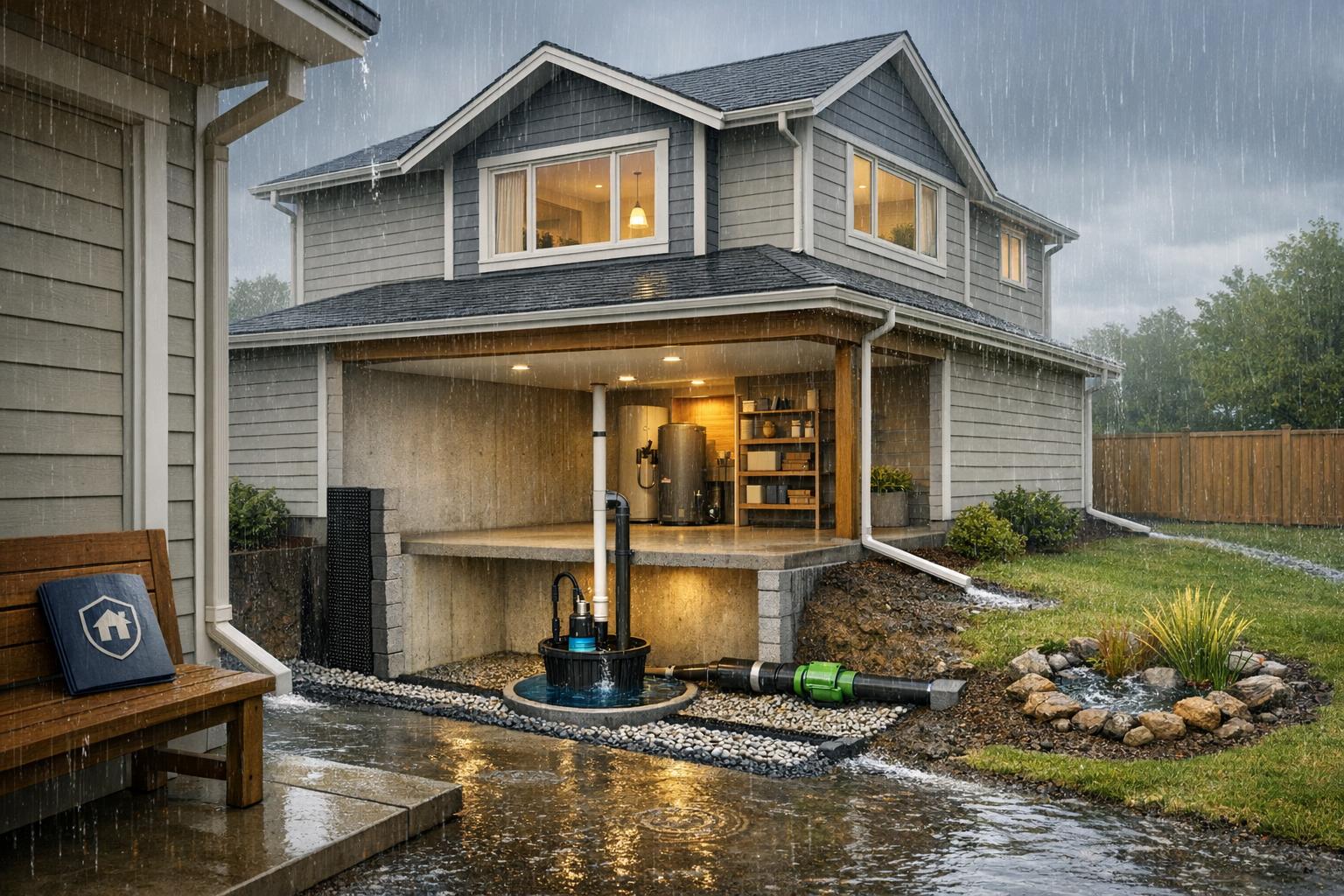
Flooding is Canada’s most frequent and costly natural disaster, with 1.8 million households at high risk and annual insured losses averaging $2.97 billion. Since 1960, flood events have surged by 300%, with damages reaching a record $8 billion in 2024. Protecting your home requires understanding risks, spotting warning signs, and taking proactive steps.
Key Takeaways:
- Common causes: Heavy rain, poor drainage, foundation cracks, and sewer backups.
- Quick actions: Clean gutters, extend downspouts, grade soil away from your house, and seal basement windows.
- Long-term solutions: Install sump pumps with backups, backwater valves, and exterior waterproofing systems.
- Preparation tips: Inspect drainage, monitor foundation cracks, and create an emergency kit.
- Insurance: Ensure coverage for overland water and sewer backups.
Flood risks are rising due to climate changes, making prevention and maintenance critical to avoid costly repairs. Let’s explore how to safeguard your home.
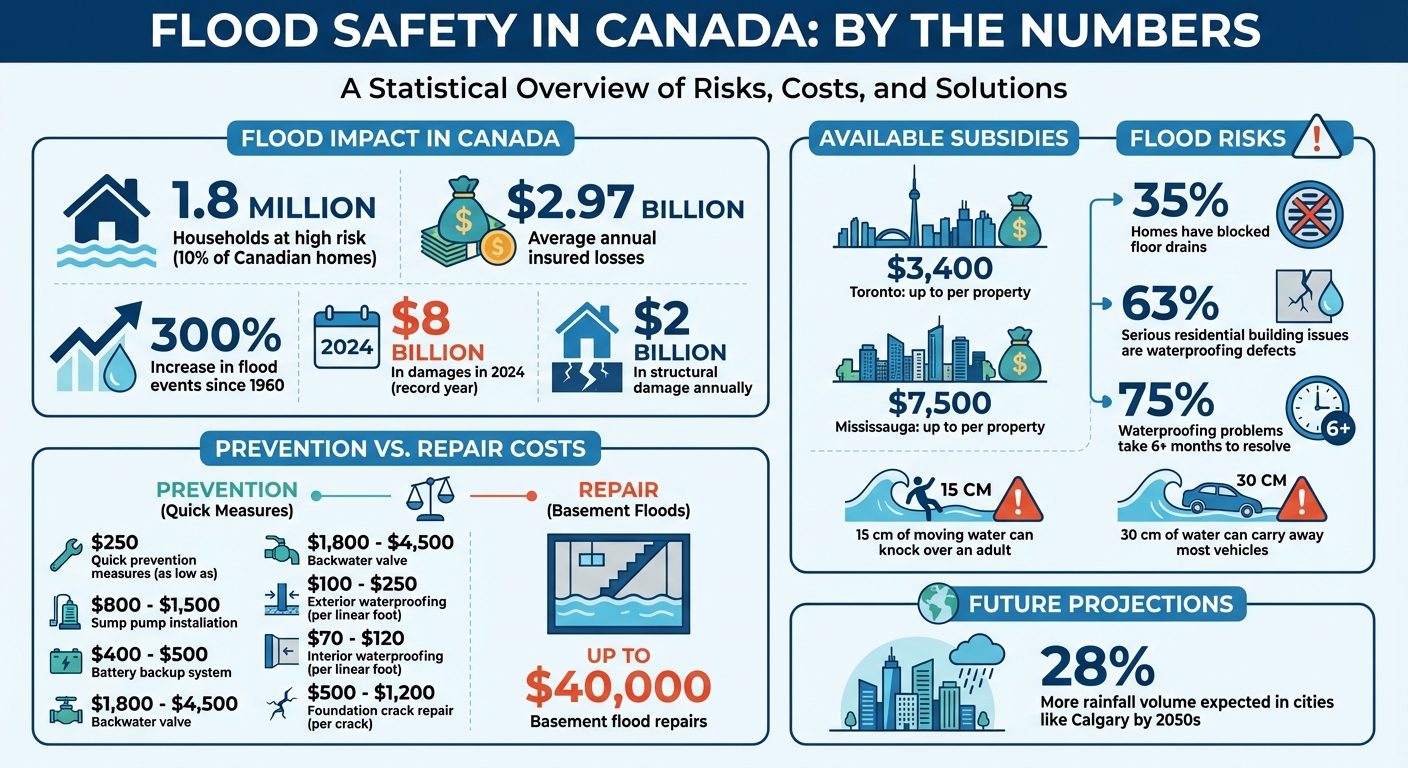
Canada Flood Statistics and Home Protection Costs
TOP 5 Ways to Protect Your Home from FLOODING
sbb-itb-5761e20
Common Causes of Home Flooding
Knowing what leads to home flooding can help you identify risks before water becomes a problem. Across Canada, four main factors are behind most residential flooding.
Heavy Rainfall and Storms
Short, intense rainstorms are happening more often as warmer air holds more moisture. These storms overwhelm outdated municipal drainage systems, which were built for lighter rainfall. For example, Ontario experienced its second-costliest summer for flooding in 2024, with insured damages surpassing $1 billion due to heavy rain that overwhelmed infrastructure.
Other weather events, like atmospheric rivers (narrow streams of moisture in the sky) and rapid spring snowmelt, also bring massive amounts of water in a short time. This is especially problematic in the Prairies, where sudden temperature spikes can cause runoff faster than drainage systems can handle. Ice storms add another layer of risk by cutting power to sump pumps just as melting ice and rain increase flood chances.
Poor Drainage Around the Property
Beyond weather, poor property drainage can direct water straight to your home. Improper grading – when your land slopes toward your house instead of away – causes surface water and snowmelt to collect around basement walls.
“When water hits pavement, it runs off instantly and goes to the lowest location around which very often could be people’s basements.” – Dr. Blair Feltmate, Head of the Intact Centre on Climate Adaptation at the University of Waterloo
Other drainage issues include clogged eavestroughs, which force water to pool near your foundation, and downspouts that discharge too close to the house (less than two metres away). Underground weeping tiles, which are meant to carry groundwater away, can fail if they get clogged or collapse. Blocked drainage swales and catch basins also prevent stormwater from leaving your property, pushing it toward your home instead.
Foundation Cracks and Leaks
Even small cracks in your foundation can let water seep in under pressure. Hydrostatic pressure – the force of groundwater pressing against your foundation – can push moisture through porous concrete, tie rod holes, or gaps around pipes.
Signs of trouble include efflorescence, a white powdery residue on basement walls that shows moisture is moving through the concrete. Wet streaks running down walls often point to cracks, while water pooling at the floor-wall joint (the “cove joint”) suggests pressure from below. Shifting foundations, caused by uneven soil saturation, can also jam doors or windows.
Most standard home insurance policies don’t cover water damage from foundation cracks or basement walls, making prevention essential. External drainage issues can worsen these vulnerabilities, leading to costly repairs.
Sewer Backups
Heavy rain can overwhelm municipal sewer systems, causing wastewater to back up into homes through floor drains and toilets. This not only damages property but also poses health risks. Research shows that 35% of homes have blocked or covered floor drains, removing a key exit point for water during floods. Without a backwater valve – a device that prevents sewage from flowing back into your home – your property is at greater risk during sewer overloads.
Understanding these causes is the first step in protecting your home from flooding.
Signs Your Home May Be at Risk of Flooding
Spotting flood risks early can save you from costly damage. A thorough inspection, both outside and inside your home, is key to identifying potential issues.
Outdoor warning signs are often the easiest to spot. Take a walk around your property during or after rainfall. Look for water pooling in your yard, which could mean drainage problems. Check if your yard slopes towards your foundation or if nearby surfaces direct water that way. Watch for clogged eavestroughs, downspouts that discharge too close to the house (less than two metres), and water collecting in window wells. Cracks in your foundation or window wells can also act as entry points for water under pressure.
“Walk around the property and see if water is pooling anywhere, a sure indication that there is a problem.” – Square One Insurance
Indoor warning signs often show up in the basement first. A musty smell could mean trapped moisture and possibly hidden mould. If you notice white, chalky residue (efflorescence) on foundation walls, it’s a sign that water is seeping through the concrete and leaving behind salt deposits as it evaporates. Other red flags include damp walls after rain, peeling or bubbling paint, soft or crumbling drywall, and rust on metal beams or appliances. Even doors or windows that suddenly stick could point to foundation shifts caused by soil saturation.
Seasonal weather events can also highlight hidden vulnerabilities. In spring, snowmelt combined with rain tests your drainage system’s ability to handle excess water. Winter rain on frozen ground can’t be absorbed, so watch for runoff heading towards your foundation. A sump pump that runs constantly – or not at all – during storms might indicate an overwhelmed drainage system. After heavy rain, check your foundation walls for high-water marks or silt lines that show where water has been.
With 2 out of 10 houses in Canada at risk of flooding and a 300% increase in flooding incidents since 1960, paying attention to these warning signs is more important than ever. Catching issues early can help you avoid major damage and costly repairs. Next, we’ll explore practical steps to protect your home from flooding risks.
Immediate Actions: Quick Wins for Flood Prevention
Taking small, proactive steps – some costing as little as $250 – can drastically lower the risk of flooding, especially when compared to the hefty $40,000 price tag that basement repairs can reach. These straightforward measures are key to protecting your home’s foundation and interior from water damage.
Clear Gutters and Downspouts
One of the easiest and most effective tasks is keeping your gutters and downspouts free of debris. Clogged gutters cause water to overflow and pool against your foundation, which can lead to basement leaks. Cleaning out your eavestroughs at least twice a year ensures water flows properly through the system and away from your home.
“If you don’t clean out your gutter, the water has nowhere to go and it will keep dripping in the areas that you don’t really want it to go, like into your home.” – Anabela Bonada, Managing Director of Climate Science, Intact Centre on Climate Adaptation
To further protect your foundation, extend your downspouts so they discharge water at least two metres away. If your downspouts are currently connected to the municipal sewer system, disconnecting them is a smart move. This prevents overloading the sewers during heavy rain, which reduces the risk of backups flooding your home.
Grade Soil Away from Your Foundation
Take a walk around your property to identify areas where the soil slopes toward your house. These low spots can act like funnels, directing water straight to your foundation walls. To fix this, add clay-based soil and compact it firmly to create a downward slope extending at least two metres away from your foundation. This simple adjustment ensures water flows toward municipal storm drains or street gutters rather than pooling near your home – or worse, a neighbour’s property. Keep an eye on these areas after heavy rain and make adjustments if needed.
Seal Basement Windows and Doors
Basement windows and ground-level doors are particularly vulnerable during heavy rain. Use weather-resistant sealant to close any gaps around window frames and door thresholds. Regularly inspect these seals, especially before the wettest seasons like spring and fall, and reapply sealant if you notice cracks or wear.
For extra precaution, consider installing clear plastic window well covers, which start at around $35. These covers keep rain and snow from building up in window wells, reducing pressure on the glass. If water does collect in a window well, clear out debris and ensure the drainage system is working properly.
Disconnect and Redirect Eavestroughs
Make sure your eavestrough system is set up to direct water safely away from your home. Disconnecting downspouts from the municipal sewer system can prevent overburdening local infrastructure during intense rainfall. This step not only helps protect your home but also contributes to reducing flood risks in your community.
Professional Waterproofing Systems
Quick fixes might get you through a storm, but for long-term protection, professional waterproofing systems are the way to go. These solutions are designed to keep water out of your home by addressing multiple potential entry points.
Install Sump Pumps and Backup Power Systems
A sump pump is your first line of defence against groundwater. Positioned in a pit at the lowest point of your basement, it collects and pumps water away from your home. Most residential sump pumps can handle between 2,000 and 5,000 gallons of water per hour.
But here’s the catch: sump pumps rely on electricity. During severe storms, power outages can render them useless – right when you need them most. That’s why backup power is critical.
“You want to make sure you have a battery backup or an external generator to run the sump pump for 42 to 72 hours” – Dr. Blair Feltmate, Head of the Intact Centre on Climate Adaptation at the University of Waterloo
Professional installation costs range from $800 to $1,500, while adding a battery backup system will set you back another $400–$500. If your pump is over 10 years old, it’s time to replace it.
If you’re in Toronto, you may qualify for a Basement Flooding Protection Subsidy of up to $3,400 per property to help with installation costs. Mississauga residents can apply for rebates up to $7,500.
Install Backwater Valves
A backwater valve is a simple but effective tool to prevent sewer backups. It acts as a one-way gate, allowing wastewater to flow out of your home while blocking sewage from reversing into your basement during heavy rainfall or municipal system overloads. Because it operates mechanically, it remains reliable even during power outages.
Installing a backwater valve typically costs between $1,800 and $4,500. For it to work properly, your drainage system must have at least a 2% grade. Additionally, your foundation drain (weeping tile) should connect downstream of the valve; otherwise, your own drainage system could flood your basement. Regular maintenance is essential – debris can prevent the valve’s gate from sealing completely, so annual clean-outs are a must.
Apply Exterior Waterproofing Membranes
Exterior waterproofing keeps water from ever reaching your foundation. This method involves excavating around your home’s perimeter and applying a multi-layered system. Typically, this includes rubberized bitumen to seal the concrete, a dimple board (like Delta-MS) to create an air gap, clear gravel for filtration, and weeping tiles to direct water away.
“A well-installed waterproofing membrane acts as a barrier between moisture and the building’s structural components” – Carrie Powers, Polyguard
This system also resists hydrostatic pressure – the force groundwater exerts against your foundation.
Professional exterior waterproofing costs between $100 and $250 per linear foot [website]. While it’s a significant investment, it offers a long-term solution with a lifespan of 10 to 20 years. By comparison, interior waterproofing, which costs $70 to $120 per linear foot, manages water after it reaches the foundation but doesn’t stop the initial contact [website].
Repair Foundation Cracks and Structural Vulnerabilities
Even small cracks in your foundation can let water in and compromise your home’s structure. Professional repairs involve injecting specialized resins into vertical or diagonal cracks to seal them. This process costs $500 to $1,200 per crack, depending on accessibility [website].
“Waterproofing is not a standalone solution but rather a preventative measure. If there are underlying issues such as structural defects… they must be addressed before applying any waterproofing materials” – Anahera Thomas, Tremco Australia
It’s worth noting that waterproofing defects account for 63% of serious issues in residential buildings. Worse, 75% of these problems take over six months to resolve once detected.
If you notice damp spots in your basement corners, it could mean your weeping tiles are clogged or damaged and need professional attention. Addressing these structural weaknesses first ensures that your waterproofing system works as intended. Together, these professional solutions form a robust strategy for flood prevention and long-term protection.
Emergency Preparedness for Flooding
Taking steps to prepare for a flood can make all the difference when it comes to protecting your home and loved ones. Once a flood warning is issued, it’s time to act fast.
Stay informed by tuning into local radio, television, or Weatheradio for updates. A flood watch means conditions are favourable for flooding, so stay vigilant. A flood warning, however, signals that flooding is already happening, and immediate action is necessary. Start by moving furniture, electronics, and valuables to higher floors. Store important documents in waterproof containers placed at elevated locations. Relocate hazardous materials like cleaning supplies and pesticides to prevent contamination of floodwaters. These steps can help minimize damage when the water rises.
Next, secure your home’s utilities. Turn off the furnace, outside gas valve, and main electrical breaker to reduce the risk of fire or electrical hazards. Before shutting off your water supply, fill bathtubs and containers with water for essential use. If your home lacks a backwater valve, plug basement floor drains and disconnect eavestroughs from the sewer line. In severe cases, remove basement toilets and seal the sewer drains. Outside, make sure propane tanks are strapped down or anchored to keep them from floating away.
Ensure your communication devices are ready. Fully charge mobile phones and conserve their batteries for emergencies. Pack an emergency kit with enough supplies to last at least 72 hours. Include essentials like one gallon of water per person per day, non-perishable food, medications, a first aid kit, a flashlight, a hand-crank radio, and extra batteries. Don’t forget to include items for pets and any special needs of household members.
If authorities issue an evacuation order, follow it immediately. Leave a note at your home with your evacuation details. Never attempt to drive or walk through flooded roads – more than half of flood-related deaths occur this way. Just 15 centimetres of moving water can knock over an adult, while 30 centimetres can carry away most vehicles. If you find yourself trapped in a flooding building, move to the highest level. Avoid enclosed attics, as they can trap you; instead, get onto the roof and signal for help.
Long-Term Flood Prevention Strategies
Maintain Drainage Systems Seasonally
Keeping your drainage system in good shape requires consistent upkeep. Aim to clean gutters and downspouts twice a year to avoid clogs and overflows. Beyond gutters, test your sump pump regularly, especially before storm season, to confirm it’s working properly. If your sump pump is over a decade old, consider replacing it with a model that includes pressure or pendulum switches for improved reliability. Homes equipped with backwater valves should have them cleaned annually using the clean-out ports to prevent sewage backups. Additionally, inspect hoses on appliances like washing machines, dishwashers, and refrigerators every three to five years, replacing them as needed to prevent internal leaks.
Monitor Foundation Integrity
After heavy rainfall, check your property for signs of foundation trouble, such as new or widening cracks or damp spots. Pay close attention to basement corners, as dampness could signal blocked or failing weeping tiles. Sticking doors and windows that suddenly won’t close properly may also indicate foundation shifts requiring immediate attention.
Addressing foundation issues early saves money in the long run. Hiring a licensed plumber to inspect underground pipes with a camera can uncover root intrusions, blockages, or deterioration before they escalate into costly repairs.
While focusing on current structural concerns, it’s wise to also prepare for future climate-related challenges.
Plan for Climate Adaptation
By the 2050s, areas like Calgary are expected to experience rainstorms with about 28% more volume due to climate change. Preparing your property for these changes is crucial.
Consider replacing non-absorbent driveways and sidewalks with permeable materials that let water soak into the ground. Elevate essential systems – such as electrical panels, furnaces, and water heaters – above potential flood levels. For basements, opt for flood-resistant materials like ceramic tile, waterproof vinyl, or closed-cell foam insulation. Adding shrubs and vegetation around your property can also help naturally absorb excess water.
Document Property Conditions for Insurance Purposes
Keep detailed records of your home’s condition. Take photos and videos of your property and valuables, and save receipts for flood-prevention upgrades, regular maintenance, and professional inspections. These records simplify insurance claims and demonstrate the steps you’ve taken to protect your home. Review your insurance policy annually to ensure it includes coverage for “overland water” and “sewer backup”, as these are often excluded from standard policies.
Store essential documents in waterproof containers placed at least 30 centimetres above the basement floor, and keep digital copies in cloud storage. With 1.8 million Canadian households (10% of homes) at high risk of flooding, thorough documentation is a critical safeguard for your property.
These strategies not only prepare your home for long-term challenges but also complement immediate flood protection measures discussed earlier.
Conclusion
Protecting your home from flooding involves a mix of immediate actions and longer-term planning. Flooding causes about $2 billion in structural damage annually across Canada, with 1.8 million households at risk each year. Taking steps now can help you avoid expensive repairs and potential insurance headaches later.
Start with simple but effective measures: clear your gutters, extend downspouts 2–3 metres away from your home’s foundation, and seal any cracks or entry points. These actions help manage surface water during heavy rain. To strengthen your defences, consider installing sump pumps with battery backups, backwater valves, and professional waterproofing systems. These additions protect against issues like sewer backups and rising groundwater.
While immediate fixes are essential, the growing impact of climate change means flooding risks are increasing. For instance, Ontario faced over $1 billion in insured flood damage in 2024. This underscores the need for adaptable strategies to keep your home protected as conditions evolve.
Evaluate your property’s specific vulnerabilities based on local risks, and ensure your insurance policy includes coverage for overland water and sewer backups. Keep detailed records of all preventive work. As the City of Toronto emphasizes:
“Generally, you are responsible for damage caused by a blocked drain pipe, leaking foundation walls or poor lot drainage on your property. Prevention is vital!”
This highlights the importance of regular maintenance and targeted upgrades, as outlined in this guide.
Combining routine upkeep with professional waterproofing offers the best defence against flooding. Every step you take reduces your risk and helps safeguard your home.


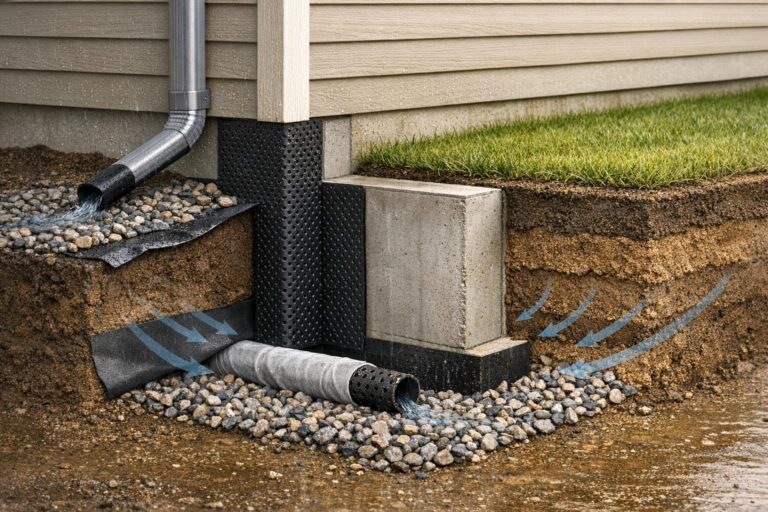
 CLOGGED OR BROKEN WEEPING TILE