
Your roof is your home’s shield against Canada’s harsh weather. Without proper waterproofing, even small leaks can lead to damage costing over $10,000, weaken your home’s structure, and create health risks like mould. Here’s what you need to know:
- Common causes of water damage: Aging materials, poor installation, extreme weather, and blocked drainage.
- Key waterproofing solutions: Membranes (EPDM, PVC), liquid coatings, bituminous systems, and sealants for minor repairs.
- Roof-specific tips: Flat roofs need seamless barriers; sloped roofs require ice shields; green roofs need root-resistant materials.
- Signs of damage: Water stains, granule loss, peeling paint, and bubbling materials.
- Maintenance essentials: Inspect twice a year, clear gutters, and reapply coatings every 10–15 years.
Professional installation ensures your roof meets Canadian standards, prevents costly mistakes, and upholds warranties. Don’t wait for damage – invest in waterproofing to protect your home, save on repairs, and maintain energy efficiency.
How to waterproof and seal leaking bitumen roofs.
sbb-itb-5761e20
Common Causes of Roof Water Damage
Catching roof water damage early can save you a lot of money and headaches. In Canada, unique weather conditions and wear-and-tear challenges make roofs particularly vulnerable. Let’s dive into the four main causes of roof leaks.
Aging Roofing Materials
Over time, roofing materials lose their ability to keep water out. For example, asphalt shingles typically last 20 to 30 years, while metal roofs can hold up for 40 to 70 years. But as they age, shingles may lose their granules and adhesive, and metal components can start to corrode.
One telltale sign of aging is granule loss. If you notice shingle grit collecting in your gutters or on the ground, it’s a sign your shingles are breaking down. Temperature changes can also cause nail pops, which lift shingles and expose the roof deck to moisture. Inside your home, watch for water stains on ceilings, peeling paint, or musty smells – these can all point to hidden roof damage. Interestingly, more than half of roof issues are first discovered in the attic.
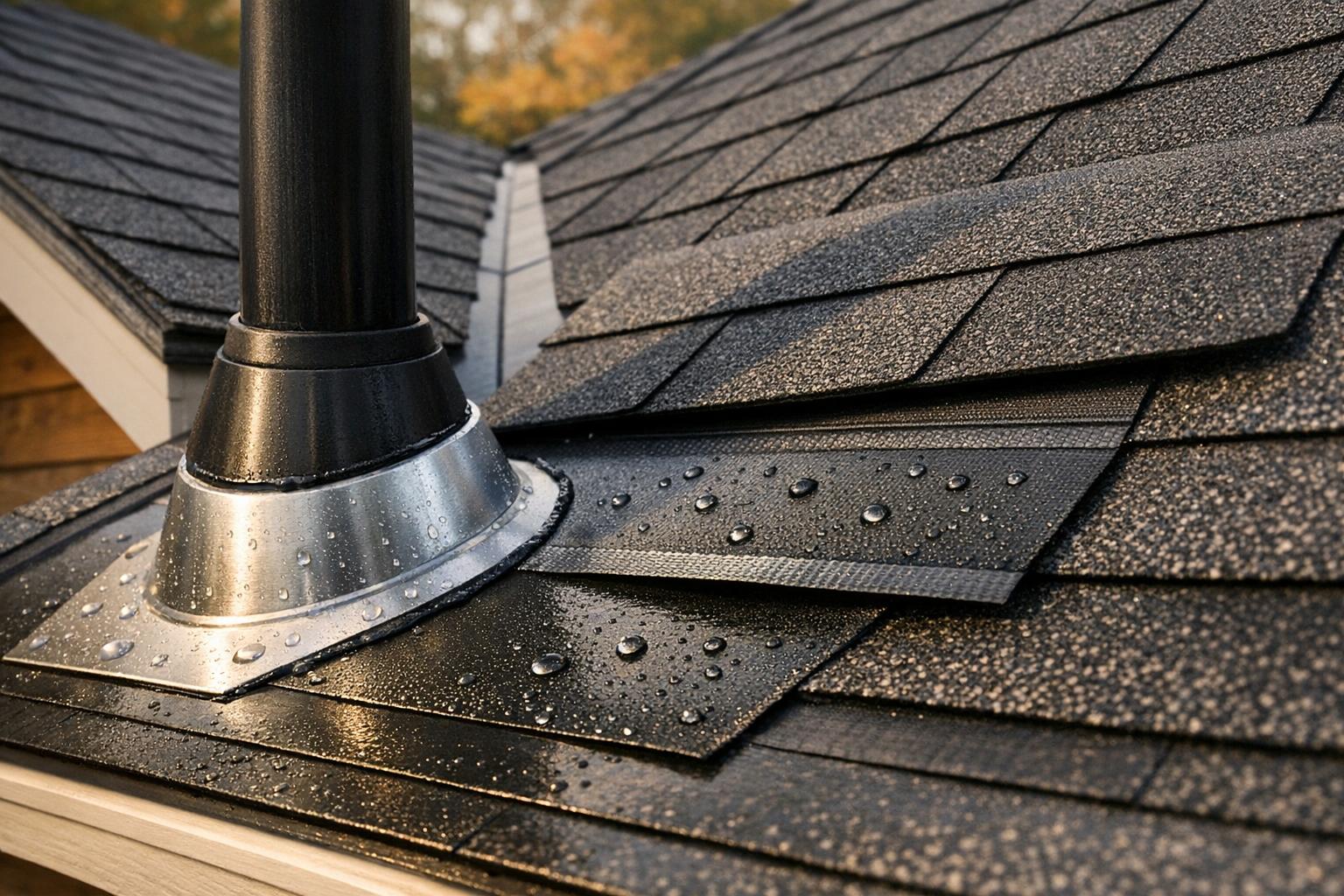
Other problem areas include metal flashing around chimneys and vents, which can rust, and rubber pipe boot flashings, which often fail after 7 to 10 years as they become brittle.
Poor Installation or Design
A poorly installed roof can cause problems even if it’s brand new. For instance, using too few fasteners when overlaying shingles can leave them insecure. Improperly installed flashings or poorly designed roof valleys can let water sneak through.
Roof design also plays a big role. An inadequate pitch can cause water and snow to pool, increasing the risk of leaks and ice dams. Poor attic ventilation or missing vapour retarders can trap warm, moist air, leading to condensation that mimics a leak and may cause wood to rot. If you can see daylight through your roof deck from the attic, it’s a clear sign of a serious issue that needs immediate attention.
Extreme Weather Conditions
Canadian winters are tough on roofs. Ice dams are a major issue – they form when heat escaping from your home melts snow on the roof, which then refreezes at the eaves, creating a ridge of ice. Water trapped behind these dams can seep under shingles and into your attic and walls. In places like Winnipeg, ice dams are responsible for nearly 70% of roof leaks.
Freeze-thaw cycles can also stress roofing materials, causing them to expand and contract, which leads to nail pops. Heavy snow adds weight that can cause roofs to sag or crack, while hail can dent or puncture shingles and strip away protective granules. Between 1955 and 2018, hailstorms caused an estimated $22.3 billion in damage across Canada and the U.S.. High winds and heavy rain can lift shingles, overwhelm gutters, and lead to water pooling.
Blocked Drainage Systems
Clogged gutters and drains may seem like minor issues, but they can lead to major damage. When leaves, dirt, and debris pile up in your eavestroughs, water has nowhere to go. This can cause it to back up and pool on your roof, eventually seeping under shingles and into your home.
To keep your drainage system working properly, clean your gutters and roof valleys at least twice a year – once in the spring and again in the fall. This simple maintenance step can prevent water buildup and protect your roof from unnecessary damage.
Now that we’ve identified these common causes, it’s time to consider solutions that can help protect your roof from water damage.
Most Effective Roof Waterproofing Solutions
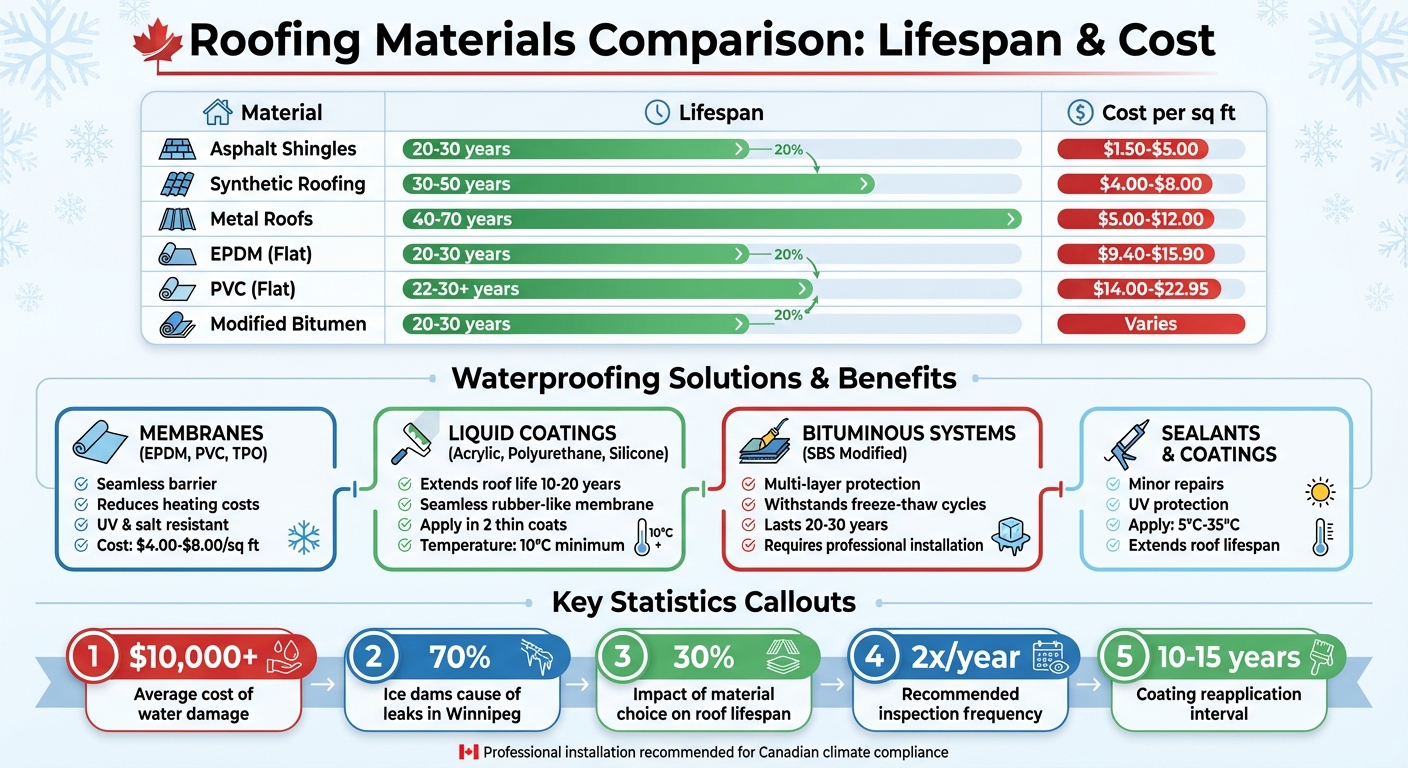
Canadian Roofing Materials Comparison: Lifespan and Cost Guide
Understanding what causes roof damage is just the first step – choosing the right waterproofing method is where the real work begins. Canadian roofs face unique challenges, from harsh freeze-thaw cycles to heavy snow loads, so selecting a method that can handle these conditions is critical. Below are four proven approaches that address these challenges directly.
Waterproof Roof Membranes
Roof membranes like EPDM, PVC, and TPO create a seamless barrier that prevents water from seeping into your roof. These are especially effective for flat and low-slope roofs, which are common in both residential and commercial buildings across Canada. These membranes can bridge small cracks and hold up against extreme temperature changes. According to the Canadian Roofing Contractors Association, "the material you choose can impact your roof’s lifespan by up to 30%".
Beyond waterproofing, these membranes help regulate indoor temperatures and reduce "thermal bridging", where cold air seeps past insulation, increasing heating costs. They’re also designed to resist UV rays and de-icing salts, both of which are common in northern climates. Costs typically range from $4.00 to $8.00 per square foot.
| Roofing Material | Average Lifespan | Cost Per Square Foot |
|---|---|---|
| Asphalt Shingles | 20–30 years | $1.50–$5.00 |
| Synthetic Roofing | 30–50 years | $4.00–$8.00 |
| Metal Roofs | 40–70 years | $5.00–$12.00 |
For installation, if you’re using thermoset membranes like EPDM, let the sheet rest on the roof for at least 30 minutes to relax before adhering it. Also, avoid installing modified bitumen or PVC membranes when temperatures dip below 4.4°C (40°F).
Liquid Waterproofing Coatings
Liquid coatings are applied directly to your roof, curing into a seamless, rubber-like elastomeric membrane. This eliminates cracks and gaps where water could sneak in. Options include acrylic, polyurethane, and silicone coatings:
- Acrylic: UV-resistant and cost-effective but struggles with ponding water (standing water that doesn’t drain within 48 hours).
- Polyurethane: Extremely durable and abrasion-resistant, making it ideal for roofs with HVAC equipment or foot traffic. However, it requires a UV-stable top coat to prevent degradation.
- Silicone: Best for roofs with drainage issues, as it resists ponding water and UV rays better than other coatings. However, it can become slippery when wet and is tricky to recoat.
When applied correctly, elastomeric coatings can extend a roof’s lifespan by 10 to 20 years. Ziying, a Technical Application Specialist at SANVO, advises:
"Applying two thinner coats in perpendicular directions is always superior to one thick coat, as it minimizes pinholes".
Before application, ensure the roof is thoroughly cleaned and dry. Use a 2,500–3,500 PSI pressure washer and a moisture meter, and seal all seams, penetrations, and angles with reinforced mastic. Avoid applying coatings if rain is expected, dew is forming, or temperatures are below 10°C (50°F). Allow 24 to 48 hours for full curing.
Bituminous Waterproofing Systems
For a durable, multi-layer approach, bituminous systems are an excellent choice. These systems use petroleum-derived bitumen to create strong waterproofing, designed to withstand Canada’s freeze-thaw cycles. They work particularly well on flat and low-slope roofs but can also be used on sloped surfaces.
Bituminous systems often involve multiple layers. Modified bitumen typically includes two to three layers (base and cap sheets), while Built-Up Roofing (BUR) can use up to six plies of reinforcing fabric and bitumen for a seamless, watertight barrier. In Canada, SBS (Styrene-Butadiene-Styrene) modified membranes are widely used. These membranes expand and contract with temperature changes without cracking, making them ideal for the climate. With proper maintenance, a bituminous flat roof can last 20 to 30 years.
"Bitumen membranes can be extremely waterproof when two to three layers are laid on your flat roof." – Canuck Roofing
Installation involves open flames (torch application) or heated asphalt, with temperatures exceeding 1,093°C (2,000°F). Because of the risks, these systems should only be installed by trained professionals. The Canadian Roofing Contractors Association cautions:
"The use of open flame and heated asphalt presents extreme hazard to personnel and property. Products applied by torching or mopping with hot asphalt should only be installed by skilled mechanics".
In colder weather, store membrane rolls in heated areas and apply them immediately.
Roof Sealants and Protective Coatings
Sealants and protective coatings are a practical solution for addressing minor leaks and wear. They’re not a substitute for full membrane systems but are effective for extending a roof’s life and fixing small problem areas before they escalate. These coatings create a flexible, waterproof layer that moves with your roof as it expands and contracts.
Sealants are particularly helpful for metal roofs, where screws and seams are common leak points, and for older asphalt shingle roofs nearing the end of their lifespan. Regular application also protects against UV damage, which can degrade roofing materials over time.
For optimal results, apply sealants during dry weather when temperatures are between 5°C and 35°C. Ensure the surface is clean and completely dry before starting. Proper preparation is key to achieving a long-lasting seal.
Waterproofing Solutions for Different Roof Types
Selecting the right waterproofing approach hinges on the design of your roof. Flat roofs need a seamless barrier to combat water pooling, sloped roofs require methods to handle runoff and prevent ice dams, and green roofs must address constant moisture and root intrusion.
Flat Roofs
Flat roofs face unique challenges, particularly with water pooling, which can lead to rot and structural issues. To tackle this, PVC membranes are highly effective in Canadian climates. They remain flexible in temperatures from -40°C to +80°C and feature heat-welded seams that are stronger than the membrane itself. Peter Coscolin, a Flat Roofing Specialist, highlights:
"The heat-welded seams in PVC create joints that are stronger than the base membrane. When properly installed, PVC seams don’t fail, and they become the strongest part of the roof system."
PVC membranes typically last 22–30+ years in Canadian conditions and cost between $14.00 and $22.95 per square foot, including insulation and installation.
For a more budget-conscious option, EPDM costs $9.40 to $15.90 per square foot and remains flexible down to -45°C. However, its glued seams are susceptible to damage during freeze-thaw cycles. TPO membranes offer heat-welded seams and can lower cooling costs by 20% to 35% compared to black EPDM, though some formulations may become brittle after 10–12 years of extreme temperature fluctuations.
For roofs with complex shapes or numerous penetrations, liquid-applied membranes create a seamless layer, eliminating joints where leaks often develop. Another popular choice in Ontario is modified bitumen, a "self-healing" multi-layer system ideal for roofs with HVAC units or other obstacles. To avoid water pooling for more than 48 hours, tapered insulation is essential to direct water toward drains and scuppers.
Sloped Roofs
Sloped roofs are designed to manage water runoff and prevent ice damming. Bituminous waterproofing systems provide durable, multi-layer protection that effectively directs water downward when paired with proper underlayment.
In Canadian climates, ice and water shields are a must. Building codes mandate that these shields extend from the eaves to at least 24 inches (610 mm) inside the warm wall line. Underlayment should be installed beneath the drip edge at rakes but above the drip edge at eaves for optimal performance. Costs for synthetic underlayment range from $0.25 to $0.55 per square foot, while ice and water shields cost $0.60 to $1.20 per square foot.
Metal roofs, which expand and contract significantly with temperature changes, rely on underlayment to protect the wood decking from abrasion. Regular inspections of flashings and ice barriers are crucial to catch small issues before they become larger problems.
Green Roofs
Green roofs bring their own set of challenges, including constant exposure to moisture, root penetration, and the need to support heavy loads. Two-ply modified bituminous membranes are a popular choice due to their thickness (3 to 4 mm per ply) and built-in redundancy. Karen Liu, PhD, Director of Research and Development, explains:
"Two-ply modified bituminous membranes are the most popular choice because of the thicker plies and built-in redundancy."
PVC and TPO membranes are naturally resistant to root penetration and algae. The Roofing Contractors Association of British Columbia specifies a minimum thickness of 1.5 mm (60 mil) for single-ply membranes and 3.7 mm (145 mil) for modified bituminous membranes in green roof applications. For intensive green roofs with deeper soil and mature vegetation, hot rubberized asphalt provides a seamless, self-healing solution that adheres well to concrete surfaces.
Fully adhered systems are preferred over mechanically attached ones because they limit water movement under the membrane, making it easier to locate leaks. A minimum slope of 2% (1:50) is recommended to ensure proper drainage and prevent water from pooling. Additionally, waterproofing membranes should extend at least 200 mm (8 inches) above the growing medium on adjoining walls to prevent moisture seepage from snow.
Signs Your Roof Needs Waterproofing
Spotting roof damage early can save you a lot of money and hassle. One of the most obvious signs is water stains on ceilings and walls – look for brown or yellow rings that tend to grow over time. Interestingly, more than half of roof issues found during professional inspections start in the attic. During colder weather, check your attic for "shiners" – nails that missed the framing and develop frost in winter. Damp insulation is another warning sign, as it can cut your home’s heating efficiency by up to 20%. A persistent musty smell in your attic or upper rooms might mean mould is growing due to a hidden leak, which needs immediate attention. Spotting these issues early can help protect your home and prevent repair costs from spiralling.
Visible Leaks or Stains
Leaks or stains are a clear indication that water has made its way past your roof’s defences. Flashings, valleys, and chimneys are the source of about 85% of roof leaks. Water tends to travel along rafters and sheathing joints, so the interior stain might not be directly under the actual leak. During rainfall, take a flashlight to the attic and mark any damp spots with chalk to help locate the issue. Peeling or blistering paint near the ceiling is another clue that moisture has seeped into your drywall or plaster.
Blistering or Bubbling Materials
Bubbles or blisters in roofing materials are a sign of trapped moisture. In Canadian winters, this trapped moisture can freeze, expand, and worsen the damage, causing cracks or punctures. Kirby Hewines, Owner and Service Manager at Videl Roofing, warns:
"Ignoring a small problem today can lead to costly damage later."
Blistering weakens the bond between the roofing material and its base, reducing its ability to protect your home. In fact, 40% of roofing complaints filed with the Better Business Bureau are related to leaks. If you notice blisters, have a professional assess them as soon as possible to figure out if they’re due to poor ventilation, bad installation, or active leaks. Never try to pop a blister yourself, as this can create an opening for water and might even void warranties.
Granule Loss in Harsh Winters
If you’re finding granules in your gutters or on the ground, your shingles are losing their protective layer, leaving them brittle and more likely to leak. These granules protect the asphalt base from weathering, so once they’re gone, shingles can deteriorate quickly. Accumulating granules or pieces of shingles in your gutters is a strong sign your roof is wearing out. Check for "bald spots" on shingles where granules have worn away, exposing the asphalt base. Other signs of shingle damage include cracking, breaking, curling (edges turning upward), or buckling (shingles looking wavy). If more than 20% of your shingles show these issues, a full roof replacement is often the best way to avoid structural problems.
Preventive Roof Waterproofing Maintenance
Taking care of your roof through routine maintenance can save you from expensive repairs and help extend its lifespan. Experts recommend inspecting your roof twice a year – once in the spring to assess any winter damage and again in the fall to prepare for the return of harsh weather. For flat roofs, October is an ideal time to check for potential freeze-thaw damage. During these inspections, keep an eye out for loose shingles, cracked flashing, and ensure attic insulation is in good shape to prevent ice dams. Addressing common issues like clogged gutters or loose shingles during these checks can significantly reduce the risk of water damage. Sarah Thompson, Senior Project Manager at Eiacuoverw Roof Construction, highlights:
"Clogged or damaged gutters are the primary contributors to ice dam formation, one of the most destructive winter roof problems in Canada."
Regular Inspections Before Winter
Pre-winter inspections are essential for identifying weak spots before they escalate into major problems. Pay close attention to areas where water tends to collect, such as valleys, and around chimneys, vents, and skylights. Inspect your attic during rainy or snowy weather to catch hidden leaks. In Canada, the freeze-thaw cycle can cause flashing to expand and contract, leading to gaps that let water seep in. Even small issues, like a single loose shingle or a minor crack, should be addressed immediately to avoid structural damage or mould growth.
Clearing Debris from Drains
Keeping your gutters and drains clear is another critical step in roof maintenance. Clean them out every spring and fall to prevent water from backing up. Pay extra attention to roof valleys where debris like leaves and branches tends to pile up, as these can trap moisture against your roof. Ensure your downspouts are clear so water flows away from your roof and foundation, and check that gutters are sloped correctly toward the downspouts. To reduce debris buildup, trim tree branches to maintain at least 3 metres (10 feet) of clearance from your roof. Installing gutter guards can also help cut down on how often you need to clean them.
Reapplying Protective Coatings
Waterproofing materials have a limited lifespan and need periodic reapplication to remain effective. Liquid waterproofing systems typically require reapplication every 10 to 15 years. Other materials, like EPDM and TPO membranes, can last 20 to 30 years with proper care, while modified bitumen systems generally last 15 to 20 years. It’s also important to inspect and repair sealants around chimneys, vents, and skylights annually, as these areas are prone to wear and tear. For best results, apply or repair coatings when the temperature is between 5°C and 35°C to ensure proper adhesion. Timely reapplication strengthens your roof’s ability to withstand Canada’s severe weather. Peter from Canada Dr. Roofing emphasizes:
"Waterproofing performance depends not only on the material but also on precise installation."
Why Professional Roof Waterproofing Is Important
Proper roof waterproofing isn’t just about slapping on a few layers of material. It’s a carefully designed system involving membranes, drainage, flashing, and ventilation – all working together to resist hydrostatic pressure up to 450 kg/m². Even a small error, like poor preparation or improperly aligned laps, can compromise the entire system and lead to costly repairs.
Expertise in Canadian Standards
In Canada, professional roofers bring more than just technical skills – they ensure compliance with strict national standards. Licensed professionals make sure your roof aligns with the National Building Code and adheres to guidelines from the Canadian Roofing Reference Manual. For areas prone to freezing, building codes mandate that ice and water shields extend a minimum of 24 inches (61 cm) inside the warm wall line. Professionals also know how to handle challenges like Ontario’s freeze-thaw cycles, heavy snow, and intense rainfall. They install materials within the required temperature ranges to ensure durability and performance. As Copper Rock Construction puts it:
"Effective moisture protection and waterproofing (often called waterproofing) is a coordinated system of membranes, drainage layers, flashing, ventilation, and proper construction methods."
Warranties for Extreme Weather Performance
Hiring professionals isn’t just about getting the job done right – it’s about protecting your investment. Manufacturer warranties often become void with DIY repairs, but professional installations uphold these guarantees. High-quality systems like synthetic underlayment can last 40–60 years, while modified bitumen systems deliver over 20 years of reliable performance. Even a seemingly minor leak can result in hidden damages exceeding $10,000. To prevent such issues, experts perform rigorous flood tests on critical areas, ensuring your roof can handle Canada’s harsh weather conditions.
Conclusion
A well-protected roof is your home’s first line of defence against Canada’s harsh weather conditions. From heavy snowfalls and ice dams to the relentless freeze-thaw cycles, a properly waterproofed roof prevents leaks, safeguards structural integrity, and helps maintain energy efficiency. When insulation gets wet, its thermal performance drops drastically, forcing your heating system to work harder and driving up energy costs.
Taking a proactive approach to waterproofing not only extends the lifespan of your roof but also helps avoid expensive repairs. Beyond structural protection, it plays a crucial role in keeping your family healthy by preventing mould growth, which can develop within just 24–48 hours of moisture exposure.
Routine maintenance is key to protecting your investment. Following Canadian standards, inspect your roof twice a year – ideally in spring and fall – and keep gutters clear to prevent water from backing up. Even minor issues like stains or peeling paint should be addressed promptly, as 73% of homeowners only discover leaks after significant damage has already occurred.
Professional installation is essential for ensuring that your waterproofing system works effectively. Experts know how to integrate membranes, drainage, flashing, and ventilation while securing manufacturer warranties to protect your investment against extreme weather.
Don’t wait until leaks cause serious damage. Investing in professional waterproofing not only preserves your roof but also protects your home’s value and keeps repair costs at bay. Trust the expertise of professionals to ensure your roof performs reliably through every tough Canadian winter.
FAQs
Which waterproofing option is best for my roof type?
The right waterproofing solution for your roof hinges on factors like its material, slope, and the local climate. For flat or low-slope roofs, waterproof membranes such as EPDM or bituminous systems tend to perform well due to their durability. Liquid coatings, like silicone or polyurethane, offer seamless coverage and work across a range of roof types. If you have a metal roof, silicone coatings stand out for their ability to resist both water and corrosion. To ensure the best results and long-term protection, it’s always a good idea to consult with a professional.
How can I tell if a stain is a roof leak or attic condensation?
To tell the difference between a roof leak and attic condensation, take a close look at where the stain is and how it appears. Roof leaks usually create water stains around areas like roof penetrations or damaged shingles. On the other hand, attic condensation tends to cause moisture build-up and staining on the roof sheathing or insulation, particularly during colder months. Check for clues such as dripping water or damp insulation to pinpoint the problem.
What does roof waterproofing typically cost in Canada?
Roof waterproofing in Canada typically ranges from CAD 2,000 to CAD 10,000. The exact cost depends on several factors, including the size of your roof, the type of materials chosen, and how complex the project is.
 CLOGGED OR BROKEN WEEPING TILE