

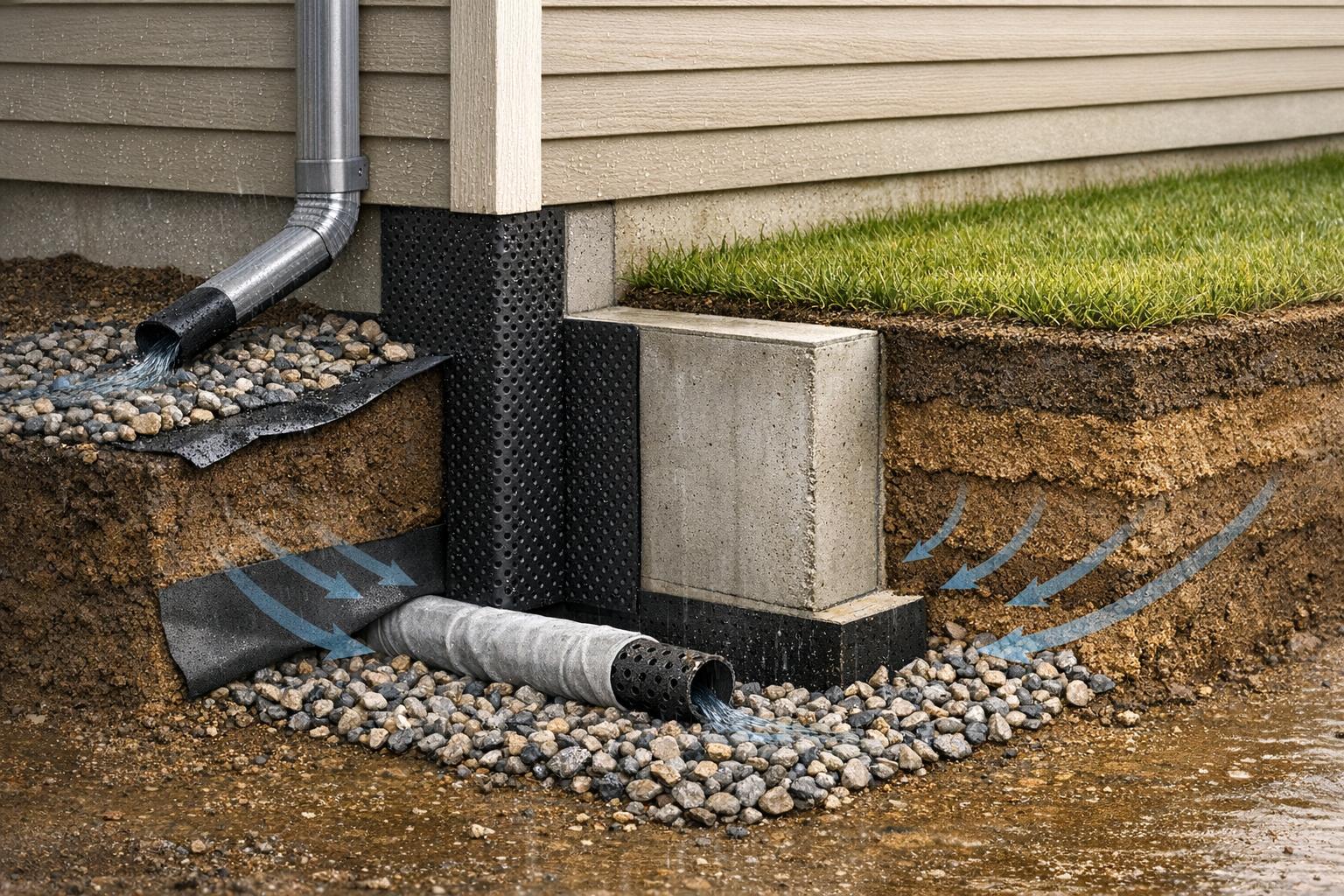
Waterproofing is one of the most important steps to protect your building’s structure, especially in areas like Toronto, where heavy rain, snowmelt, and freeze-thaw cycles can wreak havoc on foundations. Without proper waterproofing, water intrusion can lead to cracks, mould, poor air quality, and even structural damage. Here’s what you need to know:
- Common causes of waterproofing failures: Aging systems, foundation cracks, poor drainage, and extreme weather.
- Signs of issues: Damp spots, efflorescence (white residue), musty smells, or cracks in walls.
- Repair solutions: Crack injection, waterproof membrane replacement, drainage system upgrades, and interior waterproofing.
- Preventive measures: Maintain gutters, ensure proper grading, install sump pumps, and conduct regular inspections.
Ignoring these issues can lead to costly repairs, but combining repairs with preventive strategies can save money and extend your building’s lifespan. Professional services ensure proper materials and techniques are used to handle Canada’s challenging climate.
4 Solutions to fix a wet basement plus Noob Mistakes
sbb-itb-5761e20
Common Causes of Waterproofing Failure
Understanding the reasons behind waterproofing failures is key to protecting your home or building. In Canada, over 60% of homes encounter basement moisture issues at least once in their lifetime. Many of these problems arise from preventable factors. Let’s take a closer look at the main causes behind these failures.
Aging Waterproofing Systems
Many older Canadian homes were built with asphalt-based dampproofing rather than proper waterproofing. These spray-on asphalt coatings can become brittle over time, leaving them ineffective at sealing cracks that develop as the foundation shifts. As expert Erich Krause explains:
"You need to think of concrete as a hard sponge… for a concrete foundation wall to keep water out of your basement, it needs to have a waterproofing coating applied to the outside face".
Even high-quality exterior waterproofing systems, which typically last over 25 years when installed properly, will eventually degrade due to environmental wear and tear. Over time, tar coatings deteriorate, sealants fail, and drainage systems can clog with debris. Additionally, structural movements in the foundation can expose weak points, further compromising the system.
Structural Movement and Foundation Cracks
Concrete naturally shrinks as it cures, creating tension that often leads to cracks. These cracks tend to form around weak points like window openings or beam pockets. Vertical cracks can appear within days of pouring a slab, while diagonal cracks are often caused by uneven soil settling or shifting. Horizontal cracks, on the other hand, result from lateral soil pressure and can even cause walls to bow inward.
In areas like Ontario, where clay-heavy soil is common, the soil’s tendency to expand and contract with moisture levels adds to the problem. Small cracks allow water to seep in, and when that water freezes, it expands, making the cracks even worse. Foundation expert James Reid emphasizes the risks:
"A home without a solid base can quickly become unstable, and foundation problems that are allowed to worsen can be costly to repair".
Poor Drainage Systems
Even the best waterproofing systems can fail if water isn’t directed away from the foundation. Poor water management around the home is often a major contributor to failure. Common issues include improper landscaping grades that slope toward the house, clogged eavestroughs, and downspouts that discharge water too close to the foundation. These problems increase hydrostatic pressure – the force of water in saturated soil pushing against the foundation.
When soil becomes waterlogged from heavy rain or snowmelt, this pressure forces water through even the tiniest cracks or porous concrete. Other common drainage problems include blocked drainage pipes, window wells that flood during storms, and overflowing gutters that dump water directly against the house.
Extreme Weather Conditions
Canada’s climate poses unique challenges for foundations. Heavy rainfall, snowmelt, freeze-thaw cycles, and expanding soil all contribute to waterproofing failures. As Solid Core Construction notes:
"Canada’s climate is harsh on foundations… Heavy rainfall, snow melting (spring thaw), freeze-thaw cycles, and expanding soil push water toward your foundation".
The freeze-thaw cycle is particularly damaging. When water infiltrates cracks in the fall and freezes during winter, it expands, widening the cracks further. Frost heave – where frozen soil expands and lifts the foundation – can also create horizontal cracks. Over time, this cycle of freezing and thawing accelerates the deterioration of the foundation, making proactive maintenance essential to avoid costly repairs.
Signs Your Building Needs Waterproofing Repair
Spotting waterproofing issues early can save you money and prevent long-term damage to your building. Recognizing these warning signs allows you to act before minor problems escalate into costly structural repairs.
Visible Damage and Water Intrusion
One of the first indications of waterproofing issues is damp spots and water stains. Keep an eye out for discolouration, damp patches, or chalky deposits known as efflorescence. These are all signs that water is making its way through your foundation. If you notice puddles forming, it could point to drainage problems or a failing waterproof membrane, both of which need immediate attention.
Efflorescence, a white, chalky residue on concrete surfaces, is a common symptom of water infiltration. According to Eugene Kushmarak, a basement flood expert at Aquatech Waterproofing:
"That white, powdery buildup on your basement walls is called efflorescence, a sign that water is moving through the wall and depositing salts as it evaporates".
This residue confirms that groundwater is seeping through your foundation and evaporating, leaving behind mineral deposits.
Cracks in foundation walls are another warning sign. Horizontal cracks often indicate stress from soil expansion or hydrostatic pressure, while vertical or diagonal cracks can widen during freeze-thaw cycles, allowing water to enter.
Other signs of water damage include peeling paint, bubbling surfaces, warped floors, and rusted metal fixtures like furnace bases or support beams. You might also notice doors or windows that stick or refuse to close properly, hinting at foundation shifts caused by prolonged moisture exposure. Spotting these signs early is essential for timely repairs and avoiding more severe issues.
Health and Air Quality Concerns
Water intrusion doesn’t just harm your building – it can also affect your health. Musty or pungent odours often signal hidden moisture and mould growth. These smells come from volatile organic compounds (VOCs) produced by fungi thriving in damp conditions. Ted Dryce, SEO Content Specialist at Groundworks Canada, explains:
"Once mold or mildew forms on your foundation walls, it’s going to release a musty or pungent smell that will move up to the living space in your home".
High humidity levels – especially those consistently above 50% – are another red flag. They create the perfect environment for mould and condensation. Using a hygrometer to monitor humidity in your basement can help you identify moisture issues before they lead to visible mould or condensation on cold surfaces.
These problems go beyond aesthetics. As James Reid points out:
"Mold and mildew can make allergies, breathing problems and immune system disorders more serious… you should act quickly if you… notice a musty smell".
Addressing these waterproofing issues promptly not only protects your building but also ensures a healthier living environment. Recognizing these signs early sets the stage for effective repairs, which are covered in the next section.
Effective Waterproofing Repair Solutions
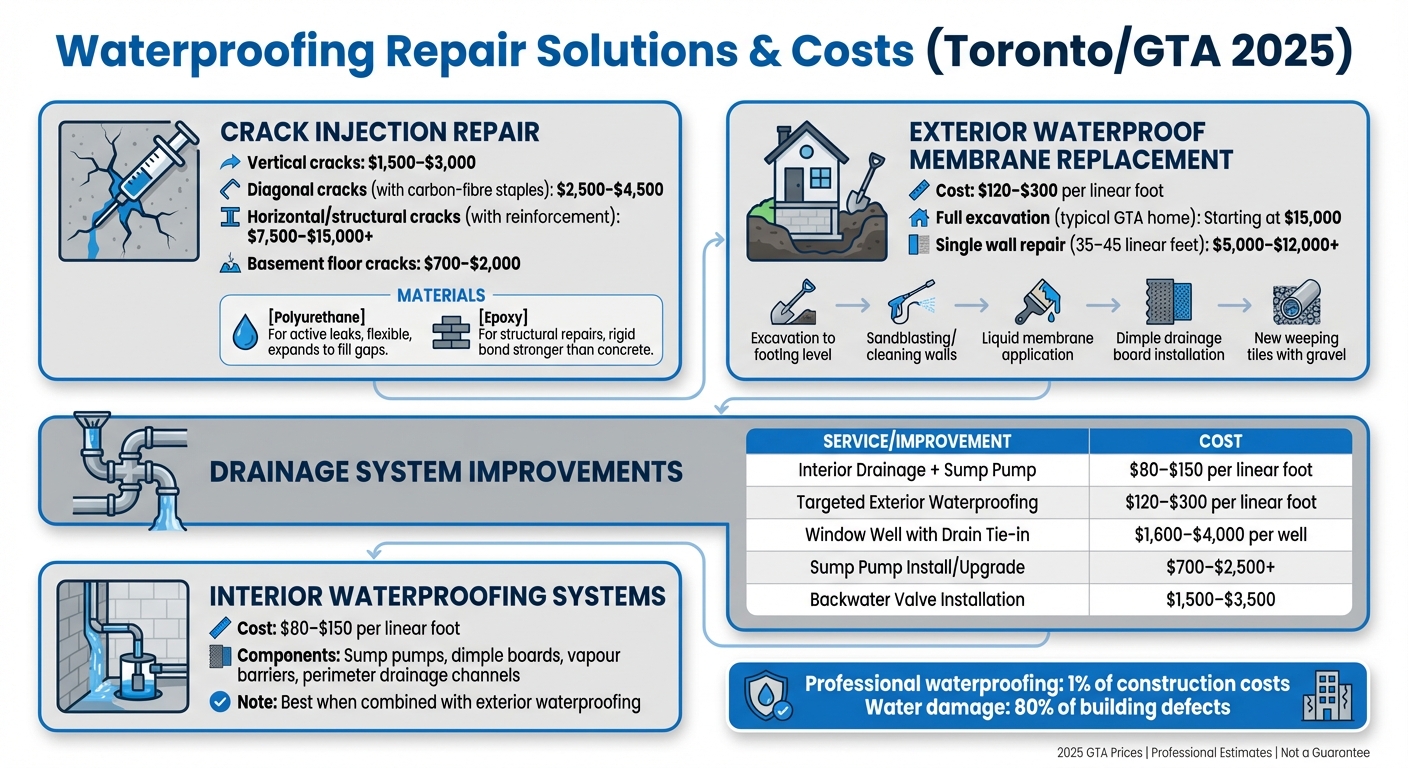
Waterproofing Repair Costs and Solutions Comparison for Toronto Homes 2025
After identifying the problem, choosing the right repair method depends on the type and severity of the damage, as well as your budget. Whether it’s active leaks or structural concerns, here’s what works for Canadian homes dealing with foundation and waterproofing issues.
Crack Injection Repair
Crack injection is a method used to seal non-structural foundation cracks by injecting sealants under high pressure. This process uses equipment similar to an automobile grease gun and typically involves two materials: polyurethane and epoxy.
- Polyurethane injection is ideal for active leaks. It expands to fill irregular paths, adheres to wet surfaces, and remains flexible, handling minor movements or shrinkage without re-cracking. It’s especially effective for large cracks because it’s less likely to leak out during application.
- Epoxy injection, on the other hand, is used for structural repairs. It cures into a rigid bond that’s even stronger than the concrete itself. According to Leaquida Waterproofing:
"The strength of epoxy is more substantial than concrete. When properly mixed and applied, it will achieve high-quality repairs".
Epoxy works well for thin cracks that polyurethane may not reach and helps stabilize wider cracks. Proper surface preparation, like vacuuming and scrubbing away loose concrete, is key to ensuring adhesion.
Vertical cracks, often caused by concrete shrinkage, are the easiest to repair with injection. However, horizontal cracks, which may indicate pressure from soil or inward bowing, require structural stabilization before sealing. As Leaquida Waterproofing advises:
"If the wall is moving, a ‘seal only’ isn’t responsible. Stabilize first, then address finishing".
Costs for crack injection in the Toronto/GTA area vary based on the complexity of the repair:
- Vertical cracks: $1,500–$3,000
- Diagonal cracks with carbon-fibre staples: $2,500–$4,500
- Horizontal or structural cracks requiring reinforcement: $7,500–$15,000+
- Basement floor cracks: $700–$2,000 for sealing.
This method not only addresses leaks but also contributes to the overall stability of your foundation.
Waterproof Membrane Replacement
When leaks are severe or widespread, replacing the exterior waterproof membrane is a comprehensive solution. This method stops water before it even reaches the foundation.
The process involves excavating to expose the entire foundation wall down to the footing. The wall is then cleaned or sandblasted to ensure proper adhesion of the waterproofing membrane. Kevin Abdi, P.Eng., PMP, from Olive Contractors Inc., stresses:
"The best (and the only correct) way to stop basement leaks is to waterproof the exterior of the foundation. And let me be clear: I said waterproof, not dampproof".
A liquid waterproofing membrane, such as rubberized bitumen or Aqua-Bloc 770-06, is applied to seal pores and cracks. A dimple drainage board is installed over the membrane to handle hydrostatic pressure during backfilling. Additionally, new weeping tiles surrounded by gravel are laid at the footing level to direct water away from the foundation.
For example, in May 2025, Olive Contractors Inc. completed an exterior waterproofing project in North York. After determining that the original dampproofing was inadequate, they sandblasted the foundation walls, applied Aqua-Bloc 770-06, and installed a dimple board with termination bars. They also replaced the weeping tile system, successfully stopping all leaks.
Exterior waterproofing typically costs $120–$300 per linear foot. For a typical GTA home, full excavation with membrane and drainage starts around $15,000. Repairs targeting a single wall (35–45 linear feet) range from $5,000 to $12,000 or more.
Drainage System Improvements
Proper drainage is essential to prevent water from pooling around your foundation. Both exterior and interior systems can work together to protect your home.
- Exterior drainage systems involve excavating to the footing and installing a waterproofing assembly. This includes drainage boards and new weeping tiles surrounded by washed stone and filter fabric to intercept groundwater before it reaches the foundation walls.
- Interior drainage systems (like French drains) are installed along the basement floor’s perimeter. They collect water that seeps through the foundation and channel it to a sump pump for removal.
Surface water management is equally important. Regular maintenance of gutters, extending downspouts, and ensuring proper yard grading can prevent water from accumulating near your home. Downspouts should direct water at least 1.8 metres (6 feet) away from the foundation.
Sump pump systems collect excess water in a pit and pump it away from the home. Installing battery backups ensures they remain operational during power outages, especially during storms. Homeowners with below-grade windows can install window well drains tied into the weeping tile system to prevent flooding. Some municipalities in the GTA even offer rebates for flood-prevention devices like sump pumps and backwater valves.
| Service/Improvement | Typical 2025 GTA Price Range |
|---|---|
| Interior Drainage + Sump Pump | $80–$150 per linear foot |
| Targeted Exterior Waterproofing | $120–$300 per linear foot |
| Window Well with Drain Tie-in | $1,600–$4,000 per well |
| Sump Pump Install/Upgrade | $700–$2,500+ |
| Backwater Valve Installation | $1,500–$3,500 |
These measures ensure water is directed away from your home, extending the life of your foundation.
Interior Waterproofing Systems
Interior waterproofing systems are designed to manage water from inside your home. They typically include components like sump pumps, dimple boards, and vapour barriers. Dimple boards create a gap between the foundation wall and interior finishes, allowing water to drain into the perimeter system instead of seeping into living spaces. Vapour barriers help control moisture, reducing humidity and mould growth.
Interior drainage channels run along the basement floor perimeter, collecting water and directing it to the sump pump. This method costs $80–$150 per linear foot and is often more affordable than exterior excavation.
However, interior solutions have limitations. DryShield highlights the shortcomings of relying solely on methods like waterproof paint:
"Hydrostatic pressure from the soil is powerful (thousands of pounds). It will eventually bubble, peel, and push right through [waterproof] paint because the water is still trapped inside the concrete".
While interior systems effectively manage moisture, they work best when combined with exterior waterproofing for complete protection.
Preventive Waterproofing Strategies
Prevention is far less expensive than dealing with repairs later. Basement repairs can run into the thousands, so regular maintenance is a wise choice. By taking steps to safeguard your property, you can avoid costly damage and keep your waterproofing systems working effectively. Here’s a look at some practical ways to maintain drainage, install protective systems, and stay on top of inspections.
Maintain Drainage and Grading
Good drainage starts with clean gutters. Make it a habit to clean your eavestroughs twice a year – ideally before winter and spring – to avoid blockages that can lead to overflow. Downspouts should direct water far enough from your home’s foundation. Aim for at least 1.8 metres, and if local bylaws allow, consider routing them directly to the street for added protection.
Grading matters just as much. The ground around your home should slope away from the foundation, dropping at least 15 centimetres over 3 metres. After heavy rain, check for water pooling near the foundation, as this could signal poor grading or clogged gutters. Keep plants like shrubs and flowers away from the foundation, as they can trap moisture against the structure, increasing the risk of water seeping in. These simple steps form the backbone of a solid waterproofing plan.
Install Protective Systems
Protective systems such as sump pumps, backwater valves, and window well covers can help prevent water damage. Sump pumps are designed to collect and remove excess groundwater from your basement’s lowest point, reducing the risk of flooding. For added peace of mind, install a battery backup or generator to ensure the pump works during power outages or storms.
Backwater valves are another key defence. These one-way valves prevent sewage or water from backing up into your home through floor drains. For homes with below-grade windows, window well covers are a simple yet effective solution. Clear covers deflect rain and debris while still letting natural light into your basement. Make sure window wells are securely installed, free of debris, and that vertical drains remain functional. Installing water-detection sensors can also alert you to leaks before they become major issues.
Routine Inspections and Maintenance
Regular inspections are your best chance to catch small issues before they escalate. These checks also help maintain the effectiveness of past repairs and keep your foundation strong. James Reid, a foundation expert at GAMCON, highlights the importance of taking action early:
"Foundation waterproofing is an inexpensive and effective way to protect your home’s structural integrity and prevent problems that could be very expensive to repair".
Every three months, test your sump pump and examine foundation walls for early warning signs like efflorescence, musty smells, or small cracks. Check that basement windows are properly sealed. In winter, insulate exposed basement pipes to prevent freezing and bursting. While DIY inspections are helpful, professional assessments can uncover hidden issues and provide a more thorough evaluation of your foundation’s condition. Autumn is a particularly good time for inspections, as water trapped in cracks can freeze and expand during winter, potentially causing serious structural damage.
Benefits of Combining Repair and Prevention
Merging repair efforts with preventive measures creates a waterproofing system that can protect your building for decades.
Extended Building Lifespan
Concrete foundations have the potential to last up to 150 years – but only if they’re shielded from water damage. By sealing cracks and incorporating drainage systems like weeping tiles and sump pumps, you can reduce hydrostatic pressure while preventing mould from undermining the concrete. This combination ensures your building’s structural integrity remains intact.
Using quality materials, expert installation, and regular maintenance can extend the life of exterior waterproofing systems to 30 years or more. Wayne Spiteri, Sales Director at Danrae Group, explains the importance of investing in quality:
"A cheap product might last 10 to 15 years. A quality PVC membrane might be a third more expensive but last up to 60 years, so there are incredible benefits long-term".
Cost Savings Over Time
This dual approach doesn’t just improve durability – it also saves money in the long run. Waterproofing typically represents only 1% of a building’s total construction costs, but water leaks and the resulting damage account for 80% of all building defects. In commercial buildings, moisture is responsible for 75% to 80% of structural issues, with water damage claims averaging close to $89,000.
Delaying maintenance can dramatically increase repair costs. For example, repair costs for one parking structure jumped by 52% – from $202,000 to $307,000 – after just five years of deferred work. Addressing small problems early, like a $1,500 crack injection, can prevent them from escalating into $15,000 or more in structural repairs. Proactive maintenance also supports better capital planning, helping you avoid the high costs and disruptions of emergency repairs.
Increased Property Value
A dry, well-maintained basement adds valuable, usable space to your home. For Canadian property owners, this signals to buyers that the property is a solid, well-maintained investment. By protecting your foundation and overall structure, combined repair and prevention efforts can enhance your property’s market appeal. Comprehensive waterproofing not only safeguards your building now but also positions it as an attractive option for future buyers and professional evaluations.
Why Professional Waterproofing Services Are Important
Compliance with Building Codes
Professional waterproofing services ensure that all work aligns with Canada’s strict building standards. In Canada, waterproofing projects must comply with the Canadian National Building Code (NBC) and any applicable municipal regulations. For instance, in Ontario, structural repairs like underpinning or installing backwater valves require building permits and, in many cases, a structural engineer’s report. These reports can cost anywhere from $500 to $2,000. Licensed contractors handle the permit process and use materials that meet code requirements, which is particularly crucial since industrial-grade membranes are specifically tested to withstand Canada’s freeze-thaw cycles. They also collaborate with structural engineers when necessary to ensure the building’s load-bearing capacity remains intact. This level of compliance not only protects you from potential legal issues but also helps maintain valid insurance coverage.
Avoiding DIY Risks
While DIY waterproofing might seem like a budget-friendly option, it can often lead to more significant issues down the line. Professionals have the expertise to differentiate between surface-level problems and serious structural concerns. For example, they can determine whether a crack is just a water entry point or a sign of compromised structural integrity. Using quick fixes like temporary fillers without proper reinforcement could result in wall failures.
Licensed waterproofing experts also have access to industrial-grade materials, such as elastomeric membranes, bentonite clay panels, and high-pressure polyurethane or epoxy injections – products that are not typically found in DIY kits. DIY sealants generally last only one or two seasons under Canadian weather conditions, whereas professional-grade solutions can endure for decades. Additionally, professional services often come with comprehensive warranties that cover both materials and labour, offering peace of mind that DIY efforts cannot match. This is especially important given the demands of Canada’s challenging weather and soil conditions.
Tailored Solutions for Local Climate
Toronto’s unique climate calls for specialized waterproofing methods. The city’s clay-heavy soil is particularly problematic, as it expands significantly when wet and contracts when dry, putting constant stress on foundation walls. To address this, professionals use flexible, high-quality membranes designed to handle these fluctuations. Moreover, Toronto’s heavy rainfall increases hydrostatic pressure on foundations, making expert evaluations critical.
Companies like Leaquida Waterproofing provide customized services tailored to these specific challenges. Their team uses advanced tools such as moisture detectors and cameras to identify hidden issues. They also assist homeowners in accessing municipal subsidies in the Greater Toronto Area for flood-protection devices like backwater valves. One satisfied customer, Trisha Grant, shared her positive experience:
"Leaquida Waterproofing was prompt, courteous and thorough. We would recommend to anyone. We had a backwater valve installed. I called Sunday, got a quote Monday, had the work done the following Monday (including issuing of building permit)."
Conclusion: Protect Your Building with Repair and Prevention
The foundation of your building is the backbone of its structural health. While crack injections are effective for stopping active leaks, they work best when paired with preventive measures to address the underlying hydrostatic pressure that causes cracks in the first place. This combined approach not only protects the structural integrity of your property but also helps you steer clear of the steep costs associated with major foundation repairs.
The cost of professional basement waterproofing typically falls between $2,000 and $15,000. This investment is a practical way to prevent further damage, safeguard your health, and maintain your property’s value. Acting early can help you avoid issues like severe structural damage, mould growth, and expensive fixes. Regular inspections are also key to catching potential problems early on.
"Waterproofing your basement is a crucial investment in your home’s safety and value… taking action today can prevent costly repairs down the line." – Groundworks
Don’t wait for small leaks to escalate into major problems. Simple measures, like keeping gutters clear and ensuring proper grading around your property, can go a long way in preventing water accumulation. And before winter sets in, scheduling professional inspections is essential. Freeze-thaw cycles can worsen existing cracks, leading to even more expensive repairs.
To address these challenges, Leaquida Waterproofing offers tailored solutions designed to handle Toronto’s specific climate conditions. Their services include interior drainage systems, which cost between $70–$120 per linear foot, and exterior waterproofing, ranging from $100–$250 per linear foot. Backed by comprehensive warranties, their professional expertise far exceeds what DIY efforts can achieve. By combining repairs with ongoing preventive maintenance, you’ll be taking a proactive step to protect your investment and ensure long-term peace of mind.
FAQs
Should I choose interior or exterior waterproofing?
Choosing between interior and exterior waterproofing comes down to your building’s specific needs.
- Exterior waterproofing is all about stopping water before it gets inside. This involves applying waterproof membranes and enhancing drainage systems, making it ideal for tackling water issues from the outside.
- Interior waterproofing, on the other hand, focuses on managing leaks that are already present. Methods like crack injections or sump pumps are commonly used, especially when accessing the exterior isn’t practical.
The right choice depends on your goals – whether you’re aiming to prevent future problems or fix current ones – and how severe the water issue is.
When is a foundation crack structural vs just leaking?
Cracks in a foundation can be structural if they display signs like lateral pressure, horizontal shifting, or noticeable displacement. These may indicate potential stability problems. In contrast, a leaking crack is typically a narrow, vertical line that doesn’t show movement or pose structural concerns.
How often should I inspect gutters, grading, and my sump pump?
Inspecting your gutters, grading, and sump pump at least twice a year – preferably in early spring and late fall – is key to keeping your home protected from water damage. It’s also a good idea to check these systems after severe storms or extreme weather to make sure they’re free of debris and working as they should. Taking care of any problems right away can save you from expensive repairs and water-related headaches down the road.
 CLOGGED OR BROKEN WEEPING TILE