
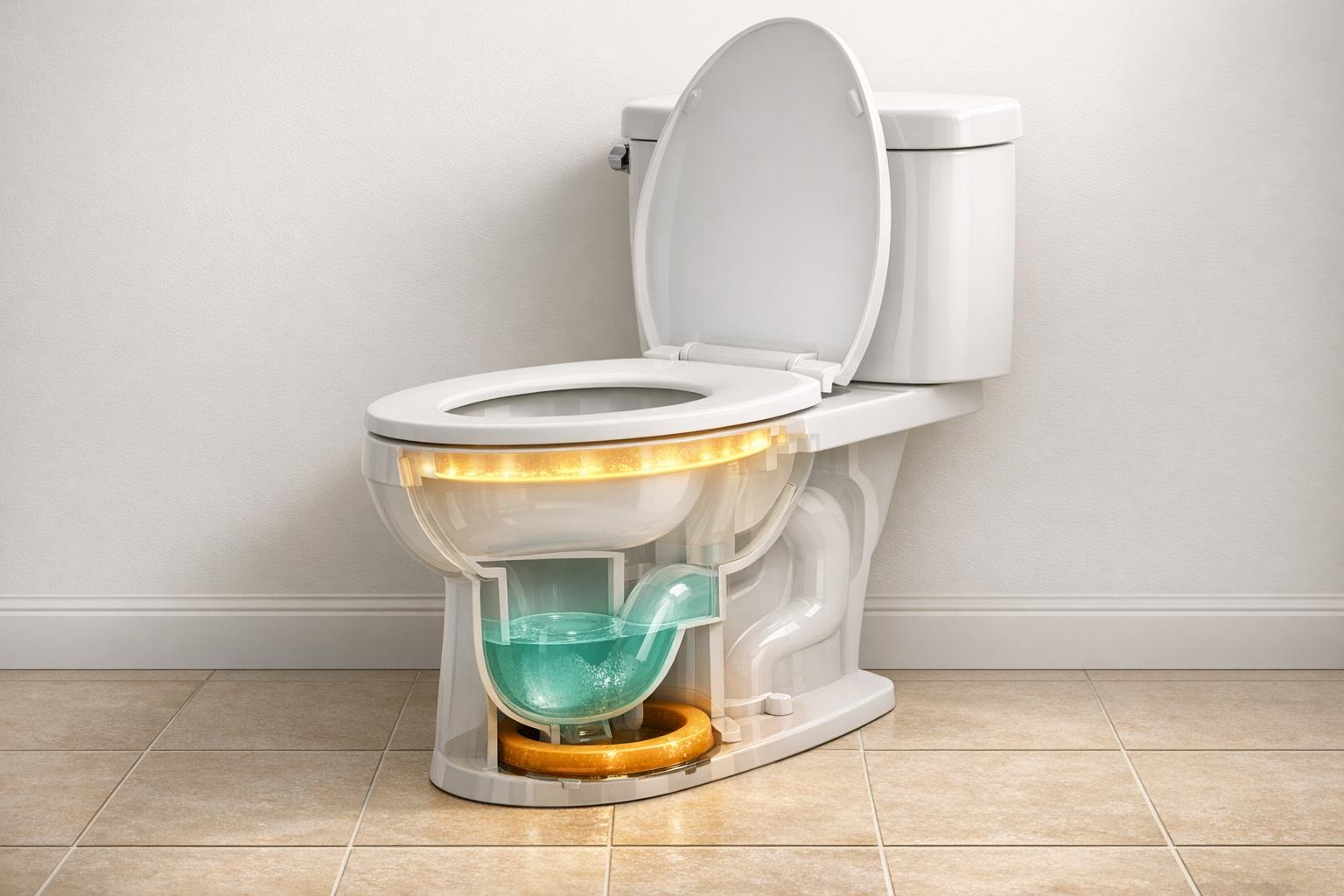
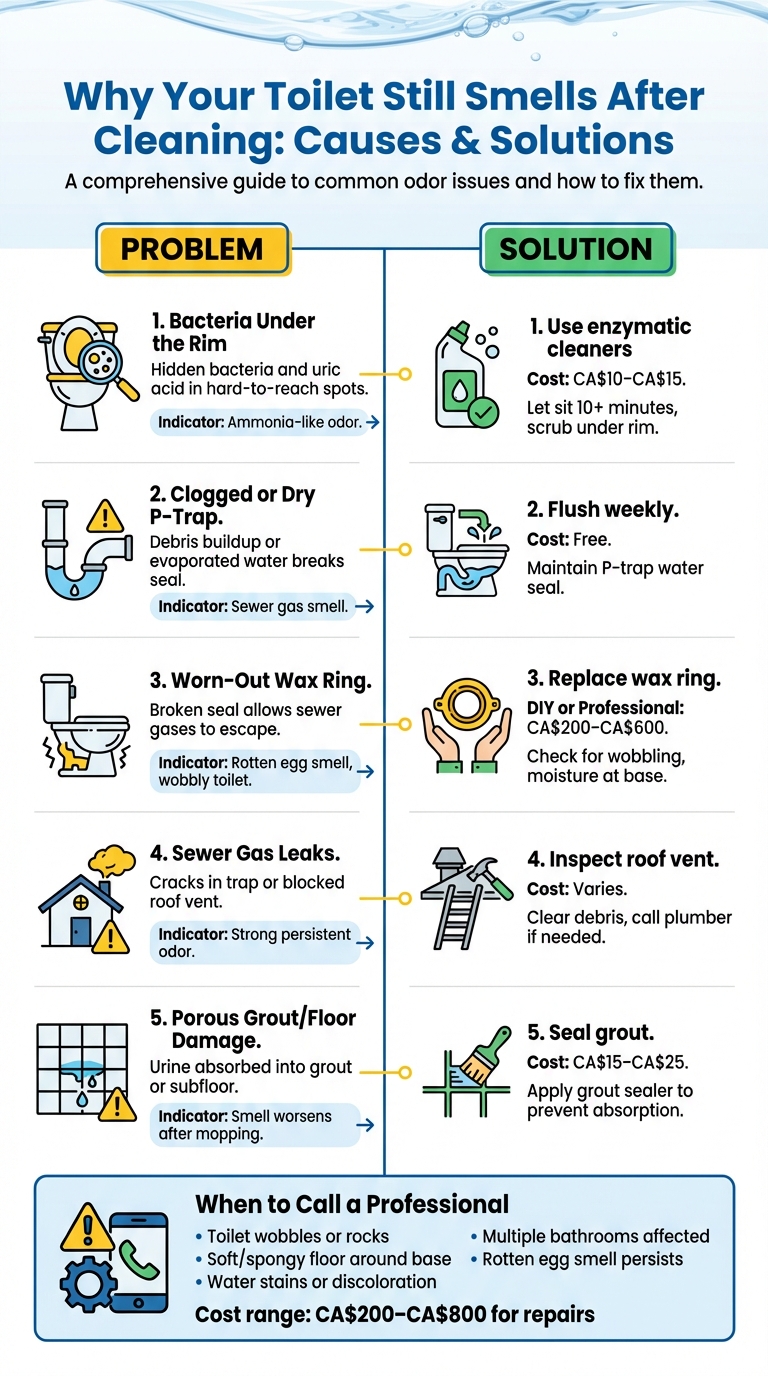
Even after cleaning your toilet, persistent odours can linger due to hidden issues. These smells often result from bacteria, trapped urine, or plumbing problems. Here’s a quick rundown of common causes and solutions:
- Bacteria under the rim: Hard-to-reach spots can trap bacteria and uric acid, releasing ammonia-like odours.
- Clogged or dry P-trap: Debris in the trap or evaporated water can let sewer gases escape.
- Worn-out wax ring: A broken seal under the toilet allows sewer gases or leaks into the subfloor.
- Sewer gas leaks: Cracks or blocked vents can force gases into the bathroom.
- Porous grout or floor damage: Urine can seep into grout or subfloor, causing odours to persist.
Solutions:
- Use enzymatic cleaners for bacteria and uric acid buildup (CA$10–CA$15).
- Replace a worn wax ring (DIY or CA$200–CA$600 for professional repairs).
- Flush unused toilets weekly to maintain the P-trap seal.
- Inspect and clean the roof vent if sewer gases persist.
If odours remain or you notice structural issues like a wobbly toilet or water stains, call a plumber to prevent further damage. Regular maintenance, like deep cleaning and sealing grout, can help keep your bathroom odour-free.
Common Causes of Toilet Odors and Solutions Guide
Here’s why the toilet still smells after you clean it
sbb-itb-5761e20
Common Causes of Toilet Odours
If your toilet smells persistently bad despite regular cleaning, the culprit is often hidden. These odours typically arise from conditions that promote bacterial growth or allow gases to seep into your bathroom.
Bacteria Under the Rim
The underside of the toilet rim is easy to overlook during cleaning, but it’s a prime spot for bacteria. This area stays damp and contains water jets that rinse the bowl, creating an ideal environment for bacteria, especially during warmer months. Over time, mineral deposits can form on these surfaces, trapping uric acid and allowing bacteria to release ammonia.
Unfortunately, standard disinfectants often don’t penetrate the rim’s hidden crevices, leaving bacterial colonies untouched. To check for buildup, use a small mirror to inspect under the rim for white, orange, or black marks that indicate mineral deposits or mould. Let cleaning products sit for at least 10 minutes before scrubbing to target these problem areas effectively.
Dirty or Clogged Toilet Trap
The toilet trap, or P-trap, is the curved pipe section that holds water to block sewer gases from entering your bathroom. When debris or waste accumulates in the trap, it can decompose and cause lingering odours.
In toilets that see infrequent use, the water in the trap can evaporate, breaking the seal and allowing sewer smells to escape. Even with regular use, organic matter in the piping can continue to emit odours. To avoid this, flush unused toilets at least once a week. For persistent smells, try an enzymatic cleaner to break down buildup inside the trap. Surface cleaning won’t resolve these deeper issues.
Worn-Out Wax Ring Seal
The wax ring under your toilet creates an airtight seal between the toilet base and the drainpipe. When this seal wears out or breaks, sewer gases can leak into your bathroom.
“The wax ring beneath the toilet forms an airtight barrier between the toilet base and the drainpipe. If the toilet has a broken or worn-out wax ring, it may cause an unpleasant smell, similar to sewage or even a rotten egg smell.” – Steven Johnson, horow.com
A broken wax ring often goes unnoticed since the smell comes from the plumbing system, not the toilet itself. You can test the seal by gently rocking the toilet – if it moves, the wax ring might be compromised. Also, check for moisture or discolouration around the caulk line at the base of the toilet. If you notice these signs, the wax ring likely needs replacing to stop gases from escaping.
Sewer Gas Issues
Cracks or leaks in the toilet trap can allow sewer gases to escape before the water seal can block them. These gases – such as methane, hydrogen sulfide, and ammonia – can cause strong odours and may even pose health risks. Identifying the exact source of these leaks often requires a thorough inspection, as hidden cracks or mould growth can exacerbate the problem.
How to Identify the Source of the Smell
Pinpointing the type of smell can help narrow down the issue. For instance, an ammonia-like odour often points to bacterial activity in areas like grout, hinges, or a deteriorating wax ring. On the other hand, a rotten egg smell usually indicates hydrogen sulfide from bacterial growth in drains.
“Methane is the largest cause of sewer smell but there is also danger of hydrogen sulfide, carbon dioxide, ammonia, nitrogen oxides and sulfur dioxide.” – Ray Patrick, Master Plumber at Roto-Rooter
Once you’ve noted the type of odour, the next step is to identify where it’s strongest. For example, if the smell is concentrated near the floor, it might indicate a wax ring seal failure. A stronger odour under the toilet seat could mean buildup around the hinges or rim. If the smell is more dispersed throughout the air, it might point to a blocked roof vent or a dry P-trap.
A close inspection can reveal more clues. Try rocking the toilet – any wobbling could mean the wax seal is damaged, allowing sewer gases to escape. Check inside the tank for slimy films or pink/black stains, which are signs of bacterial colonies causing persistent smells. Also, examine the floor around the toilet for water stains, discolouration, or soft spots that could indicate leaks. If these checks don’t reveal the source, hidden issues in the floor grout may be the culprit.
You can test the grout by mopping the area. If the smell worsens immediately after, it could mean water is reactivating uric acid trapped in the porous grout. Additionally, inspect nearby walls (up to 1.2 m high) for any yellowing or stains.
For infrequently used toilets, running water for a few minutes can help re-establish the P-trap seal and stop sewer gases from entering the room. If you notice slow drainage or hear gurgling sounds in other parts of the home, it could signal a blocked roof vent.
Solutions for Fixing a Smelly Toilet
Once you’ve pinpointed the source of the smell, the next step is choosing the right fix. Simple issues like bacterial buildup can often be handled with basic cleaning supplies, while more complex problems, such as a damaged wax ring, may require repairs.
Deep Cleaning Techniques
After identifying the issue, focus on targeted cleaning and repairs. Start with the overflow tube. This area can harbour bacteria even when the toilet bowl looks clean. Pour about 240 mL of bleach into the overflow tube, let it sit for a few minutes, then flush. For best results, allow the solution to work overnight before flushing again.
If mould is hiding under the rim, use white vinegar or bleach with an old toothbrush to scrub thoroughly. This damp, dark spot often becomes a breeding ground for odour-causing mould. Important: Never mix bleach and vinegar – they produce toxic gas. Always wear rubber gloves and a mask when dealing with mould or sewer gases.
If the toilet seems to function fine but still smells, the roof vent might be blocked. Leaves, twigs, or debris can clog the vent, forcing sewer gases back into the bathroom. Use a garden hose or plumbing auger to clear the vent from the roof. Also, make it a habit to flush rarely used toilets to keep them fresh.
Checking and Replacing the Wax Ring Seal
The wax ring under your toilet creates an airtight seal at the base. If it fails, sewer gases can escape into the room. Signs of a faulty wax ring include water pooling at the toilet base, a rotten egg smell, or a wobbly toilet.
Replacing a wax ring isn’t difficult but does require attention to detail. Start by shutting off the water supply and draining the tank and bowl completely. Disconnect the supply line and remove the floor bolts. Carefully lift the toilet straight up to break the old seal. Use a putty knife to scrape away all old wax from the floor flange and toilet horn – never reuse a wax ring. Place the new wax ring on the flange, lower the toilet back into position, and sit on the bowl to compress the wax evenly. Tighten the bolts gradually, alternating sides to prevent cracking the porcelain. Flush a few times to check for leaks before applying caulk around the base.
If the floor flange is damaged or the subfloor shows signs of water damage, it’s time to call a professional.
Fixing Leaks Around the Base
Even after replacing the wax ring, small leaks around the toilet base can still occur. These leaks can lead to bacteria growth in hidden crevices, causing lingering odours, water stains, or even soft spots on the floor. Clean the area thoroughly and apply caulk around the flange to seal it completely. If the problem persists, check the floor bolts for tightness or consider replacing the wax ring again.
Clearing the Trap and Pipes
Clogs in the trap or pipes can also contribute to bad smells. Hair, soap scum, and other debris can create blockages that trap moisture, encouraging bacterial growth. Start with a plunger for minor clogs. If that doesn’t work, try a drain snake to reach deeper blockages. For severe clogs, professionals may use hydro-jetting to clear the pipes.
“The role of the P-Trap is to keep the sewer gases out of the home… Traps are there to prevent sewer gases from escaping into the home.” – Ray Patrick, Master Plumber, Roto-Rooter
If the toilet isn’t used often, the water in the P-trap might evaporate, allowing sewer gases to escape. Simply run water for a few minutes to refill the trap. For toilets left unused for extended periods, pink RV antifreeze can help maintain the seal. If you hear gurgling sounds or notice slow drainage across multiple fixtures, the roof vent may be blocked – inspect and clear it as needed.
If you notice persistent rotten egg smells, it could mean hydrogen sulfide gas is present. This gas is both toxic and flammable, so if cleaning doesn’t solve the issue, call a professional immediately.
When to Call a Professional
Sometimes, persistent odours require more than just a thorough cleaning. If the smell lingers despite your best efforts, the problem could be deeper – beneath the toilet or within the drainage system. These lingering odours often hint at structural problems, which, if ignored, could lead to health risks and costly repairs.
Watch for physical instability. Gently press on the toilet to see if it moves or wobbles. If it does, the wax ring may have failed, or the floor flange could be damaged. Using a loose toilet can make things worse, allowing sewer gases and water to seep out. This can eventually cause subfloor rot. At this point, it’s best to stop any DIY fixes and call a licensed plumber.
Inspect the floor around the toilet base. If the floor feels soft or spongy when pressed, or if you notice water stains or discolouration, it might indicate long-term water damage. Over time, the wooden subfloor may have absorbed urine or wastewater, leading to significant deterioration. Repairing subfloor damage can cost anywhere from $200 to $800, depending on how severe the issue is.
If you notice odours or drainage problems in multiple bathrooms at the same time, this points to a larger plumbing issue rather than a single faulty fixture. Similarly, if you’ve replaced the wax ring but the smell persists, the floor flange might be cracked or improperly installed. Fixing this requires professional attention. A plumber’s service call generally costs between $150 and $300, with flange repairs ranging from $200 to $450 and complete replacements costing $300 to $600.
A rotten egg smell is another red flag. This usually means the airtight seal between your toilet and the drain pipe has failed. Sewer gas contains methane, which is flammable, and hydrogen sulfide, which is toxic. This makes it critical to have the issue diagnosed and repaired promptly by a professional. Emergency or after-hours service can cost $500 or more.
Preventing Toilet Odours
Keeping your toilet odour-free is easier (and cheaper) with regular maintenance rather than waiting for costly repairs.
Start by targeting the spots where bacteria love to hide: under the rim, around seat hinges, bolt caps, and the gaps between the toilet base and floor. Since regular disinfectants can’t break down uric acid crystals, opt for enzymatic cleaners (priced around CA$8–CA$15) to tackle the organic buildup effectively. Don’t forget the tank – it should be cleaned every 3–6 months to eliminate bacteria and mould that can produce ammonia-like smells.
But odour prevention isn’t just about scrubbing. Proper ventilation plays a big role. Reduce moisture by opening windows, running the exhaust fan during and after showers, or leaving the door slightly open. For guest bathrooms, flush the toilet at least once a week to keep the P-trap’s water barrier intact.
Even your cleaning tools need attention. Rinse your toilet brush with hot water after each use and let it dry completely to avoid unpleasant smells. Weekly, wipe down nearby walls (up to 90–120 cm high) to remove any urine spray. For tile floors within a metre of the toilet, applying a grout sealer (CA$15–CA$25) can prevent urine from seeping in.
Make it a habit to remove the toilet seat monthly to clean around the hinges and bolt holes, where splashes can collect. While you’re at it, check for any wobbling in the toilet, which could signal a failing wax ring. Inspect the caulking for gaps, and consider scheduling an annual plumbing inspection to catch potential issues early. Regular upkeep like this keeps your bathroom fresh and odour-free.
Conclusion
A persistent bathroom odour isn’t just about cleanliness – it often points to hidden issues like trapped uric acid crystals or structural problems, such as a damaged wax ring allowing leaks into the subfloor.
Identifying the root cause is key. Check for movement, moisture, or odours, and use enzymatic cleaners to determine whether it’s a simple cleaning issue or something that requires professional attention. Ignoring these signs can lead to expensive structural repairs down the line.
Acting quickly can save you money and protect your home. If you notice rocking toilets, soft flooring, or odours concentrated around the base, these are red flags of seal failure or flange damage that will only get worse if left unaddressed. Taking immediate steps to fix these issues is essential for your home’s integrity.
Once repairs are made, regular maintenance helps prevent future problems. Deep clean the tank every 3–6 months, remove the toilet seat monthly to clean hidden areas, and seal porous grout to block odour-causing bacteria. By tackling root causes and staying proactive, you can keep your bathroom fresh and free from lingering smells while ensuring it remains structurally sound.

 CLOGGED OR BROKEN WEEPING TILE