
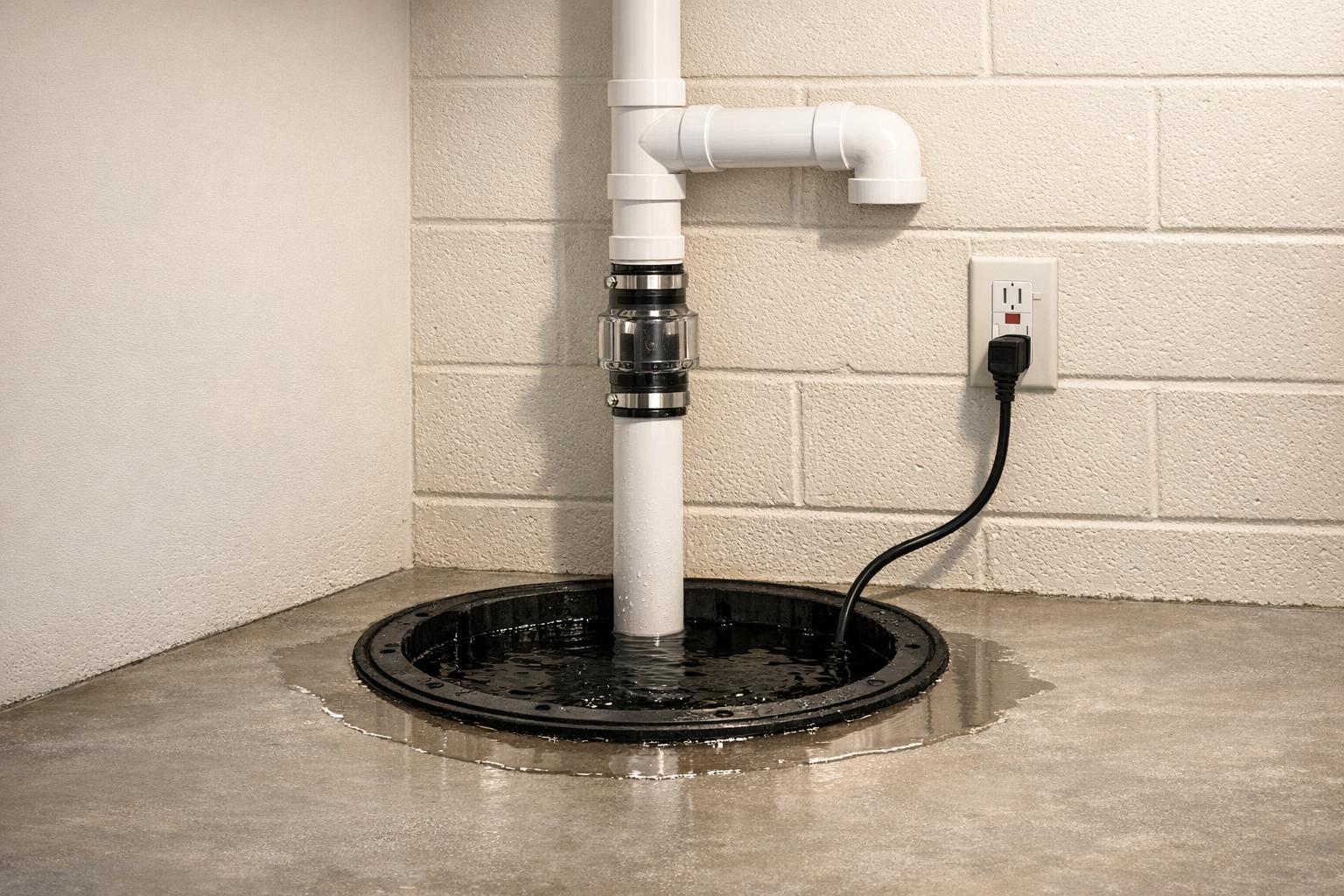
A sump pump overflow can lead to significant water damage in just hours. Here’s what you need to know:
- Common Causes: Power outages, clogged or frozen discharge lines, overworked pumps, and malfunctioning float switches are frequent culprits. Age and improper installation can also contribute.
- Immediate Actions: Prioritize safety by shutting off electricity if water is near outlets. Check the pump’s power, clear debris from the sump pit, and inspect the float switch and discharge line.
- Fixes: Clean the pump regularly, replace worn components, and consider upgrades like larger-capacity pumps or backup systems for power outages.
- Prevention: Test the pump monthly, clean quarterly, and schedule professional inspections annually. Maintain proper drainage around your home to reduce strain on the pump.
Pro Tip: Persistent issues or visible foundation damage require professional help. Timely action can save thousands in repair costs.
Keep reading for step-by-step troubleshooting, maintenance tips, and advice on when to call a professional.
Emergency Sump Pump Fix! What Every Homeowner Needs to Know
sbb-itb-5761e20
What Is a Sump Pump?
A sump pump is a device installed in the lowest part of your basement or crawlspace to help prevent water from flooding your foundation. Think of it as an automated drainage system that kicks in when groundwater levels start to rise.
At the heart of the setup is a sump pit – a recessed container designed to collect water from the surrounding soil or drainage systems. When water fills the pit to a certain level, a float switch triggers the pump. The pump then uses an impeller (a rotating component) to push the water out through a discharge pipe. This pipe directs the water safely away from your home, and a check valve ensures it doesn’t flow back into the pit.
There are two primary types of sump pumps. Submersible pumps, which sit underwater in the sump pit, are the most common in Canadian homes. They usually have motors in the 1/3 to 1/2 horsepower range. Pedestal pumps, on the other hand, have their motor mounted above the pit on a column, keeping the electrical components dry.
Some systems also include a small “weeping hole” between the pump and the check valve. This hole helps release trapped air, preventing airlock, which can hinder the pump’s performance. Features like this are especially useful during heavy rain or rapid snowmelt – common issues in Canada. Knowing how these components work can help you troubleshoot problems like overflows.
Common Causes of Sump Pump Overflow
Understanding what causes sump pump overflows is key to avoiding basement floods. Most issues tend to arise during heavy storms or rapid spring thaws – both common across Canada. Let’s break down some of the main reasons sump pumps fail when you need them most.
Power outages are the leading cause of sump pump failure. Storms often knock out electricity right when heavy rainfall pushes your pump to its limit. Without power, the pit fills quickly, leading to overflows that can damage flooring and foundations. Even when the power is on, the pump might trip its circuit breaker if the motor overheats or shares a circuit with other high-demand appliances.
Clogged or frozen discharge lines are another common issue. Debris can block the pipe, while in winter, poorly sloped lines often freeze. Snow can also bury the outlet, forcing water to back up into the pit. If your pump runs continuously without lowering the water level, a blocked discharge line could be the problem.
Pump overload happens when the pump can’t keep up with the volume of water during heavy rainfall or rapid snowmelt. If your pump cycles every few minutes even during moderate rain, it’s likely too small for your home’s drainage needs. Another common problem is faulty float switches, which can jam due to debris or get stuck against the pit wall. This prevents the pump from starting or, worse, causes it to run continuously until the motor burns out. As Harris Plumbing explains:
A sump pump that never stops can wear out fast and might even put your basement at risk for flooding.
Frequent cycling not only wears out the pump faster but can also lead to motor failure.
The age of your pump is another factor. Pumps over five years old often suffer from worn motors or damaged impellers, both of which reduce efficiency. According to Harris Plumbing:
If your pump is over five years old or the backup battery won’t hold a charge, maybe it’s time for an upgrade.
This underscores the importance of regular maintenance and timely replacements. Lastly, improper installation – whether it’s the wrong pump size, poor placement, or discharge pipes sloping toward the foundation – can create overflow problems right from the start. Proper installation is critical for both short-term performance and long-term reliability.
Immediate Steps to Take When Your Sump Pump Overflows
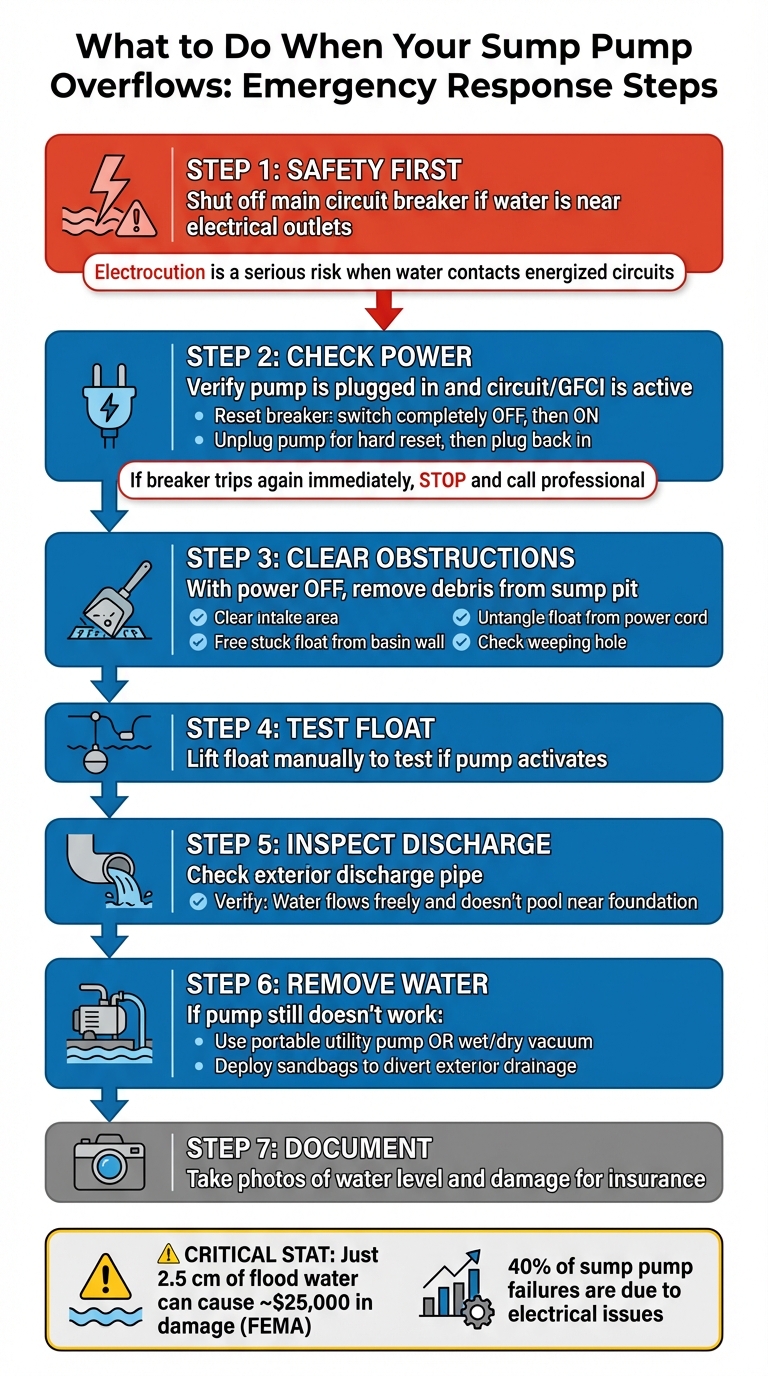
Sump Pump Overflow Emergency Response Steps
If water is near electrical outlets, your first priority should be safety. Shut off the main circuit breaker to prevent electrocution. As Total Mechanical Care warns:
Turn off the basement power at the circuit breaker if standing water is present or approaching electrical outlets – electrocution is a serious risk when water contacts energized circuits.
Once it’s safe, check if the sump pump is plugged in and if its circuit (or GFCI) is active. Electrical issues or power failures are responsible for 40% of sump pump failures. If the breaker has tripped, reset it by switching it completely off and then back on. Unplug the pump for a few minutes to perform a hard reset before plugging it back in. If the breaker trips again immediately, stop troubleshooting – this could signal a serious electrical short that needs professional attention. After addressing any power issues, inspect the pump for physical obstructions.
With the power off, clear the sump pit of debris that might be clogging the intake, jamming the float, or blocking the weeping hole. Ensure the float isn’t stuck against the basin wall or tangled in the power cord. Lift the float to see if the pump activates. Then, check the discharge pipe outside to confirm it’s releasing water properly and not pooling near your foundation. Make sure water flows freely from the pipe before moving forward.
If the pump still doesn’t work, use a portable utility pump or a wet/dry vacuum to remove standing water. To protect your home from further damage, use sandbags to divert exterior drainage. According to FEMA, even just 2.5 centimetres of flood water can result in approximately $25,000 in damage. Before starting cleanup, take photos of the water level and any damage for documentation purposes.
How to Fix the Problem
Cleaning and Maintenance
Keeping your sump pump clean is one of the most effective ways to prevent it from failing. The Sump and Sewage Pump Manufacturer’s Association (SSPMA) suggests different cleaning schedules depending on usage: monthly checks if it handles washing machine water, quarterly for standard use, and annually for occasional use. Start by turning off the power and unplugging the pump, including any backup systems. Carefully remove the pump from the pit to avoid spills, and use a shop vac or hand tools to clear out sediment, debris, and stagnant water.
Next, clean the pump’s exterior and intake screen using a hose and a soft brush. Check that the float moves freely and that the check valve is functioning properly. To test the system, pour about 5 gallons (roughly 19 litres) of water into the pit. The float switch should activate the pump immediately. Also, ensure the discharge outlet is positioned at least 6 metres from your foundation to prevent water from seeping back into your basement.
After cleaning, inspect each part of the pump for wear and tear to decide if any repairs or replacements are necessary.
Repairing or Replacing Parts
Unusual noises, excessive vibrations, or erratic cycling are signs that your sump pump might have failing components. If the pump is running but not moving water, check the small weeping hole between the pump and the check valve, as well as the check valve itself. Blockages or damage in these areas can trap air or cause backflow, making the pump overwork and short-cycle. Additionally, debris can clog the impeller (the part that moves water), so clean it if the pump’s performance seems low.
Repair costs can vary: float switches generally cost between $47 and $120, while high water alarms range from $18 to $35. For major repairs, professional labour typically runs between $300 and $800. Given that sump pumps usually last about 10 years, replacing the pump might be more economical than frequent repairs. To prevent future problems, elevate the pump slightly off the pit floor to reduce the risk of dirt and gravel jamming the float switch. For winter, consider installing an IceGuard-style attachment at the foundation exit to ensure water can flow even if the discharge line freezes.
If repeated issues persist despite repairs, it may be time to upgrade your setup with a backup system.
Installing a Backup System
Adding a backup system to your sump pump setup can provide peace of mind during power outages or periods of heavy water flow. These systems kick in automatically when the primary pump loses power or becomes overwhelmed. Parks Heating Cooling Plumbing & Electrical highlights the benefits:
A battery backup system wards off would-be water damage when your primary sump pump fails. It automatically detects a power loss, switches to the stored energy, and runs seamlessly until the primary power source is restored.
Modern backup systems often come equipped with smart technology that sends alerts to your phone, keeping you informed about pump operation and power status. To ensure proper installation and compatibility, it’s best to hire a professional. Test the backup system monthly by pouring water into the pit to confirm the float switch activates. While high-end systems can cost up to $3,200, they can save you from expensive repairs caused by mould, mildew, or water damage.
When to Call a Professional
If your sump pump fails during heavy rain – even after checking the power supply and float switch – it’s time to bring in a professional. Persistent mechanical problems often point to underlying issues that require an expert’s diagnosis.
An undersized sump pit or pump that can’t handle high water volumes is another reason to call for professional help. A specialist can evaluate the situation and recommend installing a higher-capacity unit. Visible damage to key components, such as the impeller, filter, or discharge line, also demands professional repair. Deep blockages in the discharge line that can’t be resolved with standard methods, or noticeable wear and tear on older pumps, are additional signs that expert intervention is needed. Acting quickly in these cases can prevent more serious complications.
In the event of flooding, don’t delay – contact a professional immediately to minimize damage. For homeowners in Toronto and nearby areas, Leaquida Waterproofing offers a full range of services, including sump pump installation, maintenance, and emergency repairs. Their skilled team can handle complex mechanical failures, upgrade inadequate systems, and install backup solutions to protect your home from future flooding risks.
If power outages frequently cause pump failures, consider upgrading to a battery-operated backup system or a generator. A professional can ensure the new system integrates seamlessly with your current setup, providing reliable protection during outages.
How to Prevent Sump Pump Overflow
Regular Testing and Cleaning
Testing your sump pump on a monthly basis can help you catch potential problems early. To do this, pour enough water into the sump pit to activate the float switch and confirm the pump is working as it should. This quick test can help you avoid surprises during heavy rainstorms.
Every three months, inspect the float switch and clean out any debris, dirt, or gravel from the sump basin. These materials can block the float switch or clog the pump’s intake. Additionally, schedule a professional inspection once a year to check the check valve, test backup battery systems, and ensure that discharge lines are clear and properly sloped.
“A proactive maintenance schedule should include: Monthly checks by pouring water into the pit to confirm activation; Quarterly inspection of the float switch and pit cleanliness; Annual professional inspections to test performance, backup systems, check valves, and discharge lines.” – Flood Tech
Sticking to this maintenance routine also helps ensure proper drainage, which is crucial for the sump pump to work efficiently.
Maintain Proper Drainage
Keeping water away from your foundation is just as important as maintaining the pump itself. Regularly clean your gutters and downspouts to prevent leaves and debris from directing extra water toward your basement. In the winter, check the exterior discharge pipe for ice buildup, as frozen lines can block the flow of water and cause the sump pit to overflow.
Adding a sealed sump pit lid is another smart step. It prevents debris from falling into the basin and interfering with the pump’s mechanical components.
Upgrade When Needed
If your sump pump runs constantly, even during dry spells, it might be undersized for your needs. Homes with heavy clay soil or high water tables often require a larger-capacity pump to handle the extra groundwater. Modern systems now come with Wi-Fi alerts to notify you of high water levels, power outages, or pump malfunctions.
Leaquida Waterproofing offers expert assessments to determine if your current setup fits Toronto’s unique climate and soil conditions. Their team can install high-capacity pumps with battery backup systems, ensuring your basement stays dry even during power outages caused by severe storms. Replacing an old plastic pump with a durable, professional-grade system can provide peace of mind and long-term protection against flooding. Upgrading your sump pump is a smart investment that works hand-in-hand with other measures to safeguard your home.
The Bigger Risk: Basement Water Problems
When a sump pump overflows, the immediate concern is the standing water in your basement. But the long-term risks? Those can be much more serious. Water in your basement can seep into structural elements, potentially weakening your foundation over time.
One major issue is the persistent moisture and groundwater pressure that builds beneath your basement floor. When the water table rises to or above the level of your basement floor, it creates hydraulic pressure. This pressure can actually lift the concrete slab, as Rick Thom notes:
“The hydraulic pressure from the ground water can and will attempt to lift (float) the basement floor like a boat. The first signs of this are usually cracking of the floor”.
These cracks are more than just cosmetic – they give water new ways to infiltrate your home.
In the GTA, many basement floors sit below the water line. During wet seasons, sump pumps often run continuously, and water levels can rise as high as 20 cm. This isn’t just a threat to unfinished basements; it can also damage finished rooms and critical systems like electrical and mechanical setups.
If you notice new cracks in your basement floor or walls, it’s crucial to address them quickly. Cracks allow water to bypass your sump pump entirely. Companies like Leaquida Waterproofing specialize in sealing these cracks using injection techniques that create a permanent waterproof barrier. Costs for these repairs range from $500 to $1,200 per crack, depending on how accessible the area is.
For a more comprehensive solution, exterior waterproofing can prevent water from ever reaching your foundation. Leaquida Waterproofing offers services such as excavation, waterproof membrane installation, and drainage system setup to redirect water. While this option costs between $100 and $250 per linear foot depending on soil conditions, it’s a long-term investment that reduces strain on your sump pump and protects your basement from future water damage.
Conclusion
A sump pump overflow doesn’t have to spell disaster – acting quickly can make all the difference. Regular maintenance is key: conduct monthly tests and schedule yearly professional inspections to catch potential issues early.
If an overflow does happen, respond with care. Start by disconnecting the power and inspecting for common problems like clogged discharge lines, stuck float switches, or debris in the pit.
Sometimes, though, routine fixes aren’t enough. Persistent overflows could mean your pump isn’t the right size for your home. In these cases, installing a backup system is a smart move, especially to guard against power outages during severe storms.
For ongoing problems or signs of foundation damage, you might need professional help. Leaquida Waterproofing offers emergency repairs and expert solutions. Their licensed technicians can diagnose mechanical issues, determine if your pump is properly sized, and install waterproofing systems like crack injections or exterior membranes. These measures not only ease the strain on your sump pump but also provide long-term protection for your home.
Don’t wait for the next heavy downpour to address sump pump issues. Reach out to Leaquida Waterproofing for a professional evaluation and a customized maintenance plan to keep your home safe and dry.

 CLOGGED OR BROKEN WEEPING TILE