
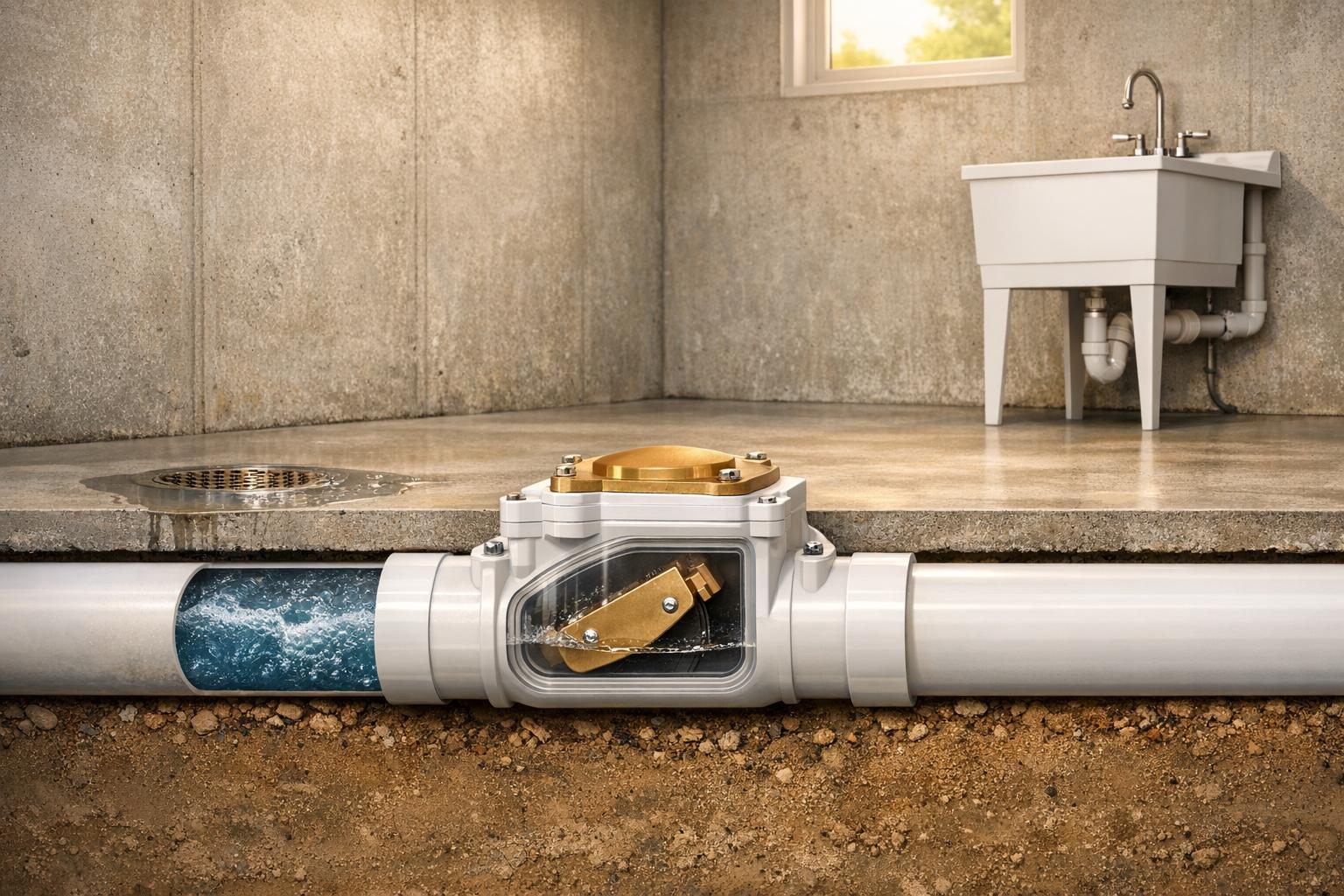
Sewage backups can destroy your basement and cost you tens of thousands of dollars to fix. A backwater valve is a one-way device that stops wastewater from flowing back into your home during heavy rains or sewer overloads. If your home has plumbing fixtures below street level or your basement floods during storms, installing a backwater valve could save you from costly repairs and health risks.
Key Takeaways:
- Common Warning Signs: Basement flooding during storms, slow drains, sewage odours, or multiple fixtures backing up at once.
- Risks of Delay: Sewage damage can cost $20,000–$50,000, while installation costs $2,000–$5,000.
- Rebate Programs: Cities like Toronto offer subsidies of up to $1,250 to offset costs.
- Maintenance: Annual inspections cost $100–$150, ensuring the valve operates effectively for up to 10+ years.
If your home is older, in a low-lying area, or prone to flooding, don’t wait. Call a licensed plumber to assess your property and protect your basement today.
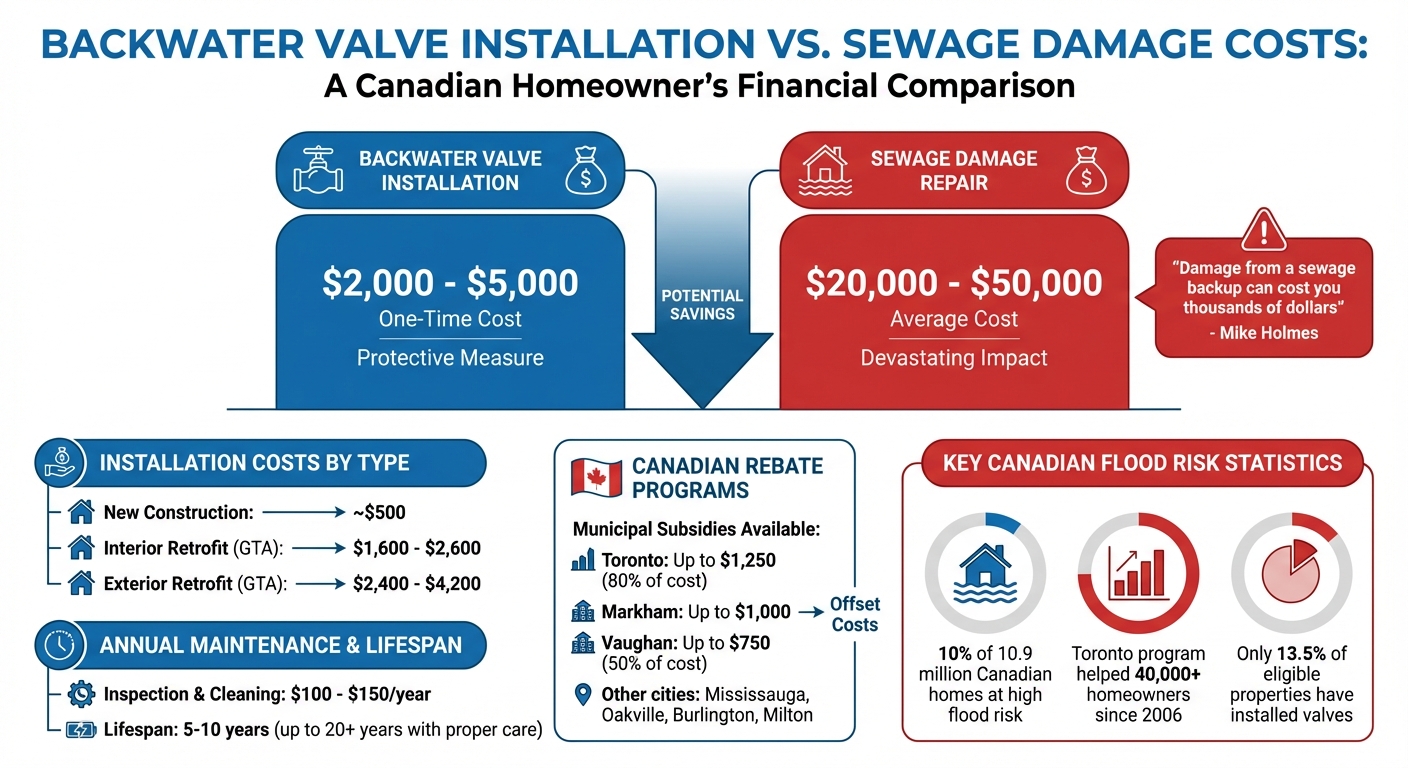
Backwater Valve Installation Costs vs Sewage Damage Repair Costs in Canada
Backwater Valves & When They are Required | From a Certified Building Inspector
What Is a Backwater Valve and How Does It Work?
A backwater valve is a simple yet effective device designed to protect your home from expensive sewage damage. Installed on your main sewer line, it acts as a one-way gate: it allows wastewater to flow out of your home but prevents sewage from backing up into it during heavy rain or municipal sewer overloads.
Here’s how it works: the valve operates mechanically, meaning it doesn’t need any external power. Under normal conditions, the valve’s flap stays open, letting wastewater and sewer gases escape. However, when backflow occurs, floats attached to the flap rise with the incoming water, sealing the flap tightly to block the reverse flow. Once the pressure in the municipal sewer system eases, gravity causes the flap to reopen, restoring normal operation.
It’s important to note that a backwater valve is different from a backflow preventer. While the backwater valve protects your home from sewer backups, a backflow preventer ensures that contaminated water doesn’t enter your drinking water supply. Backwater valves are typically installed in the basement along the sewer line, whereas backflow preventers are located near your water metre on the supply line.
In Canada, the National Building Code requires backwater valves for any fixtures below street level. For instance, Montreal has mandated stop valves since 2011. During storms, when the valve is closed, it’s crucial to limit water use, as running water in your home could flood your basement with your own wastewater. Most closures last between one and four hours.
"The device needs to be installed correctly, including the location, orientation and position. If the plumber is not diligent in ensuring that the manufacturer’s specification are followed, the device may not operate correctly." – City of Windsor
Understanding how this device works and its proper installation is key to preventing sewer backups in Canadian homes.
Common Causes of Sewer Backups in Canadian Homes
Knowing how backwater valves function is important because several factors can lead to sewer backups in Canadian homes. These backups happen when municipal systems face more pressure than they can handle.
One major culprit is municipal system overload. Intense rainfall or rapid snowmelt in the spring can overwhelm sewer networks, causing water to flow backward through home drains and into basements. This issue is particularly noticeable in cities like Toronto, where many sewer pipes were installed 50 to 100 years ago and were built to handle milder weather conditions of the past. Older urban systems are especially vulnerable, making backups more common.
In neighbourhoods with combined sewer systems, the problem is even worse. These systems carry both stormwater and sanitary sewage in the same pipes. During heavy rain, the combined flow can exceed capacity, significantly increasing the risk of backups. This is why having a properly installed backwater valve is so important for protecting your home.
Another common issue is tree root intrusion. Mature trees in urban areas often send roots into small cracks in aging clay or cast-iron pipes. These roots grow and trap debris, creating blockages that restrict flow, especially during storms. On top of that, household habits – like pouring fats, oils, and grease down the drain or flushing items like wipes that don’t break down – can cause localized clogs, adding even more strain to the system. These factors underline the need for additional safeguards like backwater valves.
Finally, climate change has made things worse. Storms that were once considered rare "100-year events" are now happening more often, producing runoff levels that older sewer systems were never designed to handle.
5 Warning Signs Your Home Needs a Backwater Valve
Spotting these signs early can save you from expensive sewage-related problems. Here are five key indicators that your home might urgently need a backwater valve.
Basement Flooding During Heavy Rains or Snowmelt
If your basement floods repeatedly during heavy rains or snowmelt, it’s a red flag. This often means the municipal sewer system is overwhelmed, pushing wastewater back into your home. Beyond the mess, each flood exposes your family to harmful bacteria and leaves you facing costly repairs.
Slow Drains and Sewage Odours
Do your basement drains seem sluggish, or do you hear gurgling sounds during storms? These are classic signs of a sewer line under pressure and a potential backup. Persistent sewage odours are another warning that wastewater or sewer gases are being forced back into your home.
"Sewer gas is not just unpleasant but can be dangerous in high concentrations. Address this problem immediately." – Absolute Draining & Plumbing
If you notice these issues together, it’s a strong indicator that a backwater valve is needed.
Multiple Toilets and Drains Backing Up at Once
When toilets, sinks, tubs, and floor drains all back up simultaneously, it’s likely a main sewer line problem – not just a clogged drain. This situation highlights the importance of having a backwater valve to prevent widespread backups.
Wet Spots or Soggy Areas in Your Yard
Unexplained puddles or damp patches in your yard could point to damaged sewer pipes. These leaks can allow tree roots to invade, creating blockages that worsen during storms. Such damage increases the risk of backups, making your home more vulnerable.
Older Home with Aging Sewer Infrastructure
If your home was built before 1989, it likely doesn’t have a backwater valve. Older homes with deteriorating pipes and lower basement levels are at a higher risk of sewage backflow. Many Canadian cities rely on sewer systems with pipes that are 50 to 100 years old. Over time, these pipes lose capacity due to wear, root intrusion, and sediment build-up.
"Backwater valves were not required in homes built before 1989. A backwater valve is important to protecting your home, you should consider installing one." – EPCOR
Spotting these warning signs early can help protect your property from severe damage. Don’t ignore them – act before it’s too late.
sbb-itb-5761e20
Risks of Delaying Backwater Valve Installation
Putting off the installation of a backwater valve might feel like a way to save money, but the reality is that it can lead to financial disaster. A single sewage backup can rack up repair bills between $20,000 and $50,000, far outstripping the $2,000 to $5,000 it typically costs to install a backwater valve retrofit. As Mike Holmes, the trusted contractor and TV personality, warns:
"Damage from a sewage backup can cost you thousands of dollars in damage and will contaminate your basement… I really think this is something that should be in every home."
And it doesn’t stop at the initial repair costs. Secondary expenses quickly pile up. You may need to deal with mould remediation, remove and replace drywall, install new flooring, and even pay for professional air quality testing to make your home livable again. Raw sewage is extremely toxic, and cleanup efforts can expose you to serious health risks, such as infections from skin or eye contact. On top of that, stagnant sewage creates ideal conditions for mould, which can lead to long-term respiratory issues for your family.
The structural integrity of your home is also at stake. Sewage backup can infiltrate foundation cracks, causing them to expand and leading to further deterioration. Persistent moisture can result in sagging floors, misaligned pipes, and wood rot, all of which weaken your home’s core structure. Pavel Sidorov, a waterproofing expert at MT Drains & Plumbing, highlights the importance of prevention:
"The investment you make in a backwater valve can prevent potentially catastrophic damage to your property and minimize the risk of human exposure to toxic sewage in your home."
Financial risks don’t end there. Insurance complications can add another layer of stress. Many standard home insurance policies exclude sewer backups unless you’ve purchased additional coverage, and insurers may even refuse to renew policies for homes in high-risk areas unless a backwater valve is installed. Frequent flooding can also lower your home’s market value, making it harder to sell or refinance and even jeopardizing your ability to secure a mortgage. Vaillancourt Plumbing & Drains underscores this point:
"When our homes are at risk, our financial security is too. Homes that flood frequently may become less valuable, and could become subject to restrictions around insurance and even mortgages."
The Insurance Bureau of Canada reports that about 10% of the 10.9 million private residences in the country are at high risk of flooding. Acting now can save you from becoming part of this statistic – prevention costs a fraction of what repairs will demand.
Installation Costs and Rebate Programs in Canada
Once you understand the risks of delaying a backwater valve installation, it’s time to explore the costs and rebates available across Canada.
For new construction, installing a backwater valve costs around $500. Retrofitting, however, involves accessing the foundation, which pushes the price up to anywhere between $2,000 and $5,000. In the Greater Toronto Area (GTA), costs for interior installations typically range from $1,600 to $2,600, while more labour-intensive exterior installations can cost between $2,400 and $4,200.
Several factors can affect pricing, including the age and location of your home. In the GTA, basic installations average $2,000–$2,500, but older homes or premium systems may cost $2,800–$3,500. Additionally, permit fees vary by municipality, with Mississauga charging $50 and Vaughan charging $214.
Rebate Programs and Subsidies
Many municipalities offer financial incentives to offset installation costs. For example:
- Toronto: Covers up to $1,250, or 80% of the cost.
- Markham: Offers up to $1,000.
- Vaughan: Covers 50% of the cost, up to $750.
Other cities, such as Mississauga, Oakville, Burlington, and Milton, also have rebate programs. Since 2006, Toronto’s subsidy program has helped over 40,000 homeowners, but only about 13.5% of eligible properties have taken advantage of it.
To qualify for these rebates, installation must be done by a licensed and certified plumber. For instance, Toronto requires specific licences, such as T94 Plumbing Contractors. Additionally, most municipalities mandate a permit before starting work. After installation, a municipal inspector must confirm the valve meets local building codes to ensure eligibility for the subsidy.
Maintenance and Insurance Benefits
Backwater valves require annual maintenance, including inspection and cleaning, which costs around $100–$150. With proper care, a high-quality valve typically lasts 5 to 10 years, though some models can perform well for over 20 years. On top of that, many Canadian insurers offer premium discounts for homes equipped with professionally installed valves, and some policies even make them a requirement for sewer backup coverage.
When to Call a Professional for Assessment
If you notice recurring sewer backups during heavy rain or storms, it’s time to call a licensed plumber. Signs like water rising in toilets or drains during wet weather, gurgling noises, or slow drainage in basement fixtures suggest your system is struggling with backpressure and needs expert attention.
The age and location of your home can make these issues even more pressing. Older homes built before backwater valves were mandated are at greater risk. Similarly, properties in low-lying areas, at the base of hills, or near rivers and ravines should be assessed by a professional.
"The backwater valve needs to be installed and maintained by professionals. There are several laws and regulations that have to be followed, and you want to make sure that the backwater valve is installed correctly." – Pavel Sidorov, Waterproofing Specialist, MT Drains & Plumbing
During an assessment, the plumber will identify the location of your main sewer line exit (often near the water metre or at the front of the house), check the elevation of your basement floor relative to the street, and use camera inspections to examine your plumbing layout. They’ll determine if all basement fixtures can be protected and whether foundation drains are improperly connected to the sanitary sewer.
Before the plumber arrives, prepare a 0.9m x 0.9m space near your main water metre and sewer exit point. Move any carpets, boxes, or furniture to allow access for potential concrete cutting or excavation work. It’s also a good idea to research local rebate programmes ahead of time – many require the work to be done by a licensed plumber to qualify for funding. Ensure the contractor has the proper credentials and complete any necessary municipal permits, which are mandatory for retrofit installations.
Conclusion: Protect Your Home with a Backwater Valve
Preventing sewage backflow isn’t just about convenience – it’s about protecting your home and your wallet. While retrofitting a backwater valve can cost between $2,000 and $5,000, it can save you from sewage damage that might rack up bills of $20,000 to $50,000 or more. The best part? This device works automatically, without electricity, offering round-the-clock protection during heavy rainfalls or snowmelt.
More and more Canadian insurance providers are making backwater valves a requirement for sewer backup coverage. Some even reward homeowners with premium discounts when the valve is professionally installed. Without one, you could face denied claims and hefty repair costs. Beyond the financial aspect, a well-maintained valve keeps your home structurally sound and safe.
Once installed, don’t forget about upkeep. Schedule yearly inspections and cleanings to keep the valve in top shape. Make sure the access box is always clear – no permanent flooring or furniture should cover it. And if you hear gurgling sounds from your drains during a storm, avoid using water. That noise could mean the valve is doing its job by sealing off your home from potential backflow.
If you experience issues like basement flooding, slow drainage, or multiple fixtures backing up at the same time, don’t wait. Call a licensed plumber right away. The peace of mind and savings a backwater valve offers make it a worthwhile investment for any homeowner.
FAQs
What are the signs that my home might need a backwater valve?
If your home often deals with basement flooding during light rain, sewage backups, or persistent unpleasant odours coming from drains after a heavy downpour, it might be time to think about installing a backwater valve. These issues are red flags that your plumbing system could be struggling, and ignoring them might lead to expensive repairs later.
A backwater valve acts as a crucial defence against sewer backups, especially in areas with frequent heavy rain or in older neighbourhoods with aging plumbing systems. Tackling these problems early can save you from more severe and costly damage in the future.
How can installing a backwater valve save you money?
Installing a backwater valve is a practical way to protect your home from the hefty costs of basement flooding or sewage backups. Without this safeguard, cleanup and repair bills can easily climb into the tens of thousands of dollars.
This valve works by blocking wastewater from re-entering your home during events like heavy rain or sewer blockages. Beyond protecting your property, it spares you the stress and financial strain that comes with dealing with severe water damage. It’s a straightforward investment that can save you from costly emergencies in the future.
How do Canadian rebate programs for backwater valve installations work?
In Canada, several municipalities provide rebate programs to assist homeowners with the cost of installing backwater valves. These devices are essential for protecting homes from sewer backups, and the rebates can help offset expenses by covering a percentage of the cost or offering a set amount. For instance, some areas might provide up to $1,500 or reimburse 50% of the installation cost, depending on local policies.
Eligibility for these programs often comes with specific requirements. Homeowners typically need to hire a licensed professional for the installation, secure the necessary permits, and may need to submit proof of completion alongside an application. These rebates are designed to encourage flood prevention measures, helping communities better withstand the challenges of severe weather or sewer system failures. Be sure to contact your local municipality for detailed information on available programs and how to qualify.
 CLOGGED OR BROKEN WEEPING TILE