
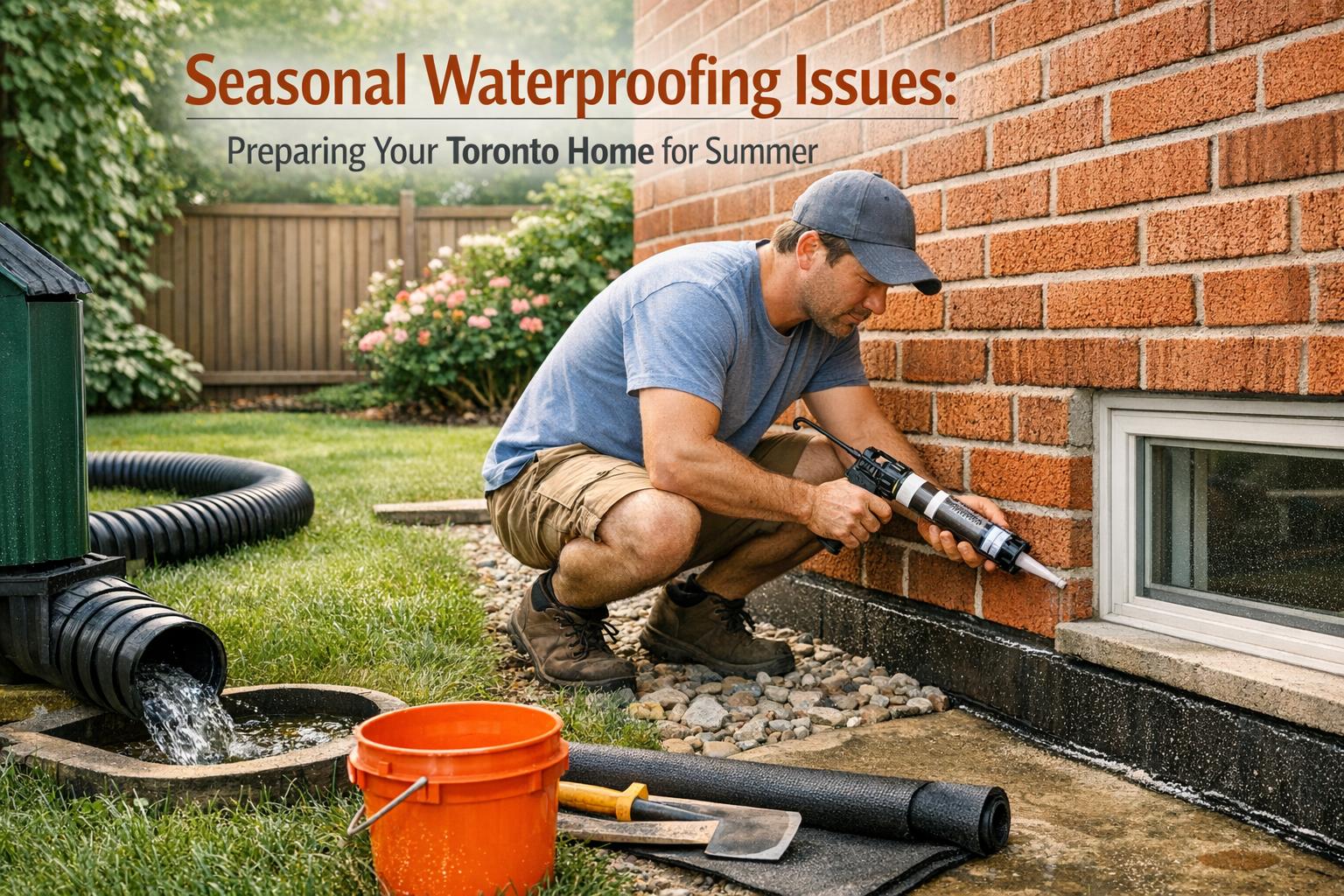
Toronto summers bring heavy rainstorms, clay-based soil challenges, and rising humidity, all of which can wreak havoc on your home’s foundation. Without proper waterproofing, these conditions can lead to basement flooding, structural damage, and mould growth. Here’s what you need to know to protect your home:
- Common Problems: Summer storms create hydrostatic pressure, forcing water through foundation cracks. Winter freeze-thaw cycles worsen these cracks, while poor drainage and high humidity increase risks of leaks and mould.
- Inspection Tips: Look for efflorescence (white residue), musty smells, damp spots, or peeling paint inside and outside your home. Check gutters, downspouts, and grading to ensure water flows away from your foundation.
- Solutions: Exterior waterproofing costs $8,000–$15,000 and lasts decades. Interior systems, including sump pumps and drainage channels, cost $70–$120/linear foot. Crack repairs range from $500–$3,000, depending on severity.
- Maintenance: Clean gutters regularly, test sump pumps, monitor humidity, and inspect for cracks annually. Proper yard drainage and professional waterproofing services can prevent costly repairs.
Skipping waterproofing now could lead to major expenses later. Act before summer storms hit to keep your home safe and dry.
Common Summer Waterproofing Problems in Toronto Homes
Heavy Rainfall and Basement Flooding
Toronto summers often bring intense storms with heavy rainfall, and the city’s aging stormwater systems can struggle to keep up. The dense, clay-heavy soil in the area doesn’t drain well, which leads to water building up around foundations. This creates hydrostatic pressure that pushes water through foundation cracks and joints.
Dryshield highlights the impact of this pressure:
"Hydrostatic pressure from the soil is powerful (thousands of pounds). It will eventually bubble, peel, and push right through [waterproof] paint because the water is still trapped inside the concrete."
Water can also find its way in through the cove joint – the spot where the basement wall meets the floor. When under-slab pressure builds, this area becomes especially vulnerable. Clogged gutters or downspouts that release water too close to the house can make things worse, saturating the soil near the foundation and increasing the likelihood of flooding.
This pressure doesn’t just cause immediate flooding; it also worsens existing foundation cracks caused by Toronto’s harsh winters.
Foundation Cracks After Winter Freeze-Thaw Cycles
Toronto’s winters are tough on foundations. The freeze-thaw cycle – where water freezes, expands, and then thaws – widens small cracks in concrete over time. In a city where temperatures can swing dramatically from -20°C to above freezing in a single day, this process happens repeatedly, making the cracks worse.
Gavin MacRae, a foundation repair expert, explains:
"When the water freezes, it expands, which can cause the crack to grow. This can happen several times within a season which can quickly become an issue."
By the time summer storms arrive, these winter-widened cracks become open doors for water. The surrounding clay soil, already saturated from rainfall, increases hydrostatic pressure, forcing water into these weakened areas. If you spot a white, chalky residue (efflorescence) on your basement walls, it’s a sign that water is seeping through foundation cracks.
These cracks aren’t the only issue – poor drainage around your property can make waterproofing even more challenging.
Poor Drainage Around the Property
Poor drainage often becomes obvious only after water starts pooling in your yard or leaking into your basement. Warning signs include damp spots on basement walls, peeling paint, musty smells, and slow-draining water. These issues suggest that water isn’t being directed away from your home as it should.
For instance, a townhouse in North York experienced significant basement leaks due to improper grading and a missing waterproofing membrane.
To reduce the risk, ensure downspouts direct water at least 2 metres away from your foundation. Window wells can also pose problems; if they fill with water during storms, moisture may seep into your basement.
High Humidity and Mould Growth
Toronto’s humid summers create the perfect conditions for mould. Moisture can travel upward through porous concrete via capillary action, and mould can begin growing within just 24 to 48 hours of exposure to water.
Leaquida Waterproofing describes the impact:
"A musty odour… can be not only in the basement, but also penetrate other house rooms. The fact is that excess moisture forms a damp environment in the basement – these are ideal conditions for the emergence and growth of fungus and mould."
With about 35% of Canadian homes built before 1970 – and nearly half before 1980 – many lack modern waterproofing membranes. Using a dehumidifier during the summer can help manage humidity levels and reduce the risk of mould.
Understanding these common issues is a critical step in identifying and addressing summer waterproofing challenges. Proper inspection and maintenance can help protect your home from these seasonal problems.
sbb-itb-5761e20
Inspecting Your Home Before Summer
DIY Inspection Tips
Use these practical tips to spot common waterproofing problems around your home.
Start by examining your basement for yellow or dark stains near the bottom of walls, especially close to the floor. Watch for signs like peeling paint, bubbling wallpaper, or crumbling plaster – these often mean moisture is seeping through the foundation. Look out for efflorescence, a white, powdery residue left behind when water evaporates on concrete surfaces. This chalky buildup is a clear sign that water is moving through your foundation walls.
If you notice a lingering musty or damp smell, it could signal hidden moisture or even mould behind drywall or insulation. Pay extra attention to high-risk areas, including the cove joint (where walls meet the floor), window wells, corners, and door frames, as these are common spots for cracks to develop.
Outside, check that the grading around your home slopes away from the foundation – aim for at least a 15 cm drop over 3 m. Keep your gutters clear and ensure downspouts direct water at least 2 m away from your home. After a rainstorm, inspect window wells for standing water or blocked drains, as these can cause unexpected seepage during heavy summer rains.
For a simple test, spray the base of your exterior foundation wall with a garden hose (set to a shower spray) for about 15 minutes. Wait 5 minutes, then check inside for any signs of seepage. If you have a finished basement, consider using a moisture meter to detect hidden dampness behind walls before visible stains appear.
If you spot any of these warning signs, it’s time to consult a professional for a more thorough investigation.
When to Call a Professional
Sometimes, a professional assessment is the only way to address serious issues.
Certain problems demand immediate attention. For example, horizontal cracks, noticeable wall movement, or doors that suddenly stick could point to structural concerns that require expert intervention. Similarly, standing water near electrical outlets, sewage odours, or rapid mould growth are urgent red flags.
Even less obvious issues shouldn’t be ignored. If you’ve improved your drainage but still notice recurring dampness after heavy rain, or if your sump pump runs constantly, a professional diagnosis is likely needed. Leaquida Waterproofing offers free inspections to help you address problems before they worsen.
Here’s a quick guide to symptoms and when to act:
| Symptom | Urgency Level | Recommended Action |
|---|---|---|
| Minor dampness / Musty odour | Low–Medium | Schedule an inspection; check gutters and grading |
| Recurring seepage after storms | Medium–High | Request a professional evaluation for waterproofing |
| Standing water / Electrical risk | Critical | Seek immediate professional intervention |
| Horizontal cracks / Wall movement | Critical | Get an urgent structural and waterproofing assessment |
Professionals use advanced tools, like camera inspections, to uncover hidden problems. They can recommend whether you need interior drainage solutions or exterior waterproofing. If you’re in the Greater Toronto Area, you might also qualify for municipal rebates on sump pumps or backwater valves, which can help reduce your expenses.
Interior vs Exterior Waterproofing | Basement Second Suite | Ontario
Key Waterproofing Solutions for Summer Protection

Toronto Home Waterproofing Solutions: Costs and Methods Comparison
Once you’ve identified common issues and completed inspections, it’s time to dive into specific solutions to shield your home from summer water damage.
Exterior Foundation Waterproofing
Exterior waterproofing creates a protective barrier to stop water from reaching your foundation. The process involves excavating 1.2 to 2.4 metres to expose the footing and cleaning the concrete surface thoroughly. A rubberized asphalt coating is applied, followed by a dimpled drainage membrane that forms an air gap, directing water to weeping tiles that carry it away. Before adding these layers, cracks in the foundation are chiselled out and filled with hydraulic cement or epoxy to ensure a watertight seal.
"Toronto’s clay-based ground expands dramatically when wet and contracts when dry. This continuous expansion and contraction cycle creates stress on concrete walls, eventually forming cracks or weak spots." – Leaquida Waterproofing
In Toronto, exterior waterproofing costs range from $100 to $290 per linear foot, with starting rates around $120 per linear foot. A full project might cost $8,000 to $15,000 or more. While the upfront investment is significant, this solution can last for decades and may even boost your property value, providing up to a 30% return on investment. Many contractors also offer lifetime transferable warranties, adding peace of mind.
Interior Waterproofing Systems
When exterior excavation isn’t an option, interior waterproofing provides a practical alternative to manage water intrusion. This approach focuses on addressing water entering through foundation pores or where walls meet the floor. It typically involves installing drainage channels along the cove joint, applying vapour barriers to walls, and setting up a sump pump to divert water away from the foundation.
"Interior waterproofing is the most practical method of preventing water damage and eliminating high humidity… it involves several steps: identifying cracks, sealing porous surfaces, and applying interior waterproofing systems." – Leaquida Waterproofing
Interior systems are quicker to install, often completed within 2 to 7 days, and cost approximately $70 to $120 per linear foot. A full sump pump system, including the pump, pit, discharge line, and check valve, typically costs between $900 and $2,000. For active leaks, professionals may use polyurethane or epoxy injections to seal foundation cracks. Since these systems rely heavily on the sump pump’s efficiency, it’s wise to install a backup power source, regularly inspect the pump, and consider adding a dehumidifier for extra protection.
Foundation Crack Repair and Sealing
Not all foundation cracks are created equal, and their treatment depends on the type of damage. Vertical or diagonal cracks, often caused by settlement, can be repaired using polyurethane injections. However, horizontal cracks or bowing walls – typically caused by lateral soil pressure – require structural reinforcement, such as carbon-fibre straps or anchors, combined with epoxy injections.
Repair costs vary based on the severity of the issue. Fixing isolated cracks generally costs between $500 and $1,200, while more extensive vertical seam repairs can range from $1,500 to $3,000. Structural repairs for horizontal cracks start around $7,500 and can exceed $15,000.
"Vertical seams are often shrinkage-related and respond to injection… A horizontal line can indicate lateral soil pressure and movement, so reinforcement (carbon-fibre straps or anchors) is added." – Leaquida Waterproofing
Surface treatments like waterproof paint or sealants might seem like quick fixes, but they aren’t suitable for structural leaks. Hydrostatic pressure from saturated soil can cause these coatings to bubble and peel over time.
Improving Yard Drainage
Proper yard drainage is essential to prevent water from pooling around your foundation. Ensure your yard slopes at least 15 centimetres over 3 metres away from your home. Regularly clean gutters and extend downspouts at least 2 metres from the foundation to direct water further away.
If drainage issues persist, consider installing French drains or upgrading to perforated PVC piping surrounded by gravel and filter fabric. These systems redirect groundwater to a sump pit or storm sewer. When backfilling around your foundation, use clear gravel topped with compacted soil to create a natural filter that enhances drainage.
Avoid piling snow or mulch directly against your foundation walls, as these materials can trap moisture during thaw cycles, increasing the risk of water damage.
Preventive Maintenance Tips for Homeowners
Even the most reliable waterproofing systems need consistent upkeep to stay effective. Simple tasks during the summer months can help you avoid costly repairs and keep your basement dry during Toronto’s unpredictable storm season.
Seasonal Home Maintenance
Start by cleaning your gutters and downspouts at least twice a year – or more often if your home is surrounded by trees. Clogged gutters can cause water to overflow and pool near your foundation, which is exactly what your waterproofing system is designed to prevent. Make sure your downspouts extend at least 2 metres away from your foundation.
Regularly test your sump pump by pouring a bucket of water into the pit to ensure the float switch activates and the pump works properly. After heavy summer storms, check the discharge pipe to confirm water isn’t flowing back toward your foundation. Use a hygrometer to monitor basement humidity levels, as excessive moisture can lead to mould growth and weaken structural materials. If humidity remains high, a dehumidifier can help maintain a dry environment.
Check the soil grading around your property as well. Ensure the ground slopes away from your home, with a 5 cm drop per 30 cm over a distance of 1.5 m. If you notice low spots or areas where water pools after rain, add compacted soil to improve drainage. Keep plants and trees at least 90 cm away from your foundation to avoid root damage to waterproofing membranes. Lastly, don’t forget to inspect window wells after storms to ensure they’re draining properly.
These straightforward tasks create a strong foundation for long-term waterproofing effectiveness and should be paired with annual inspections.
Long-Term Waterproofing Care
Beyond seasonal maintenance, long-term care is essential for keeping your waterproofing system resilient against Toronto’s demanding weather.
Inspect your basement walls and exterior foundation annually for cracks, damp spots, or peeling coatings, and address any issues immediately.
"Caring for your waterproofing system now means fewer problems in the future." – Dryshield
Consider scheduling a professional inspection every few years to spot drainage issues or membrane wear that might not be visible during routine checks. Catching small problems early – like minor cracks or blockages – can save you from dealing with costly structural damage down the road.
Why Professional Waterproofing Services Are Important
Avoiding DIY Risks
At first glance, DIY waterproofing might seem like a budget-friendly option, but it often leads to more headaches than solutions. DIY sealants, for instance, only provide temporary relief from Toronto’s intense summer rainfall. These products are typically designed for dampproofing – slowing moisture absorption – not for true waterproofing, which is built to withstand hydrostatic pressure.
Without specialized tools like moisture detectors, thermal imaging, or camera inspections, homeowners often fail to identify the actual source of leaks. Instead, they end up treating the symptoms, leaving the root problem untouched. A foundation repair expert puts it simply:
"The best (and the only correct) way to stop basement leaks is to waterproof the exterior of the foundation. And let me be clear: I said waterproof, not dampproof".
When it comes to structural repairs, DIY attempts can even be hazardous. For example, horizontal cracks or bowing walls require advanced solutions like carbon-fibre reinforcement – not just a quick application of crack filler. These pitfalls make it clear why professional expertise is indispensable.
Benefits of Professional Expertise
While regular inspections and maintenance can help spot potential issues, only professional waterproofing services can deliver long-lasting solutions to Toronto’s unique challenges. DIY methods simply can’t match the durability and effectiveness of professional-grade systems.
Toronto’s challenging soil conditions call for heavy-duty waterproofing measures. Professionals use industrial-grade elastomeric membranes that stay flexible during the city’s freeze–thaw cycles, unlike DIY products that often crack under stress.
Expert waterproofing involves more than just surface fixes. It combines multiple protective layers – like dimpled drainage boards, weeping tile systems, and high-performance sump pumps – to create a comprehensive defence against water damage. When installed correctly, these systems can safeguard your home for decades. Companies like Leaquida also offer warranties that cover both labour and materials, ensuring peace of mind. On top of that, they provide transparent pricing with no hidden fees and can assist with municipal programs like Toronto’s backwater valve subsidies to help lower costs.
One customer, Trisha Grant, shared her positive experience:
"Leaquida Waterproofing was prompt, courteous and thorough… I called Sunday, got a quote Monday, had the work done the following Monday (including issuing of building permit)".
With 24/7 availability, Leaquida ensures urgent leaks are handled promptly, preventing small issues from escalating into costly structural damage.
Conclusion
Summer storms in Toronto often arrive without warning. The combination of heavy rainfall and the city’s clay-based soil, which shifts with changes in moisture, puts constant strain on your foundation. Small springtime cracks or drainage issues can quickly lead to basement flooding during intense rainfalls.
This highlights the need for regular maintenance. Look out for early warning signs like white, powdery residue (efflorescence), musty smells, or damp spots on basement walls. It’s also essential to check your gutters and drainage systems to ensure water is being directed away from your home effectively.
While simple inspections and DIY fixes can help you catch problems early, lasting protection requires professional intervention. Temporary solutions often fail to withstand Toronto’s hydrostatic pressure, whereas professionally installed drainage systems and waterproofing membranes can offer decades of protection. As one expert puts it:
"Waterproofing once, done right, is far more cost-effective than repairing repeated damage caused by neglect or poor workmanship".
Services like Leaquida provide a thorough approach to Toronto’s specific waterproofing needs, offering advanced diagnostics, comprehensive warranties, and municipal subsidy guidance. With 24/7 availability and transparent pricing, professional waterproofing ensures your home and family are protected before the next storm strikes. Don’t wait – secure your foundation today.
FAQs
Do I need exterior or interior waterproofing?
The decision to go with exterior or interior waterproofing hinges on the unique requirements of your home.
Exterior waterproofing is designed to stop water before it penetrates your foundation walls. This option works well in areas with heavy rainfall, visible cracks in the foundation, or poor drainage around your property.
On the other hand, interior waterproofing focuses on controlling water that has already made its way inside. It’s a practical solution for dealing with hydrostatic pressure, minor seepage, or existing leaks, often involving drainage systems or waterproof coatings.
For many homes, combining both methods offers the most comprehensive protection. To figure out what’s best for your specific situation, it’s always a good idea to consult with a professional.
How can I tell if a foundation crack is serious?
Cracks in a foundation become a concern when they exceed 1/4 inch in width, show evidence of spreading or shifting, or are accompanied by problems such as uneven flooring or walls that appear to lean. In such cases, it’s essential to have a professional assess the situation to determine if there’s a potential structural issue.
What’s the fastest way to improve drainage around my home?
The fastest way to tackle drainage issues is by focusing on yard drainage solutions. Installing a French drain system or adjusting the grading of your yard to direct water away from your home are effective options. Make sure the ground slopes away from your foundation, and clear any existing drainage pathways to improve water flow right away. These measures can help prevent water pooling and lower the chances of basement flooding.
 CLOGGED OR BROKEN WEEPING TILE