
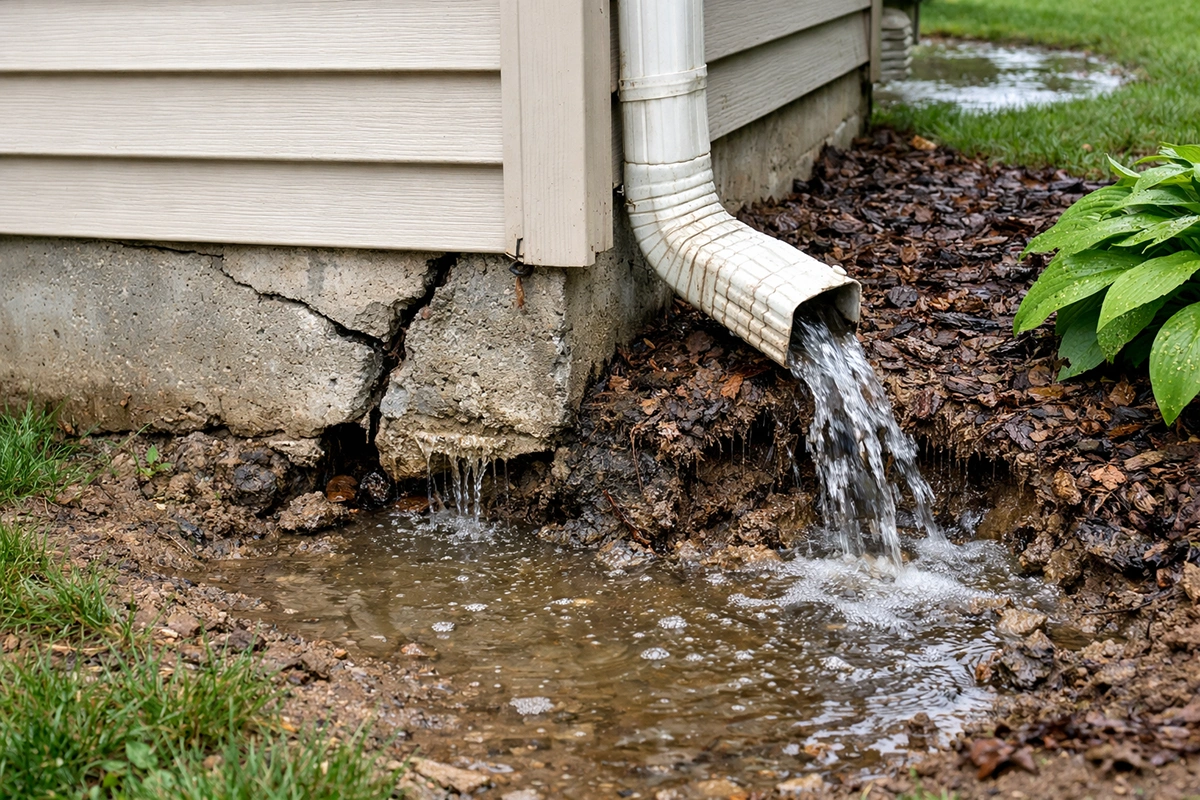
Your home’s foundation isn’t just concrete sitting in the ground. It’s a carefully engineered structural base designed to support thousands of pounds while managing moisture, temperature changes, and soil movement. But there’s one enemy that silently destroys more homes than anything else: water.
Poor drainage doesn’t announce itself with dramatic cracks or sudden collapses. Instead, it works slowly, almost invisibly, undermining your home’s structural integrity year after year.
By the time most homeowners notice the damage, repairs can cost tens of thousands of dollars.
Understanding how does water affect foundation systems and overall load-bearing stability can save you from becoming another costly statistic.
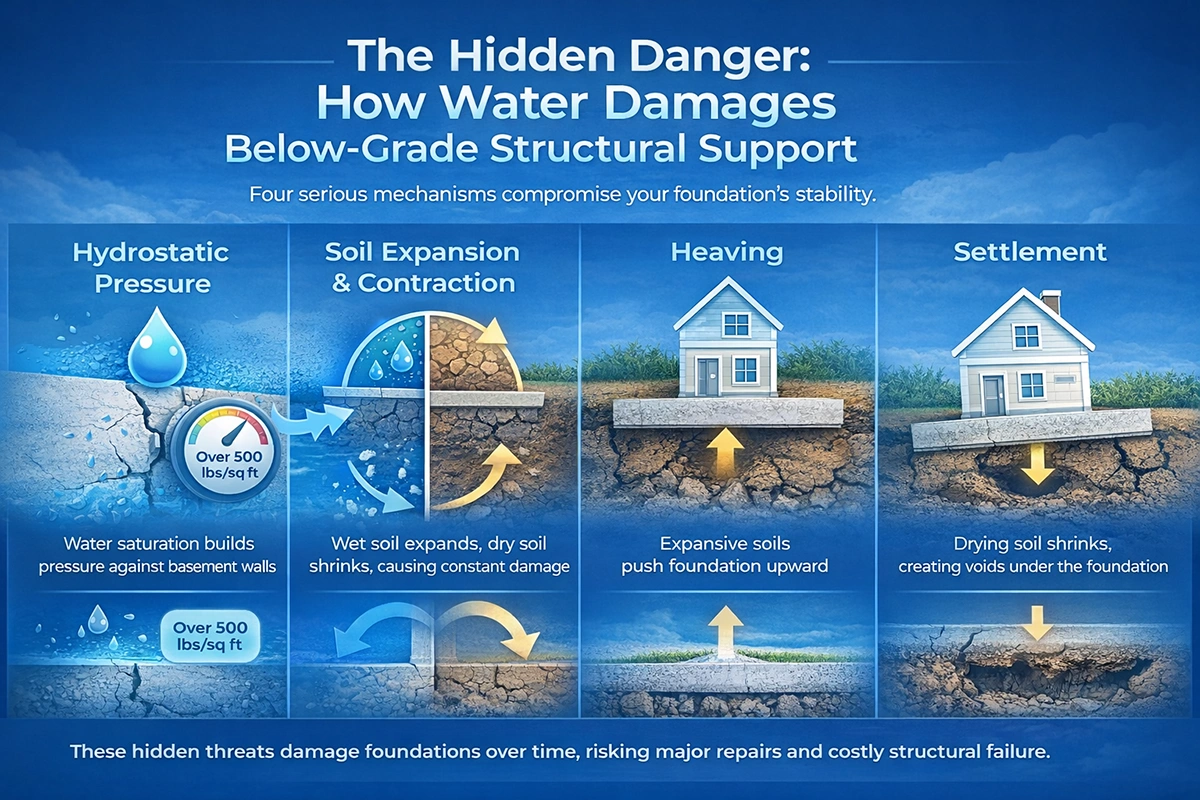
The Hidden Danger: How Water Damages Structural Support
Water affects below-grade structures through four main mechanisms, each working simultaneously to compromise stability.
Hydrostatic Pressure
When water pooling near house foundation areas doesn’t drain properly, it saturates the soil. Saturated soil exerts tremendous pressure against basement walls—sometimes over 500 pounds per square foot. This hydrostatic pressure pushes relentlessly against structural walls, creating cracks and eventually causing them to bow inward.
Concrete is strong in compression but weak in tension. Constant water pressure creates forces that concrete simply can’t resist indefinitely.
Soil Expansion and Contraction
Clay-rich soils absorb water like a sponge, expanding significantly when wet. As they dry, they shrink. This cycle repeats hundreds of times over a structure’s lifetime.
The effects of bad drainage on foundation stability become apparent through this expansion–contraction cycle. Soil pushes against basement walls when wet, then pulls away when dry, creating gaps that fill with water during the next rain. Each cycle widens cracks and destabilizes the structure.
In extreme cases, expansive soils can lift entire homes—a phenomenon called heaving—or create voids underneath as soil shrinks, leading to settlement.
Soil Erosion Around the Home
Standing water around foundation risks don’t stop at pressure and expansion.
Water flowing along basement walls carries away soil particles—a process called erosion. Over time, this creates voids under footings and around structural walls.
Soil erosion around foundation areas is particularly dangerous because it’s invisible.
You won’t see the void forming beneath your basement floor until it’s large enough to cause settling. By then, structural damage may be extensive.
Load-bearing footings need solid soil support. When erosion removes that support, walls sink unevenly, causing cracks and shifting throughout the home.
Freeze-Thaw Damage
In cold climates, water trapped in small cracks expands by 9% when it freezes. This expansion force—approximately 50,000 psi—is enough to break concrete.
Each winter, moisture seeps into tiny cracks, freezes, expands, and makes those cracks larger.
Next spring, more water enters the now-widened openings. Over time, hairline cracks evolve into serious structural failures.
Signs of Poor Drainage Around the House
Catching drainage problems early prevents expensive repairs. Watch for these warning signs:
- Visible Water Pooling: Water standing near your home for more than 24 hours after rain indicates drainage issues.
- Basement Moisture: Damp basement walls, musty odors, or visible water stains signal that moisture is reaching below-grade structures.
- Structural Cracks: Horizontal cracks, stair-step cracks in brick or block walls, and cracks wider than ¼ inch are red flags.
- Doors and Windows Sticking: When a building shifts due to water damage, door and window frames become misaligned.
- Separated Trim and Molding: Gaps between walls and trim often indicate settlement or movement.
- Visible Soil Erosion: Exposed basement walls or washed-out soil show active erosion.
Gutter and Downspout Problems: Overflowing gutters or downspouts releasing water near the house defeat proper drainage.
Long-Term Consequences: The Real Cost
Water-related structural damage compounds over time, especially when homeowners ignore standing water around foundation risks:
- Years 1–3: Minor moisture intrusion and small cracks form, often unnoticed.
- Years 4–7: Cracks widen due to freeze–thaw cycles. Basement leaks become more frequent.
- Years 8–12: Walls may begin bowing. Floors become uneven. Doors stick.
- Years 12+: Major structural damage becomes obvious. Repair costs escalate dramatically.
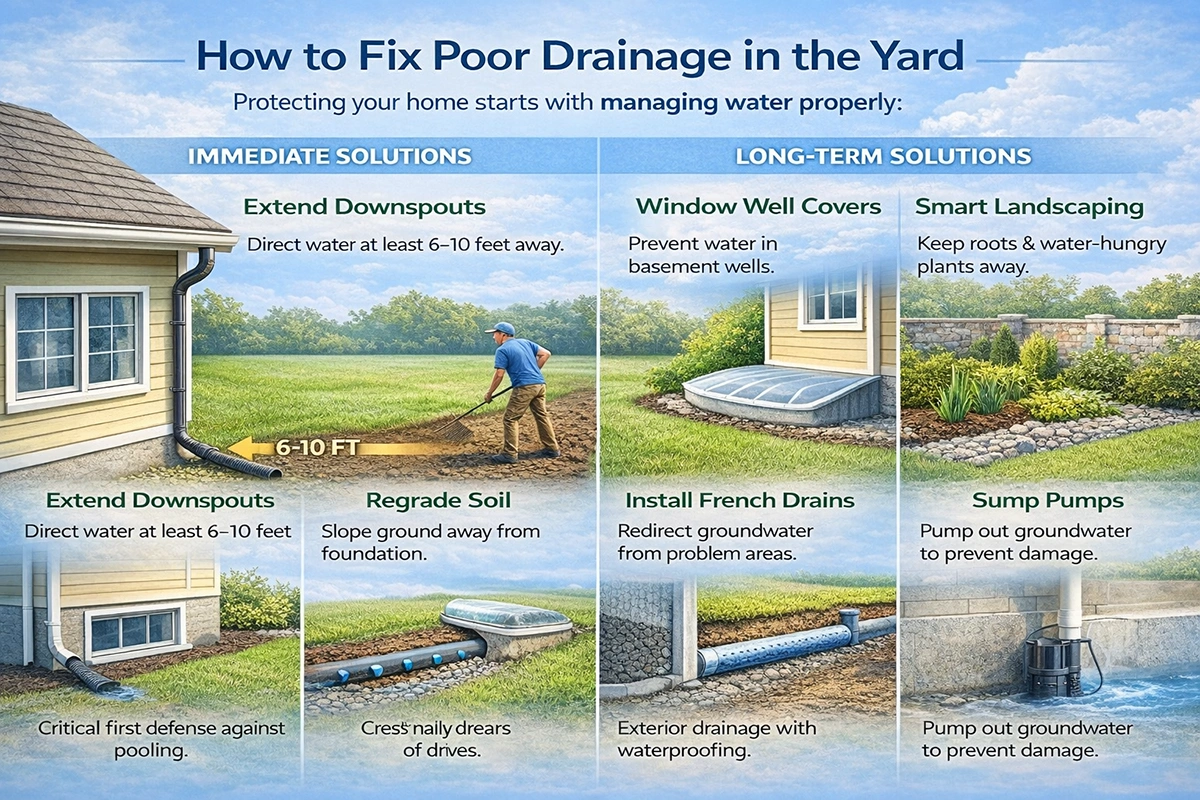
How to Fix Poor Drainage in the Yard
Protecting your home starts with managing water properly and choosing the best way to drain water away from house structures before moisture can cause damage:
Immediate Solutions
- Extend Downspouts: Direct water at least 6–10 feet away from the structure.
- Regrade Soil: One of the most effective answers to how to fix poor drainage in yard areas is ensuring the ground slopes properly away from basement walls.
- Install French Drains: Redirect groundwater away from problem areas.
- Add Gutters: A critical first defense against water pooling.
Long-Term Solutions
- Window Well Covers: Prevent basement window wells from collecting water.
- Smart Landscaping: Keep water-hungry plants and aggressive roots away from structural walls.
- Perimeter Drainage Systems: For severe cases, exterior drainage combined with waterproofing provides lasting protection.
- Sump Pumps: Actively remove groundwater before it can cause damage.
Prevention Is the Best Investment
Structural repair often costs $4,000–$15,000, while severe cases can exceed $50,000. Drainage improvements usually cost a fraction of that and prevent long-term damage.
Proper drainage protects your home, preserves its value, and prevents costly repairs by eliminating water pooling near house foundation areas before pressure builds up.
Take Action Now
- After the next heavy rain, walk around your home.
- Look for standing water and areas where runoff flows toward basement walls.
- Addressing these issues early prevents structural damage later.
- Your home’s foundation supports everything above it.
Keep it dry, stable, and protected by managing water properly—starting today.
FAQ
Excess moisture increases soil pressure around the base of the home, causing cracks, shifting, and long-term structural damage.
Common signs of poor drainage around house areas include puddles after rain, soggy soil, basement dampness, and visible soil erosion around foundation sections.
Water pooling near house foundation increases hydrostatic pressure, which can lead to cracks, leaks, and foundation settlement.
Standing water around foundation risks include soil instability, mold growth, pest issues, and accelerated structural deterioration.
The best way to drain water away from house structures is proper grading, extended downspouts, and installation of drainage systems if needed.
To fix poor drainage in yard areas effectively, improve slope grading, eliminate low spots, and install surface or subsurface drainage solutions.
 CLOGGED OR BROKEN WEEPING TILE