


In Canada, waterproofing your basement is essential to protect your home’s structure and avoid costly repairs. Here’s what you need to know:
- Interior waterproofing (e.g., French drains, sump pumps) lasts 15–25 years with proper maintenance. Sump pumps usually need replacement every 7–10 years.
- Exterior waterproofing (e.g., membranes, French drains) offers longer protection, typically 25–40 years.
- Homes in areas with heavy rainfall, clay soil, or frequent freeze-thaw cycles may require inspections every 1–2 years.
- Warning signs of failure include water seepage, mould, musty smells, efflorescence (white residue), and cracks.
To avoid costly damages, schedule inspections every 3–5 years and after major weather events. Regular maintenance, such as testing sump pumps and clearing drainage systems, can extend the lifespan of your waterproofing system. Hiring professionals ensures proper installation and long-term warranties, especially for Canada’s challenging climate.
Understanding the Basics: Basement Waterproofing 101 #BasementNinja
sbb-itb-5761e20
How Long Does Basement Waterproofing Typically Last?
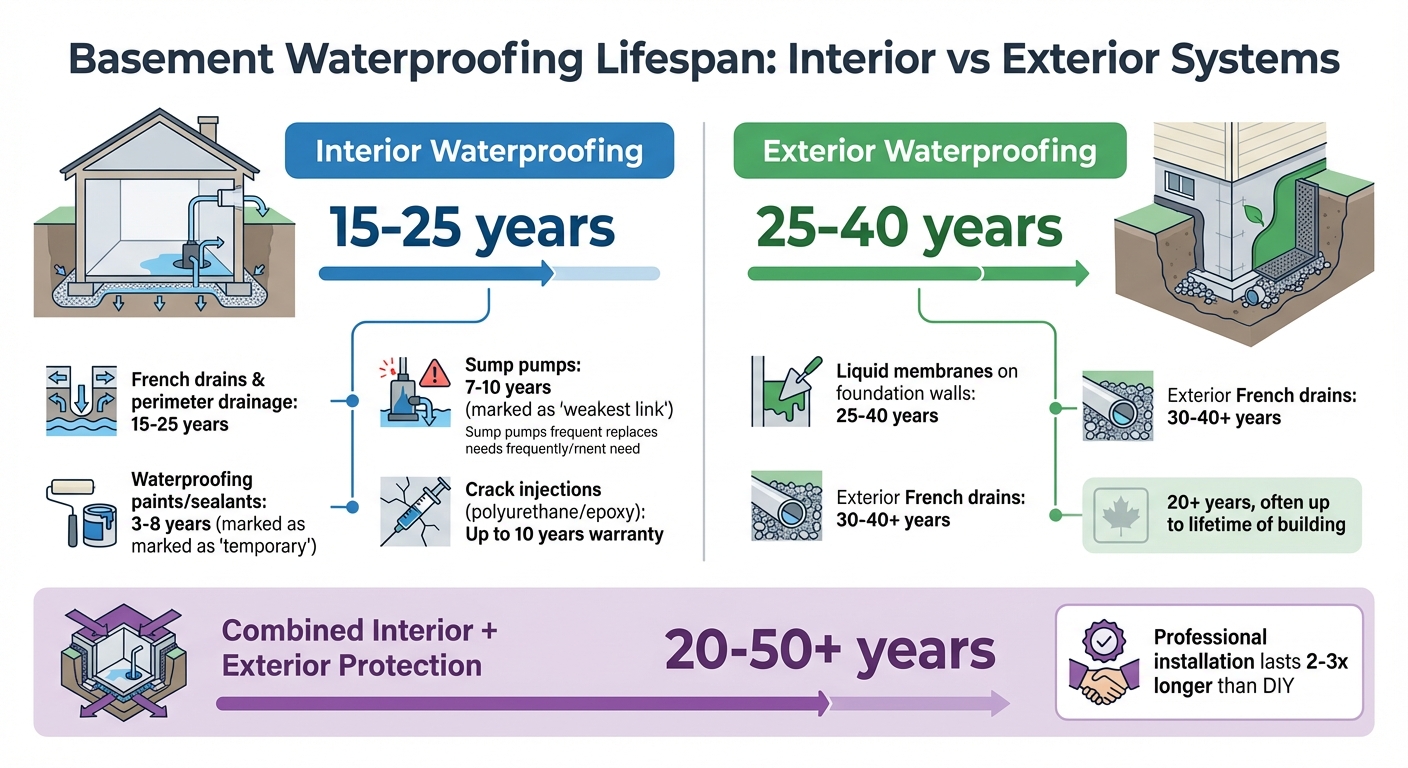
Basement Waterproofing Lifespan: Interior vs Exterior Systems Comparison
The lifespan of basement waterproofing depends on whether you use interior or exterior methods. Interior systems manage water that has already penetrated, while exterior methods prevent water from reaching your foundation in the first place. Knowing how long these solutions last can help you plan for maintenance and budget accordingly.
Interior Waterproofing Lifespan
Interior waterproofing systems – like French drains and perimeter drainage channels – are designed to manage water seepage effectively, especially in regions with challenging weather like Canada. When installed and maintained professionally, these systems can last between 15 and 25 years. They work by directing water to a sump pump, which removes it from your basement.
However, sump pumps are often the weakest link in these systems. They typically need replacement every 7 to 10 years, depending on their quality and how frequently they’re used.
"Sump pumps are often the weakest link, requiring replacement every 7–10 years, depending on usage and quality." – Schmitt Waterproofing
Other interior solutions, such as waterproofing paints and sealants, provide only short-term protection, lasting 3 to 8 years. These are more of a temporary fix rather than a reliable long-term option. On the other hand, crack injections using polyurethane or epoxy offer a more durable solution, with warranties of up to 10 years. If your foundation remains stable, these injections can last even longer.
Exterior Waterproofing Lifespan
Exterior waterproofing methods are designed to block water at its source, offering longer-lasting protection. High-quality liquid membranes applied to foundation walls can last 25 to 40 years. Similarly, exterior French drains, which redirect groundwater away from your home, can perform effectively for 30 to 40 years or more.
"When installed correctly, exterior membranes can last over 20 years, often up to the lifetime of the building." – Billy Krohne, Foundation Repair Expert, Foundation 1
These exterior systems are particularly effective because they reduce hydrostatic pressure and prevent moisture from ever reaching your foundation walls. With professional installation and high-quality materials, their lifespan can be 2 to 3 times longer than that of DIY solutions.
Combined Approach for Extended Protection
While interior systems generally last 15–25 years and exterior systems 25–40 years, combining the two can extend protection to 20–50+ years. If one system fails, the other can continue to safeguard your basement, providing an additional layer of security.
Keep in mind that factors such as soil conditions, climate, and the quality of installation can further influence the lifespan of your waterproofing system. Regular maintenance is key to ensuring these systems perform at their best for as long as possible.
Factors That Affect How Often Waterproofing Is Needed
The lifespan of waterproofing systems can vary depending on the method used, but other factors also play a key role in determining when reapplication is required. For basements, challenges like soil type, climate, the home’s age, and the quality of the initial installation all influence how frequently maintenance is needed. Let’s take a closer look at what impacts waterproofing longevity.
Soil and Climate Conditions
Toronto’s climate, with its long periods of cold and wet weather – about nine months annually – combined with frequent freeze–thaw cycles, puts a lot of stress on foundations. These cycles cause soil to expand and contract, creating hydrostatic pressure against foundation walls. This pressure is a leading cause of cracks and structural damage.
"In areas of Toronto with clay-heavy soil, water tends to drain poorly and can build up pressure against your foundation. That pressure can eventually lead to cracks and leaks." – GAMCON
Clay-heavy soil, which is common in many Toronto neighbourhoods, holds onto moisture and hinders proper drainage. This increases the pressure on foundations, making them more prone to damage. For example, Toronto saw over 1,000 mm of rainfall in 2024, and foundation issues rose by 23% between 2023 and 2025. Homes built on clay-rich soil often need waterproofing maintenance more often than those on sandy, well-draining soil.
Home Age and Foundation Type
Older homes often require more frequent waterproofing attention. Many older properties, especially in areas like East York and North York, feature traditional concrete block foundations. These are more susceptible to moisture infiltration because water can seep through mortar joints and hollow spaces.
Additionally, many older homes in Toronto still rely on outdated clay-tile drainage systems, which have often deteriorated over time. These systems typically need to be replaced with modern weeping tiles to ensure proper drainage. Original waterproofing membranes on these homes may also have decayed, while the clay soil beneath can cause settlement, leading to new cracks that compromise the foundation’s protection.
Installation Quality and Maintenance
The durability of waterproofing systems is heavily influenced by the quality of the initial installation. Professionally installed exterior systems, which include advanced materials like polymer membranes, rubberized bitumen, dimple boards, and clear gravel, are specifically designed to handle Canadian freeze–thaw cycles. These systems can last 20–25 years. On the other hand, DIY solutions, such as waterproof paint, often fail within 6–12 months because they cannot withstand the intense hydrostatic pressure.
"Hydrostatic pressure from the soil is powerful… It will eventually bubble, peel, and push right through the paint because the water is still trapped inside the concrete." – DryShield
Regular maintenance can also make a big difference. For instance, testing sump pumps before the spring thaw, maintaining proper grading around the foundation, and extending downspouts away from the house can all reduce stress on waterproofing systems. Ignoring these tasks can lead to overloading the system, shortening its lifespan, and increasing the risk of failure. Proactive maintenance and early intervention can save homeowners significant costs – between $8,000 and $15,000 – compared to emergency foundation repairs. These steps can also help identify when a basement might need an inspection.
Signs That Your Basement Needs Waterproofing
Spotting the early warning signs of moisture problems in your basement can save you a fortune in repairs. For Canadian homeowners, keeping an eye out for these issues is crucial since small problems can escalate quickly. Regular inspections are key to catching these signs before they become major headaches.
Visible Water Seepage
If you notice puddles forming on your basement floor, this could mean your waterproofing system is failing – or perhaps it was never installed properly in the first place. The location of the water can reveal a lot. For instance, a wet streak starting mid-wall and running downward often points to a foundation crack. On the other hand, water pooling at the spot where the wall meets the floor, without any streaks above it, suggests "cove joint" seepage.
Discoloured stains – brown, yellow, or grey – on walls or ceilings, along with peeling or bubbling paint, are also major red flags. These indicate moisture trapped behind wall coverings. Even if you don’t see standing water, odours or other subtle signs of deterioration can hint at hidden moisture problems.
Mould and Musty Odours
One of the first signs of water infiltration is a persistent, musty smell. This odour often appears before you even notice standing water. It’s a sign of trapped moisture and possibly hidden mould growth. Be on the lookout for black, green, or white patches in areas like dark corners, behind stored items, near baseboards, or under carpets.
Keeping your basement’s humidity below 50% is essential to avoid condensation and mould. If your basement feels damp or "muggy", or if you see condensation on windows and pipes, it’s a sign that moisture levels are too high.
Efflorescence or Cracks
That white, chalky residue you might see on your basement walls is called efflorescence. It’s a mineral deposit left behind when water seeps through the foundation and evaporates.
"That white, powdery buildup on your basement walls is called efflorescence, a sign that water is moving through the wall and depositing salts as it evaporates. It’s an early indicator of foundation moisture problems".
Cracks in your foundation walls or floors are another serious concern. Horizontal cracks, in particular, can indicate stress from soil expansion or hydrostatic pressure. Even small hairline cracks shouldn’t be ignored, as they can let in significant amounts of water during heavy rains and are likely to worsen over time.
When Homeowners Should Consider Re-Waterproofing
Both the age of your waterproofing system and external factors like weather conditions play a big role in how well it performs over time. Figuring out when to re-waterproof your basement isn’t always straightforward, but there are key timeframes and conditions that can signal it’s time to take action.
Post-Installation Timeframes
A professionally installed basement waterproofing system generally lasts 10 to 25 years. However, interior solutions like sealants, primers, and crack injections tend to have shorter lifespans, often backed by warranties of around 10 years. If your system is nearing or has surpassed the 10-year mark, it’s a good idea to schedule a professional inspection.
Exterior excavation waterproofing, on the other hand, is known for its long-lasting durability, often outlasting interior options with minimal upkeep. Some contractors even provide lifetime warranties on high-quality exterior systems. Despite this, even these strong solutions benefit from regular inspections, especially as they approach the 20-year mark. These timeframes offer a general guideline, but extreme weather can shift the timeline.
After Major Weather Events
Severe weather events can place a lot of strain on waterproofing systems, making it essential to reassess their performance afterward. Heavy rainstorms or rapid spring thaws, for instance, can saturate the surrounding soil, increasing hydrostatic pressure that forces water into your foundation through cracks or porous concrete. Freeze-thaw cycles can worsen the problem by expanding existing cracks and creating new ones.
After the first major spring thaw or a heavy downpour, inspect your basement for any new leaks or signs of system stress. If you live in an area with frequent heavy rainfall or high groundwater levels, professional inspections might be necessary every 1–2 years, compared to the standard maintenance cycle of every 3–5 years.
Evidence of System Failure
Some warning signs are hard to ignore. A sump pump that runs continuously or doesn’t activate when it should is a clear indication of trouble.
"A sump pump that runs nonstop or fails to activate when needed is a major warning sign. It means your drainage system is struggling to handle groundwater or rainwater efficiently."
Recurring leaks, even after repairs, suggest your system is no longer managing hydrostatic pressure effectively. Check for dampness or efflorescence along the cove joint – these are strong indicators of hydrostatic pressure that might require an upgrade to your interior drainage. Additionally, rust on metal support beams, furnace bases, or water heaters could point to high humidity levels or past flooding that went unnoticed.
Preventive Waterproofing Maintenance
Staying on top of regular maintenance can significantly extend the life of your waterproofing system and help you sidestep expensive repairs. The good news? Most of these tasks are simple enough to fit into your routine.
"Regular upkeep preserves the integrity of your foundation and extends the lifespan of your waterproofing solutions."
Test and Maintain Sump Pumps
Your sump pump is your first line of defence against basement flooding, so it’s important to keep it in working order. Test it every three months by pouring water into the basin to ensure it activates, pumps the water out, and shuts off properly. Twice a year, inspect the sump pit for debris and clear it out as needed.
Make sure the discharge line is free of blockages and directs water at least 1.8 to 3 metres (6 to 10 feet) away from your foundation. For Canadian winters, add frost-proof extensions to the discharge line to prevent freezing, which is a common culprit behind basement floods during colder months.
Don’t forget about the battery backup – replace it every 24 to 36 months. A backup can fail without warning, and you don’t want to find out during a power outage in the middle of a storm.
Inspect Drainage Systems
Keeping your drainage systems in top shape is another key to protecting your home. Check both interior drains and exterior gutters regularly to prevent sediment buildup. Clean your gutters and eavestroughs twice a year to avoid overflow that can damage your foundation.
Make sure downspouts extend at least 1.5 to 1.8 metres (5 to 6 feet) away from your home. Additionally, inspect the soil grading around your foundation annually. The ground should slope away from your house, with a 5-centimetre drop for every 30 centimetres over at least 1.5 metres. Also, keep plants at least 90 centimetres (3 feet) away from foundation walls to avoid damaging the waterproofing membranes.
Use Dehumidifiers and Clean Filters
Even with a strong waterproofing system, managing indoor humidity is essential to prevent mould and condensation. Use a dehumidifier in your basement, especially during the humid summer months. Regularly empty the reservoir and clean the filter to keep it running efficiently.
For added peace of mind, schedule a professional inspection once a year to catch hidden issues before they escalate. This proactive step is much cheaper than dealing with major repairs later – basement fixes can range from $8,000 to $25,000.
Benefits of Regular Basement Waterproofing
Basement waterproofing isn’t just about keeping your floors dry – it’s about protecting your home’s value, your family’s health, and the integrity of your foundation. Let’s break down why regular waterproofing is so important:
Prevents Mold and Health Risks
A damp basement is the perfect breeding ground for mould and mildew. Once mould takes hold, it releases spores that can seriously affect your respiratory health. According to Health Canada, exposure to mould can lead to breathing issues, allergies, and even asthma, particularly in children.
"Mold can trigger breathing problems, allergies, and asthma – kids are especially at risk when that faint musty smell fills the air."
- Health Canada
By waterproofing your basement, you limit moisture and reduce the risk of these health concerns, creating cleaner, healthier air for your family.
Protects Foundation Longevity
Water seepage doesn’t just cause minor inconveniences – it slowly eats away at your home’s foundation. Waterproofing shields your foundation from moisture-related damage, such as the weakening of support beams and floor joists. It also alleviates hydrostatic pressure, which can cause basement walls to bow, and prevents small cracks from turning into major structural issues during freeze–thaw cycles. Addressing these problems early is crucial, as delaying repairs can multiply costs by three to five times.
Boosts Home Value
In Canada, a waterproofed basement can add as much as 15% to your home’s resale value. Buyers are drawn to homes with documented waterproofing systems, especially when they include transferable warranties. Beyond resale value, a dry basement signals responsible home maintenance, which is a big plus considering that water damage is the leading cause of home insurance claims in Canada. A well-maintained basement not only enhances durability but also makes your property more appealing to potential buyers.
Why Professional Waterproofing Services Are Recommended
Expertise in Interior and Exterior Methods
Professional waterproofing specialists bring precision to the table, using advanced tools to identify water intrusion points. They can tell whether the issue lies with surface water or hydrostatic pressure, ensuring they tackle the cause of the problem, not just the symptoms.
Unlike DIY solutions, which often rely on short-term fixes like sealant paint, professionals use materials specifically designed for Canada’s demanding climate. These include rubberized bitumen membranes, dimple boards, and high-strength hydraulic cement – each engineered to handle freeze-thaw cycles and heavy spring snowmelt. Together, these materials form a multi-layered system that seals, shields, filters, and redirects water away from your foundation. DIY sealant paints, by contrast, often fail within 6 to 12 months, as hydrostatic pressure eventually causes them to crack, bubble, or peel.
Warranties and Guarantees
One of the biggest advantages of professional waterproofing is the peace of mind that comes with long-term warranties. Many services offer 25-year transferable warranties that cover both the materials and the workmanship. This not only ensures lasting protection but also boosts your home’s resale value – something DIY options simply can’t compete with. On top of that, professionals customize their work to address the unique challenges of your property.
Tailored Solutions for Canadian Homes
Canadian homes face unique challenges, from heavy snowmelt in the spring to frequent freeze-thaw cycles. Professionals understand these conditions and design systems to address them. For example, in the Greater Toronto Area, they install sump pumps with battery backups, backwater valves, and French drains that comply with local building codes. Some of these upgrades may even qualify for municipal subsidies. With over 60% of Canadian homes dealing with basement moisture issues, professional waterproofing isn’t just a service – it’s a necessity.
Conclusion
Basement waterproofing requires prompt and consistent care. Ideally, waterproofing should happen during the construction phase to provide lasting protection. However, if you’re dealing with an existing home, it’s crucial to address issues like mould, damp spots, or cracks as soon as they appear. Delaying repairs only leads to bigger problems down the road.
Most professional waterproofing systems are designed to last between 10 and 25 years. To keep your system in good shape, test your sump pump every few months, clear your gutters regularly, and schedule yearly inspections – especially before heavy rain or snowmelt seasons. Taking these proactive steps not only extends the lifespan of your waterproofing system but also helps you avoid costly repairs in the future.
Hiring professionals for waterproofing offers several advantages, including precise diagnostics, materials engineered to withstand Canada’s freeze–thaw cycles, and warranties that safeguard your investment. As Canadian Real Estate Wealth advises, "The best way to protect yourself from water damage is to waterproof your basement before an accident occurs or quickly after a leak has been found".
Whether you’re managing a current leak or planning preventive measures, summer is the best time to tackle these projects due to optimal conditions. By addressing issues early and relying on professional expertise, you can prevent small problems from escalating. This approach ensures your foundation remains sturdy, and your basement stays dry for years to come.
FAQs
Should I choose interior or exterior waterproofing for my basement?
When deciding between interior and exterior waterproofing, it’s all about understanding your specific situation, climate, and the type of water issues you’re dealing with.
Exterior waterproofing tackles the problem from the outside, sealing the foundation to prevent water from getting in. This is especially useful for areas prone to heavy rain, melting snow, or freeze-thaw cycles. It provides a more durable solution for keeping moisture at bay.
On the other hand, interior waterproofing focuses on managing water that has already made its way inside. This can involve tools like sump pumps or sealing cracks in the foundation. Interior methods are great for handling smaller leaks or as a backup to exterior solutions.
Each approach has its strengths, so choosing the right one depends on the severity of the issue and your long-term goals.
How do I tell if my basement moisture is seepage or just condensation?
To tell seepage apart from condensation, pay attention to water stains, mould growth, or musty odours – these are typical indicators of seepage. In contrast, condensation generally shows up as surface moisture on cold areas, without leaving stains or encouraging mould. A close inspection of these signs can help pinpoint whether the moisture in your basement is due to seepage or condensation.
What should I do right after a major rainstorm or spring thaw?
After heavy rain or the spring thaw, take a close look at your basement for any signs of water getting in. Watch for damp spots, water stains, or even mould. It’s also a good idea to check your drainage systems, sump pump, and foundation for cracks or leaks. If you spot any problems, reach out to a waterproofing professional right away to avoid bigger issues down the road. Staying on top of inspections and quick fixes can help keep your basement dry and safe.
 CLOGGED OR BROKEN WEEPING TILE