


If your drain smells bad, it’s usually caused by bacteria breaking down trapped organic material like food, grease, or hair. Other common reasons include dry P-traps, biofilm buildup, mould, or issues with your sewer line or vent pipes. Ignoring the smell can lead to health risks from sewer gas or even structural damage. Here’s how to fix it:
- Dry P-Trap: Run water to refill the trap and block sewer gases.
- Bacteria & Biofilm: Use a baking soda and vinegar flush or enzyme cleaner to break down buildup.
- Clogs: Remove blockages with a plunger or drain snake.
- Mould or Mildew: Clean nearby surfaces and pipes.
- Blocked Vent Pipes: Watch for gurgling sounds and call a plumber if needed.
- Sewer Line Issues: If multiple drains smell or water backs up, seek professional help.
Prevent odours by flushing drains with hot water weekly, using strainers to catch debris, and avoiding grease disposal down sinks. If the smell persists despite DIY fixes, it could point to a serious issue like a blocked sewer line or foundation problem, requiring expert intervention. Regular maintenance is key to avoiding future problems.
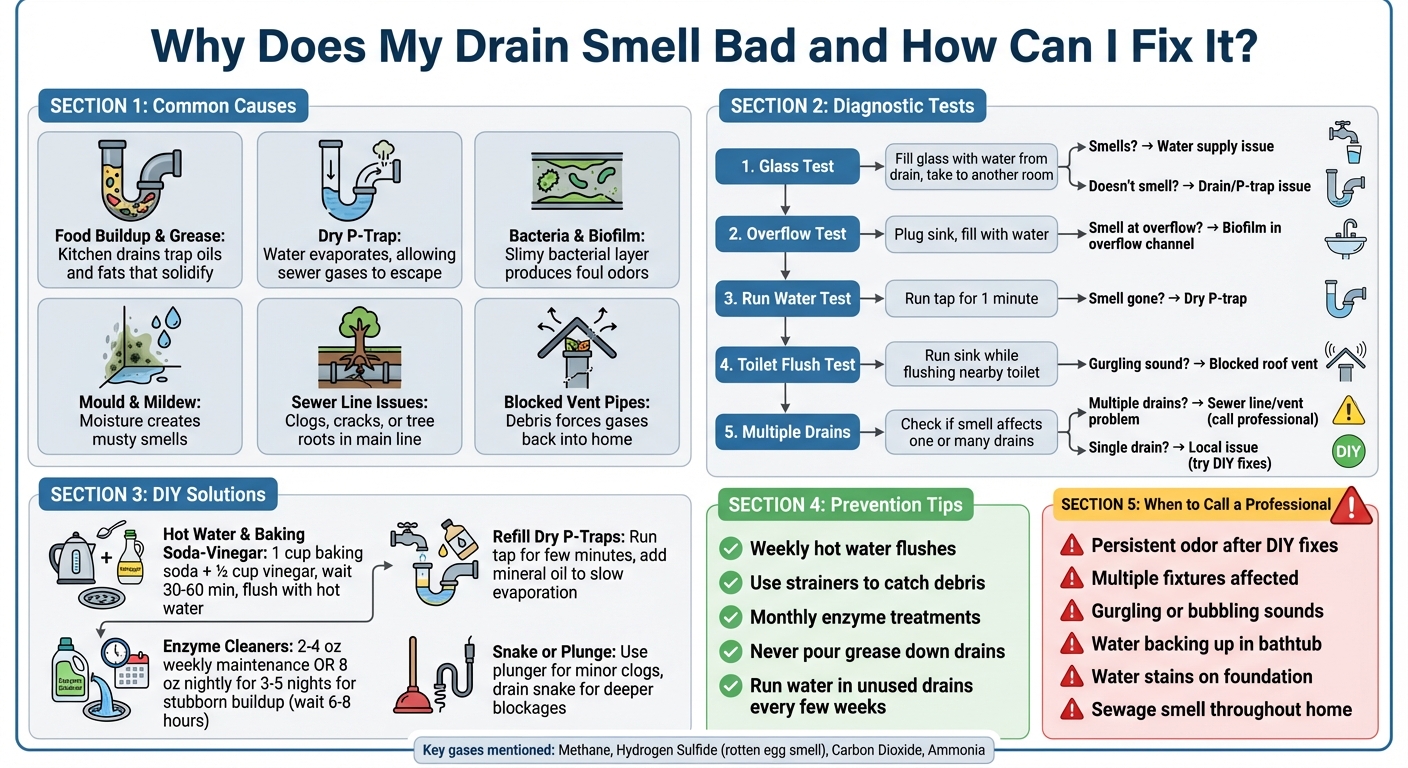
How to Diagnose and Fix Smelly Drains: A Step-by-Step Guide
Sinks That Stink and How To Fix It!
sbb-itb-5761e20
What Causes a Bad Smell in Drains?
If your drains are giving off an unpleasant smell, it usually boils down to three main issues: bacterial decomposition, problems with standing water, or sewer gas infiltration. These factors can work individually or together to create those foul odours. Let’s break them down.
When organic matter like food scraps, hair, grease, or soap scum gets trapped in your pipes, bacteria begin to break it down. This process releases gases, as explained by Ray Patrick, a Master Plumber at Roto-Rooter:
"Methane is the largest cause of sewer smell but there is also danger of hydrogen sulfide, carbon dioxide, ammonia, nitrogen oxides and sulfur dioxide".
That familiar "rotten egg" smell? That’s hydrogen sulfide, a particularly potent byproduct of organic decay.
Your plumbing system is designed to keep these gases out of your home using P-traps, which create a water seal that blocks odours. However, if a drain hasn’t been used for a while, the water in the P-trap can evaporate, removing the barrier and allowing gases to seep into your space.
Another common issue is ventilation failure. Plumbing systems use roof vents to release sewer gases and balance air pressure. When these vents get clogged – by leaves, bird nests, or other debris – the gases have nowhere to go but back down through your drains. A gurgling sound when you flush a toilet nearby is a classic sign of a blocked vent.
Even if there’s no major blockage, biofilm can still cause lingering bad smells. Kitchen and bathroom drains are especially prone to this because they frequently handle organic material that fuels bacterial growth. Inside your pipes, the warm, dark, and moist environment becomes an ideal breeding ground for odour-producing microorganisms.
Understanding these causes is the first step in identifying and fixing the problem with your drain.
Common Reasons Your Drain Smells Bad
Here’s a breakdown of what might be causing those unpleasant drain odours. Each issue has its own characteristics, and understanding the root cause can make tackling the problem much easier.
Food Buildup and Grease (Kitchen Drains)
Kitchen drains often become a trap for food particles, oils, and fats. Grease, in particular, is stubborn – it doesn’t simply wash away. Instead, it cools, solidifies, and sticks to the walls of your pipes, catching more debris as it builds up. Over time, this creates the perfect environment for bacteria to thrive.
As bacteria feed on the organic matter, they release foul-smelling gases, including sulphur compounds, which are responsible for the odour. Even a small amount of grease can accumulate over time and lead to big problems.
Dry P-Trap
If you notice a "rotten egg" smell coming from an unused drain, it’s likely due to a dry P-trap. Jason Peavey from PV Heating, Cooling & Plumbing explains:
"Water sits in the P-trap, which is the U-shaped part of your drain line, and stops the odour from coming up through the drain. If you do smell sewage from the drain, it might mean the P-trap is dry".
When the water in the P-trap evaporates, the barrier it creates against sewer gases disappears, allowing those gases to escape into your home.
Bacteria and Biofilm
Drains can smell even without a major clog, thanks to biofilm. This slimy layer of bacterial waste clings to the inside of your pipes. As bacteria multiply and break down organic material, the biofilm produces unpleasant odours that persist, even if water flows regularly through the drain.
Mould and Mildew Growth
Moisture issues around drains often lead to mould and mildew, which produce a distinct musty smell. Drains provide the perfect environment for these fungi – dark, damp, and warm.
Mould can grow inside the pipe or on nearby surfaces like tiles, grout, and sink sealants. Unlike the sulphurous smell of sewer gas, this odour points to moisture problems that might extend beyond the drain itself.
Sewer Line Issues
If multiple drains in your home are emitting bad odours or you notice sewage smells in areas without nearby drains, the problem might lie in your sewer line. Clogs, cracks, or tree roots invading the main sewer line can cause sewage to back up or leak, spreading odours throughout your home. This is a serious issue that demands immediate attention, as sewer gases contain hydrogen sulphide, which is toxic and flammable in high concentrations.
Blocked or Dirty Vent Pipes
Your plumbing system relies on roof vents to safely release sewer gases and maintain proper air pressure in the pipes. If these vents become blocked by debris like leaves, twigs, or bird nests, the gases can be forced back into your home.
A common sign of a blocked vent is a gurgling sound from your drain when you flush a nearby toilet.
How to Identify the Source of the Smell
Before tackling a smelly drain, you need to figure out exactly where the odour is coming from. A few straightforward tests can help you narrow it down. Whether it’s a dry P-trap, a clog, a water supply issue, or something more complex in your plumbing, these steps will help you determine if the problem is isolated to one fixture or spread across your system.
Start with the Glass Test. Fill a glass with water from the smelly drain and take it to another room. If the water still smells, the issue could be with your water supply or water heater. If it doesn’t, the problem likely comes from the drain or its P-trap.
If the smell is coming from a bathroom sink, try the Overflow Test. Plug the sink drain and fill the basin with water. If the odour only appears when water reaches the overflow hole near the rim, the culprit is likely biofilm buildup in the overflow channel – not the P-trap or the deeper plumbing.
For drains that haven’t been used in a while, run the tap for about a minute. If the smell goes away, it’s a sign of a dry P-trap. The water in the trap likely evaporated, allowing sewer gases to escape.
To investigate potential deeper issues, perform the Toilet Flush Test. Turn on the sink tap while flushing the nearest toilet. If you hear gurgling from the sink drain, it could mean a blocked roof vent is pulling air through the sink’s P-trap.
Finally, assess how widespread the problem is. If only one drain smells, the issue is probably local – like a clog, biofilm, or dry trap. However, if multiple drains in your home have a sulphur-like or "rotten egg" smell, you might be dealing with a blocked sewer vent or a sewer line problem that needs professional attention.
Once you’ve pinpointed the source, you’ll be ready to explore targeted solutions in the next section.
How to Fix a Smelly Drain
Once you’ve identified what’s causing the unpleasant odour in your drain, you can tackle it with these effective methods. Each approach targets specific issues to help restore a fresh, clean scent.
Flushing with Hot Water and Baking Soda-Vinegar
A baking soda and vinegar combo works wonders by creating a fizzy reaction that loosens grease, biofilm, and other organic buildup while neutralizing bad smells.
- Pour 1 cup of baking soda into the drain and let it sit for 15 minutes. Then, add ½ cup of white vinegar, plug the drain to trap the fizz, and wait 30–60 minutes before flushing with hot water.
- For tougher buildup, sprinkle ½ cup of coarse salt into the drain before the baking soda to enhance the scrubbing effect.
- Use hot water for metal, copper, or iron pipes, but stick to hot – not boiling – water for PVC pipes to avoid damage.
Refilling Dry P-Traps
If the drain hasn’t been used recently, the issue might be a dry P-trap. This U-shaped pipe under your sink holds water to block sewer gases from escaping. When the water evaporates, odours can seep into your home.
- Simply run the tap for a few minutes to refill the P-trap.
- To slow evaporation, add a small amount of mineral oil after refilling. Running water every couple of weeks also helps maintain the seal.
Using Enzyme Cleaners
Enzyme-based cleaners are a gentler way to break down organic matter like grease, food particles, and hair. They don’t rely on harsh chemicals, making them safer for your pipes and the environment.
To get the most out of enzyme cleaners:
- Apply the treatment at night or before a long period when the drain won’t be used, allowing the enzymes 6–8 hours to work.
- For regular maintenance, pour 2 to 4 oz into the drain weekly for kitchen sinks or every 1–2 weeks for bathroom drains.
- For stubborn buildup, use about 8 oz nightly for 3–5 consecutive nights.
- Use lukewarm water, as boiling water can deactivate the enzymes.
- Avoid using bleach or disinfectants alongside enzyme cleaners, as these can kill the beneficial bacteria.
Snaking or Plunging the Drain
If the smell is paired with slow drainage, a clog might be the culprit. Hair, soap scum, or debris often cause these blockages, and manual removal is the best solution.
- For minor clogs, use a plunger. Create a tight seal over the drain and plunge vigorously several times.
- For deeper blockages, a drain snake (or auger) can help. Insert the snake into the drain and turn the handle clockwise while pushing it deeper.
- Once you feel resistance, rotate the snake to break up or hook the clog, then slowly pull it out.
- After clearing the blockage, run hot water to flush away any remaining debris.
When to Call a Professional
If you’ve tried common DIY fixes like flushing with baking soda and vinegar, refilling dry P-traps, or using enzyme cleaners but the odour persists, it’s time to bring in the pros. Lingering sewage or rotten egg smells often point to serious issues like blocked ventilation systems or sewer line problems, which can pose health and safety risks.
There are a few key warning signs to watch for. For example, gurgling or bubbling sounds when water runs elsewhere in your home could mean your plumbing ventilation is compromised. If multiple fixtures emit the same odour or you notice water backing up in your bathtub when flushing, it’s likely a main sewer line blockage. A simple test can also help: fill one glass of water from the smelly drain and another from a different room. If both glasses smell, the issue might be in your water supply. If only one smells, the problem is likely isolated to that specific drain or faucet. Acting quickly on these signs can save you from bigger headaches later.
Some repairs are too complex for DIY solutions and require professional expertise. These include inaccessible vent pipes, leaking in-wall drainpipes, or damaged P-traps. Jason Peavey from PV HVAC highlights the risks:
"When there’s a leak somewhere in a drainpipe, it can throw off the equilibrium of the system that keeps sewer gasses where they should be. At worst, a leaking pipe can also allow actual sewage to leak into your walls or crawlspace".
Such problems might not only indicate a local issue but could also signal broader concerns like sewer or foundation damage. Professionals have specialized tools to tackle stubborn clogs and reach areas that DIY methods can’t.
Leaquida Waterproofing provides drainage and waterproofing services for homeowners in Toronto and nearby areas. Their team can diagnose sewer line issues, install proper drainage systems, and address foundation-related problems that could be contributing to persistent odours. Using video camera inspections, they pinpoint the exact cause of drainage issues to ensure precise repairs. If you notice water stains or moisture damage on your foundation along with unpleasant odours, these are serious warning signs of sewer or drainage failures that need immediate attention.
Scheduling an annual professional check-up can help prevent major plumbing issues and lingering odours. Professional sewer line cleaning can take anywhere from 30 minutes to 5 hours, depending on the severity of the blockage. Addressing problems early not only saves you time and money but also spares you the stress of dealing with more extensive damage later.
How to Prevent Drain Odours
Keeping your drains odour-free starts with regular care and attention. Simple habits like routine cleaning and mindful maintenance can stop grime, soap scum, and food particles from building up. These steps not only prevent bad smells but also help your plumbing work smoothly.
Regular Hot Water Flushes
A weekly hot water flush can do wonders for your drains. Heat dissolves grease and washes away bacteria and debris that cause odours. To do this, boil water in a kettle or pot, pour it slowly down the drain, and then follow it up with a cold water rinse to clear out any remaining residue. If you have PVC pipes, stick to hot – not boiling – water to avoid damaging the plastic. This quick and easy step takes just a few minutes but can save you from unpleasant smells down the line.
Using Strainers for Debris
Drain strainers are a simple yet highly effective tool. By catching hair, food particles, and other debris, strainers prevent these materials from clogging your pipes and feeding bacteria. They’re inexpensive and easy to install in sinks and showers. To keep them working efficiently, clean the strainers and any garbage disposal flaps regularly with soap, water, and a scrubbing sponge to remove grime.
Monthly Enzyme Treatments
Enzyme-based cleaners are your ally in keeping pipes free of organic buildup. These treatments break down biofilm and other debris before they become a problem. Use an enzyme cleaner once a month to maintain clean, odour-free drains and avoid clogs. It’s a simple step that pays off by keeping your plumbing in great shape.
Avoiding Grease Disposal in Drains
Grease and oil are among the worst things you can pour down a drain. As they cool, they solidify and trap food particles, creating an ideal environment for bacteria to thrive. Instead, let cooking oils cool completely, then dispose of them in a sealed container with your household garbage. For drains that don’t get much use, like those in guest bathrooms or basements, run water through them every few weeks. This keeps the P-trap filled with water, stopping sewer gases from wafting into your home.
Could It Be a Bigger Problem?
A smelly drain might seem like a simple issue – maybe food buildup or a dry P-trap – but sometimes it points to something more serious. If standard fixes don’t eliminate the odour, or you notice water stains on your basement walls or foundation, you could be dealing with sewer line damage, foundation cracks, or poor drainage. These structural issues, especially sewer line problems, need immediate attention.
Sewer line troubles are particularly alarming. Jason Peavey from PV Heating, Cooling & Plumbing explains:
"If there’s a sewer line issue, this is the smell of sewage and wastewater that’s sitting in your pipe because it can’t drain to the city sewer system".
Cracks or collapses in sewer lines – often caused by tree roots or aging, poorly installed pipes – can trap wastewater. This not only causes foul odours but may lead to gurgling noises as water struggles to pass through blockages. Other red flags include sewage backing up in basement floor drains, multiple fixtures draining slowly, or even unusual changes in your yard, like overly lush grass or sinkholes – both signs of sewage leaking into the soil.
When these warning signs appear, it’s time to call in the experts. Companies like Leaquida Waterproofing offer solutions such as:
- Interior and exterior waterproofing: Costs range from $70 to $250 per linear foot.
- Foundation crack repair: Typically priced between $500 and $1,200 per crack.
- Drainage system upgrades: To improve water flow and prevent further damage.
These services not only protect your home from water damage but also help block sewer gases from seeping in through compromised foundations.
If you suspect a deeper issue, consider requesting a video camera inspection of your sewer line and a foundation assessment. Catching these problems early can save you from expensive repairs and safeguard your home.
Conclusion
A smelly drain often points to an issue that needs addressing. Whether it’s caused by clogged pipes, dry P-traps, or bacterial growth, pinpointing the problem is the first step to restoring a fresh-smelling home. Simple remedies like flushing with hot water or using a baking soda and vinegar mix can often tackle these odours effectively.
The best way to keep drain smells at bay is through regular maintenance. Flushing drains with hot water, using strainers to catch debris, avoiding pouring grease down the sink, and occasionally running water in guest bathrooms are all smart habits. As noted by Drano, "A sewage smell in your drains should be attended to immediately. Sewer gas can build up and lead to health problems and even hydrogen sulfide poisoning". These preventative steps not only maintain a pleasant environment but also safeguard your household.
That said, not all odours can be fixed with DIY efforts. Persistent smells, especially when paired with issues like multiple fixture backups, gurgling noises, or visible foundation stains, could signal more serious problems. In such cases, professional help is essential to address potential causes such as sewer line damage, blocked vents, or foundation cracks.
Companies like Leaquida Waterproofing offer expert solutions for drainage and waterproofing challenges. Their services range from foundation crack repairs (C$500 to C$1,200 per crack) to comprehensive waterproofing (C$70 to C$250 per linear foot). When basic cleaning methods don’t work, turning to professionals can prevent costly emergency repairs and protect your home’s structure. Persistent odours shouldn’t be ignored – they’re often a sign that immediate attention is required.
FAQs
Is a smelly drain dangerous?
A smelly drain often points to underlying issues such as bacterial growth or sewer line troubles. While the odour itself isn’t directly harmful, it’s crucial to tackle the root cause quickly to avoid any potential health risks or further complications.
Why does my drain smell even when it isn’t clogged?
A smelly drain, even if it’s not clogged, is often due to a dry or empty P-trap. This happens when the water in the trap evaporates, allowing sewer gases to escape into your space. It’s a common issue with fixtures that don’t get used often. Another possible culprit? Bacteria or biofilm buildup inside the pipes, which can produce unpleasant odours. Minor pipe leaks or blocked vent pipes might also let gases seep through. To keep these smells at bay, make it a habit to regularly fill the P-trap with water and check your pipes for any issues.
How do I tell if it’s my drain or the sewer line?
If the odour is coming from a single drain, such as in the kitchen or bathroom, and is linked to food debris, grease, or hair buildup, it’s likely a problem with that specific drain. On the other hand, sewer line issues typically result in raw sewage backups, gurgling noises, or unpleasant smells across multiple fixtures. When in doubt, reach out to a professional to determine whether the problem stems from the drain or the sewer line.
 CLOGGED OR BROKEN WEEPING TILE