

Basement waterproofing costs in Canada vary widely based on regional climate challenges. Here’s what you need to know:
- Coastal Areas (e.g., British Columbia): Heavy rainfall and high water tables create constant water pressure. Exterior waterproofing costs $100–$320 per linear foot, with total project costs ranging from $14,000 to $42,000.
- Humid Regions (e.g., Ontario): Clay soils and summer rains lead to hydrostatic pressure. Interior waterproofing is common, costing $70–$200 per linear foot, with total costs between $10,000 and $25,000.
- Prairie & Northern Climates: Freeze-thaw cycles and spring runoff cause structural stress. Elastomeric membranes and crack repairs cost $100–$250 per linear foot, with total expenses up to $25,000.
- Dry Interior Areas (e.g., Okanagan): Flash floods and rocky soil make excavation costly. Interior systems cost $70–$230 per linear foot, with total costs of $8,000–$12,000.
Key takeaway: Regional factors like soil type, rainfall, and temperature extremes significantly impact the cost and type of waterproofing needed. Proper planning and tailored solutions are essential to protect your home and avoid unnecessary expenses.
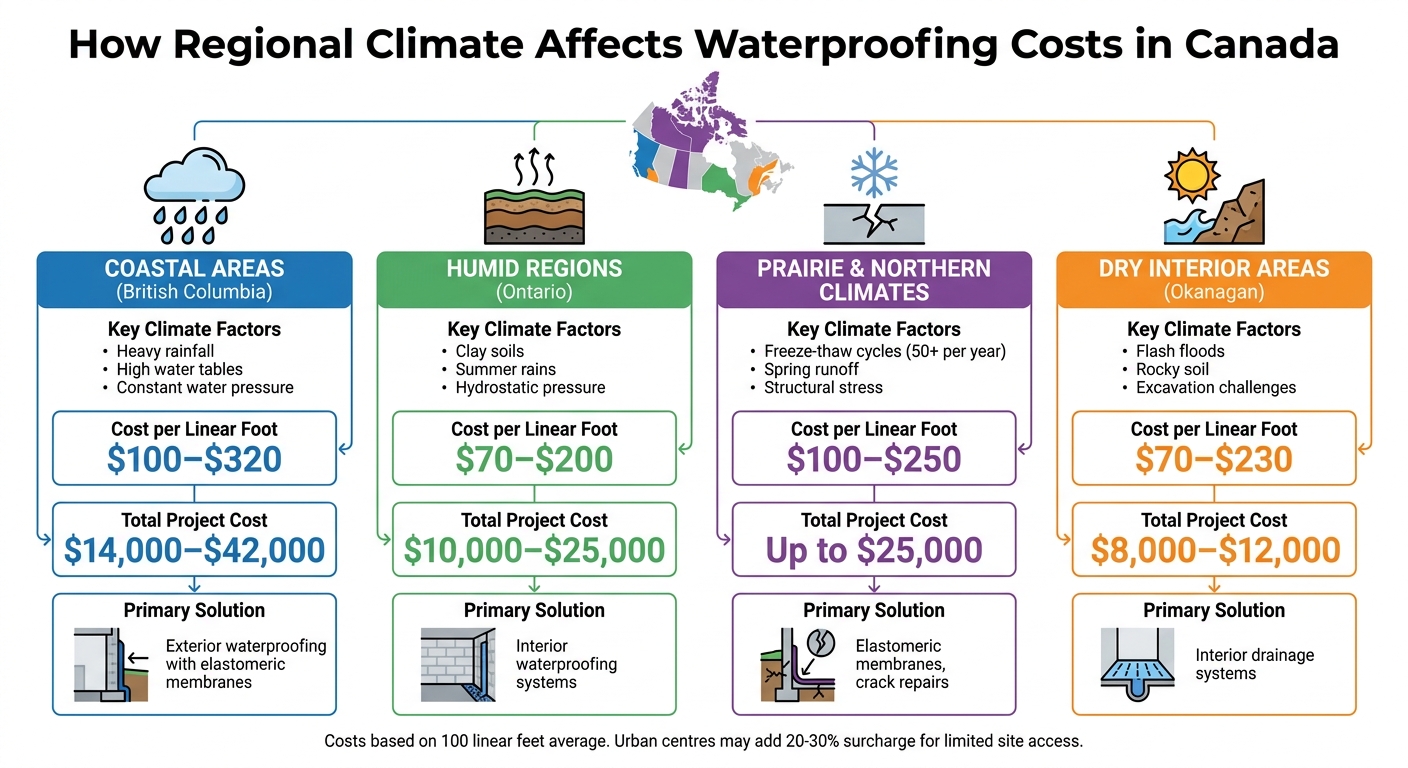
Waterproofing Costs by Canadian Climate Region Comparison
Coastal Regions: Heavy Rainfall and Constant Water Pressure
Problems in Coastal Climates
Coastal areas like British Columbia and Nova Scotia face unique challenges due to heavy rainfall and consistently high water tables. One of the biggest issues is hydrostatic pressure – essentially, the weight of water pressing against foundation walls. When storms hit and the water table rises, even the smallest cracks in concrete or the joint between the wall and floor can let water seep in. In these regions, frequent storms are often paired with rapid snowmelt, which can overwhelm drainage systems.
According to Homeowner.ca, “If your basement only leaks during extreme weather, your system is near capacity rather than completely failing”.
The geography of coastal regions adds another layer of difficulty. Steep slopes, rocky ground, and crowded urban areas – like in Vancouver – make it hard to use large machinery. Contractors often have to rely on manual digging or smaller equipment, which increases labour costs.
Finding the right waterproofing solution is critical to tackling these issues effectively.
Waterproofing Options for Coastal Areas
Exterior waterproofing is often the go-to choice for homes in coastal regions. This method stops water from ever reaching the foundation walls. It involves digging down to the footing, applying a waterproof membrane, and installing or upgrading drain tiles (also called weeping tiles). Elastomeric membranes, commonly used in this process, can last more than 40 years – far outlasting standard tar coatings, which typically hold up only 10 to 15 years in harsh Canadian weather.
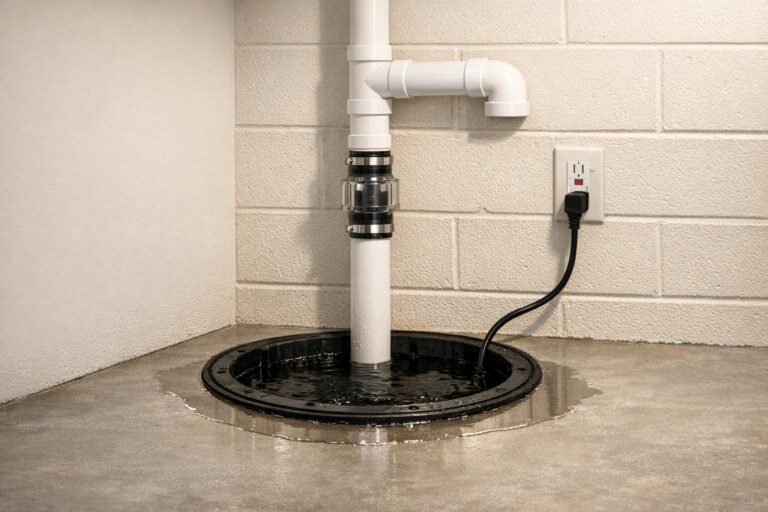
In places like Metro Vancouver and British Columbia, exterior waterproofing isn’t cheap. Excavation and drain-tile installation can cost between $100 and $320 per linear foot, depending on site conditions. For an average basement, a full exterior retrofit can range from $14,000 to over $42,000. On the other hand, interior perimeter drainage systems are a more budget-friendly alternative, costing $70 to $230 per linear foot. These systems work by collecting water that has already entered the basement and funnelling it to a sump pump.
For areas with high groundwater levels, it’s essential to reduce the strain on foundations. Simple measures like extending downspouts 1.2 to 2 metres (4 to 6 feet) away from the house and installing a sump pump with a battery backup can make a big difference. A backup system ensures the pump keeps running even during power outages, which are common during coastal storms.
sbb-itb-5761e20
Humid Climates: Summer Rains and Clay Soil Drainage Issues
Risks in Humid Climates
Ontario and other humid regions face unique challenges due to heavy summer rains and clay-heavy soils. Unlike sand or gravel, clay soil has poor drainage, which means water tends to saturate the ground. This creates hydrostatic pressure against foundation walls, pushing moisture through concrete pores and cracks.
Clay soil also has a knack for drawing water upward through capillary action. Studies show that clay can pull moisture significantly higher than other soil types like sand or gravel. This means that even homes without visible leaks can deal with constant dampness.
Adding to the problem, humid summer air often interacts with cool basement surfaces, leading to condensation that can mimic leaks. A simple way to identify the source is the plastic sheet test: tape a plastic sheet to the wall. If moisture forms on the room side, it’s condensation. If it forms on the wall side, it’s seepage.
Another issue is poorly compacted clay backfill, which can settle over time. This can cause “negative grading”, where the ground slopes toward the house instead of away, funnelling rainwater directly to the foundation. In some parts of Ontario, this is further complicated by iron ochre bacteria. As Léa Plourde-Archer explains, “In certain regions, such as parts of Ontario, the presence of iron ochre bacteria can clog your drain. The installation of access chimneys is then mandatory to allow for regular high-pressure cleaning”.
Given these challenges, waterproofing methods tailored to humid climates are a must.
Recommended Waterproofing Methods
To tackle the specific issues caused by humid climates, homeowners in Ontario often turn to interior drainage systems and foundation repairs. Interior drainage systems are especially effective, as they guide water through designated channels and remove it using a sump pump. For homes with clay-heavy soil, adding an aggregate layer beneath the slab can help manage rising groundwater. In the Greater Toronto Area, interior waterproofing typically costs between $70 and $200 per linear foot.
Repairing foundation cracks is another common solution, with costs ranging from $500 to $1,500 per crack depending on its size and accessibility. For masonry walls, drilling holes at the base of each block core ensures proper drainage into interior channels.
It’s also important to ensure proper grading around the home. The ground should slope away from the foundation by at least 1 inch per foot for a distance of 6 feet. Consulting waterproofing professionals is highly recommended for customized solutions. Companies like Leaquida Waterproofing, which serves Toronto and nearby areas, specialize in services like interior drainage system installation, foundation crack repair, and sump pump installation to address these issues.
Ontario residents may also benefit from the City of Toronto’s Basement Flooding Protection Subsidy Program. This program provides financial assistance for installing flood protection devices such as backwater valves and sump pumps. One critical tip: avoid ventilating basements with warm, humid outdoor air during summer, as it can worsen condensation problems. Instead, use a dehumidifier to maintain humidity levels below 50–60%.
Prairie and Northern Climates: Freeze-Thaw Cycles and Spring Runoff
How Extreme Weather Damages Foundations
In Prairie and northern regions, the harsh climate poses unique challenges for foundations. Unlike the issues caused by coastal moisture or humidity, the primary concern here is the mechanical stress from freeze–thaw cycles and sudden spring runoff. These areas experience over 50 freeze–thaw cycles each year, which gradually wear down foundation materials and masonry. The process is particularly tough on older construction, as freeze-induced soil expansion exerts significant lateral pressure on foundation walls. Aamir Yaqoob, an RHI Certified Inspector, explains:
“Our clay soil expands when it gets saturated with snowmelt and spring rain. That expansion puts tremendous pressure on foundation walls that were poured or laid decades ago”.
During the winter, the frozen ground can conceal structural issues, which only become apparent in spring as the soil thaws and shifts – typically from March through May. This thawing often leads to snowmelt seeping through cracks or mortar joints, leaving visible signs like dark patches, water stains, or white, chalky efflorescence on basement walls. Repairing these damages during the spring thaw can be costly, with expenses reaching up to $18,750.
Given these conditions, it’s clear that specialized protective measures are critical.
Protection Methods for Cold Climates
Traditional tar-based waterproofing isn’t well-suited for Prairie climates. These coatings tend to crack and become brittle in freezing temperatures, limiting their lifespan to just 10 to 15 years. A better alternative is elastomeric or self-adhesive membranes, such as “Blueskin”, which stay flexible even in sub-zero temperatures. These materials can bridge micro-cracks caused by freeze–thaw cycles and last over 40 years.
Managing surface water is equally important, especially during rapid spring melts. To reduce water accumulation near the foundation, it’s recommended to grade the soil so it slopes away from the house by at least 6 inches over 10 feet. Additionally, extending downspouts 1.2 to 2 metres (4–6 feet) away from the foundation can help. For rising groundwater, perforated plastic pipes with filter socks and gravel can intercept water and direct it to a sump or storm outlet. High-capacity sump pumps with battery backups and backwater valves are also effective for handling sudden meltwater surges and preventing sewer backflow.
For existing foundation cracks, flexible polyurethane foam can seal leaks, while epoxy injections provide structural reinforcement. Repairing cracks typically costs between $500 and $1,500 per crack. On larger projects, costs range from $100 to $250 per linear foot, with total expenses falling between $10,000 and $25,000.
Dry Interior Climates: Flash Floods and Rocky Soil
Problems in Dry Climates
Dry interior climates, like those in the Okanagan, come with their own set of challenges compared to coastal or humid regions. Rainfall in these areas is rare, but when it does occur, it often arrives as short, intense storms. These sudden downpours can quickly saturate the ground, creating hydrostatic pressure that pushes water through even the smallest cracks in foundation walls or porous concrete. The real issue here isn’t constant moisture – it’s the abrupt transition from dry conditions to flash flooding.
On top of that, rocky soil complicates matters further. While rock drains more efficiently than clay, excavating through it for exterior waterproofing is no easy task. It often requires specialized equipment or manual labour, which can drive up costs by 20% to 30%. Additionally, older drainage systems, like clay tiles, may seem adequate under normal conditions but can fail during a single heavy storm, exposing hidden vulnerabilities.
To tackle these sporadic but severe challenges, homeowners need targeted waterproofing solutions that balance effectiveness and cost.
Affordable Solutions for Lower-Risk Areas
For homes in these regions, interior waterproofing can be a practical and cost-effective choice. A common solution is installing a perimeter drain along the wall-floor joint. This system collects any seepage and channels it to a sump pump, which then moves the water away from the foundation. Interior systems typically cost between $70 and $230 per linear foot, while exterior excavation in rocky terrain can range from $100 to over $320 per linear foot.
Start by managing surface water. Extend downspouts 1.2 to 2 metres (4–6 feet) away from the foundation and ensure the soil around the house slopes away to prevent water from pooling during sudden storms. If you’re unsure of the moisture source, a quick diagnostic test can help pinpoint the problem. Interior waterproofing for an average home usually costs between $2,000 and $6,000, though larger houses may see costs climb to $10,000.
Finally, regular sump pump maintenance is critical, and having a backup power source ensures the system works when storms hit. These strategies highlight the importance of tailoring waterproofing methods to suit specific regional challenges across Canada.
Regional Cost Comparison and Summary
Cost Comparison Table
Regional climate conditions play a big role in shaping waterproofing challenges, which, in turn, influence costs. Here’s a breakdown of what homeowners can expect to spend in various parts of Canada based on these factors:
| Climate Region | Cost Range (Per Linear Foot) | Average Total Cost (100 lin. ft.) | Key Climate Factors |
|---|---|---|---|
| Coastal (BC Lower Mainland) | $150 – $250 | $15,000 – $25,000 | Heavy rainfall, constant water pressure, high water tables |
| Humid (Southern Ontario, Quebec) | $150 – $250 | $15,000 – $25,000 | Clay soil drainage issues |
| Prairie & Northern | $150 – $250 | $15,000 – $25,000 | Freeze-thaw cycles, spring runoff |
| Dry Interior (Okanagan) | $80 – $120 | $8,000 – $12,000 | Flash floods, rocky soil excavation challenges |
| Urban Centres (Toronto, Montreal) | $180 – $325 | $18,000 – $32,500 | Limited site access (20–30% surcharge) |
For more complex projects, such as those involving restricted access or challenging soil types like iron ochre or pyrite, costs can climb to $250–$350 per linear foot. This could bring total expenses to $25,000–$35,000 for a standard home. Additionally, repairing foundation cracks typically costs between $500 and repairing foundation cracks typically costs between $500 and $1,500 per crack,500 per crack. These numbers highlight the importance of tailoring waterproofing solutions to the specific challenges of your area.
What Canadian Homeowners Should Know
Being aware of these regional differences is essential when planning and budgeting for waterproofing. To optimize your project, aim to schedule work between mid-May and late October. This avoids frozen ground and ensures proper adhesion of membranes. It’s also worth checking for municipal subsidies, such as those for backwater valves or downspout disconnection, which can help reduce costs.
When it comes to choosing materials, elastomeric membranes offer much longer-lasting protection – over 40 years – compared to tar, which typically lasts 10–15 years.
In Toronto and surrounding areas, Leaquida Waterproofing provides customized services to address local challenges like humid climates and freeze-thaw cycles. Their offerings include:
- Interior waterproofing: $70–$120 per linear foot
- Exterior waterproofing: $100–$250 per linear foot
- Foundation crack repair: $500–$1,200 per crack
For the best results, homeowners should get at least three quotes from certified contractors to account for variations in labour and material costs. Since excavation is usually the priciest part of a waterproofing job, consider replacing your French drain during the same project to avoid paying for excavation twice.


 CLOGGED OR BROKEN WEEPING TILE