
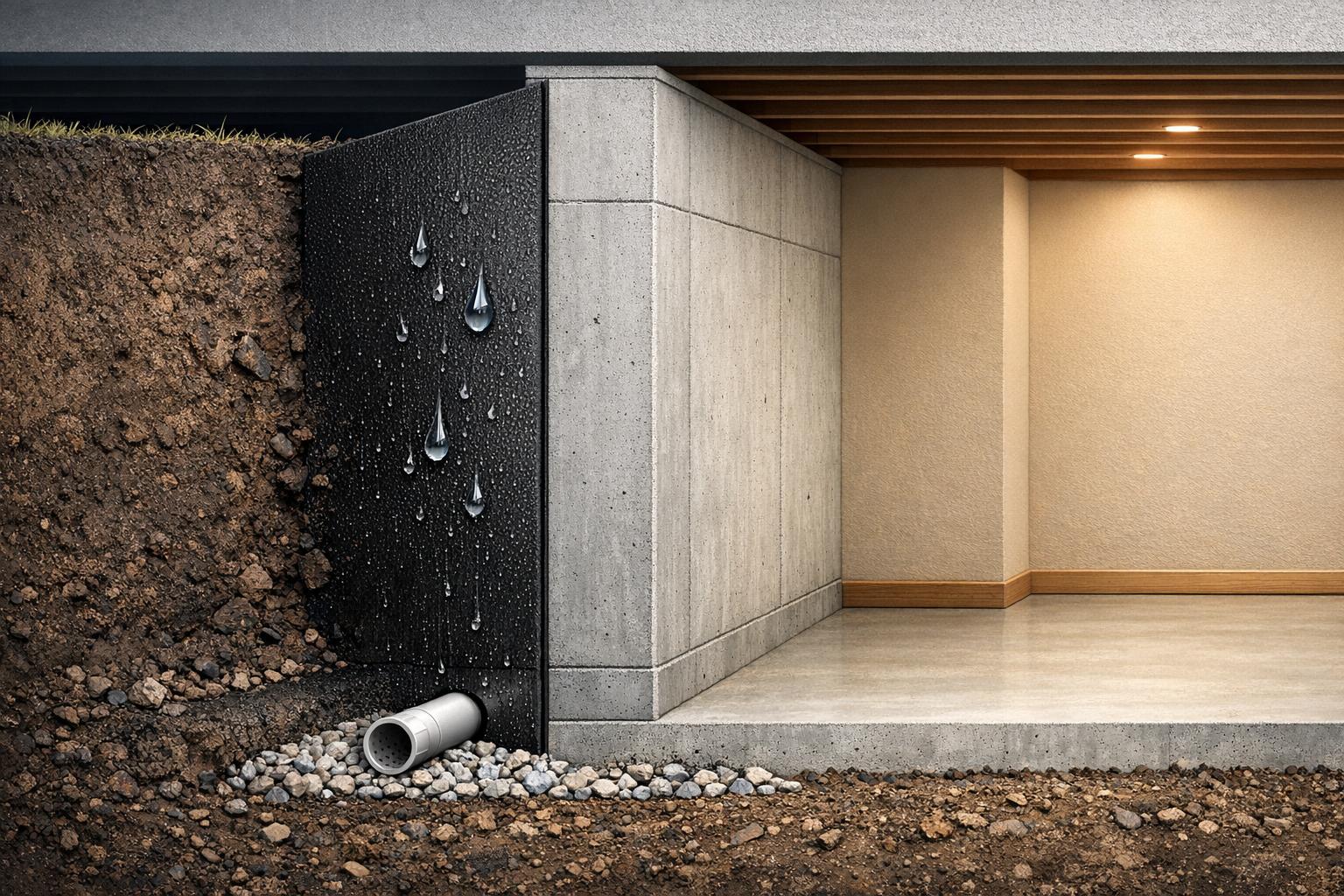
Basement waterproofing is one of the most effective ways to prevent mould and protect your home. Moisture in basements can lead to mould growth within 24–48 hours, causing health risks like respiratory issues and structural damage that can cost thousands to repair. In Canadian homes, factors like heavy rainfall, spring snowmelt, and freeze–thaw cycles make basements especially vulnerable.
Key Takeaways:
- Sources of Moisture: Foundation cracks, condensation, poor drainage, and indoor humidity above 60%.
- Health Risks: Allergies, asthma, respiratory infections, and long-term inflammation.
- Solutions: Waterproofing methods like membranes, sump pumps, French drains, and vapour barriers effectively block moisture.
- Costs: [Interior and exterior waterproofing costs](https://leaquida.ca/basement-waterproofing-cost/) range from $70–$250 CAD per linear foot depending on the method chosen.
- Maintenance Tips: Control humidity (40–50%), inspect regularly, and address small cracks early.
Investing in waterproofing safeguards your home from costly repairs and ensures a healthier living environment. Read on for practical solutions and maintenance tips to keep your basement dry year-round.
Moisture Control For Basement Remodels (Drainage + Waterproofing Strategies)
sbb-itb-5761e20
Why Basements Are Prone to Mold Growth
Basements are particularly susceptible to mould due to their underground location and the naturally damp soil surrounding them. In Canada, basements are the site of 69% of all reported mould cases. The combination of cooler temperatures, limited airflow, and constant exposure to moisture from the ground creates the perfect conditions for mould spores to flourish.
Common Moisture Sources
Water can find its way into basements through several routes. One major factor is hydrostatic pressure, which occurs when rain or melting snow saturates the soil around a home. This pressure forces water through cracks in the concrete or other weak points in the foundation. These vulnerabilities can result from natural settling or soil movement, allowing water to seep into wall cavities and insulation – ideal conditions for mould growth.
Inside the home, condensation is another common culprit. When warm indoor air comes into contact with cold foundation walls or pipes, moisture collects, contributing to damp conditions. Poor exterior drainage also plays a significant role. Issues like clogged gutters, short downspouts (less than 2 to 4 metres), or improperly sloped grading that directs water toward the house can lead to water pooling around the foundation.
Indoor activities can add to the problem, too. Overusing humidifiers, running unvented dryers, or taking long, steamy showers can push indoor humidity levels above 60%, creating an environment where mould spores can thrive. With little natural light and limited ventilation, basements often lack the airflow necessary to dry out any accumulated moisture, allowing spores to multiply unchecked.
External weather conditions further amplify these moisture challenges.
How Canadian Weather Affects Basements
Canada’s climate adds another layer of complexity to basement moisture issues. In the spring, melting snow saturates the soil, and if drainage systems are inadequate, water pools against foundation walls. Summer brings its own challenges, with high humidity and heavy rainfall increasing the hydrostatic pressure around basements. This is especially problematic in regions like Mississauga and Brampton, where dense clay soils drain slowly, intensifying the pressure on basement walls.
Winter, however, may be the most damaging season. Freeze–thaw cycles wreak havoc on foundations. When temperatures fluctuate, water trapped in cracks freezes and expands, widening those gaps. Once the ice melts, water flows freely into these enlarged cracks. Older homes are particularly vulnerable. Many century homes were built with porous materials like stone, clay brick, or concrete blocks and lack modern waterproofing systems like membranes or weeping tiles. These homes were originally designed to “breathe” as utility spaces, but when finished with drywall and insulation – without proper waterproofing – they trap moisture that would otherwise dissipate.
“Almost all homes were built without any exterior waterproofing and no weeping tiles… water travels from wet areas to dry areas, and it is able to pass through all of the foundation materials.” – Tom Cumming, Severn Woods
This highlights the critical importance of adopting effective waterproofing solutions.
Health Risks Associated with Mold
Indoor mould is a well-documented hazard that doesn’t just stay confined to basements. It can spread to upper levels of a home, increasing overall humidity and introducing secondary allergens. This happens regardless of the type of mould present, making it a concern for any household. The health effects can show up quickly or after prolonged exposure.
Short-term vs. Long-term Health Effects
In the short term, mould exposure often feels like dealing with seasonal allergies. Common symptoms include irritation in the eyes, nose, and throat, coughing, phlegm build-up, wheezing, shortness of breath, sneezing, itchy skin or eyes, and even sudden headaches, nausea, or dizziness. These reactions are often triggered by volatile organic compounds (VOCs) and mycotoxins released by mould.
Over the long haul, the risks become more serious. Chronic exposure can lead to conditions like asthma, bronchitis, respiratory infections, eczema, and persistent sinusitis. For individuals with asthma, mould exposure can instantly worsen symptoms, causing more frequent and severe attacks. The inflammation caused by mould doesn’t just affect breathing – it can also have a broader impact on overall health. Recognizing these symptoms is especially important for vulnerable groups.
Who Is Most at Risk
Certain groups face a higher risk when exposed to mould. These include infants, children, seniors, pregnant individuals, and those with pre-existing respiratory conditions. For children, early exposure to household mould significantly raises the likelihood of developing long-term respiratory issues.
“Mold exposure can cause inflammation anywhere along the respiratory tract. Prolonged exposure to any type of indoor mould may cause problems like asthma, lung inflammation, and cognitive and mood issues.” – Dr. Nicholas Nassikas, Assistant Professor of Medicine, Harvard Medical School
Mould exposure can also elevate levels of C-reactive protein (CRP) in the body, which is a marker of systemic inflammation. Over time, this can weaken the immune system’s ability to function properly. Beyond physical health, living in a mouldy environment has been linked to increased stress, depression, and anxiety.
Signs of Mold in the Basement
Spotting mould early is critical to avoiding health issues and structural problems. Mould can often spread quietly, making early detection essential.
Visible Signs of Mold
One of the clearest signs of mould is discolouration. You might see black, green, white, or even orange patches on surfaces like walls, floors, or ceilings. The texture of these patches can range from fuzzy to cotton-like. These patches often show up in corners or near foundation wall cracks.
Look out for surface damage, too. Bubbling, peeling, or cracking paint or wallpaper can signal moisture trapped beneath the surface. Water stains – brown, yellow, or grey marks – often point to past or ongoing water leaks. Other clues include rust on metal fixtures or swollen wooden doors, both of which suggest excessive moisture affecting the basement’s structure.
Hidden Warning Signs
Mould isn’t always easy to spot. A musty or earthy smell is often the first hint of its presence. This odour comes from microbial volatile organic compounds released by mould.
“A healthy basement should have no discernible smell. Any unusual scent may be your early warning sign of a hidden mould colony.” – The Mold Guy
Other subtle signs include efflorescence – a white, chalky residue on concrete or brick walls caused by water pushing minerals to the surface. Condensation, such as droplets or fogging on windows, pipes, or walls, also indicates high humidity levels. Ideally, basement humidity should stay between 30% and 50%, as levels above 60% create the perfect conditions for mould growth. Additionally, walls or floors that feel cold, damp, or clammy might signal underlying moisture issues, even if mould isn’t yet visible.
Spotting these signs early can help you take the right steps to address moisture problems and prevent mould from taking hold. Addressing the root cause of moisture is key to keeping your basement mould-free.
How Basement Waterproofing Helps Prevent Mold
How Moisture Control Works
Waterproofing keeps excess moisture out, cutting off the lifeline mould spores need to grow. It relies on multiple layers of protection to ensure your basement stays dry throughout the year.
The first step is sealing entry points. Cracks in the foundation and floor-wall joints are common pathways for water. Using polyurethane foam or epoxy injections, you can block these gaps and prevent water from infiltrating. This is crucial because mould can start growing in as little as 24–48 hours.
Next is managing hydrostatic pressure. When groundwater builds up in the soil around your home, it can push against your foundation. Systems like French drains and weeping tiles redirect this water away, while sump pumps remove any water that does get through. This prevents mould from accessing the moisture it needs to thrive.
Finally, controlling humidity levels inside the basement is key. Tools like vapour barriers and industrial-grade dehumidifiers keep relative humidity below 55%, which is the point where mould spores stop being able to grow. Vapour barriers help by stopping moisture from seeping through concrete walls, while dehumidifiers actively pull excess moisture out of the air.
These moisture control strategies are especially important for Canadian homes, where seasonal changes can make basements more vulnerable to moisture issues.
Benefits for Canadian Homeowners
Canada’s unpredictable weather – think heavy rains, spring thaws, and freeze-thaw cycles – makes basement waterproofing a must. Effective systems redirect water before it can penetrate your foundation.
Exterior waterproofing plays a big role here. Proper grading ensures that rainwater and melting snow flow away from your home. Downspouts should extend between 1.8 and 3 metres from the foundation to prevent soil from becoming oversaturated.
Investing in waterproofing can save you from expensive repairs. Mould remediation alone can cost between $500 and $6,000, while basement waterproofing costs for foundation repairs often exceed Mould remediation alone can cost between $500 and $6,000, while foundation repairs often exceed $10,000.0,000. Beyond the financial savings, waterproofing also improves indoor air quality by reducing moisture and allergens.
Next, we’ll explore practical solutions to make these waterproofing methods work for your home.
Effective Basement Waterproofing Solutions
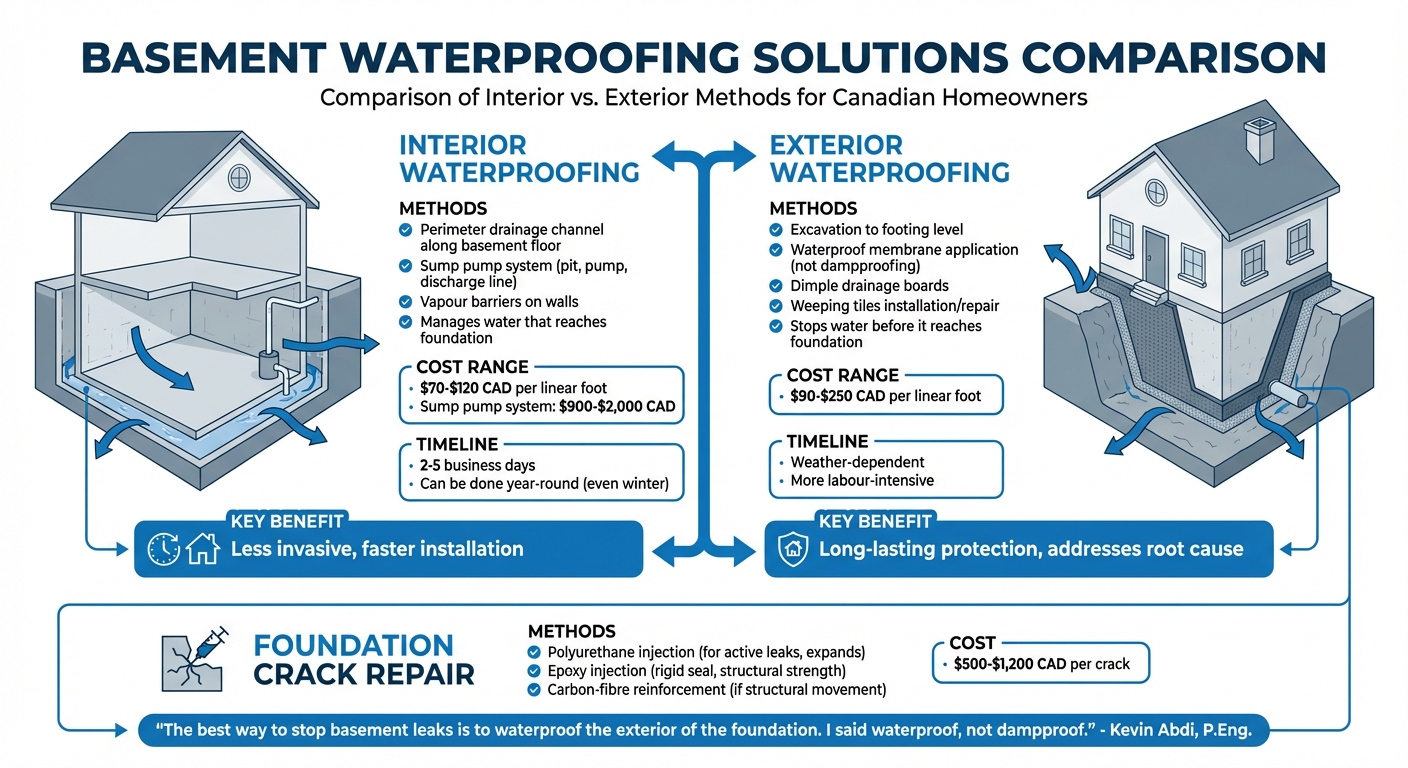
Interior vs Exterior Basement Waterproofing: Methods, Costs & Timeline Comparison
Interior Waterproofing Options
Interior waterproofing focuses on managing water that has already made its way to your foundation. A common approach involves installing a perimeter drainage channel along the basement floor. This channel collects water from cracks and joints and directs it to a sump pit. The sump pump then takes over, pushing the water safely away from your home.
To further protect your basement, durable vapour barriers can be applied to the walls. These barriers help block moisture and control humidity, which can reduce the risk of mould growth.
In the Greater Toronto Area, the cost of interior waterproofing generally falls between $70 and $120 CAD per linear foot. A complete sump pump system, which includes the pit, pump, and discharge line, typically costs between $900 and $2,000 CAD. These costs reflect the local climate and construction standards. Interior projects are usually completed within 2 to 5 business days, and they can be carried out year-round, even during the cold Canadian winters.
For a more comprehensive solution, exterior waterproofing tackles water issues at their source.
Exterior Waterproofing Options
Unlike interior systems, exterior waterproofing is designed to stop water before it even reaches your foundation. This process involves excavating down to the footing, cleaning the foundation wall, and applying a professional waterproof membrane (not just dampproofing). To enhance drainage, dimple drainage boards are installed to guide water downward, while new or repaired weeping tiles redirect groundwater safely away from your home.
Kevin Abdi, P.Eng., from Olive Contractors Inc., emphasizes the importance of this method:
“The best (and the only correct) way to stop basement leaks is to waterproof the exterior of the foundation. And let me be clear: I said waterproof, not dampproof.”
Since exterior waterproofing involves excavation and is more labour-intensive, it tends to be more expensive. In the GTA, the cost ranges from $90 to $250 CAD per linear foot. While the upfront cost is higher, this method provides long-lasting protection by addressing hydrostatic pressure and keeping foundation walls dry.
Foundation Crack Repair
Even small cracks in your foundation can become entry points for water. To address this, pressure injections using polyurethane or epoxy are employed to seal the cracks. Polyurethane is particularly effective for active leaks because it expands to fill uneven paths, while epoxy creates a rigid seal that also strengthens the structure.
Foundation crack repairs generally cost between $500 and $1,200 CAD per crack. If a crack shows signs of structural movement, carbon-fibre reinforcement may be needed to ensure stability. Repairing cracks early can save you from more significant and costly structural damage down the road.
Preventive Maintenance Tips
Even the most effective waterproofing systems need regular upkeep to ensure they continue to control moisture and prevent mould. Thankfully, most of these tasks are simple and don’t require professional assistance.
Control Indoor Humidity
Managing your basement’s humidity is key to keeping mould at bay. Aim to maintain levels between 40% and 50% by using a dehumidifier equipped with an auto-drain function. Check humidity levels weekly – anything above 50% can lead to condensation, which creates the perfect environment for mould to thrive.
“A basement dehumidifier is one of the best tools to stop mold. Set it to keep humidity levels below 60% (ideally around 50%).” – Anthony’s Abatement
In Ontario’s humid summers, keep your dehumidifier running constantly. During winter, insulate cold water pipes with foam wrapping to stop condensation from dripping onto surfaces.
Maintaining these humidity levels pairs well with interior and exterior drainage systems and routine basement inspections to catch any early signs of moisture issues.
Inspect Your Basement Regularly
Make it a habit to walk through your basement at least twice a year and after heavy rains or spring thaws. Keep an eye out for efflorescence – a white, chalky residue on concrete walls that points to water seeping through the foundation. Watch for new cracks, damp patches, or musty smells, all of which could signal hidden moisture problems.
Test your sump pump after storms by pouring water into the pit to confirm it activates properly. Outside, ensure gutters are clear, and downspouts channel water at least 1.8 metres (6 feet) away from your home’s foundation. Also, check that the soil around your house slopes away from the foundation rather than pooling against it.
Regular inspections allow you to address potential issues before they escalate.
Take Preventive Action
Small adjustments in how you use your basement can make a big difference. Swap out cardboard boxes for plastic storage bins, as cardboard absorbs moisture and encourages mould growth. Store items off the floor on shelves or in plastic containers to reduce the risk of moisture damage.
For minor foundation cracks, seal them right away with hydraulic cement or polyurethane caulk. A small crack can expand over time, letting in more water. If cracks grow wider than 3 millimetres or you notice signs of structural movement, reach out to a waterproofing expert for an evaluation.
Conclusion
Dealing with moisture at its source is key to keeping your basement free from mould. Even a small leak can quickly spiral into serious water damage, bringing hefty repair costs along with it.
“A small leak can turn into a full-blown waterlogging, which causes significant damage not only to the property but also to the health of the occupants.” – Leaquida Waterproofing
This highlights the importance of proper waterproofing. Professional services tackle moisture issues right at their root. Leaquida Waterproofing offers homeowners across Ontario – including Toronto, Mississauga, Burlington, and Oakville – a range of services like foundation crack repair, sump pump installations, and both interior and exterior waterproofing. Their approach uses durable hydraulic cement and flexible rubber membranes that adapt to foundation shifts, ensuring long-lasting protection with written warranties.
Canada’s tough seasonal weather poses unique challenges for homeowners. Rapid spring thaws, heavy rainfall, and waterlogged soil can put immense pressure on foundation walls. Investing in waterproofing, which typically ranges from $2,000 to $15,000, is a far smarter choice than facing the combined costs of foundation repairs, mould removal, and water damage restoration and cleanup.
Noticed musty smells, damp spots, or cracks? Reach out to Leaquida Waterproofing for a thorough inspection.

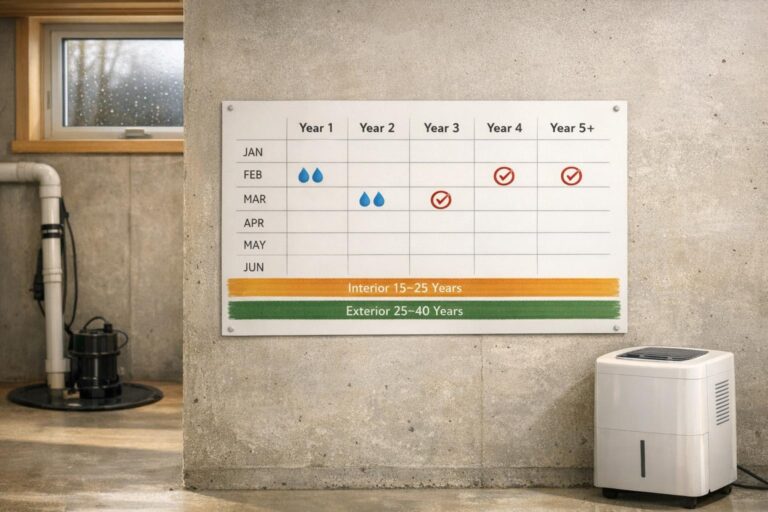


 CLOGGED OR BROKEN WEEPING TILE