
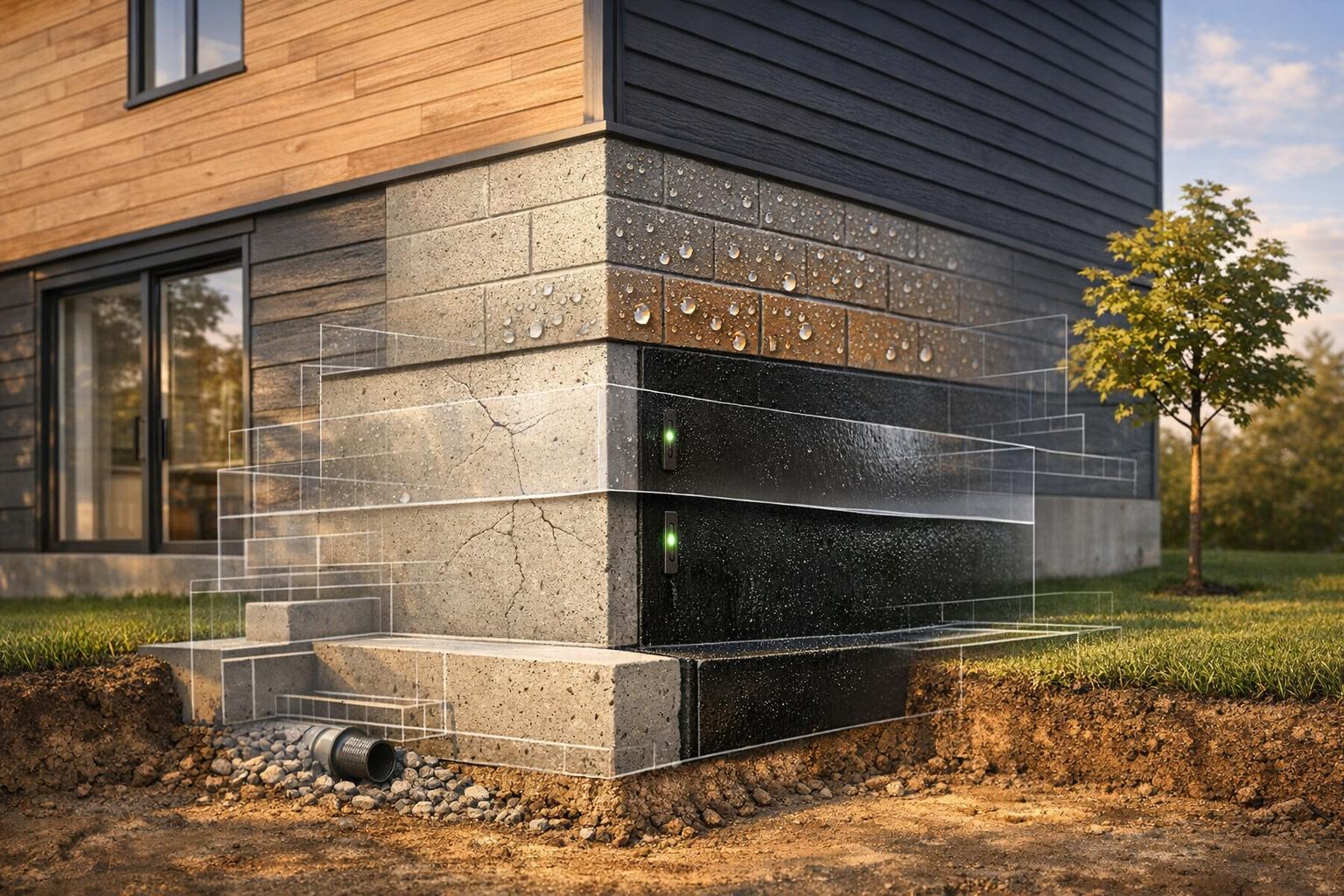
Modern waterproofing methods are transforming how Canadian homes and buildings stay protected against harsh weather. From self-healing materials to real-time moisture monitoring, today’s solutions are more durable and efficient than older techniques. Key advancements include:
- Self-healing crystalline treatments: Seal cracks up to 0.4 mm and provide permanent protection.
- Liquid membranes: Stretch up to 1,300%, handling freeze-thaw cycles without tearing.
- Smart sensors: Detect leaks early and send alerts to your phone.
- Nanotechnology coatings: Penetrate materials to block water and extend lifespan.
- BIM tools: Improve waterproofing design precision and reduce waste.
These innovations save homeowners money by cutting repair costs, increasing property value, and lasting decades longer than older methods. Whether it’s basements, roofs, or foundations, modern waterproofing is designed to handle Canada’s challenging climate effectively.
If you’d like me to expand on any specific section or refine further, let me know!
Sustainable Concrete & Long Term Waterproofing Solutions
sbb-itb-5761e20
Advanced Waterproofing Materials Used Today
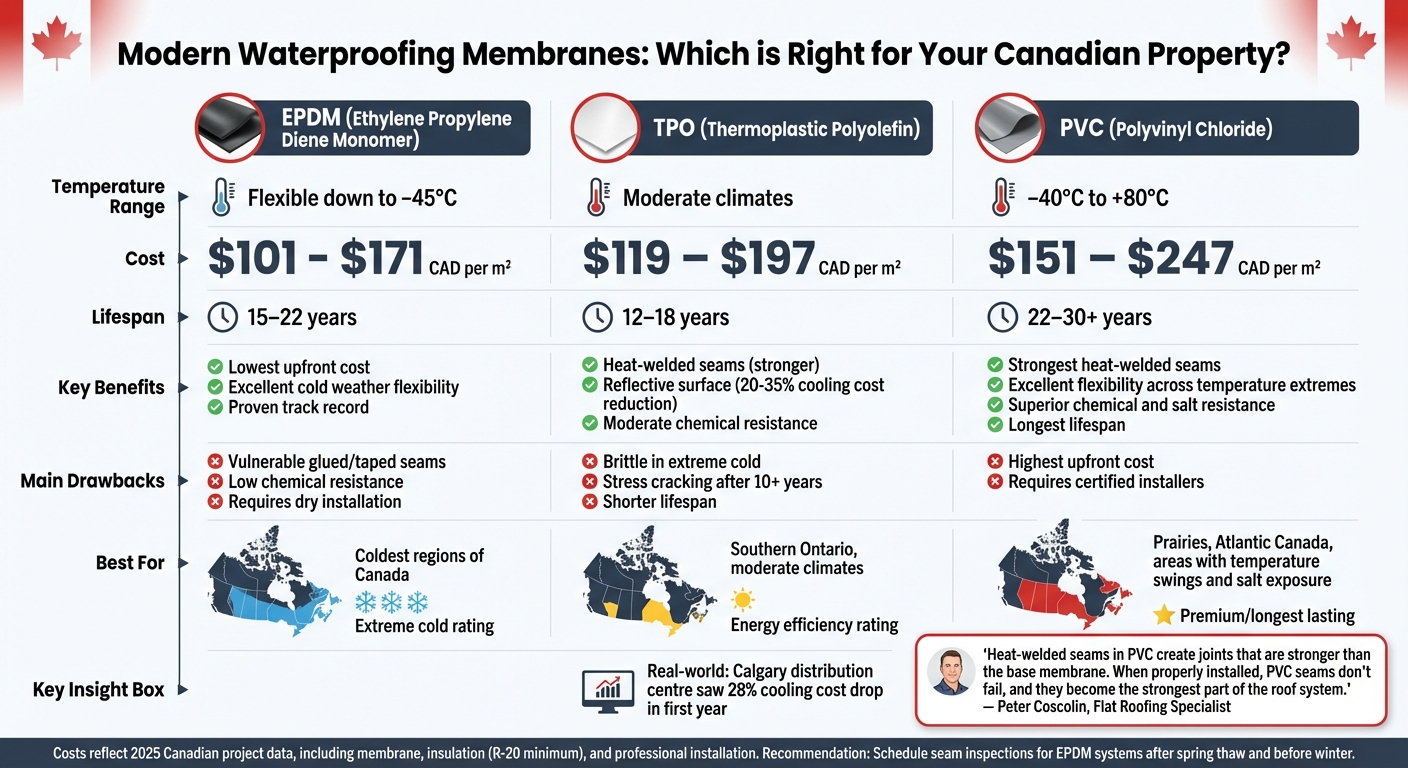
Comparison of Modern Waterproofing Membrane Types for Canadian Climate
Modern waterproofing materials are now tailored to tackle the challenges posed by Canada’s diverse and often extreme climate. Gone are the days of relying solely on basic tar-and-membrane systems. Today’s solutions are engineered to handle everything from the cold snaps of the Prairies to the relentless rain on the coasts. These materials not only block water but also adapt to structural shifts, resist chemical damage (like road salts), and in some cases, even repair minor cracks on their own. This evolution addresses the hydrostatic pressure and freeze-thaw cycles that are major concerns for foundations across the country.
Liquid Waterproofing Membranes
Liquid membranes, applied by spray or roller, create a seamless barrier, eliminating the weak points associated with traditional seams.
Thanks to advanced polymers and polyurea systems, these membranes can stretch up to 1,300% of their original length without tearing. This elasticity allows them to bridge hairline cracks and adapt to the expansion and contraction caused by Canada’s fluctuating temperatures.
“Polyurea is not just keeping water out of the system; it is acting as a long-term durability strategy… in Canada, that means more freeze-thaw cycles, more rain/snow events, and more flooding.”
– Rockford Boyer, Building Science Leader, Elastochem
The speed of installation and reduced labour costs make liquid membranes appealing for both homeowners and commercial projects. For example, a Toronto podium deck project in 2025 saw polyurea waterproofing applied over a single weekend, significantly reducing downtime. These systems can cut labour costs by up to 60% compared to traditional sheet-applied membranes.
However, proper surface preparation is crucial. A Calgary project in 2025 highlighted this when a contractor skipped the primer step on damp concrete. Within months, hydrostatic pressure caused the membrane to fail, resulting in costly repairs.
Next, let’s explore crystalline waterproofing, a technology that works from within the concrete itself.
Crystalline Waterproofing Technology
Crystalline waterproofing takes a different approach by working inside the concrete rather than coating its surface. When added to concrete or applied as a slurry, these compounds react with moisture and cement byproducts to form microscopic needle-like crystals. These crystals fill the concrete’s pores and capillaries, creating a long-lasting barrier against water. Remarkably, the system can self-heal micro-cracks up to 0.4–0.6 mm, providing ongoing protection for the structure’s lifetime.
This technology is especially useful for areas that are hard to access later, such as foundation footings or elevator pits. In urban settings where exterior excavation is impractical, crystalline waterproofing offers a viable interior solution. For instance, a Toronto elevator pit with water ingress was treated with Xypex Concentrate, a crystalline slurry. The pit was completely dry within 48 hours, with permanent protection.
Testing at Queen’s University’s Civil Engineering Department demonstrated the effectiveness of crystalline systems. The CN2000 product line delayed water leakage by almost 22 times under water pressure equivalent to over 1,100 feet of head pressure, far outperforming traditional crystalline products.
Polyurethane Waterproofing Systems
Polyurethane membranes combine the convenience of liquid application with outstanding durability and chemical resistance. These systems are ideal for basements exposed to contaminants like groundwater salts, fertilizers, or road chemicals. They form a tough, elastic coating that stays flexible in cold temperatures while resisting chemical degradation.
Some polyurethane formulations can even be applied to damp surfaces, a significant advantage in Canada’s often humid or wet conditions. Hybrid systems that blend polyurethane with UV-resistant polyaspartic materials offer even greater versatility. This means homeowners can use a single system to protect foundation walls, basement floors, and outdoor spaces like balconies.
Waterproofing Membranes (PVC, TPO, EPDM)
For flat roofs, plaza decks, and certain foundation applications, sheet membranes remain a popular choice. In Canada, three main types dominate the market: EPDM, TPO, and PVC. Each has unique strengths suited to different climates and budgets.
EPDM (Ethylene Propylene Diene Monomer) is a synthetic rubber membrane that remains flexible down to -45°C, making it ideal for Canada’s coldest regions. However, its glued or taped seams can fail over time. For instance, a 12-year-old EPDM roof in Fort Saskatchewan required $47,000 in repairs when adhesive seams failed under local climate stresses.
TPO (Thermoplastic Polyolefin) features heat-welded seams and a reflective surface that can lower cooling costs by 20% to 35% in warmer regions of Canada. A Calgary distribution centre reported a 28% drop in cooling costs in the first year after installing TPO. However, the material showed signs of stress from freeze-thaw cycles after four years, highlighting its limitations in harsher climates.
PVC (Polyvinyl Chloride) stands out for its durability and flexibility, performing well in temperatures from -40°C to +80°C. Its heat-welded seams are often stronger than the membrane itself, making it a reliable choice for regions with extreme conditions, like Fort McMurray.
“The heat-welded seams in PVC create joints that are stronger than the base membrane. When properly installed, PVC seams don’t fail, and they become the strongest part of the roof system.”
– Peter Coscolin, Flat Roofing Specialist
| Membrane Type | Cost per m² (CAD) | Key Benefits | Main Drawbacks |
|---|---|---|---|
| EPDM | $101 – $171 | Flexible in extreme cold (-45°C); lowest upfront cost; 15–22 year lifespan | Vulnerable glued seams; low chemical resistance; requires dry installation |
| TPO | $119 – $197 | Heat-welded seams; reflective surface cuts cooling costs; moderate chemical resistance | Brittle in extreme cold; 12–18 year lifespan; shows stress cracking after 10+ years |
| PVC | $151 – $247 | Excellent flexibility (-40°C to +80°C); strongest heat-welded seams; 22–30+ year lifespan; resists chemicals and salts | Higher upfront cost; requires certified installers |
Note: Costs reflect 2025 Canadian project data, including membrane, insulation (R-20 minimum), and professional installation.
Choosing the right membrane depends on the regional climate. PVC is well-suited for areas like the Prairies and Atlantic Canada, where temperature swings and salt exposure are common. TPO works better in moderate climates like Southern Ontario. For EPDM systems, regular seam inspections are recommended, especially after the spring thaw and before winter.
These advanced waterproofing materials demonstrate how far technology has come, offering tailored solutions for Canada’s unique challenges.
New Waterproofing Techniques
The waterproofing industry is reshaping its approach with cutting-edge methods that tackle Canada’s unique climate challenges. By combining advanced materials with modern techniques, these innovations are redefining how protection systems are designed, installed, and maintained. From molecular-level engineering to self-repairing materials and digital precision tools, the future of waterproofing looks promising.
Nanotechnology-Enhanced Coatings
Nanotechnology coatings go beyond traditional sealants by working at the molecular level. Instead of simply covering surfaces, these coatings penetrate deep into the pores of materials like concrete, asphalt, and wood, altering their structure from within. Nanoparticles – so small they’re 1,000 times smaller than a micrometre – fill micro-pores and cracks, effectively blocking water and road salt. This is particularly useful in Canada’s freeze-thaw zones, where moisture can wreak havoc on structures.
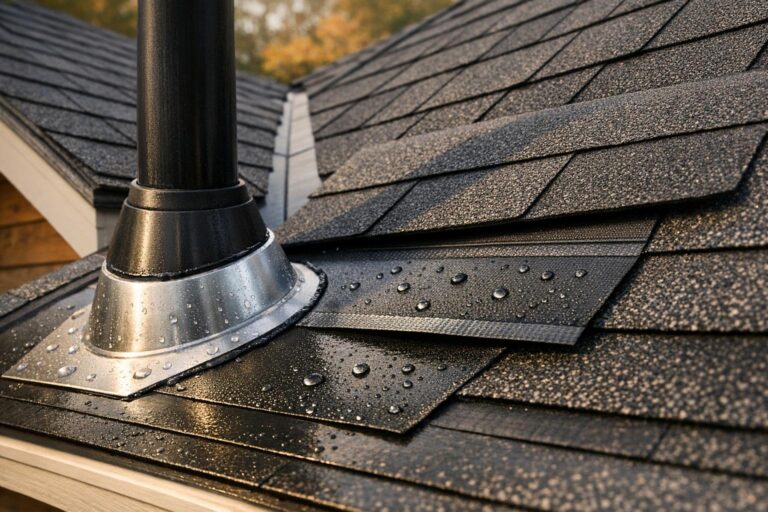
For roofing, nanosilica technology binds shingle granules together, creating a water-repellent shield against rain, hail, and ice. A standout example is GoNano technology, which has been verified by SGS Canada and recognized at the Resilient Cities Expo 2025. This treatment boosts shingle flexibility by 87% and improves granule retention by 96%. A single treatment can upgrade Class 1 shingles to Class 3 resistance, while two treatments can achieve the highest Class 4 rating.
“GoNano modifies the molecular structure of asphalt shingles permanently… creating a unified barrier against environmental strains.”
– GoNano
Another exciting development comes from the University of Waterloo, where researchers are creating battery-free nano-sensors just 5 millimetres in size. These sensors detect moisture and send alerts to smartphones, costing only about US$1 to produce – far cheaper than traditional leak detectors, which range from $50 to $100. Following a successful pilot with a major Canadian condo operator, a manufacturing facility is now under construction.
| Feature | Traditional Surface Sealers | Nanotechnology Coatings |
|---|---|---|
| Application | Sits on top of the surface | Penetrates and bonds within the material |
| Durability | Wears away; vulnerable to UV | Permanent molecular change; UV resistant |
| Moisture | Can trap moisture beneath the film | Hydrophobic; allows material to breathe |
| Maintenance | Requires frequent reapplication | Often a single application lasts 10–15 years |
For aging asphalt shingles, nanosilica treatments offer a cost-effective solution by restoring flexibility and extending their lifespan by up to 15 years.
Self-Healing Concrete and Coatings
Self-healing materials are another game-changer, capable of repairing cracks on their own and preventing minor damage from escalating into major problems. These materials use autogenous healing and engineered additives, such as bacteria or superabsorbent polymers, to fill cracks automatically.
One innovative approach involves bacterial self-healing concrete, which uses Lysinibacillus fusiformis to produce calcite and seal cracks. This bio-concrete can restore up to 22% of its compressive strength and 16% of its tensile strength. When combined with steel slag aggregates, recovery rates can soar to 74%.
For existing buildings where exterior excavation isn’t feasible, crystalline self-healing systems provide an interior solution. These materials can be applied to damp or wet surfaces, becoming an integral part of the concrete and offering long-lasting protection.
“Self-healing concrete technology has emerged as a sustainable solution to reducing maintenance expenses, autonomously repairing cracks and extending the service life of concrete.”
– Muhammad Arslan Ahmad, Author
Repairing concrete cracks can cost about $125 per cubic metre, but investing $1 in proactive waterproofing maintenance can save around $7 in future repairs. For new builds, adding crystalline admixtures during construction can eliminate the need for future membrane replacements.
BIM-Integrated Systems
Digital tools like Building Information Modeling (BIM) are revolutionizing waterproofing by enhancing precision in design and installation. BIM allows architects, engineers, and waterproofing specialists to collaborate during the design phase, tailoring systems to specific site conditions, building uses, and water pressures. It also provides detailed 3D visualizations of transition points – common weak spots in waterproofing systems.
By coordinating installation and protecting systems during subsequent construction work, BIM reduces waste and improves procurement efficiency. It can even integrate with smart moisture sensors for remote monitoring, enabling predictive maintenance instead of reactive repairs. The adoption of Software-as-a-Service (SaaS) models has made these tools more accessible, replacing expensive licences with affordable subscriptions.
For the best results, developers should involve waterproofing experts early in the BIM process to account for factors like high water tables or specific soil conditions. This proactive approach ensures that waterproofing systems are both effective and sustainable.
Technology in Waterproofing Inspections
Advancements in inspection technology now allow for the detection of hidden moisture before it causes damage, eliminating the need for guesswork or invasive testing. These tools can locate leaks with over 99% accuracy, all while leaving the property untouched. This level of precision is especially important in Canada, where freeze–thaw cycles and high water tables make early leak detection crucial.
Smart Sensors and Moisture Detection
Gone are the days of waiting for visible signs of water damage. IoT-enabled sensors now provide continuous, real-time moisture monitoring in areas like basements, foundations, and other vulnerable spots. These sensors alert property owners to potential problems immediately, even detecting leaks as small as 0.1 gallons per hour – amounts that would otherwise go unnoticed until significant damage occurs.
Specialized moisture detection tools have also become more advanced. Pin-type meters penetrate materials to provide precise depth readings, while pinless meters rely on radio frequencies to scan larger areas without causing surface damage. Both types are calibrated for specific materials, such as concrete, drywall, or wood, ensuring accurate results.
The focus has shifted towards predictive maintenance, with AI-powered systems analyzing sensor data to spot patterns and predict potential failures before they happen. This proactive approach is already paying off in industrial settings, where facilities using smart sensors have reported up to 30% reductions in maintenance costs. Additionally, affordable subscription models are making this technology more accessible for property owners.
For high-risk areas like elevator pits, flat roofs, and cove joints – where basement walls meet floors – wireless sensors provide around-the-clock monitoring in spaces that are difficult to inspect manually. Acoustic leak detection further enhances this process, using sound waves to pinpoint underground leaks to within ±6 inches. This technology has reduced detection times from several days to just a few hours.
To complement these stationary sensors, aerial inspections add another layer of precision.
Drone and Thermal Imaging
While fixed sensors focus on ground-level issues, drones equipped with thermal imaging cameras are ideal for inspecting higher elevations. Within just 30 minutes to 2 hours, drones can scan large facades, cladding, and rooftops, identifying water intrusion points that might eventually seep down to a building’s foundation. This non-invasive method is particularly useful for multi-storey buildings, where traditional inspections using ladders would be both time-consuming and risky.
Thermal imaging works by detecting how wet materials retain heat differently than dry ones, creating distinct colour patterns visible on infrared cameras. This allows technicians to inspect finished walls, ceilings, and floors without removing drywall or insulation. For instance, foundation seepage can be identified by highlighting cooler zones where water enters through cracks or porous concrete. After waterproofing work is complete, thermal imaging can confirm that the foundation is dry and the seals are functioning as intended.
For the most reliable results, combining multiple technologies is essential. While thermal cameras excel at detecting surface temperature variations, they should be paired with tools like moisture meters or probes to confirm the presence of liquid water. In challenging scenarios, such as inspecting complex roof membranes or hard-to-access foundation leaks, tracer gas detection offers a highly precise, non-invasive solution. This method can detect gas concentrations as low as 5 parts per million, pinpointing even the smallest entry points without causing damage to the property.
Benefits of Modern Waterproofing Technologies
Modern waterproofing technologies, built on cutting-edge materials and refined techniques, bring a host of benefits that enhance the durability and value of homes.
With over 60% of Canadian homes dealing with basement moisture problems, the importance of effective waterproofing cannot be overstated. Advanced systems significantly outperform older methods, offering long-lasting solutions. For example, rubberized asphalt membranes can last 25 to 50+ years, while crystalline waterproofing becomes a permanent part of the concrete structure. Compare this to the asphalt-based methods of the early 2000s, which were prone to quick degradation.
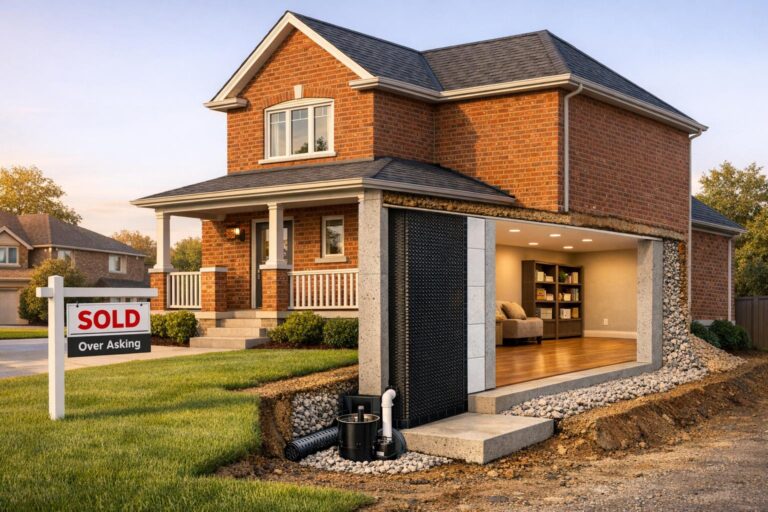
From a financial perspective, investing in modern waterproofing pays off. For every dollar spent, homeowners save approximately $7 in future repair costs. Addressing foundation issues early is critical, as neglected damage can cost three to five times more to fix. Additionally, a waterproofed basement can increase a home’s resale value by as much as 15% and may even lower insurance premiums by reducing the risk of water damage. Beyond these savings, reflective membranes and moisture control contribute to better energy efficiency.
“Modern foundation coatings are engineered to last decades, not years.” – Eugene Kushmarak, Basement Flood Expert, Aquatech Waterproofing
There are environmental benefits too. Many modern systems use low-VOC, non-toxic materials that improve indoor air quality while reducing environmental impact. Sustainable options, like bio-based materials, provide an eco-friendly alternative to petroleum-heavy products. These advanced systems also cut down on maintenance labour and waste, as they require fewer repairs over time.
Traditional vs. Modern Methods Comparison
| Feature | Traditional (Early 2000s) | Modern (2025–2026) |
|---|---|---|
| Primary Materials | Asphalt-based damp-proofing, tar, basic acrylics | Elastomeric membranes, crystalline technology, polyurea, rubberized asphalt |
| Lifespan | Short-term; prone to degradation and cracking | 25–50+ years; permanent with crystalline |
| Maintenance | Frequent repairs as material becomes brittle | Minimal; many systems feature self-healing properties |
| Environmental Impact | High-VOC; petroleum-heavy | Low-VOC; non-toxic; sustainable bio-based options |
| Water Resistance | Designed for moisture/dampness only | Blocks liquid water under hydrostatic pressure |
| Cost Efficiency | High long-term costs due to repairs | Saves $7 for every $1 invested in maintenance |
Modern waterproofing isn’t just about keeping water out. It’s about creating a durable, cost-effective, and environmentally conscious solution that meets the needs of today’s homeowners. By choosing advanced systems, you’re not only protecting your home but also investing in its future.
Applications of Modern Waterproofing Solutions
Thanks to modern waterproofing technologies, Canadian homes now enjoy protection from top to bottom. In cities like Toronto, foundation problems have risen by 23% since 2023, largely due to harsher freeze–thaw cycles and record-breaking precipitation levels. Knowing how and where these systems work is key to ensuring long-term protection.
Basements and Foundations
When it comes to basement waterproofing, exterior methods are considered the most effective. This involves digging around the foundation to apply advanced polymer membranes to the outside walls and installing drainage boards to direct water towards footing drains. In areas like Etobicoke and Scarborough, where higher water tables from Lake Ontario present ongoing moisture challenges, these exterior systems provide a reliable defence.
“Toronto’s climate continues to evolve in 2025, with our city now experiencing nearly nine months of cold, wet weather and increasingly unpredictable rainfall patterns.” – Joey’s Landscaping
If exterior excavation isn’t feasible, interior drainage systems are an alternative. These systems catch water at the cove joint and guide it through perimeter drains under the concrete slab to a sump pump. While interior solutions don’t stop water from entering the foundation, they are less invasive and typically cost between $70 and $150 per linear foot, compared to $100 to $250 for exterior systems.
For particularly tough situations, crystalline waterproofing technology has proven effective. In one 2025 commercial project in Toronto, an elevator pit experiencing water ingress through cold joints was treated with this technology. Within 48 hours, the pit was completely dry, with a durable moisture barrier in place.
Foundation crack repair is another critical aspect. Using modern polyurethane or epoxy resins, cracks are pressure-injected to seal them effectively. Repairs generally cost between $500 and $1,500 per crack. In older areas like East York, where clay-tile drainage systems are often deteriorated, combining crack repair with updated perimeter drainage offers a comprehensive solution.
Beyond addressing walls and cracks, effective water management around the structure is essential for long-term protection.
Integration with Drainage Systems
Waterproofing works best when paired with proper drainage systems. A well-integrated system doesn’t just stop water – it manages it. The most effective setups combine physical barriers with active drainage to handle hydrostatic pressure around the foundation.
“Basement waterproofing is not a single product; it’s a system-based approach. The most reliable results come from combining water diversion, pressure relief, sealing, drainage, and humidity control.” – Floodtech
This type of system typically includes a waterproof membrane to seal walls, a dimple board for airflow, filtered gravel to manage water flow, and perforated weeping tiles to direct water to a sump pump or storm sewer. Together, these elements prevent water from pooling near the foundation, reducing the risk of seepage.
Given Toronto’s increasingly unpredictable weather, smart drainage systems are more important than ever. Modern sump pumps now come with remote monitoring and high-level alarms to notify homeowners of potential issues before they escalate into flooding. Many also include battery backups to ensure functionality during power outages. Homeowners can expect to pay between $1,000 and $3,000 for sump pump installation.
Finally, surface water management is key to completing the system. Simple measures like extending downspouts at least two metres from the foundation, ensuring proper yard grading, and using clear polycarbonate covers on window wells can significantly reduce the amount of water reaching the foundation.
Choosing Professional Waterproofing Services
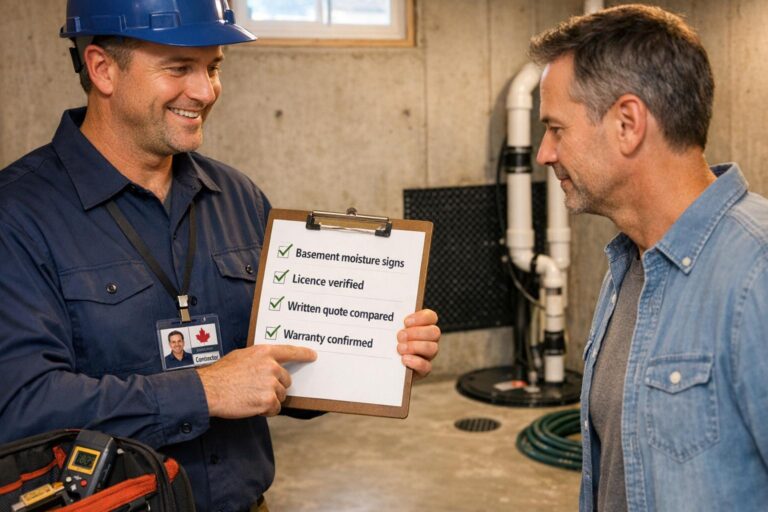
In Canada, dealing with basement moisture is a common challenge, so picking the right waterproofing service is crucial. The difference between a temporary patch-up and a long-term fix often hinges on finding a provider who combines modern technology with an understanding of local conditions.
Evaluating Service Offerings
Waterproofing today relies on advanced materials and techniques, so it’s important to choose a provider who uses these methods. Look for companies that offer a complete range of services, such as interior and exterior waterproofing, crack repair, drainage system upgrades (like weeping tiles and French drains), and sump pump installations with modern features.
A provider offering fully transferable lifetime warranties is a smart choice, as this can increase your home’s resale value by 10–15% in Canada. For example, rubberized asphalt membranes can last 30 to 50 years, while crystalline waterproofing integrates into the concrete, making it a permanent solution.
Some providers also incorporate smart technology. For instance, Wi-Fi-enabled sump pumps can notify you about power outages, rising water levels, or low battery status. Additionally, certain companies assist with applying for municipal subsidies, like Toronto’s Basement Flooding Protection Subsidy Program, which offers up to $3,400 for backwater valves and sump pumps.
Cost transparency is another key factor. Here’s a breakdown of typical pricing:
- Interior waterproofing: $70 to $120 per linear foot
- Exterior waterproofing: $150 to $250+ per linear foot
- Foundation crack repairs: $500 to $1,500 per crack
- Sump pump installations: $800 to $4,500, depending on smart features and backup systems
Beyond the services themselves, hiring a provider with local expertise is essential for addressing the unique challenges of your area.
Why Local Expertise Matters
Local professionals bring a deep understanding of regional conditions and apply the latest technologies while adhering to local building codes. For instance, Canada’s freeze–thaw cycles cause foundations to shift frequently, making it vital to use elastomeric membranes and polyurethane injections that can stretch without cracking.
Soil composition also varies widely across the country. In areas like Markham and Stouffville, heavy clay soil holds moisture, increasing hydrostatic pressure. This requires stronger drainage boards and higher-capacity weeping tiles. Experienced local providers can design solutions tailored to these specific conditions.
Regulatory knowledge is another reason to choose local experts. Contractors should comply with Section 5.8 of the Ontario Building Code, which outlines waterproofing requirements for areas with hydrostatic pressure. They should also understand the unique challenges of the Greater Toronto Area (GTA), such as narrow spaces between semi-detached homes in Toronto, which often require labour-intensive hand digging.
Ignoring foundation issues can lead to repair costs that are three to five times higher down the line. By choosing a provider with both local expertise and modern tools, you can ensure your investment offers long-lasting protection.
Conclusion
Canada’s tough climate – with its freeze-thaw cycles, heavy spring rains, and snowmelt – demands waterproofing solutions that go beyond traditional approaches. Modern advancements like crystalline waterproofing and smart moisture sensors are built to endure hydrostatic pressure and can last over 50 years, far outlasting older methods that often fall short.
Spending wisely on proactive maintenance pays off – every dollar invested can save approximately $7 in future repair costs. Self-healing technologies, as discussed earlier, offer an impressive solution, automatically sealing hairline cracks and forming a durable barrier that strengthens with time.
Experts in the field emphasize the durability of these innovations:
“Modern foundation coatings are engineered to last decades, not years.” – Eugene Kushmarak, Basement Flood Expert, Aquatech Waterproofing
Proper installation by certified professionals ensures these advanced systems deliver their full potential. These experts design solutions tailored to factors like your property’s soil type, local building codes – including Section 5.8 of the Ontario Building Code – and the specific challenges of your region’s climate. Using tools like thermal imaging, moisture sensors, and non-destructive testing, they can detect and address vulnerabilities before they evolve into costly structural issues.
In Canada’s climate, protecting your foundation isn’t just a choice – it’s a necessity. By investing in modern materials, smart monitoring tools, and expert installation, you’re securing your home’s structural integrity, improving indoor air quality, and avoiding expensive repairs down the road. These advancements are setting the standard for waterproofing solutions in Canadian homes.

 CLOGGED OR BROKEN WEEPING TILE