
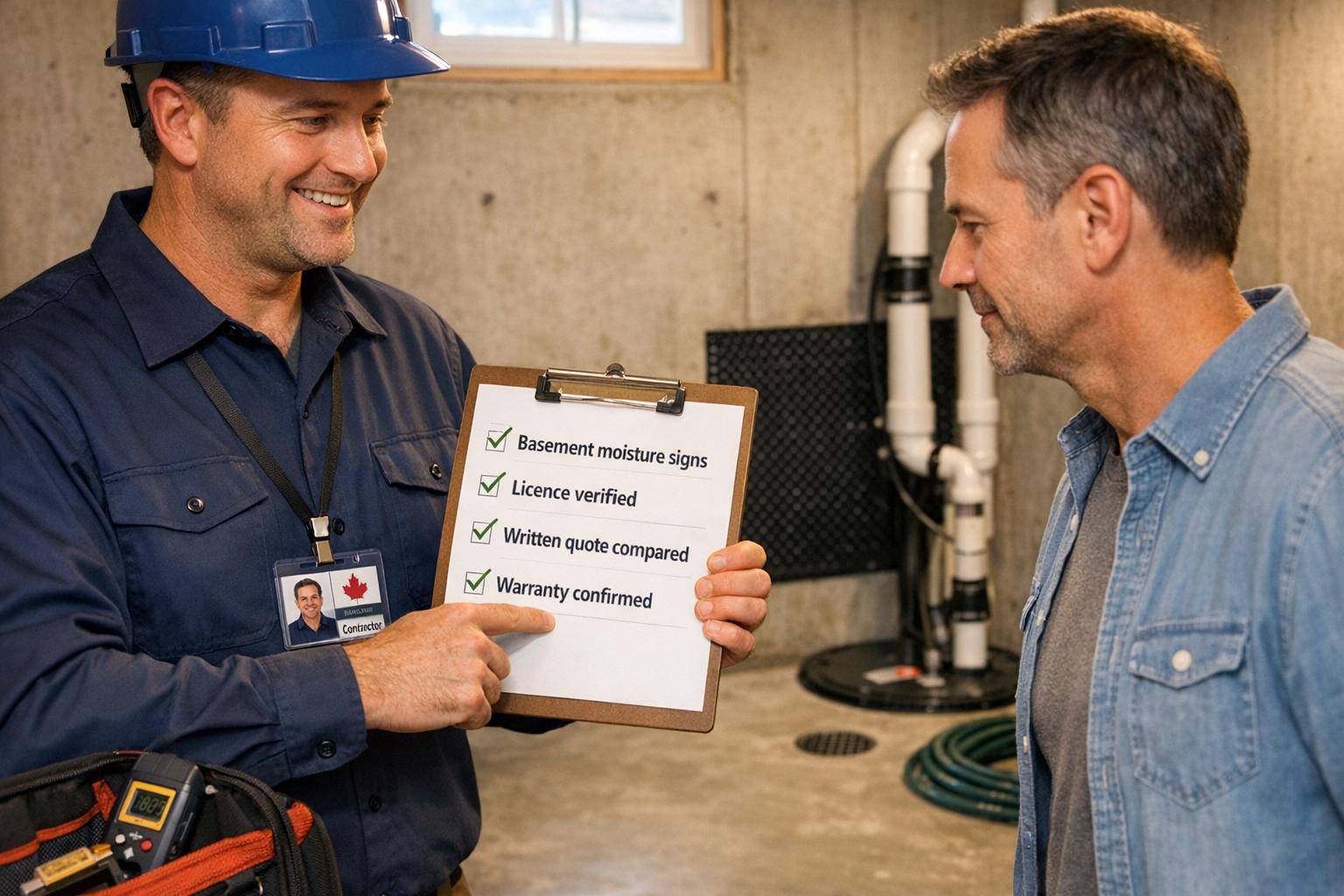
Basement waterproofing is a key step in protecting your home from costly damage and health risks. The average cost of a basement flood in Canada is $43,000, so hiring the right contractor is critical. Here’s how you can make an informed choice:
- Identify the problem: Inspect your basement for water stains, cracks, or musty smells. Outside, check for poor grading or clogged gutters.
- Verify credentials: Ensure the contractor holds a City of Toronto Building Renovator licence, liability insurance and WSIB coverage. Ask for proof and confirm it with official registries.
- Evaluate experience: Look for specialists with at least five years of expertise in waterproofing, including foundation repair and sump pump installation.
- Check reviews and references: Research online ratings and speak to past clients about their experience.
- Demand a detailed quote: Avoid vague estimates. A proper quote should clearly list materials, labour, timelines, and warranties.
Red flags to avoid: Missing licences, high upfront deposits, or contractors who pressure you to sign quickly.
Taking these steps ensures you hire a professional who delivers long-lasting solutions. Read on for a deeper dive into each step.
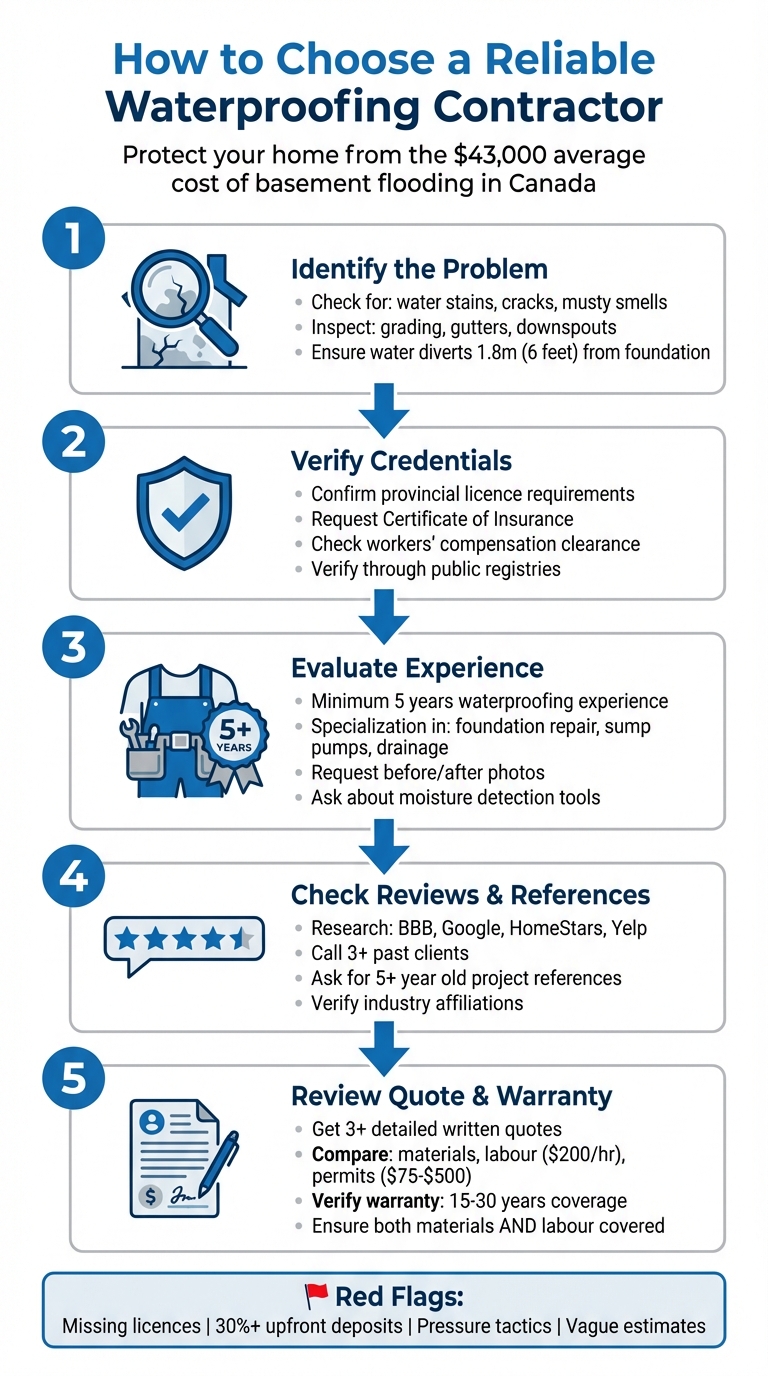
5-Step Process to Choose a Reliable Waterproofing Contractor in Canada
How to Choose a Foundation or Waterproofing Contractor
sbb-itb-5761e20
Identify Your Waterproofing Problems First
Before you call a contractor, take the time to figure out what’s causing water issues in your basement. The more precise you can be about the problem, the easier it will be to find a contractor with the right skills – and avoid paying for fixes that don’t target the actual issue. Start by carefully inspecting both your basement and the outside of your home.
Inside, look for clear signs of water trouble: stains on walls or floors, puddles, damp carpets, peeling paint, or that telltale musty smell. Check the foundation walls for cracks or efflorescence – that chalky white residue left behind when water evaporates. Outside, make sure your gutters and downspouts are free of debris and directing water at least 1.8 metres (6 feet) away from your home. Also, pay attention to the grading around your house. If the ground slopes toward your foundation instead of away, it’s a big red flag for water problems.
“Water intrusion is rarely caused by a single issue. It’s usually a combination of soil pressure, drainage failure, and foundation exposure.” – Expert insight
Pinpointing the source of the problem is key to finding the right solution. Determine if water is seeping through a crack, rising from the floor, or showing up after heavy rain. This information helps contractors give you a more accurate estimate and suggest the right fix, whether that’s exterior waterproofing, a sump pump, or repairing foundation cracks. To make things even clearer, take photos or videos during or after a rainstorm and sketch out where you notice moisture. This kind of preparation ensures you won’t waste money on generic solutions that don’t work.
Verify Licensing and Insurance
Ontario has no provincial licence for waterproofing itself, so the checks happen at the city and trade level:
- City of Toronto: A business that repairs or renovates homes in the city needs a Building Renovator licence from Municipal Licensing & Standards, and waterproofing is one of the trades this licence covers.
- Other GTA cities: Mississauga, Hamilton and several other municipalities run their own contractor licensing, so check the rules where your home is located.
- Electrical and plumbing work: If the job needs a new circuit for a sump pump or changes to drain plumbing, that part must be done by an ESA/ECRA-licensed electrical contractor or a licensed plumber.
“A professional licence shows that a contractor is qualified to do the work you’re hiring him or her to do – like plumbing or electrical.” – Government of Ontario
Always ask to see the actual documents. Request a Certificate of Insurance from a Canadian insurer to confirm they have liability coverage. Additionally, ask for a WSIB clearance certificate to ensure their account is in good standing. Without workers’ compensation coverage, you could be held responsible if a worker is injured on your property.
You can also check credentials yourself. In Toronto, contact Municipal Licensing & Standards through 311 to confirm the Building Renovator licence number, and search Ontario’s Consumer Beware List to see if the business has any complaints or charges. If electrical work is involved, ask for the contractor’s ESA/ECRA licence number, which is often displayed on their work vehicle.
Check Experience and Specialization
General handypersons might handle minor repairs, but specialized waterproofing contractors dig deeper. They identify root causes – like hydrostatic pressure or poor drainage – and provide solutions that last.
“Experience is the key to success for each waterproofing project. The more extensive the understanding and capability of commercial waterproofing contractors, the smaller the margin for error and delay.” – Valcourt Group
Look for contractors with at least five years of experience specifically in waterproofing. This kind of background shows they’ve tackled a variety of structural challenges and can adapt methods to suit different foundations and soil conditions. To ensure their work stands the test of time, request before-and-after photos of similar projects and speak with past clients for feedback.
Top-tier contractors rely on tools like moisture meters and thermal imaging to detect leaks accurately before recommending repairs. This avoids wasting money on superficial fixes. Their expertise often extends to interior and exterior waterproofing, crack repair, and sump pump systems.
Interior and Exterior Waterproofing Experience
A contractor skilled in both interior and exterior waterproofing offers more comprehensive protection for your property. They assess whether to prevent water from entering or manage it once inside. For example, exterior waterproofing reduces hydrostatic pressure and safeguards structural integrity, while interior approaches manage groundwater and moisture buildup. Often, a combination of both methods delivers the best results.
“Waterproofing is not a one-size-fits-all service. Real protection comes from understanding soil conditions, drainage behaviour, and structural risks.” – Waterproofing 4Less
Ask contractors how they approach both methods. If they only recommend one solution without evaluating your foundation type, soil conditions, or drainage patterns, it’s a red flag. Their ability to tailor solutions to your specific needs is critical when choosing the right contractor.
Foundation Crack Repair Expertise
Foundation cracks are more than an eyesore – they’re a sign of potential structural and water issues. Contractors with expertise in foundation repair can distinguish between minor cracks that need sealing and larger ones that require advanced techniques like epoxy injection or crack stitching.
“A reliable contractor will assess and address foundation issues before waterproofing, ensuring long-lasting protection.” – Foundation Brothers
When interviewing contractors, ask them to explain their repair methods. Do they use epoxy injection for structural cracks? Are they experienced with crack stitching for longer fissures? Their answers will reveal whether they’re equipped to handle the technical demands of foundation repair, beyond just patching the surface.
Sump Pump Installation and Maintenance Skills
A well-installed sump pump can be a game-changer for keeping basements dry. Qualified contractors integrate sump pumps with systems like French drains, vapour barriers, and drainage channels to manage groundwater effectively. When discussing your project, ask about their experience with sump pump installations. Do they offer battery backup systems in case of power outages? Can they provide a maintenance plan to ensure the pump stays in top condition?
“Waterproofing contractors frequently deal with sump pump problems and will know exactly what to do to get your pump back in working condition.” – Basement Systems
Professionally installed sump pump systems, built with quality materials, should last over 15 years. Always ask for references to confirm their reliability and performance over time. This expertise is a crucial factor to consider before making your final hiring decision.
Research Reviews, References, and Reputation
A contractor’s reputation can give you a clear picture of what to expect before signing a contract. Start by checking the Better Business Bureau (BBB) for their rating and how they handle complaints. Keep in mind, an A+ rating only holds weight if the company actively resolves legitimate issues. These initial steps set the stage for a deeper dive into the contractor’s reliability.
Look at reviews across multiple platforms like Google, Yelp, HomeStars, and SmartReno. HomeStars profiles also show photos from past jobs, which helps you see the kind of work the company does. Local forums are worth a look too: on Reddit’s r/askTO, Toronto homeowners often share which waterproofing companies kept their basements dry. Genuine reviews often include specific details, such as whether the crew showed up on time, stuck to the quoted budget, and kept the work area clean. Pay close attention to reviews that describe how contractors handled unexpected problems – this can be a strong indicator of their professionalism.
If a contractor provides references, take the time to call them. Ask targeted questions like, “Has the basement stayed dry during heavy rain since the work was done?” or “Would you hire this contractor again?” Whenever possible, request references from projects completed at least five years ago. This helps confirm whether the waterproofing solution has held up over time. Be cautious if a contractor offers a lifetime warranty but has only been in business for a few years – this could be a red flag.
Also, look for contractors who maintain a strong online presence and are willing to provide multiple references. Companies with a long history and a large customer base are generally more likely to honour warranties and stand by their work. Affiliations with respected organizations, such as the Basement Health Association, can also signal a commitment to industry standards.
Check Service Area and Local Waterproofing Experience
A waterproofing contractor’s service area matters more than it may seem. Basement leaks are often connected to local conditions, including soil type, grading, groundwater levels, freeze-thaw cycles, and drainage patterns around the property. A company that regularly works in your area is more likely to understand these factors and recommend a solution that fits your home.
Before hiring a contractor, confirm that they serve your city or neighbourhood, have a physical office in the GTA and can schedule an on-site inspection within a reasonable timeframe. Reliable local waterproofing companies should be able to assess the basement, foundation, exterior grading, downspouts, and drainage conditions before giving a final recommendation.
In Toronto, local experience matters most for homes on clay-heavy soil, older foundations, and areas near Lake Ontario, such as Etobicoke and Scarborough, where higher water tables keep constant moisture against basement walls. In these cases, a generic solution may not be enough. A contractor should explain how local conditions affect the waterproofing method, whether the project requires exterior excavation, interior drainage, crack repair, sump pump installation, or a combination of several services.
Review the Inspection and Quoting Process
Just like checking licences and experience, a detailed inspection and a clear quote are essential when evaluating a contractor’s reliability. The inspection should go beyond surface-level observations. A trustworthy contractor will determine why water is entering your home, not just point out where it’s visible. This involves examining foundation cracks, soil conditions, and drainage systems – all in one comprehensive assessment.
“A professional waterproofing contractor should provide a detailed inspection and written estimate. This helps homeowners understand the scope of the project and compare costs before making a commitment”.
A thorough inspection sets the foundation for a detailed written estimate.
The written quote should break down all costs clearly. Look for line items that specify materials (e.g., membrane, weeping tiles), labour (around $200 per hour in Canada), necessary permits (ranging from $75 to $500), excavation work, and debris removal (typically $200 to $1,000). It should also outline the exact waterproofing method – whether that’s exterior excavation, interior sealants, or sump pump installation – and explain why this approach is best for your home. If mould is found during the inspection, expect a separate line item for remediation, which usually costs between $500 and $3,500.
Avoid vague estimates. If a contractor provides only a lump sum without detailing the scope of work, it’s a red flag. This could mean they haven’t properly diagnosed the issue or might use substandard materials. Aim to collect at least three written quotes to compare not only prices but also the proposed methods and level of detail. Be wary of any bid that’s significantly lower than the others – it often signals poor-quality materials or limited experience with complex water intrusion problems. An itemized quote also helps with price matching: some Toronto contractors, Leaquida included, will match or beat a written quote from a licensed competitor for the same scope of work.
In addition to the detailed quote, the proposal should include a clear timeline and payment structure. Look for a realistic project schedule with specific start and end dates, as well as warranty terms that outline what’s covered (e.g., labour versus materials) and for how long. The payment schedule should also be transparent, specifying the total cost, deposit amount, and when subsequent payments are due. If a contractor can’t provide these details or pressures you to sign without answering your questions, walk away – they’re not worth the risk.
Ask About Waterproofing Methods and Materials
After reviewing your detailed quote, take the time to understand how the contractor’s proposed methods address your home’s specific needs. A dependable contractor should be able to explain their waterproofing techniques and how these are tailored to your foundation’s challenges and the local soil conditions. It’s important to ask for a breakdown of the materials and methods they plan to use, especially their performance during Canada’s freeze–thaw cycles.
Exterior waterproofing involves digging around your foundation all the way to the footing, applying waterproof membranes like SBS-modified bitumen or PVC, and installing weeping tiles to redirect water away from your foundation walls. This approach tackles the problem at the source and typically costs between $100 and $250 per linear foot. On the other hand, interior waterproofing focuses on managing water that has already entered the basement. This method includes installing drainage systems (like French drains) under the basement floor, leading to a sump pump, with costs ranging from $70 to $120 per linear foot. Foundation crack repair uses epoxy or polyurethane injections to seal cracks, with prices varying from $500 to $1,200 per crack, depending on how accessible the crack is.
When discussing materials, ask about their elongation properties – this measures how well the membrane can handle expansion and contraction due to temperature changes, which is crucial in Canadian climates. For instance, thermoplastic membranes can last up to 50 years if installed properly. Ensure the contractor plans to install a protection course, such as drainage boards, before backfilling. This extra step prevents damage to the membrane from rocks and other debris.
“The most effective way to waterproof walls and floors placed against earth is to remove the water from the earth prior to it reaching the wall or floor.” – Canadian Roofing Reference Manual
If the contractor struggles to justify their choices for your soil conditions – an issue that’s especially relevant in clay-heavy regions like Ontario – that’s a red flag. Clay soil tends to retain moisture, which can build up against foundation walls. An experienced contractor will adapt their methods to these specific challenges instead of using a generic approach.
Comparison Table: Waterproofing Methods
Use this table as a quick reference to compare waterproofing options, their costs, features, and potential drawbacks for Canadian homes.
| Method | Price Range (CAD) | Key Features | Limitations |
|---|---|---|---|
| Interior Waterproofing | $70–$120/linear foot | Manages moisture inside with drainage channels, sump pumps, and vapour barriers | Cost depends on basement size |
| Exterior Waterproofing | $100–$250/linear foot | Protects from outside by excavation, membrane application, and drainage upgrades | Pricing varies by soil type |
| Foundation Crack Repair | $500–$1,200 per crack | Seals cracks to prevent leaks and maintain structure | Cost depends on crack location |
Confirm the Full Range of Services
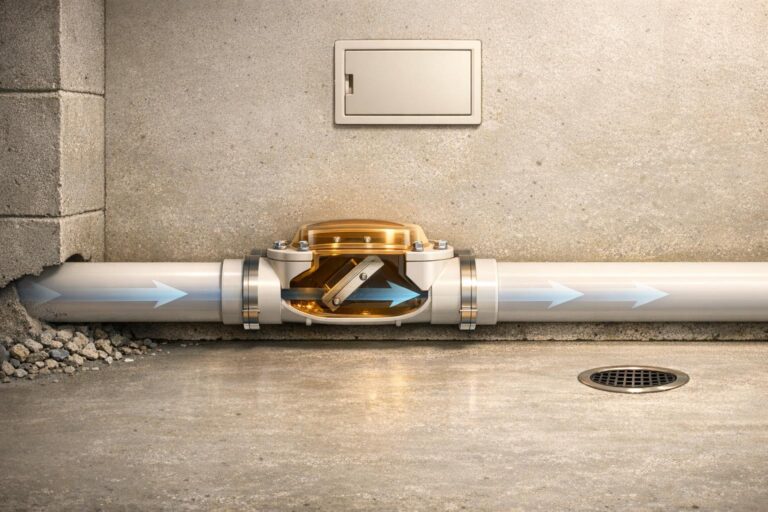
A reliable waterproofing contractor should be able to address the full scope of the problem, not just one visible symptom. Basement water issues often involve several connected factors: foundation cracks, poor exterior drainage, clogged or damaged weeping tiles, sump pump failure, wall seepage, floor moisture, or mould caused by long-term dampness.
Before choosing a company, ask which related services they provide in-house. The strongest contractors usually offer foundation crack repair, interior and exterior waterproofing, drainage system installation, sump pump installation, and moisture control solutions. In some cases, additional structural repairs or mould remediation may also be required before the basement can be properly protected.
This matters because hiring several separate contractors can create confusion over responsibility. If one company repairs the crack, another installs drainage, and a third handles the sump pump, it may be harder to determine who is accountable if water returns. A full-service waterproofing contractor can evaluate the entire system and recommend a coordinated solution.
Compare Warranties and Guarantees
After getting a detailed quote and inspection, it’s time to dig into the warranty terms. Why? Because warranties are your safety net, protecting your long-term investment and showcasing the contractor’s confidence in their work. Basic coverage across the industry often runs 5 to 10 years, while established Toronto contractors usually offer 25-year or lifetime warranties, and many of them transfer to the next owner when you sell.
“A basement waterproofing company’s lifetime guarantee doesn’t mean much if they don’t have a strong track record. Your warranty ends when their business goes bust.” – Mariel Loveland, Contributing Writer at Angi
When reviewing a warranty, ensure it covers both materials and labour. Here’s why that matters: a manufacturer’s warranty only covers product defects, leaving you on the hook for labour costs, while a workmanship warranty protects against installation errors but not defective materials. Also, check whether the warranty is transferable – it can be a big selling point if it stays with the property during resale. Another crucial detail to look for is an overburden clause, which covers the cost of removing and replacing flooring or drywall to access and repair the waterproofing system.
Some warranties come with conditions, like requiring annual maintenance or inspections to stay valid. Certain contractors might include free yearly checkups, but others may leave that responsibility up to you. Be sure to clarify any exclusions, such as damage caused by earthquakes, municipal sewer backups, or unauthorized modifications to your basement. Also, confirm the claims process – ideally, the contractor should offer a straightforward procedure with perks like a 24/7 emergency response line and guaranteed assessment times. This kind of transparency pairs well with solid insurance backing.
Speaking of insurance, don’t overlook this step. Premium contractors typically carry liability insurance of $5 million or more, which ensures they can handle major claims if something goes wrong. Considering that the average cost of a basement flood in Canada is about $43,000, this level of coverage provides essential peace of mind. Always ask for their current insurance certificate before signing anything.
Assess Communication, Timeline, and Professionalism
The way a contractor communicates during the initial stages often reveals a lot about their approach to project management. A dependable contractor should show up on time for the first consultation – this reflects their professionalism. During this visit, they should carefully inspect your foundation, walls, and drainage systems instead of giving you a generic quote. This thoroughness shows they’re serious about addressing your specific needs.
Pay close attention to how clearly they explain their proposed solution. Ask them to break down why they’re recommending a particular method and how it tackles the root cause of your water issue rather than just masking the symptoms. A skilled professional will also be honest about potential challenges, like poor soil quality or high groundwater levels, which could impact the project. This kind of open communication helps set the tone for understanding the timeline and professionalism you can expect.
“One of the major reasons why disagreements and issues arise between contractors and clients is due to a lack of communication”.
When it comes to timelines, ask for a written schedule that includes key milestones – such as site preparation, installation, and cleanup – as well as realistic start and end dates. A good contractor will also explain potential delays, whether caused by weather, permits, or material delivery. Most projects fall within a range of 3 to 25 days.
Having a designated point of contact is another key factor. This person will be your go-to for updates and any concerns, which is especially important for complex jobs where clear communication can prevent misunderstandings. Also, make sure they provide a detailed written estimate. This should include all costs, necessary permits, and confirmation that the work complies with local building codes.
Pay attention to how responsive they are during the consultation phase.
“A contractor who can’t or won’t answer your questions may not be the right person for the job”.
A reliable company should also remain accessible after the project is completed. Clear customer support matters when you need warranty service, maintenance advice, or a follow-up inspection after heavy rain.
Lastly, a professional contractor will explain how they plan to handle unexpected issues that might come up during excavation. They should also commit to keeping the work site clean, managing fine dust and debris once the job is done. Consistent and transparent communication is the backbone of a successful waterproofing project.
Red Flags to Watch Out For
When you’re ready to move forward with a contractor, it’s crucial to keep an eye out for warning signs that could save you from potential headaches down the road.
One major concern is missing or unverifiable licences and insurance. If a contractor can’t provide proof of these credentials, it’s a huge risk. Without proper documentation, you could be held responsible if a worker gets injured on your property. Always ask to see physical copies of their workers’ compensation and liability insurance, and take the extra step to verify these with the issuing authorities.
Another red flag is if the contractor demands an unusually high deposit. In Canada, a typical deposit for renovation projects is about 10% of the total cost. If someone asks for 30% or more before any work begins, consider it a serious warning sign. Payments should be linked to specific project milestones rather than handed over as one large upfront sum.
“Many untrustworthy contractors will lure you with a low price only to add excessive charges later and threaten a lawsuit if you don’t pay up.” – Eric Perigny, RenoAssistance
Be cautious of quotes that combine all costs into one lump sum or are significantly lower than other estimates. These could indicate the use of subpar materials or a lack of proper qualifications.
High-pressure sales tactics are another clear indicator to step back. For example, if a contractor offers a cash discount without providing a written contract or gives you a quote without thoroughly inspecting your property, they’re likely not prioritizing your best interests. A trustworthy professional will encourage you to take your time, compare estimates, and make an informed decision.
Staying alert to these red flags can help you make a more secure and confident choice when finalizing your renovation plans.
What Questions Should You Ask a Waterproofing Contractor?
Bring these questions to the first consultation and compare how each company answers them:
Do you have a City of Toronto Building Renovator licence and WSIB coverage?
- What is causing the water to get in, and how did you find that out?
- Do you recommend interior or exterior waterproofing for my home, and why?
- What exactly is included in the quote?
- Will your own crew do the work, or do you use subcontractors?
- How long is the warranty, what does it cover, and can it be transferred?
Final Checklist Before Hiring a Contractor
Before signing on the dotted line, go through this checklist to ensure you’re making the right choice.
Verify Credentials
Start by confirming the contractor’s licence number. Contact your provincial or municipal licensing board directly to validate it – don’t just take verbal assurances. Request physical or digital copies of their general liability insurance and workers’ compensation certificates, and double-check these with the issuing authorities.
Compare Written Estimates
Collect at least three detailed quotes. Each should clearly outline the scope of work, specific materials (like membrane types or sealants), the timeline with defined start and end dates, and payment milestones. Make sure the quotes address the root cause of the water issue you’re trying to resolve.
Review Warranties Thoroughly
Carefully examine the warranty details. Check the length of coverage (25 years or lifetime is common among established Toronto contractors), whether it includes both labour and materials, and if it’s transferable to future homeowners if you sell your property. Also, ask for a separate document that outlines any required maintenance – like sump pump testing or drainage cleaning – that’s necessary to keep the warranty valid.
Confirm Permits and References
Ensure the contractor will handle all required municipal building permits and clarify who is responsible for obtaining them. Reach out to at least three former clients to confirm the contractor’s track record for staying on schedule and within budget.
Get It All in Writing
Before any work begins, make sure everything is documented in a signed contract. This includes the scope of work, costs, timelines, cleanup responsibilities, and any legal obligations.

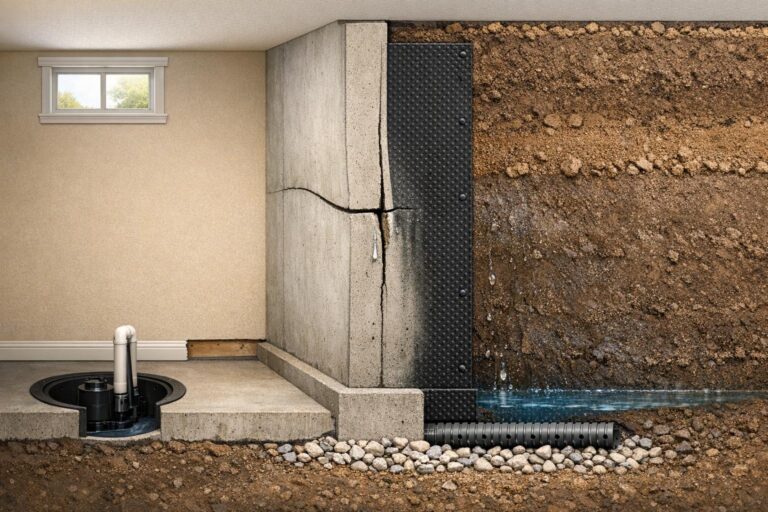
 CLOGGED OR BROKEN WEEPING TILE